

Hossa National Park Travel Guide - Free Web & App
Your ultimate guide to Hossa National Park. Discover top landmarks, proposed trips, and local tips. Free on the web or via the Evendo companion app.


Discover the serene beauty and ancient wonders of Hossa National Park, Finland's pristine wilderness retreat for outdoor enthusiasts and nature lovers.
Read more about Hossa National Park
When is the best time to visit Hossa National Park?
Best: June–August · 18–21°C| Month | High (°C) | Rainfall (mm) |
|---|---|---|
| January | -5 | 32 |
| February | -5 | 28 |
| March | -2 | 24 |
| April | 3 | 18 |
| May | 10 | 17 |
| June (best) | 18 | 16 |
| July (best) | 21 | 15 |
| August (best) | 19 | 15 |
| September | 13 | 18 |
| October | 6 | 24 |
| November | 2 | 30 |
| December | -3 | 32 |
Getting to and around Hossa National Park
How to get there
Transportation
Best attractions in Hossa National Park
Hossa National Park offers visitors a unique blend of pristine nature, rich history, and exciting outdoor activities. From crystal-clear lakes perfect for swimming and kayaking to ancient rock paintings dating back thousands of years, there is something for everyone to enjoy. Hike through lush forests, bike along scenic trails, or try your hand at fishing in the park's abundant waters. With cozy cabins for accommodation and a chance to witness the spectacular Northern Lights, Hossa National Park is a destination not to be missed.
-
Tourist attraction
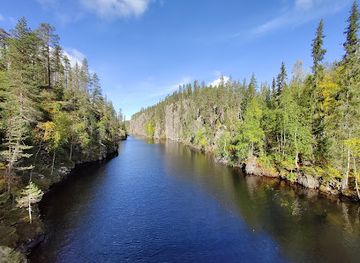
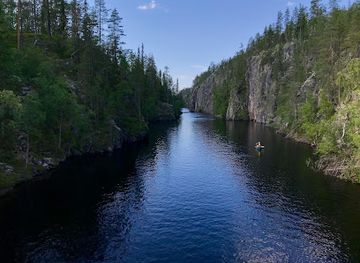
Canyon Lake Julma-Ölkky
Explore Finland's largest canyon lake, Julma-Ölkky, with its stunning cliffs, ancient rock paintings, and crystal-clear waters in Hossa National Park.
-
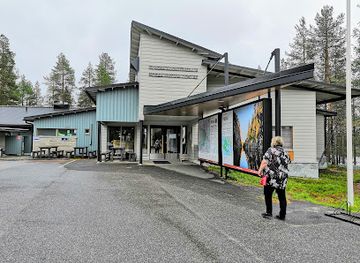
Visitor center
Hossan luontokeskus
Explore Hossa National Park: Discover Finnish nature, Stone Age rock art, and outdoor adventures at the visitor center.
-
Tourist attraction
Hossan Karhut Bear Safaris
Observe Finland's brown bears in their natural habitat with ethical and unforgettable wildlife safaris near Hossa National Park.
Best landmarks in Hossa National Park
Hossa National Park in Finland offers visitors a captivating experience with its pristine wilderness and unique geological formations. Explore ancient rock paintings dating back thousands of years, hike through dense forests and crystal-clear lakes, and witness the stunning beauty of the Northern Lights dancing in the night sky. Visitors can also enjoy fishing, canoeing, and camping in this remote and peaceful setting, immersing themselves in the natural wonders of this enchanting national park.
-
Visitor center
Hossan luontokeskus
Explore the breathtaking landscapes and rich wildlife of Hossa National Park at Hossan Luontokeskus, your essential guide to outdoor adventure in Finland.
-
 Hotel
HotelHossan Lomakeskus
Explore the breathtaking landscapes of Hossan Lomakeskus, where adventure meets relaxation in the heart of Finland's natural beauty.
-
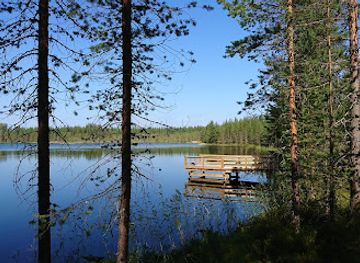
Lake
Julma-Ölkky
Experience the serene beauty of Julma-Ölkky Lake in Hossa National Park, a perfect destination for nature lovers and adventure seekers alike.
-
Cottage rental
Camping Hossan Lumo
Discover the tranquility of Camping Hossan Lumo, your gateway to Hossa National Park's natural beauty and outdoor adventures.

Explore Hossa National Park on the map
Plan your trip on one map. See where the top attractions, landmarks, restaurants and hotels are, and book hotels and experiences in a few clicks.
Best hotels in Hossa National Park
Best restaurants in Hossa National Park
In Hossa National Park, visitors can expect a unique dining experience that combines traditional Finnish cuisine with modern twists. From cozy cafes serving freshly baked pastries and locally sourced ingredients to rustic restaurants offering reindeer dishes and smoked fish caught from the nearby lakes, there is something for every palate. Enjoy a meal in a log cabin by the fireplace or dine al fresco surrounded by the breathtaking natural scenery. With a focus on sustainability and authenticity, the dining scene in Hossa National Park is sure to leave a lasting impression on visitors.
-
National park
Hossa National Park
Explore the natural wonders of Hossa National Park with its pristine lakes and breathtaking landscapes perfect for outdoor adventures.
-
Hotel
Hossan Lomakeskus
Experience the best of Finnish nature at Hossan Lomakeskus – your ultimate destination for adventure sports and relaxation in Ruhtinansalmi.
-
Restaurant
Hossan Poropuisto
Experience authentic Finnish cuisine at Hossan Poropuisto while surrounded by breathtaking natural beauty in Ruhtinansalmi.
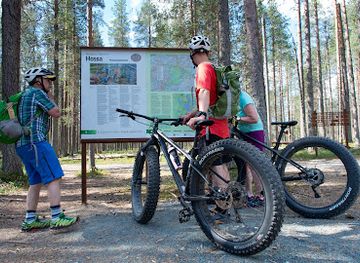
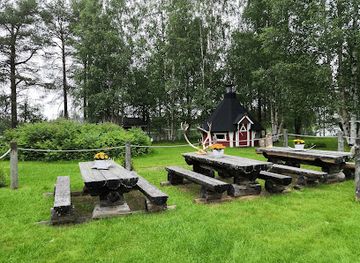
Best bars in Hossa National Park
While Hossa National Park may be known for its stunning natural beauty and outdoor activities, don't underestimate its nightlife scene. Visitors can enjoy cozy bars and lively nightclubs that offer a unique blend of Finnish culture and modern entertainment. From traditional Finnish music performances to international DJs spinning the latest hits, there is something for everyone to enjoy after a day of exploring the park. Grab a drink, mingle with locals and fellow travelers, and dance the night away under the northern lights for an unforgettable experience in Hossa National Park.
-
Historical landmark
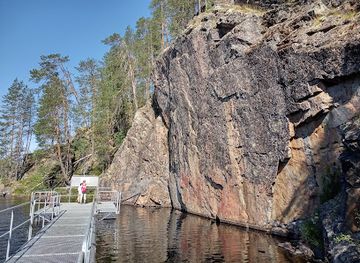
Värikallio Rock Paintings
Discover the ancient Värikallio Rock Paintings in Suomussalmi, a breathtaking testament to Finland's prehistoric heritage surrounded by serene nature.
-
Restaurant
Hossan Retkeilykeskus
Explore the beauty of Finland at Hossan Retkeilykeskus, your gateway to outdoor adventure and local culinary delights in Ruhtinansalmi.
-
Bridge
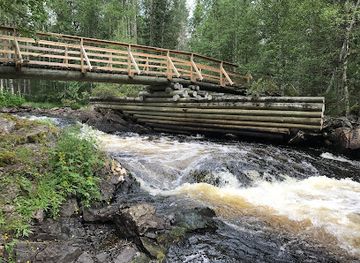
Lounatkoski
Explore the stunning Lounatkoski Bridge in Suomussalmi, Finland – a perfect blend of nature and architecture amidst serene landscapes.
-
Restaurant
Kahvila-Ravintola Olavi Seppänen
Experience authentic Finnish cuisine at Kahvila-Ravintola Olavi Seppänen in the picturesque Ruhtinansalmi, where local flavors meet a cozy atmosphere.
Best nightclubs in Hossa National Park
While Hossa National Park may be known for its stunning natural beauty and outdoor activities, don't underestimate its nightlife scene. Visitors can enjoy cozy bars and lively nightclubs that offer a unique blend of Finnish culture and modern entertainment. From traditional Finnish music performances to international DJs spinning the latest hits, there is something for everyone to enjoy after a day of exploring the park. Grab a drink, mingle with locals and fellow travelers, and dance the night away under the northern lights for an unforgettable experience in Hossa National Park.
-
National park
Hossa National Park
Explore Hossa National Park, a breathtaking natural preserve in Finland, offering stunning landscapes, diverse wildlife, and endless outdoor adventures.
-
Hotel
Hossan Lomakeskus
Discover the perfect blend of relaxation and adventure at Hossan Lomakeskus, a premier destination in Finland's breathtaking natural landscape.
Best shops in Hossa National Park
While Hossa National Park is primarily known for its stunning natural beauty and outdoor activities, visitors will be pleasantly surprised by the charming shopping scene in the area. From local handicrafts and traditional Finnish souvenirs to outdoor gear and camping supplies, there is something for everyone in the small shops and boutiques scattered throughout the park. Don't miss the opportunity to pick up a unique memento of your time in Hossa, whether it's a handmade woolen sweater or a beautiful piece of jewelry inspired by the surrounding nature.
-
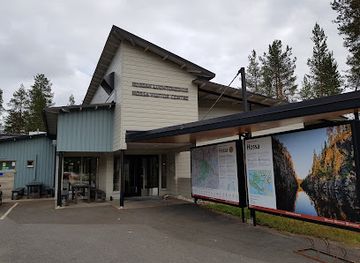
Visitor center
Hossan luontokeskus
Explore the beauty of Finland's nature at Hossan Luontokeskus, a visitor center offering exhibitions, outdoor activities, and a gateway to adventure.
-
National park
Hossa National Park
Discover the pristine wilderness of Hossa National Park, Finland's hidden gem for nature lovers and outdoor adventurers.
-
Hotel
Hossan Lomakeskus
Discover the perfect blend of adventure and comfort at Hossan Lomakeskus, a premier destination in Ruhtinansalmi, Finland.
-
Cottage rental
Camping Hossan Lumo
Camping Hossan Lumo: Your gateway to nature's paradise in Ruhtinansalmi, Finland, with cozy log cabins and endless outdoor activities.
Get your free copy of our complete guide to Hossa National Park, delivered straight to you.
Everything on this page, from attractions and restaurants to essentials and local phrases, in one PDF you can read offline, print or share.
Already have an account? Sign in
Your Hossa National Park guide is ready.
We'll send it to · Not you? Sign out

Getting your guide ready…
We are putting together a fresh copy of the Hossa National Park guide. This can take up to a minute.
This can take a few moments. If your browser asks, choose Allow so the download can start. You'll find the guide in your Downloads folder.
Nothing happened? Download it again
Sorry, the guide is taking longer than usual. Please try again in a minute, or get it by email instead.
Hossa National Park essentials
Currency and Payment
Safety
Emergency Situations
Do's and Don'ts
Local Tips
From Eve
Local phrases worth knowing
You don't need to get them perfect. A few words go a long way, and locals appreciate the effort.
Basics
| English | Local | Say it |
|---|---|---|
| Hello | Hei | [hay] |
| Goodbye | Näkemiin | [nak-em-een] |
| Yes | Kyllä | [ku-lla] |
| No | Ei | [ay] |
| Please/You're welcome | Ole hyvä | [o-le hu-va] |
| Thank you | Kiitos | [kee-tohs] |
| Excuse me/Sorry | Anteeksi | [an-tee-ksee] |
| How are you? | Kuinka voit? | [kween-ka voyt] |
| Fine. And you? | Hyvin. Entä sinä? | [huh-vin. en-ta si-na] |
| Do you speak English? | Puhutko englantia? | [poo-hut-ko eng-lan-tee-a] |
| I don't understand | En ymmärrä | [en um-mar-ra] |
Eating & Drinking
| English | Local | Say it |
|---|---|---|
| I'd like to see the menu, please | Saisinko nähdä ruokalistan? | [sai-sin-ko na-da roo-ka-lis-tan] |
| I don't eat meat | En syö lihaa | [en suh le-ha] |
| Cheers! | Kippis! | [kip-pis] |
| I would like to pay, please | Haluan maksaa, kiitos | [ha-lu-an mak-saa, kee-tos] |
Emergencies
| English | Local | Say it |
|---|---|---|
| Help! | Apua! | [a-pu-a] |
| Go away! | Mene pois! | [me-ne pois] |
| Call the Police! | Soita poliisille! | [soi-ta po-lii-sil-le] |
| Call a doctor! | Soita lääkärille! | [soi-ta laa-ka-ri-le] |
| I'm lost | Olen eksyksissä | [o-len eks-uk-sis-sa] |
| I'm ill | Olen sairas | [o-len sai-ras] |
Shopping
| English | Local | Say it |
|---|---|---|
| I'd like to buy... | Haluan ostaa... | [ha-lu-an os-ta] |
| I'm just looking | Katson vain | [kat-son vain] |
| How much is it? | Paljonko se maksaa? | [pal-yon-ko se mak-saa] |
| That's too expensive | Se on liian kallis | [se on lii-an kal-lis] |
| Can you lower the price? | Voitko laskea hintaa? | [voit-ko las-ke-a hin-ta-a] |
Time & Numbers
| English | Local | Say it |
|---|---|---|
| What time is it? | Mitä kello on? | [mi-ta kel-lo on] |
| It's one o'clock | Kello on yksi | [kel-lo on yk-si] |
| Half past (10) | Puoli (10) | [puo-li (10)] |
| Morning | Aamu | [aa-mu] |
| Afternoon | Iltapäivä | [il-ta-pa-i-va] |
| Evening | Ilta | [il-ta] |
| Yesterday | Eilen | [ei-len] |
| Today | Tänään | [ta-nan] |
| Tomorrow | Huomenna | [huo-men-na] |
| 1 | Yksi | [y-k-si] |
| 2 | Kaksi | [kak-si] |
| 3 | Kolme | [kol-me] |
| 4 | Neljä | [nel-ya] |
| 5 | Viisi | [vee-si] |
| 6 | Kuusi | [kuu-si] |
| 7 | Seitsemän | [sait-se-man] |
| 8 | Kahdeksan | [kah-dek-san] |
| 9 | Yhdeksän | [yh-dek-san] |
| 10 | Kymmenen | [kum-me-nen] |
Transport & Directions
| English | Local | Say it |
|---|---|---|
| Where's a/the...? | Missä on... | [mis-sa on] |
| What's the address? | Mikä on osoite? | [mi-ka on o-soi-te] |
| Can you show me (on the map)? | Voitko näyttää minulle (kartalla)? | [voit-ko nayt-taa mi-nul-le (kar-tal-la)] |
| When's the next (bus)? | Milloin on seuraava (bussi)? | [mil-lon on seu-raa-va (bus-si)] |
| A ticket (to ....) | Lippu (jonnekin) | [lip-pu (yon-ne-kin)] |
History of Hossa National Park
Ancient Rock Paintings
Hossa National Park is home to some of Finland's oldest rock paintings, dating back over 4,000 years. These ancient artworks, located at the Värikallio Cliffs, depict various human and animal figures, offering a glimpse into the lives and beliefs of the Stone Age people who once inhabited the region.
Sami Heritage
The indigenous Sami people have a long history in the Hossa region. Traditionally, they were semi-nomadic, relying on reindeer herding, fishing, and hunting. Traces of their ancient livelihoods can still be seen in the park, including old reindeer fences and traditional Sami dwellings known as 'kota'.
Medieval Trade Routes
During the medieval period, Hossa was an important area for trade routes connecting the inland regions of Finland to the coast. These routes facilitated the exchange of goods such as furs, fish, and salt, and were vital for the economic development of the region. Remnants of these ancient paths can still be traced through the park.
The Great Partition
In the 16th century, the area that is now Hossa National Park was affected by the Great Partition, a land distribution system implemented by the Swedish Crown. This event led to significant changes in land ownership and usage, impacting the local communities and shaping the landscape that visitors see today.
Forest Management and Logging
From the 19th century onwards, the Hossa region became a focal point for forestry and logging. The establishment of logging camps and the construction of log floats along rivers highlight the area's economic reliance on timber. These activities have left a lasting legacy on the landscape, with many old logging trails now serving as hiking paths.
Establishment of Hossa National Park
Hossa National Park was officially established in 2017 to celebrate Finland's 100th year of independence. The creation of the park aimed to protect the unique natural and cultural heritage of the area, ensuring that its rich history and pristine wilderness could be enjoyed by future generations.
Hossa National Park in Photos
Browse through our photo collection highlighting the charm and character of the destination.
Neighbouring destination travel guides
The closest destinations to Hossa National Park, if you have time for more than one.
-

-

-

-

-


Swipe for more destinations
Explore more

Explore more of Kainuu
Explore Kainuu's pristine lakes, ancient forests, and rich cultural heritage in Finland’s untouched wilderness. Perfect for nature lovers and adventure seekers alike.
Explore Kainuu
Explore more of Finland
Explore Finland, where the Midnight Sun meets the Northern Lights, offering a unique blend of natural beauty, rich culture, and unforgettable experiences.
Explore Finland