

Free Treasure Coast Travel Guide & Mobile App
Explore Treasure Coast with free travel guides. Discover regional history, expert tips, proposed trips, and audio guides on web or mobile app.


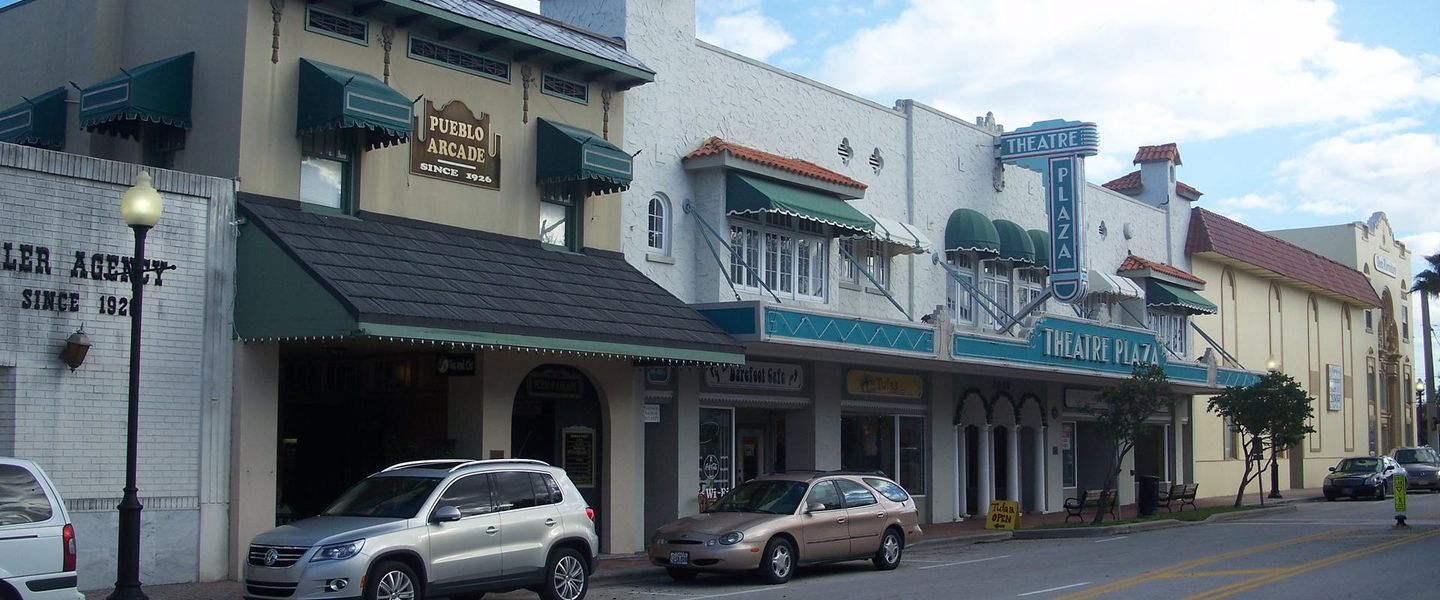


Explore Florida’s Treasure Coast for shipwreck history, Atlantic beaches, Indian River Lagoon wildlife, gardens, paddling and relaxed coastal towns.
Read more about Treasure Coast
When is the best time to visit Treasure Coast?
Best: February–March, December · 23–25°C| Month | High (°C) | Rainfall (mm) |
|---|---|---|
| January | 22 | 55 |
| February (best) | 23 | 50 |
| March (best) | 25 | 60 |
| April | 27 | 70 |
| May | 29 | 100 |
| June | 31 | 150 |
| July | 32 | 160 |
| August | 32 | 170 |
| September | 31 | 170 |
| October | 29 | 130 |
| November | 26 | 80 |
| December (best) | 24 | 60 |
Getting to and around Treasure Coast
How to get there
Transportation
Top city travel guides in Treasure Coast
The cities of Treasure Coast, and the easiest places to base yourself.
-

-


Swipe for more cities
Destinations in Treasure Coast
Resorts, valleys and scenic spots worth a trip of their own.
-

-

-


Swipe for more destinations
Best attractions in Treasure Coast
Treasure Coast attractions combine Atlantic beaches with a network of lagoons, rivers, gardens and conservation areas. Sebastian Inlet State Park, shared by the regional boundary area and the neighbouring Space Coast, is best treated as a northern gateway rather than the sole focus of the region; it offers surfing, fishing and access to coastal habitats. Within the Treasure Coast, the Environmental Learning Center near Vero Beach interprets the Indian River Lagoon, while McKee Botanical Garden provides a cultivated setting for tropical plants and historic landscape design. Fort Pierce’s National Navy UDT-SEAL Museum explores the development of US naval special operations, and the city’s waterfront and nearby beaches add maritime context. Heathcote Botanical Gardens, the House of Refuge Museum south of Stuart and the Elliott Museum provide further cultural and historical perspectives. Jonathan Dickinson State Park and Savannas Preserve State Park offer hiking, paddling and wildlife observation in contrasting inland and wetland environments. Beaches, freshwater preserves, kayak trails, fishing charters and seasonal sea-turtle activity complete an attraction landscape shaped as much by ecology as by conventional sightseeing.
-
Tourist attraction
Disney's Animal Kingdom Theme Park
Explore a world where adventure meets conservation at Disney's Animal Kingdom, home to thrilling attractions and exotic animals in immersive natural settings, creating unforgettable memories.
-
Tourist attraction
Tarpon Springs Sponge Docks
Experience the charm of Greece in Florida at the Tarpon Springs Sponge Docks, where history, culture, and authentic cuisine create an unforgettable Mediterranean escape.
-
Tourist attraction
John's Pass
Discover John's Pass Village & Boardwalk in Madeira Beach: A historic waterfront village with unique shops, diverse dining, thrilling water activities, and family fun on Florida's Gulf Coast.
-
Tourist attraction
Ponce de Leon Inlet Lighthouse & Museum
Explore Florida's tallest lighthouse, a National Historic Landmark, offering panoramic views and a glimpse into maritime history at the Ponce de Leon Inlet Lighthouse & Museum.


Best landmarks in Treasure Coast
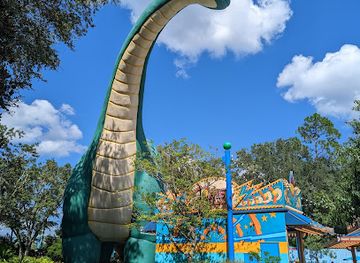
The Treasure Coast’s defining landmarks are closely linked to water, maritime history and the region’s surviving natural landscapes. The Indian River Lagoon is the central geographical landmark, a long estuarine waterway whose mangroves, islands and broad reaches shape communities from Sebastian to Stuart. Fort Pierce Inlet and the adjacent waterfront express the city’s relationship with fishing, shipping and naval history, while the National Navy UDT-SEAL Museum gives the area a distinctive twentieth-century military reference point. The House of Refuge south of Stuart, a historic coastal lifesaving station, represents the hazards once faced by mariners along Florida’s isolated shore. The 1715 Spanish fleet wreck zone is an offshore historical landscape rather than a single monument, linking beaches and museums to the origin of the Treasure Coast name. St Lucie Inlet, oceanfront dunes and the preserved wetlands of Savannas Preserve State Park provide equally important natural markers. Historic commercial streets and civic buildings in Stuart, Fort Pierce and Vero Beach complete a landmark group that is modest in scale but strongly connected to place.
-
Tourist attraction
Jetty Park
Discover Jetty Park in Fort Pierce, a beautiful blend of beach, park, and community hub, perfect for your next coastal getaway.
-
Historical landmark
Jupiter Inlet Lighthouse & Museum
Explore maritime history and breathtaking views at the Jupiter Inlet Lighthouse & Museum, a landmark offering a glimpse into Florida's past.
-
Tourist attraction
The National Navy UDT-SEAL Museum
Delve into the rich history and valor of Navy SEALs at The National Navy UDT-SEAL Museum, a premier destination for military history enthusiasts.
-
Park
Sandsprit Park
Explore the serene beauty of Sandsprit Park in Stuart, Florida—where nature meets adventure along the picturesque St. Lucie River.


Explore Treasure Coast on the map
Plan your trip on one map. See where the top cities, national parks and sights are, and book hotels and experiences in a few clicks.
Best hotels in Treasure Coast
Best restaurants in Treasure Coast
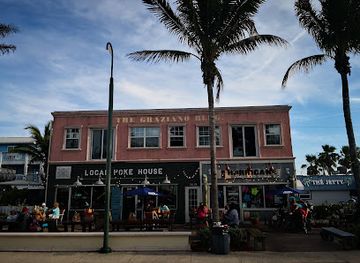
Dining on the Treasure Coast reflects its Atlantic setting, Indian River Lagoon waterways and agricultural hinterland. Seafood is prominent, with fish, shellfish, oysters and casual dockside cooking appearing alongside burgers, sandwiches and other American coastal fare. Indian River citrus, local vegetables and tropical fruit contribute to markets, cafés and seasonal menus, while farm stands and producers provide a direct link to the region’s agricultural history. Vero Beach, Fort Pierce and Stuart have the broadest selection of independent restaurants, cafés, bakeries and more contemporary dining rooms; Port St Lucie offers a wide suburban restaurant mix, and smaller waterfront communities tend towards relaxed seafood restaurants, grills and pubs. Traditional Florida ingredients are often served with influences from the wider American South, the Caribbean and Latin America rather than as a single formal regional cuisine. Farmers’ markets and seafood markets are useful places to understand local produce, but availability varies by season and weather.
-
Seafood
Kyle G's Prime Seafood & Steaks
Experience exquisite seafood and premium steaks at Kyle G's Prime Seafood & Steaks on Hutchinson Island - where flavor meets ocean views.
-
Grill
Ricky T's Bar & Grille
Experience delicious seafood and vibrant atmosphere at Ricky T's Bar & Grille on Treasure Island.
-
American
Sloppy Joe's on the Beach
Discover beachside dining at Sloppy Joe's on the Beach - enjoy American classics with stunning Gulf views in Treasure Island.
-
Seafood
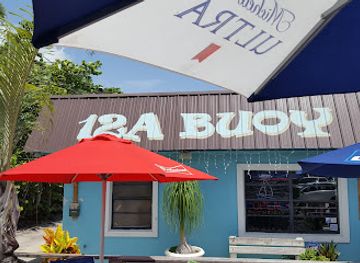
12A Buoy
Discover culinary delights at 12A Buoy in Fort Pierce, where fresh seafood meets stunning waterfront views.


Best bars in Treasure Coast
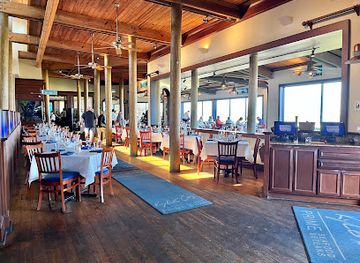
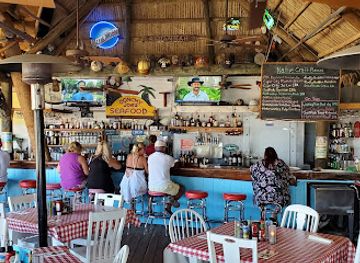
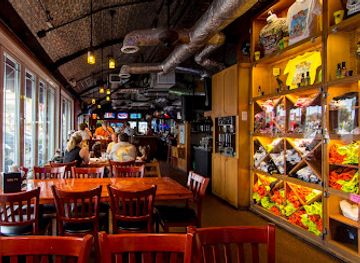
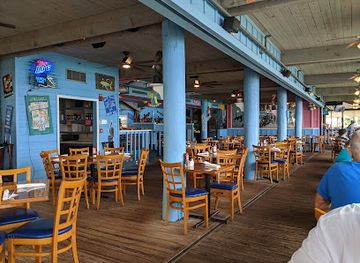
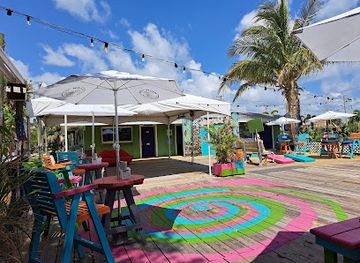
Evenings on the Treasure Coast are generally centred on restaurants, traditional pubs, breweries, wine bars, live music and waterfront gatherings rather than a concentrated nightclub circuit. Historic downtowns in Stuart, Fort Pierce and Vero Beach provide the greatest choice for an evening on foot, with Port St Lucie offering additional bars and entertainment in a more dispersed setting. Fort Pierce’s waterfront has a strong maritime atmosphere, while Stuart’s riverfront and independent commercial streets support restaurants and occasional live performances. Sebastian is suited to relaxed bars, seafood venues and music associated with its coastal and fishing culture. Some venues attract seasonal visitors, so programmes and opening arrangements change. A car or taxi may be necessary when moving between suburban or waterfront locations, and responsible drinking is particularly important when travelling on roads or using boats.
-
Seafood
Conchy Joe's Seafood
Discover the vibrant flavors of the sea at Conchy Joe's Seafood, a lively restaurant offering fresh seafood, live music, and breathtaking river views.
-
Grill
Ricky T's Bar & Grille
Discover the vibrant flavors and lively atmosphere at Ricky T's Bar & Grille in Treasure Island, where every meal is a beachside celebration.
-
Grill
Manatee Island Fort Pierce
Discover the flavors of Florida at Manatee Island Grill, a waterfront gem in Fort Pierce offering fresh seafood and a vibrant dining atmosphere.
-
American
Archie's Seabreeze
Discover Archie's Seabreeze in Fort Pierce: a lively American restaurant offering delicious food, live music, and stunning coastal views for an unforgettable experience.
Best nightclubs in Treasure Coast
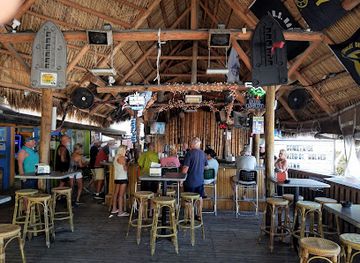
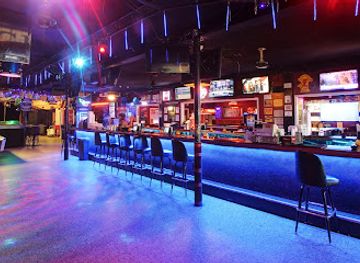
Evenings on the Treasure Coast are generally centred on restaurants, traditional pubs, breweries, wine bars, live music and waterfront gatherings rather than a concentrated nightclub circuit. Historic downtowns in Stuart, Fort Pierce and Vero Beach provide the greatest choice for an evening on foot, with Port St Lucie offering additional bars and entertainment in a more dispersed setting. Fort Pierce’s waterfront has a strong maritime atmosphere, while Stuart’s riverfront and independent commercial streets support restaurants and occasional live performances. Sebastian is suited to relaxed bars, seafood venues and music associated with its coastal and fishing culture. Some venues attract seasonal visitors, so programmes and opening arrangements change. A car or taxi may be necessary when moving between suburban or waterfront locations, and responsible drinking is particularly important when travelling on roads or using boats.
-
Tiki bar
Ka'Tiki
Discover the vibrant tiki bar experience at Ka'Tiki, where delicious food, refreshing drinks, and stunning sunset views await you on Treasure Island.
-
Grill
Charlie's Neighborhood Bar and Grill
Discover the heart of Stuart at Charlie's Neighborhood Bar and Grill - where delicious food meets lively entertainment in a welcoming atmosphere.
-
Bar
Good Night John Boy
Discover the vibrant nightlife at Good Night John Boy, the ultimate bar destination in St. Petersburg's Waterfront Arts District.
-
Bar
CJ's On The Island
Discover the lively atmosphere of CJ's On The Island, a vibrant bar in St. Petersburg, offering great drinks, music, and unforgettable nightlife experiences.


Best shops in Treasure Coast
Shopping is most distinctive in the Treasure Coast’s historic downtowns, waterfront districts, independent galleries and market settings rather than in a single major retail quarter. Stuart is known for walkable independent shops, galleries, antiques, books and locally oriented gifts, while Vero Beach combines boutiques, art galleries, design-led shops and higher-end retail areas with everyday shopping. Fort Pierce’s historic centre and waterfront provide small businesses, craft products, books and food-related purchases, and Sebastian has a relaxed selection of coastal gifts, art and outdoor-oriented retailers. Farmers’ markets and seasonal produce stands are good places to look for Indian River citrus, preserves, baked goods and locally made products, although market schedules change. Practical souvenirs include regional food, marine or botanical artwork, handmade jewellery and crafts rather than generic beach merchandise. Large suburban retail areas and national chains are available around Port St Lucie, but they are primarily useful for everyday needs rather than cultural shopping.
-
Shopping mall
Treasure Coast Square
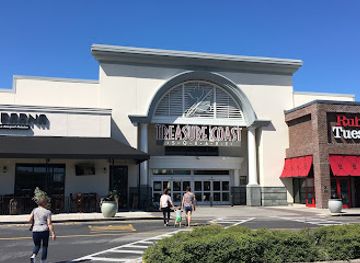
Explore the ultimate shopping experience at Treasure Coast Square, where fashion, dining, and entertainment come together in Jensen Beach, Florida.
-
Shopping mall
The Landing at Tradition
Experience shopping, dining, and entertainment at The Landing at Tradition, Port St. Lucie's premier shopping destination.
-
Shopping mall
Shoppes of Victoria Square
Explore the Shoppes of Victoria Square, a vibrant shopping mall in Port St. Lucie, featuring diverse shops and delicious dining options for everyone.
-
Shopping mall
Treasure Coast Plaza
Experience the best of shopping, dining, and entertainment at Treasure Coast Plaza in Vero Beach, Florida, your premier destination for fun.
Get your free copy of our complete guide to Treasure Coast, delivered straight to you.
Everything on this page, from attractions and restaurants to essentials and local phrases, in one PDF you can read offline, print or share.
Already have an account? Sign in
Your Treasure Coast guide is ready.
We'll send it to · Not you? Sign out

Getting your guide ready…
We are putting together a fresh copy of the Treasure Coast guide. This can take up to a minute.
This can take a few moments. If your browser asks, choose Allow so the download can start. You'll find the guide in your Downloads folder.
Nothing happened? Download it again
Sorry, the guide is taking longer than usual. Please try again in a minute, or get it by email instead.
Treasure Coast essentials
Currency and Payment
Safety
Emergency Situations
Do's and Don'ts
Local Tips
From Eve
Local phrases worth knowing
You don't need to get them perfect. A few words go a long way, and locals appreciate the effort.
Basics
| English | Local | Say it |
|---|---|---|
| Hello | Hey there | [Hay thair] |
| Goodbye | See ya | [See yah] |
| Yes | Yep | [Yep] |
| No | Nah | [Nah] |
| Please/You're welcome | No problem | [No prob-lem] |
| Thank you | Thanks a bunch | [Thangs a bunch] |
| Excuse me/Sorry | Sorry about that | [Sorry about that] |
| How are you? | How ya doin'? | [How ya doin'?] |
| Fine. And you? | Good. And you? | [Good. And you?] |
| Do you speak English? | You speakin' English? | [You speakin' English?] |
| I don't understand | I ain't gettin' it | [I ain't gettin' it] |
Eating & Drinking
| English | Local | Say it |
|---|---|---|
| I'd like to see the menu, please | Can I see the menu? | [Can I see the menu?] |
| I don't eat meat | I don't do meat | [I don't do meat] |
| Cheers! | Cheers! | [Cheers!] |
| I would like to pay, please | Can I get the check? | [Can I get the check?] |
Emergencies
| English | Local | Say it |
|---|---|---|
| Help! | Help! | [Help!] |
| Go away! | Leave me alone! | [Leave me alone!] |
| Call the Police! | Call 911! | [Call 911!] |
| Call a doctor! | Get a doctor! | [Get a doctor!] |
| I'm lost | I'm turned around | [I'm turned around] |
| I'm ill | I'm not feelin' good | [I'm not feelin' good] |
Shopping
| English | Local | Say it |
|---|---|---|
| I'd like to buy... | I wanna buy... | [I wanna buy...] |
| I'm just looking | Just browsin' | [Just browsin'] |
| How much is it? | What's the price? | [What's the price?] |
| That's too expensive | That's way too pricey | [That's way too pricey] |
| Can you lower the price? | Can you give me a better deal? | [Can you give me a better deal?] |
Time & Numbers
| English | Local | Say it |
|---|---|---|
| What time is it? | What's the time? | [What's the time?] |
| It's one o'clock | It's one | [It's one] |
| Half past (10) | Half past ten | [Half past ten] |
| Morning | Mornin' | [Mornin'] |
| Afternoon | Afternoon | [Afternoon] |
| Evening | Evenin' | [Evenin'] |
| Yesterday | Yesterday | [Yesterday] |
| Today | Today | [Today] |
| Tomorrow | Tomorrow | [Tomorrow] |
| 1 | One | [One] |
| 2 | Two | [Two] |
| 3 | Three | [Three] |
| 4 | Four | [Four] |
| 5 | Five | [Five] |
| 6 | Six | [Six] |
| 7 | Seven | [Seven] |
| 8 | Eight | [Eight] |
| 9 | Nine | [Nine] |
| 10 | Ten | [Ten] |
Transport & Directions
| English | Local | Say it |
|---|---|---|
| Where's a/the...? | Where's the...? | [Where's the...?] |
| What's the address? | What's the address? | [What's the address?] |
| Can you show me (on the map)? | Can you point it out on the map? | [Can you point it out on the map?] |
| When's the next (bus)? | When's the next bus? | [When's the next bus?] |
| A ticket (to ....) | A ticket to ... | [A ticket to ...] |
History of Treasure Coast
The Ais and Earlier Coastal Peoples
Before European settlement, the central Atlantic coast of Florida was inhabited by Indigenous peoples including the Ais, whose communities depended on lagoon, river and coastal resources. Their territory extended along the Indian River region, where shell middens and other archaeological evidence reflect long occupation and sophisticated knowledge of the estuarine environment. Disease, violence, displacement and colonial pressures severely reduced Indigenous populations after European contact. The modern landscape consequently contains only fragments of this earlier history, but the waterways that supported these communities remain fundamental to the region’s identity.
The 1715 Spanish Treasure Fleet
In July 1715, a Spanish fleet carrying treasure from the Americas was scattered and wrecked by a hurricane along Florida’s Atlantic coast. The wreck sites lie offshore from the modern Treasure Coast, particularly around the shoreline near Vero Beach, Fort Pierce and the Sebastian area. Survivors established temporary settlements while Spanish authorities attempted recovery, and storms and subsequent salvage operations dispersed artefacts along the coast. The event gave the region its enduring name; occasional discoveries still connect present-day visitors with one of Florida’s most recognisable maritime stories.
Railways, Citrus and Permanent Settlement
The late nineteenth and early twentieth centuries brought more sustained development through improved transport, agriculture and coastal commerce. The Florida East Coast Railway extended access along the Atlantic side of the peninsula, encouraging settlement and linking local producers with wider markets. Citrus groves, particularly around Indian River County, became an important economic presence, while fishing, timber and small-scale farming also shaped local communities. Towns including Vero Beach, Fort Pierce and Stuart developed distinct civic and commercial centres as roads and railways made the coast more accessible.
Fort Pierce and the Second World War
Fort Pierce became an important training centre during the Second World War. The United States Navy established an amphibious training base there in 1943, preparing personnel for difficult landings and coastal operations. The programme was a predecessor of the modern Naval Special Warfare community, and its history is interpreted at the National Navy UDT-SEAL Museum on North Hutchinson Island. Wartime activity brought personnel, infrastructure and national attention to the city, leaving a military legacy that remains an important part of Treasure Coast history.
Post-war Growth and the Port St Lucie Development
After 1945, improved roads, air travel, retirement migration and Florida’s expanding tourism economy accelerated population growth along the coast. Port St Lucie developed from a planned residential community into one of the region’s largest cities, while older places such as Stuart, Fort Pierce and Vero Beach retained more established waterfront and downtown districts. The resulting urban pattern is dispersed rather than concentrated, combining suburban neighbourhoods with agricultural land, wetlands and conservation areas. This mixture explains both the region’s spacious character and the need for practical transport planning.
Conservation of the Indian River Lagoon and Coast
During the late twentieth and early twenty-first centuries, public attention increasingly focused on protecting the Indian River Lagoon, coastal wetlands, beaches and remaining upland habitats. Nutrient pollution, stormwater, altered freshwater flows, habitat loss and changing climate conditions have affected the lagoon’s ecological health. Local governments, state agencies, environmental organisations and research centres now support restoration, monitoring and public education. Conservation is not a finished historical chapter: it is an ongoing regional effort that visitors encounter through nature centres, protected areas, turtle-protection measures and responsible boating guidance.
Treasure Coast in Photos
Browse through our photo collection highlighting the charm and character of the destination.
Neighbouring regions of Treasure Coast
The closest regions to Treasure Coast, if you have time for more than one.
-

-

-
-

-


Swipe for more regions
Explore more

Explore more of Florida
Discover Florida: A Sunshine State full of dazzling beaches, iconic theme parks, rich history, and stunning natural parks, offering endless adventures for every traveler.
Explore Florida