

Free Stuart Travel Guide & Mobile App
Plan your Stuart trip with Evendo. Get free guides to top attractions, restaurants, hotels, and bars. Web access or download the mobile app.


Stuart, Florida blends historic downtown streets, riverfront walks, sailfish heritage, museums, arts and easy access to Treasure Coast beaches.
Riverfront Character
Stuart occupies a graceful bend of Florida’s St Lucie River on the Treasure Coast, where a compact historic centre opens towards waterways, mangrove-fringed shorelines and the Atlantic coast. The city’s identity is closely tied to boating and fishing, particularly sailfish, yet its appeal is broader than its maritime reputation. Brick-paved streets, low-rise buildings, galleries, independent shops and shaded pavements give downtown Stuart a walkable, unhurried character, while the Riverwalk follows the water past public spaces and boat traffic.Read more about Stuart
History and Culture
Coastal Surroundings
When is the best time to visit Stuart?
Best: January–March · 23–25°C| Month | High (°C) | Rainfall (mm) |
|---|---|---|
| January (best) | 23 | 76 |
| February (best) | 24 | 79 |
| March (best) | 25 | 91 |
| April | 27 | 97 |
| May | 29 | 140 |
| June | 30 | 191 |
| July | 31 | 191 |
| August | 31 | 211 |
| September | 30 | 211 |
| October | 28 | 160 |
| November | 26 | 91 |
| December | 23 | 79 |
Getting to and around Stuart
How to get there
Transportation
Best attractions in Stuart
Stuart’s principal attractions are concentrated around its riverfront and historic centre. The Riverwalk follows the St Lucie River through public spaces with views of passing boats, while downtown streets lead to galleries, cafés, local shops and the Lyric Theatre, a restored venue for performances and films. The Elliott Museum presents regional stories through collections connected with automobiles, bicycles, art, technology and local life, making it more than a conventional history museum. The Stuart Heritage Museum offers a smaller, more intimate account of the community’s settlement, agriculture and maritime economy. Sailfish Splash Waterpark provides a family-oriented outdoor attraction within the city, while nearby waterways invite kayaking, paddleboarding and organised boat excursions. Atlantic beaches and other Martin County communities are close enough for a wider coastal outing, but they are separate from Stuart’s central sightseeing district and should be planned as excursions rather than assumed to be downtown attractions.
-
Tourist attraction
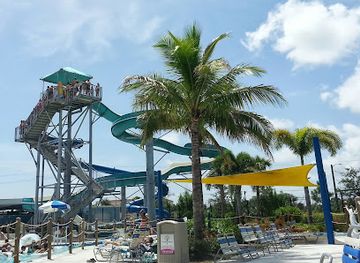
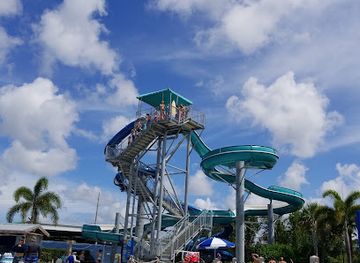
Sailfish Splash Waterpark
Dive into adventure at Sailfish Splash Waterpark, a family-friendly water park in Stuart, Florida, perfect for thrilling slides and lazy river relaxation.
12 min drive · 3.9 km from city centre
-
Association / Organization
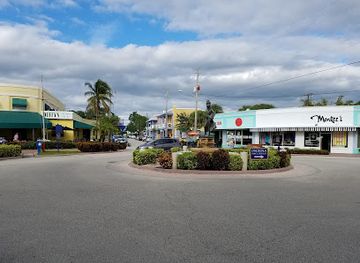
Downtown Stuart
Discover the vibrant culture, waterfront beauty, and culinary delights of Downtown Stuart, a charming destination on Florida's Treasure Coast.
2 min walk · 0.1 km from city centre
-
Tourist attraction
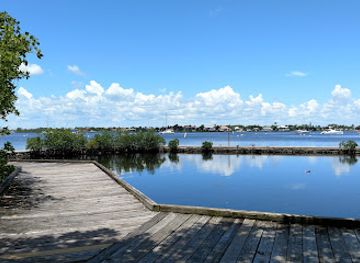
Shepard Park
Discover the natural beauty and recreational charm of Shepard Park, a serene escape in Stuart, Florida, perfect for families and nature lovers alike.
8 min walk · 0.7 km from city centre
-
Tourist attraction
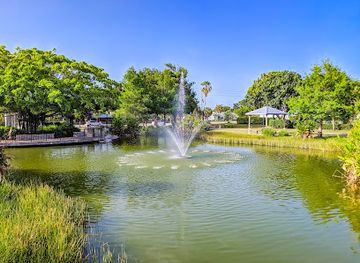
Memorial Park
Discover tranquility and beauty at Memorial Park, a perfect spot for relaxation and outdoor activities in Stuart, Florida.
7 min walk · 0.5 km from city centre
Best landmarks in Stuart
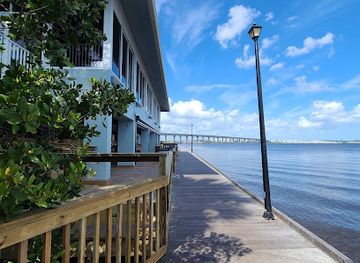
The Riverwalk is Stuart’s defining civic landmark, tracing the edge of the St Lucie River and expressing the city’s enduring relationship with boating, fishing and estuarine commerce. Nearby downtown buildings form a modest historic streetscape shaped largely by the city’s early twentieth-century growth, when rail access and agricultural trade helped establish Stuart as a local centre. The Lyric Theatre is a significant cultural landmark as a restored historic theatre that continues to host public performances. The Stuart Heritage Museum occupies a former commercial building and preserves objects and stories connected with local settlement, farming and maritime life. The Elliott Museum represents a more contemporary architectural presence and interprets the region through transport, technology, art and history. Together, these places show how Stuart’s identity developed through civic life, river commerce, cultural preservation and the practical realities of a coastal Florida town.
-
Seafood
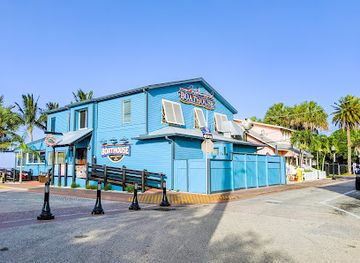
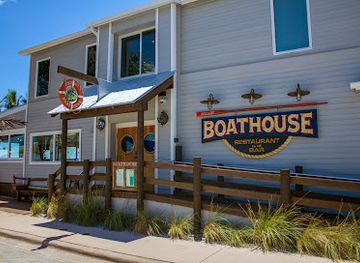
Stuart Boathouse
Discover the best seafood in Stuart, Florida at the waterfront Stuart Boathouse, where fresh flavors meet stunning views in a vibrant atmosphere.
2 min walk · 0.1 km from city centre
-
Water park
Sailfish Splash Waterpark
Sailfish Splash Waterpark in Stuart, Florida offers thrilling slides, family fun, and a perfect escape for all ages in the heart of the Sunshine State.
12 min drive · 3.9 km from city centre
-
Restaurant
Waterfront
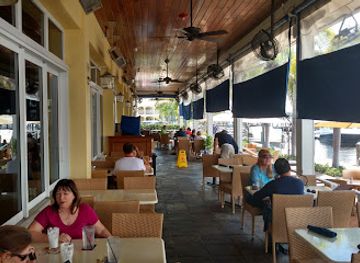
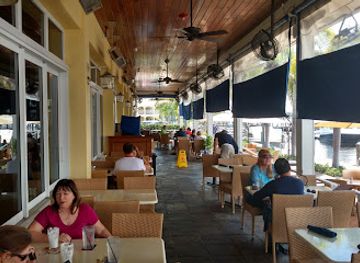
Discover the vibrant dining scene at Waterfront Stuart, where delicious American cuisine meets live music and stunning river views.
3 min walk · 0.3 km from city centre
-
Association / Organization
Downtown Stuart
Discover the charm of Downtown Stuart, a vibrant historic district filled with unique shops, waterfront views, and local dining experiences.
2 min walk · 0.1 km from city centre
Explore Stuart on the map
Plan your Stuart trip on one map. See where the top attractions, landmarks, restaurants, bars and hotels are, find what's near where you're staying, and book hotels and experiences in a few clicks.
Best hotels in Stuart
Best restaurants in Stuart
Stuart’s dining scene reflects its position between the St Lucie River and the Atlantic, with seafood, casual waterfront meals and Florida-influenced cooking prominent across the area. Menus commonly draw on fish, shrimp, oysters and other coastal ingredients, alongside burgers, salads and Southern-influenced comfort food. Historic downtown offers cafés, bakeries, bars and independent restaurants within walking distance of the Riverwalk, while marinas and nearby waterways provide settings associated with boaters and fishing culture. The wider Martin County area adds seafood shacks, relaxed family eateries and restaurant clusters in communities such as Port Salerno and Jensen Beach, each with its own character. Freshness and seasonality vary by establishment, so local catch should be understood as a feature of the region rather than a guarantee on every menu. Tipping follows standard United States practice, with gratuity expected for table service.
-
Grill
Flanigan's Seafood Bar and Grill
Experience the taste of fresh seafood at Flanigan's Seafood Bar and Grill in Stuart, Florida – where family-friendly dining meets coastal flavors.
14 min walk · 1.2 km from city centre
-
Restaurant
Sailor's Return
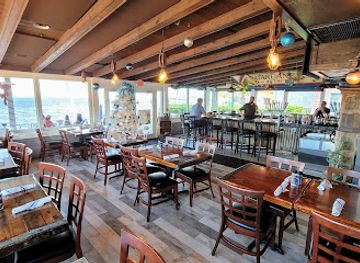
Discover Sailor's Return: Where fresh seafood meets vibrant atmosphere on Florida's beautiful coast.
7 min walk · 0.5 km from city centre
-
Seafood
Stuart Boathouse
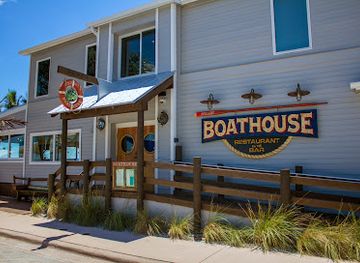
Experience exquisite seafood dining at Stuart Boathouse in Stuart, Florida - where fresh flavors meet stunning waterfront views.
2 min walk · 0.1 km from city centre
-
American
Spritz City Bistro
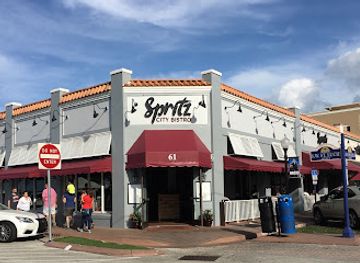
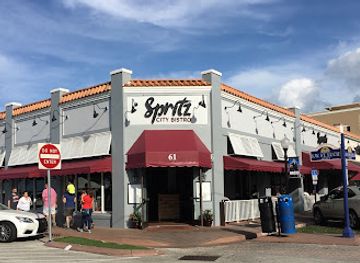
Discover culinary delight at Spritz City Bistro - where American flavors meet gluten-free options in a vibrant atmosphere.
2 min walk · 0.2 km from city centre
Best bars in Stuart
Stuart’s evening scene is more relaxed than club-oriented, centred on downtown bars, riverfront restaurants, live performances and small-scale social venues rather than large nightclubs. The historic centre is the main place to find an evening drink, with establishments ranging from casual bars to venues offering cocktails, beer and live music. The Lyric Theatre provides an important cultural alternative through concerts, films, comedy, theatre and community programming, depending on its schedule. Waterfront dining and marina areas can also be atmospheric after sunset, though the character is generally sociable and low-key rather than late-night. Nearby Port Salerno and Jensen Beach broaden the choice of bars and music venues, but they are separate communities within the wider coastal area. Visitors should check individual programmes and transport arrangements, particularly when returning from outlying venues.
-
Grill
Flanigan's Seafood Bar and Grill
Experience the best of American cuisine and fresh seafood at Flanigan's Seafood Bar and Grill in Stuart, Florida, a local favorite for families and tourists.
14 min walk · 1.2 km from city centre
-
Bar
Sailor's Return
Experience waterfront dining at Sailor's Return, where fresh seafood meets live music in Stuart, Florida.
7 min walk · 0.5 km from city centre
-
Seafood
Stuart Boathouse
Experience the best of seafood dining at Stuart Boathouse, where fresh flavors meet breathtaking waterfront views in beautiful Stuart, Florida.
2 min walk · 0.1 km from city centre
-
American
Spritz City Bistro
Experience the best of American cuisine at Spritz City Bistro, offering gluten-free and vegan delights in a vibrant setting.
2 min walk · 0.2 km from city centre
Best nightclubs in Stuart
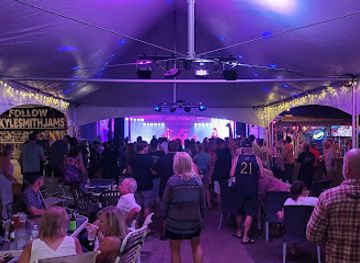
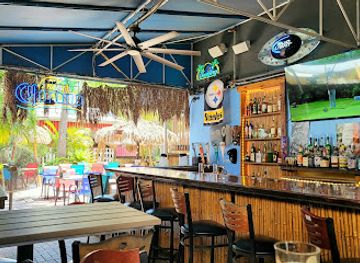
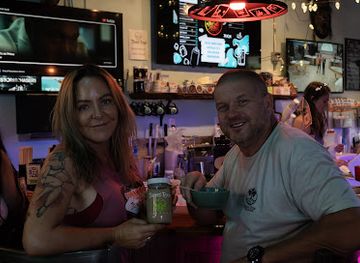
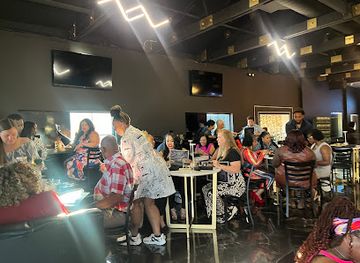
Stuart’s evening scene is more relaxed than club-oriented, centred on downtown bars, riverfront restaurants, live performances and small-scale social venues rather than large nightclubs. The historic centre is the main place to find an evening drink, with establishments ranging from casual bars to venues offering cocktails, beer and live music. The Lyric Theatre provides an important cultural alternative through concerts, films, comedy, theatre and community programming, depending on its schedule. Waterfront dining and marina areas can also be atmospheric after sunset, though the character is generally sociable and low-key rather than late-night. Nearby Port Salerno and Jensen Beach broaden the choice of bars and music venues, but they are separate communities within the wider coastal area. Visitors should check individual programmes and transport arrangements, particularly when returning from outlying venues.
-
Bar
Terra Fermata
Discover Terra Fermata: A lively bar and live music venue in Stuart, FL, where great drinks and vibrant performances await.
7 min walk · 0.6 km from city centre
-
Grill
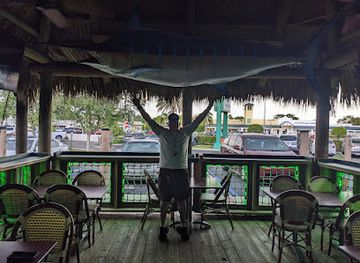
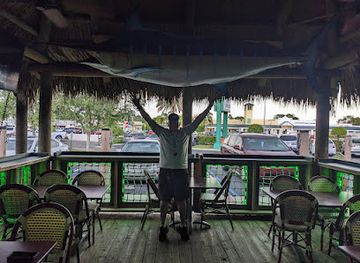
Sneaki Tiki
Experience the vibrant flavors and lively atmosphere at Sneaki Tiki, Stuart's hidden gem for tropical dining and entertainment.
1 min walk · 0.1 km from city centre
-
Lounge
Island Root Kava Bar Stuart
Experience relaxation at Island Root Kava Bar in Stuart, Florida, where the soothing effects of kava meet a vibrant social atmosphere.
7 min walk · 0.6 km from city centre
-
Bar
Lush Lounge
Discover the vibrant nightlife of Stuart, Florida at Lush Lounge, your go-to destination for cocktails, karaoke, and unforgettable fun.
2 min walk · 0.2 km from city centre
Best shops in Stuart
Shopping in Stuart is concentrated most distinctly in the historic downtown, where independent boutiques, galleries, gift shops and locally oriented businesses occupy a walkable streetscape near the Riverwalk. Visitors can browse Florida-themed art, coastal homeware, jewellery, clothing, books and gifts, with galleries providing a stronger sense of place than generic resort retail. The area’s maritime identity also appears in nautical clothing, fishing-related goods and sailfish imagery, while food shops and cafés offer regional products suitable for gifts or informal browsing. Larger everyday retail and chain stores are found along the busier commercial corridors outside the centre, generally requiring a car. Nearby communities such as Jensen Beach and Port Salerno offer additional shopping but should not be confused with Stuart’s downtown district. Prices, opening patterns and individual stock vary, so the local shopping experience is best understood as a mixture of independent town-centre retail and practical suburban commerce.
-
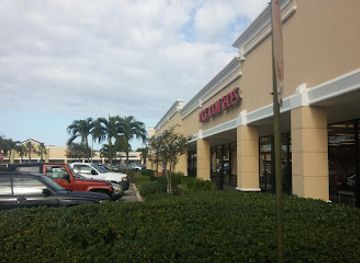
Shopping mall
Stuart Centre
Discover the Stuart Centre, a vibrant shopping mall in Stuart, Florida, offering a diverse range of shops and dining for the perfect day out.
9 min drive · 3.0 km from city centre
-
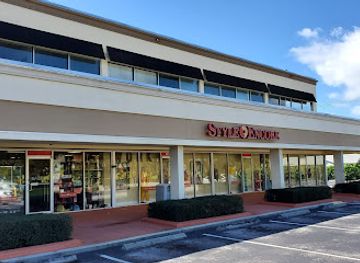
Women's clothing store
Style Encore of Stuart, FL
Explore Style Encore in Stuart, FL for fashionable, affordable women's clothing and accessories, perfect for eco-conscious shoppers and fashion lovers alike.
11 min drive · 3.7 km from city centre
-
Shopping mall
Riverside Shoppes
Explore Riverside Shoppes in Stuart, Florida - a vibrant shopping mall featuring diverse stores and dining options for a perfect shopping experience.
5 min drive · 1.8 km from city centre
-
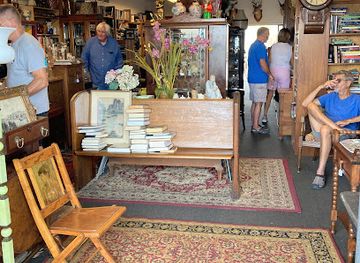
Store
Chuckles Favorite Things
Explore Chuckles Favorite Things in Stuart, Florida - a unique bookstore and antique shop offering a delightful blend of literary treasures and nostalgic finds.
12 min drive · 4.1 km from city centre
Get your free copy of our complete guide to Stuart, delivered straight to you.
Everything on this page, from attractions and restaurants to essentials and local phrases, in one PDF you can read offline, print or share.
Already have an account? Sign in
Your Stuart guide is ready.
We'll send it to · Not you? Sign out

Getting your guide ready…
We are putting together a fresh copy of the Stuart guide. This can take up to a minute.
This can take a few moments. If your browser asks, choose Allow so the download can start. You'll find the guide in your Downloads folder.
Nothing happened? Download it again
Sorry, the guide is taking longer than usual. Please try again in a minute, or get it by email instead.
Stuart essentials
Currency and Payment
Safety
Emergency Situations
Do's and Don'ts
Local Tips
From Eve
Local phrases worth knowing
You don't need to get them perfect. A few words go a long way, and locals appreciate the effort.
Basics
| English | Local | Say it |
|---|---|---|
| Hello | Hey | [hey] |
| Goodbye | See ya | [see ya] |
| Yes | Yeah | [yeah] |
| No | Nah | [nah] |
| Please/You're welcome | Please/No problem | [please/no problem] |
| Thank you | Thanks | [thanks] |
| Excuse me/Sorry | Excuse me/My bad | [excuse me/my bad] |
| How are you? | How ya doin'? | [how ya doin'] |
| Fine. And you? | Good. How 'bout you? | [good. how 'bout you?] |
| Do you speak English? | Ya speak English? | [ya speak English?] |
| I don't understand | I don't get it | [I don't get it] |
Eating & Drinking
| English | Local | Say it |
|---|---|---|
| I'd like to see the menu, please | Can I check out the menu? | [can I check out the menu?] |
| I don't eat meat | I'm vegetarian | [I'm vegetarian] |
| Cheers! | Cheers! | [cheers!] |
| I would like to pay, please | I'll take the check, please | [I'll take the check, please] |
Emergencies
| English | Local | Say it |
|---|---|---|
| Help! | Help! | [help!] |
| Go away! | Get lost! | [get lost!] |
| Call the Police! | Call the cops! | [call the cops!] |
| Call a doctor! | Get me a doctor! | [get me a doctor!] |
| I'm lost | I'm lost | [I'm lost] |
| I'm ill | I'm sick | [I'm sick] |
Shopping
| English | Local | Say it |
|---|---|---|
| I'd like to buy... | I wanna buy... | [I wanna buy...] |
| I'm just looking | Just browsing | [just browsing] |
| How much is it? | How much? | [how much?] |
| That's too expensive | That's a bit much | [that's a bit much] |
| Can you lower the price? | Can you give me a deal? | [can you give me a deal?] |
Time & Numbers
| English | Local | Say it |
|---|---|---|
| What time is it? | What time is it? | [what time is it?] |
| It's one o'clock | It's one | [it's one] |
| Half past (10) | Ten-thirty | [ten-thirty] |
| Morning | Morning | [morning] |
| Afternoon | Afternoon | [afternoon] |
| Evening | Evening | [evening] |
| Yesterday | Yesterday | [yesterday] |
| Today | Today | [today] |
| Tomorrow | Tomorrow | [tomorrow] |
| 1 | One | [one] |
| 2 | Two | [two] |
| 3 | Three | [three] |
| 4 | Four | [four] |
| 5 | Five | [five] |
| 6 | Six | [six] |
| 7 | Seven | [seven] |
| 8 | Eight | [eight] |
| 9 | Nine | [nine] |
| 10 | Ten | [ten] |
Transport & Directions
| English | Local | Say it |
|---|---|---|
| Where's a/the...? | Where's the...? | [where's the...?] |
| What's the address? | What's the address? | [what's the address?] |
| Can you show me (on the map)? | Can you show me (on the map)? | [can you show me (on the map)?] |
| When's the next (bus)? | When's the next (bus)? | [when's the next (bus)?] |
| A ticket (to ....) | A ticket (to ....) | [a ticket (to ....)] |
History of Stuart
Indigenous Rivers and Early Settlement
The waterways around present-day Stuart were part of the established homeland and travel network of Indigenous peoples, including the Ais and later the Seminole communities whose lives were linked to Florida’s rivers, wetlands and coastal resources. European-American settlement expanded gradually during the nineteenth century, when the St Lucie River served as a practical route through a sparsely developed landscape. The area’s geography remained decisive: sheltered water encouraged settlement, while access to the Atlantic supported fishing, trade and communication. Much of the early built environment has disappeared, but the city’s continued relationship with the river reflects this long pattern of movement and habitation.
A River Settlement Takes Shape
The settlement that became Stuart grew during the late nineteenth century as families, farmers, traders and maritime workers established themselves along the St Lucie River. Development was encouraged by improved transport and the growing importance of agriculture in South Florida. The community was named for Homer Hine Stuart Jr, a Pennsylvania businessman associated with land interests in the region. The river provided access for small craft and commercial activity, while nearby groves and plantations connected the settlement to the wider economy. Early Stuart was modest in scale, but its location positioned it to benefit from the rapid transformation of Florida’s east coast.
Railway, Agriculture and Incorporation
The arrival of the Florida East Coast Railway in the 1890s linked Stuart more directly with the expanding coastal corridor and markets farther south and north. Rail transport helped move agricultural produce, including citrus and pineapples, and made the settlement more accessible to visitors and investors. River traffic continued alongside the railway, creating an economy that combined farming, fishing, trade and transport. Stuart was incorporated as a municipality in 1914, marking its transition from a small, loosely organised settlement into a defined civic community. The historic centre’s scale and street pattern still carry traces of this early twentieth-century growth.
The Maritime Economy Endures
During the twentieth century, Stuart’s economy developed around the water as much as the land. Commercial fishing, boat building, marine services and recreational boating became enduring parts of local life, while nearby agricultural communities continued to influence the regional economy. The area became particularly associated with sailfish, a connection celebrated in local identity and public art. Seasonal visitors and new residents also increased as Florida’s east coast became easier to reach. This growth brought new roads, housing and businesses, but Stuart retained a smaller-scale civic centre rather than developing into a high-rise resort city.
Preserving a Distinctive Downtown
Late twentieth- and early twenty-first-century Stuart combined growth with renewed interest in preserving its historic core and riverfront. Downtown buildings, cultural venues and public spaces became important anchors for heritage interpretation, arts programming and independent commerce. The Stuart Heritage Museum records the community’s agricultural, maritime and civic past, while the Elliott Museum presents regional history through transport, technology, art and local collections. The Lyric Theatre, a restored historic venue, reinforces the centre’s cultural role. Today, Stuart’s identity rests on the coexistence of a working coastal landscape, a preserved small-city centre and a visitor economy shaped by waterways and the arts.
Stuart in Photos
Browse through our photo collection highlighting the charm and character of the destination.
Cities near Stuart
The closest cities to Stuart, if you have time for more than one stop.
-

-

-

-

-


Swipe for more cities
Explore more

Explore more of Florida
Discover Florida: A Sunshine State full of dazzling beaches, iconic theme parks, rich history, and stunning natural parks, offering endless adventures for every traveler.
Explore Florida