

Saint-Leu (Amiens) Travel Guide - Free
Explore Saint-Leu in Amiens with Evendo's free guide. Find the best shops, historic streets, restaurants, and gems on web or mobile.


Saint-Leu in Amiens pairs canals, medieval streets, riverside cafés, student energy and easy access to the cathedral and the hortillonnages gardens nearby.
A Waterside Quarter in Central Amiens
Saint-Leu occupies the low-lying area immediately north of Amiens Cathedral, where the Somme and its branching channels have shaped streets, buildings and local life for centuries. Its historic core is compact: the church of Saint-Leu, rue Saint-Leu, place du Don and the quays around the water can be explored comfortably on foot. Narrow lanes, coloured façades, small bridges and former workshops give the quarter a character distinct from the grander civic centre nearby.Read more about Saint-Leu
From Working District to Student Quarter
Streets, Water and Local Culture
Explore Saint-Leu on the map
A handpicked selection of must-see spots in Saint-Leu, mapped for you.
Best hotels in Saint-Leu
Saint-Leu essentials
Getting There
Getting Around
Safety
Emergency Situations
Do's and Don'ts
Local Tips

From Eve
Local phrases worth knowing
You don't need to get them perfect. A few words go a long way, and locals appreciate the effort.
Basics
| English | Local | Say it |
|---|---|---|
| Hello | Bonjour | [bon-zhoor] |
| Goodbye | Au revoir | [oh ruh-vwahr] |
| Yes | Oui | [wee] |
| No | Non | [nohn] |
| Please/You're welcome | S'il vous plaît | [seel voo pleh] |
| Thank you | Merci | [mehr-see] |
| Excuse me/Sorry | Excusez-moi | [ex-kew-zay mwa] |
| How are you? | Comment ça va? | [koh-mohn sah vah] |
| Fine. And you? | Bien. Et toi? | [byahn. ay twah] |
| Do you speak English? | Parlez-vous anglais? | [par-lay voo ahn-glay] |
| I don't understand | Je ne comprends pas | [zhuh nuh kohm-prahnd pah] |
Eating & Drinking
| English | Local | Say it |
|---|---|---|
| I'd like to see the menu, please | Je voudrais voir la carte, s'il vous plaît | [zhuh voo-dray vwahr lah kart, seel voo pleh] |
| I don't eat meat | Je ne mange pas de viande | [zhuh nuh mahng pah duh vyand] |
| Cheers! | Santé! | [sahn-tay] |
| I would like to pay, please | Je voudrais payer, s'il vous plaît | [zhuh voo-dray pay-ay, seel voo pleh] |
Emergencies
| English | Local | Say it |
|---|---|---|
| Help! | Au secours! | [oh suh-kour] |
| Go away! | Allez-vous en! | [ah-lay vooz ahn] |
| Call the Police! | Appelez la police! | [ah-pay-lay lah poh-lees] |
| Call a doctor! | Appelez un médecin! | [ah-pay-lay uh may-day-sahn] |
| I'm lost | Je suis perdu | [zhuh swee pair-doo] |
| I'm ill | Je suis malade | [zhuh swee mah-lahd] |
Shopping
| English | Local | Say it |
|---|---|---|
| I'd like to buy... | Je voudrais acheter... | [zhuh voo-dray zah-shay...] |
| I'm just looking | Je regarde juste | [zhuh ruh-gard zhust] |
| How much is it? | Combien ça coûte? | [kohm-byen sah koot] |
| That's too expensive | C'est trop cher | [say troh shair] |
| Can you lower the price? | Pouvez-vous baisser le prix? | [poo-veh voo beh-say luh pree] |
Time & Numbers
| English | Local | Say it |
|---|---|---|
| What time is it? | Quelle heure est-il? | [kehl er ay-til] |
| It's one o'clock | Il est une heure | [eel ay oon er] |
| Half past (10) | Dix heures et demie | [dees er ay duh-mee] |
| Morning | Matin | [mah-tahn] |
| Afternoon | Après-midi | [ah-pray mee-dee] |
| Evening | Soir | [swahr] |
| Yesterday | Hier | [ee-air] |
| Today | Aujourd'hui | [oh-zhoor-dwee] |
| Tomorrow | Demain | [duh-man] |
| 1 | Un | [uhn] |
| 2 | Deux | [duh] |
| 3 | Trois | [twah] |
| 4 | Quatre | [kah-truh] |
| 5 | Cinq | [sank] |
| 6 | Six | [sees] |
| 7 | Sept | [sept] |
| 8 | Huit | [weet] |
| 9 | Neuf | [nuf] |
| 10 | Dix | [dees] |
Transport & Directions
| English | Local | Say it |
|---|---|---|
| Where's a/the...? | Où est... | [oo ay...] |
| What's the address? | Quelle est l'adresse? | [kehl ay lah-dress] |
| Can you show me (on the map)? | Pouvez-vous me montrer (sur la carte)? | [poo-veh voo muh mohn-tray (surr lah kart)] |
| When's the next (bus)? | Quand est le prochain (bus)? | [kahn ay luh proh-shahn (bus)] |
| A ticket (to ....) | Un billet (pour ...) | [uhn bee-yay (poor)] |
History of Saint-Leu
A Quarter Shaped by Water
Saint-Leu grew in the lowlands north of the historic centre, where channels of the Somme created both practical transport routes and sources of power. In medieval Amiens, proximity to water encouraged mills and craft activity, particularly work connected with textiles and other trades needing reliable supplies or washing facilities. The neighbourhood's name is associated with the parish dedicated to Saint Leu, and the church became a local landmark within a district otherwise formed by small homes, workshops and narrow streets rather than monumental civic planning. The waterways were central to the quarter's economy and helped give it a more industrious, working character than the cathedral precinct nearby.
Mills, Crafts and Working Homes
For centuries, Saint-Leu combined modest housing with the workshops and businesses that supported Amiens's commercial life. Mills stood among the channels, while textile-related crafts, tanning and other water-dependent activities contributed to the district's identity. Buildings were adapted repeatedly as trades changed, leaving a mixed townscape of older masonry, timber-framed elements and later façades. The narrow streets and bridges were not designed as a picturesque visitor environment; they were functional connections between homes, workshops, churches and the river. This practical inheritance still explains why the quarter feels closely tied to the Somme rather than arranged around a single ceremonial square.
Industrial Change and Urban Decline
The industrial transformation of Amiens altered Saint-Leu's traditional economy. Mechanised production and shifts in manufacturing reduced the importance of small water-powered workshops, while changes to transport and urban infrastructure weakened the role of the canals in everyday trade. Some buildings lost their original uses, and the district acquired a more modest, sometimes neglected reputation than the cathedral area to the south. The waterways nevertheless remained a defining physical feature, and the church, street pattern and surviving houses preserved evidence of the quarter's earlier life even as its economic foundations changed.
Cultural Renewal beside the Canals
During the later twentieth century and into the present, Saint-Leu became increasingly associated with cultural activity, hospitality and student life. Renovation around the quays and historic streets encouraged cafés, restaurants and creative uses without erasing the area's residential fabric. Theatre and puppetry remain visible through institutions and traditions linked to Amiens, including the local Chés Cabotans heritage. The result is a quarter whose identity joins old waterways and working-class architecture with contemporary university and evening life. Its regeneration has made Saint-Leu more prominent to visitors, while the surviving everyday streets continue to distinguish it from a purely restored historic centre.
Saint-Leu in Photos
Browse through our photo collection highlighting the charm and character of the destination.
Neighbourhoods near Saint-Leu
The closest neighbourhoods to Saint-Leu, if you have time for more than one stop.
-

-


Swipe for more neighbourhoods
Explore more
Explore more of Amiens
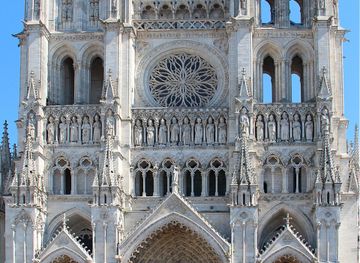
Amiens combines a magnificent Gothic cathedral, floating gardens, Jules Verne heritage and riverside culture for memorable northern France sightseeing.
Explore Amiens