

Free Normandy Travel Guide & Mobile App
Explore Normandy with free travel guides. Discover regional history, expert tips, proposed trips, and audio guides on web or mobile app.


Explore Normandy for medieval towns, Impressionist gardens, Atlantic coastlines, D-Day history, cider, seafood and distinctive regional cuisine.
Read more about Normandy
When is the best time to visit Normandy?
Best: June–August · 21–23°C| Month | High (°C) | Rainfall (mm) |
|---|---|---|
| January | 8 | 55 |
| February | 9 | 50 |
| March | 12 | 50 |
| April | 15 | 45 |
| May | 18 | 55 |
| June (best) | 21 | 45 |
| July (best) | 23 | 35 |
| August (best) | 23 | 40 |
| September | 20 | 45 |
| October | 16 | 50 |
| November | 11 | 60 |
| December | 9 | 65 |
Getting to and around Normandy
How to get there
Transportation
Top city travel guides in Normandy
The cities of Normandy, and the easiest places to base yourself.
-
-

-

-

-

-


Swipe for more cities
Destinations in Normandy
Resorts, valleys and scenic spots worth a trip of their own.
-
-

-

-


Swipe for more destinations
Best attractions in Normandy
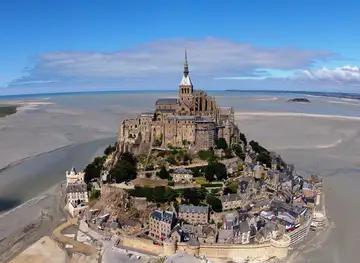
Normandy’s attractions range from major historic centres to open landscapes shaped by farming, tides and war. Rouen offers a cathedral, medieval streets, museums and river heritage, while Caen combines the Abbaye aux Hommes and Abbaye aux Dames with museums covering the twentieth century. Bayeux is an important base for the Bayeux Tapestry and the D-Day coast, whose museums, batteries, memorials and cemeteries extend across the Calvados and Manche shores. Mont-Saint-Michel and its abbey provide a dramatic architectural and tidal experience, while the Cotentin Peninsula brings dunes, marshes, harbours and long-distance coastal walking. In the east, Giverny presents Monet’s house and garden, and Le Havre introduces a modernist city centre rebuilt after wartime destruction. Castles, abbeys, manor houses and gardens appear throughout the countryside, particularly around the Seine and the Pays d’Auge. The region also supports cycling, horse riding, sailing, beach walking and visits to working food-producing landscapes, making its appeal as much about movement through varied terrain as about individual monuments.
-
War museum
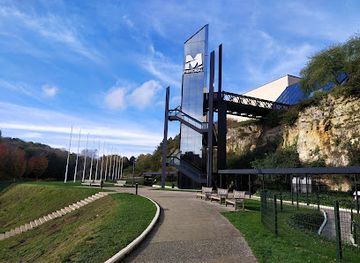
Mémorial de Caen
Explore the Mémorial de Caen, a profound war museum dedicated to World War II history and the spirit of peace.
-
Scenic spot
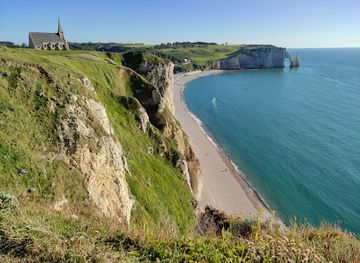
Falaise d'Aval
Explore the breathtaking Falaise d'Aval in Étretat, a stunning scenic spot featuring iconic chalk cliffs, nature trails, and breathtaking coastal views.
-
War museum
Overlord Museum
Visit the Overlord Museum in Colleville-sur-Mer for an insightful journey into the history of D-Day and WWII, showcasing remarkable artifacts and exhibits.
-
Historical landmark
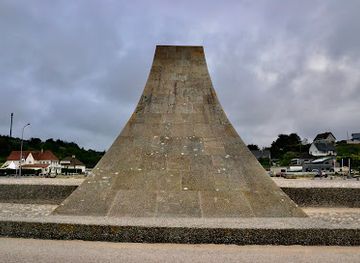
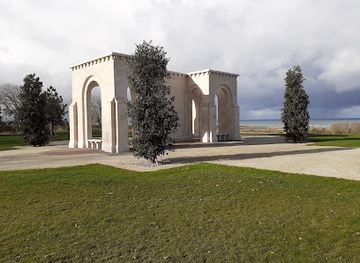
Omaha Beach Memorial
Explore Omaha Beach Memorial, a poignant tribute to D-Day, where history, courage, and sacrifice converge on the shores of Normandy.

Best landmarks in Normandy
Mont-Saint-Michel is Normandy’s most recognisable landmark: a medieval abbey and village rising above tidal surroundings in the Manche department, where the changing waterline is central to the site’s character. Rouen Cathedral dominates the historic centre with its Gothic façade and association with Monet’s series of paintings, while the city’s Gros-Horloge marks a medieval gateway and clock mechanism within the old streets. Caen’s Abbaye aux Hommes and Abbaye aux Dames express the political and religious importance of William the Conqueror’s Normandy. On the coast, the white chalk cliffs around Étretat form one of the region’s defining natural images, with arches and needle-like rock formations shaped by erosion. Le Havre’s rebuilt centre, constructed under Auguste Perret after the war, demonstrates a very different architectural vision and has UNESCO World Heritage status. The D-Day beaches, including Omaha and Juno, are landmarks of modern history as well as coastal places, marked by memorials, cemeteries and surviving wartime structures.
-
Historical landmark
Omaha Beach Memorial
Discover the solemn beauty and rich history of the Omaha Beach Memorial, a key site honoring the bravery of D-Day soldiers in Normandy, France.
-
History museum
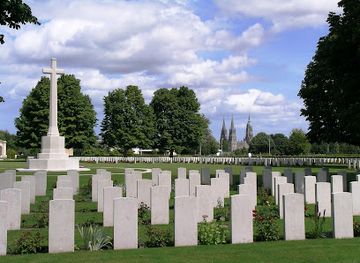
Museum of the Battle of Normandy
Explore the Museum of the Battle of Normandy and uncover the compelling stories behind D-Day and its impact on history.
-
Abbey
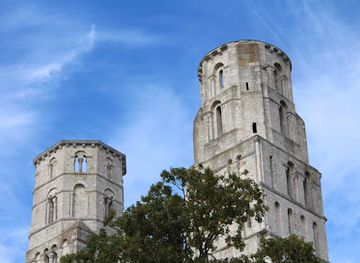
Abbaye de Jumièges
Explore the breathtaking ruins of Abbaye de Jumièges, a historical landmark steeped in rich monastic heritage and stunning Gothic architecture.
-
Memorial
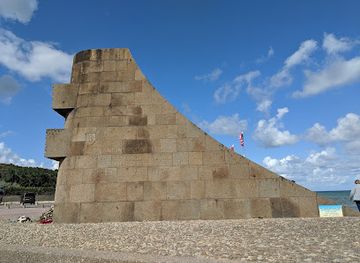
British Normandy Memorial
Explore the British Normandy Memorial, a poignant tribute to the heroes of D-Day, and reflect on the sacrifices made for freedom in World War II.
Explore Normandy on the map
Plan your trip on one map. See where the top cities, national parks and sights are, and book hotels and experiences in a few clicks.
Best hotels in Normandy
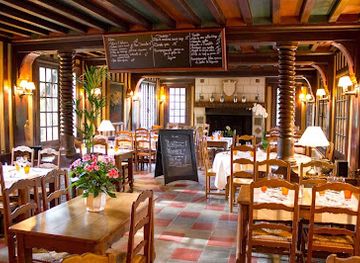
Best restaurants in Normandy
Normandy’s cuisine reflects its orchards, pasture, rivers and long coastline. Seafood and shellfish are central in coastal towns, with oysters, mussels, scallops and locally landed fish appearing in restaurants and markets. Inland, the region is known for cow’s-milk cheeses including Camembert, Livarot, Pont-l’Évêque and Neufchâtel, as well as cream, butter and dishes prepared with apples. Cider is the most characteristic local drink, while pommeau combines apple juice and Calvados; the latter is an apple brandy traditionally associated with Normandy. Menus range from crêperies and bakeries to village auberges, seafood restaurants, modern dining rooms and refined establishments in larger towns. The Pays d’Auge is especially rewarding for orchard scenery and dairy produce, while port towns offer a stronger maritime emphasis. Farmers’ markets and food halls provide a useful introduction to regional ingredients, and a Normandy breakfast often includes bread, butter, jam, cheese or pastries alongside coffee or tea.
-
Seafood
Marché aux Poissons
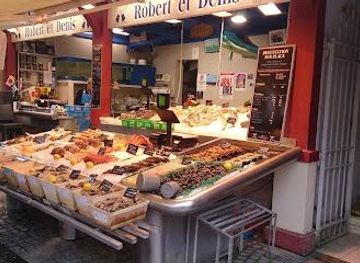
Historic Norman fish market where nine fishmongers sell fresh daily catch on the quays since 1936.
-
French
Restaurant L'Omaha
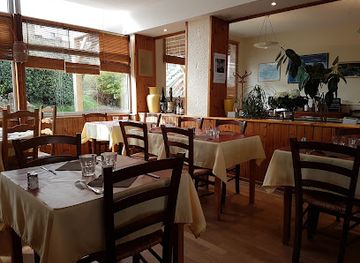
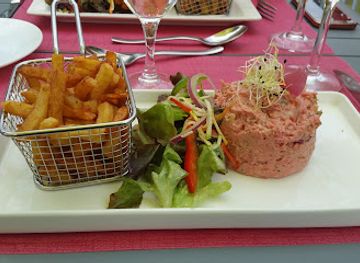
Savor authentic French cuisine at Restaurant L'Omaha in Saint-Laurent-sur-Mer, where every meal is an exquisite culinary journey.
-
Restaurant
Côté Terre Et Mer
Experience the exquisite blend of land and sea at Côté Terre Et Mer in Évreux – a must-visit culinary destination.
-
French
Restaurant Le Pot d'Étain
Experience authentic French cuisine at Restaurant Le Pot d'Étain in Manerbe—where tradition meets taste in a charming setting.
Best bars in Normandy
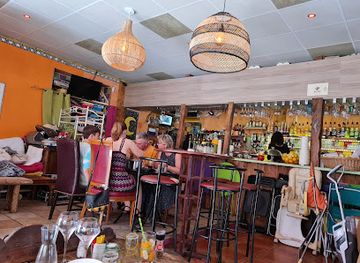
Normandy’s evening life is varied but generally more suited to conversation, dining and live performance than to a large club circuit. Traditional cafés, hotel bars and village bistros remain important meeting places, while cider producers and contemporary bars offer opportunities to explore local drinks in a relaxed setting. Rouen and Caen have the broadest choice, with student-oriented bars, cocktail venues, live music and late-night restaurants concentrated around their central streets. Le Havre adds bars connected with its port-city and cultural scene, and the seaside resorts attract a more seasonal evening crowd. Bayeux, Dieppe, Granville and Cherbourg-en-Cotentin offer smaller selections of pubs, wine bars and restaurants, with activity often increasing in summer. Rural Normandy becomes quiet earlier, although historic inns and village cafés can provide atmospheric evenings. Check local arrangements before travelling, since opening patterns and seasonal programming vary considerably.
-
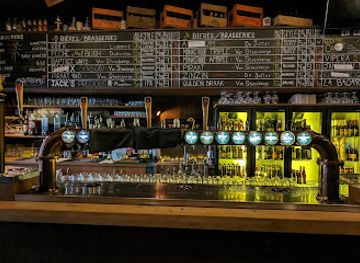
Beer hall
Le Trappist
Discover Le Trappist in Caen, a vibrant beer hall offering an extensive selection of craft brews and a welcoming atmosphere for all beer lovers.
-
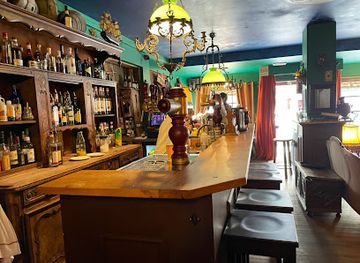
Pub
Moon & Sons
Experience the vibrant atmosphere and exquisite flavors at Moon & Sons, the go-to pub in Caen for drinks and delightful desserts.
-
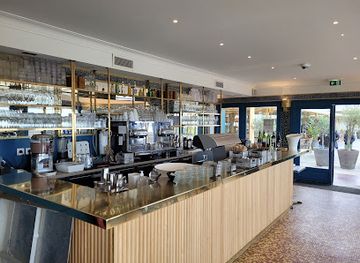
French
Le Bar du Soleil
Experience the elegance of French cuisine at Le Bar du Soleil, where every meal is enhanced by stunning coastal views and a vibrant atmosphere.
-
Bar
Hurricane Bar
Discover Hurricane Bar in Villers-sur-Mer, where cocktails, coffee, and chocolate create the ultimate indulgent experience in a vibrant coastal setting.
Best nightclubs in Normandy
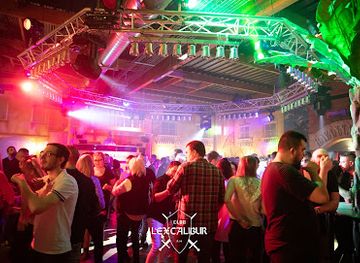
Normandy’s evening life is varied but generally more suited to conversation, dining and live performance than to a large club circuit. Traditional cafés, hotel bars and village bistros remain important meeting places, while cider producers and contemporary bars offer opportunities to explore local drinks in a relaxed setting. Rouen and Caen have the broadest choice, with student-oriented bars, cocktail venues, live music and late-night restaurants concentrated around their central streets. Le Havre adds bars connected with its port-city and cultural scene, and the seaside resorts attract a more seasonal evening crowd. Bayeux, Dieppe, Granville and Cherbourg-en-Cotentin offer smaller selections of pubs, wine bars and restaurants, with activity often increasing in summer. Rural Normandy becomes quiet earlier, although historic inns and village cafés can provide atmospheric evenings. Check local arrangements before travelling, since opening patterns and seasonal programming vary considerably.
-
Disco club
Night Club L'Excalibur
Dive into the vibrant nightlife experience at L'Excalibur Night Club in Grémonville, where dancing, music, and fun await until dawn.
-
Night club
Le BOHO Club
Discover the electrifying nightlife at Le BOHO Club in Rouen, where music, dance, and energy come alive every night.
-
Night club
Le Club Deauville
Discover the electrifying nightlife at Le Club Deauville, where vibrant music and a lively atmosphere await every night.
-
Night club
XXL Discothèque
Dive into the vibrant nightlife of Rouen at XXL Discothèque, where music, dancing, and unforgettable nights await.


Best shops in Normandy
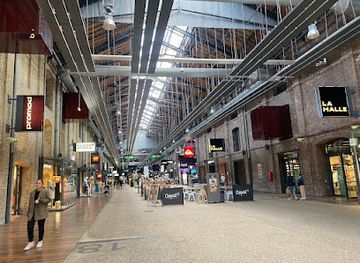
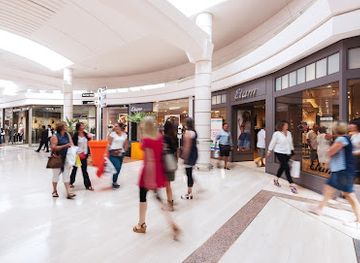
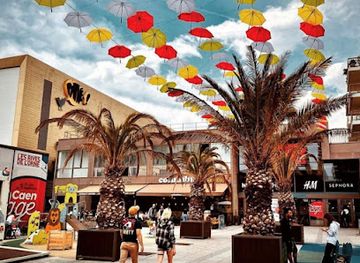
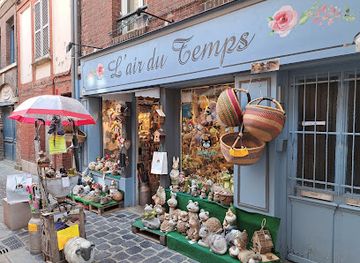
Shopping in Normandy is strongest in historic town centres, market towns and coastal ports rather than in a single regional retail district. Rouen offers department stores, independent boutiques, bookshops and food shops around its central streets, while Caen and Le Havre provide broader high-street and contemporary retail choices. Bayeux, Honfleur and the seaside towns are useful for galleries, crafts, homeware and locally themed gifts, though stock and opening patterns vary seasonally. Markets are particularly good for cheeses, butter, seafood, apples, cider, Calvados and regional preserves. Specialist food shops provide practical souvenirs, while ceramics, textiles, prints and work by local artists offer alternatives to mass-produced memorabilia. Visitors should distinguish genuinely regional products from generic French souvenirs: cider, pommeau, Calvados and Normandy cheeses have a stronger local connection than many nationally marketed goods. Smaller villages may close shops at midday or outside peak periods, so market mornings and town-centre visits are usually the most reliable shopping opportunities.
-
Shopping mall
Docks Vauban
Experience the vibrant shopping scene at Docks Vauban, Le Havre's premier shopping mall with stunning waterfront views and diverse retail options.
-
Shopping mall
Mondeville 2
Experience the best of shopping and dining at Mondeville 2, a premier mall in Normandy offering endless choices for tourists and locals.
-
Shopping mall
Les Rives de l'Orne
Discover a vibrant shopping and dining experience at Les Rives de l'Orne in Caen, boasting fashion boutiques, gourmet restaurants, and family-friendly activities.
-
Shopping mall
HONFLEUR NORMANDY OUTLET
Discover unique shopping experiences at Honfleur Normandy Outlet, surrounded by the beauty of Normandy's historic coastal town.
Get your free copy of our complete guide to Normandy, delivered straight to you.
Everything on this page, from attractions and restaurants to essentials and local phrases, in one PDF you can read offline, print or share.
Already have an account? Sign in
Your Normandy guide is ready.
We'll send it to · Not you? Sign out

Getting your guide ready…
We are putting together a fresh copy of the Normandy guide. This can take up to a minute.
This can take a few moments. If your browser asks, choose Allow so the download can start. You'll find the guide in your Downloads folder.
Nothing happened? Download it again
Sorry, the guide is taking longer than usual. Please try again in a minute, or get it by email instead.
Normandy essentials
Currency and Payment
Safety
Emergency Situations
Do's and Don'ts
Local Tips
From Eve
Local phrases worth knowing
You don't need to get them perfect. A few words go a long way, and locals appreciate the effort.
Basics
| English | Local | Say it |
|---|---|---|
| Hello | Salut | [sah-loo] |
| Goodbye | Au revoir | [oh ruh-vwahr] |
| Yes | Oui | [wee] |
| No | Non | [noh] |
| Please/You're welcome | S'il vous plaît | [seel voo pleh] |
| Thank you | Merci | [mehr-see] |
| Excuse me/Sorry | Excusez-moi | [ex-kew-zay mwah] |
| How are you? | Comment ça va? | [koh-mohn sah vah] |
| Fine. And you? | Bien. Et vous? | [byehn. eh voo] |
| Do you speak English? | Parlez-vous anglais? | [par-lay voo ahn-glay] |
| I don't understand | Je ne comprends pas | [zhuh nuh kom-prahn pah] |
Eating & Drinking
| English | Local | Say it |
|---|---|---|
| I'd like to see the menu, please | Je voudrais voir le menu, s'il vous plaît | [zhuh voo-dray vwar luh meh-nu, seel voo pleh] |
| I don't eat meat | Je ne mange pas de viande | [zhuh nuh mahnj pah duh vyahnd] |
| Cheers! | Santé! | [sahn-tay] |
| I would like to pay, please | Je voudrais payer, s'il vous plaît | [zhuh voo-dray pay-ay, seel voo pleh] |
Emergencies
| English | Local | Say it |
|---|---|---|
| Help! | Au secours! | [oh se-koor] |
| Go away! | Allez-vous-en! | [ah-lay voo-zahn] |
| Call the Police! | Appelez la police! | [ah-peh-lay lah poh-leess] |
| Call a doctor! | Appelez un médecin! | [ah-peh-lay uhn meh-deh-seen] |
| I'm lost | Je suis perdu | [zhuh swee pehr-doo] |
| I'm ill | Je suis malade | [zhuh swee mah-lahd] |
Shopping
| English | Local | Say it |
|---|---|---|
| I'd like to buy... | Je voudrais acheter... | [zhuh voo-dray ah-sheh-tay] |
| I'm just looking | Je regarde juste | [zhuh ruh-gard zhoost] |
| How much is it? | C'est combien? | [seh kohm-byen] |
| That's too expensive | C'est trop cher | [seh troh shair] |
| Can you lower the price? | Pouvez-vous baisser le prix? | [poo-vay voo beh-say luh pree] |
Time & Numbers
| English | Local | Say it |
|---|---|---|
| What time is it? | Quelle heure est-il? | [kel uhr eh-teel] |
| It's one o'clock | Il est une heure | [eel eh ewn uhr] |
| Half past (10) | Dix heures et demie | [dees uhr eh duh-mee] |
| Morning | Matin | [mah-tan] |
| Afternoon | Après-midi | [ah-pray mee-dee] |
| Evening | Soir | [swahr] |
| Yesterday | Hier | [ee-ehr] |
| Today | Aujourd'hui | [oh-zhoor-dwee] |
| Tomorrow | Demain | [duh-mahn] |
| 1 | Un | [uhn] |
| 2 | Deux | [duh] |
| 3 | Trois | [trwah] |
| 4 | Quatre | [katr] |
| 5 | Cinq | [sank] |
| 6 | Six | [sees] |
| 7 | Sept | [set] |
| 8 | Huit | [weet] |
| 9 | Neuf | [nuhf] |
| 10 | Dix | [dees] |
Transport & Directions
| English | Local | Say it |
|---|---|---|
| Where's a/the...? | Où est un/une...? | [oo eh uhn/eewn] |
| What's the address? | Quelle est l'adresse? | [kel eh luh-dress] |
| Can you show me (on the map)? | Pouvez-vous me montrer (sur la carte)? | [poo-vay voo muh mohn-tray (sur lah kart)] |
| When's the next (bus)? | Quand est le prochain (bus)? | [kahn eh luh proh-shen (boos)] |
| A ticket (to ....) | Un billet (pour ....) | [uhn bee-yay (poor ....)] |
History of Normandy
Prehistoric and Celtic Settlement
Normandy’s landscape preserves evidence of settlement long before the medieval duchy existed. Neolithic communities built monuments and cultivated the fertile plains, while later Celtic peoples organised the territory into tribal societies. Archaeological remains, including burial sites, enclosures and artefacts, indicate connections with wider networks across northern Gaul. The region’s rivers, estuaries and coastal routes encouraged movement and exchange, while its agricultural potential supported permanent communities. Although much of the visible landscape has been reshaped by later farming and urban growth, these early layers help explain Normandy’s longstanding importance as a bridge between continental France and the Channel.
Roman Gaul and the Growth of Towns
After the Roman conquest of Gaul in the first century BC, the area was incorporated into the Roman administrative and commercial system. Rotomagus, modern Rouen, developed as an important settlement on the Seine, while other towns and roads connected the interior with ports and agricultural districts. Roman influence brought new forms of administration, construction and trade, though local communities remained significant. Fragments of ancient buildings, roads and artefacts survive across Normandy, often beneath later towns. The Roman network established patterns of urban and river-based communication that continued to shape the region long after imperial rule ended.
The Duchy of Normandy, Tenth to Thirteenth Centuries
The duchy emerged in the early tenth century after the French king granted territory around the lower Seine to Scandinavian leader Rollo. His successors consolidated control and gradually expanded Norman authority westwards. Normandy became a powerful duchy with close but often tense relations with the French crown. William, duke of Normandy, conquered England in 1066, creating a cross-Channel political realm whose wealth supported major churches, castles and monasteries in the region. Rouen, Caen and Bayeux flourished, while Norman religious and architectural styles spread across western Europe. The duchy was incorporated into the French kingdom in the thirteenth century.
War, Occupation and Religious Foundations
Normandy’s position between Paris and the Channel made it a recurrent military frontier during the Hundred Years’ War. English and French forces contested towns and fortresses, and Rouen became the place where Joan of Arc was tried and executed in 1431. Earlier and later centuries also saw the growth of influential abbeys, parish churches and fortified estates, many of which shaped settlement and landholding. Monastic centres developed agricultural, intellectual and artistic roles, leaving a particularly dense legacy of Romanesque and Gothic architecture. The region’s historic buildings therefore reflect both religious patronage and the strategic pressures of its geography.
Ports, Agriculture and Industrial Change
From the early modern period onwards, Normandy combined productive agriculture with an increasingly important maritime economy. Rouen handled trade along the Seine, while ports such as Dieppe, Le Havre and Cherbourg supported fishing, commerce, naval activity and transatlantic connections. Rural Normandy became associated with dairy farming, orchards, cider production and distinctive livestock landscapes, particularly in the Pays d’Auge. Industrialisation brought textile production, shipbuilding, engineering and oil-related activity, especially around the Seine estuary and Le Havre. These industries transformed towns and transport networks while leaving a legacy that remains visible in port infrastructure, canals, factories and working waterfronts.
Impressionism and the Normandy Landscape
In the nineteenth century, improved rail connections and the growth of seaside tourism brought artists and visitors to Normandy’s coast, rivers and resorts. The region’s changing light, cliffs, beaches, gardens and urban life became important subjects for painters, including Claude Monet, who lived and worked at Giverny in the Eure department. Impressionism did not create a single regional identity, but it encouraged new ways of seeing Normandy’s atmosphere and everyday landscapes. Giverny’s gardens and the museums of Rouen and Le Havre preserve this artistic legacy, while the coast continues to attract painters, photographers and walkers.
The Second World War and the D-Day Landings
Normandy was occupied by German forces during the Second World War and became the site of the Allied invasion on 6 June 1944. The landings extended along the coast from the Cotentin Peninsula towards the Orne estuary, involving British, American, Canadian and other Allied forces. Fighting continued inland for weeks and caused severe destruction in towns including Caen. The region now contains cemeteries, museums, memorials, batteries and preserved sections of the battlefield. These sites present military events alongside the experiences of civilians, making the D-Day landscape one of France’s most important places of remembrance.
Normandy in Photos
Browse through our photo collection highlighting the charm and character of the destination.
Neighbouring regions of Normandy
The closest regions to Normandy, if you have time for more than one.
-

-

-

-

-


Swipe for more regions
Explore more

Explore more of France
Explore France: A land of romance, history, and unparalleled beauty, from the iconic streets of Paris to the serene landscapes of Provence and the luxury of the French Riviera.
Explore France