

Free Meskheti Travel Guide & Mobile App
Explore Meskheti with free travel guides. Discover regional history, expert tips, proposed trips, and audio guides on web or mobile app.


Explore Meskheti in southern Georgia for medieval fortresses, mountain monasteries, distinctive food and wide Lesser Caucasus landscapes.
Read more about Meskheti
When is the best time to visit Meskheti?
Best: June, August–September · 23–28°C| Month | High (°C) | Rainfall (mm) |
|---|---|---|
| January | 5 | 70 |
| February | 7 | 60 |
| March | 10 | 80 |
| April | 15 | 90 |
| May | 20 | 100 |
| June (best) | 25 | 110 |
| July | 28 | 100 |
| August (best) | 28 | 90 |
| September (best) | 23 | 80 |
| October | 17 | 70 |
| November | 11 | 60 |
| December | 6 | 70 |
Getting to and around Meskheti
How to get there
Transportation
Top city travel guides in Meskheti
The cities of Meskheti, and the easiest places to base yourself.
-

-

-


Swipe for more cities
Destinations in Meskheti
Resorts, valleys and scenic spots worth a trip of their own.
-

-


Swipe for more destinations
Best attractions in Meskheti
Meskheti’s attractions are concentrated around fortified settlements, religious architecture and mountain scenery rather than large urban museums or extensive resort infrastructure. Akhaltsikhe’s Rabati Castle is the principal cultural site, combining defensive walls, historic religious buildings and views across the town. Outside the city, Sapara Monastery occupies a wooded valley and preserves important medieval Georgian architecture, while the ruins at Atskuri and the monastic complex at Zarzma reveal the region’s long defensive and ecclesiastical history. The countryside itself provides opportunities for scenic drives, birdwatching, village walks and excursions into the Lesser Caucasus. Abastumani, in the wider Samtskhe-Javakheti travel area, adds a forested mountain setting and historic spa atmosphere. Travellers often combine the Meskhetian core with Vardzia, Khertvisi and other sites in historic Javakheti, but these should be understood as nearby extensions rather than attractions of Meskheti proper. Rural guesthouses offer a slower form of cultural tourism, with home cooking, agricultural landscapes and conversations about the region’s layered past.
-
Park
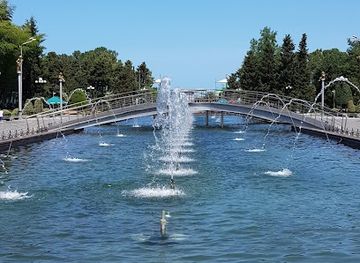
Batumi Boulevard
Experience the charm of Batumi at its vibrant seaside promenade, a blend of history, entertainment, and Black Sea beauty.
-
Orthodox church
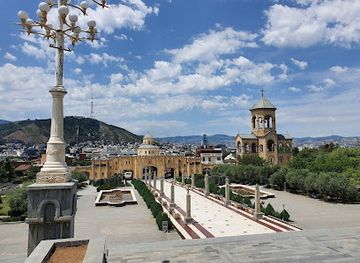
Holy Trinity Cathedral of Tbilisi
Discover Sameba, Tbilisi's iconic Holy Trinity Cathedral: a symbol of Georgian faith, blending traditional architecture with spiritual grandeur.
-
City park
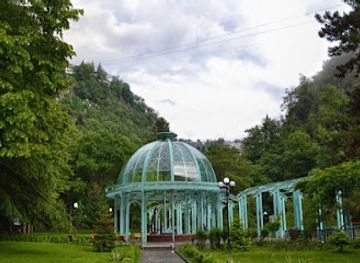
Borjomi Central Park
Discover natural mineral springs, family fun, and scenic beauty in the heart of Georgia's beloved spa town, Borjomi.
-
Tourist attraction
Chronicles of Georgia
Explore Georgia's history etched in stone at the Chronicles of Georgia, a monumental tribute offering panoramic views of Tbilisi.

Best landmarks in Meskheti
Rabati Castle in Akhaltsikhe is Meskheti’s most recognisable landmark, rising above the historic town as a palimpsest of Georgian, Ottoman and later architectural influences. Its walls embody the strategic importance of Akhaltsikhe as a frontier centre, while the town below shows how different communities and administrations shaped the settlement. Sapara Monastery is a more secluded landmark, set among wooded hills and known for its medieval Georgian church architecture, stone carving and religious history. Atskuri Fortress, overlooking the route through the Meskhetian valleys, recalls the region’s role in defending approaches from the south, although its remains are fragmentary. Zarzma Monastery, with its prominent church and rural setting, represents the enduring importance of monastic institutions in the area. The broad valleys and wooded slopes around Akhaltsikhe are themselves defining geographical landmarks, particularly where roads pass between fortress sites and highland pastures. Vardzia’s monumental cliff-side complex is often paired with Meskheti in travel itineraries, but it lies in historic Javakheti and should be identified as a nearby regional extension.
-
Bridge
Bridge of Peace
Discover the Bridge of Peace in Tbilisi, a stunning pedestrian bridge offering breathtaking views, unique architecture, and a connection between history and modernity.
-
Cathedral
Svetitskhoveli Cathedral
Explore Svetitskhoveli Cathedral, a UNESCO World Heritage site in Mtskheta, showcasing the rich heritage and stunning architecture of Georgian culture.
-
City park
Borjomi Central Park
Discover the natural beauty and cultural richness of Borjomi Central Park, a serene urban oasis in Georgia with lush landscapes and mineral springs.
-
Tourist attraction
Batumi Piazza Square
Explore Batumi Piazza Square, the cultural heart of Batumi, Georgia, where stunning architecture, vibrant street life, and local delicacies await.

Explore Meskheti on the map
Plan your trip on one map. See where the top cities, national parks and sights are, and book hotels and experiences in a few clicks.
Best hotels in Meskheti
Best restaurants in Meskheti
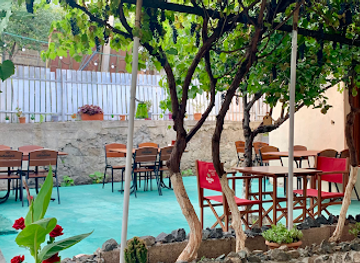
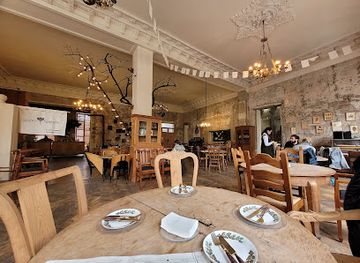
Dining in Meskheti is closely connected with household cooking, seasonal produce and the food traditions of southern Georgia. Akhaltsikhe has the widest selection of restaurants and cafés, while villages are more likely to offer meals through guesthouses or small family businesses. Look for regional versions of khachapuri and filled breads, locally made cheese, smoked or dried meat, beans, pickles, preserves and fruit products. Tklapi, a thin sheet of dried fruit purée, is associated with Georgian food culture and is particularly relevant to the fruit-growing valleys of the south. Meskhetian cooking also reflects the region’s history as a meeting place of Georgian, Ottoman and other Caucasian influences. Markets and roadside sellers can be useful for fresh fruit, dairy products and churchkhela, though availability changes with the season. Wine is important across Georgia, but Meskheti’s highland setting and cooler conditions mean that travellers should also expect fruit preserves, herbal drinks and warming home-cooked dishes to feature prominently.
-
Restaurant
Bergi terrace
Experience authentic Georgian flavors at Bergi Terrace in Borjomi - where delicious food meets breathtaking views.
-
European
My House
Experience authentic Georgian flavors at My House in Borjomi - where tradition meets taste in a cozy setting.
-
Georgian
Restaurant Mimino
Experience authentic Georgian cuisine in Akhaltsikhe at Restaurant Mimino - where tradition meets flavor in every dish.
-
Restaurant
Sisters
Discover the authentic flavors of Georgia at Sisters in Kutaisi—where traditional dishes meet warm hospitality.
Best bars in Meskheti
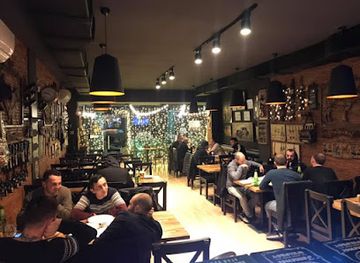
Nightlife in Meskheti is modest and centred mainly on Akhaltsikhe’s restaurants, cafés, hotel lounges and traditional forms of Georgian hospitality rather than dedicated clubs. Evenings are often spent over a meal, local conversation and Georgia’s distinctive supra tradition, in which a tamada, or toastmaster, guides a sequence of formal toasts; visitors can participate at their own pace and are not expected to drink every toast. Smaller settlements generally become quiet after dinner, although guesthouses may offer informal gatherings or homemade wine and spirits. The region is better suited to cultural evenings, stargazing and relaxed meals than to late-night entertainment. Abastumani and other mountain settlements may have seasonal visitor activity, but services are limited outside the main periods of travel. Check arrangements locally, as opening patterns in rural areas can change with the season and the number of visitors.
-
Restaurant
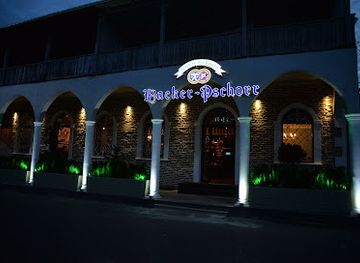
Hacker-Pschorr Kutaisi
Experience the vibrant flavors of Georgia at Hacker-Pschorr Kutaisi - a culinary gem blending traditional cuisine and lively pub culture.
-
Bar
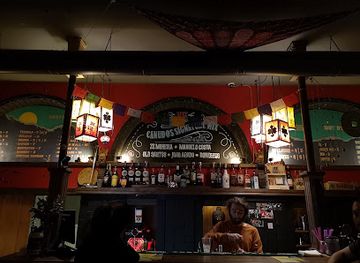
Canudos Ethnic Bar
Discover the vibrant nightlife at Canudos Ethnic Bar in Tbilisi, where local culture meets lively music and diverse drinks in a welcoming atmosphere.
-
Pub
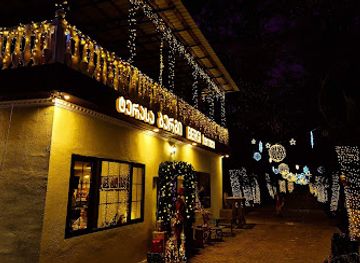
,,Beer House'' Pub-Restaurant
Discover the lively Beer House Pub-Restaurant in Poti, offering a fantastic selection of beers and delectable cuisine in a vibrant atmosphere.
-
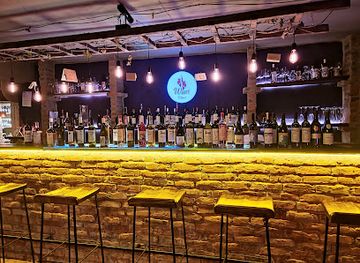
Wine bar
Wine vibes
Experience the finest Georgian wines and warm hospitality at Wine Vibes, Kutaisi's beloved wine bar and cellar.
Best nightclubs in Meskheti
Nightlife in Meskheti is modest and centred mainly on Akhaltsikhe’s restaurants, cafés, hotel lounges and traditional forms of Georgian hospitality rather than dedicated clubs. Evenings are often spent over a meal, local conversation and Georgia’s distinctive supra tradition, in which a tamada, or toastmaster, guides a sequence of formal toasts; visitors can participate at their own pace and are not expected to drink every toast. Smaller settlements generally become quiet after dinner, although guesthouses may offer informal gatherings or homemade wine and spirits. The region is better suited to cultural evenings, stargazing and relaxed meals than to late-night entertainment. Abastumani and other mountain settlements may have seasonal visitor activity, but services are limited outside the main periods of travel. Check arrangements locally, as opening patterns in rural areas can change with the season and the number of visitors.
-
Night club
Bassiani
Immerse yourself in Tbilisi's vibrant nightlife at Bassiani, where techno beats and a unique ambiance create an unforgettable experience.
-
Night club
KHIDI CLUB 中 კლუბი ხიდი
Experience Tbilisi's electrifying nightlife at KHIDI CLUB, where stunning views and pulsating beats create an unforgettable atmosphere.
-
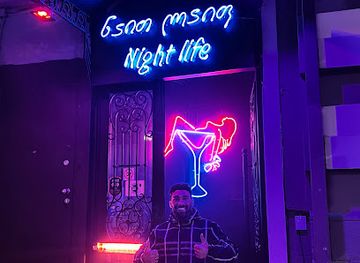
Adult entertainment club
Night Life
Experience Tbilisi's vibrant nightlife at this premier adult entertainment club, where disco beats and captivating performances await.
-
Night club
Night Office
Dive into Tbilisi's nightlife at Night Office - where music, dancing, and unforgettable moments await you in the heart of Old Tbilisi.



Best shops in Meskheti
Shopping in Meskheti is local and practical rather than centred on large retail districts. Akhaltsikhe has the region’s broadest choice of food shops, market stalls, bakeries and small independent retailers, making it the best place to stock up before visiting remote valleys. Suitable regional purchases include cheese, honey, preserves, dried fruit, tklapi, churchkhela, herbs and other shelf-stable foods, subject to seasonal availability and transport considerations. Small markets can be more useful than formal souvenir shops for seeing everyday produce and buying items directly from local sellers. Guesthouses and rural producers may offer homemade foods, but visitors should ask about ingredients and storage before carrying them long distances. Traditional Georgian textiles, ceramics and religious objects may be found in larger towns, although Meskheti is not a major specialist craft-shopping destination. For distinctive souvenirs, prioritise well-labelled regional food products and small handmade items, while avoiding antiquities or old church objects whose export may be illegal or culturally inappropriate.
-
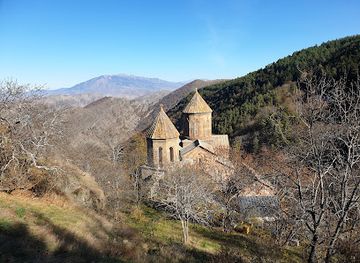
Monastery
Sapara Monastery
Experience the tranquility and rich history of Sapara Monastery, a serene retreat in Georgia's stunning Samtskhe-Javakheti region.
-
Supermarket
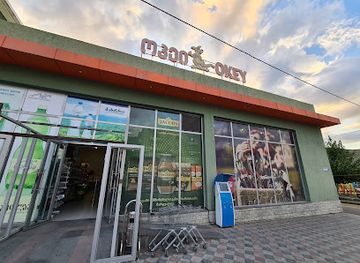
Okey Supermarket
Discover local flavors and essential products at Okey Supermarket in Akhaltsikhe, your go-to destination for grocery shopping during your travels.
-
Stationery store
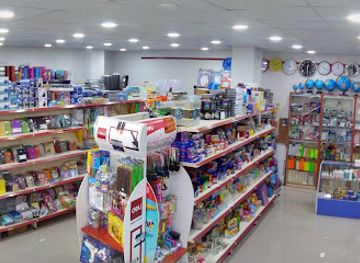
პაპირონი Papironi - საკანცელარიო მაღაზია
Explore Papironi, Akhaltsikhe's premier stationery store, offering a vast selection of books, stationery, and computer accessories in a welcoming atmosphere.
-
Shopping mall
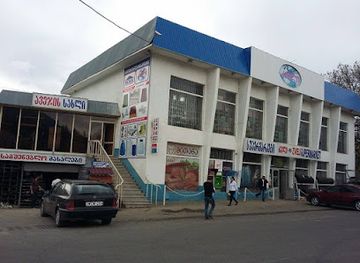
Dzveli Store
Discover the vibrant shopping experience at Dzveli Store, a unique destination in Aspindza blending local craftsmanship and modern retail.
Get your free copy of our complete guide to Meskheti, delivered straight to you.
Everything on this page, from attractions and restaurants to essentials and local phrases, in one PDF you can read offline, print or share.
Already have an account? Sign in
Your Meskheti guide is ready.
We'll send it to · Not you? Sign out

Getting your guide ready…
We are putting together a fresh copy of the Meskheti guide. This can take up to a minute.
This can take a few moments. If your browser asks, choose Allow so the download can start. You'll find the guide in your Downloads folder.
Nothing happened? Download it again
Sorry, the guide is taking longer than usual. Please try again in a minute, or get it by email instead.
Meskheti essentials
Currency and Payment
Safety
Emergency Situations
Do's and Don'ts
Local Tips
From Eve
Local phrases worth knowing
You don't need to get them perfect. A few words go a long way, and locals appreciate the effort.
Basics
| English | Local | Say it |
|---|---|---|
| Hello | Hello | [Hello] |
| Goodbye | Goodbye | [Goodbye] |
| Yes | Yes | [Yes] |
| No | No | [No] |
| Please/You're welcome | Please/You're welcome | [Please/You're welcome] |
| Thank you | Thank you | [Thank you] |
| Excuse me/Sorry | Excuse me/Sorry | [Excuse me/Sorry] |
| How are you? | How are you? | [How are you?] |
| Fine. And you? | Fine. And you? | [Fine. And you?] |
| Do you speak English? | Do you speak English? | [Do you speak English?] |
| I don't understand | I don't understand | [I don't understand] |
Eating & Drinking
| English | Local | Say it |
|---|---|---|
| I'd like to see the menu, please | I'd like to see the menu, please | [I'd like to see the menu, please] |
| I don't eat meat | I don't eat meat | [I don't eat meat] |
| Cheers! | Cheers! | [Cheers!] |
| I would like to pay, please | I would like to pay, please | [I would like to pay, please] |
Emergencies
| English | Local | Say it |
|---|---|---|
| Help! | Help! | [Help!] |
| Go away! | Go away! | [Go away!] |
| Call the Police! | Call the Police! | [Call the Police!] |
| Call a doctor! | Call a doctor! | [Call a doctor!] |
| I'm lost | I'm lost | [I'm lost] |
| I'm ill | I'm ill | [I'm ill] |
Shopping
| English | Local | Say it |
|---|---|---|
| I'd like to buy... | I'd like to buy... | [I'd like to buy...] |
| I'm just looking | I'm just looking | [I'm just looking] |
| How much is it? | How much is it? | [How much is it?] |
| That's too expensive | That's too expensive | [That's too expensive] |
| Can you lower the price? | Can you lower the price? | [Can you lower the price?] |
Time & Numbers
| English | Local | Say it |
|---|---|---|
| What time is it? | What time is it? | [What time is it?] |
| It's one o'clock | It's one o'clock | [It's one o'clock] |
| Half past (10) | Half past (10) | [Half past (10)] |
| Morning | Morning | [Morning] |
| Afternoon | Afternoon | [Afternoon] |
| Evening | Evening | [Evening] |
| Yesterday | Yesterday | [Yesterday] |
| Today | Today | [Today] |
| Tomorrow | Tomorrow | [Tomorrow] |
| 1 | 1 | [1] |
| 2 | 2 | [2] |
| 3 | 3 | [3] |
| 4 | 4 | [4] |
| 5 | 5 | [5] |
| 6 | 6 | [6] |
| 7 | 7 | [7] |
| 8 | 8 | [8] |
| 9 | 9 | [9] |
| 10 | 10 | [10] |
Transport & Directions
| English | Local | Say it |
|---|---|---|
| Where's a/the...? | Where's a/the...? | [Where's a/the...?] |
| What's the address? | What's the address? | [What's the address?] |
| Can you show me (on the map)? | Can you show me (on the map)? | [Can you show me (on the map)?] |
| When's the next (bus)? | When's the next (bus)? | [When's the next (bus)?] |
| A ticket (to ....) | A ticket (to ....) | [A ticket (to ....)] |
History of Meskheti
Early settlements and the Meskhetian landscape
Southern Georgia has been inhabited since prehistoric times, with archaeological evidence of long-established farming, metalworking and fortified settlement across the valleys and uplands. Meskheti’s position between the Georgian interior, Anatolia and the wider Caucasus made it a zone of movement and contact. The region’s natural passes and river corridors encouraged settlement, while its hills and mountain approaches also made defensive construction important. Many later fortresses occupy locations whose strategic value was recognised long before the medieval period.
Christian Georgia and medieval monasteries
Christianity became a defining force in Georgian cultural and political life from late antiquity onwards. Churches and monasteries were established across Samtskhe, often in secluded valleys or on defensible slopes. Their inscriptions, stone carving and painted interiors helped preserve Georgian literary and religious traditions. Sites such as Sapara Monastery represent the artistic and institutional strength of medieval Christianity in the region, while smaller village churches show how deeply religious architecture was integrated into the Meskhetian countryside.
The Jaqeli principality of Samtskhe
During the later medieval period, Samtskhe was governed by the Jaqeli dynasty, whose rulers controlled an important frontier principality in southern Georgia. Akhaltsikhe developed as its political centre, and fortresses, churches and administrative settlements were strengthened across the surrounding valleys. The principality sometimes acted with considerable independence from the Georgian crown, reflecting the pressures of regional warfare and the importance of local dynasties. Rabati and other fortified sites remain visible reminders of this period of political complexity.
Ottoman incorporation and a changing frontier
From the sixteenth century, Ottoman power expanded into southern Georgia, and Samtskhe was gradually incorporated into the Ottoman imperial system. The region became a frontier between Ottoman and Georgian spheres, with fortresses and towns acquiring new military and administrative roles. Islamic institutions and communities developed alongside older Georgian Christian traditions, producing a layered cultural landscape. Akhaltsikhe and its stronghold were particularly important in this period, and the Ottoman legacy remains evident in the town’s historical fabric and regional memory.
Russian rule and imperial remaking
The Russian Empire took control of Akhaltsikhe and surrounding territories during the Russo-Turkish conflicts of the nineteenth century, incorporating the area into its South Caucasian administration. Imperial rule altered military organisation, settlement patterns and links with other parts of Georgia. New administrative structures were imposed over older local arrangements, while roads and communications gradually tied the southern highlands more closely to the wider empire. The period also intensified the region’s role as a borderland between competing political and cultural systems.
The 1944 deportation of Meskhetian Muslims
In November 1944, the Soviet authorities deported the Meskhetian Muslim population from southern Georgia to Central Asia. The operation removed tens of thousands of people from their homes, causing lasting family and community dispersal. Many deportees and their descendants have continued to seek recognition, return or a fuller account of their history. This is one of the most significant modern events associated with Meskheti and is essential to understanding why the region’s name carries meanings that extend beyond its present population and administrative geography.
Post-Soviet heritage and regional tourism
Since Georgia regained independence in 1991, restoration and tourism projects have drawn renewed attention to Akhaltsikhe, its fortifications and the wider heritage of Samtskhe-Javakheti. Improved roads have made southern Georgia more accessible, while guesthouses and local businesses have developed around cultural and nature-based travel. The region still faces the challenges of rural depopulation, seasonal access and the preservation of historic buildings. Contemporary Meskheti is therefore both a living rural landscape and a place where contested, multi-layered history remains central to public identity.
Meskheti in Photos
Browse through our photo collection highlighting the charm and character of the destination.
Neighbouring regions of Meskheti
The closest regions to Meskheti, if you have time for more than one.
-

-

-

-

-


Swipe for more regions
Explore more

Explore more of Georgia
Discover Georgia: A vibrant mix of ancient history, stunning landscapes, and warm hospitality at the crossroads of Europe and Asia.
Explore Georgia