Background

Berliner-Tor-Platz: Gateway to Wesel's History

Discover Wesel's rich history at Berliner-Tor-Platz, home to the iconic Berlin Gate, a testament to the city's Prussian past and a vibrant hub for modern-day events and culture.

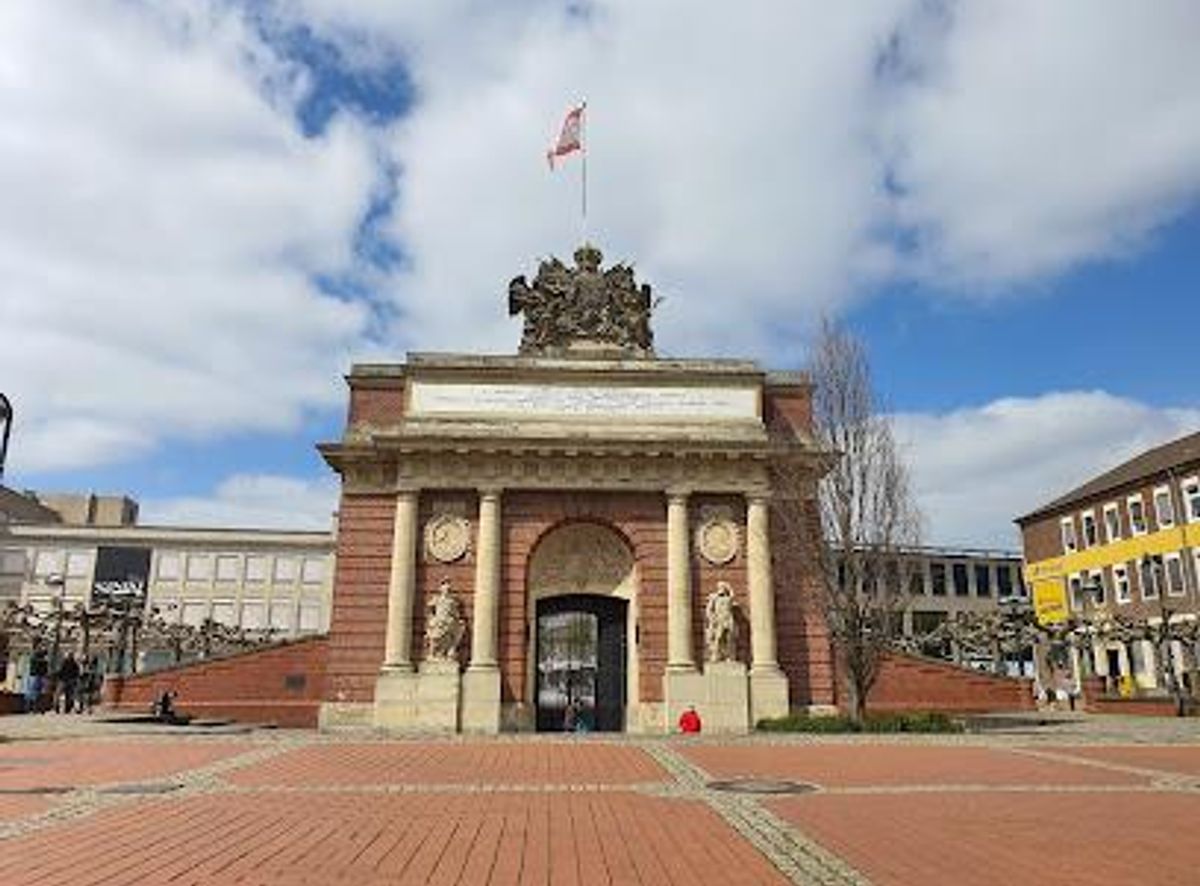
Berliner-Tor-Platz, home to the iconic Berliner Tor (Berlin Gate), serves as a vibrant entry point to Wesel's historic city center. This square, steeped in Prussian history, offers a blend of architectural grandeur and modern-day activity. The gate itself, constructed between 1718 and 1722, stands as a testament to Wesel's past as a formidable fortress. While the square has seen changes over the centuries, including damage during World War II, it remains a focal point for events, markets, and cultural experiences. Visitors can explore the Hanseforum within the gate, delve into the city's Hanseatic League heritage, and enjoy the surrounding shops and restaurants. Berliner-Tor-Platz is more than just a landmark; it's a living space where history and contemporary life intertwine, offering a glimpse into Wesel's rich cultural tapestry.

A brief summary to Berliner-Tor-Platz

  • Wesel, 46483, DE

Local tips

  • Visit the Hanseforum inside the Berliner Tor to delve into Wesel's fascinating Hanseatic League history and discover the city's medieval trade connections.
  • Check the local events calendar, as Berliner-Tor-Platz frequently hosts festivals, markets, and cultural events throughout the year.
  • Explore the pedestrian zone surrounding the square for shopping and dining, experiencing the blend of historical charm and modern-day life.
widget icon

Getting There

  • Walking

    From Wesel Train Station (Wesel Bahnhof), Berliner-Tor-Platz is approximately a 5-10 minute walk. Exit the station and head east along the Dinslakener Landstraße. Turn left onto Wallstraße, continue straight, and you'll find Berliner-Tor-Platz directly ahead. The Berlin Gate is easily visible from Wallstraße.

  • Public Transport

    Several bus lines stop near Berliner-Tor-Platz. Check local transit schedules for the most up-to-date information. The closest bus stops are 'Wesel Post' and 'Wesel Wallstraße', both a short walk from the square. A single bus fare within Wesel typically costs around €2-3.

  • Driving

    If driving, navigate to Berliner-Tor-Platz, 46483 Wesel. Parking is available near the square, including at the Wesel Bahnhof Park & Ride. Parking in public car parks in Wesel is free of charge on weekdays from 4 p.m. and at weekends! During the day, parking fees may apply, with hourly rates typically around €1-2. Consider using the Park & Ride at the train station for longer visits.

Unlock the Best of Berliner-Tor-Platz

Buy tickets

    No tickets available

Book tours with entry

    No tours available

Book tours without entry

    No tours available

Discover more about Berliner-Tor-Platz

Berliner-Tor-Platz is a central square in Wesel, Germany, defined by the imposing Berliner Tor, the city's last remaining gate. This historical site marks the eastern edge of Wesel's pedestrian zone and provides a tangible link to the city's Prussian past. The Berliner Tor was constructed between 1718 and 1722 under the direction of Jean de Bodt, a master builder for the court. It was commissioned following Wesel's return to Brandenburg-Prussia in 1680, when Frederick William I, the Great Elector, initiated further expansion of the Wesel fortress. The gate, built in the Prussian Baroque style, served as both a fortified entrance and a symbol of Prussian power. Its name, 'Berlin Gate,' reflects the seat of government in distant Berlin. The gate's design incorporated extensive wing buildings that, from the city side, led in a semicircle with pillared arcades to the gate building, reminiscent of the Potsdam City Palace. However, these wings were demolished in 1892 to facilitate smoother traffic flow. Restoration work in 1894-95 preserved the gate's basic architectural features, though much of its original figural and ornamental decoration was lost. During World War II, the Berliner Tor sustained heavy damage, particularly on its city side. Despite this, its representative function remains evident. The gate features a single passage and is crowned on the field side by a trophy with an allegorical representation of fame and good reputation, a work attributed to Guillaume Hulot, though it is a 19th-century replica. The Latin inscription on the ledge translates to: 'The fortification of the city and the citadel, which was begun by the Elector of Brandenburg Frederick William and expanded by Frederick, the first King of Prussia, has been completed by King Frederick William of Prussia, a son of Frederick I and a grandson of Frederick William, in a manner as generous as befits a king. 1722.' On the field side, between two Doric columns, stand larger-than-life figures of Minerva and Hercules. Above these sandstone figures are medallions depicting a sleeping lion with the Latin inscription 'Even in rest, to be feared' and a flying Prussian eagle with the inscription 'He does not avoid the sun,' the motto of Frederick William I. The square surrounding the gate was redesigned in 1984. Today, Berliner-Tor-Platz is a bustling hub, hosting various events and markets throughout the year. The gate itself houses the Hanseforum, an exhibition space dedicated to Wesel's history as a member of the Hanseatic League. This exhibition highlights Wesel's trade routes and goods during that era and its connections within the New Hanseatic League. Visitors to Berliner-Tor-Platz can explore the nearby pedestrian zone, filled with shops, restaurants, and cafes. The square also provides access to other notable Wesel attractions, such as the Willibrordi Cathedral and the Wesel Citadel. The Tourist Information office is located nearby, offering information on current leisure activities and tourist offers in Wesel and the Lower Rhine region. The square is easily accessible by public transportation, with bus and train connections available at the nearby Wesel Bahnhof. Parking is also available in the area, including Park & Ride options at the train station. Berliner-Tor-Platz is not just a historical landmark; it's a vibrant public space that reflects Wesel's past and present. It serves as a gathering place for locals and a welcoming gateway for visitors, offering a glimpse into the city's rich cultural heritage and its ongoing story. Throughout the year, Berliner-Tor-Platz hosts a variety of events, including the Historisches Hansefest (Historical Hanse Festival), which celebrates Wesel's Hanseatic League history with medieval markets, parades, and cultural performances. The square also hosts wine festivals, street food festivals, and other community events. The combination of historical significance, architectural beauty, and contemporary activity makes Berliner-Tor-Platz a must-see destination for anyone visiting Wesel. It's a place where the past comes alive and where visitors can experience the unique character of this Lower Rhine city. While visiting, consider exploring the Hanseforum inside the Berliner Tor to learn more about Wesel's Hanseatic history. Take a stroll through the pedestrian zone, enjoy a meal at one of the local restaurants, and soak in the atmosphere of this historic square. Berliner-Tor-Platz is a place where history, culture, and community converge, offering a memorable experience for all who visit.

Popular Experiences near Berliner-Tor-Platz

Popular Hotels near Berliner-Tor-Platz

Select Currency