Templerhaus Travel Guide
Free Guide: Explore the Templerhaus in Amorbach, a remarkably preserved medieval building offering a glimpse into Bavaria's rich history and showcasing exceptional half-timbered architecture.


A brief summary of Templerhaus
Explore the Templerhaus in Amorbach, a remarkably preserved medieval building offering a glimpse into Bavaria's rich history and showcasing exceptional half-timbered architecture.
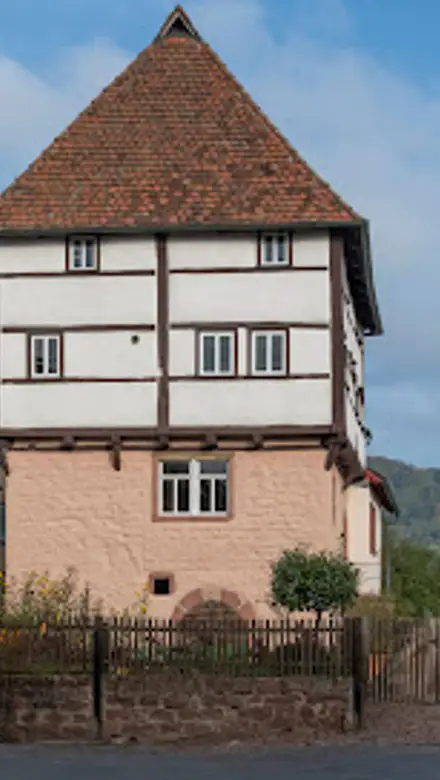
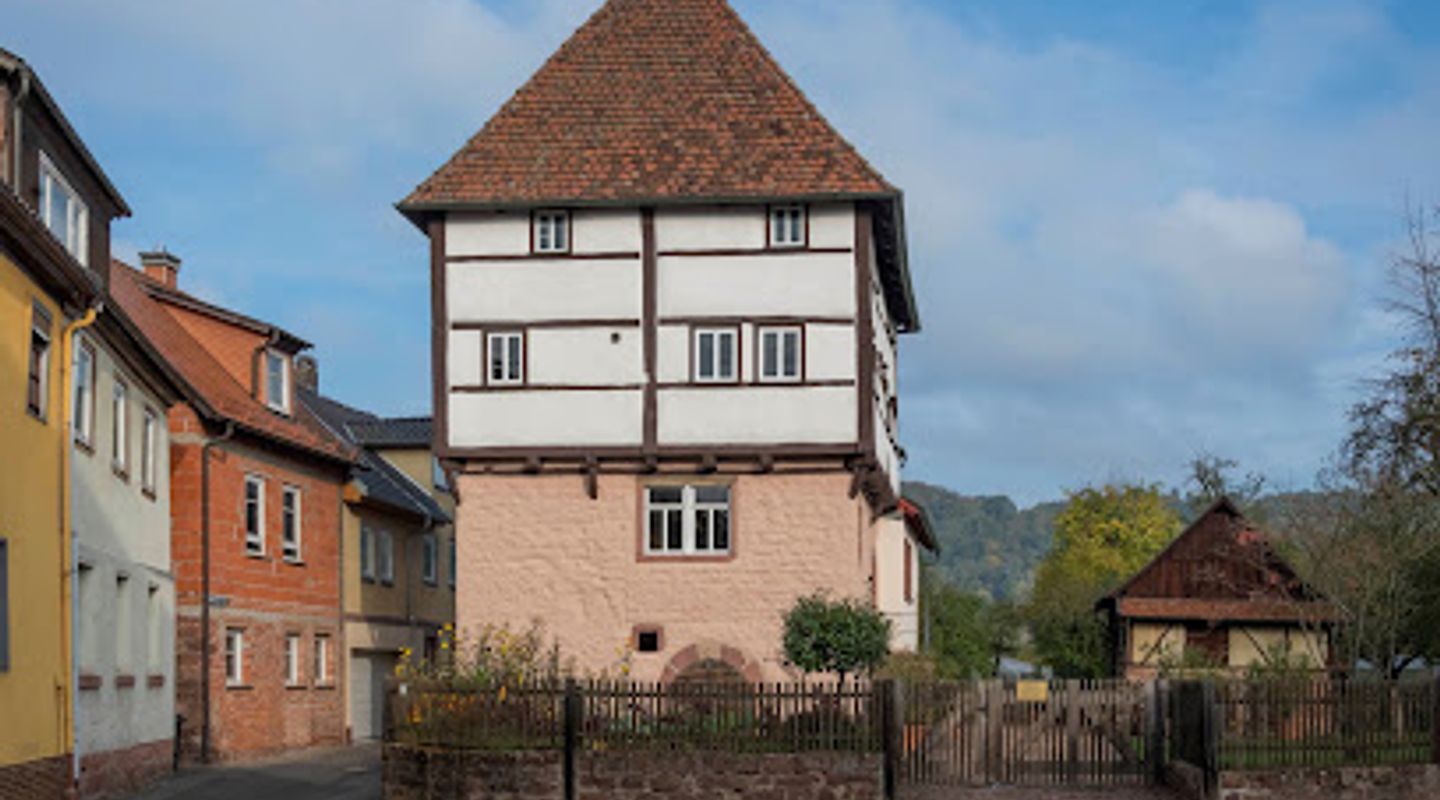
The Templerhaus in Amorbach, despite its misleading name, is a captivating medieval building and one of Bavaria's oldest half-timbered structures. Constructed around 1250 as a fortified residence, its timber-framed upper stories were added in 1291. Today, the Templerhaus serves as a museum, offering visitors a glimpse into late-medieval building techniques and living culture. Its well-preserved state and the intriguing history of its various owners make it a worthwhile stop for history buffs and those seeking a unique architectural experience. While exploring, appreciate the intricate timber framework and imagine life within its ancient walls, far removed from the modern world.
- Address
- Bädersweg 1, 63916 Amorbach
Getting there
Walking
Public Transport
Driving
Discover more about Templerhaus
Overview
The Templerhaus, nestled in the charming town of Amorbach, is a remarkable testament to medieval architecture and craftsmanship. Despite its name suggesting a connection to the Knights Templar, the building's history is rooted in the local nobility and burgher life of the region. Constructed around 1250, it originally served as a fortified residence for the Rüdt von Collenberg family, who were vassals of the Benedictine Abbey of Amorbach. The name 'Rüdenhof' was its original designation, reflecting its function as a fortified manor house. The most striking feature of the Templerhaus is its well-preserved half-timbered upper stories, added around 1291. This timber framework is among the oldest of its kind in Bavaria, showcasing the ingenuity and skill of medieval carpenters. The absence of diagonal bracing, common in later half-timbered construction, is a distinctive characteristic of its early design. The lower portion of the building, constructed of stone, is even older, potentially dating back to the 12th century. This solid base provided a secure foundation for the timber structure above. Over the centuries, the Templerhaus passed through the hands of various owners, reflecting the changing social and economic landscape of Amorbach. From noble families to craftsmen and tradespeople, each left their mark on the building's history. In the 16th century, the building underwent some interior modifications, including the addition of fragmentary room decorations that can still be seen today. These decorations offer a glimpse into the aesthetic preferences of the time. By the late 20th century, the Templerhaus had fallen into disrepair, its historical significance threatened by neglect. In 1981, the town of Amorbach acquired the property and embarked on a meticulous restoration project, working in close collaboration with the Bavarian State Office for Monument Preservation. This painstaking effort involved extensive research, documentation, and the application of traditional building techniques to preserve the building's authenticity. The restoration work was so exemplary that it received a medal of honor from the Europa Nostra association, recognizing its outstanding contribution to monument conservation. Today, the Templerhaus functions as a museum, offering visitors a fascinating journey into the world of medieval building technology and domestic life. Exhibits showcase the building's construction techniques, archaeological finds from the surrounding area, and documentation of the restoration process. Visitors can explore the various rooms, imagining what life was like for the families who once called this place home. The museum provides a tangible connection to the past, allowing visitors to appreciate the ingenuity and resilience of medieval builders and residents. While the name 'Templerhaus' is a misnomer, it has become firmly entrenched in local lore. The name likely originated in the mid-19th century, possibly due to a misinterpretation of a depiction of Saint Amor, the town's namesake, who was mistaken for a Knight Templar. Despite the lack of any actual connection to the Templar order, the name adds a touch of mystique to the building's already intriguing history. Visiting the Templerhaus is an immersive experience that transports you back in time. As you wander through its ancient rooms and admire its intricate timber framework, you'll gain a deeper appreciation for the rich history and cultural heritage of Amorbach and the surrounding region. It's a must-see destination for anyone interested in medieval architecture, local history, or simply experiencing the charm of a bygone era. Beyond the Templerhaus, Amorbach offers a wealth of other attractions for visitors to explore. The Benedictine Abbey, with its stunning Baroque architecture and magnificent Stumm organ, is a highlight. The town's historic center, with its winding streets and half-timbered houses, is also worth a stroll. And for those seeking outdoor adventures, the surrounding Odenwald forest provides ample opportunities for hiking and exploring. The Templerhaus stands as a symbol of Amorbach's rich history and cultural heritage. Its preservation is a testament to the town's commitment to preserving its past for future generations. A visit to the Templerhaus is an enriching experience that will leave you with a lasting appreciation for the beauty and ingenuity of medieval architecture and the enduring spirit of this charming Bavarian town.
Evendo Review Centre
 Google
Guest reviews
Explore Templerhaus on the map
A handpicked selection of must-see spots near Templerhaus, mapped for you.
Get your free copy of our complete guide to Templerhaus, delivered straight to you.
Everything on this page, from opening hours and how to get there to Eve’s tips and the best time to go, in one PDF you can read offline, print or share.
Already have an account? Sign in
Your Templerhaus guide is ready.
We'll send it to · Not you? Sign out

Getting your guide ready…
We are putting together a fresh copy of the Templerhaus guide. This can take up to a minute.
This can take a few moments. If your browser asks, choose Allow so the download can start. You'll find the guide in your Downloads folder.
Nothing happened? Download it again
Sorry, the guide is taking longer than usual. Please try again in a minute, or get it by email instead.
Other nearby places you may find interesting
The closest places of the same kind, if this one is not quite what you had in mind.
-
-
-
-
-


Swipe for more places
More to explore near Templerhaus

 Best experiences near Templerhaus
 Best hotels near Templerhaus
 Best landmarks near Templerhaus
 Best attractions near Templerhaus
 Best shops near Templerhaus
 Best restaurants near Templerhaus
 Best bars near Templerhaus
Do you manage this location?
Take control to get all the benefits, like improved information, better appearance, and stronger visibility across AI-powered discovery.
Explore more
Explore more of Spessart
Discover Spessart, Germany's enchanting forested region, rich in folklore, history, and natural beauty. Wander through medieval towns, ancient woodlands, and captivating trails.
Explore Spessart
Explore more of Germany
Experience Germany: where history meets innovation, and urban energy blends with natural beauty. Discover diverse cultures, delicious cuisine, and stunning landscapes.
Explore Germany