

Profitis Ilias, Crete Travel Guide
Free Guide: Explore the ruins of Temenos Fortress near Profitis Ilias, Crete, a Byzantine stronghold with a rich and bloody history.


A brief summary of Profitis Ilias
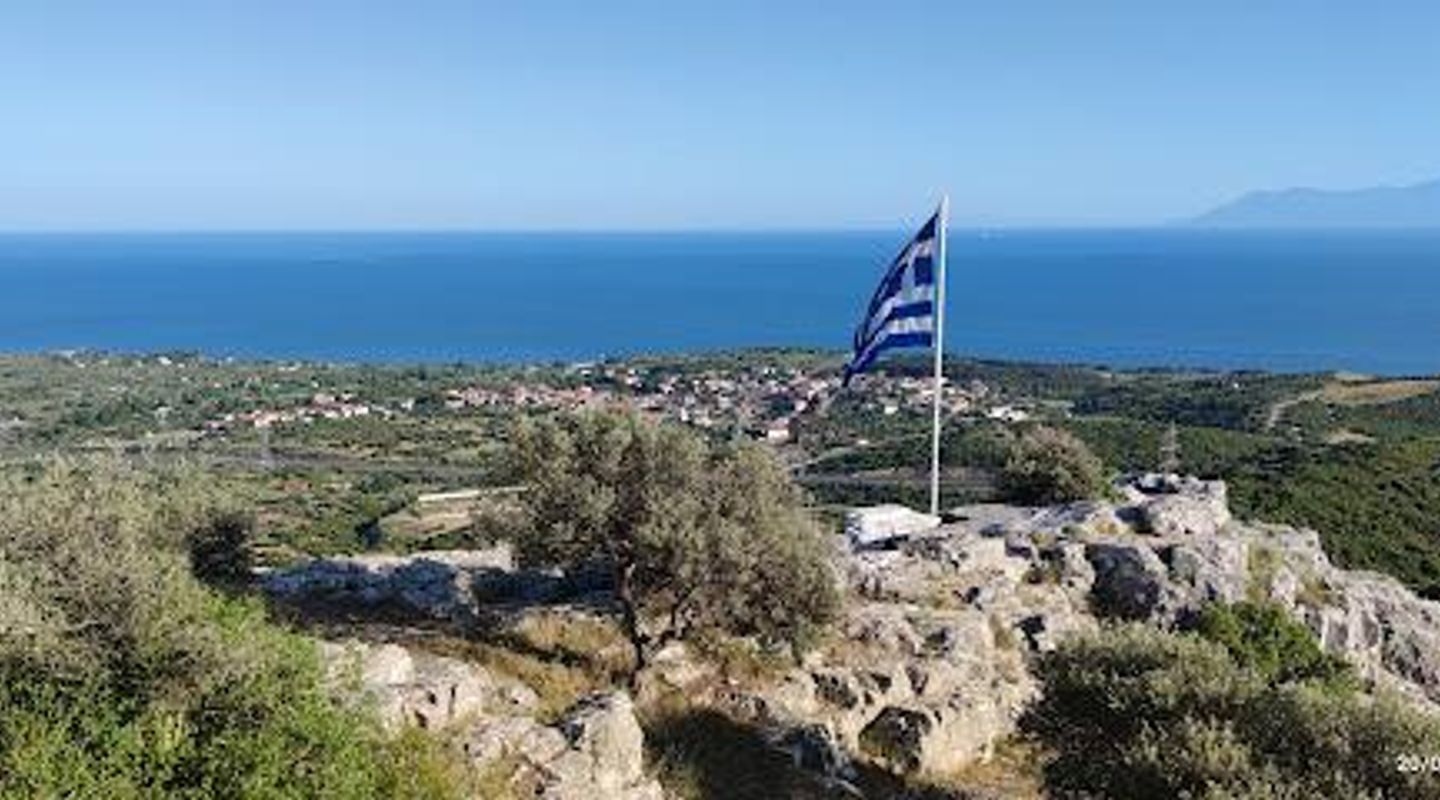
Explore the ruins of Temenos Fortress near Profitis Ilias, Crete, a Byzantine stronghold with a rich and bloody history.
Perched atop Rocca hill near Profitis Ilias, Crete, the ruins of Temenos Fortress, also known as Kanli Kastelli, offer a glimpse into the island's turbulent history. Built in 961 AD by Nikephoros Phokas, this strategic stronghold witnessed Byzantine, Venetian, and Ottoman rule, and was the site of a 17th-century massacre.
- Address
- Τέμενος 715 00
Getting there
Driving
Public Transport
Discover more about Profitis Ilias
Overview
Temenos Fortress, also called Rocca or Kanli Kastelli, stands as a testament to Crete's complex past. Situated on the strategically important Rocca hill, just south of Profitis Ilias village in Heraklion, this Byzantine-era fortification is considered the island's most significant. Built in 961 AD by Nikephoros Phokas, the fortress reflects the ambition of the Byzantine Empire to re-establish control over Crete and project power throughout the Mediterranean.Phokas intended Temenos to be more than just a military outpost; he envisioned it as the island's new capital, replacing Chandax (modern Heraklion). Although the capital never moved, the fortress remained a vital defensive structure, commanding panoramic views of the surrounding area. The location was ideal due to its natural spring, which fed the Fountana fountain within the fort, and its dominating position. The hill itself is believed to have been the acropolis of the ancient city of Lykastos, mentioned in Homer's Iliad.Throughout its history, Temenos Fortress has been modified and controlled by various powers. In 1204, the Genoese pirate Enrico Pescatore seized Crete and either built or repaired fifteen fortresses, including Temenos. When the Venetians took control in 1209, they further fortified Temenos with stronger walls and updated its defenses. The Venetians called it Castello Temene, recognizing it as a powerful fortress and granting it as a fief to prominent families. A settlement, which eventually became the village of Profitis Ilias, grew around the fortress. In 1669, the Ottomans conquered Crete and renamed the fortress Kanli Kastelli, meaning "Bloody Fortress" in Turkish, commemorating a humiliating defeat they suffered at the hands of the Venetian Cretans in 1647.Today, the 60-hectare archaeological site contains the ruins of walls, a pentagonal inner fortress, large water cisterns and several churches. Visitors can explore the remains of this once-imposing stronghold, imagining the battles and power struggles that played out within its walls.
Evendo Review Centre
 Google
Guest reviews
Explore Profitis Ilias on the map
A handpicked selection of must-see spots near Profitis Ilias, mapped for you.
Get your free copy of our complete guide to Profitis Ilias, delivered straight to you.
Everything on this page, from opening hours and how to get there to Eve’s tips and the best time to go, in one PDF you can read offline, print or share.
Already have an account? Sign in
Your Profitis Ilias guide is ready.
We'll send it to · Not you? Sign out

Getting your guide ready…
We are putting together a fresh copy of the Profitis Ilias guide. This can take up to a minute.
This can take a few moments. If your browser asks, choose Allow so the download can start. You'll find the guide in your Downloads folder.
Nothing happened? Download it again
Sorry, the guide is taking longer than usual. Please try again in a minute, or get it by email instead.
Unlock the best of Profitis Ilias
Skip-the-line tickets, guided tours with entry, and walking tours of the area, booked in a few clicks.


Other nearby places you may find interesting
The closest places of the same kind, if this one is not quite what you had in mind.
-
-
-
-
-


Swipe for more places
More to explore near Profitis Ilias

 Best experiences near Profitis Ilias
 Best hotels near Profitis Ilias
 Best landmarks near Profitis Ilias
 Best attractions near Profitis Ilias
 Best shops near Profitis Ilias
 Best restaurants near Profitis Ilias
 Best bars near Profitis Ilias
Do you manage this location?
Take control to get all the benefits, like improved information, better appearance, and stronger visibility across AI-powered discovery.
Explore more

Explore more of Crete
Discover the enchanting island of Crete, where ancient history meets breathtaking landscapes and vibrant culture. Explore ruins, relax on pristine beaches, and savor local cuisine.
Explore Crete
Explore more of Greece
Discover Greece: A land where ancient history meets modern vibrancy, offering stunning islands, crystal-clear seas, and unforgettable cultural experiences.
Explore Greece
