

Free Patras Travel Guide & Mobile App
Plan your Patras trip with Evendo. Get free guides to top attractions, restaurants, hotels, and bars. Web access or download the mobile app.


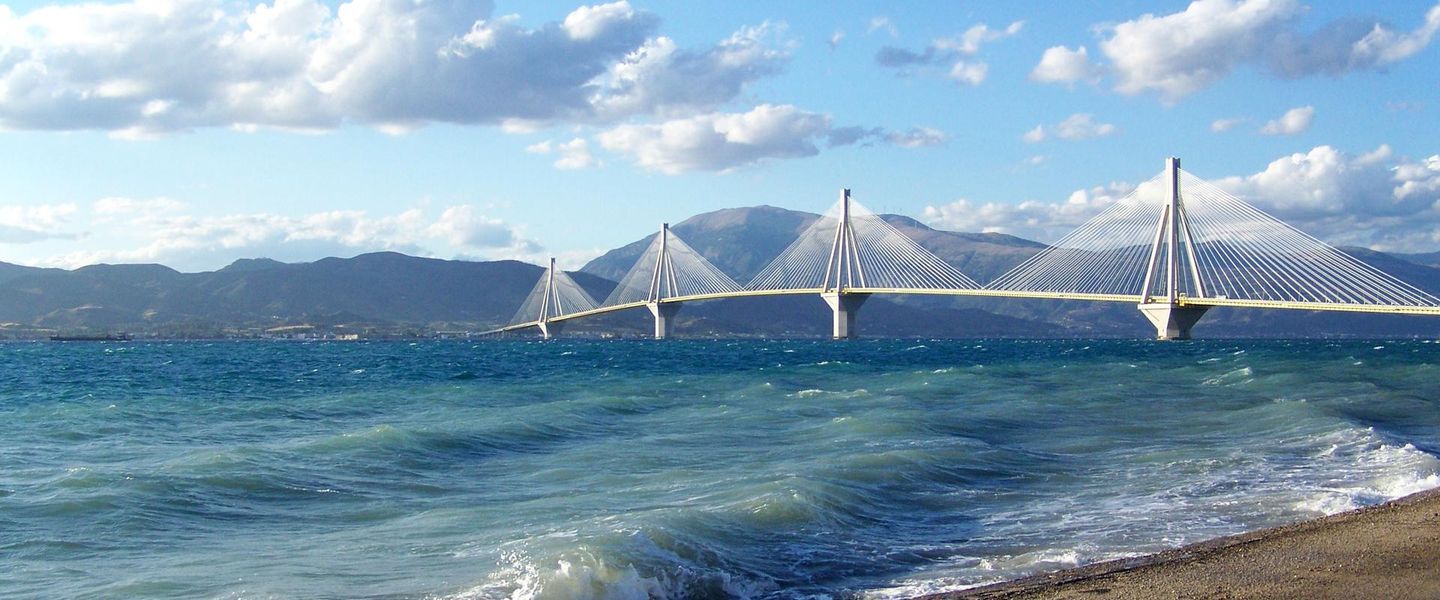


Patras, Greece blends a lively port, Roman heritage, carnival tradition, Achaian cuisine and gateway access to the Peloponnese’s cultural landscapes.
A Western Greek Gateway
Patras occupies the northern Peloponnese beside the Gulf of Patras, facing the Ionian Sea and serving as one of Greece’s principal maritime gateways to Italy and the western Mediterranean. Its broad waterfront, busy port and sloping streets give the city an open, outward-looking character, while the hills behind it lead towards vineyards, villages and the landscapes of Achaia. Patras is Greece’s third-largest urban centre and the regional capital of Western Greece, combining a substantial working city with a lively student population and a long-established cultural scene.Read more about Patras
Ancient Layers and Urban Life
Wine Country and Gulf Landscapes
When is the best time to visit Patras?
Best: May–June, September · 25–29°C| Month | High (°C) | Rainfall (mm) |
|---|---|---|
| January | 14 | 94 |
| February | 14 | 76 |
| March | 16 | 68 |
| April | 20 | 47 |
| May (best) | 25 | 27 |
| June (best) | 29 | 12 |
| July | 33 | 5 |
| August | 33 | 7 |
| September (best) | 29 | 19 |
| October | 25 | 68 |
| November | 21 | 94 |
| December | 17 | 100 |
Getting to and around Patras
How to get there
Transportation
Best attractions in Patras
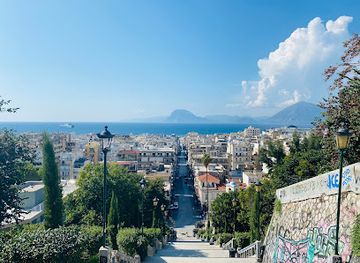
Patras’ sights are spread between the lower city, the historic upper town and the waterfront. The Roman Odeon is the most evocative ancient monument, a second-century theatre still used for performances and set against the hillside below the castle. The Archaeological Museum of Patras expands the story with mosaics, sculptures, household objects and funerary finds from Achaia. Above the centre, Patras Castle occupies the site of the ancient acropolis and provides broad views over the Gulf of Patras. The Cathedral of Saint Andrew introduces the city’s strong Orthodox identity, while the modern lighthouse on the waterfront has become a familiar meeting point and photographic landmark. Psila Alonia square offers cafés and an elevated urban outlook, and the Agiou Nikolaou steps lead through one of the city’s most recognisable pedestrian routes. During carnival season, streets and squares themselves become part of the spectacle through parades, decorations and public celebrations.
-
Bridge
Charilaos Trikoupis Rio - Antirrio Bridge
Discover the stunning Charilaos Trikoupis Rio-Antirrio Bridge, a spectacular engineering marvel connecting mainland Greece and the Peloponnese, offering breathtaking views.
27 min drive · 8.9 km from city centre
-
Greek Orthodox church
Holy Church of Saint Andrew
Discover the Holy Church of Saint Andrew in Patras, a stunning Byzantine masterpiece filled with history, spirituality, and breathtaking architecture.
9 min walk · 0.8 km from city centre
-
Castle
Venetian Castle of Nafpaktos
Discover the stunning Venetian Castle of Nafpaktos, a historical gem offering breathtaking views and rich cultural heritage in Greece.
38 min drive · 18 km from city centre
-
Tourist attraction
St. Nicholas Stairway
Discover the charm of Patras at St. Nicholas Stairway, a captivating blend of history, architecture, and stunning views that enchants every visitor.
5 min walk · 0.4 km from city centre


Best landmarks in Patras
Patras’ landmark profile is defined by the relationship between its ancient hill, Christian traditions, commercial centre and maritime setting. The Roman Odeon, built during the Roman period, is a finely preserved theatre whose stone seating and stage structure reveal the public importance of ancient Patrae. Patras Castle rises above it on the former acropolis and records centuries of Byzantine, Frankish, Venetian and Ottoman fortification. The Cathedral of Saint Andrew, completed in the twentieth century, is one of Greece’s largest Orthodox churches and honours the city’s patron saint, whose martyrdom is associated with Patras. Along the sea, the reconstructed lighthouse near the waterfront symbolises the city’s modern connection with the Gulf rather than serving as the original navigation structure. Neoclassical buildings around the centre, the stairway of Agiou Nikolaou and the open space of Psila Alonia complete a civic landscape shaped by nineteenth-century rebuilding and later urban growth.
-
Bridge
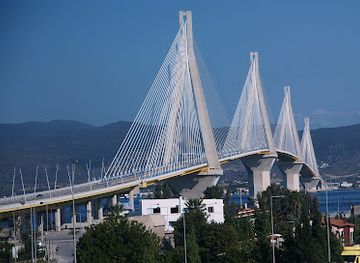
Charilaos Trikoupis Rio - Antirrio Bridge
Experience the Charilaos Trikoupis Bridge: An iconic Greek landmark connecting Rio and Antirrio with stunning views and engineering brilliance.
27 min drive · 8.9 km from city centre
-
Greek Orthodox church
Holy Church of Saint Andrew
Discover the awe-inspiring Holy Church of Saint Andrew in Patras, a beacon of Greek Orthodox faith, art, and history, attracting pilgrims and tourists alike.
9 min walk · 0.8 km from city centre
-
Park
Patras' South Park - Notio Parko Patras
Escape to Patras' waterfront park for recreation, relaxation, and scenic views of the Gulf of Patras.
5 min drive · 1.6 km from city centre
-
Tourist attraction
St. Nicholas Stairway
Experience Patras' charm by ascending the historic St. Nicholas Stairway, offering stunning views and a vibrant atmosphere. A must-see landmark!
5 min walk · 0.4 km from city centre


Explore Patras on the map
Plan your Patras trip on one map. See where the top attractions, landmarks, restaurants, bars and hotels are, find what's near where you're staying, and book hotels and experiences in a few clicks.
Best hotels in Patras
Best restaurants in Patras
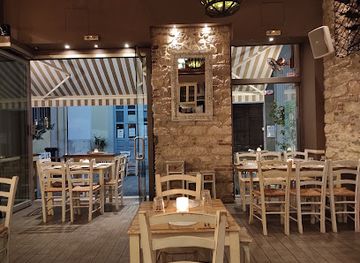
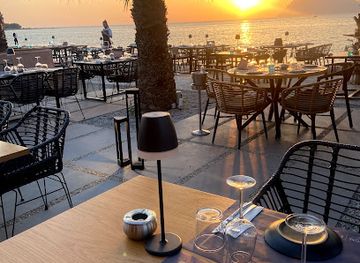
Patras’ dining scene draws on the produce of Achaia and the wider Peloponnese, with olive oil, vegetables, cheese, seafood and grilled meats appearing across traditional menus. Tavernas and mezedopoleia serve small plates alongside wine, beer or tsipouro, while the port and waterfront provide places for fish, shellfish and relaxed evening meals. Local specialities are part of a broader western Greek culinary tradition rather than a single dish identified exclusively with the city; visitors may encounter pork, lamb, pies, pulses and seasonal greens prepared in home-style ways. Achaia’s vineyards give local wines a strong presence, particularly around the surrounding countryside, and the sweet fortified wine Mavrodaphne is closely associated with the region. Central pedestrian streets and the area around Psila Alonia contain cafés, bakeries and contemporary restaurants, while neighbourhood tavernas offer a less formal setting for long meals.
-
Restaurant
Distinto Rio
Discover the culinary charm of Distinto Rio in Patras - where local flavors meet modern cuisine in an inviting atmosphere.
22 min drive · 7.4 km from city centre
-
Cafe
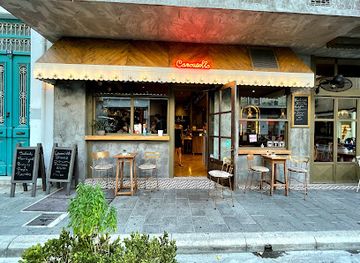
Carousello
Discover Carousello in Patras: A delightful café offering tapas, fine wines, and an inviting atmosphere for unforgettable moments.
2 min walk · 0.1 km from city centre
-
Restaurant
Salumeria
Discover the culinary delights at Salumeria in Patras – where tradition meets innovation in Mediterranean dining.
2 min walk · 0.2 km from city centre
-
Brunch
Bodegas
Discover Bodegas in Patras: A perfect blend of art, brunch delights, and exquisite wines for every tourist's taste.
4 min walk · 0.3 km from city centre

Best bars in Patras
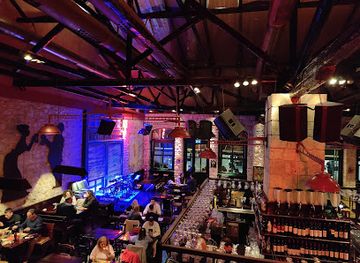
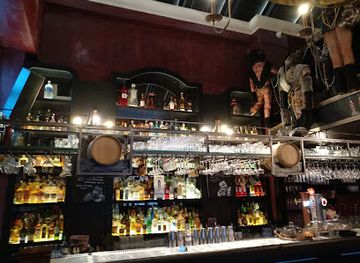
Patras has a youthful evening culture shaped by its university population, port identity and large number of cafés. Central streets around Riga Fereou, Gerokostopoulou and the pedestrian areas near Agiou Nikolaou fill with coffee bars, casual drinking venues and places where evenings extend late into the night. The waterfront offers a more open setting for drinks and conversation, while Psila Alonia remains a popular social meeting point. Music ranges from Greek popular songs and modern DJs to occasional live performances, with nightlife changing noticeably during the carnival period when themed parties and public events spread across the centre. The city is more café-led than club-dominated, though late-night venues operate at busy times. As elsewhere in Greece, opening patterns and entertainment options vary by season, and visitors should expect streets to become livelier after dinner rather than at the start of the evening.
-
Gastropub
Beer Bar Q
Discover the vibrant atmosphere and exceptional flavors at Beer Bar Q, Patras’ premier gastropub for craft beer and gourmet dining.
7 min walk · 0.6 km from city centre
-
Cocktail bar
Abbey
Experience the vibrant nightlife at Abbey in Patras, where innovative cocktails, delicious cuisine, and a lively atmosphere await your visit.
6 min walk · 0.5 km from city centre
-
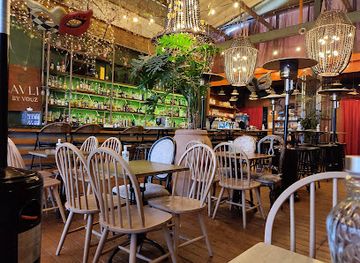
Bar
Avli By Vouz
Experience the vibrant nightlife of Patras at Avli By Vouz, a lively bar offering exceptional cocktails and a warm atmosphere for all.
2 min walk · 0.2 km from city centre
-
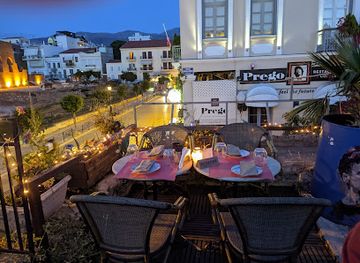
Tapas Bar
Prego
Discover Prego in Patras, where tapas, fine wines, and vibrant nightlife come together for an unforgettable experience.
6 min walk · 0.5 km from city centre
Best nightclubs in Patras
Patras has a youthful evening culture shaped by its university population, port identity and large number of cafés. Central streets around Riga Fereou, Gerokostopoulou and the pedestrian areas near Agiou Nikolaou fill with coffee bars, casual drinking venues and places where evenings extend late into the night. The waterfront offers a more open setting for drinks and conversation, while Psila Alonia remains a popular social meeting point. Music ranges from Greek popular songs and modern DJs to occasional live performances, with nightlife changing noticeably during the carnival period when themed parties and public events spread across the centre. The city is more café-led than club-dominated, though late-night venues operate at busy times. As elsewhere in Greece, opening patterns and entertainment options vary by season, and visitors should expect streets to become livelier after dinner rather than at the start of the evening.
-
Night club
Magenda
Dive into the iconic nightlife of Patras at Magenda, where every night offers exhilarating music, delicious drinks, and a vibrant atmosphere.
1 min walk · 0.1 km from city centre
-
Disco club
Navona Club Di Oggi
Discover the electric atmosphere of Navona Club Di Oggi, a must-visit disco club in Patras for an unforgettable night out.
4 min walk · 0.3 km from city centre
-
Night club
Mod's Club
Discover the electrifying nightlife of Mod's Club in Patras, where music and dance fuse to create unforgettable memories in a stylish environment.
4 min walk · 0.3 km from city centre
-
Night club
Saint Club
Discover the electrifying nightlife of Patras at Saint Club, where music, dancing, and unforgettable moments await you.
6 min walk · 0.5 km from city centre




Best shops in Patras
Shopping in Patras centres on the commercial streets of the lower city, particularly Maizonos, Riga Fereou, Korinthou and Agiou Nikolaou, where independent shops stand among cafés, department-style retailers and national chains. Small specialist stores sell shoes, clothing, jewellery and Greek-made accessories, while bakeries, delicatessens and wine shops provide more locally rooted purchases. The market streets are useful for everyday food and household goods rather than a single monumental bazaar, reflecting Patras’ role as a working regional centre. Visitors can look for Achaian wines, olive oil, honey, preserves, herbs and sweets, as well as handmade leather goods and ceramics found in selected independent shops. During carnival season, costume and party retailers become unusually prominent, since elaborate dress is part of the city’s festival culture. The waterfront and central pedestrian streets are pleasant areas for browsing, though individual opening patterns vary.
-
Shopping mall
Patra Mall
Experience the vibrant atmosphere of Patra Mall, where shopping, dining, and entertainment come together in the heart of Patras, Greece.
14 min drive · 4.7 km from city centre
-
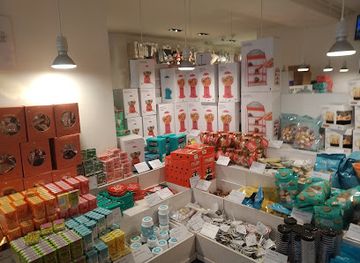
Gift shop
Flying Tiger Copenhagen
Explore a whimsical world of creativity and fun at Flying Tiger Copenhagen in Patras, where unique gifts and delightful surprises await every visitor.
3 min walk · 0.3 km from city centre
-
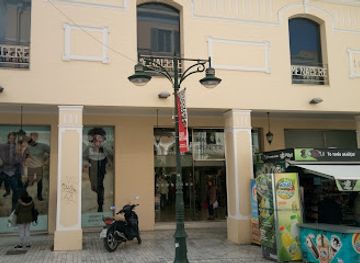
Shopping mall
Marks & Spencer
Explore stylish clothing and essentials at Marks & Spencer in Patras, where quality meets affordability in a delightful shopping experience.
2 min walk · 0.2 km from city centre
-
Sporting goods store
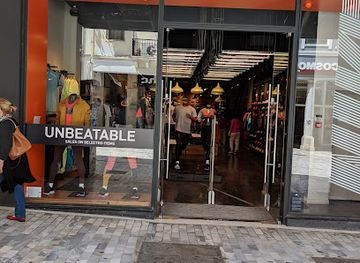
Nike Store
Explore the Nike Store in Patras for premium sportswear, footwear, and accessories in a vibrant shopping experience.
2 min walk · 0.2 km from city centre

Get your free copy of our complete guide to Patras, delivered straight to you.
Everything on this page, from attractions and restaurants to essentials and local phrases, in one PDF you can read offline, print or share.
Already have an account? Sign in
Your Patras guide is ready.
We'll send it to · Not you? Sign out

Getting your guide ready…
We are putting together a fresh copy of the Patras guide. This can take up to a minute.
This can take a few moments. If your browser asks, choose Allow so the download can start. You'll find the guide in your Downloads folder.
Nothing happened? Download it again
Sorry, the guide is taking longer than usual. Please try again in a minute, or get it by email instead.
Patras essentials
Currency and Payment
Safety
Emergency Situations
Do's and Don'ts
Local Tips
From Eve
Local phrases worth knowing
You don't need to get them perfect. A few words go a long way, and locals appreciate the effort.
Basics
| English | Local | Say it |
|---|---|---|
| Hello | Γεια σας | [Ya sas] |
| Goodbye | Αντίο | [Adio] |
| Yes | Ναι | [Ne] |
| No | Όχι | [Ohi] |
| Please/You're welcome | Παρακαλώ | [Parakalo] |
| Thank you | Ευχαριστώ | [Efharisto] |
| Excuse me/Sorry | Συγγνώμη | [Signomi] |
| How are you? | Τι κάνετε; | [Ti kanete?] |
| Fine. And you? | Καλά. Εσείς; | [Kala. Esis?] |
| Do you speak English? | Μιλάτε αγγλικά; | [Milate anglika?] |
| I don't understand | Δεν καταλαβαίνω | [Den katalaveno] |
Eating & Drinking
| English | Local | Say it |
|---|---|---|
| I'd like to see the menu, please | Θα ήθελα να δω το μενού, παρακαλώ | [Tha ithela na do to menu, parakalo] |
| I don't eat meat | Δεν τρώω κρέας | [Den troo kreas] |
| Cheers! | ΥΓΕΙΑ! | [Yia] |
| I would like to pay, please | Θα ήθελα να πληρώσω, παρακαλώ | [Tha ithela na plirososo, parakalo] |
Emergencies
| English | Local | Say it |
|---|---|---|
| Help! | Βοήθεια! | [Voithia!] |
| Go away! | Φύγε! | [Fiye!] |
| Call the Police! | Καλέστε την Αστυνομία! | [Kaleste tin Astinomia!] |
| Call a doctor! | Καλέστε για γιατρό! | [Kaleste ya giatro!] |
| I'm lost | Έχω χαθεί | [Eho hathi] |
| I'm ill | Είμαι άρρωστος | [Ime arrostos] |
Shopping
| English | Local | Say it |
|---|---|---|
| I'd like to buy... | Θα ήθελα να αγοράσω... | [Tha ithela na agoraso...] |
| I'm just looking | Απλά κοιτάζω | [Apla kitazo] |
| How much is it? | Πόσο κοστίζει; | [Poso kostizi?] |
| That's too expensive | Αυτό είναι πολύ ακριβό | [Afto ine poli akribo] |
| Can you lower the price? | Μπορείτε να μειώσετε την τιμή; | [Boreite na meiosete tin timi?] |
Time & Numbers
| English | Local | Say it |
|---|---|---|
| What time is it? | Τι ώρα είναι; | [Ti ora ine?] |
| It's one o'clock | Είναι μία ώρα | [Ine mia ora] |
| Half past (10) | Μισή (10) | [Misi (10)] |
| Morning | Πρωί | [Proi] |
| Afternoon | Απόγευμα | [Apoyevma] |
| Evening | Βράδυ | [Vradi] |
| Yesterday | Χθες | [Hthes] |
| Today | Σήμερα | [Simera] |
| Tomorrow | Αύριο | [Avrio] |
| 1 | Ένα | [Ena] |
| 2 | Δύο | [Dyo] |
| 3 | Τρία | [Tria] |
| 4 | Τέσσερα | [Tessera] |
| 5 | Πέντε | [Pente] |
| 6 | Έξι | [Exi] |
| 7 | Επτά | [Epta] |
| 8 | Οχτώ | [Ochto] |
| 9 | Εννιά | [Ennia] |
| 10 | Δέκα | [Deka] |
Transport & Directions
| English | Local | Say it |
|---|---|---|
| Where's a/the...? | Πού είναι ένα/το...; | [Pou ine ena/to...?] |
| What's the address? | Ποια είναι η διεύθυνση; | [Pia ine i diefthinsi?] |
| Can you show me (on the map)? | Μπορείτε να μου δείξετε (στο χάρτη); | [Boreite na mou dixete (sto charti)?] |
| When's the next (bus)? | Πότε είναι το επόμενο (λεωφορείο); | [Pote ine to epomeno (leoforeio)?] |
| A ticket (to ....) | Ένα εισιτήριο (για ....) | [Ena isitirio (ya ....)] |
History of Patras
Early Settlements and Achaean Patras
The area around modern Patras was inhabited from prehistoric times, and ancient Patras developed from settlements associated with the Achaean world. Greek tradition connected the city’s foundation with Patreus, a local ruler, although the historical development was more gradual. Its position on the northern Peloponnese, close to the Gulf of Patras and routes towards central Greece, encouraged agriculture, maritime exchange and regional influence. During the Hellenistic period, Patras became one of the cities of the Achaean League, a political federation that sought to coordinate the affairs of several Peloponnesian communities. The ancient settlement occupied the same broad coastal and lower-hill zone that still defines the city.
Roman Colony and Maritime Prosperity
Patras changed significantly after the Roman conquest of the Achaean territories. In 14 BC, Augustus established a Roman colony at Patrae, settling veterans and strengthening the city’s administrative and commercial role. Its harbour connected the Peloponnese with Italy, making Patras an important point for the movement of people, goods and imperial communications across the Ionian Sea. Roman public buildings, roads and urban infrastructure reshaped the settlement, while the city’s prosperity is reflected in surviving remains such as the Roman Odeon and the archaeological material displayed in the Archaeological Museum. Early Christian traditions also associate Patras with Saint Andrew, who is believed to have been martyred there.
Byzantine and Medieval Fortifications
Following the fragmentation of Roman authority, Patras remained a significant settlement within the Byzantine world, though its fortunes fluctuated with wider political and military change. The city’s elevated acropolis was fortified, creating the foundation of the castle that still overlooks the modern centre. After the Fourth Crusade, Patras passed through Latin and Greek spheres of influence before coming under Venetian control in the fifteenth century. The castle’s successive walls and buildings reflect the strategic value of the site, which commanded approaches from the coast and the Gulf. Ottoman rule followed in the fifteenth century, bringing Patras into the administrative and commercial networks of the empire.
Ottoman Port and Regional Commerce
Under Ottoman administration, Patras functioned as a regional port and market town serving the agricultural hinterland of Achaia. Trade in currants became especially important from the eighteenth century onwards. The dried grapes were exported through western Greek ports to markets abroad, generating wealth for merchants and linking the city to international commerce. Patras’ coastal location made it an intermediary between inland producers, Ionian shipping routes and European buyers. Commercial expansion also brought social and architectural change, although the city’s development was repeatedly affected by conflict and political instability. The port economy established a pattern that continued after independence and remains central to Patras’ identity.
Independence and the Modern City
Patras took part in the Greek War of Independence, and Ottoman authority ended there in 1828 when French forces under General Maison entered the city during the final phase of the conflict. The new Greek state encouraged urban rebuilding and commercial growth, while Patras became a major export centre for currants and a principal western port. Neoclassical residences, commercial buildings and broad streets expressed the ambitions of the nineteenth-century city. In the twentieth century, trade, manufacturing, education and migration reshaped its population and urban form. The port continued to connect Greece with Italy and the wider Adriatic, reinforcing Patras’ role as a western gateway.
Carnival and Contemporary Cultural Identity
Patras’ modern cultural reputation is strongly linked to its carnival, which developed into Greece’s largest organised carnival celebration during the twentieth century. Its parades, masked events, satirical themes and community participation make it more than a single procession, involving schools, clubs, businesses and residents across the city. The carnival reflects Patras’ commercial and outward-facing character, as well as its student and artistic communities. Contemporary Patras also draws on its archaeological heritage, port culture and regional wine traditions. Institutions such as the University of Patras and the Archaeological Museum contribute to the city’s present-day intellectual and cultural profile.
Patras in Photos
Browse through our photo collection highlighting the charm and character of the destination.
Cities near Patras
The closest cities to Patras, if you have time for more than one stop.
-

-

-

-

-


Swipe for more cities
Explore more
Explore more of Greece
Discover Greece: A land where ancient history meets modern vibrancy, offering stunning islands, crystal-clear seas, and unforgettable cultural experiences.
Explore Greece