

Pleinmont Point Travel Guide - Free Web & App
Your ultimate guide to Pleinmont Point. Discover top landmarks, proposed trips, and local tips. Free on the web or via the Evendo companion app.


Pleinmont Point, Guernsey: walk sea-facing cliffs, explore wartime defences and see Hanois Lighthouse above the island’s rugged south-west coast.
Cliffs, Sea and Open Skies
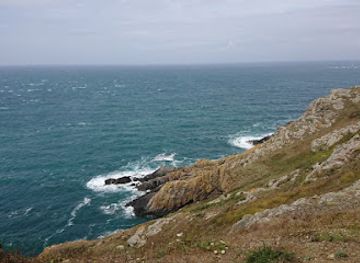
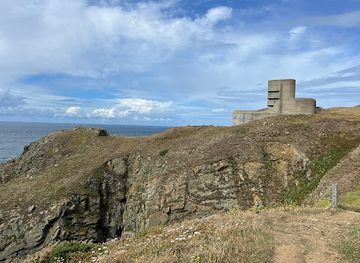
Pleinmont Point occupies the south-western tip of Guernsey, where narrow lanes and open heathland lead towards a rugged headland above the English Channel. The coast is defined by high cliffs, steep grassy slopes and rocky coves, with broad views towards the Hanois rocks and lighthouse offshore. Wind is a constant presence here, giving the landscape a spacious, exposed character that changes markedly with weather, season and light. Footpaths cross the headland and connect with sections of Guernsey’s cliff path, while viewpoints reveal the layered geology and deeply indented shoreline of the island’s south coast.Read more about Pleinmont Point
Military Heritage on the Headland
A Rural Coastal Base
When is the best time to visit Pleinmont Point?
Best: July–September · 20–22°C| Month | High (°C) | Rainfall (mm) |
|---|---|---|
| January | 10 | 59 |
| February | 10 | 55 |
| March | 11 | 45 |
| April | 13 | 35 |
| May | 16 | 25 |
| June | 20 | 18 |
| July (best) | 22 | 10 |
| August (best) | 22 | 9 |
| September (best) | 20 | 15 |
| October | 17 | 24 |
| November | 14 | 39 |
| December | 12 | 54 |
Getting to and around Pleinmont Point
How to get there
Transportation
Best attractions in Pleinmont Point
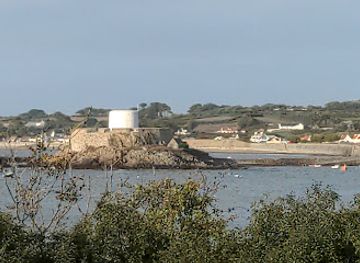
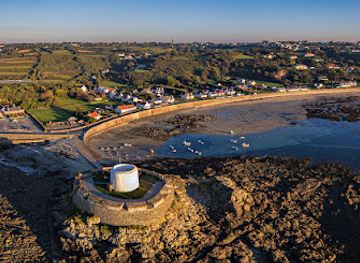
The main attraction is the Pleinmont headland itself, where cliff-top paths cross open grassland above the island’s south-western coast and provide views towards the Hanois rocks and lighthouse. Pleinmont Tower, a nineteenth-century Martello tower, is the most recognisable historic structure, while the Batterie Mirus area and associated German occupation remains reveal the scale of the Second World War defences built across this part of Guernsey. Walkers can follow sections of the island’s coastal path towards neighbouring bays and viewpoints, although access, terrain and privacy vary along the route. The nearby coastline includes steep cliffs, rocky shorelines and sheltered coves, with Portelet Bay lying close to the headland but forming a distinct coastal destination. Pleinmont is best suited to visitors interested in walking, photography, geology, sea views and military history rather than a concentration of indoor attractions or visitor facilities.
Best landmarks in Pleinmont Point
Pleinmont Point is itself a defining natural landmark of Guernsey’s south-west coast, marked by high cliffs, exposed grassland and wide views across the Channel. Pleinmont Tower is a compact coastal fortification from the early nineteenth century and represents the island’s Napoleonic-era defensive system. The Batterie Mirus complex and surviving German bunkers, gun positions and observation structures form a later military landscape dating from the occupation of the Channel Islands during the Second World War. Offshore, the Hanois rocks and Hanois Lighthouse provide a distinctive visual focus from the headland, although they are separate maritime features rather than part of the point itself. Nearby coves and rocky shore platforms demonstrate the continuing influence of marine erosion on Guernsey’s southern coastline.
-
Museum
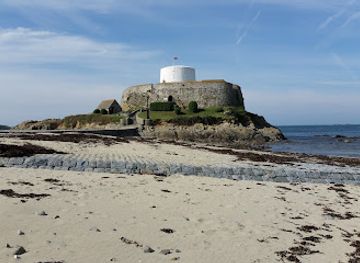
Fort Grey Shipwreck Museum
Explore the rich maritime heritage of Guernsey at Fort Grey Shipwreck Museum, where history and stunning coastal views await.
-
Public beach
Portelet Bay
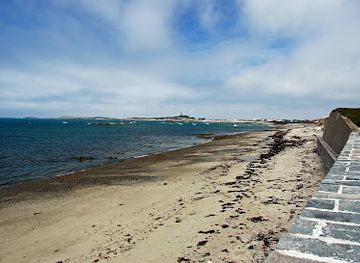
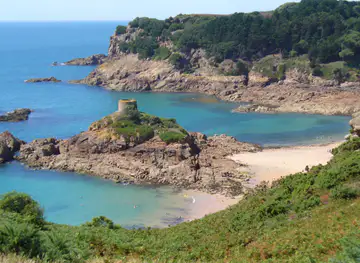
Discover Portelet Bay: a stunning public beach in Guernsey, perfect for relaxation, family fun, and breathtaking coastal views.
-
Tourist attraction
Observation Tower MP3
Discover the breathtaking views and rich history at Observation Tower MP3, the must-visit tourist attraction in Guernsey.
-
Historical landmark
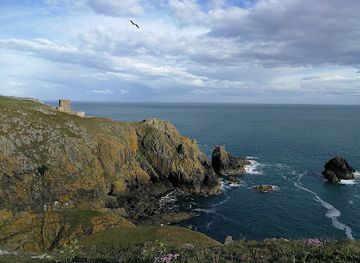
Observation Tower MP4 L'Angle
Discover stunning coastal views and rich maritime history at Observation Tower MP4 L'Angle in Guernsey, an unmissable historical landmark for every traveler.
Explore Pleinmont Point on the map
Plan your trip on one map. See where the top attractions, landmarks, restaurants and hotels are, and book hotels and experiences in a few clicks.
Best hotels in Pleinmont Point
Best restaurants in Pleinmont Point
There is no substantial dining scene at Pleinmont Point itself, so visitors generally eat before or after a walk or bring provisions for a self-contained coastal outing. Food options are more likely to be found in Guernsey’s villages, parish centres and larger settlements than beside the headland, with St Peter Port offering the broadest range of restaurants and cafés. The island’s culinary identity draws on its maritime setting and dairy tradition, including local seafood, shellfish, Guernsey Gâche, a traditional fruit bread, and produce associated with Guernsey cattle. Rural pubs and cafés elsewhere on the island can provide a useful meal stop, but opening patterns vary, particularly outside the main season. Anyone planning a longer walk should carry water and food rather than relying on finding refreshments at Pleinmont.
Best shops in Pleinmont Point
Pleinmont Point has no shops or permanent retail centre, and shopping is not a principal reason to visit the headland. Visitors should obtain walking supplies, food and drinks in St Peter Port or another suitable Guernsey settlement before travelling into the rural south-west. Across the island, locally associated purchases may include Guernsey dairy products, regional food items, handmade crafts, artwork and souvenirs reflecting the island’s coastal and maritime identity. Farm shops, village shops and independent businesses are dispersed rather than concentrated in a shopping district, and their opening arrangements can vary. Military-history enthusiasts may find themed interpretation and souvenirs at relevant heritage sites elsewhere on Guernsey, but the fortifications at Pleinmont are primarily landscape monuments rather than commercial visitor attractions.
Get your free copy of our complete guide to Pleinmont Point, delivered straight to you.
Everything on this page, from attractions and restaurants to essentials and local phrases, in one PDF you can read offline, print or share.
Already have an account? Sign in
Your Pleinmont Point guide is ready.
We'll send it to · Not you? Sign out

Getting your guide ready…
We are putting together a fresh copy of the Pleinmont Point guide. This can take up to a minute.
This can take a few moments. If your browser asks, choose Allow so the download can start. You'll find the guide in your Downloads folder.
Nothing happened? Download it again
Sorry, the guide is taking longer than usual. Please try again in a minute, or get it by email instead.
Pleinmont Point essentials
Currency and Payment
Safety
Emergency Situations
Do's and Don'ts
Local Tips
From Eve
Local phrases worth knowing
You don't need to get them perfect. A few words go a long way, and locals appreciate the effort.
Basics
| English | Local | Say it |
|---|---|---|
| Hello | Bonjour | [bon-zhoor] |
| Goodbye | Au revoir | [oh reh-vwar] |
| Yes | Oui | [wee] |
| No | Non | [noh] |
| Please/You're welcome | S'il vous plaît/De rien | [seel voo pleh/dee ryen] |
| Thank you | Merci | [mehr-see] |
| Excuse me/Sorry | Excusez-moi/Désolé | [ex-kew-zay mwah/deh-zoh-lay] |
| How are you? | Comment ça va? | [ko-mohn sah vah] |
| Fine. And you? | Bien. Et toi? | [byen/eh twah] |
| Do you speak English? | Parlez-vous anglais? | [par-lay voo ahn-glay] |
| I don't understand | Je ne comprends pas | [zhuh nuh kohm-prahnd pah] |
Eating & Drinking
| English | Local | Say it |
|---|---|---|
| I'd like to see the menu, please | Je voudrais voir le menu, s'il vous plaît | [zhuh voo-dray vwahr luh meh-noo/seel voo pleh] |
| I don't eat meat | Je ne mange pas de viande | [zhuh nuh mahnj pah duh vee-ahnd] |
| Cheers! | Santé! | [sahn-tay] |
| I would like to pay, please | Je voudrais payer, s'il vous plaît | [zhuh voo-dray pay-yay/seel voo pleh] |
Emergencies
| English | Local | Say it |
|---|---|---|
| Help! | À l'aide! | [ah leed] |
| Go away! | Allez-vous en! | [ah-lay voo zahn] |
| Call the Police! | Appelez la police! | [ah-puh-lay lah plees] |
| Call a doctor! | Appelez un médecin! | [ah-puh-lay uh may-duh-sahn] |
| I'm lost | Je suis perdu | [zhuh swee pair-doo] |
| I'm ill | Je suis malade | [zhuh swee mah-lahd] |
Shopping
| English | Local | Say it |
|---|---|---|
| I'd like to buy... | Je voudrais acheter... | [zhuh voo-dray zheh-tay] |
| I'm just looking | Je regarde juste | [zhuh ruh-gard zheust] |
| How much is it? | Combien ça coûte? | [kohm-byen sah koot] |
| That's too expensive | C'est trop cher | [say troh sher] |
| Can you lower the price? | Pouvez-vous baisser le prix? | [poo-veh voo bay-say luh pree] |
Time & Numbers
| English | Local | Say it |
|---|---|---|
| What time is it? | Quelle heure est-il? | [kehl uhr eh-teel] |
| It's one o'clock | Il est une heure | [eel eh oon uhr] |
| Half past (10) | Dix heures et demie | [dee zehr eh duh-mee] |
| Morning | Matin | [mah-tahn] |
| Afternoon | Après-midi | [ah-pray mee-dee] |
| Evening | Soirée | [swah-ray] |
| Yesterday | Hier | [yehr] |
| Today | Aujourd'hui | [oh-zhoor dwee] |
| Tomorrow | Demain | [duh-mahn] |
| 1 | Un | [uhn] |
| 2 | Deux | [duh] |
| 3 | Trois | [twah] |
| 4 | Quatre | [kah-truh] |
| 5 | Cinq | [sank] |
| 6 | Six | [sees] |
| 7 | Sept | [sept] |
| 8 | Huit | [weet] |
| 9 | Neuf | [nuff] |
| 10 | Dix | [dee] |
Transport & Directions
| English | Local | Say it |
|---|---|---|
| Where's a/the...? | Où est un/le...? | [oo eh oon/luh] |
| What's the address? | Quelle est l'adresse? | [kehl eh lah-dress] |
| Can you show me (on the map)? | Pouvez-vous me montrer (sur la carte)? | [poo-veh voo muh mohn-tray/sewr lah kahrt] |
| When's the next (bus)? | Quand est le prochain (bus)? | [kahn eh luh proh-shahn/bus] |
| A ticket (to ....) | Un billet (pour ....) | [uhn bee-yay/poor] |
History of Pleinmont Point
A Granite Headland Shaped by the Sea
Pleinmont forms part of Guernsey’s ancient rocky landscape, whose hard island bedrock has been exposed and shaped by prolonged weathering and marine erosion. Around the south-western coast, the sea has cut steep cliffs, small coves and wave-battered rock platforms, while thinner soils support grassland and heath-like vegetation on the exposed headland. Although this is geological rather than human history, the physical character of Pleinmont explains its later importance: the height of the cliffs, the wide sea outlook and the commanding position above the approaches to Guernsey made the point valuable for observation and defence.
Nineteenth-Century Coastal Defence
Pleinmont Tower belongs to the period when Guernsey strengthened its coastal defences in response to the threat posed by Napoleonic France. The Martello tower was built in the early nineteenth century as part of a wider defensive system around the island, designed to support artillery and protect strategic approaches. Its compact masonry form contrasts with the open headland around it, where the tower’s position offered a broad view across the sea. Pleinmont’s military role continued to evolve as weapons, tactics and the perceived threats to the Channel Islands changed.
Occupation and the Batterie Mirus
During the German occupation of the Channel Islands between 1940 and 1945, Pleinmont became part of the Atlantic Wall defensive system. The Batterie Mirus complex, armed with heavy coastal guns, was constructed to control the sea approaches and was supported by observation posts, bunkers and associated positions. Much of this infrastructure remains visible in the landscape, although individual structures may be fenced, unstable or inaccessible. The surviving fortifications provide tangible evidence of the way the occupation reshaped Guernsey’s coast and introduced a dense military layer to a previously rural headland.
From Strategic Coast to Heritage Landscape
After the Second World War, Pleinmont gradually returned to its role as an open coastal landscape, but the military remains were not erased. Towers, gun emplacements and concrete structures have become part of Guernsey’s twentieth-century heritage, while the headland’s cliff paths and sea views have drawn walkers and visitors. Today, Pleinmont is valued for both its natural setting and its historical evidence, with interpretation and conservation helping visitors understand the relationship between the island’s exposed geography, its strategic position and the communities that have lived beside the cliffs.
Pleinmont Point in Photos
Browse through our photo collection highlighting the charm and character of the destination.
Neighbouring destination travel guides
The closest destinations to Pleinmont Point, if you have time for more than one.
-

-

-
-
-


Swipe for more destinations

