

Grundarfjörður Area Travel Guide - Free Web & App
Your ultimate guide to Grundarfjörður Area. Discover top landmarks, proposed trips, and local tips. Free on the web or via the Evendo companion app.


Grundarfjörður Area, Iceland, pairs Kirkjufell mountain with Breiðafjörður views, coastal walks, whale watching, fishing heritage and wild Snæfellsnes landscapes.
A Fjord Town beneath Kirkjufell
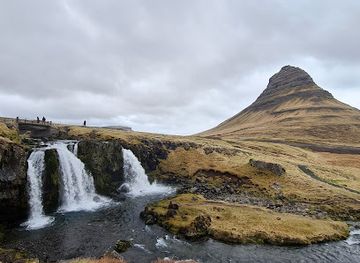
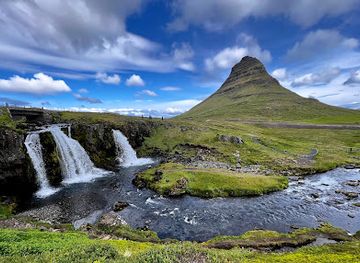
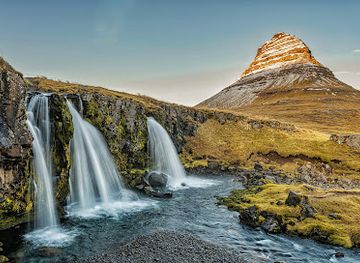
Grundarfjörður Area lies on the north coast of Iceland’s Snæfellsnes peninsula, where a compact fishing town faces the broad waters of Breiðafjörður. Its defining landmark is Kirkjufell, the sharply contoured mountain rising just west of the town. Seen with the nearby Kirkjufellsfoss waterfalls, it forms one of Iceland’s most recognisable landscapes, although the mountain’s appearance changes markedly with weather, light and season. The shoreline, harbour and surrounding roads provide changing views across the fjord towards islands and distant mountains.Read more about Grundarfjörður Area
Coast, Countryside and the Wider Peninsula
Fishing Heritage and Local Character
When is the best time to visit Grundarfjörður Area?
Best: June–August · 13–17°C| Month | High (°C) | Rainfall (mm) |
|---|---|---|
| January | 4 | 80 |
| February | 2 | 70 |
| March | 3 | 70 |
| April | 7 | 60 |
| May | 10 | 60 |
| June (best) | 13 | 50 |
| July (best) | 17 | 50 |
| August (best) | 16 | 50 |
| September | 12 | 60 |
| October | 7 | 70 |
| November | 4 | 80 |
| December | 2 | 80 |
Getting to and around Grundarfjörður Area
How to get there
Transportation
Best attractions in Grundarfjörður Area
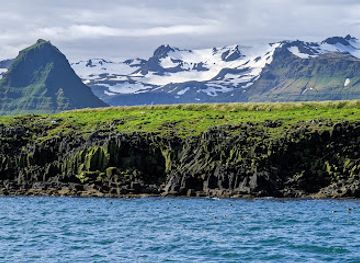
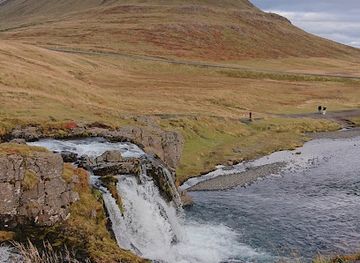
Kirkjufell and the adjacent Kirkjufellsfoss waterfalls are the defining sights of the Grundarfjörður area, with viewpoints and paths offering changing perspectives across the mountain, river and fjord. The town’s harbour provides a close look at its working maritime character and is also a departure point for some seasonal boat excursions on Breiðafjörður. Around the wider fjord, the coastline reveals small coves, open headlands and views towards the islands of Breiðafjörður, while the Berserkjahraun lava field east of town offers a rugged landscape associated with the Eyrbyggja Saga. Travelling west brings visitors towards Ólafsvík, the fishing settlement of Hellissandur and the landscapes of Snæfellsjökull National Park, although these lie beyond the immediate town area. Birdlife, changing sea conditions and broad mountain views are central to the experience, with whale-watching possibilities depending on season, weather and local operators.
-
 Restaurant
Lýsuhóll
Discover authentic Icelandic cuisine and breathtaking landscapes at Lýsuhóll, an enchanting restaurant and horseback riding service in Snæfellsbær.
-
Observation deck
Kirkjufell útsýnisstaður
Experience breathtaking views of Kirkjufell mountain at the stunning Kirkjufell Observation Deck, a must-visit for nature lovers and photographers seeking beauty.
-
Scenic spot
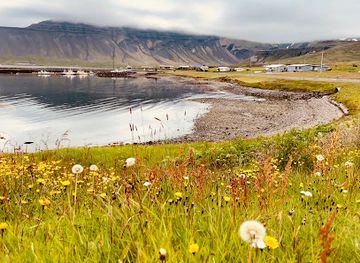
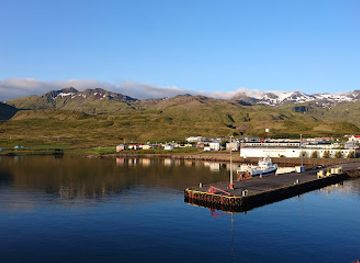
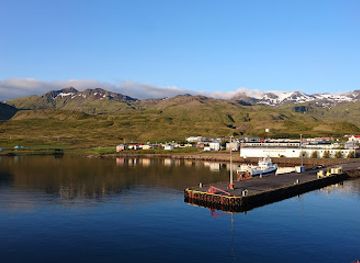
Grundarfjörður harbour view and Kirkufjell
Explore the stunning views of Grundarfjörður Harbour and the iconic Kirkufell mountain, a must-visit for nature and photography lovers in Iceland.
-
Sculpture
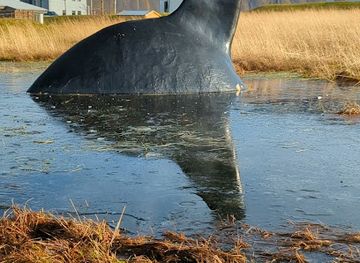
Thunderstorm sculpture
Explore the Thunderstorm Sculpture in Grundarfjörður, a breathtaking intersection of Icelandic art and nature's raw beauty.
Best landmarks in Grundarfjörður Area
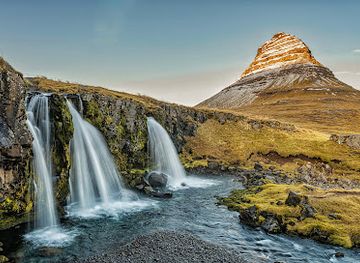
Kirkjufell is the area’s most important natural landmark, a steep-sided, distinctly shaped mountain standing beside Grundarfjörður and recognised for its relationship with the nearby Kirkjufellsfoss waterfalls. Together they create a powerful visual composition, but each feature also belongs to the wider geological and coastal landscape of northern Snæfellsnes. Breiðafjörður forms the area’s maritime setting, with scattered islands, tidal waters and distant shores giving the coast its open character. East of Grundarfjörður, the dark lava of Berserkjahraun is both a physical landmark and a place connected with the Eyrbyggja Saga tradition. The harbour is the principal human landmark in town, reflecting the community’s continuing relationship with fishing and the sea, while the surrounding mountain and lava landscapes connect local identity with the peninsula’s volcanic origins and saga heritage.
-
Tourist attraction
Kirkjufellsfossar
Discover the enchanting beauty of Kirkjufellsfossar, Iceland's iconic waterfall, nestled against stunning landscapes and the majestic Kirkjufell mountain.
-
National park
Kirkjufell Mountain
Discover the breathtaking beauty of Kirkjufell Mountain, an iconic landmark in Iceland perfect for photography, hiking, and experiencing nature's wonders.
-
Tour operator
Láki Tours (Puffin tour)
Experience unforgettable puffin watching tours in Iceland's beautiful landscapes with Lákí Tours, where adventure meets nature's wonders.
-
Scenic spot
Kirkjufell Viewpoint
Experience the breathtaking beauty of Kirkjufell Viewpoint, one of Iceland's most iconic scenic spots, perfect for photography and nature lovers.
Explore Grundarfjörður Area on the map
Plan your trip on one map. See where the top attractions, landmarks, restaurants and hotels are, and book hotels and experiences in a few clicks.
Best hotels in Grundarfjörður Area
Best restaurants in Grundarfjörður Area
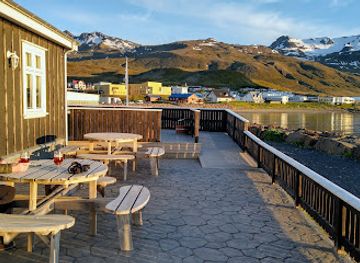
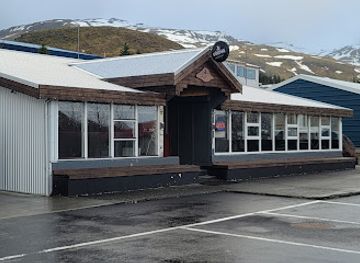
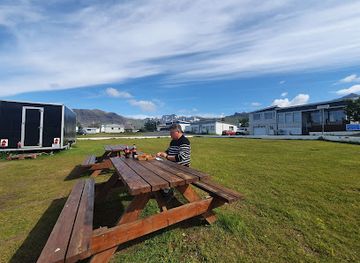
Dining in the Grundarfjörður area is concentrated in the town, where visitors can find a small selection of cafés, restaurants and casual places associated with local accommodation and the harbour community rather than a large restaurant district. Menus in Iceland commonly draw on fish, lamb, dairy products, potatoes and other straightforward local ingredients, while coffee and baked goods are useful options during a road journey. The town’s maritime setting makes seafood a natural feature of regional eating, although individual menus change and should be checked locally. Additional choice may be found in nearby settlements such as Ólafsvík and Stykkishólmur, while travellers touring rural Snæfellsnes should not expect services at every attraction. Self-catering supplies are easiest to obtain in the peninsula’s larger settlements, so carrying provisions can be sensible for longer excursions.
-
Restaurant
Bjargarsteinn Mathús
Experience authentic Icelandic cuisine with stunning views at Bjargarsteinn Mathús in Grundarfjörður.
-
Restaurant
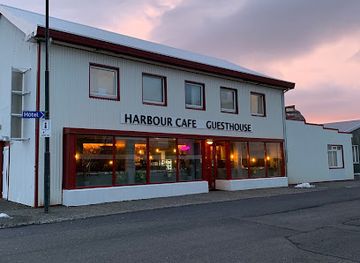
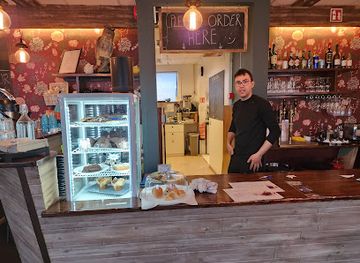
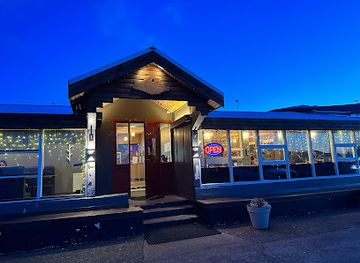
Harbour Cafe
Discover the flavors of Iceland at Harbour Cafe in Grundarfjörður – where local ingredients meet stunning coastal views.
-
Restaurant
Kaffi 59
Experience authentic Icelandic flavors at Kaffi 59 in Grundarfjörður - where local ingredients meet warm hospitality.
-
Restaurant
Mæstro - Street food
Experience authentic Icelandic street food at Mæstro in Grundarfjörður – where every bite tells a story!
Best bars in Grundarfjörður Area
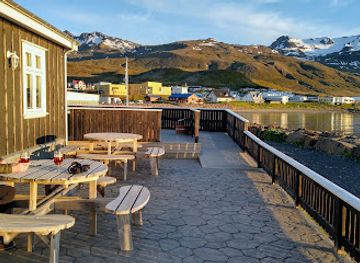
Grundarfjörður has a quiet evening atmosphere shaped by its small population, working harbour and outdoor setting rather than by a dedicated nightlife scene. Visitors are more likely to spend the evening in a hotel bar, café or local restaurant than in a nightclub, and entertainment can be modest outside the busier summer period. The town’s accommodation and hospitality venues may provide places to meet residents and other travellers, but opening patterns and seasonal services vary. For a broader choice of pubs, restaurants or occasional cultural events, visitors may look to larger settlements elsewhere on Snæfellsnes, including Stykkishólmur, while recognising that these are outside the immediate Grundarfjörður area. Clear winter skies, long summer twilight and views across the fjord are often more characteristic evening experiences than organised entertainment.
-
Restaurant
Bjargarsteinn Mathús
Experience the best of Icelandic cuisine with breathtaking views at Bjargarsteinn Mathús in Grundarfjörður.
-
Restaurant
Harbour Cafe
Experience the best of Icelandic cuisine at Harbour Cafe, nestled in the scenic town of Grundarfjörður with delightful views and local flavors.
-
Coffee roasters
Valeria Specialty Coffee & souvenirs
Experience the rich flavors of Iceland at Valeria Specialty Coffee & Souvenirs, where every cup tells a story.
-
Restaurant
Kaffi 59
Discover the flavors of Iceland at Kaffi 59 in Grundarfjörður, a cozy restaurant offering local dishes and a warm ambiance.
Best nightclubs in Grundarfjörður Area
Grundarfjörður has a quiet evening atmosphere shaped by its small population, working harbour and outdoor setting rather than by a dedicated nightlife scene. Visitors are more likely to spend the evening in a hotel bar, café or local restaurant than in a nightclub, and entertainment can be modest outside the busier summer period. The town’s accommodation and hospitality venues may provide places to meet residents and other travellers, but opening patterns and seasonal services vary. For a broader choice of pubs, restaurants or occasional cultural events, visitors may look to larger settlements elsewhere on Snæfellsnes, including Stykkishólmur, while recognising that these are outside the immediate Grundarfjörður area. Clear winter skies, long summer twilight and views across the fjord are often more characteristic evening experiences than organised entertainment.
-
Restaurant
Bjargarsteinn Mathús
Experience authentic Icelandic cuisine at Bjargarsteinn Mathús, where local flavors meet stunning natural beauty in Grundarfjörður.
-
Restaurant
Harbour Cafe
Experience the best of Icelandic cuisine at Harbour Cafe in Grundarfjörður, where local flavors meet stunning views.
-
Restaurant
Kaffi 59
Discover the flavors of Iceland at Kaffi 59, a charming restaurant in Grundarfjörður offering local dishes and warm hospitality.
-
Hostel
Grundarfjörður HI Hostel
Discover the perfect blend of comfort and adventure at Grundarfjörður HI Hostel, your gateway to Iceland's natural wonders.
Best shops in Grundarfjörður Area
Shopping in Grundarfjörður is practical and limited rather than extensive, with everyday supplies, locally made gifts and some visitor-oriented products available through small shops or hospitality businesses when operating. Regional purchases may include Icelandic wool goods, handicrafts, artwork, books and food products, although selection varies between settlements and seasons. Visitors looking for a wider range of locally produced goods can explore shops, galleries and food retailers in Stykkishólmur, Ólafsvík and other larger communities around Snæfellsnes. Farm shops and small producers may appear along the peninsula, but they are not continuous or guaranteed to be open, so travellers should not rely on finding provisions at every scenic stop. Outdoor equipment and general supplies are likewise easier to arrange in larger towns before heading into the more remote parts of the region.
-
Tourist attraction
Kirkjufellsfossar
Explore the breathtaking beauty of Kirkjufellsfossar, an iconic waterfall in Iceland, where stunning landscapes and nature await every traveler.
-
Restaurant
Harbour Cafe
Discover Harbour Cafe in Grundarfjörður, where Icelandic charm meets culinary delight amidst breathtaking landscapes.
-
Coffee roasters
Valeria Specialty Coffee & souvenirs
Discover the finest in specialty coffee and unique souvenirs at Valeria, a charming café in Grundarfjörður, Iceland.
-
Tourist attraction
Grundarfoss
Experience the breathtaking beauty of Grundarfoss Waterfall, a hidden gem in Iceland surrounded by stunning landscapes and tranquility.
Get your free copy of our complete guide to Grundarfjörður Area, delivered straight to you.
Everything on this page, from attractions and restaurants to essentials and local phrases, in one PDF you can read offline, print or share.
Already have an account? Sign in
Your Grundarfjörður Area guide is ready.
We'll send it to · Not you? Sign out

Getting your guide ready…
We are putting together a fresh copy of the Grundarfjörður Area guide. This can take up to a minute.
This can take a few moments. If your browser asks, choose Allow so the download can start. You'll find the guide in your Downloads folder.
Nothing happened? Download it again
Sorry, the guide is taking longer than usual. Please try again in a minute, or get it by email instead.
Grundarfjörður Area essentials
Currency and Payment
Safety
Emergency Situations
Do's and Don'ts
Local Tips
From Eve
Local phrases worth knowing
You don't need to get them perfect. A few words go a long way, and locals appreciate the effort.
Basics
| English | Local | Say it |
|---|---|---|
| Hello | Halló | [ha-tlo] |
| Goodbye | Bless | [bles] |
| Yes | Já | [ya] |
| No | Nei | [nay] |
| Please/You're welcome | Gjörðu svo vel | [gyo-rthu sva vel] |
| Thank you | Takk fyrir | [tahk fi-rir] |
| Excuse me/Sorry | Afsakið | [af-sa-kith] |
| How are you? | Hvað segir þú? | [kva-th se-yir thu] |
| Fine. And you? | Fínt. En þú? | [feent. en thu] |
| Do you speak English? | Talarðu ensku? | [ta-lar-thu en-skoo] |
| I don't understand | Ég skil ekki | [yeg skil eki] |
Eating & Drinking
| English | Local | Say it |
|---|---|---|
| I'd like to see the menu, please | Ég vil sjá matsedilinn, takk | [yeg vil syau mat-se-thil-inn, tahk] |
| I don't eat meat | Ég borða ekki kjöt | [yeg bor-tha eki kyot] |
| Cheers! | Skál! | [skawl] |
| I would like to pay, please | Ég vil greiða, takk | [yeg vil gray-tha, tahk] |
Emergencies
| English | Local | Say it |
|---|---|---|
| Help! | Hjálp! | [hya-lp] |
| Go away! | Farðu í burtu! | [far-thu ee bur-thu] |
| Call the Police! | Hringdu í lögregluna! | [hring-thu ee lo-gre-gluna] |
| Call a doctor! | Hringdu í lækninn! | [hring-thu ee lyek-nin] |
| I'm lost | Ég er týndur | [yeg er ti-nthur] |
| I'm ill | Ég er veikur | [yeg er vay-kur] |
Shopping
| English | Local | Say it |
|---|---|---|
| I'd like to buy... | Ég vil kaupa... | [yeg vil koy-pa] |
| I'm just looking | Ég er bara að skoða | [yeg er bara ath sko-tha] |
| How much is it? | Hvað kostar það? | [kva-th kostar tha-th] |
| That's too expensive | Það er of dýrt | [tha-th er ov deert] |
| Can you lower the price? | Geturðu lækkat verðið? | [gethur-thu lye-kat ver-thith] |
Time & Numbers
| English | Local | Say it |
|---|---|---|
| What time is it? | Hvað er klukkan? | [kva-th er kluk-an] |
| It's one o'clock | Klukkan er eitt | [kluk-an er ayt] |
| Half past (10) | Hálft á 10 | [hawlt ow 10] |
| Morning | Morgunn | [mor-gun] |
| Afternoon | Síðdegis | [seed-dey-is] |
| Evening | Kvöld | [kvowl-th] |
| Yesterday | Í gær | [ee gai-r] |
| Today | Í dag | [ee thak] |
| Tomorrow | Á morgun | [ow mor-gun] |
| 1 | Eitt | [ayt] |
| 2 | Tvö | [tvo] |
| 3 | Þrjú | [thryu] |
| 4 | Fjögur | [fy-thur] |
| 5 | Fimm | [fim] |
| 6 | Sex | [seks] |
| 7 | Sjö | [syo] |
| 8 | Átta | [ow-tha] |
| 9 | Níu | [nee-u] |
| 10 | Tíu | [tee-u] |
Transport & Directions
| English | Local | Say it |
|---|---|---|
| Where's a/the...? | Hvar er... | [kvar er] |
| What's the address? | Hvað er heimilisfangið? | [kva-th er hay-mil-is-fangi-th] |
| Can you show me (on the map)? | Geturðu sýnt mér (á kortinu)? | [gethur-thu siynt mair (ow kort-inu)] |
| When's the next (bus)? | Hvenær kemur næsti (strætó)? | [kven-ai-r kem-ur nay-sti (strai-to)] |
| A ticket (to ....) | Einn miða (til ...) | [ayt-n me-tha (til)] |
History of Grundarfjörður Area
Volcanic Landscapes and Early Settlement
The physical setting of Grundarfjörður was formed by the volcanic and glacial processes that shaped Snæfellsnes, including the mountain massifs, lava fields and fjords visible today. Human settlement followed Iceland’s colonisation in the late ninth and early tenth centuries. The area’s sheltered coastal position provided access to fishing grounds, seabird-rich shores and pasture, while the difficult terrain divided communities into small farms and coastal settlements. Place names around the fjord preserve aspects of this early relationship between people, land and sea, although the modern town developed much later than the original farms.
Saga Landscapes of Snæfellsnes
Grundarfjörður and its neighbouring districts are associated with the Eyrbyggja Saga, a medieval Icelandic narrative rooted in the communities of the Snæfellsnes peninsula. Saga references should be treated as literary accounts rather than straightforward historical records, but they reflect the importance of local farms, law, kinship and religious change in early Icelandic society. The nearby Berserkjahraun lava field is linked by tradition to the saga’s story of berserkers, a connection that has helped give the eastern side of the Grundarfjörður area a lasting place in Icelandic cultural geography.
Farming, Fishing and Coastal Trade
For centuries, life around Grundarfjörður combined farming with seasonal fishing and the use of coastal landing places. Breiðafjörður supported fishing, marine harvesting and transport between settlements, while the peninsula’s exposed waters also demanded local knowledge of weather and sea conditions. The present town grew as a fishing settlement, with the harbour becoming central to employment and trade. Modern roads and improved harbour facilities gradually connected Grundarfjörður more closely with other communities on Snæfellsnes, without removing its dependence on the surrounding sea.
Modern Town and Tourism
Grundarfjörður’s contemporary identity still rests on fishing, but tourism has become increasingly important as visitors travel around Snæfellsnes and seek views of Kirkjufell. The mountain’s instantly recognisable form has made the town a prominent stop on Icelandic road itineraries, while the wider peninsula’s protected landscapes and marine environments have encouraged more interest in responsible outdoor recreation. Tourism has added accommodation, dining and guided excursions, yet Grundarfjörður remains a small working settlement rather than a fully developed resort, and weather continues to shape both local life and visitor access.
Grundarfjörður Area in Photos
Browse through our photo collection highlighting the charm and character of the destination.
Neighbouring destination travel guides
The closest destinations to Grundarfjörður Area, if you have time for more than one.
-

-

-

-

-


Swipe for more destinations
Explore more

Explore more of Western Region
Discover the captivating beauty and rich history of Iceland's Western Region – where rugged landscapes meet serene fjords and charming towns.
Explore Western Region
Explore more of Iceland
Discover Iceland, where glaciers meet volcanoes, Northern Lights dance in the skies, and natural wonders await at every turn.
Explore Iceland