

Mississippi Palisades State Park Travel Guide - Free Web & App
Your ultimate guide to Mississippi Palisades State Park. Discover top landmarks, proposed trips, and local tips. Free on the web or via the Evendo companion app.


Mississippi Palisades State Park in Illinois pairs Mississippi River bluffs, forested ravines, scenic trails, camping and quiet outdoor adventures.
Bluffs, Ravines and River Country
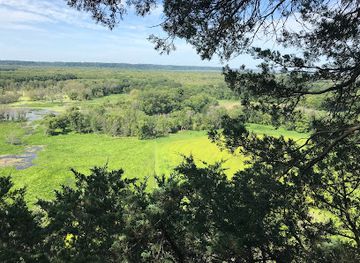
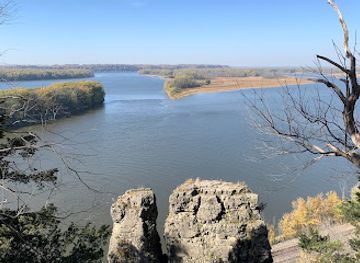
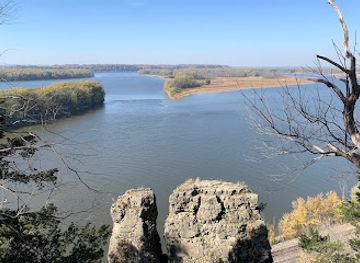
Mississippi Palisades State Park occupies roughly 2,500 acres on the Illinois side of the Mississippi River near Savanna, in the state's north-western corner. Its defining landscape is a line of wooded bluffs and exposed limestone cliffs overlooking the broad river valley, where narrow ravines cut inland through forested uplands. The park lies within the Driftless Area, a region that escaped the most recent continental glaciation and consequently retains a more rugged relief than much of neighbouring Illinois. Seasonal colour, open river views and the contrast between high bluffs and shaded ravines give the park a changing character throughout the year.Read more about Mississippi Palisades State Park
Landscapes and Outdoor Life
River Heritage and Nearby Gateways
When is the best time to visit Mississippi Palisades State Park?
Best: May–June, September · 23–28°C| Month | High (°C) | Rainfall (mm) |
|---|---|---|
| January | 1 | 40 |
| February | 4 | 45 |
| March | 10 | 50 |
| April | 17 | 60 |
| May (best) | 23 | 70 |
| June (best) | 28 | 80 |
| July | 30 | 90 |
| August | 29 | 80 |
| September (best) | 24 | 70 |
| October | 18 | 60 |
| November | 10 | 50 |
| December | 2 | 40 |
Getting to and around Mississippi Palisades State Park
How to get there
Best attractions in Mississippi Palisades State Park
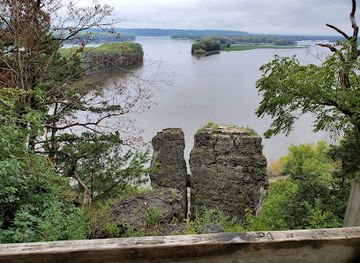
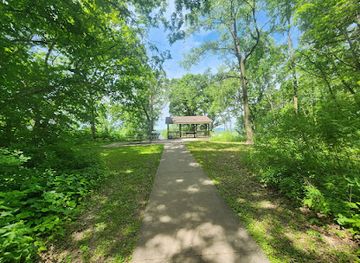
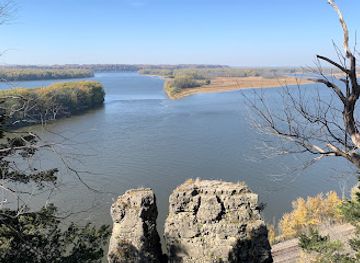
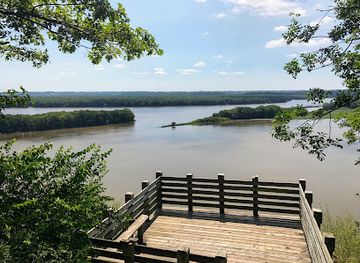
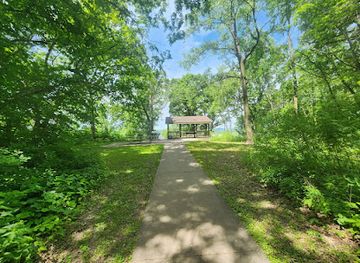
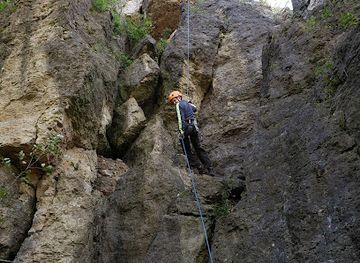
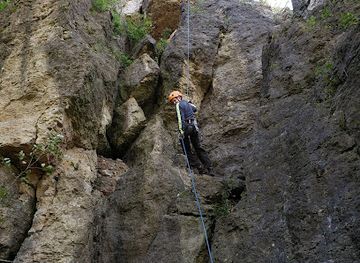
The principal attraction of Mississippi Palisades State Park is its elevated Mississippi River landscape, where wooded bluffs, limestone outcrops and narrow ravines create a far more rugged setting than the surrounding Illinois countryside. Hiking trails lead through forest and along bluff tops to named features including Sentinel Rock, Twin Sisters and Indian Head, each offering a different perspective on the park's geology and river valley. Overlooks and picnic areas provide accessible ways to experience the scenery without undertaking a long walk, while the river edge supports fishing and boating where designated facilities and current conditions allow. The park's more than 15 miles of trails vary in character, from shaded ravine sections to exposed viewpoints, and seasonal changes are especially visible in the woodland. Camping extends visits beyond a short outing, while nearby Savanna supplies practical services outside the park rather than forming part of its natural attraction.
-
Park
Marquette Park
Experience the tranquility and beauty of Marquette Park in Savanna, Illinois, a perfect escape for nature lovers and family outings.
-
Historical landmark
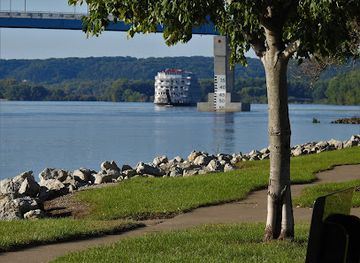
Mississippi Palisades - National Natural Landmark
Discover the breathtaking Mississippi Palisades, a stunning natural landmark in Illinois, where history and nature collide in spectacular views.
-
Campground
Mississippi Palisades State Park Campground
Discover the beauty of Mississippi Palisades State Park Campground, your perfect nature getaway in Illinois with stunning views and endless outdoor adventures.
-
Hiking area
Sentinel Trail
Explore the natural beauty of Sentinel Trail in Savanna, Illinois, a perfect hiking destination for outdoor enthusiasts and nature lovers.
Best landmarks in Mississippi Palisades State Park
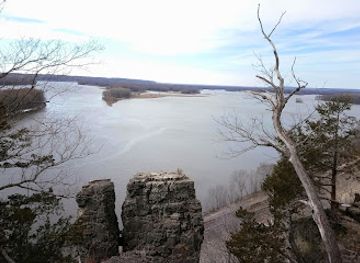
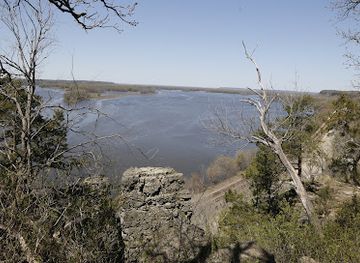
The park's defining landmarks are its Mississippi-facing bluffs, elevated limestone and dolomite outcrops, and the ravines that descend through the wooded uplands. Sentinel Rock is among the best-known named features, while Twin Sisters and Indian Head provide further recognisable points within the bluff country. Their importance lies less in monumental construction than in the way they reveal the long erosion of the river valley and give visitors changing views across the Mississippi landscape. The river itself is the park's central geographical landmark, shaping the terrain, wildlife habitats and historic movement corridor below the cliffs. Picnic overlooks, trail viewpoints and the developed river-access areas are functional landmarks within the recreational landscape, but the park contains no urban monument district; its identity is rooted in the relationship between exposed rock, forested slopes and the broad waterway.
-
Historical landmark
Mississippi Palisades - National Natural Landmark
Explore dramatic cliffs, scenic trails, and Native American history at Mississippi Palisades State Park on the banks of the mighty Mississippi River.
-
Campground
Mississippi Palisades State Park Campground
Experience the natural beauty and Native American history of the Mississippi Palisades State Park Campground, offering camping, hiking, and stunning river views.
-
Park
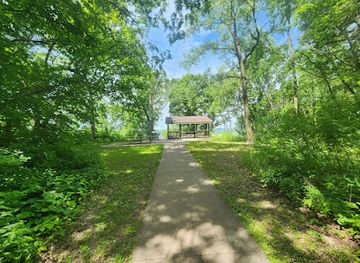
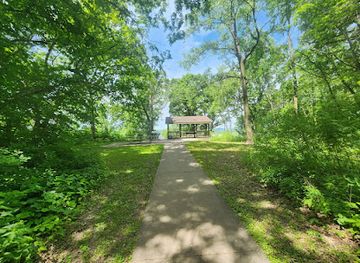
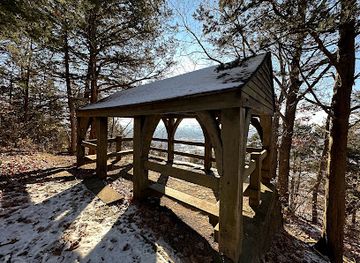
High Point Trail Shelter - Mississippi Palisades State Park
Discover scenic trails and tranquil nature at High Point Trail Shelter, your gateway to Mississippi Palisades State Park's northern wonders.
Explore Mississippi Palisades State Park on the map
Plan your trip on one map. See where the top attractions, landmarks, restaurants and hotels are, and book hotels and experiences in a few clicks.
Best hotels in Mississippi Palisades State Park
Best restaurants in Mississippi Palisades State Park
There is no substantial dining district within Mississippi Palisades State Park, so visitors normally buy provisions in Savanna or another nearby community and use them at a picnic area or campsite. Savanna provides the most immediate choice of everyday restaurants, cafés and food shops, while Mount Carroll and other towns in the surrounding region offer additional places to eat. The area's food culture reflects the agricultural character of north-western Illinois, with familiar Midwestern cooking, locally sourced farm products where available and the informal hospitality associated with small-town cafés and pubs. Travellers planning a full day on the trails should carry food and water rather than expecting refreshments at every overlook or trailhead. Farm shops and independent food businesses may be seasonal, and opening arrangements can change, so rural dining is best approached as part of the wider gateway-town experience.
-
State park
Mississippi Palisades State Park
Experience breathtaking views and outdoor adventures at Mississippi Palisades State Park – a hidden gem along the Illinois-Mississippi River corridor.
-
Historical landmark
Mississippi Palisades - National Natural Landmark
Discover breathtaking views and rich history at Mississippi Palisades National Natural Landmark in Savanna, Illinois.
-
Campground
Mississippi Palisades State Park Campground
Discover breathtaking views and outdoor adventures at Mississippi Palisades State Park Campground along the iconic Mississippi River.
-
Park
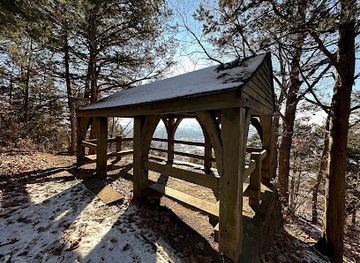
High Point Trail Shelter - Mississippi Palisades State Park
Experience breathtaking views and outdoor adventures at High Point Trail Shelter in Mississippi Palisades State Park - a nature lover's paradise.
Best bars in Mississippi Palisades State Park
Evening entertainment around Mississippi Palisades State Park is quiet and community-oriented rather than built around nightclubs. Savanna, the nearest gateway, has the area's most relevant selection of casual pubs, taverns and places for an evening drink or meal, while Mount Carroll and other nearby towns may offer traditional bars and local social venues. The park itself is better suited to a campfire where permitted, stargazing and the subdued sounds of the river valley than to organised nightlife, with all camping and fire rules applying. Seasonal community events in the surrounding towns can add cultural interest, but performances and opening arrangements are not constant. Visitors staying in the park should plan evening supplies in advance, as rural businesses may be dispersed and late-night transport options limited.
-
Restaurant
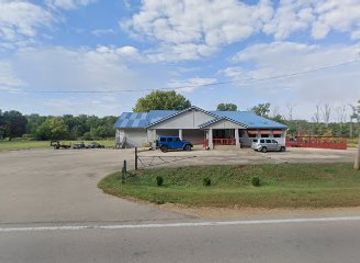
Savanna Crossings Restaurant
Discover the flavors of Savanna at Savanna Crossings Restaurant, where locally sourced ingredients meet a cozy dining experience.
Best nightclubs in Mississippi Palisades State Park
Evening entertainment around Mississippi Palisades State Park is quiet and community-oriented rather than built around nightclubs. Savanna, the nearest gateway, has the area's most relevant selection of casual pubs, taverns and places for an evening drink or meal, while Mount Carroll and other nearby towns may offer traditional bars and local social venues. The park itself is better suited to a campfire where permitted, stargazing and the subdued sounds of the river valley than to organised nightlife, with all camping and fire rules applying. Seasonal community events in the surrounding towns can add cultural interest, but performances and opening arrangements are not constant. Visitors staying in the park should plan evening supplies in advance, as rural businesses may be dispersed and late-night transport options limited.
-
State park
Mississippi Palisades State Park
Discover outdoor adventures and breathtaking views at Mississippi Palisades State Park, a natural treasure along the Mississippi River.
-
Historical landmark
Mississippi Palisades - National Natural Landmark
Discover the breathtaking beauty and rich history of Mississippi Palisades, a National Natural Landmark in Savanna, Illinois, perfect for nature and history lovers.
Best shops in Mississippi Palisades State Park
Shopping inside Mississippi Palisades State Park is limited to practical visitor needs rather than a developed retail scene. Visitors should obtain groceries, drinks, fuel, camping supplies and any specialist outdoor equipment in Savanna or another nearby town before entering the park. Savanna and Mount Carroll provide small-town shops and local businesses, while the wider region may offer farm products, antiques, handmade goods and seasonal produce, although these opportunities are dispersed rather than concentrated in one shopping quarter. Regional purchases can include locally produced food and crafts associated with rural north-western Illinois, but availability varies by business and time of year. The park is not a dependable destination for extensive souvenir shopping, so those seeking books, maps or locally themed items should check gateway-town businesses and visitor information points during normal trading periods.
-
State park
Mississippi Palisades State Park
Explore breathtaking views and diverse wildlife at Mississippi Palisades State Park, a perfect destination for adventure and relaxation in Illinois.
-
Historical landmark
Mississippi Palisades - National Natural Landmark
Explore the Mississippi Palisades – a captivating National Natural Landmark offering stunning views, rich history, and diverse outdoor adventures in Savanna, Illinois.
-
Campground
Mississippi Palisades State Park Campground
Discover the beauty of Mississippi Palisades State Park Campground, where breathtaking landscapes and outdoor adventures await every visitor in Illinois.
-
Park
High Point Trail Shelter - Mississippi Palisades State Park
Experience the natural beauty and serene atmosphere of High Point Trail Shelter in Mississippi Palisades State Park, a perfect retreat for nature lovers and hikers.
Get your free copy of our complete guide to Mississippi Palisades State Park, delivered straight to you.
Everything on this page, from attractions and restaurants to essentials and local phrases, in one PDF you can read offline, print or share.
Already have an account? Sign in
Your Mississippi Palisades State Park guide is ready.
We'll send it to · Not you? Sign out

Getting your guide ready…
We are putting together a fresh copy of the Mississippi Palisades State Park guide. This can take up to a minute.
This can take a few moments. If your browser asks, choose Allow so the download can start. You'll find the guide in your Downloads folder.
Nothing happened? Download it again
Sorry, the guide is taking longer than usual. Please try again in a minute, or get it by email instead.
Mississippi Palisades State Park essentials
Currency and Payment
Safety
Emergency Situations
Do's and Don'ts
Local Tips
From Eve
Local phrases worth knowing
You don't need to get them perfect. A few words go a long way, and locals appreciate the effort.
Basics
| English | Local | Say it |
|---|---|---|
| Hello | Howdy | [hahy-dee] |
| Goodbye | See ya | [see yuh] |
| Yes | Yep | [yep] |
| No | Nah | [nah] |
| Please/You're welcome | Please/Welcome | [pleez/wel-kuhm] |
| Thank you | Thank ya | [thank yuh] |
| Excuse me/Sorry | S'cuse me | [sk-yoos me] |
| How are you? | How y'all doin'? | [haw yawl doo-in] |
| Fine. And you? | Fine. You? | [fahyn. yoo] |
| Do you speak English? | Ya speak English? | [yuh speak ing-glish] |
| I don't understand | I don't git it | [ahy dohnt git it] |
Eating & Drinking
| English | Local | Say it |
|---|---|---|
| I'd like to see the menu, please | I wanna see the menu, please | [ahy wah-nuh see the men-yoo pleez] |
| I don't eat meat | I don't eat no meat | [ahy dohnt eet noh meet] |
| Cheers! | Cheers! | [cheers] |
| I would like to pay, please | I wanna pay, please | [ahy wah-nuh pay pleez] |
Emergencies
| English | Local | Say it |
|---|---|---|
| Help! | Help! | [help] |
| Go away! | Git! | [git] |
| Call the Police! | Call the Cops! | [call the cops] |
| Call a doctor! | Call a doc! | [call a doc] |
| I'm lost | I'm lost | [ahym lost] |
| I'm ill | I'm sick | [ahym sik] |
Shopping
| English | Local | Say it |
|---|---|---|
| I'd like to buy... | I wanna buy... | [ahy wah-nuh buy] |
| I'm just looking | I'm just lookin' | [ahym just look-in] |
| How much is it? | How much fer it? | [haw much fur it] |
| That's too expensive | That's too much | [thats tooh much] |
| Can you lower the price? | Can ya bring the price down? | [kan yuh bring the price down] |
Time & Numbers
| English | Local | Say it |
|---|---|---|
| What time is it? | What time is it? | [what time is it] |
| It's one o'clock | It's one | [its wuhn] |
| Half past (10) | Half ten | [haf ten] |
| Morning | Mornin' | [morn-in] |
| Afternoon | Afternoon | [after-noon] |
| Evening | Evenin' | [even-in] |
| Yesterday | Yesterday | [yester-day] |
| Today | Today | [toh-day] |
| Tomorrow | Tomorrow | [tom-or-row] |
| 1 | One | [wuhn] |
| 2 | Two | [too] |
| 3 | Three | [three] |
| 4 | Four | [for] |
| 5 | Five | [fahyv] |
| 6 | Six | [siks] |
| 7 | Seven | [sev-en] |
| 8 | Eight | [ayt] |
| 9 | Nine | [nahyn] |
| 10 | Ten | [ten] |
Transport & Directions
| English | Local | Say it |
|---|---|---|
| Where's a/the...? | Where's the...? | [wheres the] |
| What's the address? | What's the address? | [whats the address] |
| Can you show me (on the map)? | Can ya show me (on the map)? | [kan yuh show me on the map] |
| When's the next (bus)? | When's the next (bus)? | [whens the next bus] |
| A ticket (to ....) | A ticket (to ....) | [a ticket to] |
History of Mississippi Palisades State Park
A Landscape Shaped by River and Ice
The physical history of Mississippi Palisades State Park is written in its bluffs, ravines and exposed bedrock. The area belongs to the Driftless Area of north-western Illinois, a landscape that was not levelled by the last continental glaciers in the same way as much of the surrounding region. Erosion by the Mississippi River and its tributary valleys then cut into the uplands, leaving the steep wooded escarpments that give the park its name. The exposed dolomite and limestone formations, narrow ravines and elevated viewpoints are therefore products of long geological change rather than a single event, and they explain the marked relief found beside an otherwise river-dominated valley.
Indigenous River Corridors
Long before the creation of the modern state park, the Mississippi River and its adjacent uplands formed part of a wider Indigenous landscape. River corridors supplied routes for movement, fishing and exchange, while the bluffs and ravines created distinctive places within the terrain. The park's name and local historic interpretation reflect the importance of Native American presence in the wider region, including the complex history of peoples who lived along and travelled through the upper Mississippi valley. Visitors should understand the area not as an empty wilderness preserved from human use, but as a landscape with a much older cultural history than the park designation suggests.
Settlement Along the Upper Mississippi
European-American settlement developed around the river as transport, agriculture and commerce expanded through north-western Illinois. Towns such as Savanna grew in relation to the Mississippi and the surrounding farming country, while river trade and later rail connections strengthened links between local communities and larger regional markets. The rugged bluffs themselves were less easily cultivated than the valley floor, helping preserve woodland, ravines and rocky ground even as surrounding land was developed. This contrast between working agricultural country and steep river-edge terrain remains an important part of the area's character.
From Recreational Landscape to State Park
Mississippi Palisades State Park was established in the twentieth century to protect a substantial section of the Illinois Mississippi bluffs and provide public opportunities for recreation. The park now combines conservation of forest, ravine and river-edge habitats with hiking, picnicking, camping, fishing and boating. Its management reflects the continuing balance required in a popular natural area: trails and facilities allow access, while cliff edges, woodland habitats and changing river conditions demand responsible use. The protected landscape also preserves a visual record of the relationship between the Mississippi River, local communities and the terrain that separates the valley from the uplands.
Mississippi Palisades State Park in Photos
Browse through our photo collection highlighting the charm and character of the destination.
Neighbouring destination travel guides
The closest destinations to Mississippi Palisades State Park, if you have time for more than one.
-

-

-

-

-


Swipe for more destinations
Explore more

Explore more of Driftless Area
Explore Illinois’s Driftless Area for Galena’s heritage streets, Mississippi bluffs, wooded valleys, state parks and scenic rural roads.
Explore Driftless Area
Explore more of Illinois
Discover Illinois: From Chicago's iconic skyline to the tranquil beauty of its countryside, experience the diverse allure of the Prairie State.
Explore Illinois