

Free Rajasthan Travel Guide & Mobile App
Explore Rajasthan with free travel guides. Discover regional history, expert tips, proposed trips, and audio guides on web or mobile app.


Explore Rajasthan's forts, desert towns, painted havelis, wildlife reserves, lake cities and craft traditions across India's historic north-west.
Read more about Rajasthan
When is the best time to visit Rajasthan?
Best: January–February, November · 22–27°C| Month | High (°C) | Rainfall (mm) |
|---|---|---|
| January (best) | 22 | 3 |
| February (best) | 25 | 4 |
| March | 30 | 5 |
| April | 36 | 7 |
| May | 41 | 8 |
| June | 41 | 9 |
| July | 37 | 10 |
| August | 36 | 11 |
| September | 36 | 12 |
| October | 33 | 13 |
| November (best) | 27 | 14 |
| December | 23 | 15 |
Getting to and around Rajasthan
How to get there
Transportation
Top city travel guides in Rajasthan
The cities of Rajasthan, and the easiest places to base yourself.
-

-

-

-

-

-


Swipe for more cities
Destinations in Rajasthan
Resorts, valleys and scenic spots worth a trip of their own.
-

-

-


Swipe for more destinations
Best attractions in Rajasthan
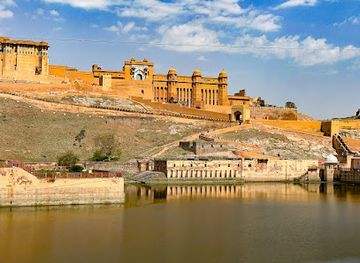
Rajasthan's attractions range from monumental forts and palace museums to wildlife, pilgrimage centres, crafts and desert landscapes. Jaipur combines the City Palace, Amber's former capital nearby, the astronomical Jantar Mantar and the stepped geometry of its historic streets. Jodhpur, Udaipur, Bikaner and Jaisalmer each offer a different courtly tradition, while the painted havelis of the Shekhawati towns reveal the wealth created by merchant networks rather than royal power alone. In the east, Bharatpur's Keoladeo National Park is important for wetland birds, and Ranthambore National Park brings woodland, lakes and a historic fort into one protected landscape. The Aravalli country offers Mount Abu's cooler setting and the Jain temples at nearby Delwara, while Pushkar and Ajmer remain major pilgrimage destinations. Desert excursions near Jaisalmer can include village visits, camel experiences and night camps, but responsible operators should limit pressure on fragile dunes and local communities. Museums, textile workshops, block-printing centres and traditional markets provide cultural context beyond the headline monuments, while travellers with more time can explore rural water structures, smaller forts and archaeological sites on carefully planned routes.
-
Castle
Amber Palace
Explore the grandeur of Amber Palace, a UNESCO World Heritage site, where history, culture, and stunning architecture converge amidst the hills of Jaipur.
-
Castle
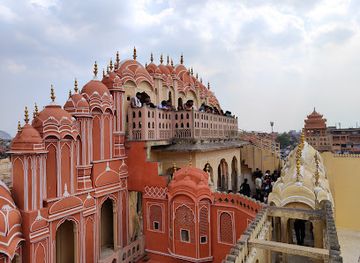
Hawa Mahal
Discover the architectural brilliance of Hawa Mahal, the iconic 'Palace of Winds', in the heart of Jaipur, Rajasthan, and immerse yourself in its rich history.
-
Castle
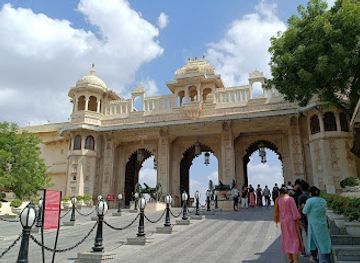
City Palace
Discover the royal splendor of Udaipur at the City Palace, a stunning historical landmark offering a glimpse into Rajasthan's majestic heritage.
-
Historical landmark
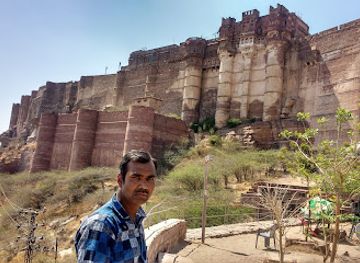
Mehrangarh Fort
Explore the majestic Mehrangarh Fort in Jodhpur, a magnificent historical landmark filled with rich culture and breathtaking views of the Blue City.
Best landmarks in Rajasthan
Mehrangarh Fort above Jodhpur is one of Rajasthan's most commanding landmarks, its massive walls enclosing palaces, courtyards and a museum overlooking the blue-painted old city. Jaisalmer Fort is especially significant because it remains a living urban settlement rather than a purely preserved monument; its honey-coloured sandstone walls, Jain temples and narrow lanes rise directly from the desert. Jaipur's Hawa Mahal is an instantly recognisable façade designed to allow women of the court to observe street life, while the nearby Jantar Mantar records the scientific ambitions of the eighteenth-century capital. Udaipur's City Palace complex traces the growth of Mewar's court beside Lake Pichola, and Chittorgarh Fort preserves the monumental scale and contested memory of the former Mewar capital. The stepwell Chand Baori at Abhaneri demonstrates how monumental design and water management were connected in the dry landscape. Further south, the Dilwara Jain Temples near Mount Abu are admired for their exceptionally detailed marble carving, while the hilltop fort of Kumbhalgarh embodies Mewar's defensive architecture amid the Aravallis.
-
 Historical place
The City Palace
Explore the grandeur of Jaipur's City Palace, a historical landmark that showcases the rich royal heritage of Rajasthan through stunning architecture and captivating museums.
-
Resort hotel
Aaram Baagh by Pachar Group, Pushkar
Experience the tranquil beauty and rich culture of Pushkar at Aaram Baagh by Pachar Group, a luxurious resort hotel nestled in the heart of Rajasthan.
-
Campground
Pushkar Desert Karni Camp
Discover the enchanting Pushkar Desert Karni Camp, where luxury meets nature in the heart of Rajasthan's stunning desert landscapes.
-
Historical landmark
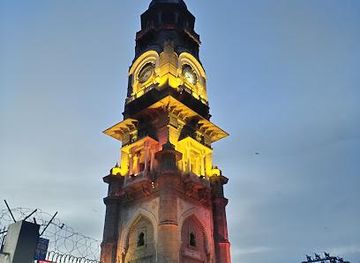
Clock Tower
Discover the historic Clock Tower in Ajmer, a stunning architectural gem that symbolizes the vibrant culture and heritage of Rajasthan.
Explore Rajasthan on the map
Plan your trip on one map. See where the top cities, national parks and sights are, and book hotels and experiences in a few clicks.
Best hotels in Rajasthan
Best restaurants in Rajasthan
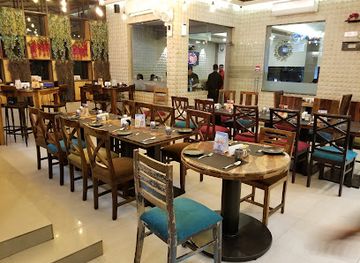
Rajasthani food reflects dry climates, long-distance travel and inventive use of grains, pulses, dairy, spices and preserved ingredients. Dal baati churma is widely associated with the state, while gatte ki sabzi, ker sangri, pyaaz kachori, mirchi bada and a variety of rotis appear in different regional and urban settings. Laal maas is a strongly spiced meat dish linked to royal and hunting-era culinary traditions, although recipes and availability vary; vegetarian cooking is equally central, especially in communities shaped by Jain and Vaishnav practice. Jaipur and Udaipur offer the widest range of contemporary restaurants, while Jodhpur, Bikaner, Pushkar and Jaisalmer combine cafés, sweet shops, traditional dining rooms and hotel restaurants. Rural inns and heritage properties may serve thalis and local specialities, but menus are not uniform across the state. Markets are useful for sweets, namkeen savoury snacks, millets, spices and seasonal produce, while lassi, masala tea and regional sweets are common refreshments. Check spice levels and dietary preparation clearly, particularly when avoiding onion, garlic, dairy or meat.
-
Indian
Thali & more
Experience the authentic flavors of Rajasthan at Thali & More - Jaipur's premier vegetarian restaurant serving exquisite Indian thalis.
-
Restaurant
Restaurant Harigarh
Experience the vibrant flavors of India at Restaurant Harigarh in Udaipur – where culinary traditions meet modern dining.
-
Restaurant
Kalyan Restaurant & Bar
Experience the best of Indian and international cuisine at Kalyan Restaurant & Bar in Jaipur – where every meal is a celebration of flavors.
-
Indian
Jhumar Restaurant
Discover the exquisite flavors of India and beyond at Jhumar Restaurant near Fateh Sagar Lake in Udaipur.
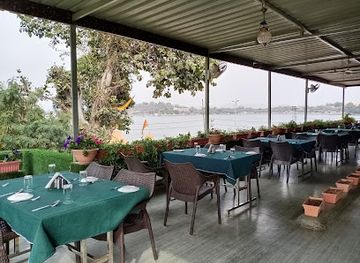
Best bars in Rajasthan
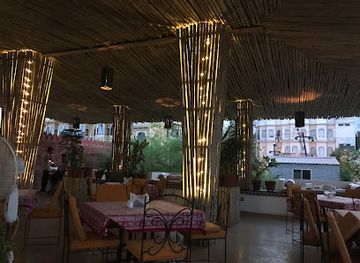
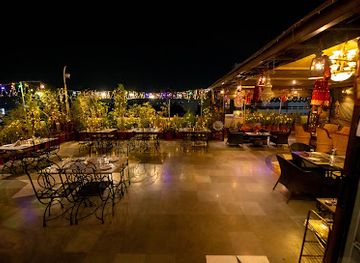
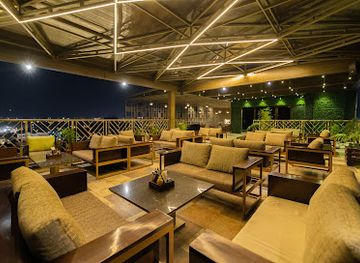
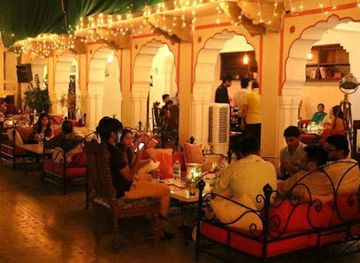
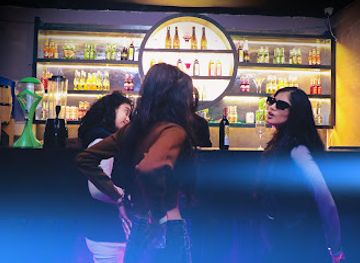
Evening life in Rajasthan is shaped more by food, conversation, music and heritage settings than by a state-wide club culture. Jaipur has the broadest selection of hotel bars, contemporary lounges, restaurants and live-music venues, while Udaipur and Jodhpur offer rooftop and courtyard settings with views of lakes, palaces or old-city rooftops. Jaisalmer's evening scene is concentrated around hotels, guesthouses and desert camps, where folk performances may accompany dinner, though such shows vary in quality and should be approached respectfully. In smaller towns, traditional tea stalls, sweet shops, restaurants and local pubs provide the main evening options, and closing times can be earlier than international visitors expect. Alcohol is available in licensed establishments, but travellers should check local rules and venue policies, particularly around religious towns and dry-day restrictions. Seasonal festivals can add music and public performances, but programming and access change from year to year.
-
Lounge
Blackout club in Jaipur
Discover Blackout Club in Jaipur: A vibrant lounge offering exquisite cocktails, delightful cuisine, and an unforgettable nightlife experience.
-
Bar
Queen's hub
Experience the vibrant nightlife of Jaipur at Queen's Hub, where exceptional dining meets an exhilarating bar atmosphere.
-
Lounge
Once Upon A Terrace - OUT
Experience elegance and vibrant nightlife at Once Upon A Terrace, Jaipur's premier lounge offering exquisite cuisine and handcrafted cocktails.
-
Bar
Retreat Drink N Dine
Discover a perfect mix of luxury dining and breathtaking views at Retreat Drink N Dine in Jaipur, where every meal is a celebration.
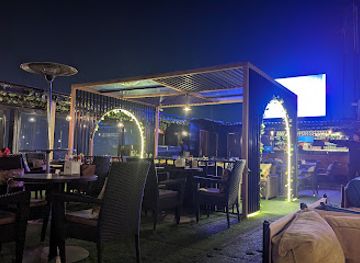
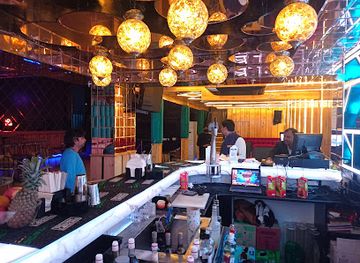
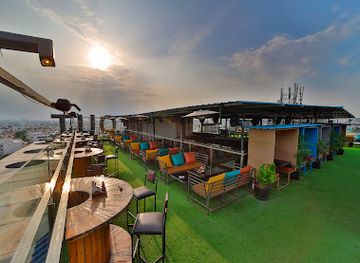
Best nightclubs in Rajasthan
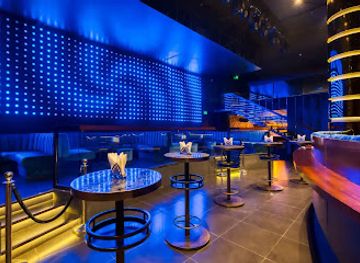
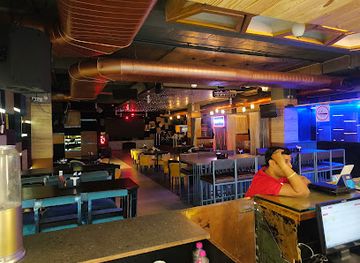
Evening life in Rajasthan is shaped more by food, conversation, music and heritage settings than by a state-wide club culture. Jaipur has the broadest selection of hotel bars, contemporary lounges, restaurants and live-music venues, while Udaipur and Jodhpur offer rooftop and courtyard settings with views of lakes, palaces or old-city rooftops. Jaisalmer's evening scene is concentrated around hotels, guesthouses and desert camps, where folk performances may accompany dinner, though such shows vary in quality and should be approached respectfully. In smaller towns, traditional tea stalls, sweet shops, restaurants and local pubs provide the main evening options, and closing times can be earlier than international visitors expect. Alcohol is available in licensed establishments, but travellers should check local rules and venue policies, particularly around religious towns and dry-day restrictions. Seasonal festivals can add music and public performances, but programming and access change from year to year.
-
Night club
G Club
Discover Jaipur's nightlife at G Club, a lively night club offering a blend of great music, stylish ambiance, and unforgettable experiences.
-
Night club
Hype Bar & Bistro - Night Club In Jaipur
Experience the vibrant nightlife of Jaipur at Hype Bar & Bistro, where delicious cuisine meets exhilarating entertainment in a stylish setting.
-
Night club
Club Naila
Discover the vibrant nightlife of Jaipur at Club Naila, where eclectic music and exquisite cuisine create unforgettable memories.
-
Disco club
Karma Club Ajmer
Discover the electrifying nightlife of Ajmer at Karma Club, a premier disco club offering vibrant music and a lively social atmosphere.
Best shops in Rajasthan
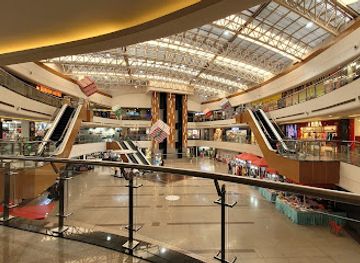
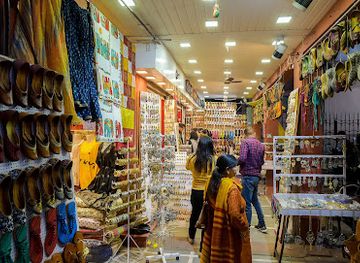
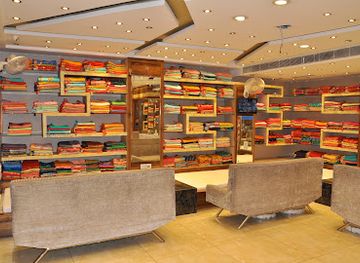
Shopping in Rajasthan ranges from crowded historic bazaars to craft cooperatives, museum shops and specialist workshops. Jaipur is known for block-printed textiles, blue pottery, jewellery, gemstones, leather goods and miniature painting, with different markets and workshops offering very different levels of provenance and quality. Jodhpur is associated with textiles, antiques, furniture and metalwork; Udaipur has paintings, craft objects and regional textiles; Jaisalmer and Bikaner offer embroidered goods, leatherwork, souvenirs and food products. The Shekhawati towns are useful places to encounter locally made textiles and decorative crafts alongside their painted merchant mansions. Look for bandhani tie-dye, hand-block printing, quilts, puppets, carved wood and woven items, but ask whether a product is handmade, where it was produced and whether dyes or materials are responsibly sourced. Bargaining is common in many informal markets but not in every shop, gallery or cooperative. Pack fragile pottery and artwork carefully, and obtain receipts for higher-value purchases, especially gemstones and jewellery.
-
Shopping mall
Ahluwalia’s the Great Mall of Kota
Experience shopping, dining, and entertainment like never before at Ahluwalia’s the Great Mall of Kota, a premier destination in Rajasthan.
-
Shopping mall
Saraogi Mansion _jaipur
Discover unique local handicrafts and culinary delights at Saraogi Mansion, Jaipur's vibrant shopping destination.
-
Clothing store
Unique Fancy Sarees Subhash Nagar Jaipur
Shop for exquisite traditional sarees at Unique Fancy Sarees in Jaipur, where craftsmanship meets vibrant Rajasthani culture.
-
Clothing store
Unique Dressup
Explore Unique Dressup in Jodhpur for a delightful shopping experience featuring exquisite traditional and contemporary clothing that embodies Rajasthan's rich heritage.
Get your free copy of our complete guide to Rajasthan, delivered straight to you.
Everything on this page, from attractions and restaurants to essentials and local phrases, in one PDF you can read offline, print or share.
Already have an account? Sign in
Your Rajasthan guide is ready.
We'll send it to · Not you? Sign out

Getting your guide ready…
We are putting together a fresh copy of the Rajasthan guide. This can take up to a minute.
This can take a few moments. If your browser asks, choose Allow so the download can start. You'll find the guide in your Downloads folder.
Nothing happened? Download it again
Sorry, the guide is taking longer than usual. Please try again in a minute, or get it by email instead.
Rajasthan essentials
Currency and Payment
Safety
Emergency Situations
Do's and Don'ts
Local Tips
From Eve
Local phrases worth knowing
You don't need to get them perfect. A few words go a long way, and locals appreciate the effort.
Basics
| English | Local | Say it |
|---|---|---|
| Hello | नमस्ते | [Namaste] |
| Goodbye | अलविदा | [Alvida] |
| Yes | हाँ | [Haan] |
| No | नहीं | [Nahin] |
| Please/You're welcome | कृपया/स्वागत है | [Kripya/Swaagat hai] |
| Thank you | धन्यवाद | [Dhanyavaad] |
| Excuse me/Sorry | माफ कीजिए/क्षमा करें | [Maaf kijiye/Kshama karen] |
| How are you? | आप कैसे हैं? | [Aap kaise hain?] |
| Fine. And you? | ठीक हूँ। और आप? | [Theek hoon. Aur aap?] |
| Do you speak English? | क्या आप अंग्रेजी बोलते हैं? | [Kya aap Angrezi bolte hain?] |
| I don't understand | मुझे समझ में नहीं आता | [Mujhe samajh mein nahin aata] |
Eating & Drinking
| English | Local | Say it |
|---|---|---|
| I'd like to see the menu, please | कृपया मुझे मेनू दिखाएं | [Kripya mujhe menu dikhayein] |
| I don't eat meat | मैं मांस नहीं खाता | [Main maans nahin khata] |
| Cheers! | स्लाम | [Salaam] |
| I would like to pay, please | कृपया मुझे भुगतान करने दें | [Kripya mujhe bhugtaan karne den] |
Emergencies
| English | Local | Say it |
|---|---|---|
| Help! | मदद करें! | [Madad karein!] |
| Go away! | चले जाओ! | [Chale jao!] |
| Call the Police! | पुलिस को बुलाओ! | [Police ko bulao!] |
| Call a doctor! | डॉक्टर को बुलाओ! | [Doctor ko bulao!] |
| I'm lost | मैं खो गया हूँ | [Main kho gaya hoon] |
| I'm ill | मैं बीमार हूँ | [Main beemar hoon] |
Shopping
| English | Local | Say it |
|---|---|---|
| I'd like to buy... | मैं खरीदना चाहूँगा... | [Main kharidna chahunga...] |
| I'm just looking | मैं बस देख रहा हूँ | [Main bas dekh raha hoon] |
| How much is it? | यह कितना है? | [Yah kitna hai?] |
| That's too expensive | यह बहुत महंगा है | [Yah bahut mehenga hai] |
| Can you lower the price? | क्या आप कीमत कम कर सकते हैं? | [Kya aap keemat kam kar sakte hain?] |
Time & Numbers
| English | Local | Say it |
|---|---|---|
| What time is it? | कितने बजे हैं? | [Kitne baje hain?] |
| It's one o'clock | यह एक बजे हैं | [Yah ek baje hain] |
| Half past (10) | साढ़े (10) | [Saade (10)] |
| Morning | सुबह | [Subah] |
| Afternoon | दोपहर | [Dopahar] |
| Evening | शाम | [Shaam] |
| Yesterday | कल | [Kal] |
| Today | आज | [Aaj] |
| Tomorrow | कल | [Kal] |
| 1 | १ | [1] |
| 2 | २ | [2] |
| 3 | ३ | [3] |
| 4 | ४ | [4] |
| 5 | ५ | [5] |
| 6 | ६ | [6] |
| 7 | ७ | [7] |
| 8 | ८ | [8] |
| 9 | ९ | [9] |
| 10 | १० | [10] |
Transport & Directions
| English | Local | Say it |
|---|---|---|
| Where's a/the...? | कहाँ है ...? | [Kahan hai ...?] |
| What's the address? | पता क्या है? | [Pata kya hai?] |
| Can you show me (on the map)? | क्या आप मुझे (नक्शे पर) दिखा सकते हैं? | [Kya aap mujhe (nakshae par) dikha sakte hain?] |
| When's the next (bus)? | अगली (बस) कब है? | [Agli (bus) kab hai?] |
| A ticket (to ....) | एक टिकट (.... के लिए) | [Ek ticket (.... ke liye)] |
History of Rajasthan
Early Settlements and the Indus World
Rajasthan has a long archaeological record extending from prehistoric communities to urban settlements connected with the Indus civilisation. Kalibangan, in the north-western part of the state, preserves evidence of planned habitation, craft activity and early agricultural practices dating broadly to the third and early second millennia BCE. Other archaeological sites show that communities adapted to varied environments, including river plains, semi-arid country and the margins of the Thar. These remains place Rajasthan within the wider history of early South Asian urbanism while also demonstrating the distinct environmental challenges that shaped settlement in the region.
Ancient Trade and Regional Kingdoms
From the early historic period, routes crossing Rajasthan linked the Gangetic plain, Gujarat, Sindh and the Deccan. Settlements developed around agriculture, caravan movement, craft production and access to water, while successive political powers influenced different parts of the region. The ancient pilgrimage centre of Pushkar and the old town of Ajmer reflect the continuing importance of religious and commercial routes. Although political boundaries changed repeatedly, the Aravalli corridor and desert-edge routes remained significant passages between north India and western trade networks.
Rajput States and Medieval Fortifications
From the early medieval period, a number of Rajput-ruled states emerged or consolidated across present-day Rajasthan, including Mewar, Marwar, Amber and Bikaner. Their rulers built hill forts, walled settlements, temples, reservoirs and palaces, often adapting architecture to difficult terrain and water scarcity. Chittorgarh became the symbolic centre of Mewar, while later capitals such as Udaipur and Jodhpur expressed changing military and political priorities. The region's celebrated fort traditions were not simply ceremonial: they controlled routes, protected courts and communities, and embodied the autonomy claimed by ruling houses.
Mughal Relations and Courtly Exchange
The Mughal expansion into north India transformed the political landscape of Rajasthan from the sixteenth century onwards. Relations varied between warfare, negotiated alliance and service at the imperial court. Several Rajput rulers entered Mughal political structures, while marriage alliances, military careers and artistic exchange connected Rajasthan with Agra and Delhi. This period influenced palace design, gardens, painting, arms and administration. Mughal connections did not erase regional identities; instead, they helped produce the hybrid court cultures visible in architecture and painting across cities such as Jaipur, Jodhpur, Bikaner and Udaipur.
The Rise of Jaipur and Eighteenth-Century Statecraft
In 1727, Sawai Jai Singh II established Jaipur as a new capital for the Kachwaha state, moving from the hill settlement of Amber to a carefully planned urban site. Its broad streets, divided commercial quarters and masonry buildings reflected principles of contemporary South Asian urbanism as well as the requirements of trade and administration. Jai Singh's astronomical observatories, including the Jantar Mantar in Jaipur, expressed the court's interest in scientific calculation and calendrical knowledge. Jaipur's planned form became one of the defining urban achievements of early modern Rajasthan.
British Paramountcy and the Princely States
During the nineteenth century, most of the Rajput states entered subsidiary or protective relationships with the British, retaining internal rulers while accepting British paramountcy. Political agents, new roads, railways and administrative reforms altered the movement of people and goods, but princely courts continued to shape urban culture, patronage and public works. Rail connections strengthened markets in places including Jaipur, Jodhpur, Bikaner and Ajmer. British-era institutions stood alongside older forts, bazaars and palace complexes, creating the layered streetscapes that visitors encounter today.
Independence, Integration and Modern Rajasthan
After Indian independence in 1947, the former princely states were gradually integrated into the Republic of India. The modern state of Rajasthan took shape through successive administrative unions, with its present form established in 1956. The transition ended the political authority of the princes, although many palaces became museums, hotels or cultural institutions. Since then, Rajasthan has combined agriculture, mining, manufacturing, tourism, handicrafts and growing cities. Conservation, water management, wildlife protection and the pressures of mass tourism remain central to the region's contemporary development.
Rajasthan in Photos
Browse through our photo collection highlighting the charm and character of the destination.
Neighbouring regions of Rajasthan
The closest regions to Rajasthan, if you have time for more than one.
-

-
-

-

-


Swipe for more regions
Explore more

Explore more of India
Discover the magic of India, where diverse landscapes, rich heritage, and vibrant culture come together to create an unforgettable travel experience.
Explore India