

Free Bloomington Travel Guide & Mobile App
Plan your Bloomington trip with Evendo. Get free guides to top attractions, restaurants, hotels, and bars. Web access or download the mobile app.


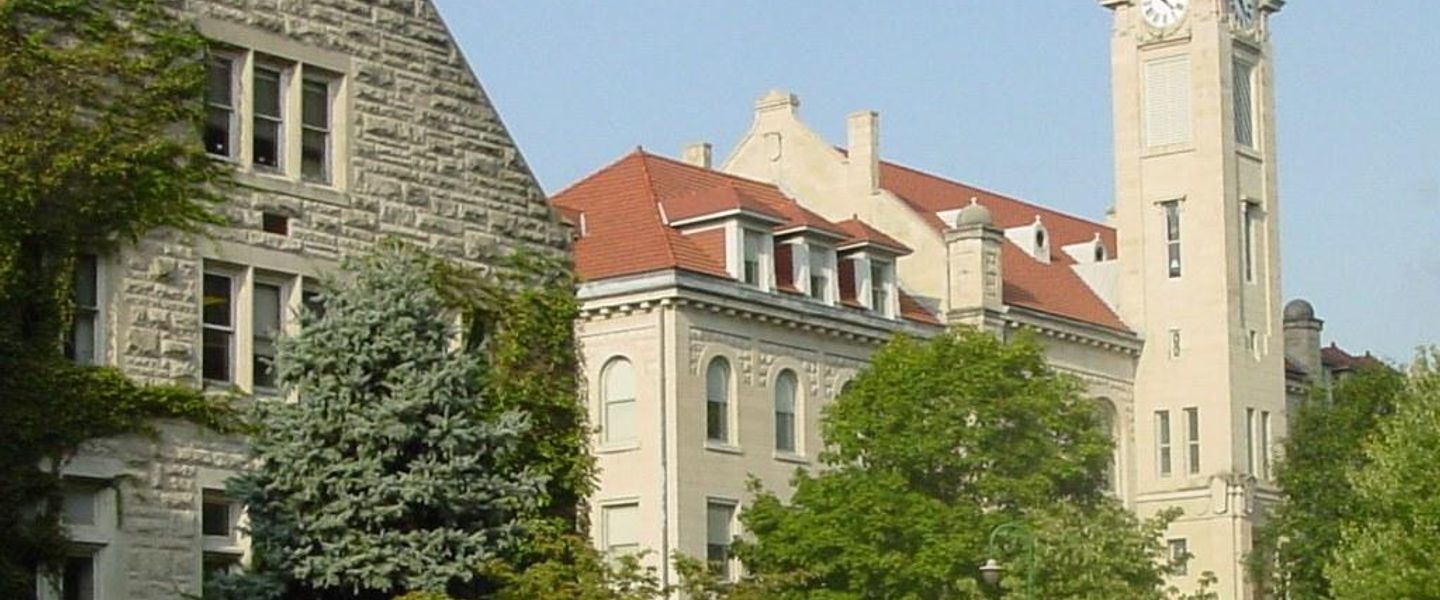


Bloomington, Indiana blends Indiana University culture, limestone heritage, lively arts, local food, scenic lakes and southern Indiana landscapes for memorable sightseeing.
A University City in the Hills
Bloomington lies among the wooded ridges and rolling valleys of south-central Indiana, about 50 miles south of Indianapolis. Its identity is closely tied to Indiana University Bloomington, whose red-brick campus, landscaped quadrangles and limestone buildings give the city much of its architectural character. The university brings an international population, major museums, performing arts, collegiate sport and a year-round calendar of lectures, concerts and exhibitions, while the surrounding city retains the scale and sociability of a small regional centre.Read more about Bloomington
Limestone, Culture and Local Life
Woodland Recreation and Regional Character
When is the best time to visit Bloomington?
Best: May, August–September · 24–29°C| Month | High (°C) | Rainfall (mm) |
|---|---|---|
| January | 4 | 74 |
| February | 6 | 70 |
| March | 12 | 94 |
| April | 18 | 98 |
| May (best) | 24 | 119 |
| June | 28 | 112 |
| July | 30 | 106 |
| August (best) | 29 | 92 |
| September (best) | 25 | 90 |
| October | 19 | 81 |
| November | 12 | 92 |
| December | 5 | 89 |
Getting to and around Bloomington
How to get there
Transportation
Best attractions in Bloomington
Bloomington’s principal attractions combine university culture, regional nature and an active arts scene. Indiana University Bloomington rewards exploration of the Old Crescent, Sample Gates and landscaped campus, while the Lilly Library displays changing exhibitions drawn from its rare books and manuscripts. Nearby, the Eskenazi Museum of Art presents international and historical collections in a notable modern building, and WonderLab Museum introduces science through hands-on exhibits aimed especially at children and families. Downtown, the Monroe County History Center occupies a former Carnegie library and explains local development through objects and displays. Griffy Lake Nature Preserve provides wooded trails and water views close to the city, while Cascades Park offers open space and walking routes around the northern edge. The Buskirk-Chumley Theater adds concerts, films and performances in a restored downtown venue, giving sightseeing in Bloomington a strong cultural dimension beyond its campus architecture.
-
Tourist attraction
WonderLab Science Museum
Explore, learn, and play at WonderLab Science Museum, Bloomington's premier destination for interactive science experiences.
11 min walk · 0.9 km from city centre
-
Tourist attraction
Lower Cascades Park
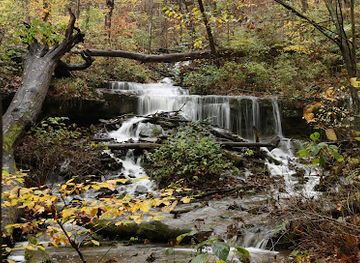
Explore Lower Cascades Park: A natural paradise in Bloomington, IN, featuring scenic trails, waterfalls, and family-friendly picnic areas.
11 min drive · 3.7 km from city centre
-
Tourist attraction
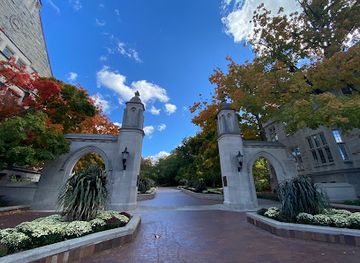
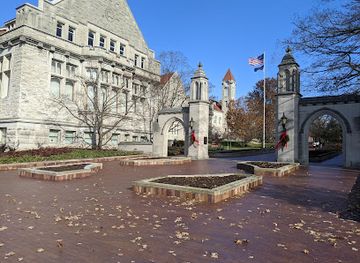
Sample Gates
Explore the beauty and history of Sample Gates, an iconic landmark connecting you to the vibrant culture of Bloomington, Indiana.
2 min walk · 0.1 km from city centre
-
Tourist attraction
Leonard Springs Nature Park
Immerse yourself in nature's beauty at Leonard Springs Nature Park, a tranquil haven in Bloomington, Indiana, ideal for hiking, picnicking, and wildlife watching.
23 min drive · 7.6 km from city centre
Best landmarks in Bloomington
Bloomington’s landmarks reveal the influence of education, civic government and Indiana limestone. The Indiana University Sample Gates form the ceremonial entrance to campus, while the Old Crescent preserves some of the university’s earliest architectural setting, including Wylie Hall and other historic buildings. The Monroe County Courthouse anchors the downtown square and remains the clearest civic reference point in the city centre. The Showers Building, a former furniture factory now associated with city administration and local history, recalls Bloomington’s industrial development, while the Buskirk-Chumley Theater represents the continuing cultural life of downtown in a restored historic cinema. The First United Church and other limestone churches demonstrate the material’s importance to local religious and civic architecture. On campus, the Eskenazi Museum of Art’s modern structure provides a striking contrast to the older limestone buildings, illustrating Bloomington’s architectural development across different periods.
-
Arena
Simon Skjodt Assembly Hall
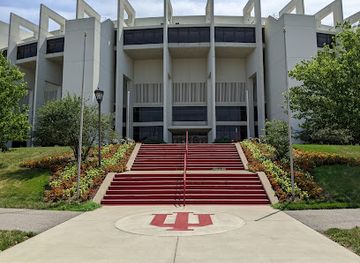
Experience the thrill of Hoosier basketball at Simon Skjodt Assembly Hall, a historic arena filled with excitement and community spirit.
5 min drive · 1.8 km from city centre
-
Science museum
WonderLab Science Museum
Discover the interactive world of science at WonderLab Science Museum in Bloomington, Indiana - a must-visit for families and science lovers alike.
11 min walk · 0.9 km from city centre
-
Park
Lower Cascades Park
Discover the serene beauty of Lower Cascades Park in Bloomington, Indiana, where nature meets adventure in a lush, family-friendly environment.
11 min drive · 3.7 km from city centre
-
Historical landmark
Sample Gates
Experience the beauty and significance of Sample Gates, a historical landmark in Bloomington, Indiana, symbolizing the spirit of Indiana University.
2 min walk · 0.1 km from city centre
Explore Bloomington on the map
Plan your Bloomington trip on one map. See where the top attractions, landmarks, restaurants, bars and hotels are, find what's near where you're staying, and book hotels and experiences in a few clicks.
Best hotels in Bloomington
Best restaurants in Bloomington
Bloomington’s dining scene reflects southern Indiana ingredients, university internationalism and a long-established independent restaurant culture. Downtown, Kirkwood Avenue, Fourth Street and the area around the courthouse offer restaurants ranging from casual cafés and pizzerias to cuisines from across Asia, the Middle East, Latin America and beyond. Hoosier influences appear in comfort food, locally sourced produce, baked goods and seasonal menus, while Indiana’s broader traditions include breaded pork tenderloin, sugar cream pie and craft beer, though individual interpretations vary. The Bloomington Community Farmers’ Market connects visitors with regional growers and producers when operating, and coffee shops, bakeries and food trucks contribute to the city’s everyday rhythm. Vegetarian and vegan dining is notably visible in this university community, while Monroe County’s surrounding farms and southern Indiana landscape support a growing interest in local sourcing and contemporary American cooking.
-
American
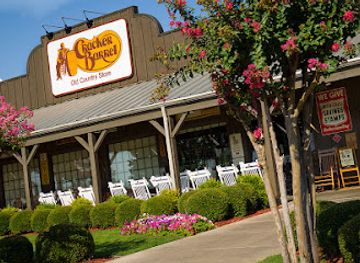
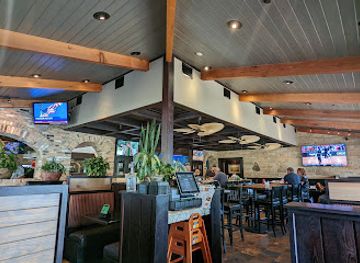
Cracker Barrel Old Country Store
Experience authentic Southern cuisine at Cracker Barrel Old Country Store in Bloomington - where comfort food meets charming hospitality.
12 min drive · 3.9 km from city centre
-
Traditional American
Cheddar's Scratch Kitchen
Savor the essence of traditional American cuisine at Cheddar's Scratch Kitchen in Bloomington, Indiana—where every dish is made from scratch.
12 min drive · 3.9 km from city centre
-
Restaurant
Uptown Cafe
Discover Uptown Cafe: A Culinary Haven in Bloomington Offering Exquisite Cajun and Creole Delights Perfect for Every Occasion.
7 min walk · 0.6 km from city centre
-
Restaurant
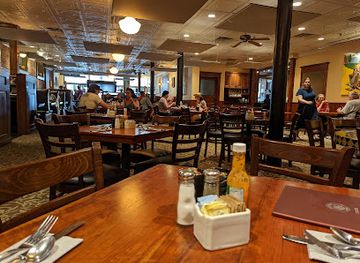
Nick's English Hut
Discover Nick's English Hut: A Culinary Gem in Bloomington Offering Classic Dishes and Local Brews.
3 min walk · 0.3 km from city centre
Best bars in Bloomington
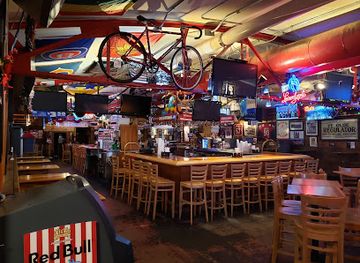
Bloomington’s evening life is shaped by Indiana University, with the greatest concentration of bars, live music and late-night social activity around Kirkwood Avenue and the streets near campus. Traditional college bars sit alongside relaxed pubs, cocktail-focused venues, cafés and restaurants that remain active after dark, while the Bluebird has long been associated with touring and local music. The Bishop and other smaller venues contribute to the city’s live-music circuit, and the Buskirk-Chumley Theater presents concerts, films and performing arts in a historic downtown setting. Fourth Street is known for dining and a calmer evening pace, while local galleries and university programmes add lectures, theatre, concerts and exhibitions that do not centre on nightlife drinking. Activity varies with the academic calendar, sporting events and the programme of performances.
-
Pub
Nick's English Hut
Experience the charm of Bloomington at Nick's English Hut, where delicious American fare meets a lively pub atmosphere.
3 min walk · 0.3 km from city centre
-
American
Crazy Horse
Discover Crazy Horse: A vibrant American restaurant in Bloomington, Indiana, offering delicious food, a lively atmosphere, and exceptional service.
10 min walk · 0.8 km from city centre
-
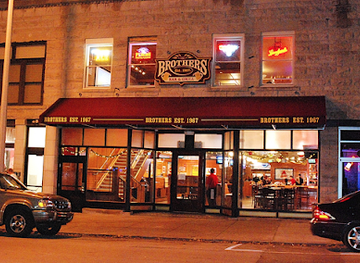
Grill
Brothers Bar & Grill
Experience the vibrant atmosphere and delicious grilled delights at Brothers Bar & Grill in Bloomington, Indiana.
9 min walk · 0.7 km from city centre
-
Grill
The Tap
Discover The Tap in Bloomington, where craft beer meets delicious American cuisine in a vibrant and inviting atmosphere.
10 min walk · 0.8 km from city centre
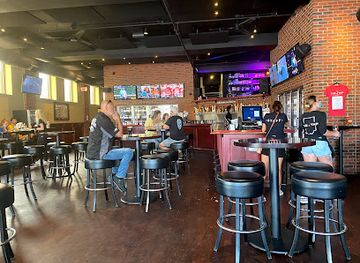
Best nightclubs in Bloomington
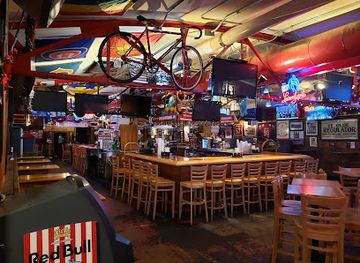
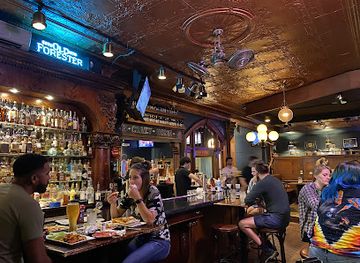
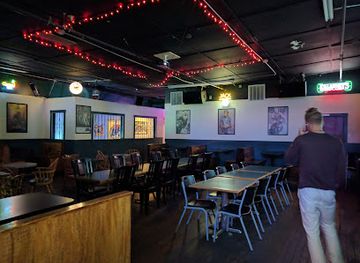
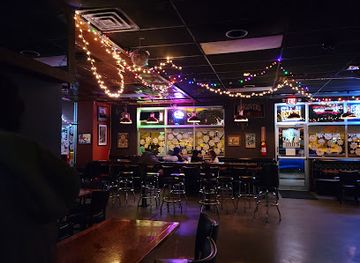
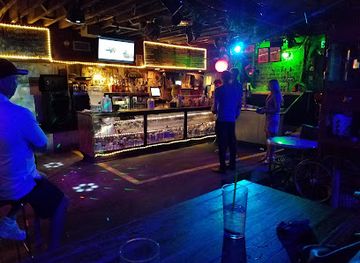
Bloomington’s evening life is shaped by Indiana University, with the greatest concentration of bars, live music and late-night social activity around Kirkwood Avenue and the streets near campus. Traditional college bars sit alongside relaxed pubs, cocktail-focused venues, cafés and restaurants that remain active after dark, while the Bluebird has long been associated with touring and local music. The Bishop and other smaller venues contribute to the city’s live-music circuit, and the Buskirk-Chumley Theater presents concerts, films and performing arts in a historic downtown setting. Fourth Street is known for dining and a calmer evening pace, while local galleries and university programmes add lectures, theatre, concerts and exhibitions that do not centre on nightlife drinking. Activity varies with the academic calendar, sporting events and the programme of performances.
-
Night club
Video Saloon
Discover Bloomington's nightlife at Video Saloon, a lively night club and bar that guarantees an unforgettable experience filled with music and excitement.
9 min walk · 0.7 km from city centre
-
Bar
Atlas Ballroom
Discover the vibrant nightlife at Atlas Ballroom - Bloomington's favorite bar for craft drinks and live entertainment.
9 min walk · 0.7 km from city centre
-
Bar
Root Cellar
Experience the vibrant nightlife of Bloomington at Root Cellar, where eclectic ambiance meets a diverse crowd and affordable drinks.
7 min walk · 0.6 km from city centre
-
Night club
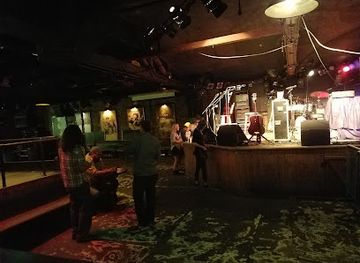
The Bluebird
Experience the vibrant nightlife at The Bluebird, Bloomington's top destination for live music, dancing, and great drinks in a lively atmosphere.
8 min walk · 0.7 km from city centre
Best shops in Bloomington
Shopping in Bloomington is concentrated around the Courthouse Square, Kirkwood Avenue, Eastland Plaza and the independent streets near Indiana University. Downtown boutiques, bookshops, galleries and specialist retailers give the centre a strongly local character, while Kirkwood combines student-oriented stores with clothing, gifts and everyday services. The Bloomington Community Farmers’ Market, when in season, is a useful place to browse Indiana produce, baked goods, preserved foods and work by local makers. Visitors may also find Indiana limestone-themed objects, regional food products, contemporary craft and university-related souvenirs, although quality and availability vary between shops. Fountain Square Mall and nearby businesses add antiques, vintage goods and small independent enterprises to the retail mix. The result is less a single shopping district than a collection of walkable commercial pockets linked by the university and downtown.
-
Shopping mall
College Mall
Discover the vibrant shopping experience at College Mall in Bloomington, offering diverse retail options and delightful dining for all visitors.
8 min drive · 2.7 km from city centre
-
Outlet mall
Whitehall Crossing Shopping Center
Explore the vibrant shopping scene at Whitehall Crossing Shopping Center, Bloomington's premier outlet destination with diverse stores and delicious dining options.
12 min drive · 4.1 km from city centre
-
Book store
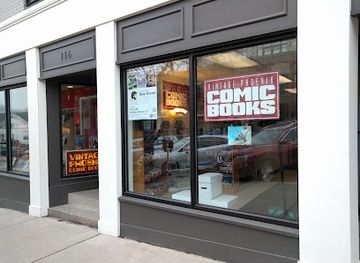
Vintage Phoenix
Explore Vintage Phoenix, a unique book and toy store in Bloomington, Indiana, offering a nostalgic shopping experience for all ages.
8 min walk · 0.6 km from city centre
-
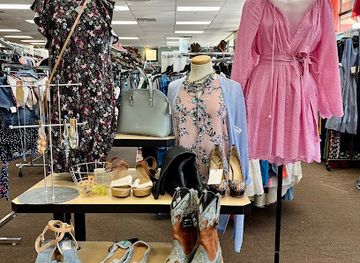
Women's clothing store
Style Encore Bloomington
Explore Style Encore Bloomington for trendy, gently used women's clothing at affordable prices - a sustainable shopping experience awaits!
13 min drive · 4.4 km from city centre
Get your free copy of our complete guide to Bloomington, delivered straight to you.
Everything on this page, from attractions and restaurants to essentials and local phrases, in one PDF you can read offline, print or share.
Already have an account? Sign in
Your Bloomington guide is ready.
We'll send it to · Not you? Sign out

Getting your guide ready…
We are putting together a fresh copy of the Bloomington guide. This can take up to a minute.
This can take a few moments. If your browser asks, choose Allow so the download can start. You'll find the guide in your Downloads folder.
Nothing happened? Download it again
Sorry, the guide is taking longer than usual. Please try again in a minute, or get it by email instead.
Bloomington essentials
Currency and Payment
Safety
Emergency Situations
Do's and Don'ts
Local Tips
From Eve
Local phrases worth knowing
You don't need to get them perfect. A few words go a long way, and locals appreciate the effort.
Basics
| English | Local | Say it |
|---|---|---|
| Hello | Howdy | [haw-dee] |
| Goodbye | See ya | [see yuh] |
| Yes | Yep | [yep] |
| No | Nah | [na] |
| Please/You're welcome | Please/No problem | [pleez/no problem] |
| Thank you | Thanks | [thanks] |
| Excuse me/Sorry | Pardon me/My bad | [par-dun mee/my bad] |
| How are you? | How's it goin'? | [hows it go-in] |
| Fine. And you? | Good. You? | [good. yoo] |
| Do you speak English? | Ya speak English? | [ya speak ing-lish] |
| I don't understand | I dunno | [I dun-no] |
Eating & Drinking
| English | Local | Say it |
|---|---|---|
| I'd like to see the menu, please | Can I check out the menu? | [can eye chek out thee menu] |
| I don't eat meat | I'm vegetarian | [im ve-ji-tair-ee-en] |
| Cheers! | Cheers! | [cheers] |
| I would like to pay, please | Check, please | [chek, please] |
Emergencies
| English | Local | Say it |
|---|---|---|
| Help! | Help! | [help] |
| Go away! | Get lost! | [get lost] |
| Call the Police! | Call the cops! | [call thee cops] |
| Call a doctor! | Call a doc! | [call a doc] |
| I'm lost | I'm lost | [im lost] |
| I'm ill | I'm sick | [im sick] |
Shopping
| English | Local | Say it |
|---|---|---|
| I'd like to buy... | I wanna get... | [I wanna get] |
| I'm just looking | Just browsing | [just brow-zing] |
| How much is it? | How much? | [how much] |
| That's too expensive | Too pricey | [too pry-see] |
| Can you lower the price? | Can you do better? | [can you do bet-ter] |
Time & Numbers
| English | Local | Say it |
|---|---|---|
| What time is it? | What time is it? | [what time is it] |
| It's one o'clock | It's one | [its one] |
| Half past (10) | Half past ten | [half past ten] |
| Morning | Morning | [morning] |
| Afternoon | Afternoon | [after-noon] |
| Evening | Evening | [evening] |
| Yesterday | Yesterday | [yes-ter-day] |
| Today | Today | [to-day] |
| Tomorrow | Tomorrow | [to-mor-row] |
| 1 | One | [wun] |
| 2 | Two | [too] |
| 3 | Three | [three] |
| 4 | Four | [four] |
| 5 | Five | [five] |
| 6 | Six | [six] |
| 7 | Seven | [seven] |
| 8 | Eight | [ate] |
| 9 | Nine | [nine] |
| 10 | Ten | [ten] |
Transport & Directions
| English | Local | Say it |
|---|---|---|
| Where's a/the...? | Where's the...? | [wheres thee] |
| What's the address? | What's the address? | [whats thee address] |
| Can you show me (on the map)? | Can you show me (on the map)? | [can you show me] |
| When's the next (bus)? | When's the next (bus)? | [whens thee next bus] |
| A ticket (to ....) | A ticket (to ....) | [a ticket] |
History of Bloomington
Indigenous Landscapes Before Bloomington
The wooded hills and waterways around present-day Bloomington were used and shaped by Indigenous peoples long before the town was established. Miami, Delaware and other Native communities maintained connections with the wider southern Indiana landscape through travel, hunting and exchange, although changing colonial pressures and treaty processes displaced many communities during the late eighteenth and early nineteenth centuries. The Indiana Territory was opened to expanding white settlement through a series of treaties, and the area that became Monroe County was surveyed and settled in that context. Bloomington’s later development therefore belongs to a broader history of Indigenous presence, removal and contested land transfer rather than an empty frontier narrative.
The Founding of Monroe County
Bloomington was founded in 1818, shortly after Monroe County was organised, and the settlement became the county seat. Its position amid fertile valleys, watercourses and the emerging roads of south-central Indiana helped it develop as a local centre for government, trade and agriculture. The early town grew around a courthouse square, a pattern that remains visible in the downtown district. Bloomington’s name is generally associated with the area’s natural setting, while its early civic institutions reflected the ambitions of a young state building administrative communities beyond the Ohio River. The town’s courthouse and surrounding commercial streets established the civic framework from which the modern centre developed.
Indiana University Takes Root
Indiana’s state legislature founded the State Seminary in Bloomington in 1820, creating the institution that became Indiana University. The first classes began in 1825, and the school was renamed Indiana College in 1828 before becoming Indiana University in 1838. Its presence gradually altered Bloomington’s economy, population and cultural life, attracting students, teachers and scholars to a town that otherwise served a largely rural county. The university’s continuing expansion brought new buildings and grounds to the east of the original settlement, establishing the enduring relationship between the downtown district and the campus. Today’s Old Crescent and surrounding historic university spaces preserve portions of that institutional development.
Limestone and Nineteenth-Century Growth
During the nineteenth century, the discovery and commercial development of high-quality Indiana limestone transformed the economy of Bloomington and nearby communities. Quarries and cutting operations supplied a durable building material used throughout Indiana and across the United States, while rail connections improved the movement of stone and agricultural goods. Limestone became an architectural signature of the city, appearing in courthouses, churches, schools and Indiana University buildings. The industry also created skilled employment and linked Bloomington to national construction markets. Though quarrying patterns changed over time, the material remains central to the city’s visual identity and to the cultural history of south-central Indiana.
A Growing Academic and Cultural Centre
In the twentieth century Bloomington expanded beyond its courthouse-centred origins as Indiana University grew into a major public research institution. New academic buildings, libraries, residence halls and cultural facilities increased the campus’s influence on the city’s daily life. The university also became associated with nationally recognised scholarship and collections, including Alfred Kinsey’s Institute for Sex Research, established in 1947 and later known as the Kinsey Institute. Around the campus and downtown, restaurants, music venues, bookshops and arts organisations developed to serve a diverse student and academic population. This combination of higher education and independent cultural activity remains one of Bloomington’s defining characteristics.
Bloomington in the Contemporary Era
Since the late twentieth century, Bloomington has continued to balance university expansion with efforts to preserve its historic centre and surrounding natural landscapes. Downtown revitalisation strengthened the role of Kirkwood Avenue, the Courthouse Square and independent local businesses, while cultural institutions such as the Eskenazi Museum of Art, the Lilly Library and the Buskirk-Chumley Theater broadened the city’s public life. Residential growth has spread into the wooded hills and valleys around the core, increasing the importance of parks, lakes and protected land. The result is a city whose contemporary identity is shaped by academic internationalism, limestone heritage, environmental recreation and a strong independent arts and food culture.
Bloomington in Photos
Browse through our photo collection highlighting the charm and character of the destination.
Cities near Bloomington
The closest cities to Bloomington, if you have time for more than one stop.
-

-

-

-

-


Swipe for more cities
Explore more

Explore more of Indiana
Explore Indiana: From the bustling streets of Indianapolis to the serene beauty of Indiana Dunes, discover the diverse experiences that make Indiana the Crossroads of America.
Explore Indiana