

Free Terre Haute Travel Guide & Mobile App
Plan your Terre Haute trip with Evendo. Get free guides to top attractions, restaurants, hotels, and bars. Web access or download the mobile app.


Terre Haute, Indiana combines Wabash River heritage, historic neighbourhoods, museums, university culture, local food and relaxed Midwest sightseeing.
A Wabash River City
Terre Haute stands in western Indiana on the Wabash River, close to the Illinois border and within the broad agricultural landscape of the Wabash Valley. Its name, derived from the French for “high land”, reflects the raised ground beside the river. The city grew from a frontier settlement into a regional centre shaped by waterways, railways, coal, manufacturing and education. Today, its scale makes exploration straightforward: a traditional downtown, university precincts, established residential districts and broad parks lie within a compact urban area.Read more about Terre Haute
History in Everyday Places
Neighbourhoods, Culture and Open Space
When is the best time to visit Terre Haute?
Best: May–June, September · 24–28°C| Month | High (°C) | Rainfall (mm) |
|---|---|---|
| January | 4 | 70 |
| February | 5 | 67 |
| March | 12 | 90 |
| April | 18 | 100 |
| May (best) | 24 | 113 |
| June (best) | 28 | 103 |
| July | 30 | 99 |
| August | 29 | 95 |
| September (best) | 25 | 85 |
| October | 18 | 82 |
| November | 12 | 81 |
| December | 4 | 75 |
Getting to and around Terre Haute
How to get there
Transportation
Best attractions in Terre Haute
Terre Haute’s attractions bring together local history, art, education and open space. The Swope Art Museum in the downtown area displays American art and provides a cultural focus for the city’s central arts district, while the Vigo County Historical Society Museum explores the people, industries and communities of the Wabash Valley. The Eugene V. Debs Home offers a close look at the life and ideas of the nationally known labour leader in his preserved residence. Indiana State University contributes galleries, performances and a collegiate atmosphere, and the Terre Haute Children’s Museum provides hands-on learning for younger visitors. Outdoors, Deming Park combines landscaped grounds and recreational facilities, Dobbs Park Nature Park offers trails and natural habitats, and the Wabashiki Fish and Wildlife Area reveals the wetlands and bottomlands along the Wabash River. The historic 12 Points district adds neighbourhood shops and architecture to a broader tour of the city.
-
Tourist attraction
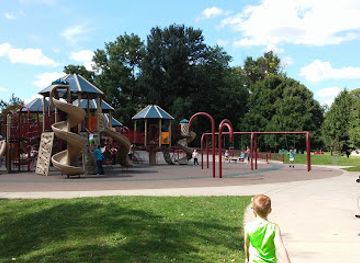
Deming Park
Experience the serene beauty of Deming Park in Terre Haute, Indiana, a perfect getaway for nature lovers and families looking for outdoor fun.
15 min drive · 5.1 km from city centre
-
Tourist attraction
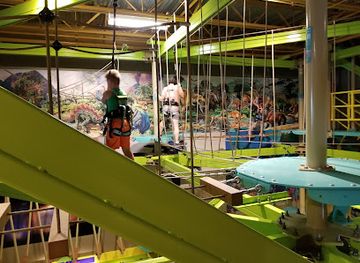
Terre Haute Children's Museum
Discover hands-on learning and fun at Terre Haute Children's Museum, where curiosity comes alive through interactive exhibits and engaging activities.
9 min walk · 0.7 km from city centre
-
Tourist attraction
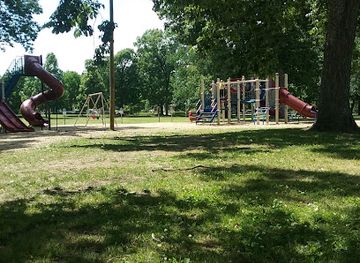
Collett Park
Explore the serene beauty of Collett Park in Terre Haute, Indiana - a perfect urban oasis for relaxation and family fun.
10 min drive · 3.2 km from city centre
-
Tourist attraction
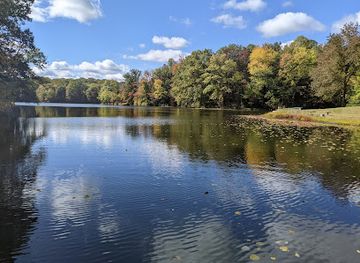
Hawthorn Park- Vigo County Parks and Recreation Department
Unwind in the natural beauty of Hawthorn Park, a tranquil park in Terre Haute, Indiana, perfect for outdoor activities and family fun.
24 min drive · 8.1 km from city centre
Best landmarks in Terre Haute
The Vigo County Courthouse is Terre Haute’s principal civic landmark, occupying a prominent downtown position and representing the city’s nineteenth-century growth as a county seat and regional centre. The Eugene V. Debs Home has a different kind of significance: the preserved residence connects the city with American labour history, railway organising and Socialist politics. Indiana State University’s historic campus buildings and public spaces mark the continuing importance of teacher education and higher learning, while Rose-Hulman Institute of Technology represents Terre Haute’s long engineering tradition. Downtown commercial blocks and the Wabash Avenue streetscape retain fragments of the city’s industrial-era prosperity, with brick façades and civic scale characteristic of older Midwestern centres. Religious buildings, memorials and neighbourhood structures add further layers, reflecting the communities that developed alongside railways, factories, schools and civic institutions.
-
Pub
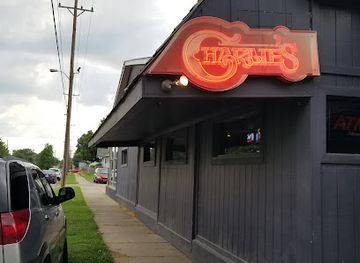
Charlie's Pub & Grub
Experience the warmth and flavor of Charlie's Pub & Grub in Terre Haute, where local cuisine and community spirit come together in a cozy setting.
6 min drive · 2.1 km from city centre
-
Park
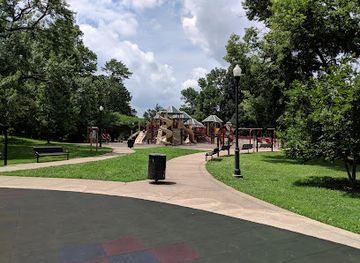
Deming Park
Explore Deming Park in Terre Haute, Indiana: a lush park perfect for relaxation, family fun, and outdoor adventures amidst nature's beauty.
15 min drive · 5.1 km from city centre
-
Shopping mall
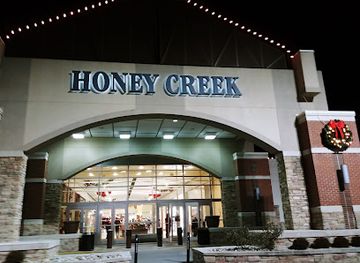
Haute City Center
Explore Haute City Center in Terre Haute, Indiana: Your ultimate destination for shopping, dining, and entertainment.
13 min drive · 4.4 km from city centre
-
Bar
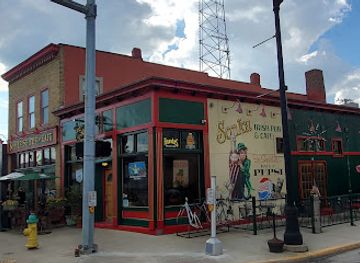
Sonka Irish Pub
Discover the authentic Irish experience at Sonka Irish Pub in Terre Haute, where great food and a lively atmosphere meet to create unforgettable memories.
5 min drive · 1.6 km from city centre
Explore Terre Haute on the map
Plan your Terre Haute trip on one map. See where the top attractions, landmarks, restaurants, bars and hotels are, find what's near where you're staying, and book hotels and experiences in a few clicks.
Best hotels in Terre Haute
Best restaurants in Terre Haute
Terre Haute’s dining scene reflects western Indiana’s Midwestern traditions, with hearty American cooking, locally familiar comfort food and a growing selection of casual international and contemporary dishes. The pork tenderloin sandwich, usually a breaded cutlet served in a bun, is a characteristic Indiana order, while breakfast cafés, diners, pizza restaurants and independent burger shops form much of the everyday scene. Downtown Wabash Avenue has the greatest concentration of restaurants and cafés, with additional choices around the university and in the 12 Points district. Regional staples such as sweet corn, seasonal produce and sugar cream pie connect local eating to Indiana’s agricultural culture. Farmers’ markets and occasional food events provide opportunities to encounter produce and prepared foods from the surrounding area. Dining is generally informal, with evening meals ranging from relaxed neighbourhood venues to more polished restaurants in the central districts.
-
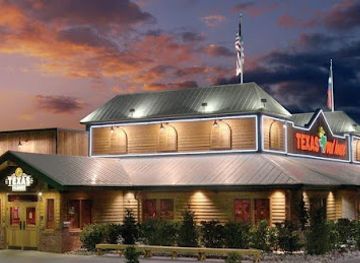
Steak
Texas Roadhouse
Experience authentic American dining at Texas Roadhouse in Terre Haute, where every meal is a celebration of flavor and hospitality.
10 min drive · 3.2 km from city centre
-
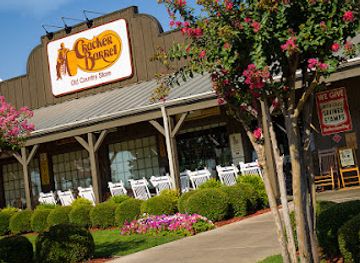
American
Cracker Barrel Old Country Store
Discover the heart of Southern comfort food at Cracker Barrel Old Country Store in Terre Haute—where every meal is a taste of Americana.
12 min drive · 3.9 km from city centre
-
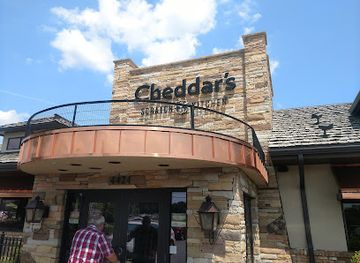
Traditional American
Cheddar's Scratch Kitchen
Experience the best of traditional American comfort food at Cheddar's Scratch Kitchen in Terre Haute, where every dish is made from scratch with love.
18 min drive · 5.9 km from city centre
-
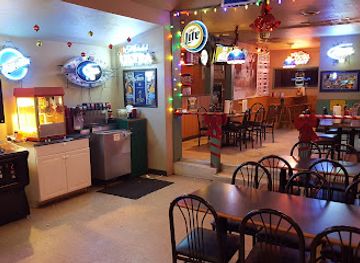
Restaurant
Charlie's Pub & Grub
Discover Charlie's Pub & Grub in Terre Haute - where hearty meals meet a lively atmosphere perfect for any occasion.
6 min drive · 2.1 km from city centre
Best bars in Terre Haute
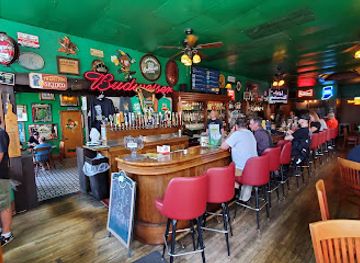
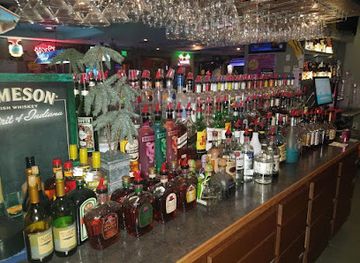
Terre Haute’s evening life is modest in scale and centred chiefly on downtown Wabash Avenue, the university surroundings and the 12 Points area. Visitors will find neighbourhood bars, pub-style restaurants, cafés and locally oriented drinking spaces rather than a large late-night club circuit. Indiana State University brings a student presence and a changing programme of social events, while local breweries and bars provide settings for conversation, live music and community gatherings when scheduled. The city’s cultural calendar can also include theatre, concerts, campus performances and gallery events, offering alternatives to nightlife based around alcohol. Evenings are generally relaxed, and activity may vary substantially by weekday, academic term and special event. Checking current venue calendars is sensible, particularly for live performances and smaller independent establishments.
-
Pub
Charlie's Pub & Grub
Experience the heart of Terre Haute at Charlie's Pub & Grub, where local flavors and a vibrant atmosphere come together for an unforgettable dining adventure.
6 min drive · 2.1 km from city centre
-
Brewpub
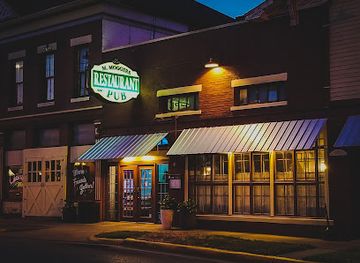
M. Moggers Restaurant & Pub
Experience the inviting atmosphere of M. Moggers Restaurant & Pub, where local flavors and craft beers come together in Terre Haute.
12 min walk · 0.9 km from city centre
-
Bar
Sonka Irish Pub
Discover the charm of Sonka Irish Pub in Terre Haute, Indiana, where authentic Irish cuisine meets a lively atmosphere.
5 min drive · 1.6 km from city centre
-
Restaurant
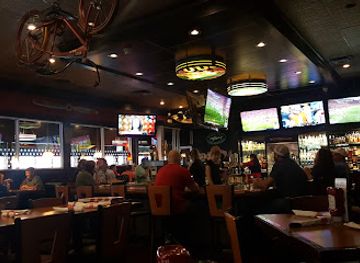
TGI Fridays
Discover the vibrant atmosphere and delicious American cuisine at TGI Fridays in Terre Haute, a perfect spot for casual dining and fun.
13 min drive · 4.4 km from city centre

Best nightclubs in Terre Haute
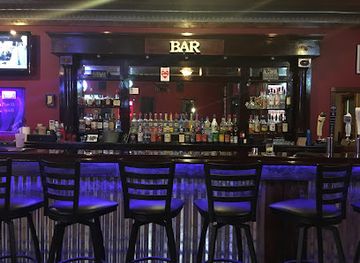
Terre Haute’s evening life is modest in scale and centred chiefly on downtown Wabash Avenue, the university surroundings and the 12 Points area. Visitors will find neighbourhood bars, pub-style restaurants, cafés and locally oriented drinking spaces rather than a large late-night club circuit. Indiana State University brings a student presence and a changing programme of social events, while local breweries and bars provide settings for conversation, live music and community gatherings when scheduled. The city’s cultural calendar can also include theatre, concerts, campus performances and gallery events, offering alternatives to nightlife based around alcohol. Evenings are generally relaxed, and activity may vary substantially by weekday, academic term and special event. Checking current venue calendars is sensible, particularly for live performances and smaller independent establishments.
-
Bar
Tollys Bar and Grill
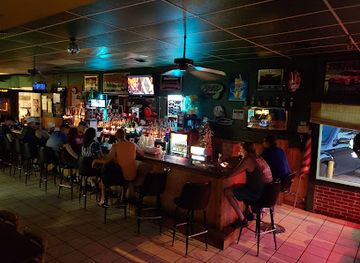
Discover the lively atmosphere of Tollys Bar and Grill in Terre Haute, Indiana, where delicious food and vibrant entertainment await every visitor.
12 min drive · 3.9 km from city centre
-
Bar
The Cabin Pub and Grub
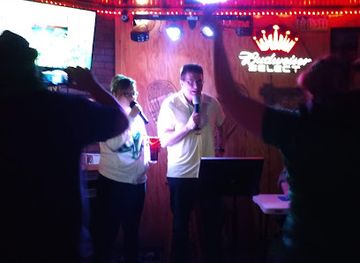
Discover the vibrant atmosphere of The Cabin Pub and Grub in Terre Haute, where hearty pub fare meets lively karaoke nights in a cozy setting.
8 min drive · 2.5 km from city centre
-
Bar
T's Lounge
Experience the vibrant nightlife at T's Lounge in Terre Haute, where affordable drinks and karaoke fun await every visitor.
6 min drive · 2.1 km from city centre
-
Bar
Ripley's Beach Bar
Experience the lively atmosphere, great drinks, and live music at Ripley's Beach Bar, Terre Haute's favorite spot for relaxation and fun.
12 min walk · 1.0 km from city centre
Best shops in Terre Haute
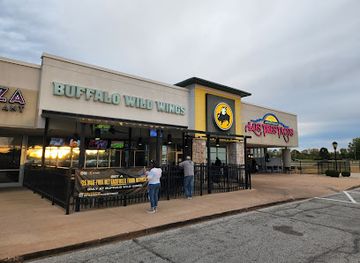
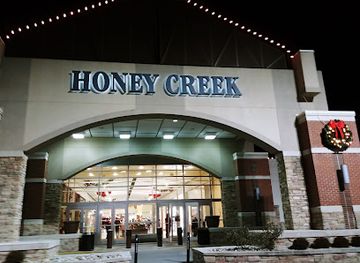
Shopping in Terre Haute combines practical regional retail with independent businesses in older commercial districts. Downtown Wabash Avenue is the most rewarding area for browsing locally owned shops, galleries, gifts and occasional specialist retailers, while the 12 Points district has a neighbourhood character and a selection of small businesses. Haute City Center, formerly Honey Creek Mall, provides a conventional enclosed shopping environment and serves the wider region. Seasonal farmers’ markets and community markets offer Indiana produce, baked goods, preserves, craft items and prepared foods, though their locations and dates vary. Visitors interested in locally meaningful purchases can look for Indiana-made food products, regional art, books connected with Eugene V. Debs or the Wabash Valley, and work by area makers. Shopping is dispersed beyond the historic centre, so a car is useful when combining independent districts with larger retail areas.
-
Shopping mall
Towne South Plaza
Discover Towne South Plaza in Terre Haute, Indiana - a shopping mall brimming with diverse stores and delightful dining options for all tastes.
15 min drive · 4.9 km from city centre
-
Shopping mall
Haute City Center
Explore Haute City Center in Terre Haute for a fantastic shopping experience, diverse dining, and lively events, perfect for every traveler.
13 min drive · 4.4 km from city centre
-
Shopping mall
Plaza North Shopping Center
Explore diverse shopping and dining experiences at Plaza North Shopping Center in Terre Haute, Indiana, perfect for every tourist seeking retail fun.
15 min drive · 4.9 km from city centre
-
Gift shop
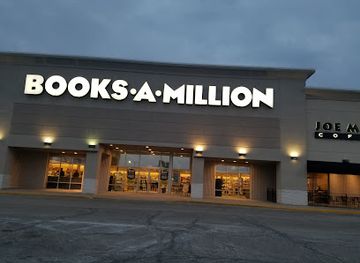
Books-A-Million
Explore an extensive selection of books, collectibles, and more at Books-A-Million, the ultimate destination for book lovers in Terre Haute, Indiana.
13 min drive · 4.3 km from city centre
Get your free copy of our complete guide to Terre Haute, delivered straight to you.
Everything on this page, from attractions and restaurants to essentials and local phrases, in one PDF you can read offline, print or share.
Already have an account? Sign in
Your Terre Haute guide is ready.
We'll send it to · Not you? Sign out

Getting your guide ready…
We are putting together a fresh copy of the Terre Haute guide. This can take up to a minute.
This can take a few moments. If your browser asks, choose Allow so the download can start. You'll find the guide in your Downloads folder.
Nothing happened? Download it again
Sorry, the guide is taking longer than usual. Please try again in a minute, or get it by email instead.
Terre Haute essentials
Currency and Payment
Safety
Emergency Situations
Do's and Don'ts
Local Tips
From Eve
Local phrases worth knowing
You don't need to get them perfect. A few words go a long way, and locals appreciate the effort.
Basics
| English | Local | Say it |
|---|---|---|
| Hello | Howdy | [hah-dee] |
| Goodbye | See ya | [see yah] |
| Yes | Yep | [yep] |
| No | Nope | [nohp] |
| Please/You're welcome | Please/Welcome | [pleez/wel-kum] |
| Thank you | Thanks | [th-anks] |
| Excuse me/Sorry | Pardon me/Sorry | [par-dn mee/sor-ee] |
| How are you? | Howdy | [hah-dee] |
| Fine. And you? | Good. You? | [gud. yoo] |
| Do you speak English? | Ya speak English? | [yah speek ing-glish] |
| I don't understand | I dunno | [I duh-noh] |
Eating & Drinking
| English | Local | Say it |
|---|---|---|
| I'd like to see the menu, please | Menu, please | [men-yoo, pleez] |
| I don't eat meat | No meat for me | [noh meet fohr mee] |
| Cheers! | Cheers! | [cheers] |
| I would like to pay, please | Check, please | [chek, pleez] |
Emergencies
| English | Local | Say it |
|---|---|---|
| Help! | Help! | [help!] |
| Go away! | Get lost! | [get lost!] |
| Call the Police! | Call the cops! | [call the cops!] |
| Call a doctor! | Get me a doctor! | [get mee uh doc-tur!] |
| I'm lost | I'm lost | [I'm lost] |
| I'm ill | I'm sick | [I'm sik] |
Shopping
| English | Local | Say it |
|---|---|---|
| I'd like to buy... | I wanna buy... | [I wah-nuh buy...] |
| I'm just looking | Just browsing | [just bro-zing] |
| How much is it? | How much? | [how much?] |
| That's too expensive | Too pricey | [too pr-eye-see] |
| Can you lower the price? | Can ya drop the price? | [can yah drop the price?] |
Time & Numbers
| English | Local | Say it |
|---|---|---|
| What time is it? | What time is it? | [what time is it?] |
| It's one o'clock | It's one | [it's one] |
| Half past (10) | Half past ten | [half past ten] |
| Morning | Morning | [mor-ning] |
| Afternoon | Afternoon | [af-ter-noon] |
| Evening | Evening | [ee-ven-ing] |
| Yesterday | Yesterday | [yes-tur-day] |
| Today | Today | [toh-day] |
| Tomorrow | Tomorrow | [toh-mor-row] |
| 1 | 1 | [1] |
| 2 | 2 | [2] |
| 3 | 3 | [3] |
| 4 | 4 | [4] |
| 5 | 5 | [5] |
| 6 | 6 | [6] |
| 7 | 7 | [7] |
| 8 | 8 | [8] |
| 9 | 9 | [9] |
| 10 | 10 | [10] |
Transport & Directions
| English | Local | Say it |
|---|---|---|
| Where's a/the...? | Where's the...? | [where's the...?] |
| What's the address? | What's the address? | [what's the address?] |
| Can you show me (on the map)? | Show me (on the map) | [show me (on the map)] |
| When's the next (bus)? | When's the next (bus)? | [when's the next (bus)?] |
| A ticket (to ....) | Ticket (to ...) | [ticket (to ...)] |
History of Terre Haute
Wabash Valley Peoples and Frontier Beginnings
The Terre Haute area lies within the historic Wabash Valley, a region associated with Miami, Piankeshaw, Wea and other Indigenous peoples before and during the period of United States expansion. European-American settlement accelerated in the early nineteenth century as military roads, river traffic and land speculation reshaped the region. Fort Harrison, established near the Wabash during the War of 1812, formed part of the wider military setting of the frontier, although the later town of Terre Haute developed as a separate settlement. The location’s elevated ground beside the river helped give the community its French name and offered practical advantages for settlement and commerce.
The Founding of Terre Haute
Terre Haute was laid out in 1816, the same year Indiana entered the Union, and became the county seat of Vigo County in the early period of statehood. Its position on the Wabash made it a natural point for agricultural exchange, river transport and regional administration. The town expanded as roads improved and as incoming settlers established farms, stores and workshops. Terre Haute was incorporated as a town in 1832 and as a city in 1853. These decades established the street pattern and civic role that still underpin the modern downtown, even though later development extended well beyond the original settlement.
Canals, Railways and Industrial Growth
Nineteenth-century transport transformed Terre Haute from a river settlement into a commercial and industrial centre. The Wabash and Erie Canal connected the city with a much wider inland waterway network during the canal era, while railways later became more important for moving agricultural goods, coal and manufactured products. Nearby coal deposits supported mining and fuel-related industries, and Terre Haute developed factories, foundries, breweries and other enterprises. Population growth brought new churches, schools, civic buildings and immigrant communities. The surviving courthouse and commercial architecture date largely from this period of confidence and expansion, when Terre Haute served as a major regional market.
Education and the Growth of Institutions
Terre Haute’s educational identity developed alongside its industry. Indiana State University traces its origins to the Indiana State Normal School, founded in 1865 to train teachers, and it became an important institution in the city’s cultural and economic life. Rose Polytechnic Institute, founded in 1874 through the bequest of Chauncey Rose, established a separate tradition of technical education; it later became Rose-Hulman Institute of Technology and moved to its present campus west of the city. These institutions helped connect Terre Haute to national professional, scientific and educational networks while sustaining a strong local emphasis on engineering, teaching and public service.
Labour, Reform and Eugene V. Debs
Terre Haute became nationally associated with labour politics through Eugene V. Debs, the railway organiser and Socialist Party leader who made the city his home. Debs helped found the American Railway Union in the 1890s and later ran for the United States presidency five times as the Socialist candidate, including from prison in 1920 after his conviction under wartime legislation. His Terre Haute house, now the Eugene V. Debs Home, preserves the setting of this political career. The city’s industrial workforce, railway connections and reform movements formed an important backdrop to debates about workers’ rights, social welfare and the role of organised labour.
Modern Terre Haute and Regional Identity
During the twentieth century, manufacturing, retail, education and public administration continued to shape Terre Haute, while changes in rail transport, industry and shopping patterns altered the traditional central business district. Indiana State University and Rose-Hulman remained major anchors, and conservation and cultural projects helped maintain links with the city’s earlier history. Museums, restored civic buildings, neighbourhood commercial areas and parks now express different aspects of Terre Haute’s identity. The city remains a regional centre rather than a large metropolitan area, with its character defined by the Wabash Valley landscape, institutional life and a layered industrial and civic past.
Terre Haute in Photos
Browse through our photo collection highlighting the charm and character of the destination.
Cities near Terre Haute
The closest cities to Terre Haute, if you have time for more than one stop.
-

-

-

-

-


Swipe for more cities
Explore more

Explore more of Indiana
Explore Indiana: From the bustling streets of Indianapolis to the serene beauty of Indiana Dunes, discover the diverse experiences that make Indiana the Crossroads of America.
Explore Indiana