

Free Western Desert Travel Guide & Mobile App
Explore Western Desert with free travel guides. Discover regional history, expert tips, proposed trips, and audio guides on web or mobile app.


Explore Iraq’s Western Desert through vast plateaux, ancient caravan routes and frontier landscapes, with security planning central to every journey.
Read more about Western Desert
When is the best time to visit Western Desert?
Best: March–April, October · 22–28°C| Month | High (°C) | Rainfall (mm) |
|---|---|---|
| January | 13 | 20 |
| February | 16 | 15 |
| March (best) | 22 | 10 |
| April (best) | 28 | 7 |
| May | 33 | 3 |
| June | 37 | 1 |
| July | 39 | 0 |
| August | 38 | 1 |
| September | 34 | 3 |
| October (best) | 27 | 7 |
| November | 22 | 10 |
| December | 15 | 15 |
Getting to and around Western Desert
How to get there
Transportation
Top city travel guides in Western Desert
The cities of Western Desert, and the easiest places to base yourself.
-

-

-

-

-

-


Swipe for more cities
Destinations in Western Desert
Resorts, valleys and scenic spots worth a trip of their own.
-

-

-


Swipe for more destinations
Best attractions in Western Desert
-
Tourist attraction
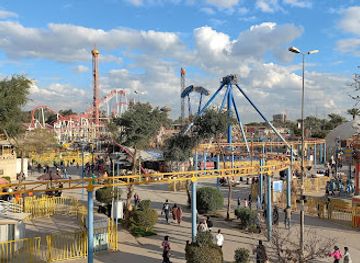
Al-Zawraa Park
Escape to Baghdad's largest park! Enjoy gardens, a zoo, amusement rides, and family fun in this green oasis.
-
Tourist attraction
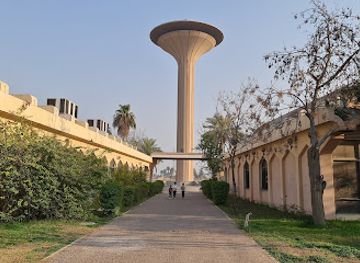
Baghdad Island Park
Escape to Baghdad's green oasis: Baghdad Island Park offers tranquility, recreation, and cultural experiences along the Tigris River.
-
Shrine
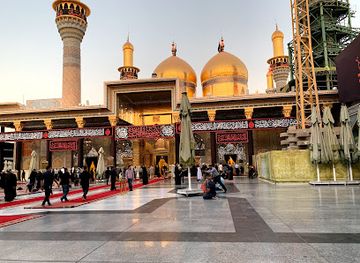
Imam al-Kāẓim & Imam al-Jawād Shrine
Discover the spiritual heart of Baghdad at the Imam al-Kāẓim & Imam al-Jawād Shrine, a beacon of Islamic architecture and heritage.
-
Tourist attraction
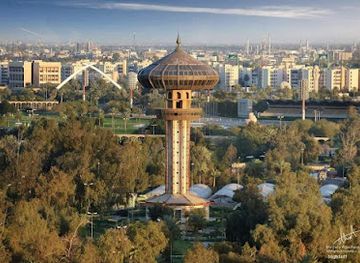
Zoo - Zawraa Park
Discover diverse wildlife in the heart of Baghdad at Zawraa Park's family-friendly zoo.
Best landmarks in Western Desert
The Western Desert’s most characteristic landmarks are broad geographical features and route markers rather than monumental urban architecture. The limestone and gravel plateaux around western Al Anbar define the region’s visual identity, while wadis and isolated wells explain why particular roads and settlements developed where they did. Ar-Rutbah is the principal named settlement and a practical reference point for understanding the desert’s modern road geography. The Akashat area represents the region’s industrial landscape through phosphate extraction and associated infrastructure, but operational sites may be restricted and are not suitable for casual photography. Across the desert, remnants of roads, posts and transport installations reflect the changing importance of the Baghdad–Levant corridor, although many are remote, damaged or difficult to identify safely. Ancient frontier remains connected with western Mesopotamia are historically relevant, but not every famous site associated with Iraq’s western approaches lies within the strict Western Desert. Any archaeological or military-looking structure should be viewed only from an authorised location and never entered or examined independently.
-
Castle
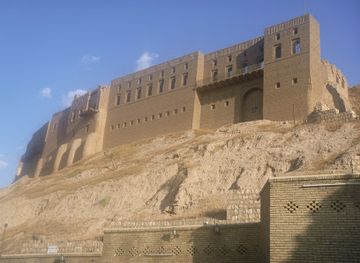
Erbil Citadel
Explore the ancient Erbil Citadel, a UNESCO World Heritage site and one of the world's oldest continuously inhabited settlements. A journey through time in Kurdistan.
-
Park
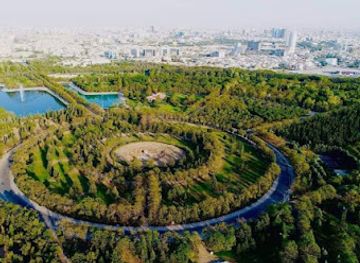
Samî Abdulrahman Park
Erbil's largest park, a green escape offering leisure, recreation, and a poignant reminder of Kurdish resilience and freedom.
-
Castle
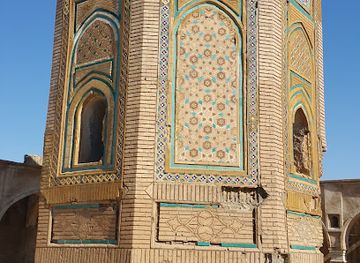
Kirkuk Citadel
Explore Kirkuk Citadel, an ancient fortress steeped in history, offering breathtaking views and a glimpse into Iraq's rich cultural heritage.
-
Park
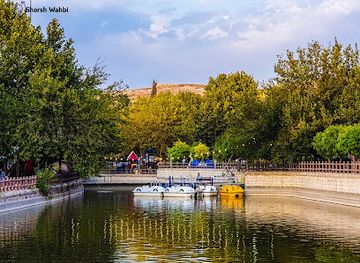
Sarchnar Park
Escape to Sarchnar Park in Sulaymaniyah: A serene oasis with lush gardens, walking paths, and a vibrant cultural atmosphere.
Explore Western Desert on the map
Plan your trip on one map. See where the top cities, national parks and sights are, and book hotels and experiences in a few clicks.
Best hotels in Western Desert
Best restaurants in Western Desert
Dining in the Western Desert is functional, local and shaped by distance. Ar-Rutbah and larger roadside settlements may offer simple Iraqi meals such as rice with chicken or meat, stews, grilled kebabs, flatbread, lentil dishes and tea, while travellers on organised journeys should normally carry provisions arranged in advance. The desert does not have a separate cuisine, but food reflects the broader traditions of western Iraq and the hospitality of communities connected to the Euphrates and long-distance roads. Dates, yoghurt, pickles, bread and sweet tea are useful staples on journeys, although storage requires care in high temperatures. Restaurants may be modest and opening arrangements can change, so do not depend on finding a meal at a particular hour outside established towns. Bottled water should be used, and visitors should follow local advice about food hygiene, especially at remote stops. In practice, a prepared expedition kitchen or packed meals may be more dependable than dining out.
-
Restaurant
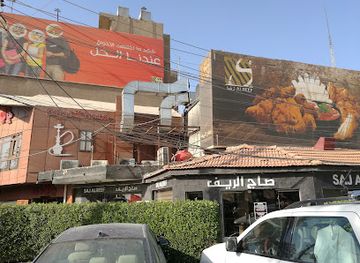
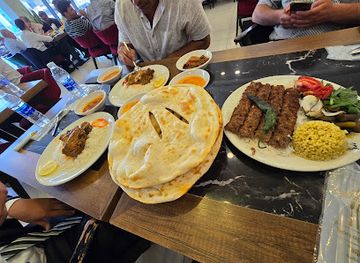
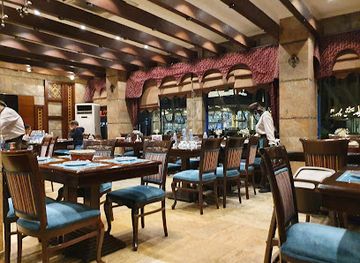
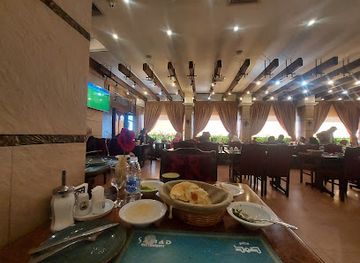
Saj Alreef Restaurant - Karada
Discover the rich flavors of Iraqi cuisine at Saj Alreef Restaurant in Karada - a culinary experience not to be missed.
-
Restaurant
Royal Galaxy Restaurant
Discover the rich flavors of Iraq at Royal Galaxy Restaurant in Baghdad - where tradition meets taste.
-
Restaurant
Restaurant Beeston Samad
Experience the essence of Iraqi cuisine at Restaurant Beeston Samad in Baghdad's vibrant Mansour district.
-
Meat
Samad Restaurant
Discover the authentic flavors of Iraq at Samad Restaurant in Baghdad's Mansour district - where tradition meets taste.
Best bars in Western Desert
The Western Desert does not have a conventional bar or nightclub scene. Evening life in Ar-Rutbah and other settlements is more likely to centre on family restaurants, tea shops, cafés and informal gatherings than on alcohol-led entertainment. Iraq is socially and religiously diverse, but conservative expectations are particularly important in small communities and near religious or security-sensitive locations; public drinking is inappropriate and alcohol availability is limited. Organised visitors may spend evenings at secure accommodation, discussing the day’s route over tea or observing the exceptionally dark sky away from settlement lights. Do not treat remote camping as casual nightlife: it requires permission, security assessment, suitable equipment and a reliable communication plan. Any venue information should be checked locally because services and access can change rapidly.
-
Restaurant
German Bar
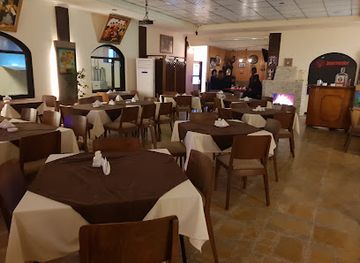
Discover the essence of German cuisine at the German Bar in Erbil, where authentic flavors meet a vibrant atmosphere.
-
Bar
Mars Rooftop
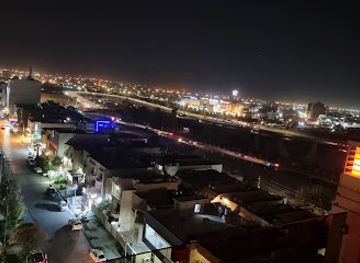
Experience the breathtaking views and vibrant atmosphere at Mars Rooftop, Erbil's premier bar for a memorable night out.
-
Chocolate Bar 14 Ramadan - جوكلت بار ١٤ رمضان
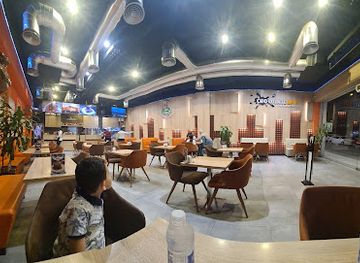
Experience the rich and diverse world of chocolate at Chocolate Bar 14 Ramadan, a must-visit dessert shop in Baghdad.
-
Roundabout
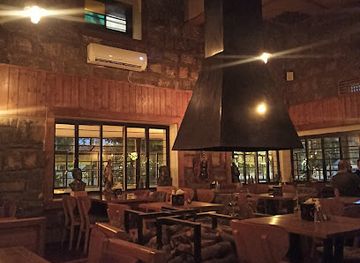
Discover the vibrant atmosphere at Roundabout, a Western-style bar in Sulaymaniyah, blending local flavors with a lively ambiance.
Best nightclubs in Western Desert
The Western Desert does not have a conventional bar or nightclub scene. Evening life in Ar-Rutbah and other settlements is more likely to centre on family restaurants, tea shops, cafés and informal gatherings than on alcohol-led entertainment. Iraq is socially and religiously diverse, but conservative expectations are particularly important in small communities and near religious or security-sensitive locations; public drinking is inappropriate and alcohol availability is limited. Organised visitors may spend evenings at secure accommodation, discussing the day’s route over tea or observing the exceptionally dark sky away from settlement lights. Do not treat remote camping as casual nightlife: it requires permission, security assessment, suitable equipment and a reliable communication plan. Any venue information should be checked locally because services and access can change rapidly.
-
Disco club
HERA Club
Experience the electrifying nightlife at HERA Club in Erbil, where music, dance, and vibrant energy come together.
-
Night club
Inferno Erbil
Experience the vibrant nightlife of Erbil at Inferno Erbil, a premier night club offering electrifying music, stunning visuals, and a luxurious atmosphere.
-
Night club
LOTUS NIGHT CLUB
Experience the vibrant nightlife at Lotus Night Club in Erbil, where music, dancing, and unforgettable memories await.
-
Night club
نايت ڤينيسيا
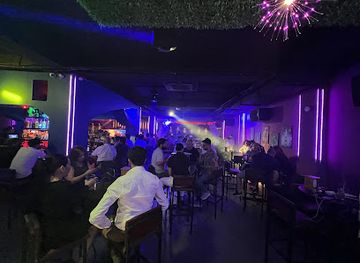
Discover Baghdad's nightlife at نايت ڤينيسيا, a disco club where the music never stops and the dance floor awaits.


Best shops in Western Desert
Shopping opportunities in the Western Desert are limited and practical. Ar-Rutbah and roadside settlements may provide basic groceries, bottled water, clothing, vehicle supplies and locally available household goods, but they are not established retail destinations. Travellers should purchase specialist equipment, medicines, reliable navigation supplies and most provisions in Baghdad or a larger Iraqi city before entering the desert. Small food shops may stock dates, tea, bread and packaged staples, while roadside purchases should be made with modest cash and with attention to storage conditions. The region is not known for a broad, formalised craft-shopping tradition aimed at international visitors, and archaeological objects should never be bought, collected or transported. For appropriate souvenirs, choose ordinary packaged Iraqi food products or locally made textiles obtained through a reputable shop outside sensitive areas, rather than anything described as an ancient artefact or recovered from the desert.
-
Shopping mall
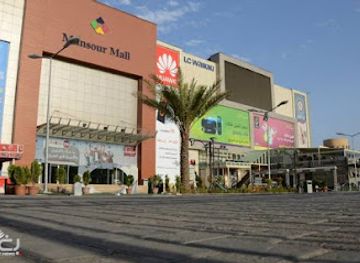
Mansour Mall
Explore the vibrant Mansour Mall in Baghdad, where shopping, dining, and entertainment converge in a modern retail experience.
-
Shopping mall
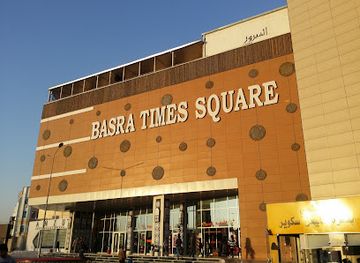
Basra Times Square Mall
Experience the best shopping, dining, and entertainment at Basra Times Square Mall, the premier shopping destination in Basra, Iraq.
-
Shopping mall
Babylon Mall
Explore Babylon Mall: A Shopping, Dining, and Entertainment Hub in Baghdad, Perfect for Tourists and Families.
-
Shopping mall
Family Mall Duhok
Explore Family Mall Duhok, a vibrant shopping haven offering diverse stores, family-friendly entertainment, and delicious dining options in a modern setting.
Get your free copy of our complete guide to Western Desert, delivered straight to you.
Everything on this page, from attractions and restaurants to essentials and local phrases, in one PDF you can read offline, print or share.
Already have an account? Sign in
Your Western Desert guide is ready.
We'll send it to · Not you? Sign out

Getting your guide ready…
We are putting together a fresh copy of the Western Desert guide. This can take up to a minute.
This can take a few moments. If your browser asks, choose Allow so the download can start. You'll find the guide in your Downloads folder.
Nothing happened? Download it again
Sorry, the guide is taking longer than usual. Please try again in a minute, or get it by email instead.
Western Desert essentials
Currency and Payment
Safety
Emergency Situations
Do's and Don'ts
Local Tips
From Eve
Local phrases worth knowing
You don't need to get them perfect. A few words go a long way, and locals appreciate the effort.
Basics
| English | Local | Say it |
|---|---|---|
| Hello | Ahoj | [Ahoy] |
| Goodbye | Zbohem | [Zbohem] |
| Yes | Ano | [Ah-no] |
| No | Ne | [Neh] |
| Please/You're welcome | Prosím | [Pro-seem] |
| Thank you | Děkuji | [Dyeh-koo-yee] |
| Excuse me/Sorry | Omlouvám se | [O-mlo-vam seh] |
| How are you? | Jak se máš? | [Yak seh mash] |
| Fine. And you? | Dobře. A ty? | [Doh-breh. Ah tee?] |
| Do you speak English? | Mluvíš anglicky? | [Mloo-veesh ahn-glit-ski?] |
| I don't understand | Nerozumím | [Neh-roh-zoo-meem] |
Eating & Drinking
| English | Local | Say it |
|---|---|---|
| I'd like to see the menu, please | Chtěl bych vidět menu, prosím | [Kht-yel bikh vid-yet meh-noo, pro-seem] |
| I don't eat meat | Nejím maso | [Neh-yim mah-so] |
| Cheers! | Na zdraví! | [Nah zdra-vee] |
| I would like to pay, please | Chtěl bych zaplatit, prosím | [Kht-yel bikh zah-pla-tit, pro-seem] |
Emergencies
| English | Local | Say it |
|---|---|---|
| Help! | Pomoc! | [Poh-mots] |
| Go away! | Jdi pryč! | [Yee preech] |
| Call the Police! | Zavolejte policii! | [Zah-vo-ley-teh poh-lee-tsi-ee] |
| Call a doctor! | Zavolejte doktora! | [Zah-vo-ley-teh doh-kto-ra] |
| I'm lost | Ztratil jsem se | [Ztrah-teel ysem seh] |
| I'm ill | Jsem nemocný | [Ysem neh-mots-nee] |
Shopping
| English | Local | Say it |
|---|---|---|
| I'd like to buy... | Chtěl bych koupit... | [Kht-yel bikh kohl-pit] |
| I'm just looking | Jen se dívám | [Yen seh dee-vahm] |
| How much is it? | Kolik to stojí? | [Koh-lik toh stoh-yee?] |
| That's too expensive | To je moc drahé | [Toh yeh mohtz drah-heh] |
| Can you lower the price? | Můžeš snížit cenu? | [Moo-zhesh snee-zit tseh-noo?] |
Time & Numbers
| English | Local | Say it |
|---|---|---|
| What time is it? | Kolik je hodin? | [Koh-lik yeh hoh-din?] |
| It's one o'clock | Je jedna hodina | [Yeh yed-nah hoh-dee-nah] |
| Half past (10) | Půl (10) | [Pool (10)] |
| Morning | Ráno | [Rah-no] |
| Afternoon | Odpoledne | [Ohd-po-leh-dneh] |
| Evening | Večer | [Veh-cher] |
| Yesterday | Včera | [V-cheh-rah] |
| Today | Dnes | [Dnes] |
| Tomorrow | Zítra | [Zee-trah] |
| 1 | 1 | [1] |
| 2 | 2 | [2] |
| 3 | 3 | [3] |
| 4 | 4 | [4] |
| 5 | 5 | [5] |
| 6 | 6 | [6] |
| 7 | 7 | [7] |
| 8 | 8 | [8] |
| 9 | 9 | [9] |
| 10 | 10 | [10] |
Transport & Directions
| English | Local | Say it |
|---|---|---|
| Where's a/the...? | Kde je...? | [Kdeh yeh...?] |
| What's the address? | Jaká je adresa? | [Yah-kah yeh ah-dreh-sah?] |
| Can you show me (on the map)? | Můžeš mi ukázat (na mapě)? | [Moo-zhesh mee oo-kah-zat (nah mah-peh)?] |
| When's the next (bus)? | Kdy jede další (autobus)? | [Kdee yeh-deh dal-shi (ow-toh-boos)?] |
| A ticket (to ....) | Jeden lístek (do ...) | [Yeh-den lee-stek (doh ...)] |
History of Western Desert
Prehistoric Movement Across the Plateau
The Western Desert was never entirely empty. Archaeological evidence from Iraq’s wider western and northern desert zones indicates repeated human movement through a landscape where wells, wadis and seasonal water sources determined survival. Mobile communities used stone resources, hunted when conditions allowed and connected the desert with the more productive Euphrates corridor. Finds are unevenly documented and many localities are difficult or unsafe to access today, but the broad historical pattern is clear: the plateau functioned as a zone of passage and seasonal activity rather than a permanently settled agricultural region.
Ancient Routes Between Mesopotamia and the Levant
Western Iraq formed part of the overland geography linking Mesopotamian cities with Syria, the eastern Mediterranean and Arabia. Merchants and official travellers moved along routes organised around wells and caravan stations, carrying textiles, metals, livestock, incense and other goods. Political powers sought to control these corridors because they offered access between river settlements and frontier territories. The desert’s importance therefore came less from dense settlement than from its position between major cultural and economic regions.
Roman and Sasanian Frontier Landscapes
During the Roman and Sasanian periods, the western approaches to Mesopotamia became part of a contested frontier. Forts, roads, watchpoints and garrison settlements protected routes and monitored movement, while nearby desert communities negotiated with successive imperial authorities. The most visible Roman remains associated with western Iraq are not all within the strict Western Desert, so visitors should avoid treating every Syrian-Mesopotamian frontier site as part of this region. Nevertheless, the desert’s strategic role in the rivalry between Rome and Persia shaped its roads and political geography.
Early Islamic Caravan Networks
After the seventh-century Arab-Muslim conquests, western Iraq remained a corridor between the central Mesopotamian cities and the Levant. Caravan movement, pilgrimage and administrative travel depended on wells, way stations and protected routes. The rise of Baghdad increased the importance of connections across the desert, while religious and commercial journeys linked Iraq with Syria and the Arabian Peninsula. The period left a durable cultural legacy in the form of route traditions, place names and the continued importance of hospitality and water management in desert travel.
Ottoman Rule and the Baghdad–Damascus Corridor
Under the Ottoman Empire, western Iraq lay within a frontier environment administered from larger provincial centres and connected to Syria by long-distance roads. Authority was uneven beyond settled districts, and tribal relationships, taxation, protection and access to wells all influenced movement. The desert corridor became more significant as imperial governments attempted to improve communications and reinforce control over distant territories. Remnants of later roads, posts and route infrastructure reflect the gradual transition from caravan travel to state-managed transport.
Twentieth-Century Roads, Airfields and Extraction
The twentieth century brought motor roads, aviation, border administration and industrial development to parts of the desert. Routes that once required caravans became corridors for lorries and government transport, while exploration for minerals and hydrocarbons encouraged new infrastructure. The phosphate industry around Akashat illustrates the region’s role in Iraq’s resource economy, although industrial sites are not ordinary tourist attractions and access may be restricted. Airfields, pipelines and military facilities further altered the strategic landscape.
Conflict, Displacement and Reconstruction
Western Al Anbar experienced severe disruption during the wars and insurgencies that affected Iraq, including the period when Islamic State controlled extensive territory in western and northern Iraq. Towns, roads and public services were damaged, while many communities faced displacement and prolonged insecurity. The defeat of territorial control did not remove all risks: extremist activity, unexploded ordnance, damaged infrastructure and military restrictions continue to shape travel. Any contemporary visit must therefore be understood within the region’s ongoing security and reconstruction history.
Western Desert in Photos
Browse through our photo collection highlighting the charm and character of the destination.
Neighbouring regions of Western Desert
The closest regions to Western Desert, if you have time for more than one.
-

-

-

-

-


Swipe for more regions
Explore more

Explore more of Iraq
Explore the cradle of civilization in Iraq, where ancient history, rich culture, and diverse landscapes create an unforgettable travel experience.
Explore Iraq