

Taman Negara National Park Travel Guide - Free Web & App
Your ultimate guide to Taman Negara National Park. Discover top landmarks, proposed trips, and local tips. Free on the web or via the Evendo companion app.


Taman Negara National Park, Malaysia, offers ancient rainforest, river journeys, canopy walks, wildlife encounters, jungle treks and Gunung Tahan.
Rainforest, Rivers and Mountain Trails
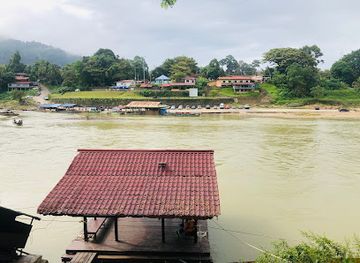
Taman Negara National Park protects one of Peninsular Malaysia’s largest remaining expanses of lowland rainforest, extending across parts of Pahang, Kelantan and Terengganu. The park’s visitor identity is centred on the Pahang River and its forested tributaries, with Kuala Tahan in Pahang serving as the best-known gateway. Another important access point is Sungai Relau near Merapoh, which provides an approach to the western side of the park and the long route towards Gunung Tahan, Peninsular Malaysia’s highest mountain.Read more about Taman Negara National Park
Exploring the Park
When is the best time to visit Taman Negara National Park?
Best: January–March · 30°C| Month | High (°C) | Rainfall (mm) |
|---|---|---|
| January (best) | 30 | 251 |
| February (best) | 30 | 251 |
| March (best) | 30 | 251 |
| April | 30 | 251 |
| May | 30 | 251 |
| June | 30 | 251 |
| July | 30 | 251 |
| August | 30 | 251 |
| September | 30 | 251 |
| October | 30 | 251 |
| November | 30 | 251 |
| December | 30 | 251 |
Getting to and around Taman Negara National Park
How to get there
Transportation
Best attractions in Taman Negara National Park
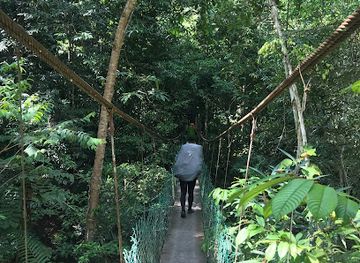
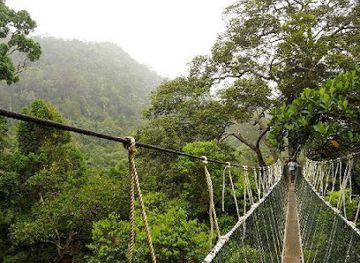
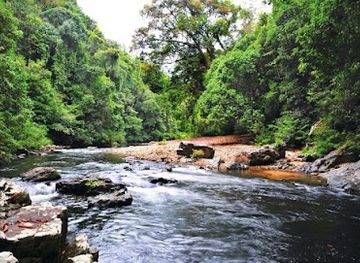
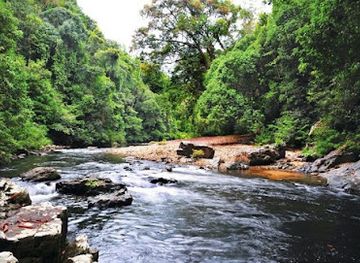
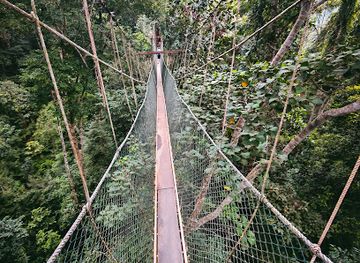
Taman Negara’s attractions are primarily experiences within a living rainforest rather than a collection of constructed sights. Around Kuala Tahan, trails lead towards Bukit Teresek, where forest walking and elevated views are associated with the visitor area, while the Canopy Walkway offers a perspective above the forest floor when open and operating. Boat trips along the Tembeling and forest rivers reach places such as Lata Berkoh, known for river scenery and cascades, and may include visits to riverside settlements or forest edges. Gua Telinga is a cave attraction whose access can be affected by conditions and management arrangements. The western side near Sungai Relau and Merapoh provides a more expedition-oriented approach to Gunung Tahan, with longer treks through changing forest and mountain landscapes. Guided night walks, wildlife observation and interpretation of plants, tracks and calls add interest to routes where sightings remain unpredictable.
-
National park
Taman Negara Sungai Relau
Explore Taman Negara Sungai Relau - a national park teeming with wildlife, pristine nature, and exciting outdoor adventures in Malaysia.
-
 National park
AsiaCamp Resort ( National Park Malaysia ) , Taman Negara, Kuala Tahan.
Explore the majestic rainforests of Taman Negara at AsiaCamp Resort, where nature meets comfort in Malaysia's oldest national park.
-
Tourist attraction
Bukit Awan
Discover the breathtaking landscapes and serene vibes at Bukit Awan, a hidden gem in Pahang that showcases Malaysia's natural beauty.
-
Tourist attraction
Lubuk Simpon
Explore the serene beauty of Lubuk Simpon in Pahang, Malaysia — a must-visit natural attraction for adventure and nature lovers.


Best landmarks in Taman Negara National Park
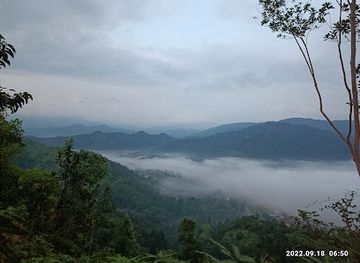
Taman Negara’s defining landmark is the vast protected rainforest itself, crossed by the Pahang River and its tributaries and framed by the central ranges of Peninsular Malaysia. Gunung Tahan is the major mountain landmark and the highest summit in Peninsular Malaysia, reached through demanding multi-day routes rather than a casual roadside excursion. Bukit Teresek is a well-known forest viewpoint near Kuala Tahan, while the Canopy Walkway has become an emblematic structure for experiencing the forest at a higher level when access is available. Lata Berkoh provides a recognised river and cascade setting, and Gua Telinga adds a cave environment to the park’s range of natural features. The rivers themselves are also cultural landmarks, serving as routes through which communities, guides and visitors understand the relationship between settlements and the forest.
-
National park
Taman Negara
Discover the ancient beauty of Taman Negara, Malaysia's stunning national park, where lush rainforests and diverse wildlife await your exploration.
-
Resort hotel
Mutiara Taman Negara
Experience the serene beauty of Mutiara Taman Negara, your gateway to adventure in Malaysia's oldest national park.
-
Local history museum
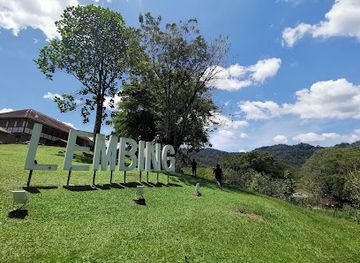
Muzium Sungai Lembing
Explore Malaysia's tin mining heritage at Muzium Sungai Lembing, a captivating local history museum showcasing the region's vibrant past.
-
Hiking area
End Trail Bukit Panorama = Pondok Puncak Bukit Panorama
Explore Bukit Panorama's breathtaking hiking trails and stunning views in the heart of Pahang, Malaysia - a paradise for nature lovers.
Explore Taman Negara National Park on the map
Plan your trip on one map. See where the top attractions, landmarks, restaurants and hotels are, and book hotels and experiences in a few clicks.
Best hotels in Taman Negara National Park
Best restaurants in Taman Negara National Park
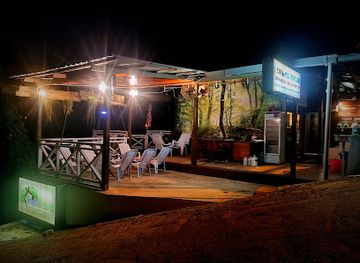
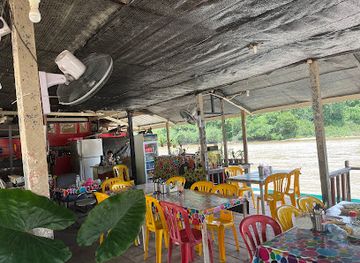
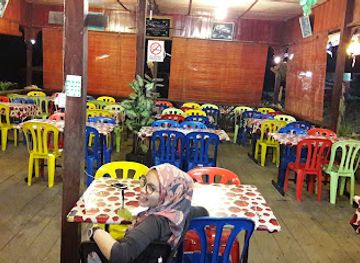
Dining in and around Taman Negara is concentrated in gateway settlements rather than scattered deep inside the forest. Kuala Tahan has simple restaurants, resort dining rooms, cafés and riverside eateries serving familiar Malaysian dishes such as nasi goreng, rice-based meals, noodles, roti, curries and vegetables, alongside drinks suited to the tropical climate. Some establishments also provide straightforward Western-style food for international visitors, while packed meals may be useful for longer excursions. Fresh supplies and restaurant choice are more limited than in major Malaysian towns, particularly for visitors heading towards Merapoh or remote trailheads. Jerantut is a larger provisioning and dining stop before the final approach, and visitors should not assume that every forest activity includes food or that meals are available on isolated river routes.
-
Restaurant
Anne Restaurant
Experience authentic Malaysian flavors at Anne Restaurant in Kuala Tahan – where delicious meals meet breathtaking natural beauty.
-
Restaurant
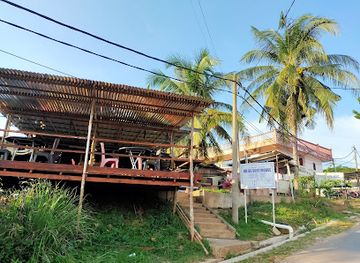
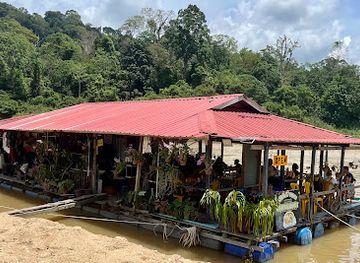
Kuala View Restaurant
Discover Kuala View Restaurant: A floating dining experience offering exquisite local cuisine with breathtaking views of Taman Negara's lush landscapes.
-
Restaurant
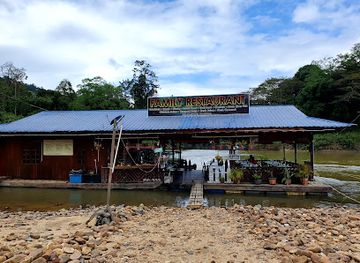
Family Restaurant Taman Negara
Discover delicious local cuisine at Family Restaurant Taman Negara, where nature meets flavor in the heart of Malaysia's lush landscapes.
-
Restaurant
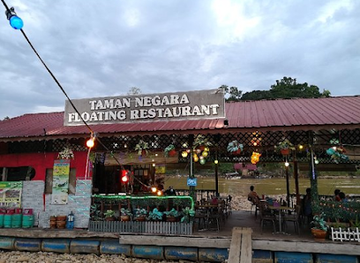
TAMAN NEGARA FLOATING RESTAURANT
Discover delightful Malaysian flavors at Taman Negara Floating Restaurant, where stunning river views enhance your dining experience amidst nature.
Best bars in Taman Negara National Park
Taman Negara has no substantial nightclub scene, and evenings are generally quiet, practical and closely connected to the forest. Around Kuala Tahan, visitors may find drinks and relaxed socialising at accommodation restaurants, riverside eateries and simple local establishments, but the atmosphere is better suited to conversation than late-night entertainment. The main evening activity is often a guided night walk or a quiet period listening to insects, frogs and other forest sounds, subject to local arrangements and weather. Alcohol availability varies between businesses and religious or cultural expectations should be respected. Merapoh and other approach settlements are similarly low-key, while larger nightlife options belong to towns outside the park rather than to Taman Negara itself.
-
Restaurant
Mutiara Taman Negara
Explore the beauty of Taman Negara at Mutiara Taman Negara, where adventure meets tranquility in the heart of Malaysia's rainforest.
-
Hotel
Wild Lodge Taman Negara
Experience the breathtaking beauty of Taman Negara at Wild Lodge, your gateway to adventure in Malaysia's lush rainforest.
-
Restaurant
Kuala View Restaurant
Experience the best of Malaysian cuisine with stunning views at Kuala View Restaurant in Pahang, a must-visit for every traveler.
-
Restaurant
Family Restaurant Taman Negara
Savor authentic Malaysian cuisine in a serene setting at Family Restaurant Taman Negara, perfect for families and nature lovers alike.
Best nightclubs in Taman Negara National Park
Taman Negara has no substantial nightclub scene, and evenings are generally quiet, practical and closely connected to the forest. Around Kuala Tahan, visitors may find drinks and relaxed socialising at accommodation restaurants, riverside eateries and simple local establishments, but the atmosphere is better suited to conversation than late-night entertainment. The main evening activity is often a guided night walk or a quiet period listening to insects, frogs and other forest sounds, subject to local arrangements and weather. Alcohol availability varies between businesses and religious or cultural expectations should be respected. Merapoh and other approach settlements are similarly low-key, while larger nightlife options belong to towns outside the park rather than to Taman Negara itself.
-
Resort hotel
Mutiara Taman Negara
Explore the enchanting beauty of Mutiara Taman Negara, a serene resort nestled in Malaysia's oldest national park, perfect for nature lovers and adventurers.
-
National park
Taman Negara National Park
Explore Taman Negara National Park, a stunning Malaysian paradise filled with ancient rainforests, exotic wildlife, and thrilling outdoor adventures.
-
Tourist attraction
Jeti Taman Negara (Kuala Tahan)
Explore Jeti Taman Negara: A breathtaking eco-tourism destination filled with rich biodiversity and outdoor adventures in the heart of Malaysia.
-
Resort hotel
AsiaCamp Resort ( National Park Malaysia ) , Taman Negara, Kuala Tahan.
Experience the beauty of Taman Negara at AsiaCamp Resort, where adventure meets comfort in Malaysia's oldest national park.
Best shops in Taman Negara National Park
Shopping within Taman Negara is limited and practical, with the main concentration around Kuala Tahan and the approach towns. Small shops and accommodation businesses may sell drinks, snacks, basic travel needs, insect repellent and simple outdoor supplies, while visitors can sometimes find locally made souvenirs or craft items associated with the forest region. Jerantut is a more useful place for broader provisions before entering the park, and Merapoh serves as a practical stopping point for western expeditions rather than a major retail destination. Purchases connected with Orang Asli communities should be made respectfully and through legitimate local channels; visitors should avoid buying wildlife products, plants or objects presented as items collected from the forest. The most characteristic local purchases are generally food supplies, modest souvenirs and practical trekking essentials rather than luxury goods.
-
Resort hotel
Mutiara Taman Negara
Experience the untouched beauty of Taman Negara at Mutiara Taman Negara, a serene resort where adventure meets relaxation amidst lush tropical landscapes.
-
National park
Taman Negara National Park
Explore the vast expanse of Taman Negara National Park, a haven for wildlife and adventure in Malaysia's ancient rainforest.
-
National park
Canopy Walkway Kuala Tahan National Park
Explore the breathtaking heights of the Canopy Walkway in Kuala Tahan National Park, a stunning national park that showcases Malaysia's rich biodiversity.
-
Tourist attraction
Jeti Taman Negara (Kuala Tahan)
Explore the breathtaking Jeti Taman Negara in Kuala Tahan, a gateway to ancient rainforests and thrilling outdoor adventures.
Get your free copy of our complete guide to Taman Negara National Park, delivered straight to you.
Everything on this page, from attractions and restaurants to essentials and local phrases, in one PDF you can read offline, print or share.
Already have an account? Sign in
Your Taman Negara National Park guide is ready.
We'll send it to · Not you? Sign out

Getting your guide ready…
We are putting together a fresh copy of the Taman Negara National Park guide. This can take up to a minute.
This can take a few moments. If your browser asks, choose Allow so the download can start. You'll find the guide in your Downloads folder.
Nothing happened? Download it again
Sorry, the guide is taking longer than usual. Please try again in a minute, or get it by email instead.
Taman Negara National Park essentials
Currency and Payment
Safety
Emergency Situations
Do's and Don'ts
Local Tips
From Eve
Local phrases worth knowing
You don't need to get them perfect. A few words go a long way, and locals appreciate the effort.
Basics
| English | Local | Say it |
|---|---|---|
| Hello | Selamat pagi | [suh-lah-maht pah-gee] |
| Goodbye | Selamat tinggal | [suh-lah-maht ting-gahl] |
| Yes | Ya | [yah] |
| No | Tidak | [tee-dahk] |
| Please/You're welcome | Sila | [see-lah] |
| Thank you | Terima kasih | [teh-ree-mah kah-seh] |
| Excuse me/Sorry | Maaf | [mah-ahf] |
| How are you? | Apa khabar? | [ah-pah kah-bahr] |
| Fine. And you? | Baik. Dan awak? | [bah-eek. dahn ah-wahk] |
| Do you speak English? | Boleh cakap English? | [boh-leh chah-kahp English] |
| I don't understand | Saya tak faham | [sah-yah tahk fah-hahm] |
Eating & Drinking
| English | Local | Say it |
|---|---|---|
| I'd like to see the menu, please | Boleh saya lihat menu? | [boh-leh sah-yah lee-haht meh-noo] |
| I don't eat meat | Saya tak makan daging | [sah-yah tahk mah-kahn dah-yehng] |
| Cheers! | Sihat! | [see-haht] |
| I would like to pay, please | Boleh saya bayar? | [boh-leh sah-yah bah-yahr] |
Emergencies
| English | Local | Say it |
|---|---|---|
| Help! | Tolong! | [toh-lohng] |
| Go away! | Pergi! | [pehr-gee] |
| Call the Police! | Panggil polis! | [pahng-geel poh-lees] |
| Call a doctor! | Panggil doktor! | [pahng-geel dohk-tohr] |
| I'm lost | Saya sesat | [sah-yah suh-saht] |
| I'm ill | Saya sakit | [sah-yah sah-keet] |
Shopping
| English | Local | Say it |
|---|---|---|
| I'd like to buy... | Saya nak beli... | [sah-yah nahk beh-lee] |
| I'm just looking | Saya cuma tengok | [sah-yah choo-mah tehn-gohk] |
| How much is it? | Berapa harganya? | [beh-rah-pah hahr-gahn-yah] |
| That's too expensive | Itu terlalu mahal | [ee-too tehr-lah-loo mah-hahl] |
| Can you lower the price? | Boleh kurangkan harga? | [boh-leh koor-ahn-gahn hahr-gah] |
Time & Numbers
| English | Local | Say it |
|---|---|---|
| What time is it? | Pukul berapa sekarang? | [poo-kool beh-rah-pah suh-kah-rahn] |
| It's one o'clock | Pukul satu | [poo-kool sah-too] |
| Half past (10) | Setengah pukul (10) | [suh-teng-ah poo-kool] |
| Morning | Pagi | [pah-gee] |
| Afternoon | Petang | [peh-tahng] |
| Evening | Malam | [mah-lahm] |
| Yesterday | Semalam | [seh-mah-lahm] |
| Today | Hari ini | [hah-ree ee-nee] |
| Tomorrow | Esok | [eh-suhk] |
| 1 | Satu | [sah-too] |
| 2 | Dua | [doo-ah] |
| 3 | Tiga | [tee-gah] |
| 4 | Empat | [em-paht] |
| 5 | Lima | [lee-mah] |
| 6 | Enam | [eh-nahm] |
| 7 | Tujuh | [too-joo] |
| 8 | Lapan | [lah-pahn] |
| 9 | Sembilan | [suhm-bee-lahn] |
| 10 | Sepuluh | [suh-poo-loo] |
Transport & Directions
| English | Local | Say it |
|---|---|---|
| Where's a/the...? | Di mana... | [dee mah-nah] |
| What's the address? | Alamatnya di mana? | [ah-lah-mah-nyah dee mah-nah] |
| Can you show me (on the map)? | Boleh tunjukkan kepada saya (di peta)? | [boh-leh toon-jook-kahn keh-pah sah-yah dee peh-tah] |
| When's the next (bus)? | Bila bas seterusnya? | [bee-lah bahs suh-teh-roos-nyah] |
| A ticket (to ....) | Sebuah tiket (ke ....) | [seh-oo-ah tee-keht keh] |
History of Taman Negara National Park
A Rainforest Shaped by Deep Time
Taman Negara’s history begins with the geological and ecological development of Peninsular Malaysia’s central mountain and river systems. Its rainforest is not a single uniform forest but a changing mosaic influenced by elevation, soil, drainage, river movement and natural disturbance. Tall dipterocarp trees dominate many lowland areas, while ridges, limestone formations and mountain slopes support different habitats. The park’s great age is often expressed through its continuity of forest rather than through one precisely defined age for every tree community. This long environmental history provides the foundation for the biodiversity and watershed functions that made the region increasingly important to conservation.
People and Forest Landscapes
Human communities have used the forests and rivers of the central Malay Peninsula for generations. Orang Asli groups, including Batek communities associated with the Taman Negara region, have maintained detailed knowledge of forest plants, animals, rivers and seasonal conditions. Malay settlements developed along navigable waterways and at the edges of the forest, where movement, fishing, small-scale cultivation and trade connected communities to the wider region. These relationships were not separate from the rainforest: river routes, edible and medicinal plants, forest materials and wildlife all formed part of a broader cultural landscape that predates the park’s modern boundaries.
The King George V National Park
The protected area was established in 1938 and 1939 as King George V National Park, commemorating the British monarch. Created across the states of Pahang, Kelantan and Terengganu, it was among the major early conservation initiatives in British Malaya. The designation sought to protect a large forested landscape and its wildlife at a time when roads, commercial extraction and agricultural expansion were changing many parts of the peninsula. The park’s multi-state character remains important: Taman Negara is a connected natural region rather than a reserve confined to one administrative district.
Renaming and Post-Independence Conservation
Following Malaya’s independence, the national park was renamed Taman Negara, meaning ‘national park’ in Malay. Management developed within the country’s post-independence conservation framework, while the park became increasingly recognised as a major destination for rainforest trekking, river travel and wildlife observation. Tourism introduced new forms of access and employment around gateways such as Kuala Tahan, but the core forest remained subject to conservation rules and practical limits on development. The contrast between visitor facilities at the edges and the extensive interior is central to understanding the destination today.
Tourism, Research and Forest Protection
Modern Taman Negara combines protected-area management, scientific interest, local livelihoods and carefully controlled tourism. Jungle trails, canopy infrastructure, river excursions and guided activities allow visitors to experience sections of the forest without converting the interior into an urban-style attraction. Gunung Tahan expeditions and western approaches through Merapoh require more substantial preparation than short visits around Kuala Tahan. Continuing conservation challenges include maintaining habitat connectivity, managing visitor pressure, protecting waterways and respecting the rights and knowledge of communities connected with the forest.
Taman Negara National Park in Photos
Browse through our photo collection highlighting the charm and character of the destination.
Neighbouring destination travel guides
The closest destinations to Taman Negara National Park, if you have time for more than one.
-

-

-

-

-


Swipe for more destinations
Explore more

Explore more of East Coast
Explore East Coast Malaysia for tropical islands, rainforest, Malay heritage, seafood and distinctive traditions across Pahang, Terengganu and Kelantan.
Explore East Coast
Explore more of Malaysia
Discover Malaysia: A stunning blend of modernity and nature, where diverse cultures meet, and adventure awaits. From vibrant cities to serene beaches, Malaysia has it all.
Explore Malaysia