

Free Terengganu Travel Guide & Mobile App
Explore Terengganu with free travel guides. Discover regional history, expert tips, proposed trips, and audio guides on web or mobile app.


Terengganu combines coral islands, rainforest reservoirs, Malay-Islamic heritage, traditional crafts and distinctive east-coast cuisine in north-eastern Malaysia.
Read more about Terengganu
When is the best time to visit Terengganu?
Best: February–March, June · 30–31°C| Month | High (°C) | Rainfall (mm) |
|---|---|---|
| January | 30 | 220 |
| February (best) | 30 | 150 |
| March (best) | 30 | 170 |
| April | 31 | 200 |
| May | 31 | 210 |
| June (best) | 31 | 170 |
| July | 31 | 180 |
| August | 31 | 190 |
| September | 31 | 210 |
| October | 31 | 250 |
| November | 30 | 300 |
| December | 30 | 330 |
Getting to and around Terengganu
How to get there
Transportation
Top city travel guides in Terengganu
The cities of Terengganu, and the easiest places to base yourself.
-
-


Swipe for more cities
Destinations in Terengganu
Resorts, valleys and scenic spots worth a trip of their own.
-

-

-


Swipe for more destinations
Best attractions in Terengganu
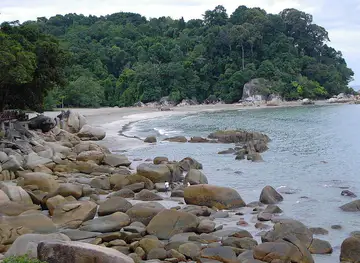
Terengganu’s attractions range from coral islands and mangrove wetlands to museums, craft centres and forested reservoirs. The Perhentian Islands, Redang, Lang Tengah and Kapas are the principal marine destinations, offering snorkelling, diving, swimming and boat trips, although seasonal sea conditions shape what is possible. On the mainland, Kuala Terengganu provides the state’s strongest concentration of cultural sights, including the State Museum complex, Pasar Payang and the Islamic Civilisation Park. Setiu Wetlands offers lagoons, mangroves and coastal habitats, while Tasik Kenyir opens onto waterfalls, caves, forest excursions and boating routes in Hulu Terengganu. The Kenyir Elephant Conservation Village adds an educational wildlife experience. Visitors interested in local life can seek out batik workshops, songket weaving, traditional boatbuilding and markets selling regional food. The attraction landscape is therefore broad but not tightly clustered: island resorts, coastal communities and inland nature sites require different bases and transport arrangements.
-
Local history museum
Terengganu State Museum
Explore Malaysia's cultural treasures at the Terengganu State Museum, showcasing the rich heritage and history of Terengganu with immersive exhibits.
-
Tourist attraction
Taman Tamadun Islam ( TTI Management Sdn Bhd )
Explore Taman Tamadun Islam, Kuala Terengganu's premier destination for Islamic architecture and cultural heritage.
-
Batik clothing store
NACC Batik Pavilion
Explore the artistry of Malaysian batik at NACC Batik Pavilion, your gateway to traditional crafts and vibrant souvenirs in Kuala Terengganu.
-
Mosque
Abidin Mosque (State Mosque)
Explore the architectural grandeur and spiritual tranquility of Abidin Mosque, a must-see landmark in Kuala Terengganu, Malaysia.


Best landmarks in Terengganu
The Batu Bersurat Terengganu is the state’s most important historical landmark: the inscribed stone, associated with the Kuala Berang area, records early Islamic principles in the Malay world and represents a major stage in the region’s political and religious history. In Kuala Terengganu, the State Museum complex is notable for its large traditional Malay architectural form and for collections covering archaeology, royal history, Islamic culture and crafts. The Crystal Mosque, on Wan Man island, is a prominent contemporary structure within the Islamic Civilisation Park, while the city’s riverfront and traditional wooden houses reflect the relationship between settlement and water. At Bukit Besi in Dungun, surviving mining landscapes recall the iron-ore industry that transformed the area during the twentieth century. Offshore, the forested profiles and reef-fringed shores of Redang, the Perhentian Islands and Kapas are geographical landmarks as well as tourism destinations. Inland, Tasik Kenyir’s broad reservoir, wooded islands and surrounding hills form one of Terengganu’s defining natural landscapes.
-
Shopping mall
Pasar Payang
Explore Pasar Payang, a cultural marketplace in Kuala Terengganu filled with local crafts, delicious street food, and vibrant Malaysian heritage.
-
Mosque
Masjid Kristal
Discover the breathtaking beauty of Masjid Kristal, an architectural marvel in Kuala Terengganu, where modern design meets spiritual serenity.
-
Local history museum
Terengganu State Museum
Explore the vibrant heritage of Terengganu at the State Museum, a cultural gem showcasing Malaysia's rich history and traditions.
-
Tourist attraction
Taman Tamadun Islam ( TTI Management Sdn Bhd )
Discover the beauty and heritage of Islamic architecture at Taman Tamadun Islam, a cultural park in Kuala Terengganu showcasing stunning mosques and gardens.


Explore Terengganu on the map
Plan your trip on one map. See where the top cities, national parks and sights are, and book hotels and experiences in a few clicks.
Best hotels in Terengganu
Best restaurants in Terengganu
Terengganu’s food culture is closely linked to the east-coast Malay culinary tradition and to the state’s fisheries. Nasi dagang, often served with fish curry and pickles, is a familiar breakfast or daytime dish, while keropok lekor combines fish and sago in a snack sold fresh, fried or boiled. Satar, a spiced fish mixture grilled in banana leaves, and ikan celup tepung, fish or seafood dipped in seasoned batter, are associated with coastal stalls and casual dining. Budu, a fermented fish sauce, appears as a pungent accompaniment rather than a universal ingredient. Kuala Terengganu has the widest range of restaurants, cafés, markets and food courts, while smaller coastal towns are well suited to seafood and simple Malay cooking. Island resorts commonly serve their own menus, with supply and choice more limited than on the mainland. Look for local rice dishes, kuih, tropical fruit and traditional drinks in markets such as Pasar Payang, while remembering that recipes vary between households and districts.
-
Restaurant
Nasi Dagang Atas Tol - Kg Atas Tol
Discover authentic Malaysian flavors at Nasi Dagang Atas Tol, where every bite tells a story.
-
Steak
kbbsteak Terengganu
Experience the ultimate steak indulgence at KBB Steak in Terengganu - where every bite is a celebration of flavor.
-
Traditional restaurant
Restoran Singgang Budu
Discover the essence of Malay cuisine at Restoran Singgang Budu – where tradition meets taste in Kuala Terengganu.
-
Malaysian
Nasi Dagang Atas Tol - Hiliran
Discover the flavors of Malaysia at Nasi Dagang Atas Tol in Kuala Terengganu - where tradition meets taste.


Best bars in Terengganu
Terengganu’s evening culture is more closely associated with food, family gatherings, night markets and relaxed waterfront activity than with a large nightclub circuit. Kuala Terengganu has the broadest selection of cafés, restaurants and hotel lounges, with some venues offering live music or late-evening dining. In coastal towns, traditional eateries and food stalls provide the main after-dark activity, while resort islands may have informal beachfront gatherings, occasional acoustic entertainment and quieter bars aimed at visitors. Alcohol is less prominent and less widely available than in Malaysia’s major international resort centres, reflecting the state’s predominantly Muslim character. Nightlife on the Perhentian Islands and some other island resorts is seasonal and can change with weather, resort policies and visitor numbers. Visitors should avoid assuming that every island has late-night venues and should arrange boat transfers before dark when travelling between mainland jetties and accommodation.
-
Resort hotel
The Taaras Beach & Spa Resort
Experience luxury and tranquility at The Taaras Beach & Spa Resort, your ultimate tropical getaway in Malaysia's stunning Pulau Redang.
-
 Hotel
Duyong Marina & Resort
Experience the perfect blend of luxury and nature at Duyong Marina & Resort, your serene escape in Kuala Terengganu.
-
Restaurant
The Syrup VS Soda
Experience the vibrant flavors of Malaysia at The Syrup VS Soda, a culinary gem in Kuala Terengganu known for its unique beverages and delicious dishes.
-
Hotel
ARENA Boutique Hotel Kuala Terengganu
Experience the perfect blend of comfort and local culture at ARENA Boutique Hotel in the heart of Kuala Terengganu, your gateway to Malaysian charm.


Best nightclubs in Terengganu
Terengganu’s evening culture is more closely associated with food, family gatherings, night markets and relaxed waterfront activity than with a large nightclub circuit. Kuala Terengganu has the broadest selection of cafés, restaurants and hotel lounges, with some venues offering live music or late-evening dining. In coastal towns, traditional eateries and food stalls provide the main after-dark activity, while resort islands may have informal beachfront gatherings, occasional acoustic entertainment and quieter bars aimed at visitors. Alcohol is less prominent and less widely available than in Malaysia’s major international resort centres, reflecting the state’s predominantly Muslim character. Nightlife on the Perhentian Islands and some other island resorts is seasonal and can change with weather, resort policies and visitor numbers. Visitors should avoid assuming that every island has late-night venues and should arrange boat transfers before dark when travelling between mainland jetties and accommodation.
-
Karaoke bar
Voice Family Karaoke
Experience the vibrant nightlife at Voice Family Karaoke in Kuala Terengganu – a must-visit for music enthusiasts seeking fun and entertainment.
-
Night market
KT Walk Uptown Market
Immerse yourself in the vibrant culture of Kuala Terengganu at KT Walk Uptown Market, where street food and unique crafts await.
-
Bar
LUNA BAR
Luna Bar in Pulau Redang: A Vibrant Oasis of Refreshing Drinks and Stunning Ocean Views.
-
Pool hall
Conway Snooker
Discover the vibrant snooker scene at Conway Snooker in Kuala Terengganu, where leisure meets local culture in a friendly atmosphere.


Best shops in Terengganu
Kuala Terengganu is the state’s main shopping centre, with Pasar Payang offering a concentrated introduction to batik, songket, woven goods, dried seafood, spices, snacks and everyday market life. Batik fabrics and garments make practical souvenirs, while songket, with its supplementary metallic or coloured threads, is usually more elaborate and should be bought from a reputable craft seller. Independent workshops and craft outlets in and around the capital may also sell woodcarving, pandan and mengkuang products, traditional clothing and locally made food. Smaller coastal towns tend to have practical high streets, market stalls and food shops rather than large retail complexes. Visitors can look for sealed packets of keropok lekor or other durable snacks, subject to transport and customs rules. Island resorts offer limited souvenir shopping, often focused on beachwear, crafts and branded resort goods, so buy specialist textiles and gifts on the mainland. Prices, quality and weaving methods vary, making it sensible to compare products before purchasing.
-
Shopping mall
Pasar Payang
Discover the vibrant Pasar Payang, a cultural hub in Kuala Terengganu, showcasing unique handicrafts, delicious local food, and an authentic market experience.
-
Shopping mall
Mydin Mall Kuala Terengganu
Discover shopping, dining, and entertainment at Mydin Mall Kuala Terengganu - the ultimate retail destination for tourists and locals alike.
-
Supermarket
Mydin Mall Gong Badak
Experience the vibrant shopping and dining at Mydin Mall Gong Badak, Kuala Terengganu's ultimate retail destination for tourists.
-
Hypermarket
Giant Kuala Terengganu
Explore Giant Kuala Terengganu, a vibrant hypermarket showcasing local culture with a wide array of products and a lively shopping atmosphere.


Get your free copy of our complete guide to Terengganu, delivered straight to you.
Everything on this page, from attractions and restaurants to essentials and local phrases, in one PDF you can read offline, print or share.
Already have an account? Sign in
Your Terengganu guide is ready.
We'll send it to · Not you? Sign out

Getting your guide ready…
We are putting together a fresh copy of the Terengganu guide. This can take up to a minute.
This can take a few moments. If your browser asks, choose Allow so the download can start. You'll find the guide in your Downloads folder.
Nothing happened? Download it again
Sorry, the guide is taking longer than usual. Please try again in a minute, or get it by email instead.
Terengganu essentials
Currency and Payment
Safety
Emergency Situations
Do's and Don'ts
Local Tips
From Eve
Local phrases worth knowing
You don't need to get them perfect. A few words go a long way, and locals appreciate the effort.
Basics
| English | Local | Say it |
|---|---|---|
| Hello | Hai | [hai] |
| Goodbye | Selamat tinggal | [suh-lah-maht ting-gahl] |
| Yes | Ya | [yah] |
| No | Tidak | [tee-dahk] |
| Please/You're welcome | Sila/Sama-sama | [see-lah/sah-mah-sah-mah] |
| Thank you | Terima kasih | [tuh-ree-mah kah-see] |
| Excuse me/Sorry | Maaf | [mah-ahf] |
| How are you? | Apa khabar? | [ah-pah kah-bar] |
| Fine. And you? | Baik. Dan awak? | [bye-k. dahn ah-wahk] |
| Do you speak English? | Awak boleh cakap Inggeris? | [ah-wahk boh-leh chah-kahp ing-geh-ris] |
| I don't understand | Saya tidak faham | [sah-yah tee-dahk fah-hahm] |
Eating & Drinking
| English | Local | Say it |
|---|---|---|
| I'd like to see the menu, please | Saya nak tengok menu, sila | [sah-yah nahk teng-ohk meh-noo, see-lah] |
| I don't eat meat | Saya tidak makan daging | [sah-yah tee-dahk mah-kahn dah-ging] |
| Cheers! | Selamat! | [suh-lah-maht] |
| I would like to pay, please | Saya ingin bayar, sila | [sah-yah in-gin bah-yar, see-lah] |
Emergencies
| English | Local | Say it |
|---|---|---|
| Help! | Tolong! | [toh-long] |
| Go away! | Pergi jauh! | [per-gee jah-oo] |
| Call the Police! | Panggil polis! | [pahng-geel poh-lis] |
| Call a doctor! | Panggil doktor! | [pahng-geel dok-tor] |
| I'm lost | Saya sesat | [sah-yah seh-saht] |
| I'm ill | Saya sakit | [sah-yah sah-kit] |
Shopping
| English | Local | Say it |
|---|---|---|
| I'd like to buy... | Saya nak beli... | [sah-yah nahk beh-lee] |
| I'm just looking | Saya hanya tengok | [sah-yah han-yah teng-ohk] |
| How much is it? | Berapa harganya? | [beh-rah-pah har-gahn-yah] |
| That's too expensive | Itu terlalu mahal | [ee-too ter-lah-loo mah-hahl] |
| Can you lower the price? | Boleh turunkan harga? | [boh-leh too-run-kahn har-gah] |
Time & Numbers
| English | Local | Say it |
|---|---|---|
| What time is it? | Jam berapa? | [jahm beh-rah-pah] |
| It's one o'clock | Jam satu | [jahm sah-too] |
| Half past (10) | Setengah (10) | [seh-teng-ah (10)] |
| Morning | Pagi | [pah-gee] |
| Afternoon | Petang | [peh-tahng] |
| Evening | Malam | [mah-lahm] |
| Yesterday | Semalam | [seh-mah-lahm] |
| Today | Hari ini | [hah-ree ee-nee] |
| Tomorrow | Esok | [eh-sok] |
| 1 | Satu | [sah-too] |
| 2 | Dua | [doo-ah] |
| 3 | Tiga | [tee-gah] |
| 4 | Empat | [em-pah't] |
| 5 | Lima | [lee-mah] |
| 6 | Enam | [eh-nahm] |
| 7 | Tujuh | [too-joo] |
| 8 | Lapan | [lah-pahn] |
| 9 | Sembilan | [sem-bee-lahn] |
| 10 | Sepuluh | [seh-poo-loh] |
Transport & Directions
| English | Local | Say it |
|---|---|---|
| Where's a/the...? | Di mana ...? | [dee mah-nah] |
| What's the address? | Apa alamatnya? | [ah-pah ah-lah-mah-nyah] |
| Can you show me (on the map)? | Boleh tunjukkan saya (peta)? | [boh-leh toon-jook-kahn sah-yah (peh-tah)] |
| When's the next (bus)? | Bila bas seterusnya? | [bee-lah bahs seh-tuh-roos-nyah] |
| A ticket (to ....) | Satu tiket (ke ....) | [sah-too tee-ket (keh ....)] |
History of Terengganu
Early Settlements and Maritime Trade
Terengganu’s long coastline and navigable rivers connected settlements to the wider South China Sea trading world. Archaeological evidence from the region includes prehistoric occupation and finds associated with early exchange networks, while Chinese and other foreign records point to maritime links involving the east coast of the Malay Peninsula. River mouths supported fishing, cultivation and craft production, allowing communities to connect inland resources with seaborne commerce. This geography helped establish the political and commercial importance of the Terengganu basin long before the modern state took shape.
The Batu Bersurat and the Spread of Islam
The Batu Bersurat Terengganu, usually dated to 1303, is an inscribed stone recording Islamic principles and legal obligations in an early Malay-language script. Found in the Kuala Berang area of Hulu Terengganu, it is among the earliest substantial evidence of Islamic political and religious influence in the Malay world. The inscription indicates that Islam was not simply a later court practice but was already being connected with governance and public norms. Its legacy remains central to Terengganu’s historical identity and museum collections.
The Terengganu Sultanate
Terengganu developed as a Malay sultanate whose fortunes were tied to riverine agriculture, coastal trade, Islamic scholarship and relations with neighbouring powers. Royal authority was centred on the coastal and river settlements, with Kuala Terengganu becoming the principal seat of administration. Court culture supported manuscript traditions, textile production, boatbuilding and religious institutions. The sultanate’s history also reflects the shifting political landscape of the Malay Peninsula, including connections and rivalries involving Johor, Kelantan, Siam and other regional powers.
Nineteenth- and Early Twentieth-Century Change
During the nineteenth century and the early twentieth century, Terengganu navigated increasing pressure from Siamese influence and British expansion in the Malay Peninsula. The Anglo-Siamese Treaty of 1909 transferred formal control of the northern Malay states, including Terengganu, into the British sphere. Administration, taxation and commercial regulation consequently changed, although the sultanate remained an important institution. Coastal trade, fishing, agriculture and craft production continued, while new political and educational developments gradually altered the relationship between local society and colonial authority.
Batu Bersurat, Scholarship and Cultural Memory
Terengganu’s Islamic and Malay cultural institutions developed through mosques, religious schools, royal patronage, manuscript traditions and the work of local scholars. The state became particularly associated with Islamic learning and with a distinctive visual culture expressed through batik, songket, woodcarving and traditional architecture. These traditions were not isolated from wider Malay networks: teachers, traders and pilgrims moved around the peninsula and the South China Sea. In the modern era, museums and heritage programmes have helped preserve and interpret this layered cultural memory.
Bauxite, Iron Ore and Industrial Landscapes
Mining became an important part of Terengganu’s modern economic history, particularly around Bukit Besi in Dungun, where iron ore extraction developed during the twentieth century. The industry brought railways, labour migration, technical infrastructure and a settlement pattern different from the older fishing and agricultural economy. Production declined after the mine closed, leaving industrial remains and a historical landscape that illustrates the state’s transition from resource extraction to a more diversified economy. Bukit Besi is especially significant for understanding Terengganu beyond its coastal tourism image.
Post-Independence Development and the Petroleum Economy
After Malaya’s independence in 1957 and the formation of Malaysia in 1963, Terengganu experienced major changes in infrastructure, education, urban growth and public services. The petroleum industry, including offshore activity in the South China Sea and related facilities on the mainland, became increasingly important to the state economy. Kuala Terengganu expanded as an administrative and commercial centre, while roads and airports improved access to coastal and inland districts. Tourism, fisheries, agriculture, crafts and petroleum now coexist within Terengganu’s contemporary economy.
Terengganu in Photos
Browse through our photo collection highlighting the charm and character of the destination.
Neighbouring regions of Terengganu
The closest regions to Terengganu, if you have time for more than one.
-

-

-

-

-


Swipe for more regions
Explore more
Explore more of Malaysia
Discover Malaysia: A stunning blend of modernity and nature, where diverse cultures meet, and adventure awaits. From vibrant cities to serene beaches, Malaysia has it all.
Explore Malaysia