

Free Malé Atoll Travel Guide & Mobile App
Explore Malé Atoll with free travel guides. Discover regional history, expert tips, proposed trips, and audio guides on web or mobile app.


Malé Atoll combines the Maldives’ capital, airport access, local islands, surf breaks, coral reefs and resort lagoons in one central island region.
Read more about Malé Atoll
When is the best time to visit Malé Atoll?
Best: January–March · 29–30°C| Month | High (°C) | Rainfall (mm) |
|---|---|---|
| January (best) | 29 | 100 |
| February (best) | 30 | 75 |
| March (best) | 30 | 100 |
| April | 31 | 150 |
| May | 30 | 200 |
| June | 30 | 175 |
| July | 30 | 150 |
| August | 30 | 175 |
| September | 30 | 200 |
| October | 30 | 225 |
| November | 29 | 175 |
| December | 29 | 175 |
Getting to and around Malé Atoll
How to get there
Transportation
Top city travel guides in Malé Atoll
The cities of Malé Atoll, and the easiest places to base yourself.
-

-
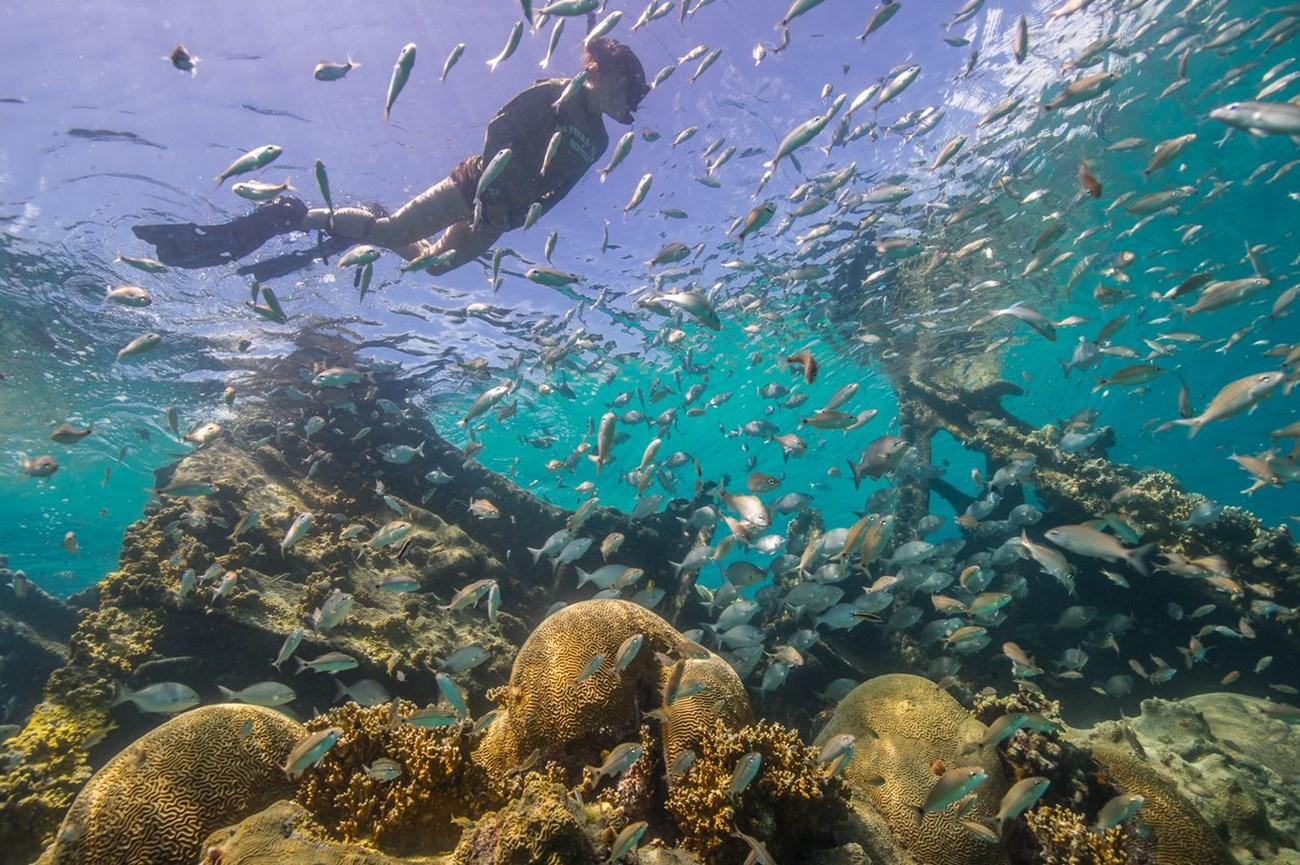 Thulusdhoo
, Maldives combines world-class surfing at Cokes with local island life, lagoon excursions, Maldivian food, guesthouses and quiet tropical beaches.
Thulusdhoo
Thulusdhoo, Maldives combines world-class surfing at Cokes with local island life, lagoon excursions, Maldivian food, guesthouses and quiet tropical beaches.
-

-


Swipe for more cities
Destinations in Malé Atoll
Resorts, valleys and scenic spots worth a trip of their own.
-

-


Swipe for more destinations
Best attractions in Malé Atoll
Malé Atoll's attractions are largely marine and island-based rather than arranged around a long list of monumental sights. In Malé, visitors can explore the capital's mosques, markets, waterfront and national institutions, while Hulhumalé offers beaches, cafés and a more spacious planned urban environment. Resort islands centre their visitor experience on lagoons, house reefs, spa facilities, sunset cruises, diving, snorkelling, fishing and water sports. Inhabited islands such as Thulusdhoo, Dhiffushi, Huraa and Himmafushi provide guesthouse stays, local beaches, boat excursions and a closer view of everyday island life. The atoll's coral reefs support guided dives, turtle and ray encounters in suitable areas, dolphin trips and sandbank excursions, but wildlife sightings cannot be guaranteed. Surfing is an important draw at recognised reef breaks, particularly around the northern part of the atoll, where conditions vary by season and swell. Visitors should choose operators that explain reef etiquette and environmental limits, since the health of the lagoon is itself the region's most important attraction.
-
Resort hotel
Centara Ras Fushi Resort
Experience the epitome of tropical luxury at Centara Ras Fushi Resort, where stunning beaches and exceptional service create unforgettable memories in the Maldives.
-
 Resort hotel
Velassaru Maldives
Discover the ultimate island escape at Velassaru Maldives, where luxury meets nature in a tropical paradise.
-
Park
Sultan Park
Explore the tranquil beauty and rich history of Sultan Park, the serene urban oasis in the heart of Malé, Maldives.
-
Park
Central Park (Hulhumalé)
Explore the tranquility of Central Park in Hulhumalé, a stunning urban oasis in the Maldives perfect for relaxation and outdoor activities.
Best landmarks in Malé Atoll
The Maldives Victory Monument and the distinctive waterfront skyline of Malé are reminders of the capital's political role, while the Friday Mosque, or Hukuru Miskiy, is among the country's best-known historic religious buildings. Built largely from coral stone and associated with the Islamic history of the Maldivian state, it should be visited with appropriate dress and behaviour; access arrangements can vary. The Islamic Centre and its golden-domed mosque form one of Malé's most recognisable modern landmarks beside the main harbour. The city's fish market and waterfront are less monumental but important expressions of its working maritime character. Hulhulé's airport infrastructure and Hulhumalé's reclaimed urban form represent a different landmark landscape: the expansion of a country where buildable land is scarce. Beyond the built environment, the atoll's defining geographical landmarks are its reef rims, channels, lagoons and isolated low islands. These marine features are visually subtle from land but shape navigation, settlement, diving and the entire pattern of life across Malé Atoll.
-
Resort hotel
Villa Nautica, Maldives
Experience luxury at Villa Nautica Maldives: stunning beaches, overwater villas, diverse dining, and thrilling activities, just 20 minutes from Malé.
-
Resort hotel
Cinnamon Dhonveli Maldives
Experience the Maldives at Cinnamon Dhonveli: Pristine beaches, world-class surfing, luxurious stays, and unforgettable adventures await in this tropical paradise.
-
Resort hotel
Centara Ras Fushi Resort
An adults-only Maldives resort offering luxurious villas, world-class diving, and exquisite dining, just a speedboat ride from Malé.
-
Resort hotel
Bandos Maldives
Experience timeless romance and relaxation at Bandos Maldives, the Island of Hospitality, with pristine beaches, turquoise waters, and world-class diving.
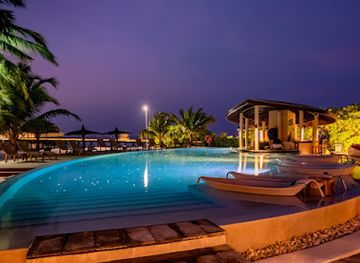
Explore Malé Atoll on the map
Plan your trip on one map. See where the top cities, national parks and sights are, and book hotels and experiences in a few clicks.
Best hotels in Malé Atoll
Best restaurants in Malé Atoll
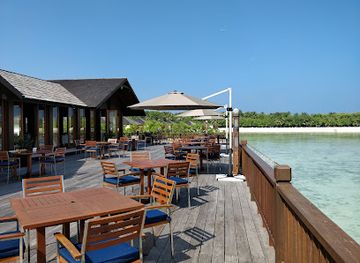
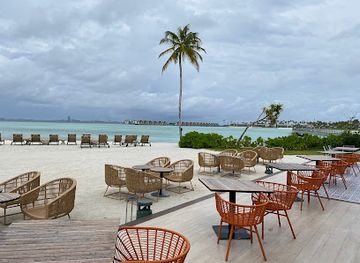
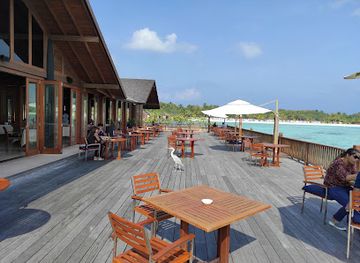
Dining in Malé Atoll ranges from Maldivian home cooking and compact cafés to resort restaurants serving international menus. Maldivian food commonly combines rice, tuna and other seafood with coconut, chilli, lime and curry spices; dishes such as mas huni, fish curries, garudhiya and hedhikaa snacks offer a useful introduction to local flavours, although recipes vary between households and islands. Malé has the widest choice of casual restaurants, tea shops, bakeries and cafés, with seafood and South Asian influences particularly visible. Hulhumalé has a growing café and restaurant scene shaped by residents, airport workers and visitors. On local islands, guesthouses often provide pre-arranged meals, while small restaurants may serve simple rice, noodle and fish dishes. Resort dining is more varied and may include specialist seafood, Asian, Middle Eastern and Western menus, but prices are normally higher and meal arrangements are often tied to the booking. Freshness and supply depend on transport between islands, so menus can be more limited away from the capital.
-
Restaurant
Faraumati/Hook Restaurant
Experience exquisite seafood and authentic Maldivian flavors at Faraumati/Hook Restaurant in Himmafushi.
-
American
Hard Rock Cafe Maldives
Discover the heart of rock 'n' roll at Hard Rock Cafe Maldives - where American cuisine meets iconic music memorabilia.
-
Restaurant
The Lagoon Restaurant
Experience luxury dining at The Lagoon Restaurant in Maldives - where exquisite flavors meet breathtaking ocean views.
-
Halal
Sea House Café
Experience authentic halal Asian cuisine at Sea House Café in Malé – where every meal tells a story.
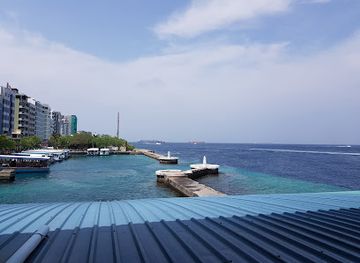
Best bars in Malé Atoll
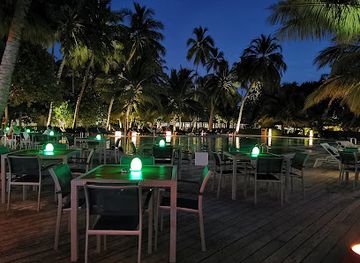
Nightlife in Malé Atoll is divided between resorts, the capital area and inhabited local islands. Resort islands usually provide the broadest evening programme, with lounges, beach bars, live music, cultural performances, sunset cruises and occasional DJ-led events; alcohol is generally confined to these tourism settings and liveaboards. Malé and Hulhumalé have cafés, restaurants and late-evening social spaces, but they do not resemble a large international nightclub district. On inhabited islands such as Thulusdhoo, Dhiffushi, Huraa and Himmafushi, evenings are more likely to centre on guesthouse dining, tea shops, walks, fishing or small community events than on bars. Alcohol is not normally available on local islands, and visitors should not attempt to bring it ashore. Evening excursions are weather-dependent, while resort entertainment schedules and venue availability can change seasonally.
-
Restaurant
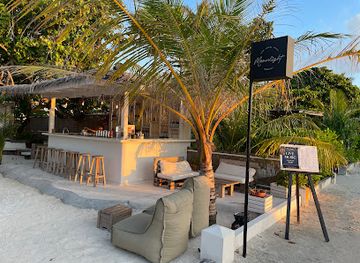
Moonlight - FOOD . DRINKS . SHISHA
Experience the perfect blend of European cuisine and shisha at Moonlight in Maafushi, South Male Atoll, Maldives.
-
Bar
Anchorage Bar
Discover a tropical paradise at Anchorage Bar, where exquisite drinks and breathtaking ocean views await in the heart of the Maldives.
-
Bar
Meeru Kakuni Bar & Game Room
Experience lively entertainment and refreshing drinks at Meeru Kakuni Bar & Game Room in the heart of the Maldives.
-
Bar
Meeru Dhoni Bar
Experience the vibrant atmosphere of Meeru Dhoni Bar in the Maldives, where stunning views and refreshing cocktails await every traveler.
Best nightclubs in Malé Atoll
Nightlife in Malé Atoll is divided between resorts, the capital area and inhabited local islands. Resort islands usually provide the broadest evening programme, with lounges, beach bars, live music, cultural performances, sunset cruises and occasional DJ-led events; alcohol is generally confined to these tourism settings and liveaboards. Malé and Hulhumalé have cafés, restaurants and late-evening social spaces, but they do not resemble a large international nightclub district. On inhabited islands such as Thulusdhoo, Dhiffushi, Huraa and Himmafushi, evenings are more likely to centre on guesthouse dining, tea shops, walks, fishing or small community events than on bars. Alcohol is not normally available on local islands, and visitors should not attempt to bring it ashore. Evening excursions are weather-dependent, while resort entertainment schedules and venue availability can change seasonally.
-
Resort hotel
Club Med Kani - Maldives
Discover the ultimate tropical escape at Club Med Kani, Maldives, where luxury meets adventure in a stunning beachfront paradise.
-
Lounge
Constance Hotels and Resorts Maldives Airport Lounge
Discover the tranquility of Constance Hotels and Resorts Maldives Airport Lounge, a perfect retreat before your adventure in paradise.
-
Lounge
Ooredoo Club Premier Lounge
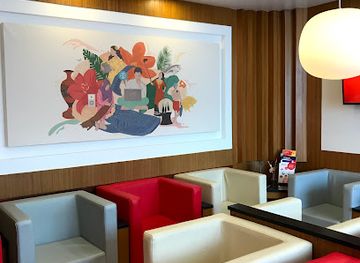
Experience the epitome of relaxation at Ooredoo Club Premier Lounge in Malé, where luxury meets Maldivian hospitality.
-
Bar
Meeru Dhoni Bar
Discover the charm of Meeru Dhoni Bar, a tropical paradise in the Maldives, where relaxation and vibrant nightlife converge.


Best shops in Malé Atoll
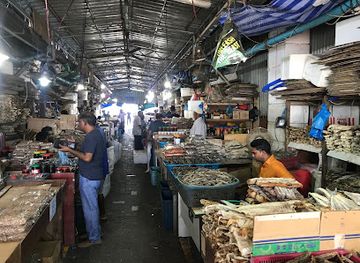
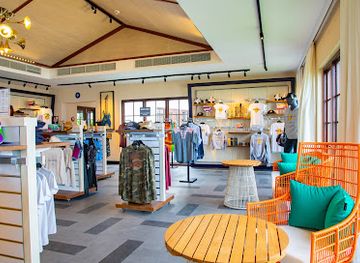
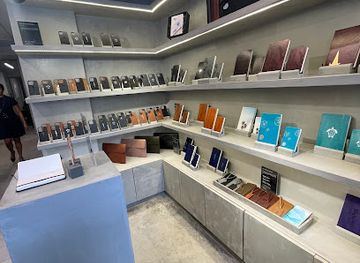
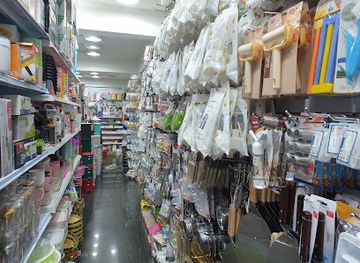
Shopping in Malé Atoll is strongest in Malé, where compact streets around the commercial centre offer supermarkets, pharmacies, electronics, clothing, books, household goods and small independent retailers. The local market near the waterfront is associated with fruit, vegetables and produce arriving from across the country, while the fish market illustrates the capital's connection with the sea. Hulhumalé has convenience shops, cafés, everyday services and a growing selection of small businesses rather than a traditional bazaar. Resort boutiques sell clothing, jewellery, postcards, handicrafts and marine-themed souvenirs, although prices are usually higher. Useful regional purchases include packaged Maldivian foods, spice blends, tea, locally inspired crafts and practical beachwear; travellers should check import rules before buying shells, coral or products made from protected wildlife. On inhabited islands, guesthouses may help visitors find small craft workshops or local products, but retail choice is limited and opening arrangements are informal. Bargaining is not appropriate everywhere, so ask politely and accept fixed prices when displayed.
-
Shopping mall
Fish Market
Discover the bustling Fish Market in Malé, where fresh seafood meets vibrant local culture in a colorful and lively atmosphere.
-
Shopping mall
The Marina CROSSROADS Maldives
Explore The Marina CROSSROADS Maldives, where shopping, dining, and entertainment come together in a stunning tropical paradise.
-
Art gallery
Oevaali Art Shop
Explore Oevaali Art Shop: A vibrant art gallery and boutique showcasing local talent and authentic Maldivian souvenirs in the heart of Malé.
-
Department store
Items
Explore the vibrant department store Items in Malé, where unbeatable prices and a diverse range of products await every traveler.
Get your free copy of our complete guide to Malé Atoll, delivered straight to you.
Everything on this page, from attractions and restaurants to essentials and local phrases, in one PDF you can read offline, print or share.
Already have an account? Sign in
Your Malé Atoll guide is ready.
We'll send it to · Not you? Sign out

Getting your guide ready…
We are putting together a fresh copy of the Malé Atoll guide. This can take up to a minute.
This can take a few moments. If your browser asks, choose Allow so the download can start. You'll find the guide in your Downloads folder.
Nothing happened? Download it again
Sorry, the guide is taking longer than usual. Please try again in a minute, or get it by email instead.
Malé Atoll essentials
Currency and Payment
Safety
Emergency Situations
Do's and Don'ts
Local Tips
From Eve
Local phrases worth knowing
You don't need to get them perfect. A few words go a long way, and locals appreciate the effort.
Basics
| English | Local | Say it |
|---|---|---|
| Hello | As-salaam alaikum | [As-salaam alaikum] |
| Goodbye | Khudaa hithun | [Khudaa hithun] |
| Yes | Aah | [Aah] |
| No | Nah | [Nah] |
| Please/You're welcome | Thibaage thibaage | [Thibaage thibaage] |
| Thank you | Shukuriyaa | [Shukuriyaa] |
| Excuse me/Sorry | Dhiulhun | [Dhiulhun] |
| How are you? | Thibaage kihineiy? | [Thibaage kihineiy?] |
| Fine. And you? | Thibaage miadhu kihineiy? | [Thibaage miadhu kihineiy?] |
| Do you speak English? | Ingrisi kihineiy? | [Ingrisi kihineiy?] |
| I don't understand | Thibaage dhathuru kihineiy | [Thibaage dhathuru kihineiy] |
Eating & Drinking
| English | Local | Say it |
|---|---|---|
| I'd like to see the menu, please | Thibaage menu thibaage dhathuru kihineiy | [Thibaage menu thibaage dhathuru kihineiy] |
| I don't eat meat | Thibaage mas huriyaa kihineiy | [Thibaage mas huriyaa kihineiy] |
| Cheers! | Hadhun! | [Hadhun!] |
| I would like to pay, please | Thibaage dhathuru thibaage hithun | [Thibaage dhathuru thibaage hithun] |
Emergencies
| English | Local | Say it |
|---|---|---|
| Help! | Hatharu! | [Hatharu!] |
| Go away! | Kihineiy! | [Kihineiy!] |
| Call the Police! | Police thibaage dhathuru kihineiy! | [Police thibaage dhathuru kihineiy!] |
| Call a doctor! | Daktaru thibaage dhathuru kihineiy! | [Daktaru thibaage dhathuru kihineiy!] |
| I'm lost | Thibaage ḩaalu kihineiy | [Thibaage ḩaalu kihineiy] |
| I'm ill | Thibaage ḩaalu kihineiy | [Thibaage ḩaalu kihineiy] |
Shopping
| English | Local | Say it |
|---|---|---|
| I'd like to buy... | Thibaage ḩulhu kihii... | [Thibaage ḩulhu kihii...] |
| I'm just looking | Thibaage ḩaalu kihii | [Thibaage ḩaalu kihii] |
| How much is it? | Thibaage dhathuru kihineiy? | [Thibaage dhathuru kihineiy?] |
| That's too expensive | Thibaage dhathuru baiy hithun | [Thibaage dhathuru baiy hithun] |
| Can you lower the price? | Thibaage dhathuru baiy kihii hithun? | [Thibaage dhathuru baiy kihii hithun?] |
Time & Numbers
| English | Local | Say it |
|---|---|---|
| What time is it? | Thibaage kudhuneiy? | [Thibaage kudhuneiy?] |
| It's one o'clock | Thibaage ḩaalu kihineiy | [Thibaage ḩaalu kihineiy] |
| Half past (10) | Dhaalu (10) kihineiy | [Dhaalu (10) kihineiy] |
| Morning | Bodu kashugaa | [Bodu kashugaa] |
| Afternoon | Gulhune | [Gulhune] |
| Evening | Fushimeh | [Fushimeh] |
| Yesterday | Kihineiy | [Kihineiy] |
| Today | Thibaage kihineiy | [Thibaage kihineiy] |
| Tomorrow | Bodu kihineiy | [Bodu kihineiy] |
| 1 | Thun | [Thun] |
| 2 | Dhuni | [Dhuni] |
| 3 | Thah | [Thah] |
| 4 | Fath | [Fath] |
| 5 | Nih | [Nih] |
| 6 | Gah | [Gah] |
| 7 | Haa | [Haa] |
| 8 | Thah | [Thah] |
| 9 | Neh | [Neh] |
| 10 | Dhu | [Dhu] |
Transport & Directions
| English | Local | Say it |
|---|---|---|
| Where's a/the...? | Kihineiy aa...? | [Kihineiy aa...?] |
| What's the address? | Thibaage address kihineiy? | [Thibaage address kihineiy?] |
| Can you show me (on the map)? | Thibaage dhathuru kihineiy (mapah)? | [Thibaage dhathuru kihineiy (mapah)?] |
| When's the next (bus)? | Thibaage next (bus) kihineiy? | [Thibaage next (bus) kihineiy?] |
| A ticket (to ....) | Ticket (to ...) | [Ticket (to ...)] |
History of Malé Atoll
Early settlement and Buddhist heritage
The Maldives was settled over many centuries by seafaring communities connected to the wider Indian Ocean. Before the adoption of Islam, Buddhism was an important religious influence, and archaeological remains across the archipelago include Buddhist sculptures, foundations and artefacts. In the Malé area, later building and continual urban development have obscured much of the earliest physical landscape, but the wider atoll belongs to the same long history of island settlement, maritime exchange and adaptation to coral-island environments.
The conversion to Islam, 12th century
The Maldives adopted Islam in the 12th century, a transformation that shaped its political institutions, architecture, law and cultural identity. Malé became increasingly important as a seat of rulers and religious authority, while mosques and Islamic scholarship became central to community life. The conversion did not end the islands' older Indian Ocean connections; instead, Maldivian society continued to develop through links with traders, sailors and scholars moving between South Asia, the Arabian Peninsula and other parts of the Indian Ocean.
Malé as a sultanate capital
Malé grew as the principal seat of the Maldivian sultanate, whose rulers governed a dispersed chain of islands through maritime networks and local authority. The capital's harbour gave it strategic importance, while the surrounding atoll provided routes to inhabited islands, fishing grounds and overseas trade. Historic mosques, palace areas and cemeteries in Malé reflect this political and religious past, although the modern capital has been heavily rebuilt as population growth and national administration concentrated on a very small urban island.
Portuguese occupation and regional power struggles
In the 16th century, Portuguese forces occupied Malé for a period during attempts to control Indian Ocean trade routes. Their presence was resisted and eventually ended, but the episode illustrates the strategic importance of the Maldives' position between South Asia and maritime routes to the west. Subsequent centuries saw changing relationships with regional powers, including periods of influence from South Indian and Sri Lankan courts, while Maldivian rulers retained authority through the sultanate centred on Malé.
The British protectorate and the modern state
The Maldives became a British protected state in the late 19th century, while the sultanate continued to exist internally. The arrangement reflected the wider colonial restructuring of Indian Ocean politics without turning the islands into a conventional British colony. Independence followed in 1965, and the Maldives became a republic in 1968. Malé remained the political centre, setting the pattern for the modern concentration of administration, commerce and population in and around the capital area.
Tourism, aviation and urban expansion
Modern tourism began in the 1970s and transformed the Maldivian economy, especially through resort islands designed around beaches, lagoons and marine recreation. Malé Atoll became the main tourism gateway because of its airport and proximity to the capital. Expansion later included the development of Hulhumalé through land reclamation, while improved speedboats and airport infrastructure linked more islands to the metropolitan area. Today the region reflects both the benefits of tourism and the pressures of rapid urban growth, limited land, waste management and climate vulnerability.
Malé Atoll in Photos
Browse through our photo collection highlighting the charm and character of the destination.
Neighbouring regions of Malé Atoll
The closest regions to Malé Atoll, if you have time for more than one.
-

-

-
-

-


Swipe for more regions
Explore more

Explore more of Maldives
Experience the unparalleled beauty of the Maldives, where pristine beaches, luxurious resorts, and vibrant marine life create the perfect tropical getaway.
Explore Maldives