

Chesapeake Bay Maritime Museum, Maryland Travel Guide
Explore the Chesapeake Bay Maritime Museum in St. Michaels, Maryland: A captivating journey through maritime history with historic boats, interactive exhibits, and scenic views.
The Chesapeake Bay Maritime Museum, nestled in the charming town of St. Michaels, Maryland, offers a captivating glimpse into the maritime heritage of the Chesapeake Bay. Spanning over 18 acres, this museum is a treasure trove of history, culture, and natural beauty that appeals to visitors of all ages. As you wander through the museum's exhibits, you'll find a fascinating collection of historic boats, artifacts, and interactive displays. The Chesapeake Bay Maritime Museum is home to the Hooper Strait Lighthouse, a beacon of the past that stands proudly on the waterfront. Climb up to the lighthouse for stunning views of the bay and imagine the lives of the lighthouse keepers who once tended its light. The museum's working boatyard is a highlight for many visitors. Here, skilled shipwrights and apprentices restore and maintain traditional Chesapeake Bay boats. You can watch these craftsmen at work and even chat with them about their trade. The boatyard is a testament to the living history of the bay's maritime culture. Don't miss the Waterman's Wharf, where you can learn about the lives of the watermen who have harvested the bay's bounty for generations. Interactive exhibits and hands-on activities make this a fun and educational experience for the whole family. After exploring the museum, take a leisurely stroll along the waterfront or enjoy a picnic on the museum's scenic grounds. The Chesapeake Bay Maritime Museum is not just a museum; it's a gateway to understanding the rich maritime history and vibrant culture of the Chesapeake Bay region.

Know before you go
Hi, I'm Eve. Here are a few practical things to know before exploring Chesapeake Bay Maritime Museum.
- Visit the museum early in the day to avoid crowds and enjoy a peaceful experience.
- Wear comfortable shoes as there is a lot of walking to do around the expansive museum grounds.
- Check the museum's schedule for special events, workshops, and boat rides.
- Bring a camera to capture the picturesque views, especially from the Hooper Strait Lighthouse.
- Spend some time in St. Michaels town, known for its quaint shops, restaurants, and historic charm.
Explore Chesapeake Bay Maritime Museum: Things to Do, Places to Eat, Hotels & More
Handpicked recommendations for top attractions, local dining, accommodations, and more

Best attractions in Chesapeake Bay Maritime Museum
Top-rated picks
Best Attractions

Patriot Cruises
Experience the beauty of the Chesapeake Bay with Patriot Cruises, where history and stunning scenery come together for an unforgettable adventure.

1879 Hooper Strait Lighthouse, CBMM
Explore the 1879 Hooper Strait Lighthouse in St. Michaels, Maryland, a historical treasure and maritime museum celebrating the rich nautical heritage of the Chesapeake Bay.

Ego Alley
Experience the vibrant atmosphere and scenic beauty of Ego Alley, a premier marina in Annapolis, MD, perfect for dining, shopping, and cultural exploration.

CBMM Welcome Center Entrance
Discover the rich maritime heritage of the Chesapeake Bay at the Chesapeake Bay Maritime Museum in St. Michaels, Maryland.

Best landmarks in Chesapeake Bay Maritime Museum
Top-rated picks
Best Landmarks

Calvert Marine Museum
Explore the Calvert Marine Museum in Solomons, MD – a fascinating journey through Chesapeake Bay's maritime history and natural wonders.

Annapolis Maritime Museum & Park
Explore the Annapolis Maritime Museum & Park, a treasure trove of Chesapeake Bay history and culture, perfect for families and maritime enthusiasts.

Frederick Douglass-Isaac Myers Maritime Park
Discover the maritime heritage of Baltimore at Frederick Douglass-Isaac Myers Maritime Park, where history meets scenic waterfront views.

Patriot Cruises
Discover the Chesapeake Bay's stunning beauty and rich history with Patriot Cruises, a premier boat tour experience in St. Michaels, Maryland.

Best restaurants in Chesapeake Bay Maritime Museum
Top-rated picks
Best Restaurants

Nick's Fish House
Experience the best of Maryland seafood at Nick's Fish House on Baltimore Peninsula - where fresh flavors meet stunning waterfront views.

Boatyard Bar & Grill
Experience fresh seafood delights at Boatyard Bar & Grill in Annapolis, where coastal charm meets culinary excellence.

Schaefer's Canal House
Discover fresh seafood and scenic views at Schaefer's Canal House in Chesapeake City - an unforgettable dining experience awaits!

Chesapeake Inn Restaurant & Marina
Experience exquisite dining at Chesapeake Inn Restaurant & Marina with fresh seafood, live music, and stunning waterfront views in Maryland.

Best bars in Chesapeake Bay Maritime Museum
Top-rated picks
Best Bars

Chesapeake Bay Maritime Museum
Delve into the maritime legacy of the Chesapeake Bay at this captivating museum, featuring engaging exhibits, scenic views, and rich local history.

Inn At Perry Cabin
Discover luxurious comfort and picturesque views at the Inn At Perry Cabin, a premier resort hotel in St. Michaels, Maryland.

1879 Hooper Strait Lighthouse, CBMM
Discover the maritime heritage at the 1879 Hooper Strait Lighthouse, a historic landmark offering insights into the Chesapeake Bay's rich history.

Chesapeake Bay Maritime Museum Parking Lot
Discover St. Michaels' maritime heritage at the Chesapeake Bay Maritime Museum Parking Lot, your gateway to history and stunning waterfront views.

Best nightclubs in Chesapeake Bay Maritime Museum
Top-rated picks
Best Nightclubs

Hyatt Regency Chesapeake Bay Golf Resort, Spa And Marina
Unwind in luxury at Hyatt Regency Chesapeake Bay, where stunning views, world-class amenities, and a tranquil atmosphere await every traveler.

Chesapeake Bay Maritime Museum
Immerse yourself in the maritime heritage of the Chesapeake Bay at this captivating museum in St. Michaels, Maryland.

Chesapeake Bay Beach Club
Experience the elegance of Chesapeake Bay Beach Club, a stunning venue for memorable events and celebrations amidst breathtaking waterfront views.

The Original Cancun Cantina
Discover the lively nightlife at The Original Cancun Cantina, a premier night club in Hanover, MD, offering music, dancing, and karaoke fun.

Best shops in Chesapeake Bay Maritime Museum
Top-rated picks
Best Shops

Chesapeake Bay Maritime Museum
Discover the maritime history of the Chesapeake Bay at this engaging museum featuring interactive exhibits and beautiful waterfront views.

Patriot Cruises
Experience the beauty and history of Chesapeake Bay with Patriot Cruises, offering scenic boat tours and captivating stories of the region's maritime heritage.

1879 Hooper Strait Lighthouse, CBMM
Explore the 1879 Hooper Strait Lighthouse, a historical landmark offering captivating exhibits and stunning views of Chesapeake Bay in St. Michaels, Maryland.

CBMM Welcome Center Entrance
Experience the rich maritime heritage of the Chesapeake Bay at the Chesapeake Bay Maritime Museum in St. Michaels, Maryland.

Explore Chesapeake Bay Maritime Museum on the Map
A handpicked selection of must-see spots in Chesapeake Bay Maritime Museum, mapped for you.
Chesapeake Bay Maritime Museum Essentials
-
The Chesapeake Bay Maritime Museum is located in St. Michaels, Maryland. The nearest major airports are Baltimore/Washington International Thurgood Marshall Airport (BWI) and Philadelphia International Airport (PHL). From BWI, it's approximately a 1.5-hour drive, and from PHL, it's about a 2.5-hour drive. Rental cars are available at both airports. Alternatively, you can take a bus or shuttle service to nearby Easton, MD, and then a taxi or rideshare to St. Michaels.
-
St. Michaels is a small town, making it easy to navigate on foot or by bicycle. The museum itself is within walking distance of many local hotels and bed & breakfasts. For exploring the broader region, including nearby towns like Easton and Oxford, renting a car is advisable. Taxis and rideshare services like Uber and Lyft are available but may be limited, so plan accordingly.
-
The official currency is the U.S. Dollar (USD). Major credit cards are widely accepted at the museum, hotels, restaurants, and shops in St. Michaels. ATMs are available in the town, but it is advisable to carry some cash for smaller establishments and tips. Mobile payments are also increasingly accepted.
-
St. Michaels is generally a safe destination for tourists. However, it is always wise to take standard safety precautions, such as keeping your belongings secure and being aware of your surroundings, especially in crowded areas. There are no specific high-crime areas targeting tourists, but it's always best to stay vigilant.
-
In case of emergency, dial 911 for immediate assistance. The local police and emergency medical services are readily available in St. Michaels. The nearest hospital is University of Maryland Shore Medical Center at Easton, located about 20 minutes away by car. It is recommended to have travel insurance that covers medical emergencies. For minor health issues, there are pharmacies in town where you can purchase over-the-counter medications.
-
Fashion: Do dress comfortably and casually; the museum is an informal setting. Don't wear overly revealing clothing. Religion: There are no specific religious customs to observe at the museum, but always be respectful of others' beliefs. Public Transport: Do use local taxis or rideshares if you need to travel longer distances. Don't expect extensive public transport options. Greetings: Do greet people with a friendly 'Hello' or a handshake. Don't be overly formal. Eating & Drinking: Do try the local seafood, especially the crab cakes. Don't litter; always dispose of your trash properly.
-
To experience the Chesapeake Bay Maritime Museum like a local, consider visiting during one of their special events or festivals, such as the annual Watermen's Appreciation Day. Engage with the museum's volunteers and staff; they often have fascinating stories and insights. Don't miss out on a scenic boat ride from the museum's docks for a unique perspective of the Chesapeake Bay. Explore the town of St. Michaels, with its charming shops, restaurants, and historic sites, to fully immerse yourself in the local culture.
When is the best time to visit Chesapeake Bay Maritime Museum?
Useful Local Phrases for Chesapeake Bay Maritime Museum
You don't need to speak the language perfectly. Even learning a few simple words can make conversations warmer—and locals usually appreciate the effort.
— Eve

Here are the phrases I use most often in Chesapeake Bay Maritime Museum. Try a few—you'll be surprised how far they go! 😊
❤️
-
- HelloHowdy
[haw-dee] - GoodbyeSee ya
[see yah] - YesYup
[yuhp] - NoNah
[nah] - Please/You're welcomePlease/No problem
[pleez/no prob-lem] - Thank youMuch obliged
[muhch uh-blahy-d] - Excuse me/SorryPardon me/My bad
[pahr-dn mee/my bad] - How are you?How y'all doin'?
[how y'all doo-in] - Fine. And you?Fine. How 'bout you?
[fine. how 'bout yuh] - Do you speak English?Ya speak English?
[yah speak ing-glish] - I don't understandI ain't catchin' on
[I aint katch-in on]
- HelloHowdy
-
- I'd like to see the menu, pleaseCan I see the bill, please
[can I see the bill, please] - I don't eat meatI don't eat meat
[I don't eat meat] - Cheers!Cheers!
[Cheers!] - I would like to pay, pleaseI'm ready to settle up
[I'm ready to settle up]
- I'd like to see the menu, pleaseCan I see the bill, please
-
- Help!Help!
[Help!] - Go away!Git outta here!
[Git outta here!] - Call the Police!Ring up the Law!
[Ring up the Law!] - Call a doctor!Fetch a sawbones!
[Fetch a sawbones!] - I'm lostI'm turned around
[I'm turned around] - I'm illI ain't feelin' right
[I ain't feelin' right]
- Help!Help!
-
- I'd like to buy...I reckon I'll take...
[I reckon I'll take...] - I'm just lookingI'm just browsin'
[I'm just browsin'] - How much is it?How much does it run?
[How much does it run?] - That's too expensiveThat's a mite pricey
[That's a mite pricey] - Can you lower the price?Can you come down a tad?
[Can you come down a tad?]
- I'd like to buy...I reckon I'll take...
-
- What time is it?What's the time o' day?
[What's the time o' day?] - It's one o'clockIt's one o'clock
[It's one o'clock] - Half past (10)Half past (10)
[Half past (10)] - MorningMornin'
[Mornin'] - AfternoonAfternoon
[Afternoon] - EveningEvenin'
[Evenin'] - YesterdayYestiddy
[Yestiddy] - TodayToday
[Today] - TomorrowMorrer
[Morrer] - 1One
[One] - 2Two
[Two] - 3Three
[Three] - 4Four
[Four] - 5Five
[Five] - 6Six
[Six] - 7Seven
[Seven] - 8Eight
[Eight] - 9Nine
[Nine] - 10Ten
[Ten]
- What time is it?What's the time o' day?
-
- Where's a/the...?Where's the...
[Where's the...] - What's the address?What's the street?
[What's the street?] - Can you show me (on the map)?Can you point it out?
[Can you point it out?] - When's the next (bus)?When's the next (bus)?
[When's the next (bus)?] - A ticket (to ....)A ticket (to ....)
[A ticket (to ....)]
- Where's a/the...?Where's the...
History of Chesapeake Bay Maritime Museum
-
The Chesapeake Bay Maritime Museum (CBMM) was founded in 1965 in the historic town of St. Michaels, Maryland. The museum was established to preserve and celebrate the rich maritime heritage of the Chesapeake Bay region. It occupies 18 acres along the Miles River and has grown to become one of the premier maritime museums in the United States.
-
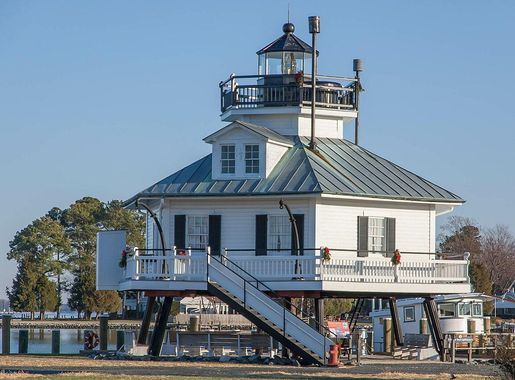
One of the museum's most iconic structures is the Hooper Strait Lighthouse. Originally built in 1879, this historic screwpile lighthouse was moved to the museum grounds in 1966 to prevent its demolition. The lighthouse has been meticulously restored to its former glory and now stands as a testament to the maritime history of the Chesapeake Bay.
-
The Waterman's Wharf exhibit is a key feature of the Chesapeake Bay Maritime Museum. This exhibit offers visitors an immersive experience into the life and work of Chesapeake Bay watermen, who have harvested the bay's rich seafood resources for centuries. The exhibit includes a working crab shanty, oyster dredging skipjack, and other artifacts that tell the story of the bay's fishing industry.
-
The museum's boat yard is a living exhibit where skilled shipwrights and apprentices work on the restoration and maintenance of historic Chesapeake Bay vessels. Visitors can observe traditional boatbuilding techniques and learn about the craftsmanship that goes into preserving these important cultural artifacts. The boat yard is a vital part of the museum's mission to keep the region's maritime traditions alive.
-
The Chesapeake Bay Maritime Museum's waterfront along the Miles River provides a picturesque setting for exploring the bay's maritime history. The waterfront area includes floating docks, a fleet of historic vessels, and opportunities for hands-on experiences such as boat rides and sailing classes. This section of the museum allows visitors to connect with the bay's natural beauty and understand its importance to the region's culture and economy.
-
Skipjacks are traditional oyster dredging sailboats that have become a symbol of the Chesapeake Bay. The museum is home to several of these historic vessels, including the Edna E. Lockwood, the last remaining working dredge boat of its kind. The museum's collection and preservation efforts highlight the significance of skipjacks in the bay's oystering industry and their role in the region's maritime heritage.
-
Since 1983, the Chesapeake Bay Maritime Museum has hosted the Annual Mid-Atlantic Small Craft Festival. This event attracts boat enthusiasts from all over the region to showcase traditional small craft, participate in boatbuilding competitions, and celebrate the art of small boat construction. The festival is a vibrant display of the region's maritime culture and craftsmanship.
-
OysterFest is one of the museum's signature events, held annually to celebrate the Chesapeake Bay's oyster heritage. The festival features oyster shucking contests, seafood cooking demonstrations, and educational exhibits about oyster ecology and restoration efforts. OysterFest provides a unique opportunity for visitors to savor the flavors of the bay and learn about the importance of oysters to the region's ecosystem and economy.
Neighbouring destination travel guides
Browse our curated selection of top destinations, scenic points, and must-visit spots in the area.



Your all‑in‑one travel companion app
Explore expert travel guides, compare and book tours, experiences, hotels, and more—all from the palm of your hand. Download now for seamless trip planning wherever your wanderlust takes you.


Explore More of Chesapeake Bay Area
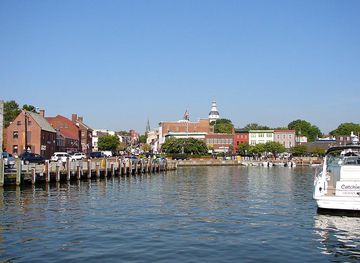
Looking beyond Chesapeake Bay Maritime Museum? Discover Chesapeake Bay Area for broader travel guides, local hot-spots, and regional highlights.
Explore Chesapeake Bay AreaExplore More of Maryland

Looking beyond Chesapeake Bay Maritime Museum? Discover Maryland for broader travel guides, local hot-spots, and regional highlights.
Explore MarylandChesapeake Bay Maritime Museum in Photos
Browse through our photo collection highlighting the charm and character of the destination.


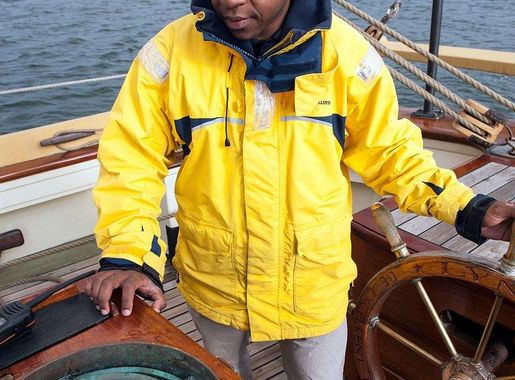


Discovering Chesapeake Bay Maritime Museum: A Journey Through Time and Tide
The Chesapeake Bay Maritime Museum, nestled in the charming town of St. Michaels, Maryland, offers a captivating glimpse into the maritime heritage of the Chesapeake Bay. Spanning over 18 acres, this museum is a treasure trove of history, culture, and natural beauty that appeals to visitors of all ages. As you wander through the museum's exhibits, you'll find a fascinating collection of historic boats, artifacts, and interactive displays. The Chesapeake Bay Maritime Museum is home to the Hooper Strait Lighthouse, a beacon of the past that stands proudly on the waterfront. Climb up to the lighthouse for stunning views of the bay and imagine the lives of the lighthouse keepers who once tended its light. The museum's working boatyard is a highlight for many visitors. Here, skilled shipwrights and apprentices restore and maintain traditional Chesapeake Bay boats. You can watch these craftsmen at work and even chat with them about their trade. The boatyard is a testament to the living history of the bay's maritime culture. Don't miss the Waterman's Wharf, where you can learn about the lives of the watermen who have harvested the bay's bounty for generations. Interactive exhibits and hands-on activities make this a fun and educational experience for the whole family. After exploring the museum, take a leisurely stroll along the waterfront or enjoy a picnic on the museum's scenic grounds. The Chesapeake Bay Maritime Museum is not just a museum; it's a gateway to understanding the rich maritime history and vibrant culture of the Chesapeake Bay region.