

Ganga Talao, Mauritius Travel Guide
Explore the spiritual and natural beauty of Ganga Talao, Mauritius' sacred crater lake and a serene haven for pilgrims and nature enthusiasts alike.
Ganga Talao, also known as Grand Bassin, is a serene crater lake nestled in the heart of Mauritius. It is a place of deep spiritual significance for the island's Hindu community and a must-visit for anyone seeking tranquility and cultural insight. The lake is said to be linked to the holy River Ganges in India, making it a revered pilgrimage site, especially during the Maha Shivaratri festival. Surrounded by lush greenery and rolling hills, Ganga Talao offers a peaceful escape from the bustling beaches and cities. The area is dotted with temples and statues dedicated to various Hindu deities, with the most notable being the towering statue of Lord Shiva, standing at an impressive 108 feet. Visitors often come here to meditate, pray, or simply to soak in the serene atmosphere. Apart from its spiritual allure, Ganga Talao is also a haven for nature lovers. The surrounding landscape is perfect for leisurely walks, and the lake itself is home to a variety of fish and bird species. Whether you are drawn by its religious significance or its natural beauty, Ganga Talao offers a unique and enriching experience for all who visit.

Know before you go
Hi, I'm Eve. Here are a few practical things to know before exploring Ganga Talao.
- Visit during the Maha Shivaratri festival for a unique cultural experience.
- Wear modest clothing, as this is a religious site.
- Bring comfortable walking shoes for exploring the surrounding area.
- Take some time to meditate or simply enjoy the tranquility of the lake.
- Respect the local customs and traditions when visiting temples and shrines.
Explore Ganga Talao: Things to Do, Places to Eat, Hotels & More
Handpicked recommendations for top attractions, local dining, accommodations, and more

Best attractions in Ganga Talao
Top-rated picks
Best Attractions

Sodnac Wellness Park
Discover the tranquil beauty of Sodnac Wellness Park in Quatre Bornes, a perfect escape for relaxation, exercise, and nature appreciation.

Domaine De La Grave
Explore the stunning landscapes and thrilling adventures at Domaine De La Grave in Cluny, Mauritius, a perfect blend of nature and excitement.

Dolswim Ltd
Experience the thrill of whale watching with Dolswim Ltd in Grand Riviere Noire, where adventure meets marine conservation.

Domaine De L'Etoile
Experience the breathtaking landscapes and rich biodiversity of Domaine De L'Etoile, a stunning nature preserve in Mauritius ideal for outdoor adventures.

Best landmarks in Ganga Talao
Top-rated picks
Best Landmarks

La Vallée Des Couleurs Nature Park
Discover the vibrant landscapes and thrilling adventures at La Vallée Des Couleurs Nature Park, Mauritius' breathtaking natural wonder.

Curious Chamarel
Explore the vibrant geology and breathtaking views at Curious Chamarel, a must-visit attraction in Mauritius showcasing nature's colorful artistry.

Grand Bassin
Experience the serene landscapes and deep spiritual significance of Grand Bassin, Mauritius' sacred lake nestled in lush highlands.
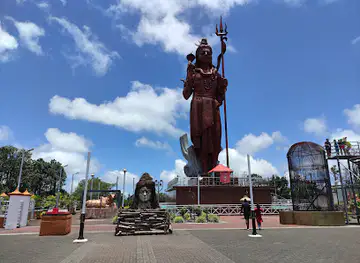
Lord Shiva, Grand Bassin Hindu Temple
Explore the spiritual heart of Mauritius at the breathtaking Lord Shiva Temple, a serene and culturally rich pilgrimage site surrounded by stunning natural beauty.

Best restaurants in Ganga Talao
Top-rated picks
Best Restaurants

McDonald's Port Louis
Experience fast food at its finest in Port Louis with McDonald's - where global flavors meet local charm!

KFC Curepipe
Experience delicious American fast food at KFC Curepipe while exploring the scenic beauty and vibrant culture of Mauritius.

McDonald's Beau Bassin
Experience fast food bliss at McDonald's Beau Bassin - where local charm meets global flavors in Mauritius.

Sunset Cafe and Trattoria
Experience exquisite flavors and breathtaking views at Sunset Cafe and Trattoria in Grand Baie – where culinary delight meets stunning sunsets.

Best bars in Ganga Talao
Top-rated picks
Best Bars

The Irish Pub & Restaurant
Discover the heart of Irish hospitality at The Irish Pub & Restaurant in Quatre Bornes, Mauritius, where authentic cuisine meets vibrant entertainment.

Big Willy's
Discover the lively ambiance of Big Willy's, a top restaurant and nightclub in Mauritius, offering delicious food and unforgettable nightlife experiences.

Backstage Lounge Bar at Hennessy Park
Experience the vibrant nightlife and live entertainment at Backstage Lounge Bar, your ultimate destination in Quatre Bornes for unforgettable evenings.

HY EBENE - Epicurean Cuisine & Sky Pub
Discover the ultimate dining and nightlife experience at HY EBENE, where culinary excellence meets stunning views in Ebene Cybercity, Mauritius.

Best nightclubs in Ganga Talao
Top-rated picks
Best Nightclubs

Banana Beach Club
Experience the vibrant fusion of grill delights and live jazz at Banana Beach Club, a must-visit destination in Grand Baie, Mauritius.

Ganga Talao
Discover Ganga Talao, a serene Hindu temple in Mauritius, where nature meets spirituality, offering a unique cultural experience for every traveler.

OMG Nightclub
Unleash the night at OMG Nightclub in Triolet, where electrifying beats and vibrant energy create an unforgettable nightlife experience.

Xindix Night Club
Dive into the vibrant nightlife at Xindix Night Club in Curepipe, where the beats are pulsing and the atmosphere is electric.

Best shops in Ganga Talao
Top-rated picks
Best Shops

TiGadget Curepipe Gift Shop
Explore TiGadget Curepipe Gift Shop for unique Mauritian souvenirs, local crafts, and delightful gifts that capture the spirit of the island.

Jetha Tulsidas
Explore Jetha Tulsidas in Curepipe for unique gifts and local fashion accessories that embody the essence of Mauritius.

NS shop
Discover local flavors and essentials at NS Shop, a vibrant supermarket in Curepipe offering a wide selection of products for every traveler.

Mel's Crafts Mauritius
Discover Mel's Crafts Mauritius: A treasure trove of unique gifts, custom souvenirs, and local artistry in Vacoas-Phoenix.

Explore Ganga Talao on the Map
A handpicked selection of must-see spots in Ganga Talao, mapped for you.
Ganga Talao Essentials
-
Ganga Talao, also known as Grand Bassin, is located in the Savanne district of Mauritius. The nearest major airport is Sir Seewoosagur Ramgoolam International Airport (MRU), approximately 40 kilometers away. From the airport, you can hire a taxi, rent a car, or use a shuttle service to reach Ganga Talao. The drive typically takes about an hour, offering scenic views of the island's countryside.
-
While renting a car offers the most flexibility, especially if you plan to explore other parts of Mauritius, taxis are also a convenient option. Public buses do service the area, but they can be less frequent and may not provide direct routes. For the most comfortable and efficient travel, consider hiring a local driver who can navigate the roads and provide insights about the area.
-
The official currency of Mauritius is the Mauritian Rupee (MUR). Credit cards are widely accepted in hotels, restaurants, and shops, but it is advisable to carry some cash, especially for smaller vendors or in more remote areas. ATMs are available in nearby towns, so withdrawing cash beforehand can ensure you have sufficient funds during your visit.
-
Mauritius is generally a safe destination for tourists. However, like any tourist spot, it is essential to stay vigilant. Avoid displaying valuables and keep an eye on your belongings, especially in crowded areas. There are no specific high-crime areas targeting tourists around Ganga Talao, but it is always wise to exercise caution, particularly at night.
-
In case of an emergency, dial 999 for police, fire, or medical assistance. The nearest medical facilities are located in the towns of Curepipe and Vacoas, which are a short drive away. It is recommended to have travel insurance that covers medical emergencies. Pharmacies are available in nearby towns for minor health issues.
-
Fashion: Do dress modestly, particularly when visiting religious sites. Avoid revealing clothing as a sign of respect. Religion: Do respect local customs and traditions. Remove your shoes before entering temples and cover your shoulders and knees. Public Transport: Do be courteous and give up your seat to elderly passengers. Don't eat or drink on public transport. Greetings: Do greet people with a smile and a polite 'Bonjour' or 'Namaste'. A slight bow of the head can also show respect. Eating & Drinking: Do try local delicacies and accept food offerings graciously. Don't refuse hospitality, as it is considered impolite.
-
To experience Ganga Talao like a local, visit during the Maha Shivaratri festival, when pilgrims from across the island walk to the lake to honor Lord Shiva. Engage with locals who are often eager to share the significance of the area and its traditions. Don't miss the opportunity to taste the local vegetarian food offerings at the temple, which are often prepared for visitors.
When is the best time to visit Ganga Talao?
Useful Local Phrases for Ganga Talao
You don't need to speak the language perfectly. Even learning a few simple words can make conversations warmer—and locals usually appreciate the effort.
— Eve

Here are the phrases I use most often in Ganga Talao. Try a few—you'll be surprised how far they go! 😊
❤️
-
- HelloBonjour
[Bon-zhoor] - GoodbyeAu revoir
[Oh rev-wahr] - YesWi
[Wee] - NoNon
[Non] - Please/You're welcomeS'il vous plaît/De rien
[See voo pleh/Dee ree-en] - Thank youMerci
[Mehr-see] - Excuse me/SorryExcusez-moi/Désolé
[Ex-koo-zay mwah/Day-zo-lay] - How are you?Comment allez-vous?
[Koh-mon-tal-ay voo] - Fine. And you?Bien. Et vous?
[Byen. Ay voo] - Do you speak English?Parlez-vous anglais?
[Par-lay voo ahn-glay] - I don't understandJe ne comprends pas
[Zhuh nuh kohm-prahn pah]
- HelloBonjour
-
- I'd like to see the menu, pleaseJe voudrais voir le menu, s'il vous plaît
[Zhuh voo-dray vwah luh men-oo, see voo pleh] - I don't eat meatJe ne mange pas de viande
[Zhuh nuh mahnj pah duh vee-and] - Cheers!Santé!
[San-tay] - I would like to pay, pleaseJe voudrais payer, s'il vous plaît
[Zhuh voo-dray pay-ay, see voo pleh]
- I'd like to see the menu, pleaseJe voudrais voir le menu, s'il vous plaît
-
- Help!À l'aide!
[Ah layd] - Go away!Allez-vous en!
[Ah-lay voo on] - Call the Police!Appelez la police!
[Ah-play lah po-leece] - Call a doctor!Appelez un médecin!
[Ah-play uh mayd-sahn] - I'm lostJe suis perdu
[Zhuh swee pair-doo] - I'm illJe suis malade
[Zhuh swee mah-lahd]
- Help!À l'aide!
-
- I'd like to buy...Je voudrais acheter...
[Zhuh voo-dray ah-shet-ay] - I'm just lookingJe regarde juste
[Zhuh ruh-gard joo-st] - How much is it?Combien ça coûte?
[Kohm-byen sah koot] - That's too expensiveC'est trop cher
[Say troh shay] - Can you lower the price?Pouvez-vous baisser le prix?
[Poo-vay voo bay-say luh pree]
- I'd like to buy...Je voudrais acheter...
-
- What time is it?Quelle heure est-il?
[Kell ur ay-teel] - It's one o'clockIl est une heure
[Eel ay tun ur] - Half past (10)Dix et demi
[Dees ay-d dem-ee] - MorningMatin
[Ma-tan] - AfternoonAprès-midi
[Ah-pray mee-dee] - EveningSoir
[Swah] - YesterdayHier
[Yehr] - TodayAujourd'hui
[Oh-zhoor-dwee] - TomorrowDemain
[Duh-man] - 1Un
[Un] - 2Deux
[Duh] - 3Trois
[Twa] - 4Quatre
[Kat] - 5Cinq
[Sank] - 6Six
[Sees] - 7Sept
[Set] - 8Huit
[Wheat] - 9Neuf
[Nurf] - 10Dix
[Dees]
- What time is it?Quelle heure est-il?
-
- Where's a/the...?Où est...?
[Oo ay] - What's the address?Quelle est l'adresse?
[Kell ay luh-dress] - Can you show me (on the map)?Pouvez-vous me montrer (sur la carte)?
[Poo-vay voo muh mohn-tray (sir lah kart)] - When's the next (bus)?Quand est le prochain (bus)?
[Kahnd ay luh proh-shang (bus)] - A ticket (to ....)Un billet (pour ...)
[Un bee-yay (poor)]
- Where's a/the...?Où est...?
History of Ganga Talao
-
Ganga Talao, also known as Grand Bassin, is a sacred crater lake located in the Savanne district of Mauritius. It was discovered in 1897 by Pandit Jhummon Giri Gossagne Nepal, who had a vision of the holy lake in his dream. This vision led him to the lake, which was later consecrated as a pilgrimage site for Hindus.
-
The first pilgrimage to Ganga Talao took place in 1898, following the discovery of the lake. Devotees walked from their homes to the lake, carrying water from the Ganges River in India. This tradition has continued to this day, with thousands of pilgrims making the journey on foot during the Maha Shivaratri festival.
-
Over the years, several temples have been constructed around Ganga Talao. The most prominent is the temple dedicated to Lord Shiva, which was built in the early 20th century. Other temples honor deities such as Durga, Hanuman, and Lakshmi, creating a rich tapestry of Hindu worship around the lake.
-
In 1972, a significant event took place when a murti (statue) of Lord Shiva was brought from India and installed at Ganga Talao. This added to the sanctity of the site, attracting even more pilgrims. The statue stands as a testament to the deep cultural and religious ties between Mauritius and India.
-
Maha Shivaratri is the most important festival celebrated at Ganga Talao. Every year, during the months of February or March, hundreds of thousands of devotees gather at the lake to honor Lord Shiva. The celebrations include prayers, offerings, and a night of vigil, creating a vibrant and spiritual atmosphere.
-
In 2007, a 108-feet tall statue of Mangal Mahadev, another form of Lord Shiva, was inaugurated near Ganga Talao. This imposing statue is one of the tallest in Mauritius and serves as a symbol of faith and devotion. It has become an iconic landmark, drawing visitors and pilgrims alike.
-
Ganga Talao is not only a religious site but also an ecological haven. The lake and its surrounding areas are home to diverse flora and fauna, including fish and bird species. Efforts have been made to preserve the natural beauty of the site, ensuring that it remains a pristine and tranquil place for worship and reflection.
Neighbouring destination travel guides
Browse our curated selection of top destinations, scenic points, and must-visit spots in the area.


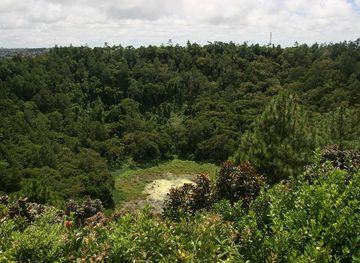


Your all‑in‑one travel companion app
Explore expert travel guides, compare and book tours, experiences, hotels, and more—all from the palm of your hand. Download now for seamless trip planning wherever your wanderlust takes you.


Explore More of Plaines Wilhems

Looking beyond Ganga Talao? Discover Plaines Wilhems for broader travel guides, local hot-spots, and regional highlights.
Explore Plaines WilhemsExplore More of Mauritius
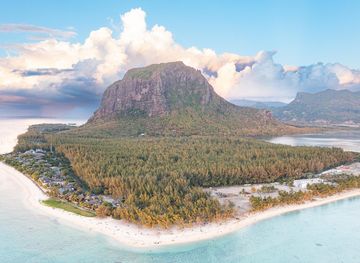
Looking beyond Ganga Talao? Discover Mauritius for broader travel guides, local hot-spots, and regional highlights.
Explore MauritiusGanga Talao in Photos
Browse through our photo collection highlighting the charm and character of the destination.
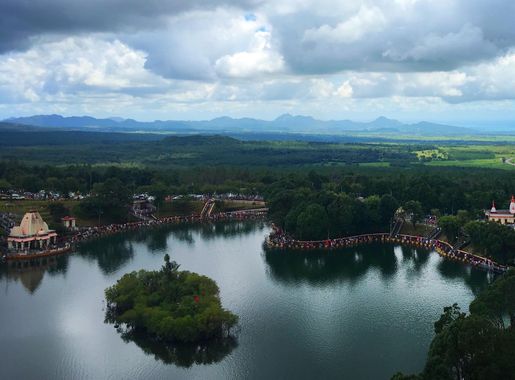


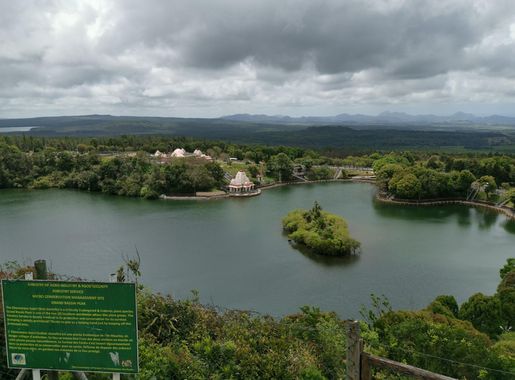


The Sacred Shores of Ganga Talao
Ganga Talao, also known as Grand Bassin, is a serene crater lake nestled in the heart of Mauritius. It is a place of deep spiritual significance for the island's Hindu community and a must-visit for anyone seeking tranquility and cultural insight. The lake is said to be linked to the holy River Ganges in India, making it a revered pilgrimage site, especially during the Maha Shivaratri festival. Surrounded by lush greenery and rolling hills, Ganga Talao offers a peaceful escape from the bustling beaches and cities. The area is dotted with temples and statues dedicated to various Hindu deities, with the most notable being the towering statue of Lord Shiva, standing at an impressive 108 feet. Visitors often come here to meditate, pray, or simply to soak in the serene atmosphere. Apart from its spiritual allure, Ganga Talao is also a haven for nature lovers. The surrounding landscape is perfect for leisurely walks, and the lake itself is home to a variety of fish and bird species. Whether you are drawn by its religious significance or its natural beauty, Ganga Talao offers a unique and enriching experience for all who visit.