

Scotts Bluff National Monument, Nebraska Travel Guide
Explore Scotts Bluff National Monument, a breathtaking natural and historic landmark in Nebraska, offering panoramic views, rich history, and outdoor adventures.
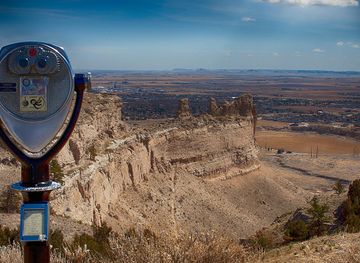
Discover the awe-inspiring Scotts Bluff National Monument, a striking natural landmark that rises majestically from the Nebraska plains. This historic site offers a glimpse into the past, standing as a sentinel over the routes once traveled by pioneers on the Oregon, California, and Mormon Trails. The monument, with its towering cliffs and rugged terrain, provides breathtaking views and an immersive experience in the heart of America's frontier history. As you explore Scotts Bluff National Monument, you'll find a rich tapestry of geological formations, flora, and fauna. The visitor center offers engaging exhibits about the area's natural history and its significance during the westward expansion. The monument's scenic drive and hiking trails allow visitors to experience the landscape up close, with opportunities to see stunning vistas and unique rock formations. The monument is also a haven for outdoor enthusiasts. Whether you're hiking to the summit of the bluff or taking a leisurely drive along the Summit Road, the panorama of the surrounding prairie, river valleys, and distant mountains is truly captivating. Don't miss the chance to walk in the footsteps of the pioneers and experience the spirit of adventure that led so many to this iconic landmark.

Know before you go
Hi, I'm Eve. Here are a few practical things to know before exploring Scotts Bluff National Monument.
- Visit the monument early in the morning or late afternoon to avoid the midday heat and enjoy the best lighting for photographs.
- Wear sturdy shoes if you plan on hiking the trails; the terrain can be uneven and rocky.
- Bring plenty of water, especially during the summer months, as temperatures can soar and there are limited facilities along the trails.
- Check the visitor center for ranger-led tours and educational programs to enhance your visit.
- Look out for wildlife such as mule deer, foxes, and various bird species that inhabit the area.
- Consider visiting nearby historic sites such as Chimney Rock for a more comprehensive understanding of the region's significance.
Explore Scotts Bluff National Monument: Things to Do, Places to Eat, Hotels & More
Handpicked recommendations for top attractions, local dining, accommodations, and more

Best attractions in Scotts Bluff National Monument
Top-rated picks
Best Attractions

Riverside Discovery Center
Discover the beauty of wildlife and nature at Riverside Discovery Center, a premier zoo and park in Scottsbluff, Nebraska, perfect for families and nature lovers.

Scotts Bluff National Monument Visitor Center
Discover the rich history and stunning landscapes of Nebraska at the Scotts Bluff National Monument Visitor Center, your gateway to adventure.

Riverside Park
Explore Riverside Park in Scottsbluff, Nebraska: a scenic retreat with trails, picnicking areas, and stunning views of nature's beauty.

Best bars in Scotts Bluff National Monument


Explore Scotts Bluff National Monument on the Map
A handpicked selection of must-see spots in Scotts Bluff National Monument, mapped for you.
Scotts Bluff National Monument Essentials
-
Scotts Bluff National Monument is located in western Nebraska, near the town of Gering. The nearest major airport is Denver International Airport (DEN) in Denver, Colorado, about 200 miles southwest of the monument. From Denver, you can rent a car and drive to Scotts Bluff via I-76 and US-26, a journey of approximately 3.5 to 4 hours. Alternatively, you can fly into smaller regional airports such as Western Nebraska Regional Airport (BFF) in Scottsbluff, which is about 5 miles from the monument. Car rentals and taxis are available at the regional airport.
-
Once at Scotts Bluff National Monument, the best way to explore the area is by car. The monument features paved roads and parking areas near key viewpoints and trailheads. There is no public transportation within the monument, so a rental car is recommended for convenience. For those staying in nearby towns like Gering or Scottsbluff, taxis and ride-sharing services such as Uber and Lyft are available but may be limited. Biking and hiking are also popular ways to explore the monument and nearby trails.
-
The official currency in the United States is the US Dollar (USD). Credit and debit cards are widely accepted at hotels, restaurants, and shops in the Scotts Bluff area. ATMs are available in nearby towns such as Gering and Scottsbluff. It is advisable to carry some cash for smaller establishments or for emergencies. Most major banks have branches in Scottsbluff where you can exchange foreign currency, though it may be more convenient to do so before your trip.
-
Scotts Bluff National Monument and the surrounding areas are generally safe for tourists. However, it's always wise to take standard precautions. Avoid leaving valuables in your car while hiking and be mindful of your surroundings. Gering and Scottsbluff are small towns with low crime rates, but it is still advisable to avoid poorly lit or unfamiliar areas at night. There are no specific high-crime areas targeting tourists, but staying vigilant is always recommended.
-
In case of an emergency, dial 911 for immediate assistance. The nearest medical facilities are located in Scottsbluff, which has a regional hospital and urgent care centers. It is advisable to have travel insurance that covers medical emergencies. The monument's visitor center can provide assistance and information if you encounter any issues while exploring the area. For minor health issues, there are several pharmacies in Scottsbluff where you can purchase over-the-counter medications.
-
Fashion: Do wear comfortable and weather-appropriate clothing, as the weather can change quickly. Hiking boots or sturdy shoes are recommended for trails. Don't wear overly revealing clothing as it may be considered inappropriate in some areas. Religion: Do be respectful of any religious or cultural sites you may visit in the area. Public Transport: Do use your own vehicle or a rental to get around, as public transport is limited. Greetings: Do greet people with a friendly 'hello' or a handshake. Locals are generally friendly and welcoming. Eating & Drinking: Do try local cuisine at nearby restaurants. Don't leave trash behind; always use designated waste bins to keep the area clean.
-
To experience Scotts Bluff like a local, visit the Scotts Bluff County Fair if you're here in the summer. Check out the local farmers' markets for fresh produce and handmade goods. Engage with park rangers at the monument for insightful stories and historical context. Don't miss the chance to hike the Saddle Rock Trail for stunning views of the surrounding landscape. For a unique local experience, visit the nearby Legacy of the Plains Museum to learn more about the region's history and culture.
When is the best time to visit Scotts Bluff National Monument?
Useful Local Phrases for Scotts Bluff National Monument
You don't need to speak the language perfectly. Even learning a few simple words can make conversations warmer—and locals usually appreciate the effort.
— Eve

Here are the phrases I use most often in Scotts Bluff National Monument. Try a few—you'll be surprised how far they go! 😊
❤️
-
- HelloHallo
[ha-lo] - GoodbyeToodle-oo
[too-dl-oo] - YesAye
[ay] - NoNae
[nay] - Please/You're welcomePlease/Ye're welcome
[pleez/yer-wel-kum] - Thank youThank ye
[thank yee] - Excuse me/SorryPardon me/Sorry
[par-dn mee/sor-ee] - How are you?Hoo are ye?
[hoo ar yee] - Fine. And you?Fine. An' yersel'?
[fain. an yur-sel] - Do you speak English?D'ye speak English?
[dee speak ing-lish] - I don't understandI dinnae ken
[I din-ee ken]
- HelloHallo
-
- I'd like to see the menu, pleaseI'd like tae see the menu, if ye please
[I'd like tae see the men-yoo, if yee pleez] - I don't eat meatI dinnae eat flesh
[I din-ee eat flesh] - Cheers!Slàinte!
[slan-cha] - I would like to pay, pleaseI'd like tae pay, if ye please
[I'd like tae pay, if yee pleez]
- I'd like to see the menu, pleaseI'd like tae see the menu, if ye please
-
- Help!Help!
[help] - Go away!Gae awa!
[gay a-wa] - Call the Police!Phone the Polis!
[fone the pol-iss] - Call a doctor!Phone a doctor!
[fone a doc-tor] - I'm lostI'm awa' hame
[I'm a-wa hame] - I'm illI'm sair
[I'm sair]
- Help!Help!
-
- I'd like to buy...I'd like tae buy...
[I'd like tae buy...] - I'm just lookingI'm juist haein' a gander
[I'm juist hay-in a gan-der] - How much is it?Hoo muckle is it?
[hoo muck-le is it] - That's too expensiveThon's ower dear
[thon's ower deer] - Can you lower the price?Can ye drap the price?
[can yee drap the price]
- I'd like to buy...I'd like tae buy...
-
- What time is it?Fit time is it?
[fit time is it] - It's one o'clockIt's yin o'clock
[It's yin o-clock] - Half past (10)Half ten
[Half ten] - MorningMornin'
[mor-nin] - AfternoonEfternuin
[ef-ter-nuin] - EveningEenin'
[ee-nin] - YesterdayYestreen
[yes-treen] - TodayThe day
[the day] - TomorrowThe morn
[the morn] - 1Ane
[ain] - 2Twa
[twa] - 3Three
[three] - 4Fower
[fow-er] - 5Fife
[fife] - 6Sax
[sax] - 7Seiven
[see-ven] - 8Echt
[echt] - 9Nin
[nin] - 10Ten
[ten]
- What time is it?Fit time is it?
-
- Where's a/the...?Whaur's a/the...?
[whaur's a/the] - What's the address?Fit's the address?
[fit's the address] - Can you show me (on the map)?Can ye shaw me (on the map)?
[can yee shaw me (on the map)] - When's the next (bus)?When's the next (bus)?
[when's the next (bus)] - A ticket (to ....)A ticket (tae ....)
[A ticket (tae ....)]
- Where's a/the...?Whaur's a/the...?
History of Scotts Bluff National Monument
-
Before the arrival of European settlers, the area surrounding Scotts Bluff was inhabited by various Native American tribes, including the Lakota, Cheyenne, and Arapaho. These tribes used the natural landmarks for navigation and held the area in spiritual reverence. Evidence of their presence can be found in the form of ancient artifacts and oral histories passed down through generations.
-
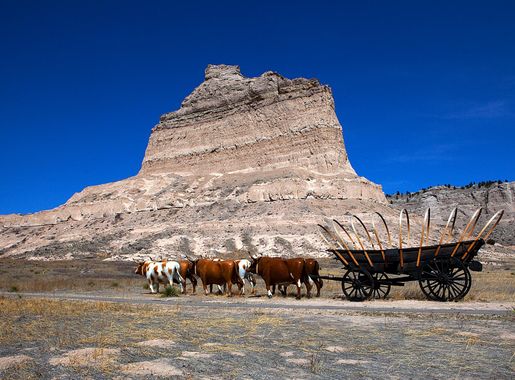
Scotts Bluff served as a significant landmark for pioneers traveling westward on the Oregon Trail during the mid-19th century. The towering bluffs provided a visual guide for settlers making their way across the Great Plains. Many emigrants carved their names into the soft rock of the bluffs, leaving behind a historical record of their arduous journey.
-
In addition to the Oregon Trail, Scotts Bluff was also a key waypoint on the Mormon Trail. Thousands of Latter-day Saints passed by the bluffs on their way to the Salt Lake Valley in Utah. The area was a place of rest and resupply for these travelers, who often faced harsh conditions and limited resources.
-
The discovery of gold in California in 1848 led to a massive influx of fortune seekers, many of whom traveled along the California Trail, which intersected with the Oregon Trail at Scotts Bluff. This period saw an increase in traffic and the establishment of trading posts and ferry services to accommodate the needs of the gold rush emigrants.
-
During the Indian Wars of the late 19th century, Scotts Bluff held strategic importance for the U.S. military. The bluffs provided a vantage point for monitoring the movements of Native American tribes and served as a staging area for military expeditions. The presence of the military further influenced the development of the surrounding region.
-
Scotts Bluff was designated a National Monument by President Woodrow Wilson in 1919. This designation aimed to preserve the natural and historical significance of the bluffs. Over the years, the National Park Service has developed the area, adding visitor centers, interpretive trails, and educational programs to enhance public understanding of the site's rich history.
Neighbouring destination travel guides
Browse our curated selection of top destinations, scenic points, and must-visit spots in the area.





Your all‑in‑one travel companion app
Explore expert travel guides, compare and book tours, experiences, hotels, and more—all from the palm of your hand. Download now for seamless trip planning wherever your wanderlust takes you.


Explore More of North Platte River Valley
Looking beyond Scotts Bluff National Monument? Discover North Platte River Valley for broader travel guides, local hot-spots, and regional highlights.
Explore North Platte River ValleyExplore More of Nebraska

Looking beyond Scotts Bluff National Monument? Discover Nebraska for broader travel guides, local hot-spots, and regional highlights.
Explore NebraskaScotts Bluff National Monument in Photos
Browse through our photo collection highlighting the charm and character of the destination.






Scotts Bluff National Monument: A Historic Marvel of the Nebraska Plains
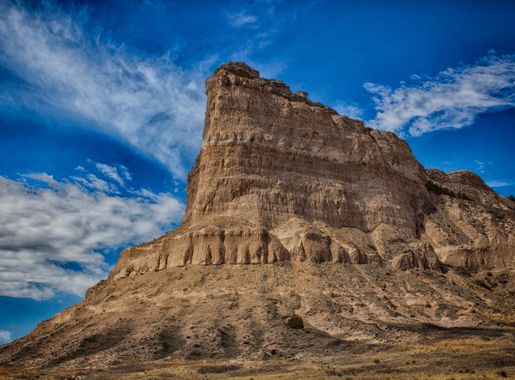
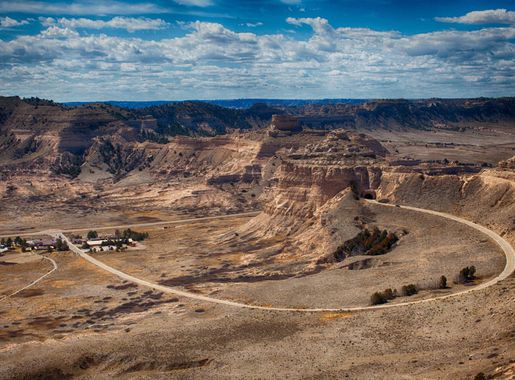
Discover the awe-inspiring Scotts Bluff National Monument, a striking natural landmark that rises majestically from the Nebraska plains. This historic site offers a glimpse into the past, standing as a sentinel over the routes once traveled by pioneers on the Oregon, California, and Mormon Trails. The monument, with its towering cliffs and rugged terrain, provides breathtaking views and an immersive experience in the heart of America's frontier history. As you explore Scotts Bluff National Monument, you'll find a rich tapestry of geological formations, flora, and fauna. The visitor center offers engaging exhibits about the area's natural history and its significance during the westward expansion. The monument's scenic drive and hiking trails allow visitors to experience the landscape up close, with opportunities to see stunning vistas and unique rock formations. The monument is also a haven for outdoor enthusiasts. Whether you're hiking to the summit of the bluff or taking a leisurely drive along the Summit Road, the panorama of the surrounding prairie, river valleys, and distant mountains is truly captivating. Don't miss the chance to walk in the footsteps of the pioneers and experience the spirit of adventure that led so many to this iconic landmark.