

Keukenhof Gardens Travel Guide - Free Web & App
Your ultimate guide to Keukenhof Gardens. Discover top landmarks, proposed trips, and local tips. Free on the web or via the Evendo companion app.


Keukenhof Gardens in the Netherlands brings spring bulbs, historic parkland, art, flower displays and cycling routes near Lisse and Amsterdam for spring day out.
A Garden Shaped by Spring
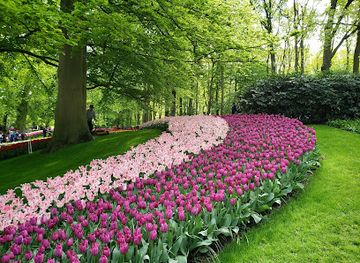
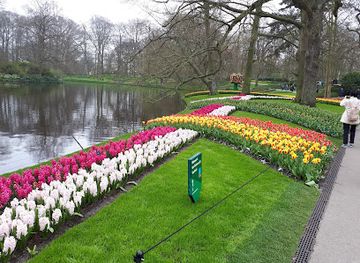
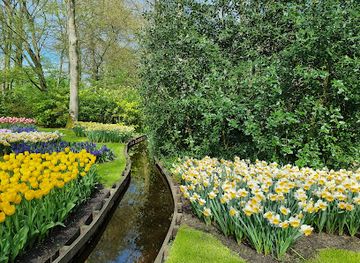
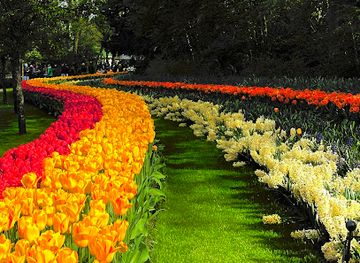
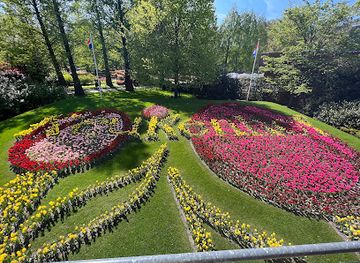
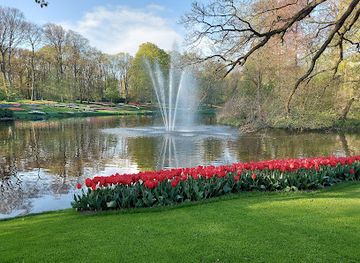
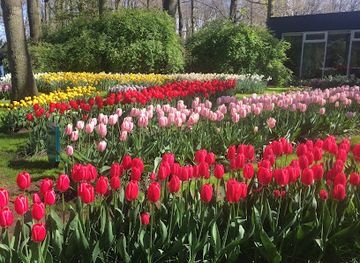
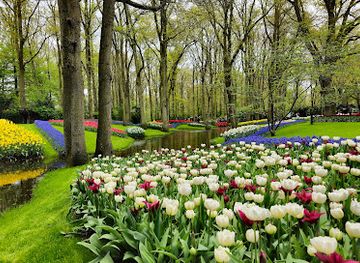
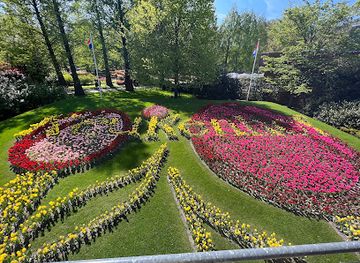
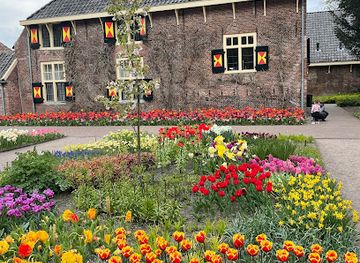
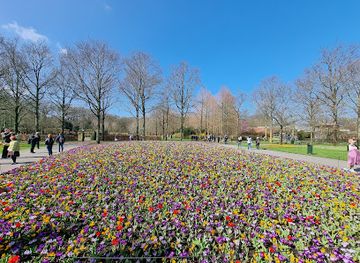
Keukenhof Gardens is a seasonal floral park near Lisse, in the Dutch province of South Holland, celebrated for its carefully designed displays of tulips, hyacinths, daffodils and other spring bulbs. Open for only part of the year, usually from late March into May, the 32-hectare estate is arranged as a sequence of formal gardens, wooded paths, ponds, lawns and flower-filled avenues. Millions of bulbs are planted each year, creating a changing display whose character depends on the weather and flowering schedule.Read more about Keukenhof Gardens
Landscape, Design and Heritage
Exploring the Bulb Region
When is the best time to visit Keukenhof Gardens?
Best: June–August · 24–26°C| Month | High (°C) | Rainfall (mm) |
|---|---|---|
| January | 6 | 71 |
| February | 6 | 61 |
| March | 10 | 51 |
| April | 16 | 41 |
| May | 21 | 51 |
| June (best) | 24 | 61 |
| July (best) | 26 | 71 |
| August (best) | 26 | 71 |
| September | 23 | 61 |
| October | 18 | 51 |
| November | 12 | 41 |
| December | 10 | 51 |
Getting to and around Keukenhof Gardens
How to get there
Transportation
Best attractions in Keukenhof Gardens
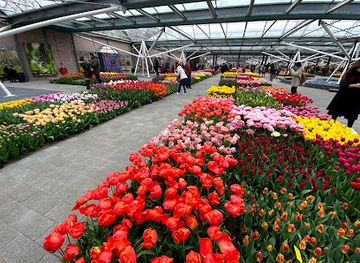
The principal attraction is the garden itself, where formal planting beds, wooded avenues, ponds and lawns frame successive displays of tulips, daffodils, hyacinths and other spring bulbs. The Oranje-Nassau Pavilion hosts changing flower and plant presentations, while the Willem-Alexander Pavilion is known for large-scale seasonal displays, including tulips when in bloom. Other pavilions and landscaped areas provide different horticultural themes, artworks and places to pause. Outside the park, the Bollenstreek around Lisse, Hillegom and Noordwijkerhout offers a changing rural panorama of commercial bulb fields, best viewed from public roads and cycle routes rather than entered. Castle Keukenhof and its historic estate provide an architectural and landscape context beside the gardens, although the castle is a separate attraction with its own arrangements. Nearby Lisse adds village services and local heritage, while Leiden, Haarlem and the North Sea coast offer substantial cultural or coastal excursions beyond the immediate floral landscape.
-
Tourist attraction
LAM Museum
Explore the LAM Museum in Lisse, a unique tourist destination where contemporary art meets the stunning Dutch landscapes.
-
Mill
Keukenhof Windmill
Experience the splendor of tulip fields and the charm of Dutch heritage at Keukenhof Windmill in Lisse.
-
Garden
Labyrinth
Explore the vibrant tulip fields and exquisite gardens of Keukenhof, a breathtaking floral paradise in Lisse, Netherlands.
-
Park
Beatrix Pavilion - Orchids & Anthurium Show
Explore the Beatrix Pavilion's stunning Orchids & Anthurium Show, a floral paradise in the heart of Keukenhof Gardens, perfect for nature lovers.
Best landmarks in Keukenhof Gardens
Keukenhof's defining landmark is its planned spring landscape, where broad avenues, mature trees, ponds and flower beds turn the former estate grounds into a horticultural exhibition. The historic Castle Keukenhof, immediately associated with the estate, provides an important architectural reference, although it is separate from the seasonal gardens and may have different access arrangements. Beyond the estate, the regularly planted bulb fields of the Bollenstreek are a distinctive agricultural landmark, their appearance changing with crop rotation, weather and flowering dates. The gardens' pavilions are significant for Dutch horticulture because they host exhibitions and displays that connect ornamental planting with the country's commercial bulb industry. Lisse's village setting, historic estate landscape and surrounding sandy cultivation grounds together explain why this small area has become so strongly associated with Dutch spring flowers.
-
Botanical garden
Keukenhof
Explore the stunning Keukenhof, a vibrant botanical garden in Lisse, showcasing millions of tulips and breathtaking floral displays every spring.
-
Castle
Kasteel Keukenhof
Explore Kasteel Keukenhof, a stunning castle surrounded by vibrant gardens and tulip fields, where history and beauty intertwine in the heart of the Netherlands.
-
Botanical garden
Willem-Alexander paviljoen
Discover the breathtaking floral displays and serene landscapes at Willem-Alexander Paviljoen in Keukenhof Gardens, a top destination for nature lovers.
-
Mill
Keukenhof Windmill
Experience the enchanting beauty of Keukenhof Windmill, a timeless symbol of Dutch culture surrounded by breathtaking gardens and serene landscapes.


Explore Keukenhof Gardens on the map
Plan your trip on one map. See where the top attractions, landmarks, restaurants and hotels are, and book hotels and experiences in a few clicks.
Best hotels in Keukenhof Gardens
Best restaurants in Keukenhof Gardens
Keukenhof has cafés, restaurants and refreshment points within the seasonal park, making it possible to eat without leaving the grounds, although opening arrangements and menus follow the annual visitor season. In Lisse and neighbouring villages, dining is more varied, with cafés, bakeries, restaurants and traditional Dutch hospitality venues serving visitors exploring the bulb region. Typical Dutch choices may include broodjes, soups, pancakes, pastries and coffee, alongside international dishes common in a heavily visited part of South Holland. The region's horticultural identity is more influential than a single signature dish: local farm shops and food retailers may offer Dutch cheeses, bread, fruit products and other regional provisions. Travellers cycling through the Bollenstreek should not expect restaurants beside every field, so carrying water and checking facilities in advance is sensible, particularly outside village centres.
-
Restaurant
Hofboerderij
Experience authentic Dutch cuisine at Hofboerderij in Keukenhof Gardens, where culinary delights meet stunning floral beauty.
-
Restaurant
Blooming Dutch
Experience authentic Dutch cuisine at Blooming Dutch, where every dish tells a story amidst breathtaking floral landscapes.
-
Vegetarian
Jacoba’s Kitchen
Experience exquisite vegetarian cuisine surrounded by the breathtaking beauty of Keukenhof's stunning gardens.
-
Restaurant
Wilhelmina Paviljoen
Experience authentic Dutch cuisine at Wilhelmina Paviljoen amidst Lisse's stunning landscapes.


Best bars in Keukenhof Gardens
Evening entertainment around Keukenhof is modest because the gardens are a daytime, seasonal attraction rather than a nightlife district. Lisse and nearby villages have cafés, bars and traditional pubs where visitors can spend a quiet evening, while larger urban centres such as Leiden and Haarlem, outside the Keukenhof area, provide a broader choice of restaurants, bars, theatres and late venues. During the garden season, special floral events or extended programmes may occur, but these vary by year and should not be assumed to be available. The surrounding bulb fields are rural working landscapes with little evening infrastructure, and the park itself should not be approached as a night-time entertainment venue.
-
Botanical garden
Keukenhof
Discover the enchanting beauty of Keukenhof, where millions of tulips bloom in a vibrant display of colors every spring in the heart of the Netherlands.
-
Castle
Kasteel Keukenhof
Discover the stunning Kasteel Keukenhof, where history meets the vibrant beauty of blooming gardens in the heart of the Netherlands.
-
Botanical garden
Willem-Alexander paviljoen
Explore the breathtaking beauty of the Willem-Alexander Pavilion, a botanical paradise in the heart of Keukenhof, showcasing vibrant flowers and serene landscapes.
-
Restaurant
Hofboerderij
Discover the flavors of the Netherlands at Hofboerderij, a charming restaurant nestled in the heart of Keukenhof gardens, offering delightful dishes and stunning views.
Best shops in Keukenhof Gardens
Shopping at Keukenhof centres on horticulture, with seasonal outlets selling bulbs, gardening-related goods, souvenirs, books, art and flower-themed gifts. These purchases are closely connected with the park's exhibition role, although visitors should follow any guidance about transporting bulbs internationally and check current plant-health requirements for their destination country. Lisse and the wider Bollenstreek offer additional opportunities in village shops, garden centres, cafés and food retailers rather than an extensive shopping district. Dutch cheese, confectionery, bakery items, postcards and locally themed crafts are common regional purchases, while specialist growers and bulb businesses may have their own seasonal arrangements. Retail choice is considerably broader in nearby Leiden, Haarlem or Amsterdam, but these are outside Keukenhof itself and serve as separate urban shopping destinations.
-
Gift shop
Keukenhof
Experience the breathtaking beauty of Keukenhof, the world's largest flower garden, showcasing millions of vibrant blooms in a stunning setting.
Get your free copy of our complete guide to Keukenhof Gardens, delivered straight to you.
Everything on this page, from attractions and restaurants to essentials and local phrases, in one PDF you can read offline, print or share.
Already have an account? Sign in
Your Keukenhof Gardens guide is ready.
We'll send it to · Not you? Sign out

Getting your guide ready…
We are putting together a fresh copy of the Keukenhof Gardens guide. This can take up to a minute.
This can take a few moments. If your browser asks, choose Allow so the download can start. You'll find the guide in your Downloads folder.
Nothing happened? Download it again
Sorry, the guide is taking longer than usual. Please try again in a minute, or get it by email instead.
Keukenhof Gardens essentials
Currency and Payment
Safety
Emergency Situations
Do's and Don'ts
Local Tips
From Eve
Local phrases worth knowing
You don't need to get them perfect. A few words go a long way, and locals appreciate the effort.
Basics
| English | Local | Say it |
|---|---|---|
| Hello | Hallo | [hah-loh] |
| Goodbye | Tot ziens | [toht zeens] |
| Yes | Ja | [yah] |
| No | Nee | [nay] |
| Please/You're welcome | Alstublieft | [ahl-stu-bleeft] |
| Thank you | Dank je wel | [dahnk yeh vell] |
| Excuse me/Sorry | Sorry | [soh-ree] |
| How are you? | Hoe gaat het met jou? | [hoo gahht het met yow] |
| Fine. And you? | Goed. En met jou? | [khoot en met yow] |
| Do you speak English? | Spreek je Engels? | [spreyk yeh ehng-uhls] |
| I don't understand | Ik begrijp het niet | [ihk buh-grayp het neet] |
Eating & Drinking
| English | Local | Say it |
|---|---|---|
| I'd like to see the menu, please | Ik wil graag de menukaart zien, alstublieft | [ihk vil khrahkh duh menu-kahrt seen, ahl-stu-bleeft] |
| I don't eat meat | Ik eet geen vlees | [ihk ayt khayn flays] |
| Cheers! | Proost! | [prohst] |
| I would like to pay, please | Ik wil graag betalen, alstublieft | [ihk vil khrahkh buh-tah-luhn, ahl-stu-bleeft] |
Emergencies
| English | Local | Say it |
|---|---|---|
| Help! | Help! | [help] |
| Go away! | Ga weg! | [gah vekh] |
| Call the Police! | Bel de politie! | [bel duh poh-lee-see] |
| Call a doctor! | Bel een dokter! | [bel ayn dawk-tuhr] |
| I'm lost | Ik ben verdwaald | [ihk ben vuhr-dwahld] |
| I'm ill | Ik ben ziek | [ihk ben zik] |
Shopping
| English | Local | Say it |
|---|---|---|
| I'd like to buy... | Ik wil ... kopen | [ihk vil ... koh-puhn] |
| I'm just looking | Ik kijk alleen maar | [ihk kayk a-layn mahr] |
| How much is it? | Hoeveel kost het? | [hoo-vel kost het] |
| That's too expensive | Dat is te duur | [daht is tuh dur] |
| Can you lower the price? | Kunt u de prijs verlagen? | [koont yoo duh prays fuh-rah-ghuhn] |
Time & Numbers
| English | Local | Say it |
|---|---|---|
| What time is it? | Hoe laat is het? | [hoo laht is het] |
| It's one o'clock | Het is een uur | [het is ayn oor] |
| Half past (10) | Half elf | [hahlf elf] |
| Morning | Ochtend | [ohk-tuhnt] |
| Afternoon | Middag | [mi-dahkh] |
| Evening | Avond | [ah-vohnt] |
| Yesterday | Gisteren | [khistuhr-uhn] |
| Today | Vandaag | [fahn-dahkh] |
| Tomorrow | Morgen | [mohr-khuhn] |
| 1 | Een | [ayn] |
| 2 | Twee | [tvay] |
| 3 | Drie | [dree] |
| 4 | Vier | [veer] |
| 5 | Vijf | [vayf] |
| 6 | Zes | [zehs] |
| 7 | Zeven | [zay-vuhn] |
| 8 | Acht | [ahkht] |
| 9 | Negen | [nay-khuhn] |
| 10 | Tien | [teen] |
Transport & Directions
| English | Local | Say it |
|---|---|---|
| Where's a/the...? | Waar is de...? | [vahr is duh] |
| What's the address? | Wat is het adres? | [vaht is het ah-druhs] |
| Can you show me (on the map)? | Kunt u het me laten zien (op de kaart)? | [koont yoo het muh lah-tuhn seen (op duh kahrt)] |
| When's the next (bus)? | Wanneer is de volgende (bus)? | [vahn-ehr is duh vohl-huhnd-uh bus] |
| A ticket (to ....) | Een kaartje (naar ....) | [ayn kahrt-yuh (nahr)] |
History of Keukenhof Gardens
From Hunting Ground to Estate
The name Keukenhof means kitchen garden, reflecting the estate's historic association with the kitchens of nearby Teylingen Castle, although the present garden landscape developed much later. In the fifteenth century, the area formed part of the extensive grounds of Jacoba van Beieren, Countess of Holland and Zeeland. Woodland, dunes and open land were gradually shaped by estate management, and the land later became associated with Castle Keukenhof, built in the seventeenth century. The castle and surrounding estate remain important to understanding the garden's historic setting, even though the seasonal floral park is a distinct visitor attraction.
The Growth of Dutch Bulb Cultivation
Keukenhof lies within the Bollenstreek, a region whose modern identity was formed by commercial bulb cultivation. Sandy soils between the coast and the inland peatlands proved suitable for growing tulips, hyacinths, daffodils and other bulbs, and agricultural land around villages including Lisse was progressively adapted for the industry. Dutch growers and exporters developed international markets, turning the area into one of the country's principal flower-producing landscapes. The neat rows of seasonal fields surrounding Keukenhof are therefore working agricultural land, not simply ornamental extensions of the park.
The Creation of a Spring Exhibition
In 1949, a group of leading bulb growers and exporters proposed using the estate as a permanent open-air exhibition for the Dutch bulb sector. Keukenhof opened to the public in 1950 and quickly became a showcase where growers could present new varieties and visitors could see bulbs planted in designed combinations. The park's purpose remains closely linked to horticulture: planting plans are renewed each year, and the displays provide both a public garden experience and an international platform for the Netherlands' bulb industry.
A Seasonal Cultural Landscape
As visitor numbers grew, Keukenhof developed into a major seasonal attraction with pavilions, indoor flower shows, landscaped water features, artworks and educational interpretation. Its short opening period preserves the garden's defining rhythm: the estate is prepared during the dormant months, reaches its public season in spring and then returns to intensive horticultural work after closing. The park has also helped shape the cultural image of the Dutch bulb region, while surrounding growers continue to balance tourism with agricultural production and the management of a densely visited rural landscape.
Keukenhof Gardens in Photos
Browse through our photo collection highlighting the charm and character of the destination.
Neighbouring destination travel guides
The closest destinations to Keukenhof Gardens, if you have time for more than one.
-

-

-

-

-


Swipe for more destinations
Explore more

Explore more of Bollenstreek
Discover Bollenstreek, the enchanting Dutch Bulb Region bursting with colorful flower fields, charming villages, and the world-renowned Keukenhof Gardens.
Explore Bollenstreek
Explore more of Netherlands
Discover the Netherlands: A blend of historic charm, artistic treasures, and scenic landscapes, perfect for an enriching travel experience.
Explore Netherlands