

Hoover Dam Travel Guide - Free Web & App
Your ultimate guide to Hoover Dam. Discover top landmarks, proposed trips, and local tips. Free on the web or via the Evendo companion app.


Hoover Dam in Nevada combines engineering history, Lake Mead views and Black Canyon scenery with tours from Las Vegas and Boulder City.
A Monument to Engineering
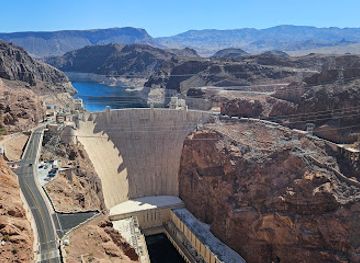
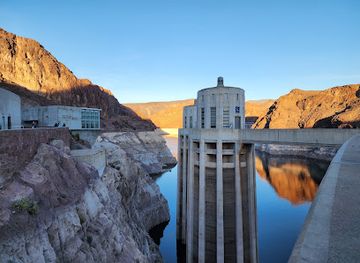
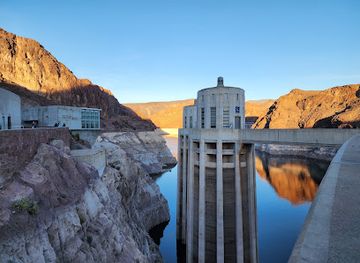
Hoover Dam rises from Black Canyon on the Colorado River, on the border between Nevada and Arizona, about 30 miles southeast of Las Vegas. Built during the Great Depression, the concrete arch-gravity dam transformed one of the American Southwest's most ambitious water and power projects into a working landmark. Its massive curved wall holds back Lake Mead, the reservoir created by the dam, while the surrounding desert cliffs reveal the scale and severity of the Mojave landscape.Read more about Hoover Dam
Black Canyon and Lake Mead
Gateway Communities and Visitor Experiences
When is the best time to visit Hoover Dam?
Best: April, October–November · 21–29°C| Month | High (°C) | Rainfall (mm) |
|---|---|---|
| January | 15 | 13 |
| February | 17 | 13 |
| March | 21 | 13 |
| April (best) | 25 | 8 |
| May | 32 | 5 |
| June | 37 | 2 |
| July | 41 | 12 |
| August | 40 | 12 |
| September | 36 | 8 |
| October (best) | 29 | 8 |
| November (best) | 21 | 8 |
| December | 15 | 13 |
Getting to and around Hoover Dam
How to get there
Transportation
Best attractions in Hoover Dam
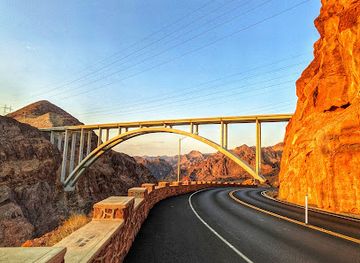
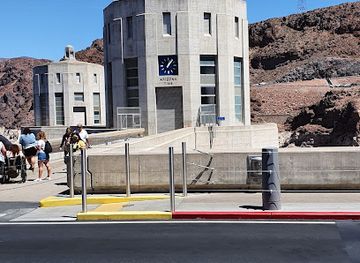
Hoover Dam itself is the central attraction, with the crest, visitor centre, exhibitions and power-facility experiences explaining how the dam was constructed and how it generates electricity. The Mike O'Callaghan–Pat Tillman Memorial Bridge, just downstream, offers elevated views over Black Canyon and the dam, with its own pedestrian walkway reached from the Nevada side. Lake Mead, formed by the dam and included within the surrounding Lake Mead National Recreation Area, provides a contrasting setting of broad water, desert mountains, coves and shoreline landscapes; boating, fishing and hiking opportunities depend on current conditions and regulations. Boulder City adds a human dimension through its planned-town history, local museums and historic streets. The Nevada and Arizona approaches also reveal changing perspectives on the Colorado River corridor, although some wider recreation-area sites lie beyond the immediate Hoover Dam visitor complex.
-
Museum
Hoover Dam Museum
Discover the Hoover Dam Museum in Boulder City, NV, where history and engineering converge to tell the story of an American icon.
Best landmarks in Hoover Dam
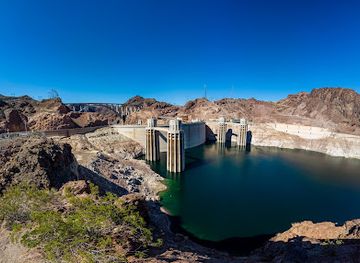
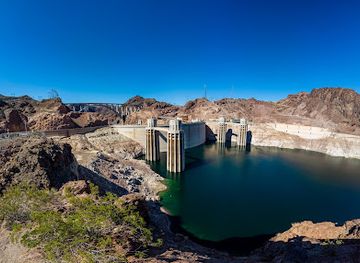
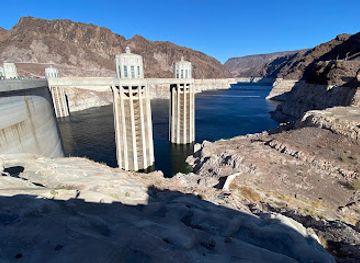
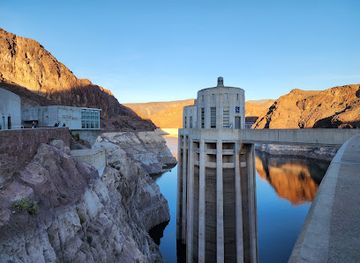
Hoover Dam is the defining landmark, its broad concrete arch-gravity structure spanning Black Canyon and holding back Lake Mead. The dam's Art Deco treatment, including monumental sculptures and geometric detailing, reflects the public architectural style of the 1930s, while the power plant and intake towers demonstrate that it remains functioning infrastructure. Downstream, the Mike O'Callaghan–Pat Tillman Memorial Bridge is a major modern landmark and one of the most prominent crossing structures in the region, carrying US 93 above the Colorado River canyon. Lake Mead is a landmark landscape as well as a reservoir, its waterline, exposed shorelines and desert basins revealing the changing relationship between engineered water storage and the Mojave environment. Boulder City's historic planned-town character provides an important human counterpart to the dam's industrial monumentality.
-
Visitor center
Hoover Dam Visitor Center
Explore the iconic Hoover Dam Visitor Center, an engineering marvel showcasing history, stunning views, and interactive exhibits.
-
Museum
Hoover Dam Museum
Explore the Hoover Dam Museum in Boulder City, Nevada - a tribute to engineering excellence and American history.
-
Sculpture
The Winged Figures of the Republic
Explore The Winged Figures of the Republic, a stunning sculpture celebrating American engineering, located at the majestic Hoover Dam in Nevada.
-
Convention center
Hoover Dam Spillway House
Visit the Hoover Dam Spillway House for an unforgettable journey through history and engineering marvels amidst stunning landscapes.
Explore Hoover Dam on the map
Plan your trip on one map. See where the top attractions, landmarks, restaurants and hotels are, and book hotels and experiences in a few clicks.
Best hotels in Hoover Dam
Best bars in Hoover Dam
Hoover Dam has no substantial nightlife of its own, and the visitor complex quietens after daytime sightseeing and scheduled experiences. The most authentic evening atmosphere nearby is found in Boulder City, where local restaurants, bars and traditional pub-style venues serve residents and visitors in a low-key setting rather than a late-night entertainment district. Las Vegas, outside the destination itself, provides the region's extensive choice of bars, clubs, shows and casino entertainment, while Henderson offers additional evening venues. Travellers staying near Lake Mead should expect darkness, distance and limited late services rather than a resort nightlife scene. Evening outings in the dam area are generally centred on dining, conversation and desert views, with venue availability and operating times varying by season and business.
-
Cafe
Hoover Dam Cafe
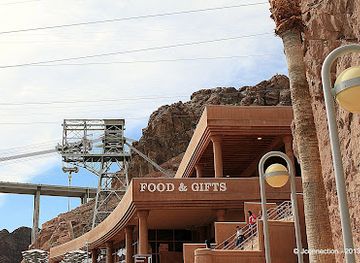
Experience delicious meals and breathtaking views at Hoover Dam Cafe, the perfect stop for tourists exploring the iconic Hoover Dam.
-
Convention center
Hoover Dam Spillway House
Discover the Hoover Dam Spillway House, an engineering marvel offering breathtaking views and insights into water management near Boulder City, Nevada.
-
Historical landmark
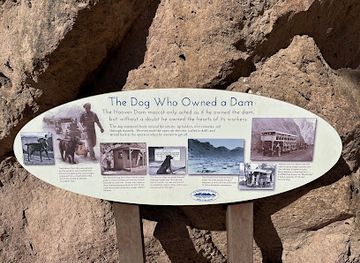
The Dog Who Owned a Dam
Discover the touching story of loyalty at The Dog Who Owned a Dam, a unique historical landmark near Hoover Dam that celebrates the bond between dogs and humans.
Best shops in Hoover Dam
Shopping at Hoover Dam is concentrated in visitor-oriented gift shops associated with the dam experience, where souvenirs, books and educational items reflect the structure's engineering history and the surrounding desert landscape. The main nearby retail choice is Boulder City, whose independent shops and galleries offer local art, craft items, books, antiques and practical goods alongside food stores and everyday services. Las Vegas and Henderson provide a far larger commercial selection, but they are outside the immediate Hoover Dam setting. Visitors exploring Lake Mead should not expect regular retail facilities in remote recreation areas, so water, snacks, fuel and outdoor essentials are best obtained in established towns before departure. Products connected with Nevada, the Southwest and the dam's construction history are generally more meaningful purchases than generic resort merchandise.
-
Visitor center
Hoover Dam Visitor Center
Explore the Hoover Dam Visitor Center, an engineering marvel offering educational exhibits and stunning views of the Colorado River and Lake Mead.
-
Museum
Hoover Dam Museum
Discover the Hoover Dam Museum, a remarkable journey into the history and engineering behind one of America's great landmarks.
-
Convention center
Hoover Dam Spillway House
Explore the Hoover Dam Spillway House, a remarkable feat of engineering, offering breathtaking views and rich history in Boulder City, Nevada.
Get your free copy of our complete guide to Hoover Dam, delivered straight to you.
Everything on this page, from attractions and restaurants to essentials and local phrases, in one PDF you can read offline, print or share.
Already have an account? Sign in
Your Hoover Dam guide is ready.
We'll send it to · Not you? Sign out

Getting your guide ready…
We are putting together a fresh copy of the Hoover Dam guide. This can take up to a minute.
This can take a few moments. If your browser asks, choose Allow so the download can start. You'll find the guide in your Downloads folder.
Nothing happened? Download it again
Sorry, the guide is taking longer than usual. Please try again in a minute, or get it by email instead.
Hoover Dam essentials
Currency and Payment
Safety
Emergency Situations
Do's and Don'ts
Local Tips
From Eve
Local phrases worth knowing
You don't need to get them perfect. A few words go a long way, and locals appreciate the effort.
Basics
| English | Local | Say it |
|---|---|---|
| Hello | Howdy | [haw-dee] |
| Goodbye | See ya later | [see ya lay-ter] |
| Yes | Yep | [yep] |
| No | Nope | [nope] |
| Please/You're welcome | Please/No problem | [pleez/no prob-lem] |
| Thank you | Thanks | [thanks] |
| Excuse me/Sorry | Pardon me/My bad | [par-dun me/my bad] |
| How are you? | Howdy | [haw-dee] |
| Fine. And you? | Just peachy. You? | [just peachy. yoo?] |
| Do you speak English? | Ya speak English? | [ya speak ing-glish?] |
| I don't understand | Don't git it | [dunt git it] |
Eating & Drinking
| English | Local | Say it |
|---|---|---|
| I'd like to see the menu, please | Show me what ya got | [show me what ya got] |
| I don't eat meat | I'm a veggie | [I'm a ve-jee] |
| Cheers! | Bottoms up! | [bot-ums up!] |
| I would like to pay, please | Check, please | [check, please] |
Emergencies
| English | Local | Say it |
|---|---|---|
| Help! | I need a hand! | [I need a hand!] |
| Go away! | Git outta here! | [git out-ta here!] |
| Call the Police! | Get the law! | [get the law!] |
| Call a doctor! | Doctor, please! | [doc-tor, please!] |
| I'm lost | I'm turned around | [I'm turned around] |
| I'm ill | I ain't feelin' right | [I ain't feelin' right] |
Shopping
| English | Local | Say it |
|---|---|---|
| I'd like to buy... | I'm lookin' to purchase... | [I'm lookin' to pur-chase...] |
| I'm just looking | Just browsing | [just brows-ing] |
| How much is it? | What's the damage? | [wuts the dam-age?] |
| That's too expensive | That's steep | [that's steep] |
| Can you lower the price? | Can ya do me a deal? | [can ya do me a deal?] |
Time & Numbers
| English | Local | Say it |
|---|---|---|
| What time is it? | What's the clock say? | [wuts the clock say?] |
| It's one o'clock | It's one | [It's one] |
| Half past (10) | Half past ten | [Half past ten] |
| Morning | Mornin' | [Mornin'] |
| Afternoon | Afternoon | [Afternoon] |
| Evening | Evenin' | [Evenin'] |
| Yesterday | Yest'day | [Yest'day] |
| Today | Today | [Today] |
| Tomorrow | Tomorrah | [Tomorrah] |
| 1 | One | [One] |
| 2 | Two | [Two] |
| 3 | Three | [Three] |
| 4 | Four | [Four] |
| 5 | Five | [Five] |
| 6 | Six | [Six] |
| 7 | Seven | [Seven] |
| 8 | Eight | [Eight] |
| 9 | Nine | [Nine] |
| 10 | Ten | [Ten] |
Transport & Directions
| English | Local | Say it |
|---|---|---|
| Where's a/the...? | Where's the...? | [Where's the...?] |
| What's the address? | Where's it located? | [Where's it located?] |
| Can you show me (on the map)? | Can you point it out? | [Can you point it out?] |
| When's the next (bus)? | When's the next (bus)? | [When's the next (bus)?] |
| A ticket (to ....) | A ticket to ... | [A ticket to ...] |
History of Hoover Dam
The Colorado River and Black Canyon
Long before the dam was built, the Colorado River cut through the volcanic and sedimentary landscapes of Black Canyon. The river's highly variable flow, periodic floods and valuable water supply shaped the history of the lower Colorado Basin. By the early twentieth century, growing settlements and agriculture in the Southwest had intensified demands for flood control, dependable water storage and hydroelectric power. The canyon's steep walls eventually made it a practical location for a large dam, although the project required extensive surveys, political negotiation and engineering preparation across a remote desert region.
Planning the Boulder Canyon Project
The dam emerged from federal plans developed during the 1920s to regulate the Colorado River and distribute its water among several western states. Congress authorised the Boulder Canyon Project in 1928, and the Bureau of Reclamation oversaw a scheme that combined the dam, power station, water-storage reservoir and associated infrastructure. The project was named Boulder Canyon during its planning stages, even though the final dam was constructed in Black Canyon. Its approval reflected intense regional competition over the river and the expanding ambitions of the American West.
Construction During the Depression
Construction began in 1931 under the direction of Six Companies, a consortium of contractors working for the federal government. Thousands of workers excavated tunnels, diverted the river and poured enormous quantities of concrete in difficult heat, dust and isolation. Boulder City was established as a planned settlement to house the workforce and regulate life around the project. The dam's construction became a major employment undertaking during the Great Depression, but it also involved severe working conditions and loss of life. The structure was dedicated in 1935, ahead of its original completion schedule.
Power, Water and a New Reservoir
Hoover Dam began generating electricity in the mid-1930s, and its power station supplied developing communities and industries across the Southwest. Lake Mead filled behind the completed dam, creating a vast reservoir that became central to the region's water system and later to recreation. The project helped control floods and deliver regulated water to farms and cities, while also altering the river's natural flow, sediment movement and downstream environment. Its benefits therefore came with lasting ecological and political consequences that remain part of debate over Colorado River management.
A National Engineering Landmark
The dam soon became both working infrastructure and a symbol of federal engineering during the New Deal era. Its Art Deco details, including sculptural and decorative work by designer Gordon B. Kaufmann and sculptor Oskar J. W. Hansen, gave the utilitarian project a distinctive public face. The name Hoover Dam, contested for a period because of political disagreements, became firmly established after the Second World War. Today the dam remains an operating hydropower facility and a major visitor attraction, while changing reservoir levels and prolonged drought have sharpened attention on the future of the Colorado River.
Hoover Dam in Photos
Browse through our photo collection highlighting the charm and character of the destination.
Neighbouring destination travel guides
The closest destinations to Hoover Dam, if you have time for more than one.
-

-
-

-

-


Swipe for more destinations
Explore more
Explore more of Clark County
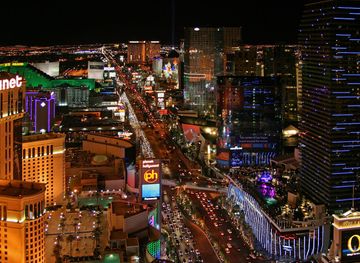
Explore Clark County, Nevada for Las Vegas entertainment, desert parks, Hoover Dam, Lake Mead, mountain scenery and distinctive Southwestern history.
Explore Clark County
Explore more of Nevada
Discover Nevada: From the bright lights of Las Vegas to the tranquil beauty of Lake Tahoe, Nevada offers a unique blend of excitement and natural wonder.
Explore Nevada