

Free Los Alamos Travel Guide & Mobile App
Plan your Los Alamos trip with Evendo. Get free guides to top attractions, restaurants, hotels, and bars. Web access or download the mobile app.


Los Alamos, New Mexico, combines Manhattan Project history, high-desert landscapes, Pueblo heritage and outdoor adventures near Bandelier and Valles Caldera.
A Plateau Shaped by Science
Los Alamos occupies a forested plateau in northern New Mexico, where ponderosa pine, deep volcanic canyons and high-desert light frame a town known throughout the world for its scientific history. The community developed around the wartime laboratory created for the Manhattan Project, and the work carried out here transformed global history. Today, that legacy remains visible in museums, historic buildings and the continuing presence of Los Alamos National Laboratory, while the surrounding landscape offers a very different story of geology, ecology and ancient settlement.Read more about Los Alamos
Heritage and Living Landscapes
Outdoor New Mexico
When is the best time to visit Los Alamos?
Best: May–June, September · 23–29°C| Month | High (°C) | Rainfall (mm) |
|---|---|---|
| January | 6 | 25 |
| February | 9 | 25 |
| March | 12 | 31 |
| April | 17 | 31 |
| May (best) | 23 | 36 |
| June (best) | 29 | 36 |
| July | 31 | 41 |
| August | 29 | 46 |
| September (best) | 25 | 41 |
| October | 18 | 31 |
| November | 11 | 25 |
| December | 7 | 25 |
Getting to and around Los Alamos
How to get there
Transportation
Best attractions in Los Alamos
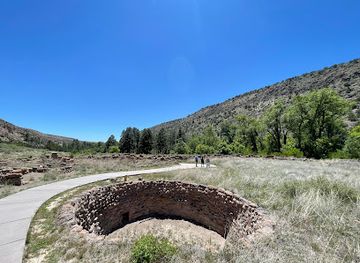
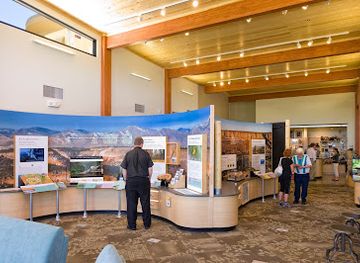
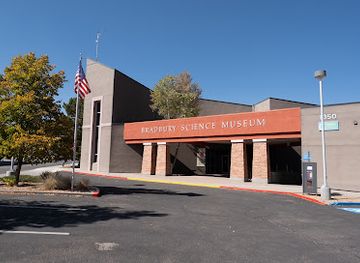
The Bradbury Science Museum provides the clearest introduction to Los Alamos, using artefacts, exhibits and explanations of scientific research to place the Manhattan Project in context. Nearby Fuller Lodge and the Los Alamos Historic District reveal the town’s earlier ranch-school and wartime architecture, while Ashley Pond offers a quieter centre for walking. Bandelier National Monument, south of town, extends sightseeing into a landscape of volcanic cliffs, Ancestral Pueblo dwellings, petroglyphs and forested canyon trails; its Tsankawi unit presents a more exposed mesa setting with ladders and narrow paths. For a different perspective, Valles Caldera National Preserve protects a vast volcanic basin surrounded by the Jemez Mountains, with opportunities for wildlife viewing, hiking and seasonal snow activities. Local trails around Los Alamos add accessible views across the plateau and canyons, although altitude, weather and changing access conditions should shape every outing.
-
National forest
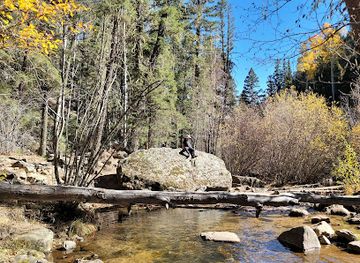
Santa Fe National Forest
Discover the breathtaking landscapes and rich biodiversity of Santa Fe National Forest, a true natural gem in New Mexico.
22 min drive · 7.2 km from city centre
-
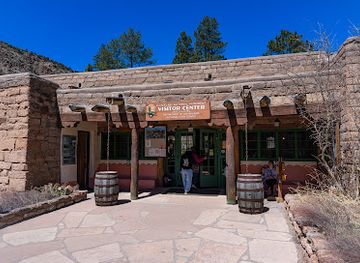
Visitor center
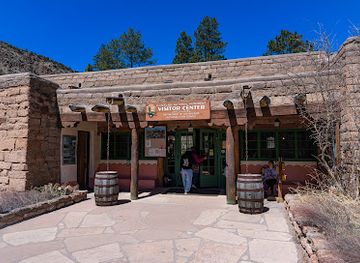
Bandelier National Monument Visitor Center
Discover the ancient Pueblo heritage and stunning landscapes at the Bandelier National Monument Visitor Center, a must-visit for every traveler.
32 min drive · 12 km from city centre
-
Tourist attraction
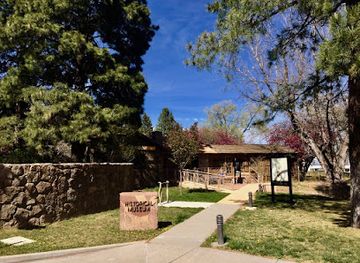
Los Alamos History Museum
Uncover the unique history of Los Alamos at the Los Alamos History Museum, where the past meets the present in a captivating narrative.
4 min walk · 0.3 km from city centre
-
Tourist attraction
Los Alamos History Museum
Discover the intriguing history of Los Alamos, from the Manhattan Project to local culture at the Los Alamos History Museum.
4 min walk · 0.3 km from city centre

Best landmarks in Los Alamos
Fuller Lodge is Los Alamos’s most recognisable historic building, dating from the ranch-school period and later serving as a social and administrative centre for the wartime community. Nearby structures in the Los Alamos Historic District preserve the modest scale and practical architecture of the former school and Manhattan Project settlement. The Bradbury Science Museum is a contemporary civic landmark whose exhibitions interpret the laboratory’s scientific work and historical consequences. Ashley Pond, named for ranch-school founder Ashley Pond, anchors the central area as a public landscape rather than a monumental structure. Beyond town, the archaeological rooms and cliff-side dwellings of Bandelier National Monument express the much older human history of the plateau, while Tsankawi’s mesa paths and volcanic-tuff caves provide another important cultural landscape. Together these places connect Los Alamos’s scientific identity with its ranch-school origins, Pueblo heritage and distinctive geology.
-
National forest
Santa Fe National Forest
Explore the vast wilderness of Santa Fe National Forest, where stunning landscapes and outdoor adventures await in the heart of New Mexico.
22 min drive · 7.2 km from city centre
-
National reserve
Bandelier National Monument
Explore Bandelier National Monument: A Journey Through Ancient Cultures and Breathtaking Natural Landscapes in New Mexico.
31 min drive · 11 km from city centre
-
Visitor center
Bandelier National Monument Visitor Center
Explore ancient Puebloan history and breathtaking landscapes at Bandelier National Monument Visitor Center, your gateway to New Mexico's natural wonders.
32 min drive · 12 km from city centre
-
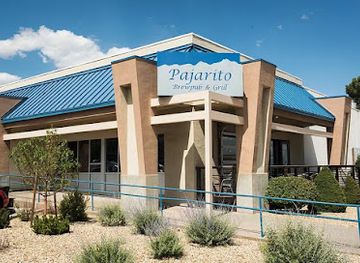
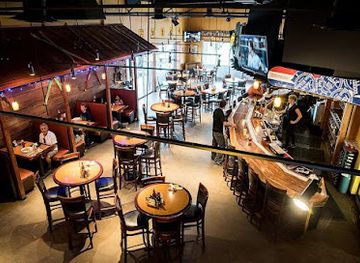
Pub
Pajarito Brewpub and Grill
Discover the flavors of Los Alamos at Pajarito Brewpub and Grill, where craft beers meet delicious pub fare in a welcoming atmosphere.
11 min walk · 0.9 km from city centre
Explore Los Alamos on the map
Plan your Los Alamos trip on one map. See where the top attractions, landmarks, restaurants, bars and hotels are, find what's near where you're staying, and book hotels and experiences in a few clicks.
Best hotels in Los Alamos
Best restaurants in Los Alamos
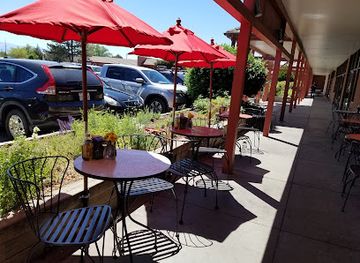
Los Alamos’s dining scene reflects northern New Mexico’s blend of Pueblo, Hispano and wider American influences. Visitors will encounter New Mexican red and green chile, often served with enchiladas, burritos, eggs or carne adovada, alongside blue-corn preparations, sopaipillas and locally familiar beans and rice. Casual cafés, family restaurants, bakeries and takeaway counters serve the town’s working community, while international cuisines and contemporary American dishes reflect the laboratory’s global workforce. Española and Santa Fe broaden the choice considerably for travellers making regional excursions, with Santa Fe particularly noted for its long-established restaurant culture and traditional New Mexican cooking. Local farmers’ markets and seasonal community events may offer produce, baked goods and prepared food, but their timing varies. Because the town is small and evening options can be limited, dining plans should take account of distance, weather and operating schedules without assuming large-city restaurant availability.
-
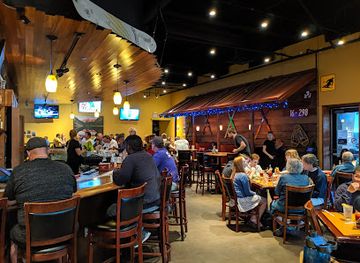
Pub
Pajarito Brewpub and Grill
Discover local craft beer and delicious cuisine at Pajarito Brewpub and Grill in Los Alamos – where flavor meets community spirit.
11 min walk · 0.9 km from city centre
-
Cafe
Pig and Fig Cafe
Experience delightful flavors at Pig and Fig Cafe in White Rock—where every meal feels like home.
30 min drive · 10 km from city centre
-
Bistro
Blue Window Bistro
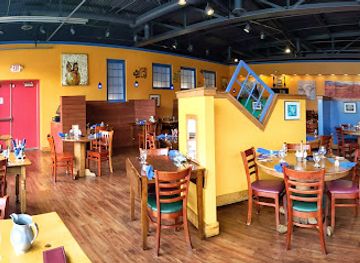
Experience authentic New Mexican flavors at Blue Window Bistro in Los Alamos - where every dish tells a story.
3 min walk · 0.2 km from city centre
-
Mexican
El Rigobertos Taco Shop
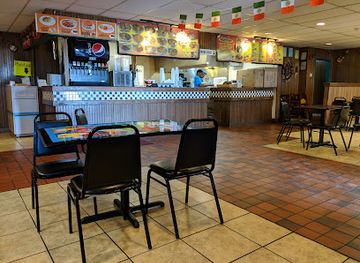
Experience the vibrant flavors of Mexico at El Rigobertos Taco Shop – your go-to spot for authentic tacos and breakfast delights in Los Alamos.
6 min walk · 0.4 km from city centre
Best bars in Los Alamos
Los Alamos has a restrained evening scene rather than a major club district. After the museums and trails close, visitors generally find relaxed bars, brewery-style gatherings, cafés and restaurant lounges serving a local community of scientists, families and students. Social life often centres on community events, live music and seasonal programmes rather than late-night dancing, while nearby Santa Fe offers a broader choice of cocktail bars, music venues, theatres and evening cultural performances. The town’s high-desert setting also makes sunset walks, stargazing and quiet evenings significant parts of its after-dark character, provided visitors remain in safe, permitted areas. Alcohol service follows New Mexico law, and remote roads, winter conditions and limited late transport make arranging a sober driver particularly important. Venues and entertainment schedules can be seasonal or changeable, so current local information is more reliable than assuming a permanent nightlife circuit.
-
Pub
Pajarito Brewpub and Grill
Discover the unique flavors of New Mexico at Pajarito Brewpub and Grill, where craft beer meets local cuisine in a lively atmosphere.
11 min walk · 0.9 km from city centre
-
Bistro
Blue Window Bistro
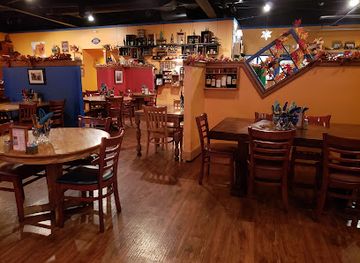
Experience the vibrant flavors of New Mexico at Blue Window Bistro, a charming bistro offering fresh, locally sourced dishes in Los Alamos.
3 min walk · 0.2 km from city centre
-
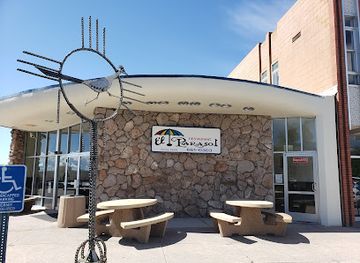
Restaurant
El Parasol
Experience the vibrant flavors of Mexico at El Parasol, a must-visit restaurant in Los Alamos offering authentic dishes and a welcoming atmosphere.
2 min walk · 0.2 km from city centre
-
Mediterranean
Pyramid cafe
Discover the vibrant tastes of the Mediterranean at Pyramid Cafe in Los Alamos, where every meal is a delightful culinary journey.
6 min walk · 0.5 km from city centre


Best nightclubs in Los Alamos
Los Alamos has a restrained evening scene rather than a major club district. After the museums and trails close, visitors generally find relaxed bars, brewery-style gatherings, cafés and restaurant lounges serving a local community of scientists, families and students. Social life often centres on community events, live music and seasonal programmes rather than late-night dancing, while nearby Santa Fe offers a broader choice of cocktail bars, music venues, theatres and evening cultural performances. The town’s high-desert setting also makes sunset walks, stargazing and quiet evenings significant parts of its after-dark character, provided visitors remain in safe, permitted areas. Alcohol service follows New Mexico law, and remote roads, winter conditions and limited late transport make arranging a sober driver particularly important. Venues and entertainment schedules can be seasonal or changeable, so current local information is more reliable than assuming a permanent nightlife circuit.
-
Pub
Pajarito Brewpub and Grill
Experience the best of local brews and delightful cuisine at Pajarito Brewpub and Grill in Los Alamos, NM.
11 min walk · 0.9 km from city centre
-
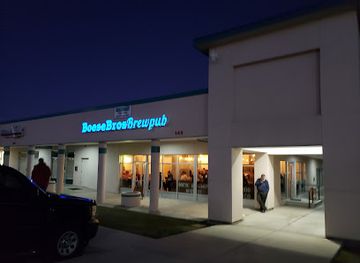
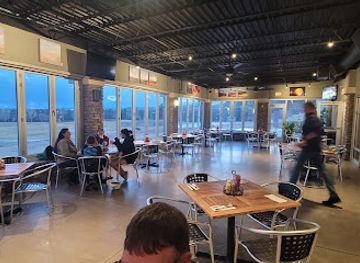
Brewpub
Boese Bros Brewpub - Los Alamos
Explore the vibrant craft beer scene at Boese Bros Brewpub in Los Alamos, offering delicious brews and hearty dishes in a welcoming setting.
5 min walk · 0.4 km from city centre
-
American
Cottonwood on the Greens
Discover the flavors of America amidst stunning views at Cottonwood on the Greens, the perfect dining spot in Los Alamos.
7 min drive · 2.3 km from city centre
-
Movie theater
Reel Deal Theater
Enjoy a unique movie experience at Reel Deal Theater in Los Alamos, NM, showcasing diverse films in a cozy atmosphere.
4 min walk · 0.3 km from city centre

Best shops in Los Alamos
Shopping in Los Alamos is concentrated around Central Avenue and the town’s small commercial areas, where practical stores, independent businesses, cafés, galleries and services reflect the needs of a permanent community rather than a resort market. The Bradbury Science Museum is an important place for science-related books, educational material and locally relevant souvenirs, while independent retailers may carry outdoor equipment, regional gifts and New Mexico-themed goods. Farmers’ markets and community events can provide seasonal produce, baked goods and handmade items when operating. For Native American jewellery, pottery, textiles and other art, visitors should buy directly from reputable artists, galleries or authorised sellers and ask about provenance; nearby pueblos have distinct traditions and access rules. Santa Fe offers a far larger and more specialised range of galleries, crafts and design shops, making it a separate regional shopping destination rather than part of Los Alamos’s compact retail centre.
-
Grocery store
Smith's Marketplace
Experience the best of local shopping at Smith's Marketplace, a grocery store in Los Alamos offering fresh produce, local delicacies, and more.
11 min walk · 0.9 km from city centre
-
Gift shop
Los Alamos Nature Center, operated by PEEC
Discover the wonders of nature and science at Los Alamos Nature Center, a family-friendly destination in New Mexico's stunning landscapes.
8 min walk · 0.6 km from city centre
-
Museum
Bradbury Science Museum
Explore the Bradbury Science Museum in Los Alamos, NM - a gateway to scientific discovery and historical insight in an interactive setting.
5 min walk · 0.4 km from city centre
-
Pet store
Pet Pangaea LLC
Discover Pet Pangaea LLC in Los Alamos, NM, your go-to pet store for high-quality supplies and a community of passionate pet lovers.
4 min walk · 0.3 km from city centre


Get your free copy of our complete guide to Los Alamos, delivered straight to you.
Everything on this page, from attractions and restaurants to essentials and local phrases, in one PDF you can read offline, print or share.
Already have an account? Sign in
Your Los Alamos guide is ready.
We'll send it to · Not you? Sign out

Getting your guide ready…
We are putting together a fresh copy of the Los Alamos guide. This can take up to a minute.
This can take a few moments. If your browser asks, choose Allow so the download can start. You'll find the guide in your Downloads folder.
Nothing happened? Download it again
Sorry, the guide is taking longer than usual. Please try again in a minute, or get it by email instead.
Los Alamos essentials
Currency and Payment
Safety
Emergency Situations
Do's and Don'ts
Local Tips
From Eve
Local phrases worth knowing
You don't need to get them perfect. A few words go a long way, and locals appreciate the effort.
Basics
| English | Local | Say it |
|---|---|---|
| Hello | Hola | [oh-lah] |
| Goodbye | Adiós | [ah-dee-ohs] |
| Yes | Sí | [see] |
| No | No | [noh] |
| Please/You're welcome | Por favor/De nada | [pohr fah-vohr/deh nah-dah] |
| Thank you | Gracias | [grah-see-ahs] |
| Excuse me/Sorry | Perdón/Lo siento | [pehr-dohn/loh see-ehn-toh] |
| How are you? | ¿Cómo estás? | [koh-moh ehs-tahs] |
| Fine. And you? | Bien. ¿Y tú? | [bee-ehn. ee too] |
| Do you speak English? | ¿Hablas inglés? | [ah-blahs een-glays] |
| I don't understand | No entiendo | [noh ehn-tee-ehn-doh] |
Eating & Drinking
| English | Local | Say it |
|---|---|---|
| I'd like to see the menu, please | Me gustaría ver el menú, por favor | [meh goos-tah-ree-ah behr ehl meh-noo, pohr fah-vohr] |
| I don't eat meat | No como carne | [noh koh-moh kahr-neh] |
| Cheers! | ¡Salud! | [sah-lood] |
| I would like to pay, please | Me gustaría pagar, por favor | [meh goos-tah-ree-ah pah-gahr, pohr fah-vohr] |
Emergencies
| English | Local | Say it |
|---|---|---|
| Help! | ¡Ayuda! | [ah-yoo-dah] |
| Go away! | ¡Vete! | [veh-teh] |
| Call the Police! | ¡Llama a la policía! | [yah-mah ah lah poh-lee-see-ah] |
| Call a doctor! | ¡Llama a un doctor! | [yah-mah ah oon dohk-tohr] |
| I'm lost | Estoy perdido | [ehs-toy pehr-dee-doh] |
| I'm ill | Estoy enfermo | [ehs-toy ehn-fehr-moh] |
Shopping
| English | Local | Say it |
|---|---|---|
| I'd like to buy... | Me gustaría comprar... | [meh goos-tah-ree-ah kohm-prahr] |
| I'm just looking | Sólo estoy mirando | [soh-loh ehs-toy mee-rahn-doh] |
| How much is it? | ¿Cuánto cuesta? | [kwan-toh kwehs-tah] |
| That's too expensive | Eso es muy caro | [eh-soh ehs moo-ee kah-roh] |
| Can you lower the price? | ¿Puedes bajar el precio? | [pweh-dehs bah-hahr ehl pree-see-oh] |
Time & Numbers
| English | Local | Say it |
|---|---|---|
| What time is it? | ¿Qué hora es? | [keh oh-rah ehs] |
| It's one o'clock | Es la una | [ehs lah oo-nah] |
| Half past (10) | Media hora (10) | [meh-dee-ah oh-rah (dies)] |
| Morning | Mañana | [mah-nyah-nah] |
| Afternoon | Tarde | [tahr-deh] |
| Evening | Noche | [noh-cheh] |
| Yesterday | Ayer | [ah-yehr] |
| Today | Hoy | [oy] |
| Tomorrow | Mañana | [mah-nyah-nah] |
| 1 | Uno | [oo-noh] |
| 2 | Dos | [dohs] |
| 3 | Tres | [trehs] |
| 4 | Cuatro | [kwah-troh] |
| 5 | Cinco | [seen-koh] |
| 6 | Seis | [says] |
| 7 | Siete | [syeh-teh] |
| 8 | Ocho | [oh-choh] |
| 9 | Nueve | [nweh-veh] |
| 10 | Diez | [dyehs] |
Transport & Directions
| English | Local | Say it |
|---|---|---|
| Where's a/the...? | ¿Dónde está...? | [dohn-deh ehs-tah] |
| What's the address? | ¿Cuál es la dirección? | [kwal ehs lah dee-rehk-syohn] |
| Can you show me (on the map)? | ¿Puedes mostrarme (en el mapa)? | [pweh-dehs mohs-trahr-meh (ehn ehl mah-pah)] |
| When's the next (bus)? | ¿Cuándo es el próximo (autobús)? | [kwan-doh ehs ehl proh-ksee-moh (ow-toh-boos)] |
| A ticket (to ....) | Un boleto (a ...) | [oon boh-leh-toh (ah)] |
History of Los Alamos
Ancestral Pueblo Landscapes
Long before the modern town existed, the mesas and canyons around Los Alamos were inhabited and used by Ancestral Pueblo communities. Sites now protected at Bandelier National Monument and Tsankawi include stone structures, cavates carved into volcanic tuff, agricultural spaces and rock imagery. These remains belong to a wider cultural landscape connected with Pueblo communities of the Rio Grande region. Later Pueblo migrations and changing settlement patterns shaped the living communities that remain near Los Alamos, including San Ildefonso Pueblo and Santa Clara Pueblo. The archaeological record provides the deepest historical context for the plateau, although it does not represent a vanished culture: Pueblo peoples continue to maintain languages, traditions, artistic practices and community identities in northern New Mexico.
The Los Alamos Ranch School
The modern town’s immediate predecessor was the Los Alamos Ranch School, founded in 1917 by Ashley Pond as a private school for boys. Its buildings, including Fuller Lodge and several surviving residences, introduced an educational campus to the remote plateau and established much of the built setting later adapted for wartime research. The school closed in 1943 after the United States government acquired the property for military purposes. Although the institution was short-lived, its architecture and grounds became part of the physical framework of the secret laboratory town. Fuller Lodge, constructed by the school and later used by the Manhattan Project community, remains one of the clearest links between pre-war Los Alamos and the settlement that followed.
The Manhattan Project
In 1942, the United States Army selected Los Alamos as the site for a secret weapons laboratory within the Manhattan Project. J. Robert Oppenheimer directed the scientific work, bringing physicists, chemists, engineers and technicians to a guarded community on the plateau. Research and design culminated in the first controlled nuclear test, Trinity, on 16 July 1945 at the remote Alamogordo Bombing and Gunnery Range in southern New Mexico. The atomic bombings of Hiroshima and Nagasaki followed in August 1945, bringing the project’s consequences into world history. Wartime Los Alamos was closed to ordinary public access, and its rapid construction transformed a former school campus and rural landscape into an internationally significant scientific site.
From Secret Site to Research Town
After the Second World War, Los Alamos moved from a temporary military project towards a permanent centre of scientific research. The laboratory continued under civilian arrangements from 1947, becoming associated with the University of California and later with the United States Department of Energy. The surrounding community gradually developed civic institutions, schools, businesses and public services, while the laboratory remained central to employment and local identity. Los Alamos County was created in 1949, formalising local administration after the wartime period. The shift from secrecy to a more open community did not erase the security culture associated with national research, but it allowed historic buildings, museums and public spaces to interpret the town’s complicated origins.
A Modern Scientific Community
In the later twentieth century and into the present, Los Alamos expanded its scientific role beyond weapons research into areas including nuclear science, national security, computing, materials research and earth and environmental studies. Los Alamos National Laboratory remains a major federal research institution, while the town has developed a parallel identity as a mountain community with access to hiking, skiing and protected landscapes. Public interpretation at the Bradbury Science Museum places the Manhattan Project within a broader history of science and its consequences. The result is a place where working research facilities, preserved wartime buildings, Pueblo cultural landscapes and outdoor recreation coexist, though not always without the tensions created by security, development and environmental stewardship.
Los Alamos in Photos
Browse through our photo collection highlighting the charm and character of the destination.
Cities near Los Alamos
The closest cities to Los Alamos, if you have time for more than one stop.
-

-

-

-

-


Swipe for more cities
Explore more

Explore more of New Mexico
Discover the enchanting blend of rich history, diverse cultures, and stunning landscapes in New Mexico, the Land of Enchantment, where adventure and relaxation await.
Explore New Mexico