

Free Taos Travel Guide & Mobile App
Plan your Taos trip with Evendo. Get free guides to top attractions, restaurants, hotels, and bars. Web access or download the mobile app.


Taos, New Mexico, blends Pueblo heritage, adobe architecture, desert landscapes, art galleries and mountain adventures in northern New Mexico.
High-Desert Setting
Taos lies in northern New Mexico, where the sagebrush plains of the Rio Grande valley rise towards the Sangre de Cristo Mountains. The town's altitude, dry air and intense sunlight give the landscape a distinctive clarity, while the surrounding mesas, canyons and mountain forests provide a dramatic setting for exploration. Taos is compact enough to experience on foot in parts, yet its identity is spread across several distinct areas: the historic plaza, the galleries and shops of the downtown streets, the artists' community of Taos Canyon and the rural landscape leading towards Taos Ski Valley.Read more about Taos
Pueblo and Spanish Legacies
Art, Architecture and Open Country
When is the best time to visit Taos?
Best: June, August–September · 23–27°C| Month | High (°C) | Rainfall (mm) |
|---|---|---|
| January | 4 | 15 |
| February | 7 | 17 |
| March | 11 | 18 |
| April | 16 | 20 |
| May | 21 | 24 |
| June (best) | 25 | 27 |
| July | 27 | 38 |
| August (best) | 27 | 36 |
| September (best) | 23 | 27 |
| October | 17 | 18 |
| November | 9 | 15 |
| December | 4 | 14 |
Getting to and around Taos
How to get there
Transportation
Best attractions in Taos
Taos's principal attractions reveal the meeting of Pueblo heritage, Spanish colonial architecture, American art and high-desert scenery. Taos Pueblo, north of the town, is a living sovereign community whose historic adobe dwellings and religious traditions require respectful, rule-led visits. In the centre, Taos Plaza and the surrounding streets lead to galleries, independent shops and museums, including the Harwood Museum of Art and the Taos Art Museum at Fechin House. The Millicent Rogers Museum presents Indigenous, Hispanic and Anglo artistic traditions from the region. South of town, San Francisco de Asís Church at Ranchos de Taos is one of northern New Mexico's most recognisable adobe buildings, while the Rio Grande Gorge Bridge provides expansive views over the volcanic gorge. Outdoor visitors can follow trails, scenic drives and river-based activities around the gorge, with conditions varying sharply by season and elevation.
-
Business center
Taos Plaza
Experience the vibrant culture and history of Taos at Taos Plaza, where art, shopping, and beautiful landscapes come together.
19 min walk · 1.5 km from city centre
-
Tourist attraction
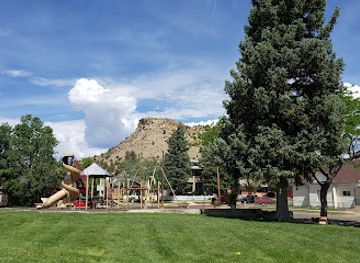
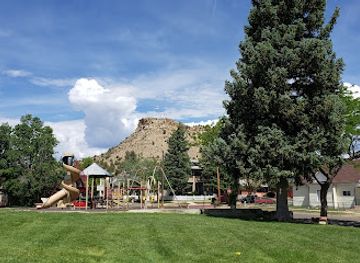
Kit Carson Park
Explore the natural beauty and rich history of Kit Carson Park in Taos, New Mexico, a serene escape for every traveler.
5 min drive · 1.7 km from city centre
-
Tourist attraction
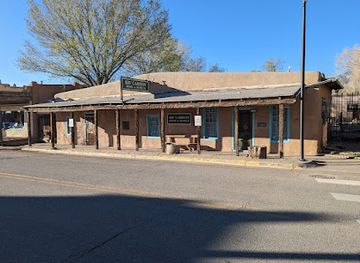
Kit Carson Home & Museum
Discover the legacy of Kit Carson at his historic home and museum in Taos, New Mexico, where adventure and history intertwine in a captivating experience.
19 min walk · 1.5 km from city centre
-
Tourist attraction
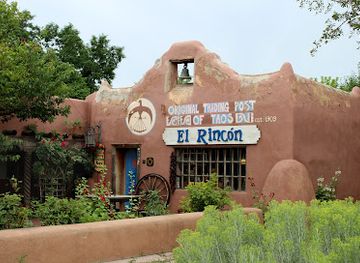
Downtown Taos Historic District
Explore the historic charm and artistic spirit of Downtown Taos Historic District, a vibrant hub in New Mexico brimming with local culture and unique shops.
18 min walk · 1.4 km from city centre

Best landmarks in Taos
Taos's most significant landmarks express the region's layered Indigenous, Hispanic and artistic history. Taos Pueblo, north of the town, is an inhabited Pueblo community whose multi-storey adobe structures and ceremonial landscape have exceptional cultural significance; it is also recognised by UNESCO, although visitor access is governed by the community. San Francisco de Asís Church at Ranchos de Taos, built in the late eighteenth century, is a celebrated example of northern New Mexico's adobe mission architecture and remains an active place of worship. In town, Taos Plaza anchors the historic centre, while the Harwood Museum of Art and Fechin House preserve the town's modern artistic legacy in distinctive historic settings. The Rio Grande Gorge Bridge, west of Taos, represents the area's later infrastructure and provides a powerful architectural line across the high-desert landscape.
-
Business center
Taos Plaza
Experience the vibrant culture and artistic spirit of Taos at Taos Plaza, your gateway to New Mexico's rich history and unique local treasures.
19 min walk · 1.5 km from city centre
-
 Hotel
HotelEl Monte Sagrado
Experience the perfect blend of luxury and nature at El Monte Sagrado, a serene hotel offering stunning landscapes and rich cultural experiences in Taos, NM.
15 min walk · 1.2 km from city centre
-
Hotel
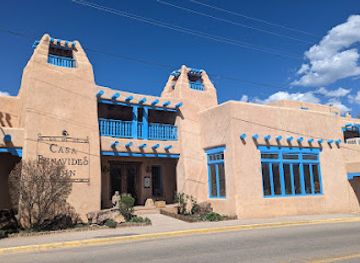
The Historic Taos Inn
Experience the rich history and vibrant culture of Taos, New Mexico at The Historic Taos Inn, your perfect retreat in the heart of the Southwest.
5 min drive · 1.6 km from city centre
-
Park
Kit Carson Park
Discover the tranquility and history of Kit Carson Park in Taos, NM – a perfect destination for nature lovers and history enthusiasts alike.
5 min drive · 1.7 km from city centre
Explore Taos on the map
Plan your Taos trip on one map. See where the top attractions, landmarks, restaurants, bars and hotels are, find what's near where you're staying, and book hotels and experiences in a few clicks.
Best hotels in Taos
Best restaurants in Taos
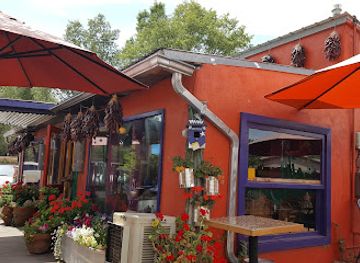
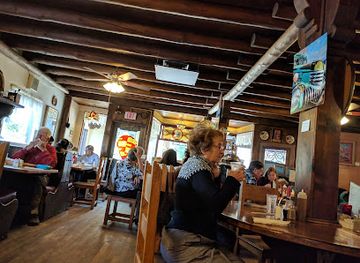
Taos dining is shaped by New Mexican cooking, whose defining ingredients include red and green chile, blue corn, beans, squash and locally influenced forms of stewed and roasted meat. Enchiladas, tamales, posole and chile-based sauces appear alongside breakfast plates and other regional staples, while biscochitos provide a traditional anise-scented sweet associated with New Mexico. Restaurants around the plaza and central Taos range from long-established New Mexican kitchens to cafés, bakeries and internationally influenced small businesses. Ranchos de Taos and the roads towards the mountains add further choices, though the scene becomes more dispersed outside town. Farmers' markets and seasonal local produce connect dining with the area's agricultural communities, while galleries and cafés reflect the longstanding relationship between food, art and Taos's visitor culture.
-
Mexican
Orlando's
Discover the rich flavors of authentic Mexican cuisine at Orlando's in Taos – where every meal is a celebration of tradition and taste.
12 min drive · 4.1 km from city centre
-
Southwestern American
Michael's Kitchen Restaurant & Bakery
Discover authentic Southwestern American cuisine and delectable baked goods at Michael's Kitchen Restaurant & Bakery in Taos.
6 min drive · 2.0 km from city centre
-
Mexican
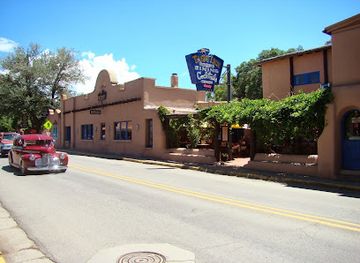
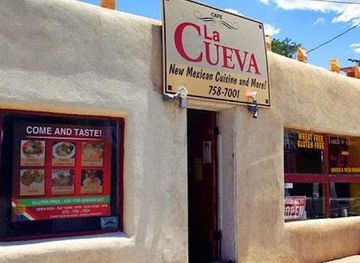
La Cueva Cafe
Experience the essence of authentic Mexican cuisine at La Cueva Cafe in Taos – where every meal tells a flavorful story.
17 min walk · 1.3 km from city centre
-
Hamburger
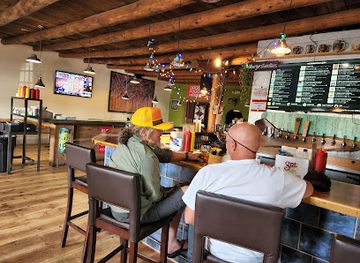
The Burger Stand @ Taos Ale House
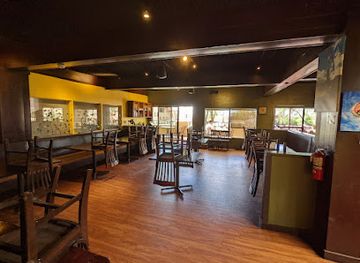
Experience the best burgers in Taos at The Burger Stand @ Taos Ale House - where flavor meets fun in a family-friendly atmosphere.
6 min drive · 2.2 km from city centre
Best bars in Taos
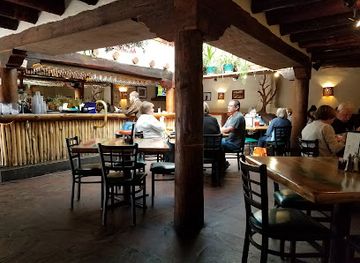
Taos has a relatively intimate evening scene rather than a large club circuit. Central Taos offers relaxed bars, restaurants with drinks and small venues where live music, local conversation and art-world gatherings are more characteristic than late-night spectacle. The historic plaza and nearby streets form the main focus, while some mountain-area establishments cater to visitors and seasonal outdoor communities. Performances, cultural events and occasional music programmes provide alternatives to drinking, particularly when local arts organisations and galleries host evening activities. Opening patterns and entertainment schedules can be seasonal, and the town quietens considerably outside event periods. Because roads between communities are dark and distances can be substantial, arranging a sober driver or reliable transport is important when moving beyond the central area.
-
Hamburger
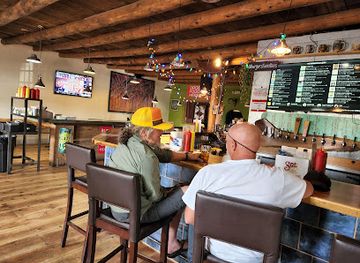
The Burger Stand @ Taos Ale House
Experience unbeatable gourmet burgers and a vast selection of craft beers at The Burger Stand @ Taos Ale House, the perfect dining spot in Taos, NM.
6 min drive · 2.2 km from city centre
-
Hamburger
5 Star Burgers
Savor gourmet burgers and local flavors at 5 Star Burgers in Taos, NM - a must-visit for food lovers seeking a unique dining experience.
18 min walk · 1.4 km from city centre
-
Bar
The Alley Cantina
Discover Taos' vibrant dining scene at The Alley Cantina, where live music and delicious American-Mexican fusion cuisine come together.
5 min drive · 1.6 km from city centre
-
Grill
The Gorge Bar and Grill
Savor the vibrant flavors of New Mexico at The Gorge Bar and Grill, a top dining spot in Taos for tourists seeking authentic local cuisine.
18 min walk · 1.5 km from city centre
Best nightclubs in Taos
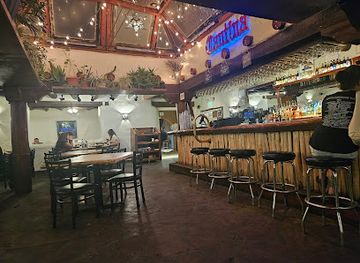
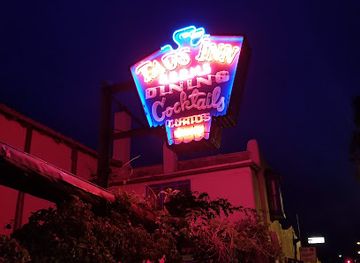
Taos has a relatively intimate evening scene rather than a large club circuit. Central Taos offers relaxed bars, restaurants with drinks and small venues where live music, local conversation and art-world gatherings are more characteristic than late-night spectacle. The historic plaza and nearby streets form the main focus, while some mountain-area establishments cater to visitors and seasonal outdoor communities. Performances, cultural events and occasional music programmes provide alternatives to drinking, particularly when local arts organisations and galleries host evening activities. Opening patterns and entertainment schedules can be seasonal, and the town quietens considerably outside event periods. Because roads between communities are dark and distances can be substantial, arranging a sober driver or reliable transport is important when moving beyond the central area.
-
Bar
The Alley Cantina
Discover the lively atmosphere of The Alley Cantina in Taos - where delicious food meets great live music.
5 min drive · 1.6 km from city centre
-
Grill
The Gorge Bar and Grill
Experience the vibrant flavors of Taos at The Gorge Bar and Grill, where delightful cuisine meets a warm, welcoming atmosphere.
18 min walk · 1.5 km from city centre
-
Brewery
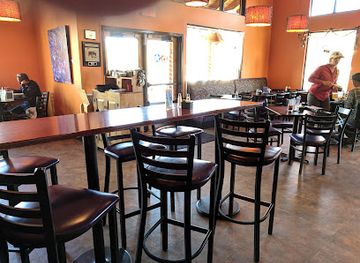
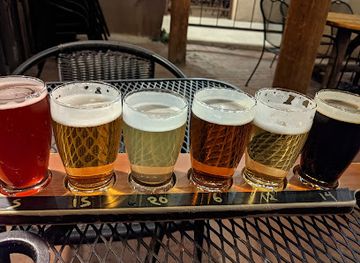
Taos Mesa Brewing Taos Tap Room
Discover the unique flavors of Taos at Taos Mesa Brewing, where craft beer meets delicious Italian cuisine in a vibrant atmosphere.
16 min walk · 1.3 km from city centre
-
Bar
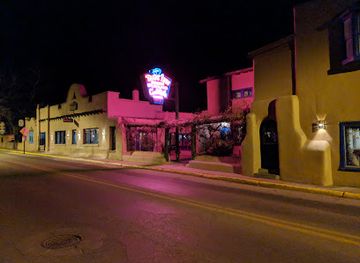
Adobe Bar
Experience the heart of Taos nightlife at Adobe Bar, where craft cocktails, live music, and a vibrant atmosphere await every visitor.
5 min drive · 1.6 km from city centre
Best shops in Taos
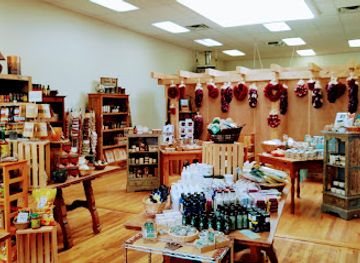
Shopping in Taos centres on the historic plaza, surrounding streets and nearby galleries, where visitors find Native American jewellery, pottery, woven textiles, paintings, sculpture and handcrafted objects. Taos Pueblo artists and other regional makers offer work connected to longstanding Indigenous traditions, while Hispanic crafts may include weaving, tinwork, wood carving and santos, the carved devotional figures associated with New Mexican religious art. Buyers should ask about provenance and purchase directly from artists or reputable galleries where possible. The town also has independent bookshops, clothing and design retailers, antiques and shops selling New Mexican foods and gifts. Markets and seasonal events provide opportunities to encounter local produce and crafts, although retail activity is more dispersed than in a conventional shopping district and some businesses follow seasonal schedules.
-
Shopping mall
John Dunn Shops
Experience the vibrant culture and unique shopping at John Dunn Shops, a premier open-air mall in the heart of Taos, New Mexico.
5 min drive · 1.6 km from city centre
-
Rock shop
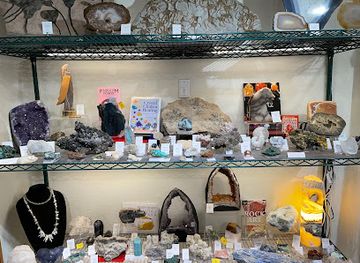
Taos Rockers
Discover the mesmerizing world of gemstones and crystals at Taos Rockers, a unique rock shop in the heart of Taos, New Mexico.
5 min drive · 1.6 km from city centre
-
Gift shop
Made In New Mexico
Explore the heart of Taos at Made In New Mexico, your destination for authentic gifts and local artisan treasures.
5 min drive · 1.5 km from city centre
-
Clothing store
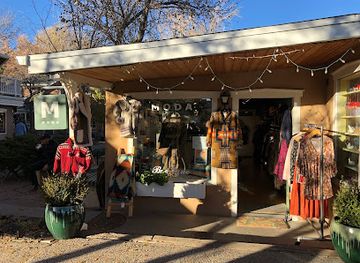
Re-Threads
Explore Re-Threads in Taos for unique consignment clothing and outdoor gear, supporting sustainable shopping in a charming atmosphere.
12 min walk · 1.0 km from city centre

Get your free copy of our complete guide to Taos, delivered straight to you.
Everything on this page, from attractions and restaurants to essentials and local phrases, in one PDF you can read offline, print or share.
Already have an account? Sign in
Your Taos guide is ready.
We'll send it to · Not you? Sign out

Getting your guide ready…
We are putting together a fresh copy of the Taos guide. This can take up to a minute.
This can take a few moments. If your browser asks, choose Allow so the download can start. You'll find the guide in your Downloads folder.
Nothing happened? Download it again
Sorry, the guide is taking longer than usual. Please try again in a minute, or get it by email instead.
Taos essentials
Currency and Payment
Safety
Emergency Situations
Do's and Don'ts
Local Tips
From Eve
Local phrases worth knowing
You don't need to get them perfect. A few words go a long way, and locals appreciate the effort.
Basics
| English | Local | Say it |
|---|---|---|
| Hello | Hawwo | [hah-woh] |
| Goodbye | Adios | [ah-dee-ohs] |
| Yes | Si | [see] |
| No | No | [noh] |
| Please/You're welcome | Por favor/De nada | [por fah-vor/deh nah-dah] |
| Thank you | Gracias | [grah-see-ahs] |
| Excuse me/Sorry | Perdón | [pehr-dohn] |
| How are you? | ¿Cómo estás? | [koh-moh ehs-tahs] |
| Fine. And you? | Bien. ¿Y tú? | [byehn. ee too] |
| Do you speak English? | ¿Hablas inglés? | [ah-blahs een-glehs] |
| I don't understand | No entiendo | [noh ehn-tee-ehn-doh] |
Eating & Drinking
| English | Local | Say it |
|---|---|---|
| I'd like to see the menu, please | Me gustaría ver el menú, por favor | [meh gooh-stah-ree-ah vehr ehl meh-noo, pohr fah-vor] |
| I don't eat meat | No como carne | [noh koh-moh kahr-neh] |
| Cheers! | ¡Salud! | [sah-lood] |
| I would like to pay, please | Me gustaría pagar, por favor | [meh gooh-stah-ree-ah pah-gahr, pohr fah-vor] |
Emergencies
| English | Local | Say it |
|---|---|---|
| Help! | ¡Ayuda! | [ah-yoo-dah] |
| Go away! | ¡Vete! | [veh-teh] |
| Call the Police! | Llama a la policía! | [yah-mah ah lah poh-lee-see-ah] |
| Call a doctor! | Llama a un médico! | [yah-mah ah oon meh-dee-koh] |
| I'm lost | Estoy perdido/a | [ehs-toy pehr-dee-doh/dah] |
| I'm ill | Estoy enfermo/a | [ehs-toy ehn-fehr-moh/dah] |
Shopping
| English | Local | Say it |
|---|---|---|
| I'd like to buy... | Me gustaría comprar... | [meh gooh-stah-ree-ah kohm-prahr] |
| I'm just looking | Solo estoy mirando | [soh-loh ehs-toy meer-ahn-doh] |
| How much is it? | ¿Cuánto cuesta? | [kwan-toh kwes-tah] |
| That's too expensive | Eso es muy caro | [eh-soh ehs moo-ee kah-roh] |
| Can you lower the price? | ¿Puede bajar el precio? | [pweh-deh bah-har ehl pree-syoh] |
Time & Numbers
| English | Local | Say it |
|---|---|---|
| What time is it? | ¿Qué hora es? | [keh oh-rah ehs] |
| It's one o'clock | Es la una en punto | [ehs lah oo-nah ehn poon-toh] |
| Half past (10) | Media (10) | [meh-dee-ah (deez)] |
| Morning | Mañana | [mah-nyah-nah] |
| Afternoon | Tarde | [tahr-deh] |
| Evening | Noche | [noh-cheh] |
| Yesterday | Ayer | [ah-yehr] |
| Today | Hoy | [hoy] |
| Tomorrow | Mañana | [mah-nyah-nah] |
| 1 | Uno | [oo-noh] |
| 2 | Dos | [dohs] |
| 3 | Tres | [trehs] |
| 4 | Cuatro | [kwah-troh] |
| 5 | Cinco | [seen-koh] |
| 6 | Seis | [sayss] |
| 7 | Siete | [syeh-teh] |
| 8 | Ocho | [oh-choh] |
| 9 | Nueve | [nweh-veh] |
| 10 | Diez | [dyehs] |
Transport & Directions
| English | Local | Say it |
|---|---|---|
| Where's a/the...? | ¿Dónde está...? | [dohn-deh ehs-tah] |
| What's the address? | ¿Cuál es la dirección? | [kwal ehs lah dee-rehk-syon] |
| Can you show me (on the map)? | ¿Puedes enseñarme (en el mapa)? | [pweh-dehs ehn-seh-nyahr-meh (ehn ehl mah-pah)] |
| When's the next (bus)? | ¿Cuándo es el próximo (autobús)? | [kwan-doh ehs ehl prohk-see-moh (ow-toh-boos)] |
| A ticket (to ....) | Un boleto (para ...) | [oon boh-leh-toh (pah-rah)] |
History of Taos
Ancient Settlement at Taos Pueblo
The Taos region has been home to Pueblo peoples for many centuries, and Taos Pueblo remains the clearest expression of this enduring history. The community's multi-storey adobe buildings stand beside Red Willow Creek north of present-day Taos and form part of a living cultural landscape rather than a preserved archaeological site. Taos Pueblo's continuity reflects deep relationships with land, agriculture, water and ceremonial life. Its significance extends beyond architecture: the Pueblo is a sovereign Native American community whose traditions and governance continue today. Visitors should therefore understand that access, photography and participation are governed by community decisions and may vary.
Spanish Colonisation and Mission Life
Spanish colonisation reached the upper Rio Grande valley in the late sixteenth century, although sustained settlement and mission activity developed over subsequent decades. Spanish settlers established communities and religious institutions alongside existing Pueblo societies, creating patterns of cultural exchange, conflict and adaptation that shaped northern New Mexico. San Francisco de Asís Church at Ranchos de Taos, begun in the late eighteenth century, represents the region's distinctive adobe mission tradition. The church and other historic buildings preserve evidence of a colonial society whose language, Catholic practices, agricultural customs and architectural forms remain visible across the Taos area.
The Pueblo Revolt and Imperial Change
In 1680, Pueblo communities united in the Pueblo Revolt, expelling Spanish colonists from New Mexico for more than a decade. Taos Pueblo participated in the wider resistance, which challenged forced labour, religious suppression and colonial authority. Spanish rule was re-established in 1692 under Diego de Vargas, but the political and cultural landscape had changed. The region continued to experience negotiation and tension between Pueblo communities, Spanish settlers and colonial officials. Mexican independence from Spain in 1821 then transferred New Mexico into the Mexican republic, opening new political and trading connections while leaving older local institutions in place.
The Taos Trade Route
During the nineteenth century, Taos became an important point on regional trading networks linking New Mexico with the plains and the wider United States. The Taos Trade Route connected the town with settlements such as Santa Fe and with commercial routes leading towards Missouri. Traders exchanged manufactured goods, livestock, agricultural products and regional crafts, while the town's position near mountain passes and the Rio Grande gave it strategic importance. After the United States acquired New Mexico in 1848 following the Mexican-American War, Taos was incorporated into a new territorial system, though its Pueblo, Hispanic and Anglo communities retained distinct identities.
Artists Discover the High Desert
Taos's reputation as an artists' centre grew in the early twentieth century. Ernest L. Blumenschein and Bert Geer Phillips arrived in 1898 and later helped establish the Taos Society of Artists, attracting painters interested in the region's light, landscapes and cultural life. Mabel Dodge Luhan became an influential patron and hosted writers, artists and intellectuals at her Taos home, encouraging exchanges that connected the town with wider American modernism. The movement brought new attention and economic opportunity, but it also involved outsiders interpreting Indigenous and Hispanic communities through romanticised ideas. Its legacy survives in local museums, galleries and the continuing importance of art to Taos identity.
Modern Taos and Cultural Continuity
Taos developed in the twentieth and twenty-first centuries as a small cultural and tourism centre while remaining surrounded by working villages, Pueblo lands, farms and mountain communities. The town's adobe streetscapes, galleries and museums now coexist with outdoor recreation associated with the Rio Grande Gorge and Taos Ski Valley. This modern economy has brought visitors, seasonal residents and new businesses, but cultural continuity remains central: Taos Pueblo continues as a sovereign community, Hispanic villages maintain religious and agricultural traditions, and local artists sustain practices shaped by the area's landscape. Contemporary Taos is therefore best understood as a layered place rather than solely an art destination.
Taos in Photos
Browse through our photo collection highlighting the charm and character of the destination.
Cities near Taos
The closest cities to Taos, if you have time for more than one stop.
-

-

-

-

-


Swipe for more cities
Explore more

Explore more of New Mexico
Discover the enchanting blend of rich history, diverse cultures, and stunning landscapes in New Mexico, the Land of Enchantment, where adventure and relaxation await.
Explore New Mexico