

Canyon Road (Santa Fe) Travel Guide - Free
Explore Canyon Road in Santa Fe with Evendo's free guide. Find the best shops, historic streets, restaurants, and gems on web or mobile.


Canyon Road in Santa Fe pairs adobe history with acclaimed galleries, sculpture gardens, museums, restaurants, and high-desert walks along a historic art district.
An Historic Road into the Arts
Canyon Road climbs east from Santa Fe’s historic centre into the foothills of the Sangre de Cristo Mountains, following a narrow route that began as a rural access road and later became one of the city’s best-known art districts. Its appeal lies in the close relationship between place and display: adobe houses, mature trees, garden walls and small courtyards provide the setting for galleries rather than a conventional commercial strip. The road is compact enough to explore on foot, though its gently rising grade and uneven pavements make comfortable shoes useful.Read more about Canyon Road
Galleries, Gardens and Adobe Architecture
Evenings on the East Side
Best attractions in Canyon Road
Canyon Road’s principal attraction is its concentrated succession of galleries, studios and sculpture gardens set within adobe homes and walled compounds. Visitors can browse contemporary painting, photography, jewellery, Native American art, craft and regional work, with outdoor sculpture often providing a second exhibition space among trees and courtyards. The road itself is an important part of the experience: its narrow alignment, mature landscaping and changing views towards the foothills make it more intimate than a large commercial avenue. Cristo Rey Church, near the eastern end, adds a significant architectural and religious stop, while nearby Eastside lanes reveal older residential forms and acequia-influenced landscapes. The attraction is less a single blockbuster institution than the cumulative contrast between galleries, domestic-scale buildings, gardens and public street life, with seasonal art walks bringing additional activity.
-
Art gallery
Canyon Road Contemporary Art
Explore the vibrant world of contemporary art at Canyon Road Contemporary Art in Santa Fe, New Mexico, where creativity knows no bounds.
8 min walk · 0.6 km from neighbourhood centre
-
Park
Patrick Smith Park
Experience serenity at Patrick Smith Park in Santa Fe, NM—a perfect blend of nature, relaxation, and scenic views of the Santa Fe River.
5 min drive · 1.7 km from neighbourhood centre
-
Historical place museum
Oldest House Museum
Explore the Oldest House Museum in Santa Fe, a captivating historical place showcasing the rich heritage and stories of New Mexico.
6 min walk · 0.5 km from neighbourhood centre
-
 History museum
Palace of the Governors at New Mexico History Museum
Discover the rich history of New Mexico at the Palace of the Governors, a cornerstone of Santa Fe's cultural heritage.
3 min walk · 0.2 km from neighbourhood centre


Best landmarks in Canyon Road
Canyon Road is itself the defining landmark: a historic route lined with adobe compounds, garden walls, mature trees and buildings that embody Santa Fe’s layered architectural identity. Its significance lies in the survival of a domestic-scale streetscape that was adapted for galleries without becoming a conventional shopping boulevard. Cristo Rey Church at the eastern end is an especially important structure, completed in 1940 from designs by architect John Gaw Meem and associated with Santa Fe’s Spanish Colonial Revival interpretation of regional building traditions. Along the road, vigas, canales, carved doors, plastered walls and enclosed courtyards provide smaller architectural markers of place, though not every historic-looking feature belongs to the same period. The acequia landscape and older Eastside compounds also help explain why the road feels connected to both rural land use and twentieth-century cultural development.
-
Historical landmark
Santa Fe Plaza
Experience the vibrant cultural heart of Santa Fe at the historic Plaza, a must-visit destination for art enthusiasts and food lovers alike.
3 min walk · 0.2 km from neighbourhood centre
-
Art gallery
Canyon Road Contemporary Art
Explore contemporary artistry in the heart of Santa Fe at Canyon Road Contemporary Art, where every piece tells a story of creativity and culture.
8 min walk · 0.6 km from neighbourhood centre
-
Historical place museum
Oldest House Museum
Explore the Oldest House Museum in Santa Fe, a captivating journey through the rich history and culture of New Mexico's heritage.
6 min walk · 0.5 km from neighbourhood centre
-
Art gallery
Wiford Gallery Santa Fe
Discover the artistic essence of Santa Fe at Wiford Gallery, where contemporary art meets New Mexico's rich cultural heritage.
8 min walk · 0.6 km from neighbourhood centre


Explore Canyon Road on the map
A handpicked selection of must-see spots in Canyon Road, mapped for you.
Best hotels in Canyon Road
Best restaurants in Canyon Road
Dining on Canyon Road combines established Santa Fe restaurants with the atmosphere of an older adobe corridor. El Farol, a long-running venue at the western part of the road, is associated with Spanish-influenced food, music and evening entertainment, while Geronimo occupies a historic adobe setting and represents the area’s more formal dining tradition. The broader Santa Fe influence appears in menus that draw on New Mexican ingredients and techniques, including chile, alongside Southwestern, Spanish and contemporary cooking. Cafés and smaller food options are less densely arranged than around the Plaza, so visitors should distinguish Canyon Road’s gallery visits from the city’s larger dining districts. Restaurants often occupy converted homes or low adobe buildings, making the setting part of the experience, but individual menus, reservation policies and opening arrangements should be checked directly.
-
Mexican
The Shed
Experience authentic Mexican flavors at The Shed in Santa Fe – where traditional recipes meet a vibrant dining atmosphere.
1 min walk · 0.1 km from neighbourhood centre
-
Southwestern American
Coyote Cafe & Rooftop Cantina
Savor exquisite Southwestern cuisine at Coyote Cafe & Rooftop Cantina with breathtaking views in Santa Fe.
6 min walk · 0.4 km from neighbourhood centre
-
Restaurant
The Teahouse
Discover serenity at The Teahouse in Santa Fe—your ultimate destination for exquisite teas and delightful brunch options.
18 min walk · 1.4 km from neighbourhood centre
-
New American
Geronimo
Experience exquisite New American cuisine at Geronimo in Santa Fe - where every meal is an artistic journey for your taste buds.
16 min walk · 1.3 km from neighbourhood centre


Best bars in Canyon Road
Canyon Road is not a clubbing district; evenings here are shaped by restaurants, conversation, music and the subdued character of the Eastside rather than by a continuous strip of late-night venues. El Farol is the best-known evening institution on the road, with a long association with Spanish-style dining, flamenco and live entertainment, although current programmes and access arrangements vary. Other restaurants may provide bar service or a relaxed setting for drinks, but the road becomes considerably quieter away from its established venues. Visitors seeking larger concentrations of bars, concert rooms or nightclubs will find more choice around the Plaza, downtown and the Railyard, outside Canyon Road itself. At night, the adobe walls and garden trees create a calm atmosphere, so departing guests should keep noise down near residences.
-
Bar
Coyote Cafe & Rooftop Cantina
Discover the vibrant flavors of Southwestern cuisine at Coyote Cafe & Rooftop Cantina in Santa Fe, New Mexico, with breathtaking views and a lively atmosphere.
6 min walk · 0.4 km from neighbourhood centre
-
New American
Geronimo
Experience the culinary artistry of New American cuisine at Geronimo in Santa Fe, where every dish is a masterpiece.
16 min walk · 1.3 km from neighbourhood centre
-
Grill
Thunderbird Bar & Grill
Experience the vibrant flavors of New Mexico at Thunderbird Bar & Grill, where local cuisine meets a lively atmosphere in Santa Fe.
4 min walk · 0.3 km from neighbourhood centre
-
Bar
El Farol
Discover the vibrant flavors of Spanish tapas and live music at El Farol, a culinary gem in the heart of Santa Fe, New Mexico.
17 min walk · 1.3 km from neighbourhood centre


Best nightclubs in Canyon Road
Canyon Road is not a clubbing district; evenings here are shaped by restaurants, conversation, music and the subdued character of the Eastside rather than by a continuous strip of late-night venues. El Farol is the best-known evening institution on the road, with a long association with Spanish-style dining, flamenco and live entertainment, although current programmes and access arrangements vary. Other restaurants may provide bar service or a relaxed setting for drinks, but the road becomes considerably quieter away from its established venues. Visitors seeking larger concentrations of bars, concert rooms or nightclubs will find more choice around the Plaza, downtown and the Railyard, outside Canyon Road itself. At night, the adobe walls and garden trees create a calm atmosphere, so departing guests should keep noise down near residences.
-
Bar
El Farol
Experience the vibrant flavors of Spain at El Farol, Santa Fe's premier tapas restaurant and live music venue.
17 min walk · 1.3 km from neighbourhood centre
-
Bar
The Compound
Experience the finest dining at The Compound in Santa Fe, where local flavors meet international cuisine in a stunning setting.
14 min walk · 1.1 km from neighbourhood centre
-
Bar
The Matador
Discover the heart of Santa Fe's nightlife at The Matador, a vibrant bar with signature cocktails and a lively atmosphere.
5 min walk · 0.4 km from neighbourhood centre
-
Cocktail bar
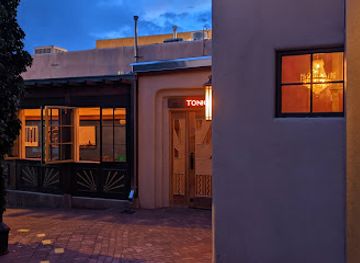
Tonic
Discover the vibrant cocktail culture of Santa Fe at Tonic, where expertly crafted drinks and a cozy lounge atmosphere await you.
5 min walk · 0.4 km from neighbourhood centre


Best shops in Canyon Road
Shopping on Canyon Road centres on art rather than everyday retail. The road’s galleries offer paintings, sculpture, photography, jewellery, ceramics, textiles and other works connected with New Mexico, the American Southwest and wider contemporary practice. Some spaces specialise in Native American art, regional artists or outdoor sculpture, while others present modern and international work; the selection changes as exhibitions and ownership change. Visitors can browse without treating the corridor like a department-store district, but purchases, photography and handling are governed by each gallery’s policies. There is little reason to expect a traditional food market or a long run of general shops here. Instead, the commercial character comes from small adobe galleries, design-led objects and the relationship between displayed work, courtyards and historic architecture, with broader fashion, souvenir and book shopping available around the Plaza and other parts of Santa Fe.
-
Gift shop
Leslie Flynt
Explore Leslie Flynt, a unique gift shop and art gallery in Santa Fe, where local artistry meets exquisite craftsmanship in an inspiring setting.
7 min walk · 0.6 km from neighbourhood centre
-
Vintage clothing store
Desert Moss Vintage
Uncover unique vintage clothing treasures at Desert Moss Vintage in Santa Fe, a paradise for fashion lovers and sustainability enthusiasts.
13 min walk · 1.0 km from neighbourhood centre
-
Women's clothing store
Nathalie Home
Discover unique fashion at Nathalie Home in Santa Fe, offering a curated selection of women's, children's, and men's clothing that embodies local artistry.
9 min walk · 0.7 km from neighbourhood centre
-
Gift shop
Cielo Handcrafted
Explore Cielo Handcrafted in Santa Fe for exquisite artisan gifts, local art, and unique jewelry that celebrate New Mexico's vibrant culture.
18 min walk · 1.4 km from neighbourhood centre


Canyon Road essentials
Getting There
Getting Around
Safety
Emergency Situations
Do's and Don'ts
Local Tips

From Eve
Local phrases worth knowing
You don't need to get them perfect. A few words go a long way, and locals appreciate the effort.
Basics
| English | Local | Say it |
|---|---|---|
| Hello | Howdy | [haw-dee] |
| Goodbye | Adios | [ah-dee-ohs] |
| Yes | Si | [see] |
| No | No | [no] |
| Please/You're welcome | Por favor | [pore fah-vore] |
| Thank you | Gracias | [grah-see-ahs] |
| Excuse me/Sorry | Perdon | [pair-dohn] |
| How are you? | Como estas? | [koh-moh ess-tahs] |
| Fine. And you? | Bien. Y tu? | [bee-ehn. ee too] |
| Do you speak English? | Hablas ingles? | [ah-blahs een-glays] |
| I don't understand | No entiendo | [noh en-tee-ehn-doh] |
Eating & Drinking
| English | Local | Say it |
|---|---|---|
| I'd like to see the menu, please | Me gustaria ver el menu, por favor | [may goo-stah-ree-ah vehr ehl may-noo, pore fah-vore] |
| I don't eat meat | No como carne | [noh koh-moh kahr-neh] |
| Cheers! | Salud! | [sah-lood] |
| I would like to pay, please | Me gustaria pagar, por favor | [may goo-stah-ree-ah pah-gahr, pore fah-vore] |
Emergencies
| English | Local | Say it |
|---|---|---|
| Help! | Ayuda! | [ah-yoo-dah] |
| Go away! | Vete! | [veh-teh] |
| Call the Police! | Llama a la policia! | [yah-mah ah lah poh-lee-see-ah] |
| Call a doctor! | Llama a un doctor! | [yah-mah ah oon dohk-tohr] |
| I'm lost | Estoy perdido | [ess-toy pehr-dee-doh] |
| I'm ill | Estoy enfermo | [ess-toy ehn-fehr-moh] |
Shopping
| English | Local | Say it |
|---|---|---|
| I'd like to buy... | Quisiera comprar... | [kee-see-eh-rah kohm-prahr] |
| I'm just looking | Solo estoy mirando | [soh-loh ess-toy meer-ahn-doh] |
| How much is it? | Cuanto cuesta? | [kwan-to kwehs-tah] |
| That's too expensive | Esto es muy caro | [ehs-toh ehs moo-ee kahr-oh] |
| Can you lower the price? | Puede bajar el precio? | [pweh-deh bah-hahr ehl pree-syoh] |
Time & Numbers
| English | Local | Say it |
|---|---|---|
| What time is it? | Que hora es? | [keh oh-rah ehs] |
| It's one o'clock | Es la una | [ehs lah oo-nah] |
| Half past (10) | Media (10) | [meh-dee-ah (deez)] |
| Morning | Manana | [mah-nyah-nyah] |
| Afternoon | Tarde | [tahr-deh] |
| Evening | Noche | [noh-cheh] |
| Yesterday | Ayer | [ah-yehr] |
| Today | Hoy | [hoi] |
| Tomorrow | Manana | [mah-nyah-nyah] |
| 1 | Uno | [oo-noh] |
| 2 | Dos | [dohs] |
| 3 | Tres | [trehs] |
| 4 | Cuatro | [kwah-troh] |
| 5 | Cinco | [seen-koh] |
| 6 | Seis | [says] |
| 7 | Siete | [syeh-teh] |
| 8 | Ocho | [oh-choh] |
| 9 | Nueve | [nwah-veh] |
| 10 | Diez | [dyehs] |
Transport & Directions
| English | Local | Say it |
|---|---|---|
| Where's a/the...? | Donde esta...? | [dohn-deh ehs-tah] |
| What's the address? | Cual es la direccion? | [kwahl ehs lah dee-rehk-syohn] |
| Can you show me (on the map)? | Puedes mostrarme (en el mapa)? | [pweh-dehs mohs-trahr-meh (ehn ehl mah-pah)] |
| When's the next (bus)? | Cuando es el proximo (autobus)? | [kwan-doh ehs ehl prohk-see-moh (ow-toh-boos)] |
| A ticket (to ....) | Un boleto (para ....) | [oon boh-leh-toh (pah-rah)] |
History of Canyon Road
From Rural Road to Eastside Lane
Canyon Road developed as a route into the high country east of Santa Fe rather than as a purpose-built cultural district. Its relationship with water is central to the older Eastside landscape: acequias, or community-managed irrigation channels, supported small farms, orchards and household gardens in a dry climate. Adobe homes and compounds grew along the road, creating the low, inward-looking pattern of walls, courtyards and mature trees that still distinguishes it from the more formal blocks around the Plaza. The name reflects the road’s route towards the canyon country and mountain foothills, while the surrounding area remained a predominantly residential part of Santa Fe for much of its history.
Adobe Homes and Santa Fe Revival
During the late nineteenth and early twentieth centuries, Santa Fe’s older building traditions increasingly became part of a deliberate architectural identity. The city’s preservation movement and the development of the Spanish-Pueblo Revival style encouraged the use of adobe forms, vigas, canales and restrained façades. On Canyon Road, existing homes and compounds were preserved, remodelled or adapted rather than replaced by a continuous commercial frontage. This architectural setting helped retain the road’s residential scale while giving later galleries a distinctive context. The result is not a single-period streetscape but a layered one, in which vernacular adobe buildings, revival-style interventions and landscaped compounds sit close together.
Artists Establish a Gallery District
Canyon Road’s transformation into an art corridor gathered pace in the twentieth century as artists, dealers and collectors moved into or began using the former homes and studios along the road. Galleries appeared in small adobe compounds, often with sculpture displayed outdoors, and the area developed a concentration of work connected with New Mexico’s long-standing interest in landscape, Indigenous art, craft and regional identity. This change altered the road’s economic role without erasing its domestic character: the narrow route, garden walls and historic buildings remained part of the visitor experience. The district’s reputation subsequently attracted a broader range of contemporary, modern and international art.
A Living Cultural Streetscape
Canyon Road continues to function as both an art destination and a residential Eastside street. Its galleries, restaurants and cultural venues occupy a setting shaped by older land divisions, adobe construction and irrigation history, while changing tastes and property pressures have influenced the mix of businesses over time. Events such as seasonal art walks have strengthened its public identity, but the district is not an open-air museum: homes, working galleries and local institutions share the same narrow road. Cristo Rey Church, completed in 1940 to designs by John Gaw Meem, adds a significant twentieth-century architectural presence at the eastern end and connects the road’s artistic image with Santa Fe’s religious and civic history.
Canyon Road in Photos
Browse through our photo collection highlighting the charm and character of the destination.
Neighbourhoods near Canyon Road
The closest neighbourhoods to Canyon Road, if you have time for more than one stop.

Swipe for more neighbourhoods
Explore more

Explore more of Santa Fe
Discover Santa Fe, New Mexico: A vibrant city with a rich history, stunning art scene, and breathtaking landscapes, offering a unique blend of culture and adventure.
Explore Santa Fe