

Free New York Metropolitan Area Travel Guide & Mobile App
Explore New York Metropolitan Area with free travel guides. Discover regional history, expert tips, proposed trips, and audio guides on web or mobile app.


Explore the New York Metropolitan Area for world-class culture, diverse neighbourhoods, waterfront parks, historic towns and Atlantic scenery.
Read more about New York Metropolitan Area
When is the best time to visit New York Metropolitan Area?
Best: June, August–September · 24–29°C| Month | High (°C) | Rainfall (mm) |
|---|---|---|
| January | 4 | 89 |
| February | 4 | 76 |
| March | 9 | 102 |
| April | 16 | 114 |
| May | 21 | 117 |
| June (best) | 26 | 97 |
| July | 29 | 104 |
| August (best) | 29 | 105 |
| September (best) | 24 | 102 |
| October | 19 | 95 |
| November | 13 | 101 |
| December | 7 | 95 |
Getting to and around New York Metropolitan Area
How to get there
Transportation
Top city travel guides in New York Metropolitan Area
The cities of New York Metropolitan Area, and the easiest places to base yourself.
-

-

-

-

-
-


Swipe for more cities
Destinations in New York Metropolitan Area
Resorts, valleys and scenic spots worth a trip of their own.
-
-

-

-


Swipe for more destinations
Best attractions in New York Metropolitan Area
The metropolitan area offers an unusually broad mix of urban culture and accessible landscapes. New York City contains major museums such as The Metropolitan Museum of Art, the Museum of Modern Art and the American Museum of Natural History, alongside Broadway theatres, neighbourhood galleries, botanical gardens, the Bronx Zoo and extensive public parks. Central Park is only one of many green spaces; Prospect Park, Flushing Meadows Corona Park, Van Cortlandt Park and the waterfront parks of Brooklyn, Queens and Staten Island reveal different sides of the city. Beyond the boroughs, visitors can explore the historic riverfront and cultural institutions of Newark and Jersey City, coastal communities along Long Island Sound, estates and gardens in Westchester, and beaches, wetlands and maritime landscapes on Long Island. The region also supports cycling, kayaking, sailing, birdwatching and walking, although some natural areas are easiest to reach by car. Its strongest attraction is the contrast between globally important cultural institutions, dense immigrant neighbourhoods, working waterfronts and quieter suburban or coastal settings.
-
Park
Central Park
Discover the serene beauty and cultural richness of Central Park, the iconic urban oasis in the heart of New York City.
-
Plaza
Times Square
Experience the dazzling energy and vibrant culture of Times Square, the iconic heart of New York City, filled with entertainment, dining, and shopping.
-
 Historical landmark
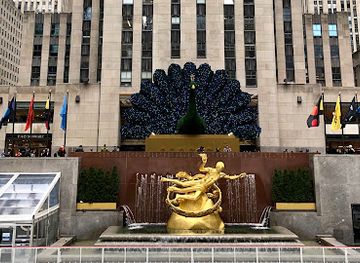
Rockefeller Center
Experience the magic of Rockefeller Center, a historical landmark in NYC with stunning views, art, shopping, and seasonal festivities.
-
Historical landmark
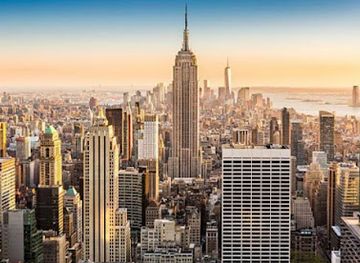
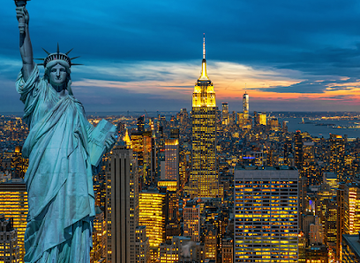
Empire State Building
Experience the breathtaking views and rich history of the Empire State Building, a must-visit icon of New York City.


Best landmarks in New York Metropolitan Area
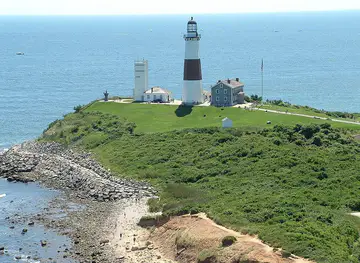
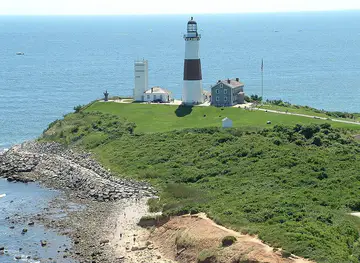
The Statue of Liberty and Ellis Island are the region’s most recognisable symbols of harbour geography, immigration and the United States’ relationship with the wider world. Manhattan’s Empire State Building, Chrysler Building, Flatiron Building, Brooklyn Bridge and One World Trade Center represent different phases of metropolitan architecture and engineering. Historic districts such as Greenwich Village, SoHo, the Upper West Side and Brooklyn Heights preserve distinctive streetscapes, although they are living neighbourhoods rather than museum sets. The region’s physical identity also rests on great waterways and civic landscapes: the Hudson River, New York Harbor, the East River, Central Park and the Palisades across the Hudson in New Jersey. Outside the central city, notable landmarks include the historic village landscapes of Westchester and Connecticut, the mansions and estates of the Gold Coast and the lighthouse and maritime structures of Long Island. These places show how port, finance, industry, commuting and recreation have continuously reshaped the metropolitan landscape.
-
Historical landmark
Rockefeller Center
Experience the charm and vibrancy of Rockefeller Center, a historical landmark in New York City, showcasing stunning architecture and vibrant cultural attractions.
-
Historical landmark
Empire State Building
Discover breathtaking views and rich history at the iconic Empire State Building, a must-visit landmark in New York City.
-
Historical landmark
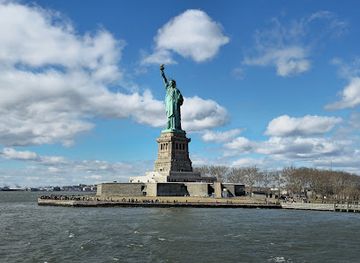
Statue of Liberty
Experience the majestic Statue of Liberty, a symbol of freedom and democracy, offering breathtaking views and rich history on Liberty Island.
-
Bridge
Brooklyn Bridge
Explore the historic Brooklyn Bridge, an architectural marvel of New York City, offering breathtaking views and a rich history to every visitor.

Explore New York Metropolitan Area on the map
Plan your trip on one map. See where the top cities, national parks and sights are, and book hotels and experiences in a few clicks.
Best hotels in New York Metropolitan Area
Best restaurants in New York Metropolitan Area
Dining is one of the metropolitan area’s defining experiences, with New York City providing an exceptional concentration of cuisines and the surrounding region adding its own suburban, coastal and immigrant food cultures. New York-style pizza, bagels, Jewish deli traditions, cheesecake and the city’s long-established street-food culture are nationally recognised, while Caribbean, Chinese, Korean, South Asian, West African, Middle Eastern, Italian, Latin American and many other traditions are represented across different neighbourhoods. In New Jersey, Connecticut and Long Island, diners, pizzerias, seafood restaurants, bakeries, farm-to-table kitchens and family-run establishments broaden the picture. Seafood is particularly relevant around the coast and estuaries, while farmers’ markets and farm stands become more prominent beyond the densest urban districts. Tipping is customary for table service, and restaurant prices normally exclude sales tax. Exploring a local commercial avenue or market can provide a more revealing meal than concentrating only on famous dining districts.
-
American
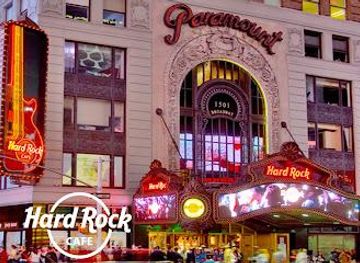
Hard Rock Cafe
Rock out in Times Square's ultimate diner: memorabilia-packed walls, smash burgers, ribs, and cocktails amid Broadway's neon frenzy.
-
Diner
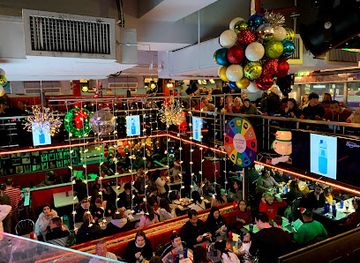
Ellen's Stardust Diner
Experience the magic of Broadway while enjoying classic American cuisine at Ellen's Stardust Diner in New York City.
-
Market
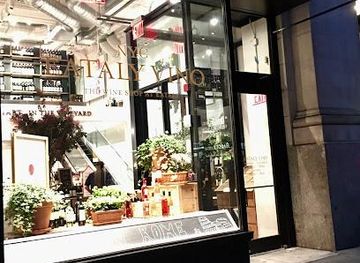
Eataly NYC Flatiron
Italian marketplace and dining complex offering quality products but inconsistent restaurant experiences in a crowded Manhattan setting.
-
American
Essex
Experience the best of American cuisine at Essex in Manhattan – where fine dining meets vibrant nightlife.

Best bars in New York Metropolitan Area
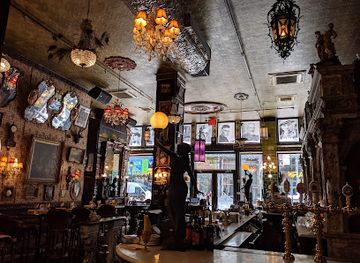
Nightlife ranges from Broadway and smaller theatre venues to cocktail bars, music rooms, neighbourhood pubs, wine bars, comedy clubs and late-night restaurants. Manhattan remains the region’s most concentrated evening centre, but Brooklyn, Queens, the Bronx, Jersey City, Newark, Stamford and many other communities have their own bars, performance spaces and restaurant scenes. Historic taverns and Irish-style pubs sit alongside breweries, specialist cocktail venues and establishments reflecting the metropolitan area’s many immigrant communities. Nightclubs are most numerous in New York City, while suburban nightlife is generally more dispersed and often depends on restaurants, live music and local bars rather than a single entertainment district. Summer brings increased activity around waterfronts and outdoor venues, subject to local regulations. Check age requirements, identification rules, transport options and closing arrangements, especially when travelling across state lines.
-
Lounge
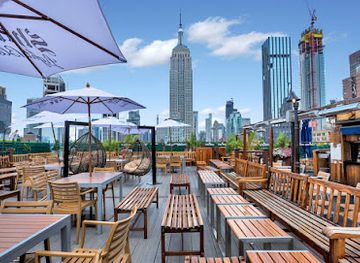
230 Fifth Rooftop Bar
Experience breathtaking skyline views and unique cocktails at 230 Fifth Rooftop Bar, the premier lounge destination in New York City.
-
Irish pub
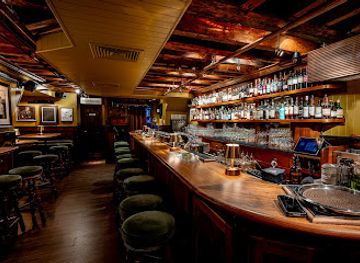
The Dead Rabbit, New York City
Discover The Dead Rabbit, an award-winning Irish pub in NYC, blending tradition with modern flair for an unforgettable dining experience.
-
Cocktail bar
Lost in Paradise Rooftop
Discover Lost in Paradise Rooftop, an enchanting cocktail bar in Queens, offering breathtaking skyline views and expertly crafted drinks.
-
New American
Oscar Wilde
Experience the artistic charm and innovative flavors of Oscar Wilde, a New American bistro in the heart of Manhattan, NYC.

Best nightclubs in New York Metropolitan Area
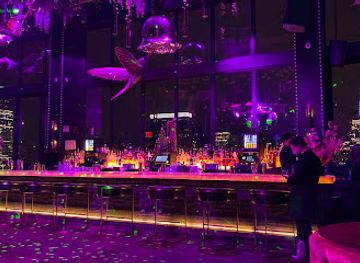
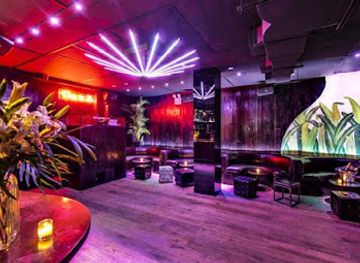
Nightlife ranges from Broadway and smaller theatre venues to cocktail bars, music rooms, neighbourhood pubs, wine bars, comedy clubs and late-night restaurants. Manhattan remains the region’s most concentrated evening centre, but Brooklyn, Queens, the Bronx, Jersey City, Newark, Stamford and many other communities have their own bars, performance spaces and restaurant scenes. Historic taverns and Irish-style pubs sit alongside breweries, specialist cocktail venues and establishments reflecting the metropolitan area’s many immigrant communities. Nightclubs are most numerous in New York City, while suburban nightlife is generally more dispersed and often depends on restaurants, live music and local bars rather than a single entertainment district. Summer brings increased activity around waterfronts and outdoor venues, subject to local regulations. Check age requirements, identification rules, transport options and closing arrangements, especially when travelling across state lines.
-
Night club
Somewhere Nowhere NYC - Lounge, Nightclub & Rooftop Pool
Discover the premier nightlife destination in New York City with stunning rooftop views, innovative cocktails, and an unforgettable atmosphere.
-
Night club
Doha Bar Lounge- Brunch, Nightclub & Restaurant
Discover Doha Bar Lounge in Queens - a vibrant blend of nightlife, delicious brunches, and Latin American flavors, perfect for every occasion.
-
Travel lounge
Virgin Atlantic Clubhouse
Experience unparalleled luxury and comfort at the Virgin Atlantic Clubhouse in Queens, NY, the ultimate lounge for discerning travelers.
-
Night club
Rumpus Room
Rumpus Room: Dance the night away in NYC's lively nightclub, where retro vibes meet modern beats in an unforgettable atmosphere.


Best shops in New York Metropolitan Area
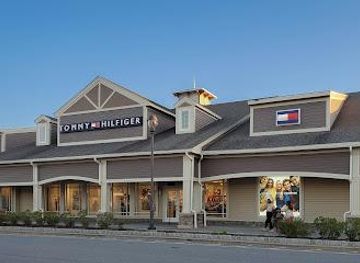
Shopping reflects the region’s immense cultural and economic range. Manhattan offers major department stores, international fashion, jewellery, design and bookselling, while neighbourhoods such as SoHo, the Lower East Side, Greenwich Village and the Upper West Side provide different concentrations of independent shops and galleries. Brooklyn and Queens are strong for vintage clothing, specialist food stores, crafts, records and locally designed goods. In New Jersey, Newark and Jersey City combine urban retail with local food businesses, while suburban town centres in Westchester, Connecticut and Long Island contain boutiques, antiques shops, bookshops and galleries. Farmers’ markets and farm stands are useful for regional produce, baked goods, honey, wine and seasonal fruit, particularly outside the city. Visitors should remember that sales tax varies by state and locality, and some New York City clothing purchases below a specified price can receive different tax treatment. Souvenirs are more meaningful when connected to local food, design, books or neighbourhood culture than to generic skyline merchandise.
-
Department store
Macy's
Experience the magic of shopping at Macy's Herald Square, the iconic department store in the heart of New York City, offering a wide array of fashion and beauty.
-
Market
Chelsea Market
Discover the culinary delights of Chelsea Market, New York City's iconic food hall brimming with vibrant flavors and artisanal treasures.
-
Outlet mall
Woodbury Common Premium Outlets
Discover unbeatable deals at over 200 stores in the iconic Woodbury Common Premium Outlets, a must-visit destination for savvy shoppers.
-
Shopping mall
Brookfield Place
Explore Brookfield Place, New York's luxurious shopping destination with waterfront views, exquisite dining, and vibrant cultural experiences.


Get your free copy of our complete guide to New York Metropolitan Area, delivered straight to you.
Everything on this page, from attractions and restaurants to essentials and local phrases, in one PDF you can read offline, print or share.
Already have an account? Sign in
Your New York Metropolitan Area guide is ready.
We'll send it to · Not you? Sign out

Getting your guide ready…
We are putting together a fresh copy of the New York Metropolitan Area guide. This can take up to a minute.
This can take a few moments. If your browser asks, choose Allow so the download can start. You'll find the guide in your Downloads folder.
Nothing happened? Download it again
Sorry, the guide is taking longer than usual. Please try again in a minute, or get it by email instead.
New York Metropolitan Area essentials
Currency and Payment
Safety
Emergency Situations
Do's and Don'ts
Local Tips
From Eve
Local phrases worth knowing
You don't need to get them perfect. A few words go a long way, and locals appreciate the effort.
Basics
| English | Local | Say it |
|---|---|---|
| Hello | Hey | [Hey] |
| Goodbye | Later | [Lay-ter] |
| Yes | Yeah | [Yeah] |
| No | Nope | [Nope] |
| Please/You're welcome | Please/No problem | [Please/No prob-lum] |
| Thank you | Thanks | [Thanks] |
| Excuse me/Sorry | Excuse me/Sorry | [Excuse me/Sor-ree] |
| How are you? | How ya doin'? | [How yah doin'?] |
| Fine. And you? | Good. You? | [Good. You?] |
| Do you speak English? | You speak English? | [Yah speak English?] |
| I don't understand | I don't get it | [I don't get it] |
Eating & Drinking
| English | Local | Say it |
|---|---|---|
| I'd like to see the menu, please | Can I see the menu? | [Can I see the menu?] |
| I don't eat meat | I don't eat meat | [I don't eat meat] |
| Cheers! | Cheers! | [Cheers!] |
| I would like to pay, please | Can I get the check, please? | [Can I get the check, please?] |
Emergencies
| English | Local | Say it |
|---|---|---|
| Help! | Help! | [Help!] |
| Go away! | Get lost! | [Get lost!] |
| Call the Police! | Call 911! | [Call nine-one-one!] |
| Call a doctor! | Get a doctor! | [Get a doctor!] |
| I'm lost | I'm lost | [I'm lost] |
| I'm ill | I'm not feeling well | [I'm not feeling well] |
Shopping
| English | Local | Say it |
|---|---|---|
| I'd like to buy... | I wanna buy... | [I wanna buy...] |
| I'm just looking | Just looking around | [Just looking around] |
| How much is it? | How much? | [How much?] |
| That's too expensive | That's way too pricey | [That's way too pricey] |
| Can you lower the price? | Can you make it cheaper? | [Can you make it cheaper?] |
Time & Numbers
| English | Local | Say it |
|---|---|---|
| What time is it? | What time is it? | [What time is it?] |
| It's one o'clock | It's one | [It's one] |
| Half past (10) | Half past ten | [Half past ten] |
| Morning | Morning | [Morning] |
| Afternoon | Afternoon | [Afternoon] |
| Evening | Evening | [Evening] |
| Yesterday | Yesterday | [Yesterday] |
| Today | Today | [Today] |
| Tomorrow | Tomorrow | [Tomorrow] |
| 1 | One | [One] |
| 2 | Two | [Two] |
| 3 | Three | [Three] |
| 4 | Four | [Four] |
| 5 | Five | [Five] |
| 6 | Six | [Six] |
| 7 | Seven | [Seven] |
| 8 | Eight | [Eight] |
| 9 | Nine | [Nine] |
| 10 | Ten | [Ten] |
Transport & Directions
| English | Local | Say it |
|---|---|---|
| Where's a/the...? | Where's the...? | [Where's the...?] |
| What's the address? | What's the address? | [What's the address?] |
| Can you show me (on the map)? | Can you show me on the map? | [Can you show me on the map?] |
| When's the next (bus)? | When's the next bus? | [When's the next bus?] |
| A ticket (to ....) | A ticket to... | [A ticket to...] |
History of New York Metropolitan Area
Lenape Homeland and Indigenous History
Before European colonisation, the region was home to Lenape communities and other Indigenous peoples whose territories included the lower Hudson Valley, the harbour islands, Long Island and parts of New Jersey and Connecticut. Communities used the rivers, shorelines, forests and fertile ground for fishing, hunting, agriculture and trade. European settlement, disease, warfare and land dispossession profoundly disrupted these societies from the seventeenth century onwards. Indigenous place names and archaeological evidence remain part of the region’s historical record, although much of the original landscape has been transformed by urban development.
Dutch New Netherland and English New York
The Dutch established New Amsterdam on Manhattan in the seventeenth century as part of the trading colony of New Netherland, with settlements and commercial activity extending around the harbour and up the Hudson. The English seized the colony in 1664 and renamed it New York, but Dutch influence remained visible in place names, landholding patterns and aspects of local architecture. The port’s position at the meeting point of inland waterways and the Atlantic helped establish the foundations of the metropolitan economy.
Revolutionary New York and the Early Republic
The New York region was strategically important during the American Revolution. New York City was occupied by British forces for much of the war, while the surrounding waterways and roads were contested by armies, privateers and local communities. After independence, New York City became the first national capital under the United States Constitution, and Federal Hall in Lower Manhattan commemorates George Washington’s inauguration as the first president. The new republic’s commercial and political institutions accelerated the growth of the harbour and its hinterland.
Canals, Railways and the Rise of the Port
Nineteenth-century transport improvements transformed the region. The Erie Canal connected the Hudson River with the Great Lakes, strengthening New York’s commercial reach, while railways linked the city with inland towns, New Jersey, Long Island, Connecticut and the Hudson Valley. Steamships, ferries and bridges further unified the harbour. Industrial districts, warehouses and working waterfronts expanded, and New York became a major centre for finance, manufacturing, publishing, immigration and international trade.
Immigration, Tenement Life and Metropolitan Growth
From the nineteenth century into the twentieth, millions of immigrants entered the United States through the port of New York, with many settling in the metropolitan region. Ellis Island processed many arrivals, while Lower Manhattan, Brooklyn, the Bronx, Newark and numerous surrounding communities developed dense neighbourhoods shaped by European, Caribbean, Latin American, Asian and African diasporas. Tenement housing, religious institutions, newspapers, labour organisations and small businesses created durable cultural landscapes. Later suburbanisation and new migration continued to change the region’s social geography.
Bridges, Tunnels and the Modern Metropolitan Region
The twentieth century brought unprecedented regional integration through bridges, tunnels, parkways, airports and commuter railways. Projects associated with planners and engineers such as Robert Moses reshaped roads, housing, parks and waterfronts, often bringing major benefits while displacing established communities. The completion of the World Trade Center complex symbolised the region’s global economic role before the attacks of 11 September 2001 transformed Lower Manhattan and national history. Today the metropolitan area remains a centre of finance, media, culture, education, immigration and international commerce.
New York Metropolitan Area in Photos
Browse through our photo collection highlighting the charm and character of the destination.
Neighbouring regions of New York Metropolitan Area
The closest regions to New York Metropolitan Area, if you have time for more than one.
-

-
-

-

-


Swipe for more regions
Explore more

Explore more of New York
Discover the electrifying energy, iconic landmarks, and diverse cultural experiences of New York City, the ultimate urban playground for travelers from around the world.
Explore New York