

Downtown Syracuse (Syracuse) Travel Guide - Free
Explore Downtown Syracuse in Syracuse with Evendo's free guide. Find the best shops, historic streets, restaurants, and gems on web or mobile.


Downtown Syracuse, New York, brings Clinton Square, Armory Square dining, the Landmark Theatre, museums, public art and historic streets together.
A Compact Urban Centre
Downtown Syracuse occupies the historic civic and commercial core of Syracuse, New York, where the city's original street grid meets Clinton Square, Armory Square, Hanover Square and Washington Square. The area is compact enough to explore on foot, yet its blocks reveal several distinct moods: office and government buildings around East Genesee Street, restaurants and converted warehouses in Armory Square, and a more traditional civic character around Clinton Square. The former Erie Canal corridor, now largely followed by Erie Boulevard, remains central to understanding how water transport and commerce shaped the city.Read more about Downtown Syracuse
Architecture and Public Life
Culture, Food and Events
Best attractions in Downtown Syracuse
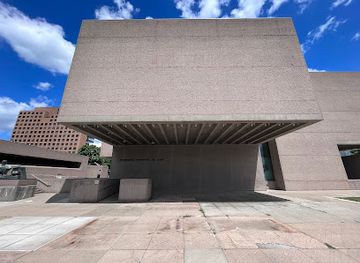
Downtown Syracuse's principal attractions are close enough to connect in a walking circuit. Clinton Square provides the clearest introduction, with its canal-era setting, central fountain and seasonal skating rink, while Hanover Square offers a quieter historic public space framed by older commercial buildings. Armory Square combines converted warehouses with the Museum of Science and Technology, whose hands-on exhibitions make it a substantial family attraction. The Everson Museum of Art, on the southern side of the central district, is known for its modern and contemporary collections and distinctive building. The Landmark Theatre adds grand performance architecture, while the Oncenter hosts exhibitions, conventions and cultural events. Along the way, visitors can find public art, restored façades and streets that reveal Syracuse's transition from canal and railway commerce to a contemporary regional centre.
-
Art museum
Everson Museum of Art
Explore the Everson Museum of Art in Syracuse, where American art comes to life amidst stunning architecture and engaging exhibitions.
5 min walk · 0.4 km from neighbourhood centre
-
Park
Franklin Square Park
Explore Franklin Square Park: A beautiful urban oasis in Syracuse, NY, perfect for relaxation, recreation, and community events.
16 min walk · 1.3 km from neighbourhood centre
-
Museum
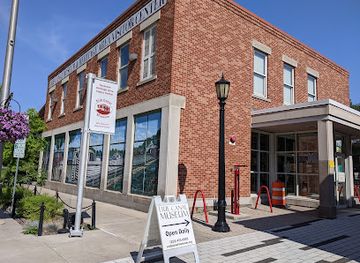
Erie Canal Museum
Explore the rich history of the Erie Canal at the Erie Canal Museum in Syracuse, NY - a must-visit for history enthusiasts and curious travelers alike.
4 min walk · 0.3 km from neighbourhood centre
-
Tourist attraction
Armory Square
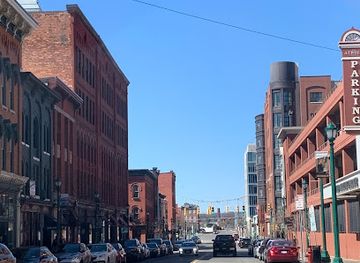
Explore Armory Square, Syracuse's vibrant district filled with shops, restaurants, and cultural experiences in the heart of downtown.
8 min walk · 0.6 km from neighbourhood centre
Best landmarks in Downtown Syracuse
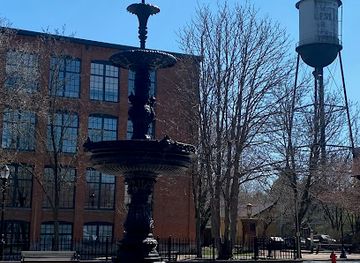
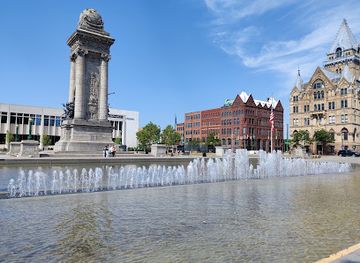
Clinton Square is downtown Syracuse's defining landmark, occupying the former Erie Canal corridor and expressing the city's transformation from canal port to modern civic centre. The square's fountain and surrounding buildings provide a direct connection with the commercial history that shaped nineteenth-century Syracuse. The Landmark Theatre on South Salina Street is another major reference point: its ornate atmospheric design and long role as a performance venue make it one of the city's most recognisable interiors. The Gridley Building, a historic high-rise commercial structure near Clinton Square, reflects the era when banks, offices and merchants gave downtown a more substantial architectural scale. Armory Square's brick warehouse buildings are significant as a group, showing the area's industrial and commercial past even as they now accommodate restaurants, offices and cultural uses.
-
Plaza
Clinton Square
Explore Clinton Square in Syracuse, NY—an iconic plaza featuring historical architecture, art, community events, and lush green spaces.
7 min walk · 0.6 km from neighbourhood centre
-
Museum
Erie Canal Museum
Explore the Erie Canal's rich history at the Erie Canal Museum in Syracuse, a captivating destination for history lovers and curious travelers.
4 min walk · 0.3 km from neighbourhood centre
-
Tourist attraction
Armory Square
Explore the vibrant Armory Square, a cultural gem in Syracuse with unique shops, diverse dining, and lively entertainment to make your visit unforgettable.
8 min walk · 0.6 km from neighbourhood centre
-
Park
Columbus Circle
Discover tranquility at Columbus Circle, a peaceful park in Syracuse, NY, perfect for relaxation and enjoying nature in the heart of the city.
3 min walk · 0.2 km from neighbourhood centre
Explore Downtown Syracuse on the map
A handpicked selection of must-see spots in Downtown Syracuse, mapped for you.
Best hotels in Downtown Syracuse
Best restaurants in Downtown Syracuse
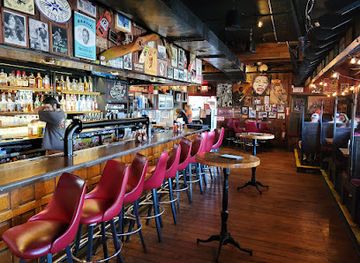
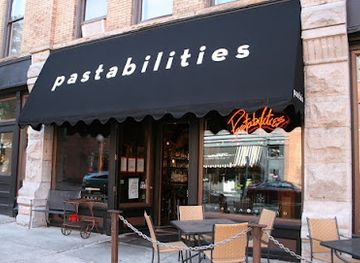
Downtown Syracuse has a broad, locally rooted dining scene spread across Clinton Square, Armory Square, Walton Street and the surrounding central blocks. Restaurants draw on Central New York traditions, including the region's distinctive salty, spicy chicken wing style, alongside barbecue, burgers, pizza, international cooking and contemporary American menus. Armory Square is the most concentrated area for sit-down restaurants and evening meals, with former warehouse buildings providing much of the setting. Cafés, bakeries and casual venues around Salina Street and the civic core suit daytime visits, while vegetarian and plant-based options form part of the central city's modern food culture. The area is also associated with Syracuse institutions such as Dinosaur Bar-B-Que and Pastabilities, though visitors should check current opening details independently. Downtown dining changes noticeably during theatre performances, festivals and conventions.
-
Barbecue
Dinosaur Bar-B-Que
Experience the best of American barbecue at Dinosaur Bar-B-Que in Syracuse – where delicious food meets vibrant live music.
10 min walk · 0.8 km from neighbourhood centre
-
Italian
Pastabilities
Experience exquisite Italian cuisine at Pastabilities in downtown Syracuse – where tradition meets innovation in every dish.
8 min walk · 0.6 km from neighbourhood centre
-
American
Funk 'n Waffles
Discover the vibrant atmosphere at Funk 'n Waffles in Syracuse – where delicious American cuisine meets live music and creativity.
6 min walk · 0.5 km from neighbourhood centre
-
Pizza
Apizza Regionale
Discover authentic artisanal pizzas made with fresh ingredients at Apizza Regionale in Syracuse - a true gem for food lovers.
9 min walk · 0.7 km from neighbourhood centre
Best bars in Downtown Syracuse
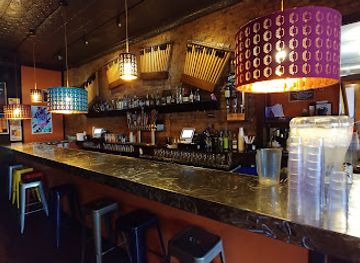
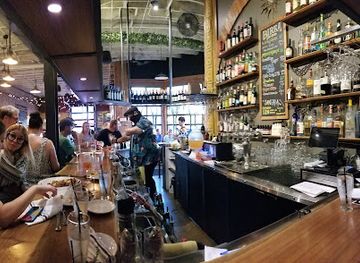
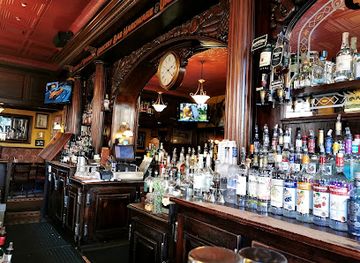
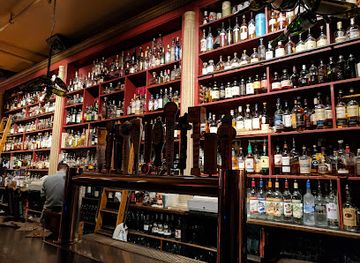
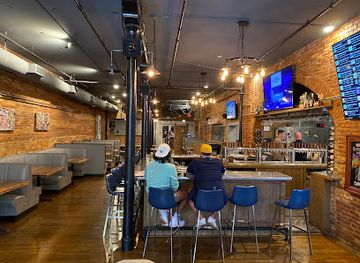
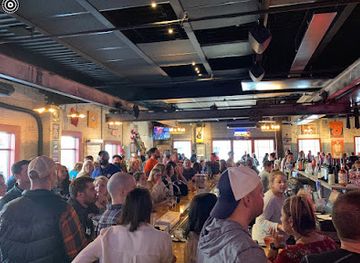
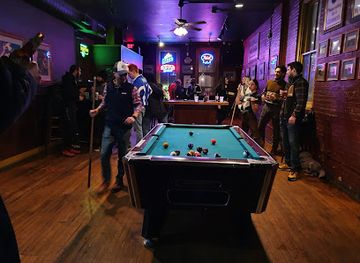
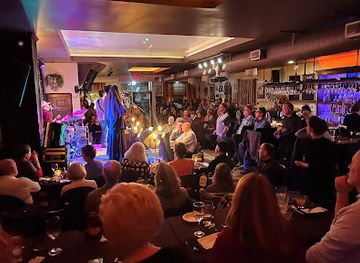
Downtown Syracuse's evening life is concentrated in Armory Square and the blocks around Walton Street, where restaurants, bars and converted industrial buildings create the city's most established central nightlife area. The mood ranges from relaxed pub and cocktail settings to busier late-evening venues, with crowds often shaped by theatre performances, concerts and events at the Oncenter. The Landmark Theatre brings a different kind of night out, offering touring productions and other performances in a richly decorated historic interior. Clinton Square and Hanover Square are more civic than club-oriented, although festivals and seasonal events can bring temporary evening activity. Syracuse is not primarily known for a large downtown nightclub strip, so visitors should check current listings rather than assume every venue operates nightly.
-
Irish pub
Kitty Hoyne's Irish Pub
Discover the heart of Irish hospitality at Kitty Hoyne's Irish Pub in Syracuse, where traditional dishes, live music, and a vibrant atmosphere await.
8 min walk · 0.7 km from neighbourhood centre
-
Bar
Al's Wine & Whiskey Lounge
Discover the best selection of wines and whiskeys at Al's Wine & Whiskey Lounge, a cozy bar in Downtown Syracuse, perfect for relaxation and socializing.
6 min walk · 0.5 km from neighbourhood centre
-
Bar
The Hops Spot
Discover a vibrant dining experience at The Hops Spot in Downtown Syracuse, featuring a rich selection of craft beers and delectable bistro cuisine.
7 min walk · 0.6 km from neighbourhood centre
-
Sports bar
PressRoom Pub
Discover the lively atmosphere of PressRoom Pub in Syracuse, where sports meet delicious dining in a vibrant downtown setting.
10 min walk · 0.8 km from neighbourhood centre
Best nightclubs in Downtown Syracuse
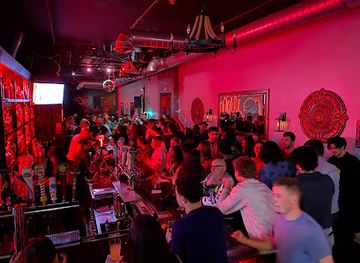
Downtown Syracuse's evening life is concentrated in Armory Square and the blocks around Walton Street, where restaurants, bars and converted industrial buildings create the city's most established central nightlife area. The mood ranges from relaxed pub and cocktail settings to busier late-evening venues, with crowds often shaped by theatre performances, concerts and events at the Oncenter. The Landmark Theatre brings a different kind of night out, offering touring productions and other performances in a richly decorated historic interior. Clinton Square and Hanover Square are more civic than club-oriented, although festivals and seasonal events can bring temporary evening activity. Syracuse is not primarily known for a large downtown nightclub strip, so visitors should check current listings rather than assume every venue operates nightly.
-
Night club
Benjamin's on Franklin
Discover the best of Syracuse nightlife at Benjamin's on Franklin, a vibrant night club, bar, and restaurant offering great food and entertainment.
8 min walk · 0.7 km from neighbourhood centre
-
Live Music
The 443 Social Club & Lounge (formerly The Listening Room at 443)
Discover the rhythm of Syracuse at The 443 Social Club & Lounge, a premier live music venue offering unforgettable performances and a lively atmosphere.
9 min walk · 0.8 km from neighbourhood centre
-
Night club
Orbis Lounge
Orbis Lounge: The ultimate nightlife experience in Syracuse, blending bar, lounge, and nightclub vibes for an unforgettable evening.
5 min walk · 0.4 km from neighbourhood centre
-
Night club
Trexx
Discover Syracuse's nightlife at Trexx, a lively night club offering affordable drinks, great music, and an unforgettable party atmosphere.
9 min walk · 0.7 km from neighbourhood centre

Best shops in Downtown Syracuse
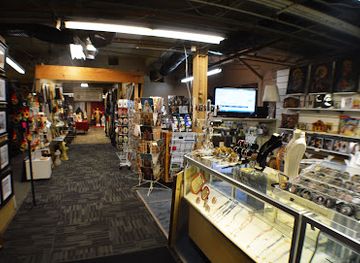
Shopping in downtown Syracuse is more independent and occasion-oriented than department-store focused. South Salina Street and the blocks around Clinton Square contain everyday services, cafés and small businesses, while Armory Square mixes dining with boutiques, galleries and specialist retail in rehabilitated warehouse buildings. Hanover Square and nearby streets contribute smaller-scale local shops rather than a single enclosed shopping centre. The downtown retail offer is particularly tied to arts, design, gifts, books, clothing and event-related browsing, with public festivals and cultural institutions adding temporary stalls or creative-market activity at certain times. Visitors should expect a changing urban mix rather than a permanent market district: individual businesses and stock vary, and the area's strongest reasons to browse are its historic buildings, independent character and proximity to theatres, museums and restaurants.
-
Gift shop
Buy A Great Gift home of the Catholic Shop
Discover the essence of faith and community with unique gifts at Buy A Great Gift, a charming shop in Syracuse specializing in religious and church supplies.
12 min walk · 1.0 km from neighbourhood centre
-
Gift shop
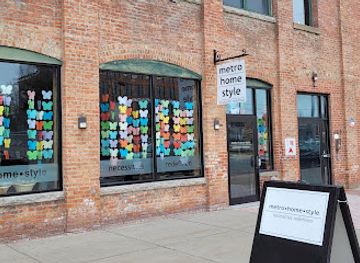
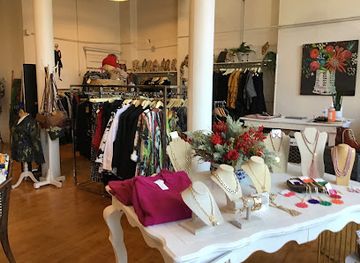
Metro Home Style
Explore Metro Home Style in Syracuse for unique gifts, boutique finds, and locally crafted greeting cards that capture the essence of your travels.
18 min walk · 1.4 km from neighbourhood centre
-
Women's clothing store
Floridella Boutique
Explore Floridella Boutique, a trendy women's clothing store in Downtown Syracuse, offering stylish apparel and a unique shopping experience.
8 min walk · 0.7 km from neighbourhood centre
-
Gift shop
Mixed Methods
Explore Mixed Methods in Syracuse for unique handcrafted gifts and local artisan treasures that embody the spirit of the community.
5 min walk · 0.4 km from neighbourhood centre
Downtown Syracuse essentials
Getting There
Getting Around
Safety
Emergency Situations
Do's and Don'ts
Local Tips

From Eve
Local phrases worth knowing
You don't need to get them perfect. A few words go a long way, and locals appreciate the effort.
Basics
| English | Local | Say it |
|---|---|---|
| Hello | Hey there | [hey thair] |
| Goodbye | See ya | [see yuh] |
| Yes | Yup | [yuhp] |
| No | Nah | [nah] |
| Please/You're welcome | Sure thing | [shur thing] |
| Thank you | Thanks a lot | [thanks uh lot] |
| Excuse me/Sorry | Pardon me | [pahr-dn me] |
| How are you? | What's up? | [wuts up] |
| Fine. And you? | Doing good. You? | [doo-ing good. yuh?] |
| Do you speak English? | You speak English? | [yuh speak ing-glish?] |
| I don't understand | I don't get it | [eye don't get it] |
Eating & Drinking
| English | Local | Say it |
|---|---|---|
| I'd like to see the menu, please | Let me check out the menu, please | [let mee chek out the menu, please] |
| I don't eat meat | I don't do meat | [eye don't do meat] |
| Cheers! | Cheers! | [cheers!] |
| I would like to pay, please | I'll settle up, please | [eye-ll set-ul up, please] |
Emergencies
| English | Local | Say it |
|---|---|---|
| Help! | I need help! | [eye need help] |
| Go away! | Get lost! | [get lost] |
| Call the Police! | Call the cops! | [call the cops] |
| Call a doctor! | Get a doc! | [get a doc] |
| I'm lost | I'm turned around | [eye-m turned uh-round] |
| I'm ill | I'm sick | [eye-m sik] |
Shopping
| English | Local | Say it |
|---|---|---|
| I'd like to buy... | I wanna get... | [eye wanna get] |
| I'm just looking | Just browsing | [just brows-ing] |
| How much is it? | What's the damage? | [wuts the dam-ij] |
| That's too expensive | That's a rip off | [thats uh rip off] |
| Can you lower the price? | Can you do better on the price? | [can yuh do bet-er on the price] |
Time & Numbers
| English | Local | Say it |
|---|---|---|
| What time is it? | What's the time? | [wuts the time] |
| It's one o'clock | It's one | [its one] |
| Half past (10) | Ten thirty | [ten thur-tee] |
| Morning | AM | [A.M.] |
| Afternoon | PM | [P.M.] |
| Evening | Evening | [even-ing] |
| Yesterday | Yesterday | [yes-ter-day] |
| Today | Today | [to-day] |
| Tomorrow | Tomorrow | [to-mor-row] |
| 1 | One | [wun] |
| 2 | Two | [too] |
| 3 | Three | [three] |
| 4 | Four | [four] |
| 5 | Five | [five] |
| 6 | Six | [six] |
| 7 | Seven | [seven] |
| 8 | Eight | [ate] |
| 9 | Nine | [nine] |
| 10 | Ten | [ten] |
Transport & Directions
| English | Local | Say it |
|---|---|---|
| Where's a/the...? | Where's the... | [wheres the] |
| What's the address? | What's the location? | [wuts the loh-kay-shun] |
| Can you show me (on the map)? | Can you point it out? | [can yuh point it out] |
| When's the next (bus)? | When's the next (bus)? | [whens the next (bus)] |
| A ticket (to ....) | A pass (to ....) | [uh pass (to)] |
History of Downtown Syracuse
Indigenous Land and Early Settlement
The land now occupied by downtown Syracuse lies within the traditional homeland of the Onondaga Nation, one of the Haudenosaunee nations whose political and cultural centre remains in Central New York. Euro-American settlement expanded around Onondaga Creek and the salt-producing marshes to the south of the present centre during the late eighteenth and early nineteenth centuries. The name Syracuse was adopted in 1825, linking the new community imaginatively with the ancient Sicilian city. The downtown street plan developed as the settlement grew into a commercial and administrative centre, although the area's deeper history precedes the modern city by centuries.
Canal Commerce and a Growing City
The opening of the Erie Canal through Syracuse in 1825 transformed the settlement's prospects by connecting the Finger Lakes region and the Great Lakes with the Hudson River and New York City. The canal followed the route now associated with Erie Boulevard, bringing freight, merchants and investment into the growing centre. Salt production from nearby Onondaga Lake and marshes supported the local economy, while Clinton Square developed as a prominent public and commercial space beside the canal. Warehouses, shops, banks and civic buildings gradually gave downtown Syracuse the urban form that still appears in its major blocks and public squares.
Railways, Industry and Civic Architecture
Rail transport and industrial expansion strengthened downtown Syracuse during the second half of the nineteenth century, connecting local manufacturers and traders with markets beyond Central New York. Commercial buildings rose in increasingly substantial masonry forms, and institutions established the civic identity of the centre. The late nineteenth and early twentieth centuries produced landmarks such as the Gridley Building and the ornate theatre now known as the Landmark Theatre, while churches, banks, department stores and government offices filled the surrounding streets. Armory Square developed as part of this broader commercial and industrial landscape, its warehouses later becoming important evidence of the city's working past.
Redevelopment and Downtown Renewal
Like many American city centres, downtown Syracuse faced population shifts, suburban retail competition, highway construction and changing patterns of employment after the Second World War. Urban renewal removed or altered parts of the older fabric, while the former canal corridor became a modern road rather than a waterway. From the late twentieth century, rehabilitation of historic commercial and warehouse buildings helped restore activity to areas including Armory Square. Cultural institutions, restaurants, offices, apartments and public events have since supported a more mixed downtown economy. The result is a centre where preservation and redevelopment remain visible alongside the surviving civic, commercial and theatrical landmarks.
Downtown Syracuse in Photos
Browse through our photo collection highlighting the charm and character of the destination.
Neighbourhoods near Downtown Syracuse
The closest neighbourhoods to Downtown Syracuse, if you have time for more than one stop.
-

-


Swipe for more neighbourhoods
Explore more

Explore more of Syracuse
Syracuse, New York blends Erie Canal history, Onondaga heritage, museums, lively neighbourhoods and Finger Lakes gateways for rewarding sightseeing.
Explore Syracuse