

Free Western New York Travel Guide & Mobile App
Explore Western New York with free travel guides. Discover regional history, expert tips, proposed trips, and audio guides on web or mobile app.


Explore Western New York for Niagara Falls, Buffalo architecture, Great Lakes landscapes, wine country, state parks and distinctive regional food.
Read more about Western New York
When is the best time to visit Western New York?
Best: June, August–September · 22–27°C| Month | High (°C) | Rainfall (mm) |
|---|---|---|
| January | 1 | 61 |
| February | 1 | 56 |
| March | 7 | 71 |
| April | 13 | 81 |
| May | 19 | 92 |
| June (best) | 25 | 96 |
| July | 27 | 101 |
| August (best) | 27 | 106 |
| September (best) | 22 | 91 |
| October | 16 | 81 |
| November | 10 | 76 |
| December | 3 | 66 |
Getting to and around Western New York
How to get there
Transportation
Top city travel guides in Western New York
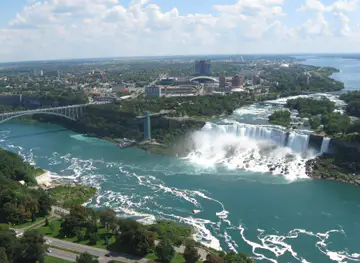
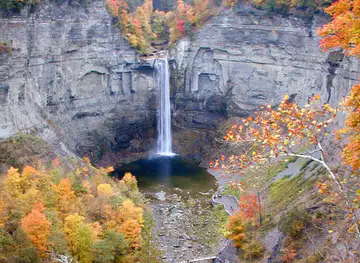
The cities of Western New York, and the easiest places to base yourself.
-
-

-


Swipe for more cities
Destinations in Western New York
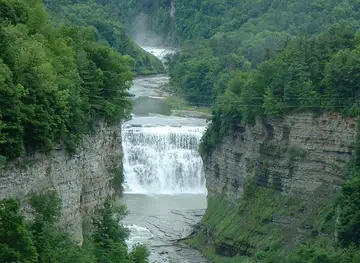
Resorts, valleys and scenic spots worth a trip of their own.
-
-

-

-


Swipe for more destinations
Best attractions in Western New York
Western New York's attractions range from major natural spectacles to carefully preserved urban and rural heritage. Niagara Falls State Park provides viewpoints of the American Falls, Bridal Veil Falls and the Horseshoe Falls, along with trails and seasonal boat excursions near the Niagara River. Buffalo offers architecture, museums, public art, waterfront recreation and cultural institutions, while the Buffalo and Erie County Botanical Gardens and the city's Olmsted park system add a strong landscape dimension. Fort Niagara in Youngstown interprets several centuries of military and colonial history at the mouth of the river. Southwards, Chautauqua Institution combines lectures, performance and visual arts in a lakeside setting, and the vineyards and orchards around Lake Erie support tastings and farm visits. Letchworth State Park, in the Genesee River gorge, is known for waterfalls, overlooks and hiking, while Allegany State Park provides a larger forested setting for camping, boating and winter recreation. The Seneca Iroquois National Museum in Salamanca offers important Indigenous historical and cultural context. Activities vary substantially by season, with boating, cycling and hiking in warmer months and snow sports, skating and indoor cultural visits in winter.
-
Animal park
Hidden Valley Animal Adventure
Explore Hidden Valley Animal Adventure, where family-friendly fun meets wildlife encounters in the heart of New York's countryside!
-
National museum
National Warplane Museum
Explore the rich history of military aviation at the National Warplane Museum in Geneseo, NY, featuring iconic aircraft and thrilling events.
-
Swimming basin
Wiscoy Falls
Explore the breathtaking beauty of Wiscoy Falls in Portageville, NY - a natural paradise for swimming, hiking, and outdoor adventure.


Best landmarks in Western New York
Niagara Falls is Western New York's defining natural landmark: the American Falls, Bridal Veil Falls and the US-facing view of the Horseshoe Falls form a powerful landscape shaped by the Niagara River and the international boundary. In Buffalo, the grain elevators along the Buffalo River and the city's historic canals recall the commercial system created by the Erie Canal, while Buffalo City Hall and the Guaranty Building represent different phases of the city's monumental civic and commercial architecture. The Darwin D. Martin House is a significant example of Frank Lloyd Wright's early twentieth-century residential work, and the Olmsted-designed parkways give Buffalo a distinctive relationship between architecture and designed landscape. Fort Niagara, on the river's eastern approach to Lake Ontario, is an important surviving military landmark with French, British and American layers. Farther south, the Genesee River gorge at Letchworth State Park forms a dramatic geological and scenic landmark, and the Chautauqua Institution grounds express the region's long association with public education, religious thought and the arts. These places represent different identities rather than one uniform regional style.
-
Historical place
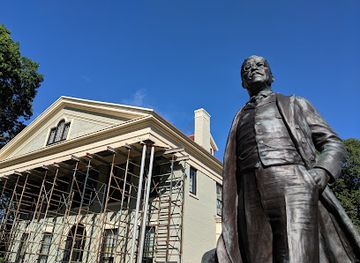
Theodore Roosevelt Inaugural National Historic Site
Discover the site of Theodore Roosevelt's historic inauguration and explore the legacy of one of America's most influential presidents.
-
Historical place museum
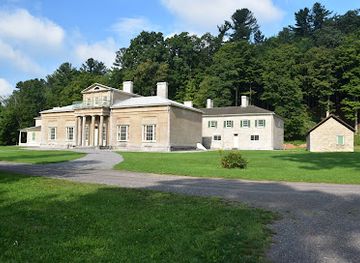
Hyde Hall
Explore Hyde Hall, a stunning neoclassical mansion in Cooperstown, NY, offering rich history and breathtaking views of Lake Otsego.
-
Heritage preservation
Landmark Society Of Western New York
Explore the Landmark Society of Western New York, a stunning historical landmark in Rochester, NY, dedicated to preserving the region's rich heritage.
-
Historical landmark
Historic Site of the Milburn House
Explore the Historic Site of the Milburn House in Buffalo, NY, where architectural beauty meets rich historical significance in a charming neighborhood.


Explore Western New York on the map
Plan your trip on one map. See where the top cities, national parks and sights are, and book hotels and experiences in a few clicks.
Best hotels in Western New York
Best restaurants in Western New York
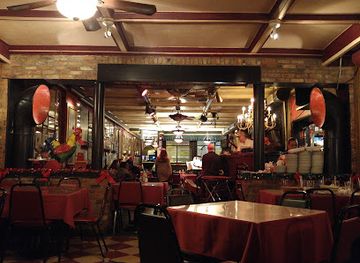
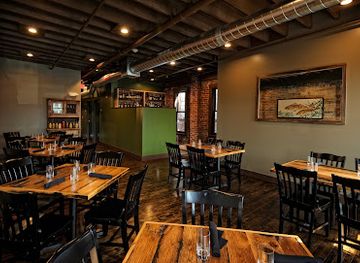
Western New York has a recognisable regional food culture built around Buffalo wings, beef on weck, sponge candy and the generous portions associated with neighbourhood taverns and family restaurants. Buffalo wings are traditionally served with a hot sauce and butter-based coating, while beef on weck pairs roast beef with a kummelweck roll marked by coarse salt and caraway. These specialities sit alongside lake fish, locally raised meat, apples, grapes, cherries and produce from the farms around the Lake Erie plain. Buffalo's dining scene includes Italian-American restaurants, Polish and other immigrant-influenced food traditions, contemporary kitchens, breweries and coffee shops. Niagara County and Chautauqua County offer wineries, cider producers, farm stands and seasonal menus, and rural towns often centre their evening dining on diners, pubs and inns. Farmers' markets are useful for regional fruit, baked goods and preserves, while specialty food shops provide practical ways to explore the area beyond restaurant meals.
-
Grill
Anchor Bar
Experience the authentic taste of Buffalo at Anchor Bar, where legendary chicken wings were born and flavors come alive.
-
Italian
Lucia's On The Lake
Experience exquisite Italian-American dining with breathtaking views at Lucia's On The Lake - Hamburg's culinary treasure by Lake Erie.
-
Southern
Toutant
Experience the rich flavors of Southern cuisine at Toutant in Buffalo – where every dish tells a story.
-
Fondue
The Melting Pot
Experience the art of fondue at The Melting Pot in Buffalo—a fine dining destination where every bite is an adventure.


Best bars in Western New York
Evening life in Western New York is concentrated in Buffalo, where neighbourhood pubs, breweries, cocktail bars, restaurants and live-music venues support a fuller urban night-time scene. Allentown, Hertel Avenue, the Elmwood Village and the waterfront each have different mixes of dining and drinking establishments, although individual venues and opening arrangements change. Niagara Falls has bars, hotel lounges, restaurants and entertainment aimed at visitors, with activity usually focused around the falls and central tourist areas rather than a large club district. In smaller cities and rural counties, traditional taverns, brewery taprooms, seasonal events and live music are more characteristic than nightclubs. Chautauqua Institution brings evening concerts, theatre and lectures in season, while lakeside communities become busier during summer. Visitors should plan transport carefully outside Buffalo, as late-night public options are limited in many rural areas and drinking is not a prerequisite for enjoying the region's evening culture.
-
Bar
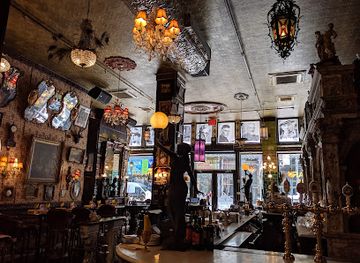
Oscar Wilde
Experience the vibrant atmosphere of Oscar Wilde, a unique New American restaurant and bistro in Manhattan, offering exquisite cuisine and craft cocktails.
-
Breakfast
Brian's USA Diner
Experience the charm of classic American breakfasts at Brian's USA Diner in Mt. Morris, NY - where every bite tells a story.
-
Cocktail bar
The Rum House
Experience the best of Manhattan nightlife at The Rum House, where craft cocktails and live music create an unforgettable atmosphere.
-
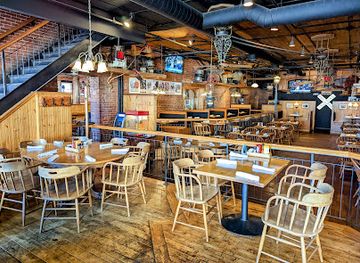
Brewpub
Pearl Street Grill & Brewery
Experience the best of local brews and hearty American cuisine at Pearl Street Grill & Brewery in Buffalo, NY.


Best nightclubs in Western New York
Evening life in Western New York is concentrated in Buffalo, where neighbourhood pubs, breweries, cocktail bars, restaurants and live-music venues support a fuller urban night-time scene. Allentown, Hertel Avenue, the Elmwood Village and the waterfront each have different mixes of dining and drinking establishments, although individual venues and opening arrangements change. Niagara Falls has bars, hotel lounges, restaurants and entertainment aimed at visitors, with activity usually focused around the falls and central tourist areas rather than a large club district. In smaller cities and rural counties, traditional taverns, brewery taprooms, seasonal events and live music are more characteristic than nightclubs. Chautauqua Institution brings evening concerts, theatre and lectures in season, while lakeside communities become busier during summer. Visitors should plan transport carefully outside Buffalo, as late-night public options are limited in many rural areas and drinking is not a prerequisite for enjoying the region's evening culture.
-
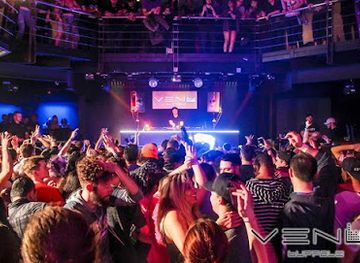
Night club
VENU
Experience the vibrant nightlife of Buffalo at VENU, a premier night club and event venue offering unforgettable music, dancing, and drinks.
-
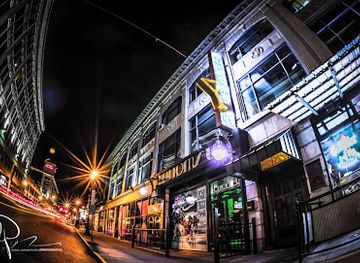
Night club
Bottoms Up
Discover the heart of Buffalo's nightlife at Bottoms Up, a dynamic night club offering creative cocktails and an energetic dance scene.
Best shops in Western New York
Shopping in Western New York is strongest in Buffalo's independent neighbourhoods, traditional commercial streets and public markets, with the Broadway-Fillmore area particularly associated with the historic Broadway Market. Buffalo also has specialist food shops, antique dealers, bookshops, galleries and boutiques in districts such as Allentown, Elmwood Village and Hertel Avenue, while Niagara Falls focuses more heavily on visitor goods and practical travel purchases. Outside the cities, farm stands, orchard shops, winery tasting rooms and seasonal markets offer apples, grapes, preserves, baked goods, honey, maple products and locally made drinks. Chautauqua County and the foothill communities are useful places to look for rural produce, crafts and small galleries rather than extensive retail centres. Regional souvenirs commonly include Buffalo food products, Great Lakes-themed goods, Indigenous-made items purchased respectfully and locally produced wine or beer. Retail hours and market schedules vary considerably by season, especially in smaller towns, so check current arrangements before making a special journey.
-
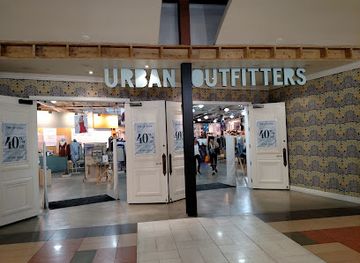
Shopping mall
Walden Galleria
Discover Walden Galleria: Buffalo's premier shopping mall with diverse stores, dining options, and vibrant entertainment for a memorable experience.
-
Shopping mall
Mckinley Mall
Discover Mckinley Mall, a premier shopping destination in Blasdell, NY, featuring a wide array of stores, dining options, and family-friendly entertainment.
-
Gift shop
The Shops On West Ridge
Explore Rochester's hidden gem for unique gifts, antiques, and home decor at The Shops On West Ridge, where every visit reveals new treasures.
-
Gift shop
Unlimited 716 LLC
Explore Unlimited 716 LLC, a unique gift shop in Niagara Falls, offering locally inspired souvenirs and original designs for every traveler.

Get your free copy of our complete guide to Western New York, delivered straight to you.
Everything on this page, from attractions and restaurants to essentials and local phrases, in one PDF you can read offline, print or share.
Already have an account? Sign in
Your Western New York guide is ready.
We'll send it to · Not you? Sign out

Getting your guide ready…
We are putting together a fresh copy of the Western New York guide. This can take up to a minute.
This can take a few moments. If your browser asks, choose Allow so the download can start. You'll find the guide in your Downloads folder.
Nothing happened? Download it again
Sorry, the guide is taking longer than usual. Please try again in a minute, or get it by email instead.
Western New York essentials
Currency and Payment
Safety
Emergency Situations
Do's and Don'ts
Local Tips
From Eve
Local phrases worth knowing
You don't need to get them perfect. A few words go a long way, and locals appreciate the effort.
Basics
| English | Local | Say it |
|---|---|---|
| Hello | Hey | [hey] |
| Goodbye | See ya | [see yah] |
| Yes | Yeah | [yeh] |
| No | Nope | [nohp] |
| Please/You're welcome | No problem | [noh prob-lum] |
| Thank you | Thanks | [thanks] |
| Excuse me/Sorry | Pardon me | [pardon me] |
| How are you? | How ya doin'? | [how yah doin'] |
| Fine. And you? | Good. You? | [good. you?] |
| Do you speak English? | You speakin' English? | [you speakin' English?] |
| I don't understand | I don't get it | [I don't get it] |
Eating & Drinking
| English | Local | Say it |
|---|---|---|
| I'd like to see the menu, please | Can I see the menu? | [can I see the menu?] |
| I don't eat meat | I'm a vegetarian | [I'm a vege-tarian] |
| Cheers! | Cheers! | [cheers] |
| I would like to pay, please | Can I get the check? | [can I get the check?] |
Emergencies
| English | Local | Say it |
|---|---|---|
| Help! | Help! | [help] |
| Go away! | Get lost! | [get lost] |
| Call the Police! | Call 911! | [call 911] |
| Call a doctor! | Get a doctor! | [get a doctor] |
| I'm lost | I'm all turned around | [I'm all turned around] |
| I'm ill | I'm not feelin' well | [I'm not feelin' well] |
Shopping
| English | Local | Say it |
|---|---|---|
| I'd like to buy... | I wanna buy... | [I wanna buy...] |
| I'm just looking | Just browsing | [just browsing] |
| How much is it? | What’s the price? | [what’s the price?] |
| That's too expensive | That’s too pricey | [that’s too pricey] |
| Can you lower the price? | Can ya give me a better price? | [can ya give me a better price?] |
Time & Numbers
| English | Local | Say it |
|---|---|---|
| What time is it? | What time is it? | [what time is it?] |
| It's one o'clock | It's one o'clock | [it's one o'clock] |
| Half past (10) | Half past ten | [half past ten] |
| Morning | Mornin' | [mornin'] |
| Afternoon | Afternoon | [afternoon] |
| Evening | Evenin' | [evenin'] |
| Yesterday | Yesterday | [yesterday] |
| Today | Today | [today] |
| Tomorrow | Tomorrow | [tomorrow] |
| 1 | One | [one] |
| 2 | Two | [two] |
| 3 | Three | [three] |
| 4 | Four | [four] |
| 5 | Five | [five] |
| 6 | Six | [six] |
| 7 | Seven | [seven] |
| 8 | Eight | [eight] |
| 9 | Nine | [nine] |
| 10 | Ten | [ten] |
Transport & Directions
| English | Local | Say it |
|---|---|---|
| Where's a/the...? | Where's a...? | [where's a...?] |
| What's the address? | What's the address? | [what's the address?] |
| Can you show me (on the map)? | Can you point it out? | [can you point it out?] |
| When's the next (bus)? | When's the next bus? | [when's the next bus?] |
| A ticket (to ....) | A ticket to... | [a ticket to...] |
History of Western New York
Indigenous Homelands and the Haudenosaunee
Western New York lies within the historic homelands of Haudenosaunee nations, including the Seneca, one of the six nations of the Iroquois Confederacy. The region's waterways, forests and fertile river valleys supported travel, trade, diplomacy and agriculture long before European settlement. The Seneca maintained important communities in the Genesee and Niagara areas, and their history remains central to the identity of the region. Contemporary Seneca Nation territories and cultural institutions continue this living connection, particularly in the western Southern Tier.
Fort Niagara and the Imperial Borderlands
The Niagara corridor became strategically important during the colonial struggles between France, Britain and Indigenous powers. Fort Niagara, at the mouth of the Niagara River, was first established by the French in the eighteenth century and later taken by the British. Control of the fort influenced movement between the Great Lakes and the interior of North America. The site was contested again during the American Revolution and the War of 1812, leaving Western New York with a military history closely tied to the international border and the waterways connecting the Great Lakes.
The Erie Canal and Buffalo's Rise
The opening of the Erie Canal in 1825 transformed Buffalo from a small lake port into the western gateway of a water route linking the Great Lakes with the Hudson River and New York City. Grain, timber and other commodities passed through the harbour, while canal commerce brought population, capital and manufacturing. Buffalo's grain elevators, canalside districts and monumental commercial buildings preserve the physical legacy of this change. The canal also helped make the city a major point of migration and exchange between the interior and the Atlantic seaboard.
The War of 1812 and Border Fortifications
Because Western New York faced British North America across the Niagara River and Lake Erie, it became an active theatre during the War of 1812. Fighting occurred around Buffalo, Black Rock, Fort Niagara and the Niagara frontier, and several communities suffered destruction during the conflict. The war shaped the later development of coastal defences and reinforced the strategic importance of the Great Lakes. Fort Niagara and other surviving military landscapes offer visitors a way to understand how the border influenced settlement and politics in the early United States.
Hydropower and Industrialisation
The Niagara River's immense flow made the falls and surrounding waterways a source of mechanical and electrical power. By the late nineteenth and early twentieth centuries, hydroelectric development helped establish energy-intensive industries in Niagara County and supported Buffalo's manufacturing economy. The region became associated with grain processing, steel, chemicals, machinery and transport infrastructure. Industrial decline later altered the urban landscape, but surviving factories, grain elevators, canals and power-related structures remain important reminders that Western New York's prosperity was built as much on engineering and logistics as on natural scenery.
Immigration, Urban Culture and Architecture
Buffalo's industrial and port economy attracted successive communities from Europe and elsewhere, creating neighbourhoods with varied religious institutions, foodways and cultural organisations. Wealth generated by commerce and manufacturing funded substantial houses, parks, railway buildings and civic architecture, including work associated with leading American architects. Buffalo's park and parkway system, designed in part by Frederick Law Olmsted, linked urban neighbourhoods with green space. These layers of migration and investment remain visible in the city's streets, markets, churches and public buildings.
The Modern Heritage and Tourism Economy
During the late twentieth century, Western New York faced population loss, industrial contraction and the decline of some traditional commercial districts. Buffalo and Niagara Falls subsequently placed greater emphasis on waterfront regeneration, heritage conservation, higher education, healthcare, culture and tourism. The preservation and reuse of historic buildings, the expansion of public waterfront access and renewed interest in the Erie Canal and industrial landmarks have reshaped parts of the region. At the same time, agriculture, wine production, outdoor recreation and Indigenous cultural presence remain important beyond the main cities.
Western New York in Photos
Browse through our photo collection highlighting the charm and character of the destination.
Neighbouring regions of Western New York
The closest regions to Western New York, if you have time for more than one.
-

-

-

-

-


Swipe for more regions
Explore more

Explore more of New York
Discover the electrifying energy, iconic landmarks, and diverse cultural experiences of New York City, the ultimate urban playground for travelers from around the world.
Explore New York