
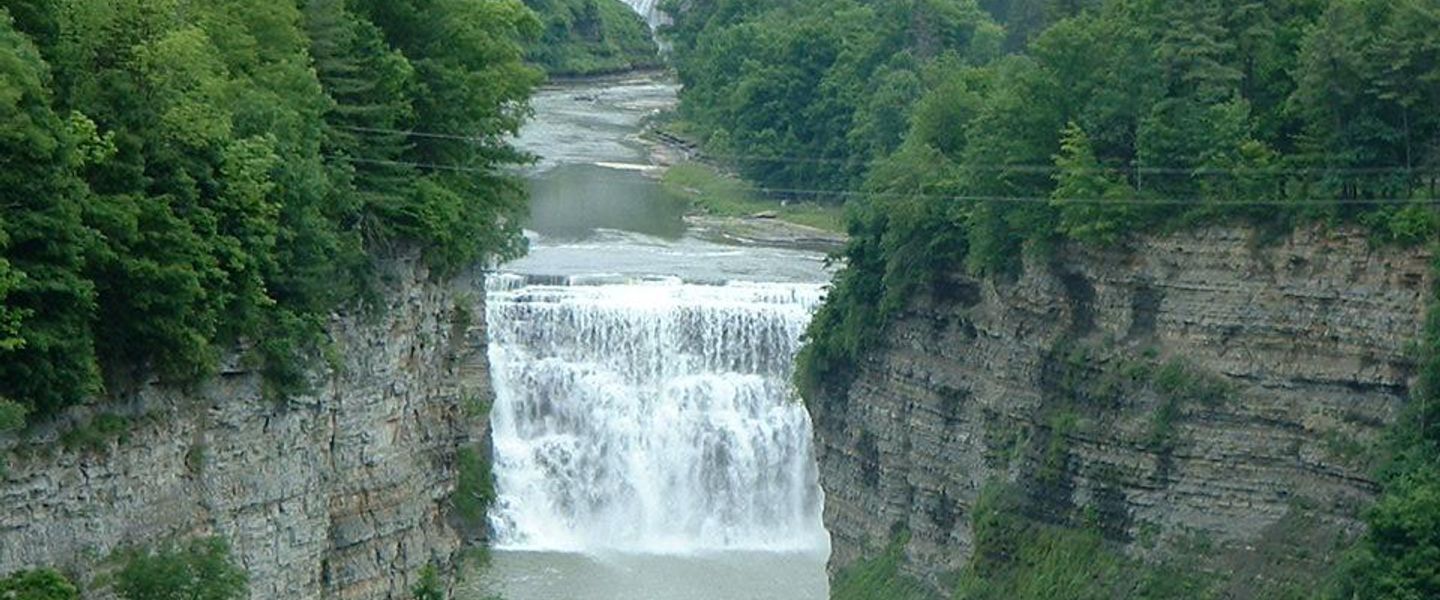
Letchworth State Park, New York Travel Guide
Discover the awe-inspiring beauty of Letchworth State Park, New York's very own 'Grand Canyon,' offering waterfalls, hiking trails, and rich history for the ultimate nature escape.
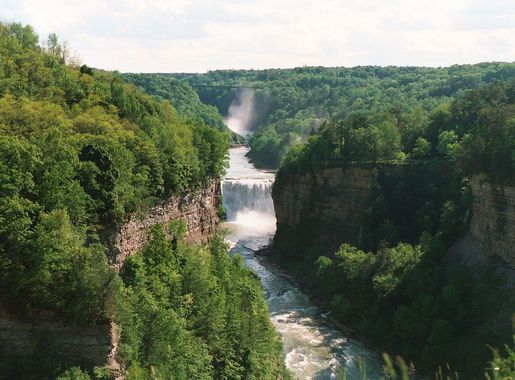
Letchworth State Park, often called the 'Grand Canyon of the East,' is a stunning natural wonder located in New York State. The park spans over 14,000 acres and is renowned for its breathtaking scenery, including three major waterfalls along the Genesee River. Lush forests, deep gorges, and dramatic cliffs make it a perfect escape into nature. History buffs will appreciate the park's rich past, with landmarks like the Glen Iris Inn, once the home of William Pryor Letchworth, the park's namesake. The museum within the park offers insights into the area's geology, Native American history, and the life of Letchworth himself. Outdoor enthusiasts will find a multitude of activities to enjoy. Hiking trails of varying difficulty levels wind through the park, offering spectacular views at every turn. For a more leisurely experience, visitors can enjoy kayaking on the Genesee River, hot air balloon rides, or simply picnicking in one of the many scenic spots. The park is also a favorite for bird watchers and photographers, thanks to its diverse wildlife and picturesque landscapes.

Know before you go
Hi, I'm Eve. Here are a few practical things to know before exploring Letchworth State Park.
- Visit during fall for the most stunning foliage views.
- Wear sturdy hiking shoes to navigate the park's varied terrain comfortably.
- Check out the park's event calendar for special programs and tours.
- Bring a camera to capture the park's breathtaking vistas and wildlife.
- Stop by the Glen Iris Inn for a meal or stay overnight for a unique experience.
Explore Letchworth State Park: Things to Do, Places to Eat, Hotels & More
Handpicked recommendations for top attractions, local dining, accommodations, and more

Best attractions in Letchworth State Park
Top-rated picks
Best Attractions

Letchworth State Park Visitor Center
Explore the breathtaking beauty of Letchworth State Park Visitor Center, your gateway to stunning landscapes and outdoor adventures in New York.

Letchworth State Park Upper Falls
Explore the breathtaking Letchworth State Park Upper Falls, a natural gem offering stunning vistas, hiking trails, and outdoor adventures in New York's Finger Lakes region.

Archery Field Overlook
Experience the stunning beauty of Archery Field Overlook in Castile, NY, where panoramic views and nature's tranquility await every visitor.

Letchworth State Park Campground
Experience the breathtaking landscapes and outdoor adventures at Letchworth State Park Campground, known as the Grand Canyon of the East.

Best landmarks in Letchworth State Park
Top-rated picks
Best Landmarks

Glen Iris Inn
Discover the charm of Glen Iris Inn, nestled in Letchworth State Park, offering exquisite dining, cozy accommodations, and unique gifts in a stunning natural setting.

Letchworth State Park Visitor Center
Explore the breathtaking landscapes and rich history at Letchworth State Park Visitor Center, your gateway to nature's wonders in New York.

Letchworth State Park Upper Falls
Experience the breathtaking views and outdoor adventures at Letchworth State Park Upper Falls, the Grand Canyon of the East, in New York.

Archery Field Overlook
Discover the stunning vistas of Archery Field Overlook, a scenic spot in Letchworth State Park, perfect for nature lovers and photographers alike.

Best restaurants in Letchworth State Park
Top-rated picks
Best Restaurants

Glen Iris Inn
Experience unparalleled beauty at Glen Iris Inn nestled in Letchworth State Park with exquisite dining, lodging, and unique gifts.

Lower Fall Restaurant and Gifts
Discover delightful cuisine and charming gifts at Lower Fall Restaurant in scenic Hunt, NY - a must-visit stop for all travelers.

Best bars in Letchworth State Park
Top-rated picks
Best Bars

Letchworth State Park
Discover the stunning beauty of Letchworth State Park, a natural wonder with breathtaking waterfalls and endless outdoor adventures in New York.

Charcoal Corral
Discover Charcoal Corral in Perry, NY - a perfect blend of BBQ, burgers, and fun with miniature golf and arcade games for an unforgettable experience.

Glen Iris Inn
Discover the perfect blend of nature and fine dining at Glen Iris Inn, your gateway to Letchworth State Park's stunning waterfalls and rich landscapes.

High Banks Tavern
Discover High Banks Tavern in Mt. Morris, where delicious American cuisine meets a warm and inviting atmosphere for a memorable dining experience.

Best shops in Letchworth State Park
Top-rated picks
Best Shops

Letchworth State Park
Explore Letchworth State Park, a breathtaking natural wonder in New York, featuring stunning waterfalls, diverse trails, and rich history for nature lovers and adventurers.

Charcoal Corral
Discover Charcoal Corral, a family-friendly restaurant in Perry, NY, offering delicious American cuisine, BBQ, ice cream, and fun activities in a welcoming atmosphere.

Glen Iris Inn
Discover culinary delights and breathtaking landscapes at Glen Iris Inn, nestled in Letchworth State Park, a true gem for nature-loving foodies.

Letchworth State Park Visitor Center
Explore Letchworth State Park Visitor Center for insights into nature's beauty, history, and the adventure of New York's Grand Canyon.

Explore Letchworth State Park on the Map
A handpicked selection of must-see spots in Letchworth State Park, mapped for you.
Letchworth State Park Essentials
-
Letchworth State Park is located in western New York. The nearest major cities are Rochester (about 35 miles north) and Buffalo (about 60 miles west). The closest airport is Greater Rochester International Airport (ROC). From the airport, you can rent a car or take a shuttle service to the park. The park is accessible by car via Interstate 390 (exit 7) and is well-signposted.
-
The best way to get around Letchworth State Park is by car. The park covers over 14,000 acres, and having a vehicle will allow you to explore its many scenic spots and hiking trails. There is no public transportation within the park, but bike rentals are available. Parking is available at various points throughout the park, including major attractions like the three main waterfalls.
-
The official currency is the United States Dollar (USD). Credit cards are widely accepted at the park's visitor centers, gift shops, and restaurants. However, it is advisable to carry some cash, especially for entrance fees, smaller vendors, or if you plan to visit nearby towns. ATMs can be found in nearby towns but not within the park itself.
-
Letchworth State Park is generally very safe for tourists. However, standard precautions should be taken. Lock your vehicle and keep valuables out of sight. Be cautious around the waterfalls and steep cliffs, as these areas can be hazardous. There are no specific high-crime areas targeting tourists, but always stay aware of your surroundings.
-
In case of emergency, dial 911 for immediate assistance. There are park rangers and staff available who can provide help in emergency situations. First aid stations are located at key points throughout the park. It is also recommended to have travel insurance that covers medical emergencies. The nearest hospitals are in Warsaw and Geneseo.
-
Fashion: Do wear comfortable, weather-appropriate clothing and sturdy hiking shoes. Avoid wearing flip-flops or sandals if you plan to hike. Religion: There are no specific religious customs to observe, but general respect for nature and other visitors is expected. Public Transport: There is no public transport within the park. If using park shuttles, do follow the guidelines provided. Greetings: A simple 'Hello' or 'Hi' is appropriate. Locals are generally friendly and open to conversations. Eating & Drinking: Do use designated picnic areas and dispose of trash properly. Don't feed the wildlife, as it is harmful to their natural diet and behavior.
-
To experience Letchworth State Park like a local, visit early in the morning or late in the afternoon to avoid crowds. Take time to explore the lesser-known hiking trails for a more secluded experience. Attend one of the park’s seasonal events or guided tours to learn more about its history and natural features. Don't miss the chance to see the park's three major waterfalls: Upper, Middle, and Lower Falls.
When is the best time to visit Letchworth State Park?
Useful Local Phrases for Letchworth State Park
You don't need to speak the language perfectly. Even learning a few simple words can make conversations warmer—and locals usually appreciate the effort.
— Eve

Here are the phrases I use most often in Letchworth State Park. Try a few—you'll be surprised how far they go! 😊
❤️
-
- HelloHowdy
[haw-dee] - GoodbyeSee ya later
[see yuh lay-tur] - YesYup
[yuhp] - NoNah
[nah] - Please/You're welcomeSure thing
[shur thing] - Thank youThanks a bunch
[thanks uh bunch] - Excuse me/SorryPardon me
[par-dun me] - How are you?Howdy do?
[haw-dee doo] - Fine. And you?Just peachy. How 'bout you?
[just pee-chee. how bawt yuh] - Do you speak English?Y'all speak English?
[yaw-l speak ing-glish] - I don't understandI ain't got a clue
[I aint got uh cloo]
- HelloHowdy
-
- I'd like to see the menu, pleaseCan I take a gander at the menu?
[can aye take uh gan-der at the menu] - I don't eat meatI'm a vegetarian
[I'm uh ve-jeh-tair-ee-un] - Cheers!Bottoms up!
[bot-ums up] - I would like to pay, pleaseCan I settle the bill, please?
[can aye set-ul thu bill, please]
- I'd like to see the menu, pleaseCan I take a gander at the menu?
-
- Help!I need a hand!
[I need uh hand] - Go away!Scram!
[skram] - Call the Police!Ring up the cops!
[ring up thu cops] - Call a doctor!Get me a doc!
[get me uh dok] - I'm lostI'm turned around
[I'm turned uh-round] - I'm illI'm under the weather
[I'm un-der thu weh-thur]
- Help!I need a hand!
-
- I'd like to buy...I'm fixin' to purchase...
[I'm fix-in tuh pur-chase] - I'm just lookingJust browsing
[just brow-zing] - How much is it?What's the damage?
[whuts thu dam-ij] - That's too expensiveThat's a bit steep
[thats uh bit steep] - Can you lower the price?Can ya cut me a deal?
[can yuh cut me uh deel]
- I'd like to buy...I'm fixin' to purchase...
-
- What time is it?What's the time o' day?
[whuts thu time uh day] - It's one o'clockIt's one
[its one] - Half past (10)Ten-thirty
[ten-thur-tee] - MorningMornin'
[morn-in] - AfternoonAfternoon
[after-noon] - EveningEvenin'
[ev-en-in] - YesterdayYest'day
[yest-duh] - TodayToday
[to-day] - TomorrowTomorra
[tom-or-ruh] - 1One
[wun] - 2Two
[too] - 3Three
[three] - 4Four
[four] - 5Five
[five] - 6Six
[six] - 7Seven
[seven] - 8Eight
[ate] - 9Nine
[nine] - 10Ten
[ten]
- What time is it?What's the time o' day?
-
- Where's a/the...?Where's the...
[wheres thu] - What's the address?What's the addy?
[whuts thu add-ee] - Can you show me (on the map)?Can ya point it out (on the map)?
[can yuh point it out (on thu map)] - When's the next (bus)?When's the next (bus)?
[whens thu next (bus)] - A ticket (to ....)A pass (to ....)
[uh pass (to)]
- Where's a/the...?Where's the...
History of Letchworth State Park
-
Long before European settlers arrived, the area now known as Letchworth State Park was home to the Seneca Nation, one of the Six Nations of the Iroquois Confederacy. The Seneca people referred to the Genesee River as 'Casconchiagon,' meaning 'River of Many Falls.' The river and surrounding land were of immense cultural and spiritual importance, serving as a site for hunting, fishing, and gathering.
-
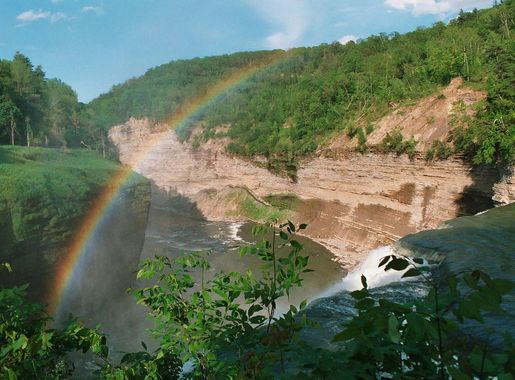
In 1859, a wealthy businessman named William Pryor Letchworth purchased a large tract of land that would eventually become Letchworth State Park. Letchworth was captivated by the natural beauty of the Genesee River Gorge and the surrounding woodlands. He constructed his Glen Iris Estate, named after the Greek goddess of the rainbow, and began efforts to preserve the area's natural landscape.
-
As Letchworth's vision for the preservation of the area grew, he transformed his Glen Iris home into a public inn. In 1906, Letchworth donated his estate to the American Scenic and Historic Preservation Society, ensuring the land would be protected for future generations. The Glen Iris Inn still operates today as a historic hotel, offering visitors a glimpse into the past.
-
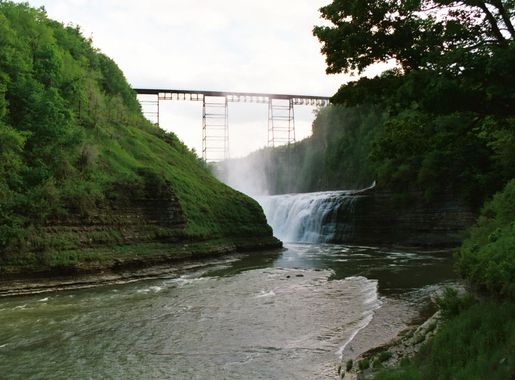
The Portage Bridge, originally built in 1852, was an engineering marvel of its time, spanning the Genesee River Gorge. This wooden trestle bridge was later replaced by an iron structure in 1875 after a devastating fire. The bridge became an iconic symbol and a crucial transportation link. In 2017, a modern steel arch bridge was inaugurated, continuing the legacy of connecting the region while offering breathtaking views of the gorge.
-
One of the most dramatic features of Letchworth State Park is the Great Bend, where the Genesee River makes a sweeping curve through the gorge. The Middle Falls, one of the park's three major waterfalls, is particularly notable for its height and volume. Native American legends speak of the falls' spiritual significance, and today they remain a focal point for visitors.
-
During the Great Depression, the Civilian Conservation Corps (CCC) played a significant role in developing the infrastructure of Letchworth State Park. From 1933 to 1942, the CCC built trails, shelters, and other facilities that are still in use today. Their work not only provided employment during a time of economic hardship but also contributed to the park's long-term preservation and accessibility.
-
Established in 1913, the William Pryor Letchworth Museum houses a vast array of artifacts and exhibits detailing the history of the park and the surrounding region. The museum includes Native American artifacts, historical photographs, and personal items from William Pryor Letchworth. It serves as an educational resource for visitors interested in the cultural and natural history of the area.
-
Mary Jemison, known as the 'White Woman of the Genesee,' was a frontierswoman captured by a Seneca war party in 1758. She chose to remain with the Seneca, marrying and raising a family. Her life story provides a unique perspective on the cultural exchanges between Native Americans and European settlers. A statue of Mary Jemison stands in Letchworth State Park, commemorating her remarkable life and legacy.
Neighbouring destination travel guides
Browse our curated selection of top destinations, scenic points, and must-visit spots in the area.


Your all‑in‑one travel companion app
Explore expert travel guides, compare and book tours, experiences, hotels, and more—all from the palm of your hand. Download now for seamless trip planning wherever your wanderlust takes you.


Explore More of Western New York

Looking beyond Letchworth State Park? Discover Western New York for broader travel guides, local hot-spots, and regional highlights.
Explore Western New YorkExplore More of New York

Looking beyond Letchworth State Park? Discover New York for broader travel guides, local hot-spots, and regional highlights.
Explore New YorkLetchworth State Park in Photos
Browse through our photo collection highlighting the charm and character of the destination.






Letchworth State Park: The Grand Canyon of the East
Letchworth State Park, often called the 'Grand Canyon of the East,' is a stunning natural wonder located in New York State. The park spans over 14,000 acres and is renowned for its breathtaking scenery, including three major waterfalls along the Genesee River. Lush forests, deep gorges, and dramatic cliffs make it a perfect escape into nature. History buffs will appreciate the park's rich past, with landmarks like the Glen Iris Inn, once the home of William Pryor Letchworth, the park's namesake. The museum within the park offers insights into the area's geology, Native American history, and the life of Letchworth himself. Outdoor enthusiasts will find a multitude of activities to enjoy. Hiking trails of varying difficulty levels wind through the park, offering spectacular views at every turn. For a more leisurely experience, visitors can enjoy kayaking on the Genesee River, hot air balloon rides, or simply picnicking in one of the many scenic spots. The park is also a favorite for bird watchers and photographers, thanks to its diverse wildlife and picturesque landscapes.