

Ouachita National Forest Travel Guide - Free Web & App
Your ultimate guide to Ouachita National Forest. Discover top landmarks, proposed trips, and local tips. Free on the web or via the Evendo companion app.


Ouachita National Forest in Oklahoma offers forested mountains, Talimena Scenic Drive overlooks, hiking, camping and wildlife near Talihina.
Forest and Mountain Landscape
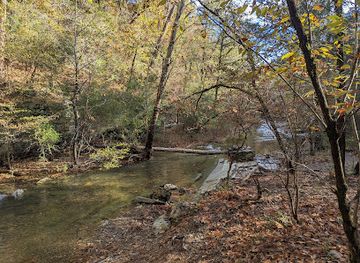
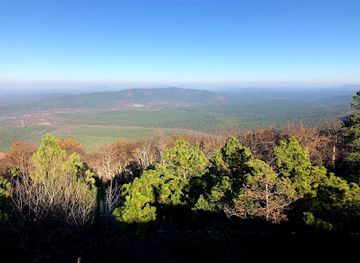
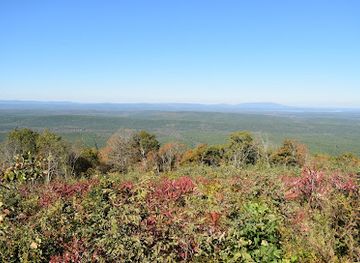
In southeastern Oklahoma, the Ouachita National Forest occupies a rugged corner of the Ouachita Mountains, where long forested ridges, narrow valleys and clear-running streams create a landscape quite unlike the state’s better-known plains. The Oklahoma portion lies chiefly around the Winding Stair and Kiamichi mountain ranges, close to Talihina, Heavener, Wister and Poteau. Its hardwood and pine forests change character with the seasons, while exposed ridgelines provide wide views across folded mountain country.Read more about Ouachita National Forest
Scenic Roads and Outdoor Exploration
History and Local Character
When is the best time to visit Ouachita National Forest?
Best: March–April, October · 19–24°C| Month | High (°C) | Rainfall (mm) |
|---|---|---|
| January | 11 | 65 |
| February | 14 | 61 |
| March (best) | 19 | 89 |
| April (best) | 24 | 99 |
| May | 29 | 117 |
| June | 33 | 88 |
| July | 34 | 79 |
| August | 34 | 89 |
| September | 31 | 94 |
| October (best) | 24 | 94 |
| November | 17 | 86 |
| December | 11 | 71 |
Getting to and around Ouachita National Forest
How to get there
Transportation
Best attractions in Ouachita National Forest
The Oklahoma section of the Ouachita National Forest is centred on ridged mountain scenery rather than a single headline attraction. The Winding Stair Mountain National Recreation Area offers access to forest roads, campsites, trails and elevated views in one of the state’s most distinctive upland landscapes. The Talimena Scenic Drive follows the mountain crest from Talihina towards the Arkansas border, linking overlooks with short walking opportunities and changing views across the Kiamichi and Ouachita country. The Black Fork Mountain Wilderness provides a more secluded setting where roads give way to remote forest terrain and opportunities for quiet hiking. Around the forest, the communities of Talihina, Heavener, Poteau and Wister provide practical bases and local context, while nearby attractions such as Talimena State Park and Beavers Bend State Park should be treated as separate destinations rather than parts of the national forest. Streams, hardwood hollows, pine-covered ridges and seasonal foliage form the quieter attractions of the landscape.
-
State park
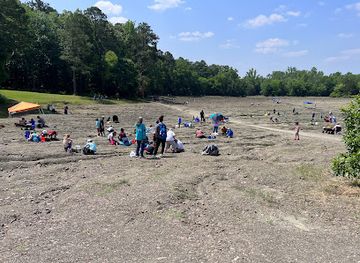
Crater of Diamonds State Park
Discover the thrill of hunting for real diamonds in the only public diamond mine at Crater of Diamonds State Park, Arkansas.
-
State park
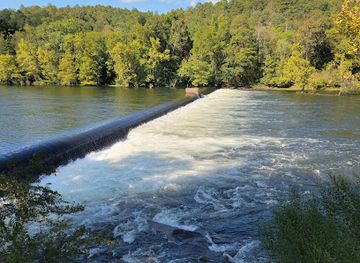
Beavers Bend State Park and Nature Center
Explore the breathtaking landscapes of Beavers Bend State Park, a haven for outdoor enthusiasts and nature lovers alike in Oklahoma.
-
State park
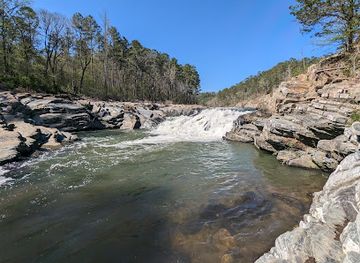
Beavers Bend State Park - Hochatown Area
Explore the breathtaking landscapes and outdoor adventures at Beavers Bend State Park in Hochatown, Oklahoma.
-
State park
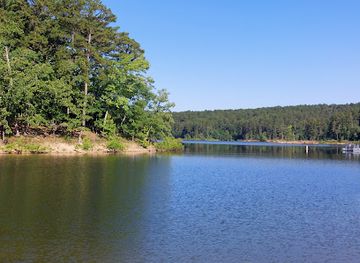
Lake Ouachita State Park
Experience the breathtaking beauty and recreational opportunities at Lake Ouachita State Park, Arkansas's premier outdoor escape.
Best landmarks in Ouachita National Forest
The defining landmarks of the Oklahoma forest are its parallel Ouachita ridges, whose folded geology creates the long wooded horizons seen from the Talimena Scenic Drive. Winding Stair Mountain is the best-known mountain feature within this part of the forest, while the associated national recreation area provides an organised setting for experiencing the ridge country. The Black Fork Mountain Wilderness is significant as a protected roadless landscape, offering a different sense of scale from the drive-accessible overlooks. The Talimena Scenic Drive itself is an important cultural and scenic landmark, representing the region’s twentieth-century transition towards automobile-based mountain tourism. Outside the forest boundaries, Talimena State Park near Talihina and the larger recreational landscapes around Broken Bow are nearby points of interest, but they should not be described as national-forest landmarks.
-
Heritage museum
Beaver's Bend State Park Forest Heritage Center
Explore the cultural treasures of Southeastern Oklahoma at Beaver's Bend State Park Forest Heritage Center, where history and nature intertwine.
-
Scenic spot
Panorama Vista
Discover the breathtaking beauty of Panorama Vista in Talihina, Oklahoma, a must-visit scenic spot for nature lovers and photographers.
-
Scenic spot
Talimena National Scenic Byway
Experience the stunning views and vibrant landscapes of the Talimena National Scenic Byway in Oklahoma, a scenic gem for nature lovers and photographers alike.
-
Campground
Winding Stair Campground
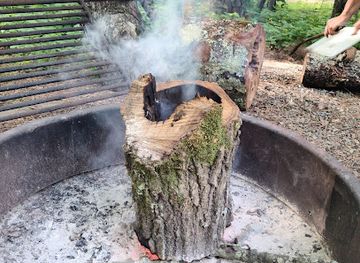
Explore the serene Winding Stair Campground in Oklahoma's Ouachita National Forest, a perfect getaway for nature lovers and adventure seekers.
Explore Ouachita National Forest on the map
Plan your trip on one map. See where the top attractions, landmarks, restaurants and hotels are, and book hotels and experiences in a few clicks.
Best hotels in Ouachita National Forest
Best restaurants in Ouachita National Forest
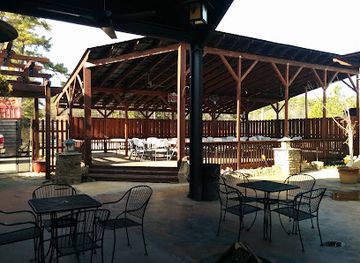
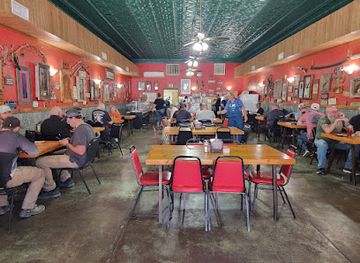
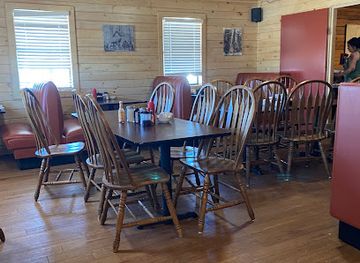
Dining is limited within the forest itself, where established recreation areas are not restaurant districts and visitors commonly bring provisions for day trips or camping. The most reliable choice is to eat before entering the mountains or return to gateway communities such as Talihina, Poteau, Heavener and Wister, where locally oriented cafés, diners, takeaway outlets and family-run restaurants serve the surrounding rural population. Food traditions reflect southeastern Oklahoma’s blend of Southern and Native regional influences, with familiar dishes such as barbecue, fried catfish, burgers, biscuits and other homestyle cooking found in the wider area, though individual menus vary. Farm shops and small local stores may provide useful supplies, but opening arrangements and stock can be limited outside settled areas. Visitors camping in the forest should plan meals, drinking water and cooking fuel in advance rather than expecting refreshments at every trailhead or scenic stop.
-
Steak
Abendigo's
Discover exquisite steaks and lively entertainment at Abendigo's in Broken Bow, Oklahoma—a must-visit destination for food lovers.
-
Breakfast
Pams Diner
Discover Pam's Diner in Talihina - where classic Southern breakfasts meet warm hospitality in a charming diner setting.
-
American
Stevens Gap
Experience delicious American breakfast favorites at Stevens Gap in Hochatown - where great food meets warm hospitality.
-
Mexican
La Villa Mexican Restaurant
Experience authentic Mexican cuisine in Mena at La Villa Mexican Restaurant - where flavor meets tradition in a vibrant atmosphere.

Best bars in Ouachita National Forest
Nightlife is sparse and informal across the Ouachita National Forest. Evenings are more likely to centre on a quiet meal, a drink at an established pub or local restaurant in Talihina, Poteau, Heavener or Wister, or conversation around a permitted campsite than on dedicated entertainment venues. These gateway communities have a rural, community-oriented atmosphere rather than a concentrated bar or nightclub scene, and options can be limited outside normal local trading patterns. Seasonal fairs, community gatherings and cultural events may add occasional evening activity, but programmes vary and should be checked locally. Within the forest, darkness, distance and limited services make it important to bring what is needed for the evening and to respect campsite quiet hours and neighbouring visitors.
-
Mexican
Papa's Mexican Cafe
Experience authentic Mexican cuisine at Papa's Mexican Cafe in Mena, Arkansas, where every dish celebrates the vibrant flavors of Mexico.
-
Restaurant
THE OUACHITAS
Experience the unique flavors and brews at The Ouachitas, a must-visit restaurant and brewpub in Mena, Arkansas.
-
Restaurant
Fully Baked Cafe
Discover the heartwarming flavors of Fully Baked Cafe in Mena, Arkansas—where delicious meals and delightful desserts await every visitor.
-
Sandwich
Subway
Discover Mena's Subway: Fresh, customizable sandwiches and quick bites perfect for tourists exploring Arkansas's scenic beauty.




Best nightclubs in Ouachita National Forest
Nightlife is sparse and informal across the Ouachita National Forest. Evenings are more likely to centre on a quiet meal, a drink at an established pub or local restaurant in Talihina, Poteau, Heavener or Wister, or conversation around a permitted campsite than on dedicated entertainment venues. These gateway communities have a rural, community-oriented atmosphere rather than a concentrated bar or nightclub scene, and options can be limited outside normal local trading patterns. Seasonal fairs, community gatherings and cultural events may add occasional evening activity, but programmes vary and should be checked locally. Within the forest, darkness, distance and limited services make it important to bring what is needed for the evening and to respect campsite quiet hours and neighbouring visitors.
-
Camping cabin
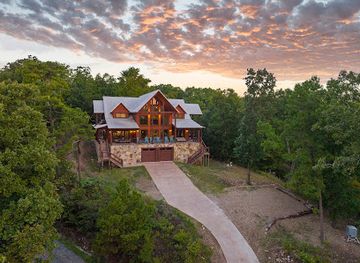
Mile High Club
Experience the perfect blend of rustic charm and modern comfort at the Mile High Club in Broken Bow, Oklahoma, where nature meets adventure.
Best shops in Ouachita National Forest
Shopping within the forest is limited to the practical supplies available in surrounding communities, so visitors should stock up before travelling to remote trailheads and campsites. Talihina is the most natural place to look for provisions and locally made goods associated with the Kiamichi and Ouachita mountain region, while Poteau, Heavener and Wister provide additional shops and everyday services. Small local businesses may carry outdoor essentials, groceries, handmade items or regional food products, but the area does not have a large, continuous retail district or extensive specialist shopping scene. Visitors interested in Choctaw culture should seek products through reputable Native-owned or officially recognised sources and treat cultural items with respect. Local produce, preserves, artwork and rural crafts may be available seasonally, although specific stock and market dates change.
-
Grocery store
Mountain Country Store
Discover the charm of Smithville at Mountain Country Store, your go-to destination for local groceries and craft beers.
-
Book store
Books & Stuf
Explore a charming bookstore in Mena, AR, offering a stunning selection of vintage and contemporary books, perfect for every literary enthusiast.
-
Convenience store
Rich Mountain Country Store
Experience the charm of Rich Mountain Country Store in Mena, Arkansas, where local flavors and warm hospitality await every traveler.
-
Gift shop
Cabin Daddy Backwoods Emporium
Explore Cabin Daddy Backwoods Emporium in Broken Bow for unique gifts, local treasures, and a charming shopping experience.


Get your free copy of our complete guide to Ouachita National Forest, delivered straight to you.
Everything on this page, from attractions and restaurants to essentials and local phrases, in one PDF you can read offline, print or share.
Already have an account? Sign in
Your Ouachita National Forest guide is ready.
We'll send it to · Not you? Sign out

Getting your guide ready…
We are putting together a fresh copy of the Ouachita National Forest guide. This can take up to a minute.
This can take a few moments. If your browser asks, choose Allow so the download can start. You'll find the guide in your Downloads folder.
Nothing happened? Download it again
Sorry, the guide is taking longer than usual. Please try again in a minute, or get it by email instead.
Ouachita National Forest essentials
Currency and Payment
Safety
Emergency Situations
Do's and Don'ts
Local Tips
From Eve
Local phrases worth knowing
You don't need to get them perfect. A few words go a long way, and locals appreciate the effort.
Basics
| English | Local | Say it |
|---|---|---|
| Hello | Howdy | [hah-dee] |
| Goodbye | See ya | [see yuh] |
| Yes | Yep | [yep] |
| No | Nah | [nah] |
| Please/You're welcome | Please/No problem | [pleez/no prob-lem] |
| Thank you | Thanks | [thanks] |
| Excuse me/Sorry | Pardon me/My bad | [par-dun me/my bad] |
| How are you? | Howdy partner? | [hah-dee par-tnur?] |
| Fine. And you? | Just dandy. Yourself? | [just dan-dee. yur-self?] |
| Do you speak English? | Ya speak English? | [yuh speak ing-glish?] |
| I don't understand | I'm plum confused | [I'm plum kun-fyoozd] |
Eating & Drinking
| English | Local | Say it |
|---|---|---|
| I'd like to see the menu, please | Can I take a gander at the menu? | [can I take uh gan-dur at the menu?] |
| I don't eat meat | I'm a vegetarian | [I'm uh ve-juh-tair-ee-an] |
| Cheers! | Bottoms up! | [bot-ums up!] |
| I would like to pay, please | I reckon it's time to settle up | [I rek-uhn it's time to set-ul up] |
Emergencies
| English | Local | Say it |
|---|---|---|
| Help! | SOS! | [ess-oh-ess!] |
| Go away! | Git! | [git!] |
| Call the Police! | Ring up the Sheriff! | [ring up the sher-iff!] |
| Call a doctor! | Get the doc! | [get the doc!] |
| I'm lost | I'm plumb lost | [I'm plumb lost] |
| I'm ill | I'm feelin' poorly | [I'm feel-in poor-lee] |
Shopping
| English | Local | Say it |
|---|---|---|
| I'd like to buy... | I'm fixin' to purchase... | [I'm fix-in to pur-chuss...] |
| I'm just looking | Just browsin' | [just brow-zin'] |
| How much is it? | What's the damage? | [what's the dam-ij?] |
| That's too expensive | That's a mite pricey | [that's uh mite prahy-see] |
| Can you lower the price? | Can ya do it for less? | [can yuh do it for less?] |
Time & Numbers
| English | Local | Say it |
|---|---|---|
| What time is it? | What's the time? | [what's the time?] |
| It's one o'clock | It's one | [It's one] |
| Half past (10) | Ten thirty | [ten thur-tee] |
| Morning | Mornin' | [morn-in'] |
| Afternoon | Afternoon | [Afternoon] |
| Evening | Evenin' | [even-in'] |
| Yesterday | Yesterday | [Yesterday] |
| Today | Today | [Today] |
| Tomorrow | Tomorrow | [Tomorrow] |
| 1 | One | [One] |
| 2 | Two | [Two] |
| 3 | Three | [Three] |
| 4 | Four | [Four] |
| 5 | Five | [Five] |
| 6 | Six | [Six] |
| 7 | Seven | [Seven] |
| 8 | Eight | [Eight] |
| 9 | Nine | [Nine] |
| 10 | Ten | [Ten] |
Transport & Directions
| English | Local | Say it |
|---|---|---|
| Where's a/the...? | Where's the... | [Where's the...] |
| What's the address? | What's the street? | [What's the street?] |
| Can you show me (on the map)? | Can you point it out? | [Can you point it out?] |
| When's the next (bus)? | When's the next (bus)? | [When's the next (bus)?] |
| A ticket (to ....) | A ticket (to ....) | [A ticket (to ....)] |
History of Ouachita National Forest
Ouachita Mountain Formation
The Ouachita Mountains are a very old folded mountain system formed from sedimentary rocks that were compressed and uplifted during the Ouachita orogeny, hundreds of millions of years ago. Long periods of erosion subsequently shaped the parallel ridges and valleys visible in southeastern Oklahoma and western Arkansas. The forest’s distinctive landscape is therefore geological before it is administrative: forested crests, steep slopes and narrow mountain corridors reflect the structure of the underlying rocks. This ancient terrain also helps explain the region’s scenic value and the winding routes required by modern roads.
Choctaw Homeland and Early Settlement
The Oklahoma portion of the forest lies within the historic homeland of the Choctaw Nation. Choctaw communities used and travelled through the wider landscape long before the area became a federally managed forest, maintaining relationships with its rivers, woodland resources and mountain routes. The forced removal of Choctaw people from the Southeast in the nineteenth century reshaped the population and political geography of the region, while the later development of southeastern Oklahoma took place within the jurisdiction and continuing cultural presence of the Choctaw Nation. That living connection remains important to understanding the forest beyond its scenery.
Timber, Railways and Mountain Industry
During the nineteenth and early twentieth centuries, timber extraction, farming, mineral activity and improved transport brought more intensive commercial use to the Ouachita Mountains. Railways and roads opened valleys and connected isolated communities with regional markets, while sawmills and associated industries altered parts of the woodland. These activities were not confined to the forest itself, but they influenced the settlements and working landscapes around Talihina, Poteau, Heavener and Wister. The resulting history is one of changing relationships with the mountains: subsistence and local trade gave way to larger-scale resource use, followed by greater attention to sustained forest management.
Creation of the National Forest
The Ouachita National Forest was established in 1907, making it one of the older national forests in the United States. Federal forest management gradually introduced a more systematic approach to timber, watershed protection, recreation and fire management across the Ouachita Mountains. In Oklahoma, the forest’s public lands became part of a wider system of mountain recreation areas, scenic roads and protected landscapes rather than a single enclosed park. Management has continued to balance working-forest objectives with habitat protection, access, outdoor recreation and the preservation of more remote places such as the Black Fork Mountain Wilderness.
Scenic Tourism and Conservation
Automobile travel helped turn the mountain ridges into a regional scenic destination, particularly after the development of routes associated with the Talimena Scenic Drive. The road links high viewpoints and forested mountain country between Oklahoma and Arkansas, while nearby recreation areas support camping, walking, fishing and wildlife observation. Conservation has increasingly shaped how these landscapes are experienced, with wilderness protection, habitat management and responsible recreation complementing the continuing use of the forest as a working public woodland. Today, tourism is concentrated at roads, trailheads, overlooks and established recreation sites rather than in large resort settlements.
Ouachita National Forest in Photos
Browse through our photo collection highlighting the charm and character of the destination.
Neighbouring destination travel guides
The closest destinations to Ouachita National Forest, if you have time for more than one.
-

-

-

-

-


Swipe for more destinations
Explore more

Explore more of Ouachita Mountains
Explore Oklahoma’s Ouachita Mountains for forested ridges, Talimena views, Choctaw heritage, hiking, lakes and quiet outdoor escapes.
Explore Ouachita Mountains
Explore more of Oklahoma
Discover Oklahoma: Where the spirit of the Old West meets modern charm, offering a rich mix of history, nature, and vibrant culture in the heart of the United States.
Explore Oklahoma