

Free Washington County Travel Guide & Mobile App
Explore Washington County with free travel guides. Discover regional history, expert tips, proposed trips, and audio guides on web or mobile app.


Explore Washington County, Rhode Island, for Atlantic beaches, Block Island, wildlife refuges, historic villages, seafood and wooded inland roads.
Read more about Washington County
Getting to and around Washington County
How to get there
Transportation
Top city travel guides in Washington County
The cities of Washington County, and the easiest places to base yourself.
-

-

-

-
-


Swipe for more cities
Destinations in Washington County
Resorts, valleys and scenic spots worth a trip of their own.
-

-

-

-

-
-


Swipe for more destinations
Best attractions in Washington County
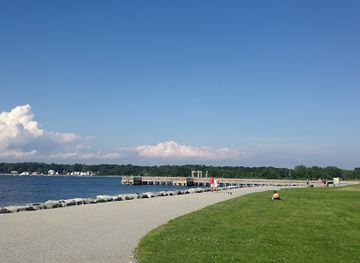
Washington County’s attractions are shaped by the meeting of Atlantic coast, salt ponds, woodland and working countryside. Its beaches range from the broad public shore at Narragansett to the barrier beaches and coastal communities around Charlestown, South Kingstown and Westerly. The Ninigret National Wildlife Refuge, Trustom Pond National Wildlife Refuge and Kettle Pond National Wildlife Refuge protect marshes, ponds, dunes and woodland that are especially valuable for birdwatching and quiet walking. Burlingame State Campground and the surrounding Arcadia Management Area provide opportunities for camping, swimming, paddling, hiking and cycling inland. History is represented by Smith’s Castle, Casey Farm, the Gilbert Stuart Birthplace and Museum, the Tomaquag Museum and the South County History Center in Kingston. Westerly’s historic centre, the village of Wickford and the resort community of Watch Hill add architectural and maritime interest. Offshore, Block Island offers beaches, nature trails, lighthouses, ponds and open-water activities, but deserves a full day or an overnight stay. The University of Rhode Island also contributes public lectures, cultural events and educational facilities to the county’s visitor landscape.
-
Tourist attraction
Mystic Aquarium
Explore the wonders of the ocean at Mystic Aquarium, where education meets adventure in a family-friendly environment.
-
Historical place museum
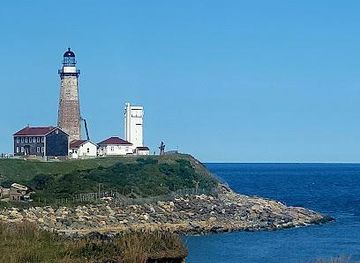
Montauk Point Lighthouse Museum
Discover the historic Montauk Point Lighthouse Museum, where maritime history meets breathtaking coastal views on Long Island's easternmost point.
-
Museum
Mystic Seaport Museum
Explore the rich maritime heritage at Mystic Seaport Museum, where history, adventure, and family fun come together in a picturesque setting.
-
State park
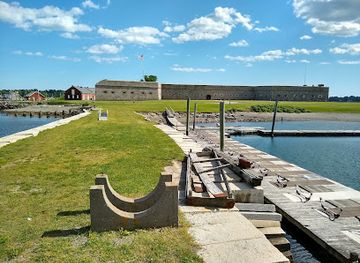
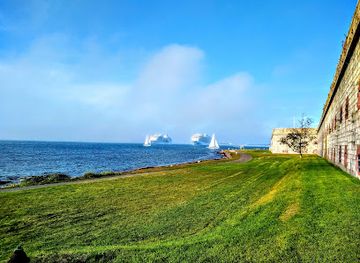
Fort Adams State Park
Experience the rich history and stunning coastal views at Fort Adams State Park, a must-visit destination for tourists in Newport, Rhode Island.


Best landmarks in Washington County
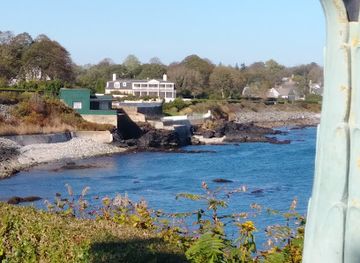
The Watch Hill Lighthouse, standing at the western edge of Westerly’s coastal peninsula, is one of Washington County’s most recognisable maritime landmarks and marks the entrance to Little Narragansett Bay. In North Kingstown, Smith’s Castle preserves a rare early colonial house and the layered history of trade, agriculture and settlement around Cocumcussoc. Casey Farm, also in North Kingstown, represents the county’s long agricultural tradition through its historic buildings, fields and connection with Narragansett Bay. The Gilbert Stuart Birthplace in Saunderstown is associated with the eighteenth-century portraitist whose paintings helped define the visual record of early American political leaders. Kingston’s village historic district and the surrounding civic buildings reflect the county’s administrative past, while Westerly’s downtown shows the influence of nineteenth-century prosperity, granite and manufacturing. Offshore, Block Island Southeast Lighthouse is a major architectural and navigational landmark on the island’s Mohegan Bluffs, although its position within Washington County’s offshore territory gives it a very different setting from the mainland landmarks. The county’s beaches, salt ponds and wooded ridges are also significant geographical markers, not simply scenic backdrops.
-
State park
Colt State Park
Experience the stunning landscapes and recreational delights of Colt State Park, a premier destination for nature lovers in Bristol, Rhode Island.
-
State park
Brenton Point State Park
Discover the beauty and history of Brenton Point State Park, a stunning coastal retreat in Newport, Rhode Island, perfect for nature lovers and adventure seekers.
-
State park
Fort Adams State Park
Explore Fort Adams State Park: a historic military fort and scenic coastal park in Newport, Rhode Island, offering stunning views and outdoor activities.
-
Historical place museum
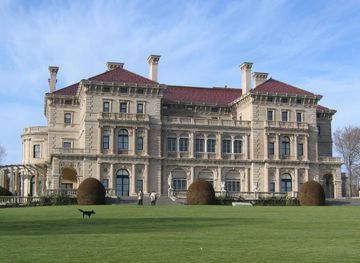
Marble House
Discover the opulence of the Gilded Age at Marble House, an architectural masterpiece and a symbol of Newport's rich history.

Explore Washington County on the map
Plan your trip on one map. See where the top cities, national parks and sights are, and book hotels and experiences in a few clicks.
Best hotels in Washington County
Best restaurants in Washington County
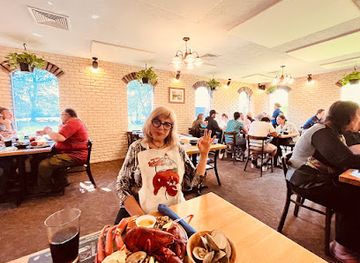
Dining in Washington County follows the geography of South County: seafood is prominent along the coast, while inland towns and villages support farm stands, cafés, bakeries, country inns and family-run restaurants. Local menus commonly feature oysters, clams, lobster, scallops, fried fish and other New England seafood, alongside burgers, chowders and seasonal produce. Narragansett, South Kingstown, Westerly and Wakefield offer the broadest concentration of restaurants, from casual beach food to contemporary dining rooms, while Watch Hill has a more resort-oriented selection. Farm stands and farmers’ markets are good places to find berries, sweet corn, tomatoes, apples, baked goods and locally produced preserves during the growing season. Ice-cream parlours and clam shacks are part of the summer landscape, while breweries and cafés provide less formal alternatives. Block Island’s restaurants make use of its maritime setting but can be busy in high season, so visitors should not assume that every establishment can accommodate walk-ins at peak times.
-
Oyster Bar
Matunuck Oyster Bar
Experience fresh seafood and breathtaking views at Matunuck Oyster Bar, one of Rhode Island's top destinations for food lovers.
-
Seafood
The Nordic
Experience exquisite seafood dining at The Nordic in Charlestown, RI—where fresh flavors meet stunning coastal views.
-
American
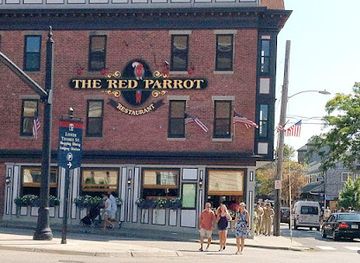
The Red Parrot Restaurant
Experience vibrant flavors at The Red Parrot Restaurant in Newport - where American meets Caribbean cuisine in a lively waterfront setting.
-
Seafood
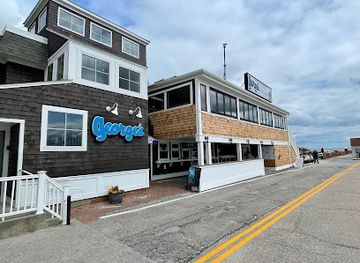
George's of Galilee
Experience fresh seafood and stunning views at George's of Galilee - where Rhode Island coastal charm meets culinary delight.

Best bars in Washington County
Evening life in Washington County is generally relaxed rather than club-focused. Traditional pubs, taverns, seafood restaurants and waterfront bars are concentrated in Westerly, Narragansett, South Kingstown, Wakefield and the resort communities, with live music and seasonal outdoor seating more common than large nightclubs. Watch Hill and Narragansett tend towards a polished summer atmosphere, while Westerly has a more established year-round mix of bars, restaurants and performance spaces. Around the University of Rhode Island, Kingston has a younger and more student-oriented evening scene during term time, although it remains modest compared with Providence or Boston. Block Island has the county’s most recognisable holiday nightlife, with bars and music venues busiest in summer. Outside the main coastal settlements, expect evenings to centre on local pubs, restaurants and private gatherings; opening patterns and entertainment schedules vary considerably by season.
-
Oyster Bar
Matunuck Oyster Bar
Discover the essence of Rhode Island's coastal cuisine at Matunuck Oyster Bar, where fresh seafood meets breathtaking waterfront views.
-
Seafood
The Nordic
Experience the freshest seafood and stunning coastal views at The Nordic, Charlestown's premier dining destination.
-
American
Engine Room
Discover The Engine Room in Mystic, CT – where American cuisine meets craft cocktails in a lively and welcoming atmosphere.
-
Seafood
The Coast Guard House Restaurant
Experience exquisite seafood dining with stunning ocean views at The Coast Guard House Restaurant in Narragansett, Rhode Island.


Best nightclubs in Washington County
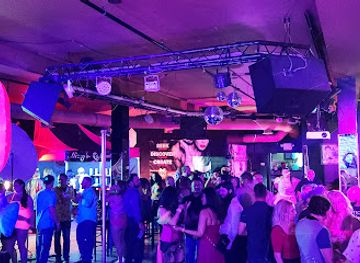
Evening life in Washington County is generally relaxed rather than club-focused. Traditional pubs, taverns, seafood restaurants and waterfront bars are concentrated in Westerly, Narragansett, South Kingstown, Wakefield and the resort communities, with live music and seasonal outdoor seating more common than large nightclubs. Watch Hill and Narragansett tend towards a polished summer atmosphere, while Westerly has a more established year-round mix of bars, restaurants and performance spaces. Around the University of Rhode Island, Kingston has a younger and more student-oriented evening scene during term time, although it remains modest compared with Providence or Boston. Block Island has the county’s most recognisable holiday nightlife, with bars and music venues busiest in summer. Outside the main coastal settlements, expect evenings to centre on local pubs, restaurants and private gatherings; opening patterns and entertainment schedules vary considerably by season.
-
Restaurant
Rooftop at the Providence G
Discover the perfect blend of breathtaking views, exquisite cuisine, and vibrant nightlife at Rooftop at the Providence G in Downtown Providence.
-
Ski resort
Yawgoo Valley Ski Area & Water Park
Experience thrilling skiing and water park fun at Yawgoo Valley, Rhode Island's premier recreation destination for all seasons.
-
Dance club
Platforms Dance Club
Dance the night away at Platforms Dance Club, Providence's vibrant nightlife hub featuring great music and an energetic atmosphere.
-
Event venue
Galilee Beach Club
Discover the stunning Galilee Beach Club in Narragansett, RI - the perfect seaside venue for unforgettable events and celebrations.


Best shops in Washington County
Shopping in Washington County is centred on independent town centres, seasonal coastal businesses, farm stands and local food producers rather than large metropolitan retail districts. Westerly offers the most substantial year-round choice of independent shops, galleries, cafés, booksellers and services, while Wakefield and nearby South Kingstown combine everyday retail with antiques, gifts and small specialist businesses. Wickford’s historic village setting suits browsing for art, crafts, jewellery, homewares and maritime-themed gifts, with a noticeably seasonal rhythm. Farm stands and farmers’ markets sell fruit, vegetables, flowers, baked goods, preserves and other products from the surrounding countryside, particularly in warmer months. Beach communities provide practical summer goods, casual clothing and souvenirs, while Watch Hill has a more resort-oriented selection of fashion, homeware and gifts. On Block Island, visitors can browse galleries, locally themed products, clothing and craft items in the island’s central settlement. For a more meaningful souvenir, consider Rhode Island food products, regional art, pottery, books on Narragansett history or goods from a local farm rather than generic beach merchandise.
-
Shopping mall
Warwick Mall
Experience the ultimate shopping adventure at Warwick Mall, Rhode Island's premier shopping destination with diverse stores and delicious dining options.
-
Cannabis store
Sweetspot Medical and Recreational Dispensary Exeter
Explore the vibrant cannabis culture at Sweetspot Medical and Recreational Dispensary in Exeter, Rhode Island, where quality meets community.
-
Public beach
Scarborough State Beach
Experience the beauty of Scarborough State Beach, a serene destination offering sandy shores, water activities, and breathtaking sunsets in Narragansett, Rhode Island.
-
Gift shop
Fantastic Umbrella Factory
Discover unique gifts and local artistry at the Fantastic Umbrella Factory – a charming destination in Charlestown, Rhode Island.


Get your free copy of our complete guide to Washington County, delivered straight to you.
Everything on this page, from attractions and restaurants to essentials and local phrases, in one PDF you can read offline, print or share.
Already have an account? Sign in
Your Washington County guide is ready.
We'll send it to · Not you? Sign out

Getting your guide ready…
We are putting together a fresh copy of the Washington County guide. This can take up to a minute.
This can take a few moments. If your browser asks, choose Allow so the download can start. You'll find the guide in your Downloads folder.
Nothing happened? Download it again
Sorry, the guide is taking longer than usual. Please try again in a minute, or get it by email instead.
Washington County essentials
Currency and Payment
Safety
Emergency Situations
Do's and Don'ts
Local Tips
From Eve
Local phrases worth knowing
You don't need to get them perfect. A few words go a long way, and locals appreciate the effort.
Basics
| English | Local | Say it |
|---|---|---|
| Hello | Hiya | [Hiyah] |
| Goodbye | See ya | [See yah] |
| Yes | Yeah | [Yah] |
| No | Nah | [Nah] |
| Please/You're welcome | No problem | [No prob] |
| Thank you | Thanks | [Thangs] |
| Excuse me/Sorry | Sorry 'bout that | [Sorry 'bout that] |
| How are you? | How ya doin'? | [How yah doin'?] |
| Fine. And you? | Good. You? | [Good. You?] |
| Do you speak English? | You speakin' English? | [Yah speakin' English?] |
| I don't understand | I ain't gettin' it | [I ain't gettin' it] |
Eating & Drinking
| English | Local | Say it |
|---|---|---|
| I'd like to see the menu, please | Can I see the menu? | [Can I see the menu?] |
| I don't eat meat | I don't eat no meat | [I don't eat no meat] |
| Cheers! | Cheers! | [Cheers!] |
| I would like to pay, please | Can I get the check? | [Can I get the check?] |
Emergencies
| English | Local | Say it |
|---|---|---|
| Help! | Help! | [Help!] |
| Go away! | Get lost! | [Get lost!] |
| Call the Police! | Call the cops! | [Call the cops!] |
| Call a doctor! | Get a doctor! | [Get a doctor!] |
| I'm lost | I dunno where I'm at | [I dunno where I'm at] |
| I'm ill | I'm not feelin' well | [I'm not feelin' well] |
Shopping
| English | Local | Say it |
|---|---|---|
| I'd like to buy... | I wanna buy... | [I wanna buy...] |
| I'm just looking | Just browsin' | [Just browsin'] |
| How much is it? | What's the price? | [What's the price?] |
| That's too expensive | That's way too pricey | [That's way too pricey] |
| Can you lower the price? | Can you bring it down? | [Can you bring it down?] |
Time & Numbers
| English | Local | Say it |
|---|---|---|
| What time is it? | What time we got? | [What time we got?] |
| It's one o'clock | It's one | [It's one] |
| Half past (10) | Half past ten | [Half past ten] |
| Morning | Mornin' | [Mornin'] |
| Afternoon | Afternoon | [Afternoon] |
| Evening | Evenin' | [Evenin'] |
| Yesterday | Yesterday | [Yesterday] |
| Today | Today | [Today] |
| Tomorrow | Tomorrow | [Tomorrow] |
| 1 | One | [One] |
| 2 | Two | [Two] |
| 3 | Three | [Three] |
| 4 | Four | [Four] |
| 5 | Five | [Five] |
| 6 | Six | [Six] |
| 7 | Seven | [Seven] |
| 8 | Eight | [Eight] |
| 9 | Nine | [Nine] |
| 10 | Ten | [Ten] |
Transport & Directions
| English | Local | Say it |
|---|---|---|
| Where's a/the...? | Where's the...? | [Where's the...?] |
| What's the address? | What's the address? | [What's the address?] |
| Can you show me (on the map)? | Can you point it out? | [Can you point it out?] |
| When's the next (bus)? | When's the next bus? | [When's the next bus?] |
| A ticket (to ....) | One ticket to ... | [One ticket to ...] |
History of Washington County
Narragansett Homeland and Indigenous Continuity
Long before European settlement, the Narragansett people lived throughout the coastal and inland landscapes of southern Rhode Island, using forests, rivers, salt ponds and shorelines for food, travel and trade. Seasonal movement connected villages and coastal resources, while shell middens and archaeological evidence record a deep relationship with Narragansett Bay and the Atlantic shore. European colonisation brought disease, land pressure and political conflict, particularly during the seventeenth century. The Narragansett Tribe remains a living community in Rhode Island, and places such as the Tomaquag Museum in Exeter help visitors understand Indigenous history and continuing cultural presence.
Colonial Settlement and King Philip’s War
English settlement expanded into southern Rhode Island during the seventeenth century, creating farms, trading points and fortified residences. The region became a major theatre of King Philip’s War in 1675–76, the destructive conflict between English colonists and a coalition of Indigenous peoples led by Metacom, often known as King Philip. The Great Swamp Fight took place in present-day South Kingstown in December 1675, with profound consequences for the Narragansett community. Colonial houses, farm landscapes and surviving sites connected with early settlement reflect the political and economic changes that followed, although the period is best understood through both settler and Indigenous perspectives.
Farms, Maritime Trade and Coastal Communities
During the eighteenth and early nineteenth centuries, the area that is now Washington County developed through agriculture, coastal trade and small ports. Farms supplied grain, livestock and produce, while waterways and roads connected settlements with Newport, New London and other New England markets. Historic properties such as Casey Farm in North Kingstown and Smith’s Castle in North Kingstown illustrate changing patterns of landholding, domestic life and commerce. Fishing, shipbuilding and coastal transport were also important, particularly around Narragansett Bay and the county’s Atlantic shore. The region’s dispersed settlement pattern, with village centres surrounded by farms and woodland, still reflects this period.
County Formation and the Growth of Local Government
Washington County was established in 1729 as Kings County and was renamed Washington County in 1781, after the American Revolution. Its towns developed with considerable local independence, and the county never became a single dominant urban centre. Kingston served as an important administrative and civic focus, while Westerly, Wickford and other settlements grew through their own maritime, commercial or manufacturing connections. The later expansion of roads and railways improved access between inland villages, bay-side communities and the coast. This history helps explain why the county is experienced today as a collection of distinct towns rather than as one continuous city.
Westerly Granite, Mills and Manufacturing
Westerly became an industrial centre in the nineteenth century, drawing on the Pawcatuck River, transportation links and nearby granite resources. Westerly granite was quarried for buildings, monuments and civic works across the United States, while textile and other manufacturing enterprises operated in and around the town. The river also marked the state boundary with Connecticut, making Westerly part of a wider regional economy rather than an isolated settlement. Industrial buildings, workers’ neighbourhoods and the town’s historic commercial core preserve traces of this transformation. Manufacturing later declined, but the town’s economic and architectural identity remains strongly shaped by the era.
The University of Rhode Island and Modern South County
The Rhode Island College of Agriculture and Mechanic Arts was established at Kingston in 1892 and became the University of Rhode Island in 1951. The university brought research, education, cultural activity and an international population to a largely rural part of the county. During the twentieth century, improved roads and the growth of automobile travel also transformed the Atlantic shore. Beaches such as Narragansett Town Beach, Misquamicut and East Matunuck became major summer destinations, while Watch Hill developed as a high-end resort community. Tourism, higher education, conservation and residential development now coexist with farming, fishing and long-established local industries.
Washington County in Photos
Browse through our photo collection highlighting the charm and character of the destination.
Neighbouring regions of Washington County
The closest regions to Washington County, if you have time for more than one.
-

-
-
-
-


Swipe for more regions
Explore more
Explore more of Rhode Island
Discover Rhode Island: Explore historic mansions, vibrant cities, serene islands, and culinary delights in the smallest state with a big heart.
Explore Rhode Island