

Free South County Travel Guide & Mobile App
Explore South County with free travel guides. Discover regional history, expert tips, proposed trips, and audio guides on web or mobile app.


Explore South County’s Rhode Island beaches, salt ponds, lighthouses, historic villages, seafood shacks and woodland parks at an unhurried pace.
Read more about South County
Getting to and around South County
How to get there
Transportation
Top city travel guides in South County
The cities of South County, and the easiest places to base yourself.
-

-

-

-


Swipe for more cities
Destinations in South County
Resorts, valleys and scenic spots worth a trip of their own.
-

-

-

-

-

-


Swipe for more destinations
Best attractions in South County
South County’s attractions are defined by the meeting of Atlantic shoreline, salt ponds and inland countryside. Public beaches range from Narragansett Town Beach and Scarborough State Beaches to the broad sands of East Matunuck and Misquamicut, while smaller coves and pond shores offer quieter settings. Point Judith provides maritime atmosphere, fishing activity and views towards the open ocean. For nature, Burlingame State Park surrounds Watchaug Pond with woodland and trails, and the Ninigret National Wildlife Refuge protects important coastal habitats for migratory birds. Inland, historic Kingston, Wickford Village and rural South Kingstown provide architecture, galleries and locally rooted cultural experiences. Heritage visitors can explore the Gilbert Stuart Birthplace and Museum in Saunderstown, colonial houses and former mill landscapes, while families often combine beaches with miniature golf, boating or seasonal farm attractions. Water activities include kayaking, sailing, fishing and paddleboarding, but conditions vary by pond and coast. Block Island is a separate offshore destination reached by ferry from Point Judith and is best planned as a full excursion rather than treated as a quick mainland stop.
-
State park
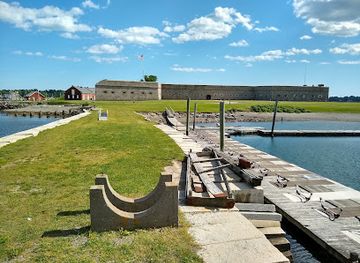
Fort Adams State Park
Explore the historic Fort Adams State Park in Newport, RI, where breathtaking views and rich military history await every visitor.
-
Museum
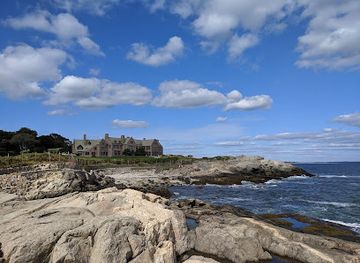
Rough Point
Discover Rough Point in Newport, RI - a historical museum showcasing Doris Duke's opulent lifestyle and spectacular art collection in a breathtaking coastal setting.
-
Natural history museum
Museum of Natural History and Planetarium
Discover the wonders of nature and the universe at the Museum of Natural History and Planetarium in Providence, RI, perfect for nature lovers and families.
-
Museum
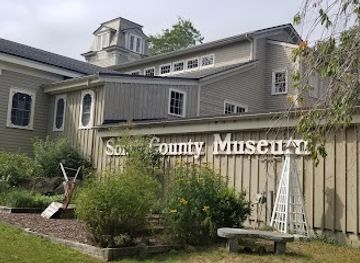
South County Museum
Explore the rich history of Narragansett at the South County Museum, showcasing local heritage through fascinating exhibits and engaging programs.


Best landmarks in South County
The Narragansett Towers are South County’s most recognisable architectural landmark, the surviving entrance structure of the grand Narragansett Pier Casino destroyed by fire in 1900. Farther south, the Point Judith Lighthouse marks the exposed headland at the entrance to Narragansett Bay and symbolises the area’s long relationship with navigation and fishing. Kingston Village, centred around the historic courthouse and village green, preserves an important colonial and civic setting, while Wickford Village in North Kingstown retains a dense collection of eighteenth- and nineteenth-century buildings beside the harbour. The Gilbert Stuart Birthplace and Museum in Saunderstown connects the region with the celebrated eighteenth-century American portraitist. The stone walls and farmsteads of South Kingstown and Charlestown are less monumental but form a defining rural landscape. Along the shore, the barrier beaches, salt ponds and dunes themselves are essential geographical landmarks: Ninigret Pond, Quonochontaug Pond and Point Judith Pond demonstrate how tides, storms and sand have shaped both settlement and recreation.
-
Historical place museum
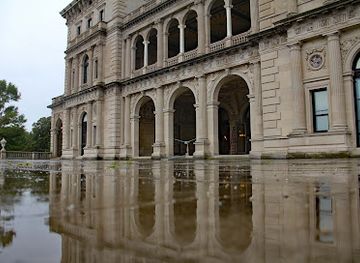
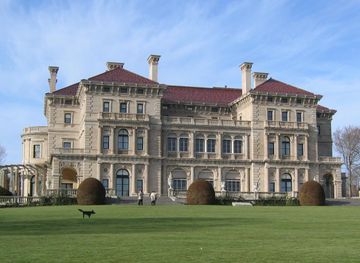
The Breakers
Discover the opulent world of The Breakers, Newport's premier Gilded Age mansion, rich in history and breathtaking architecture along the Atlantic coast.
-
State park
Fort Adams State Park
Explore Fort Adams State Park for a blend of history, scenic beauty, and outdoor activities in Newport, Rhode Island.
-
Historical place museum
Marble House
Explore the grandeur of Marble House, a stunning Gilded Age mansion in Newport, Rhode Island, showcasing opulent architecture and rich history.
-
Historical landmark
The Elms
The Elms in Newport, RI: A majestic historical mansion showcasing exquisite architecture and lush gardens from America's Gilded Age.
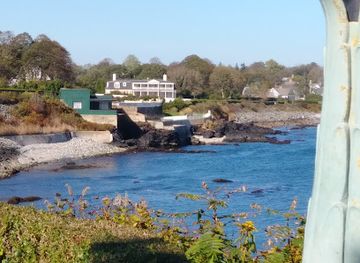

Explore South County on the map
Plan your trip on one map. See where the top cities, national parks and sights are, and book hotels and experiences in a few clicks.
Best hotels in South County
Best restaurants in South County
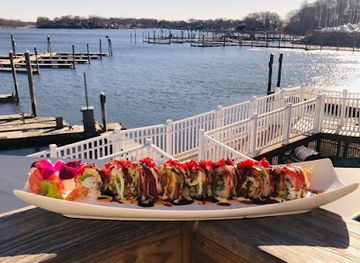
South County dining is anchored by New England coastal cooking, with fried clams, lobster, chowder, oysters, scallops and locally landed fish appearing in clam shacks, fish markets, harbour restaurants and more formal dining rooms. Narragansett, Point Judith, Matunuck, Watch Hill and Misquamicut have the strongest concentration of seasonal seafood-focused establishments, while inland villages and farm districts offer cafés, bakeries, pizzerias, pubs and restaurants using regional produce. Rhode Island’s distinctive coffee milk is widely available, and stuffies—stuffed quahogs baked in their shells—are a familiar local preparation, although menus vary. Farm stands and farmers’ markets add berries, sweetcorn, tomatoes, pumpkins, honey and other produce in season. Oysters and other shellfish are an important part of the wider coastal food economy, but visitors should buy from reputable suppliers and check current harvesting advisories. Reservations can be prudent in summer, especially in Watch Hill and at popular waterfront restaurants.
-
Seafood
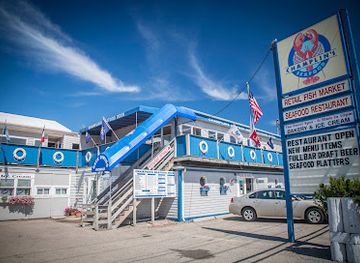
Champlin's Seafood
Discover fresh seafood delights at Champlin's Seafood in Galilee - a must-visit for foodies seeking local flavors!
-
American
CAV Restaurant
Discover CAV Restaurant in Providence: Where modern American cuisine meets an eclectic atmosphere for an unforgettable dining experience.
-
Restaurant
Two Ten Oyster Bar & Grill
Experience the best of Rhode Island's coastal cuisine at Two Ten Oyster Bar & Grill – where fresh seafood meets vibrant atmosphere.
-
Restaurant
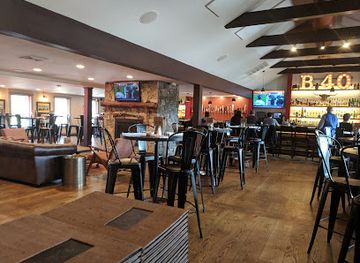
Back 40
Discover Back 40 in North Kingstown: A culinary gem offering unique entrees and crafted cocktails in an inviting atmosphere.

Best bars in South County
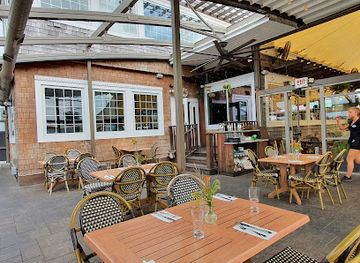
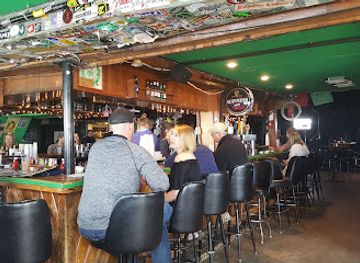
Evening life in South County is generally sociable and seasonal rather than club-centred. Traditional pubs, taverns and restaurants provide the main after-dark activity in Narragansett, Westerly, Wakefield and nearby villages, with live music and outdoor dining particularly common during the warmer months. Watch Hill and Misquamicut attract a more holiday-oriented crowd, while Westerly has the broadest choice of bars, craft beer outlets and late-evening dining in the western part of the region. Breweries and cocktail-focused venues have added variety, but opening arrangements and entertainment schedules can change. In rural areas, evenings are quieter and often revolve around a good meal, a local drink or small-scale music rather than nightclubs. Visitors should arrange a safe journey home, as distances between coastal communities are greater than they may appear and public transport is limited late at night.
-
Oyster Bar
Matunuck Oyster Bar
Experience the best of Rhode Island's seafood culture at Matunuck Oyster Bar, where fresh oysters and stunning coastal views await.
-
Seafood
The Coast Guard House Restaurant
Experience exquisite seafood and breathtaking views at The Coast Guard House Restaurant in Narragansett, Rhode Island.
-
Bar
Ocean Mist
Discover the vibrant atmosphere of Ocean Mist, a live music bar in South Kingstown, RI, where stunning views meet unforgettable entertainment.
-
Bar
Windjammer Surf Bar
Experience the vibrant Windjammer Surf Bar in Westerly, RI, where tasty food, refreshing drinks, and live music create unforgettable beachside memories.


Best nightclubs in South County
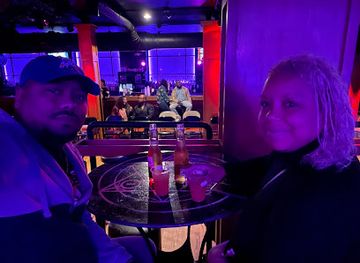
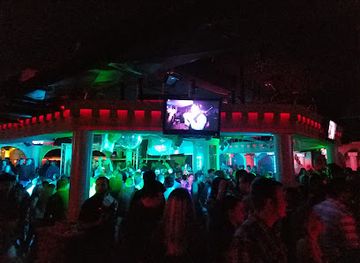
Evening life in South County is generally sociable and seasonal rather than club-centred. Traditional pubs, taverns and restaurants provide the main after-dark activity in Narragansett, Westerly, Wakefield and nearby villages, with live music and outdoor dining particularly common during the warmer months. Watch Hill and Misquamicut attract a more holiday-oriented crowd, while Westerly has the broadest choice of bars, craft beer outlets and late-evening dining in the western part of the region. Breweries and cocktail-focused venues have added variety, but opening arrangements and entertainment schedules can change. In rural areas, evenings are quieter and often revolve around a good meal, a local drink or small-scale music rather than nightclubs. Visitors should arrange a safe journey home, as distances between coastal communities are greater than they may appear and public transport is limited late at night.
-
Restaurant
Rooftop at the Providence G
Experience the best of Providence dining with breathtaking views and a lively atmosphere at Rooftop at the Providence G.
-
Night club
Renegades
Experience the vibrant nightlife at Renegades, Warwick's premier night club and bar, with live music, great drinks, and an unforgettable atmosphere.
-
Night club
Alchemy
Discover Providence's hottest nightlife hub at Alchemy, where music and energy create unforgettable evenings.
-
Night club
Colosseum
Discover the heartbeat of Providence's nightlife at Colosseum, a premier night club and live music venue where unforgettable memories are made.


Best shops in South County
Shopping in South County is concentrated in village centres, coastal commercial strips, farm stands and seasonal markets rather than large urban retail districts. Westerly offers the broadest mix of independent shops, galleries, cafés and practical services, while Wickford Village and Watch Hill are known for compact, walkable collections of boutiques, art and gift shops. Narragansett and Wakefield provide everyday shopping alongside beachwear, books, local art and small food businesses. Farm stands are a useful source of seasonal berries, corn, vegetables, honey and baked goods, and fish markets sell regional seafood for visitors with self-catering accommodation. Look for Rhode Island-made pottery, jewellery, textiles, prints and maritime-themed crafts rather than generic souvenirs. Retail activity is strongly seasonal in the smaller coastal communities, so inland village shops and established food producers are generally more dependable outside the summer months.
-
Gift shop
Fantastic Umbrella Factory
Explore the Fantastic Umbrella Factory in Rhode Island for unique gifts, local craftsmanship, and a delightful atmosphere amidst beautiful gardens.
-
Gift shop
The Wakefield Mall
Experience shopping, dining, and entertainment at Wakefield Mall, a vibrant hub in Rhode Island with something for everyone.
-
Shopping mall
The Village at South County Commons
Discover unique shops, delightful dining, and a vibrant atmosphere at The Village at South County Commons in South Kingstown, Rhode Island.
-
Gift shop
Imagine Gift Store
Explore Imagine Gift Store in Warren, RI for unique gifts, handmade crafts, and a delightful shopping experience that celebrates local artistry.


Get your free copy of our complete guide to South County, delivered straight to you.
Everything on this page, from attractions and restaurants to essentials and local phrases, in one PDF you can read offline, print or share.
Already have an account? Sign in
Your South County guide is ready.
We'll send it to · Not you? Sign out

Getting your guide ready…
We are putting together a fresh copy of the South County guide. This can take up to a minute.
This can take a few moments. If your browser asks, choose Allow so the download can start. You'll find the guide in your Downloads folder.
Nothing happened? Download it again
Sorry, the guide is taking longer than usual. Please try again in a minute, or get it by email instead.
South County essentials
Currency and Payment
Safety
Emergency Situations
Do's and Don'ts
Local Tips
From Eve
Local phrases worth knowing
You don't need to get them perfect. A few words go a long way, and locals appreciate the effort.
Basics
| English | Local | Say it |
|---|---|---|
| Hello | Hey | [hey] |
| Goodbye | Later | [lay-ter] |
| Yes | Yeah | [yeh] |
| No | Nah | [nah] |
| Please/You're welcome | No problem | [noh prob-lum] |
| Thank you | Thanks | [thanks] |
| Excuse me/Sorry | Sorry | [saw-ree] |
| How are you? | How ya doin'? | [how ya doin'] |
| Fine. And you? | Good. And you? | [good. an' you?] |
| Do you speak English? | Do ya speak English? | [doo ya speak ing-glish?] |
| I don't understand | I don’t get it | [I don’t get it] |
Eating & Drinking
| English | Local | Say it |
|---|---|---|
| I'd like to see the menu, please | Can I see the menu? | [can I see the men-u?] |
| I don't eat meat | I’m a vegetarian | [I’m a vege-tair-ian] |
| Cheers! | Cheers! | [cheers] |
| I would like to pay, please | Can I get the check? | [can I get the check?] |
Emergencies
| English | Local | Say it |
|---|---|---|
| Help! | Help! | [help] |
| Go away! | Get lost! | [get lost] |
| Call the Police! | Call the cops! | [call the cops] |
| Call a doctor! | Get a doctor! | [get a doc-tor] |
| I'm lost | I’m lost | [I'm lost] |
| I'm ill | I’m sick | [I'm sick] |
Shopping
| English | Local | Say it |
|---|---|---|
| I'd like to buy... | I wanna buy... | [I wanna buy...] |
| I'm just looking | Just lookin' | [just lookin'] |
| How much is it? | How much? | [how much?] |
| That's too expensive | That's a bit pricey | [that's a bit pry-cee] |
| Can you lower the price? | Can ya bring down the price? | [can ya bring down the pryce?] |
Time & Numbers
| English | Local | Say it |
|---|---|---|
| What time is it? | What time? | [what time?] |
| It's one o'clock | It's one | [it's one] |
| Half past (10) | Half past ten | [half past ten] |
| Morning | Morning | [morning] |
| Afternoon | Afternoon | [afternoon] |
| Evening | Evening | [evening] |
| Yesterday | Yesterday | [yes-ter-day] |
| Today | Today | [to-day] |
| Tomorrow | Tomorrow | [to-mor-row] |
| 1 | One | [one] |
| 2 | Two | [two] |
| 3 | Three | [three] |
| 4 | Four | [four] |
| 5 | Five | [five] |
| 6 | Six | [six] |
| 7 | Seven | [seven] |
| 8 | Eight | [eight] |
| 9 | Nine | [nine] |
| 10 | Ten | [ten] |
Transport & Directions
| English | Local | Say it |
|---|---|---|
| Where's a/the...? | Where's the...? | [where's the...?] |
| What's the address? | What's the address? | [what's the ad-dress?] |
| Can you show me (on the map)? | Can you point it out? | [can you point it out?] |
| When's the next (bus)? | When's the next bus? | [when's the next bus?] |
| A ticket (to ....) | A ticket to... | [a ticket to...] |
History of South County
Narragansett Country before European Settlement
The Narragansett people have deep historical connections with the lands and waters of southern Rhode Island, including Narragansett Bay, coastal ponds and the interior forests. Fishing, shellfish gathering, hunting and agriculture were adapted to a landscape of tidal estuaries and fertile clearings. European settlement did not occur on an empty coast: it brought disease, land pressure, trade and political conflict, while the Narragansett continued to shape the region’s history. Their presence remains important to understanding the names, archaeology and cultural landscape of South County.
Colonial Settlement and King Philip’s War
English colonists established farms, villages and coastal connections in the seventeenth century, including settlements that developed around present-day South Kingstown, Westerly and North Kingstown. Relations with Indigenous communities deteriorated as colonial land claims expanded. During King Philip’s War in 1675–76, southern Rhode Island became a major theatre of conflict, including the Great Swamp Fight near modern West Kingston. The war caused severe loss of life and displacement among Indigenous peoples and reshaped political control and settlement across the region.
Farming, Fishing and Seaborne Trade
For much of the eighteenth and early nineteenth centuries, South County’s economy rested on mixed farming, timber, fishing, coastal trade and small-scale manufacturing. Narragansett Bay provided sheltered routes, while Point Judith and the western shore connected communities with the open Atlantic. Salt hay from the coastal ponds, livestock, dairy products and grain were among the resources that supported local households. Roads, mills and village centres gradually created the settlement pattern still visible in places such as Kingston, Wickford and the older parts of Westerly.
Mills and Nineteenth-Century Industry
Water-powered and later steam-powered mills brought textile production and other manufacturing to parts of southern Rhode Island during the nineteenth century. Westerly became especially associated with granite quarrying and stoneworking, while mill villages developed around rivers and industrial sites in the interior. These industries connected South County to Rhode Island’s wider transformation from an agricultural economy to an industrial one. Former mill buildings, workers’ housing and altered waterways remain reminders that the region’s history is not exclusively maritime or recreational.
The Rise of the Seaside Resort
Improved roads and rail connections during the nineteenth century helped turn Narragansett, Watch Hill and other coastal settlements into seasonal resorts. Hotels, bathing facilities, promenades and summer houses catered to visitors from the cities of southern New England. The Narragansett Pier area became a particularly prominent resort district, although fires and redevelopment changed much of its architecture. Surviving structures, beach traditions and the continued seasonal rhythm of the shoreline preserve the influence of this Victorian tourism economy.
Military and Naval Landscapes in the Twentieth Century
South County’s strategic position on Narragansett Bay made it important to twentieth-century military activity. Quonset Point in North Kingstown became a major naval air station during the Second World War, while nearby Davisville was associated with the United States Navy Seabees. Military construction changed local employment, transport and waterfront land use. After the decline of the naval facilities, parts of the former complex were redeveloped for aviation, business and public purposes, leaving a modern layer of industrial and military heritage alongside older villages and farms.
South County in Photos
Browse through our photo collection highlighting the charm and character of the destination.
Neighbouring regions of South County
The closest regions to South County, if you have time for more than one.
-

-

-

-

-


Swipe for more regions
Explore more
Explore more of Rhode Island
Discover Rhode Island: Explore historic mansions, vibrant cities, serene islands, and culinary delights in the smallest state with a big heart.
Explore Rhode Island