

Beavertail State Park Travel Guide - Free Web & App
Your ultimate guide to Beavertail State Park. Discover top landmarks, proposed trips, and local tips. Free on the web or via the Evendo companion app.


Beavertail State Park in Rhode Island combines rocky ocean scenery, lighthouse history, tide pools, coastal walks and views across Narragansett Bay near Jamestown.
Coastal Landscape
At the southern tip of Jamestown, Beavertail State Park occupies a windswept peninsula where Narragansett Bay meets the open waters of Rhode Island Sound. Waves break against dark, weathered rock ledges, while low coastal vegetation, sea pools and broad horizons give the park a distinctly maritime character. Paths lead around the headland, offering changing views towards Newport, Conanicut Island and the mainland shores of Rhode Island. The terrain is exposed and uneven in places, so the experience is shaped as much by wind, tide and weather as by the scenery itself.Read more about Beavertail State Park
Lighthouse and Local History
Exploring the Park
When is the best time to visit Beavertail State Park?
Best: June, August–September · 23–27°C| Month | High (°C) | Rainfall (mm) |
|---|---|---|
| January | 5 | 92 |
| February | 5 | 85 |
| March | 9 | 105 |
| April | 14 | 102 |
| May | 19 | 96 |
| June (best) | 24 | 93 |
| July | 28 | 96 |
| August (best) | 27 | 97 |
| September (best) | 23 | 99 |
| October | 18 | 100 |
| November | 12 | 103 |
| December | 6 | 94 |
Getting to and around Beavertail State Park
How to get there
Transportation
Best attractions in Beavertail State Park
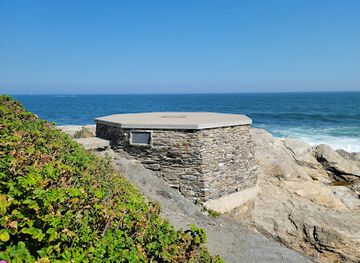
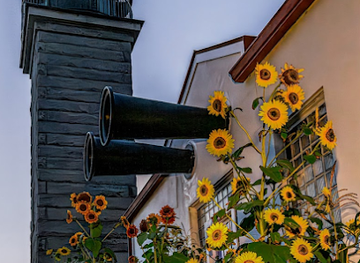
The central attraction is Beavertail Lighthouse, whose white tower and adjoining museum stand above the rocky southern point of Conanicut Island. The museum interprets lighthouse keeping, navigation and the maritime history of Narragansett Bay, while a small seasonal aquarium may provide an introduction to local marine life when open. Around the headland, coastal paths and informal viewing areas reveal wave-cut rock platforms, tide pools and changing vistas towards Newport, Jamestown and the mainland. The park’s shoreline is particularly suited to photography, seabird observation and experiencing the contrast between sheltered bay waters and the open Rhode Island Sound. Historic military remains add another layer of interest, although the park’s strongest appeal is its combination of working-waterfront history and exposed coastal scenery. Nearby Jamestown offers village services and further island landscapes, while Newport’s historic attractions lie across the Pell Bridge rather than within the state park.
-
Museum
Original Beavertail Lighthouse Location
Explore the historic Beavertail Lighthouse in Jamestown, RI, a stunning coastal landmark offering breathtaking views and rich maritime history.
-
Aquarium
Beavertail Aquarium
Explore the vibrant marine life at Beavertail Aquarium in Jamestown, Rhode Island, where education meets adventure in stunning coastal surroundings.
Best landmarks in Beavertail State Park
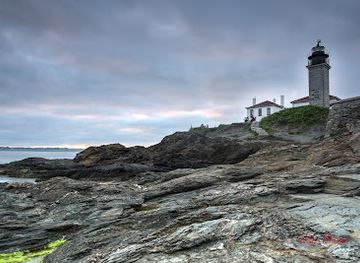
Beavertail Lighthouse is the park’s defining built landmark, occupying a strategic headland at the entrance to Narragansett Bay and representing centuries of maritime navigation. The present tower dates from 1856, while the earlier lighthouse tradition at the site reaches back to the colonial period. Around it, the rocky promontory itself is the principal natural landmark: wave-shaped ledges, small tide pools and open views illustrate the meeting of bay and ocean. Historic defensive features and military remnants reflect Beavertail’s strategic position, although they are secondary to the lighthouse in the visitor experience. Across the water, Newport’s shoreline and the mainland form a changing backdrop, emphasising how the point commands the wider bay. The combination of lighthouse, exposed geology, marine habitat and coastal defence gives the park a landmark character rooted in both nature and Rhode Island’s seafaring history.
-
Museum
Beavertail Lighthouse Museum
Explore the historic Beavertail Lighthouse Museum, where maritime history meets stunning coastal views in beautiful Jamestown, Rhode Island.
-
Aquarium
Beavertail Aquarium
Discover the enchanting marine life at Beavertail Aquarium in Jamestown, RI, where education and conservation come together in a captivating experience for all ages.

Explore Beavertail State Park on the map
Plan your trip on one map. See where the top attractions, landmarks, restaurants and hotels are, and book hotels and experiences in a few clicks.
Best hotels in Beavertail State Park
Best shops in Beavertail State Park
Shopping within Beavertail State Park is limited to the interpretive and seasonal facilities associated with the lighthouse rather than a permanent retail area. Visitors seeking food, supplies, gifts or locally made goods generally use businesses in Jamestown, where small shops and galleries reflect the island’s maritime and village character, or travel to Newport for a much wider retail choice. Regional products may include Rhode Island food specialities, coastal-themed artwork, nautical gifts, locally made crafts and practical outdoor supplies, although stock varies between businesses and seasons. Farm stands and specialist food retailers can also be found around the wider island and mainland approaches, but they should not be assumed to operate year-round. The park’s most appropriate souvenirs are connected with its lighthouse, maritime history and coastal landscape; collecting shells, stones, plants or other natural material from the shoreline is not responsible.
-
Park
Beavertail State Park
Experience the breathtaking views and rich history of Beavertail State Park, a coastal paradise in Jamestown, Rhode Island, perfect for nature lovers and adventurers.
-
Museum
Beavertail Lighthouse Museum
Discover the maritime heritage and breathtaking views at Beavertail Lighthouse Museum in Jamestown, Rhode Island.


Get your free copy of our complete guide to Beavertail State Park, delivered straight to you.
Everything on this page, from attractions and restaurants to essentials and local phrases, in one PDF you can read offline, print or share.
Already have an account? Sign in
Your Beavertail State Park guide is ready.
We'll send it to · Not you? Sign out

Getting your guide ready…
We are putting together a fresh copy of the Beavertail State Park guide. This can take up to a minute.
This can take a few moments. If your browser asks, choose Allow so the download can start. You'll find the guide in your Downloads folder.
Nothing happened? Download it again
Sorry, the guide is taking longer than usual. Please try again in a minute, or get it by email instead.
Beavertail State Park essentials
Currency and Payment
Safety
Emergency Situations
Do's and Don'ts
Local Tips
From Eve
Local phrases worth knowing
You don't need to get them perfect. A few words go a long way, and locals appreciate the effort.
Basics
| English | Local | Say it |
|---|---|---|
| Hello | Hey there | [Hey there] |
| Goodbye | See ya later | [See ya later] |
| Yes | Yup | [Yup] |
| No | Nah | [Nah] |
| Please/You're welcome | Sure thing | [Sure thing] |
| Thank you | Thanks a bunch | [Thanks a bunch] |
| Excuse me/Sorry | Pardon me | [Pardon me] |
| How are you? | How's it going? | [How's it going?] |
| Fine. And you? | Doing well. You? | [Doing well. You?] |
| Do you speak English? | You speak English? | [You speak English?] |
| I don't understand | I don't get it | [I don't get it] |
Eating & Drinking
| English | Local | Say it |
|---|---|---|
| I'd like to see the menu, please | Can I check out the menu? | [Can I check out the menu?] |
| I don't eat meat | I'm vegetarian | [I'm vegetarian] |
| Cheers! | Cheers! | [Cheers!] |
| I would like to pay, please | I'll settle the bill, thanks | [I'll settle the bill, thanks] |
Emergencies
| English | Local | Say it |
|---|---|---|
| Help! | I need help! | [I need help!] |
| Go away! | Get lost! | [Get lost!] |
| Call the Police! | Call the cops! | [Call the cops!] |
| Call a doctor! | Get a doctor! | [Get a doctor!] |
| I'm lost | I'm all turned around | [I'm all turned around] |
| I'm ill | I'm feeling sick | [I'm feeling sick] |
Shopping
| English | Local | Say it |
|---|---|---|
| I'd like to buy... | I'm interested in buying... | [I'm interested in buying...] |
| I'm just looking | Just browsing | [Just browsing] |
| How much is it? | What's the price? | [What's the price?] |
| That's too expensive | That's steep | [That's steep] |
| Can you lower the price? | Can you drop the price? | [Can you drop the price?] |
Time & Numbers
| English | Local | Say it |
|---|---|---|
| What time is it? | What's the time? | [What's the time?] |
| It's one o'clock | It's one | [It's one] |
| Half past (10) | Half past ten | [Half past ten] |
| Morning | Morning | [Morning] |
| Afternoon | Afternoon | [Afternoon] |
| Evening | Evening | [Evening] |
| Yesterday | Yesterday | [Yesterday] |
| Today | Today | [Today] |
| Tomorrow | Tomorrow | [Tomorrow] |
| 1 | One | [One] |
| 2 | Two | [Two] |
| 3 | Three | [Three] |
| 4 | Four | [Four] |
| 5 | Five | [Five] |
| 6 | Six | [Six] |
| 7 | Seven | [Seven] |
| 8 | Eight | [Eight] |
| 9 | Nine | [Nine] |
| 10 | Ten | [Ten] |
Transport & Directions
| English | Local | Say it |
|---|---|---|
| Where's a/the...? | Where's the... | [Where's the...] |
| What's the address? | What's the address? | [What's the address?] |
| Can you show me (on the map)? | Can you point it out? | [Can you point it out?] |
| When's the next (bus)? | When's the next one coming? | [When's the next one coming?] |
| A ticket (to ....) | A ticket to... | [A ticket to...] |
History of Beavertail State Park
Narragansett Coastal Homeland
Beavertail lies within the traditional homeland of the Narragansett people, whose relationship with Narragansett Bay included fishing, seasonal movement and detailed knowledge of its islands, coves and tidal waters. Conanicut Island, now associated with Jamestown, became part of the landscape transformed by European colonisation from the seventeenth century onwards. The headland’s value has always been closely tied to its position: it commands views into the bay while marking a hazardous approach for vessels entering or leaving its waters.
An Early Beacon on the Bay
A lighthouse was established at Beavertail in 1749, serving ships navigating the entrance to Narragansett Bay and reflecting the growing maritime importance of Rhode Island’s ports. The exposed headland was a practical location for a light, but maintaining a beacon there also demonstrated the risks of the coast and the need for reliable navigation. Over time, successive structures and improvements adapted the station to changing technology and shipping requirements.
Navigation and Military Strategy
Beavertail’s commanding position made it important beyond lighthouse work. During periods when Narragansett Bay required defence, fortifications and military installations were developed around the harbour approaches, and the headland retains evidence of this strategic role. Its history therefore combines navigation, coastal defence and maritime commerce rather than belonging solely to the story of a single lighthouse. The surrounding waters also formed part of the working seascape connected with fishing, ferries and shipping.
The Present Lighthouse
The lighthouse standing at Beavertail today dates from 1856, when improvements to the station created the landmark familiar to visitors. Although modern navigation systems have changed the work of lighthouse keepers, the tower remains a visible reminder of the dangers once faced by ships approaching Narragansett Bay. The lighthouse museum preserves and explains this local maritime heritage, while surviving military traces and the open coastal setting connect the site’s past uses with its present role as a public park.
From Working Headland to State Park
As navigation technology and coastal land use changed, Beavertail increasingly became valued for public recreation, scenery and historical interpretation. Its designation as a Rhode Island state park protects access to the headland while retaining the lighthouse, museum and shoreline features that define its identity. Today, conservation and visitor use must coexist on a small, exposed peninsula where rocky habitat, tidal life, historic structures and public enjoyment are closely concentrated.
Beavertail State Park in Photos
Browse through our photo collection highlighting the charm and character of the destination.
Neighbouring destination travel guides
The closest destinations to Beavertail State Park, if you have time for more than one.
-

-

-

-

-


Swipe for more destinations
Explore more
Explore more of Newport County
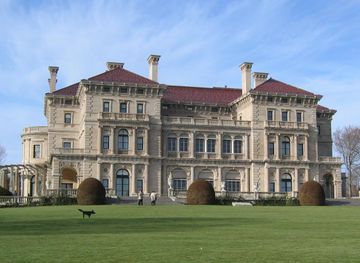
Newport County pairs Gilded Age mansions and sailing heritage with Atlantic beaches, island roads, seafood and rural coastal landscapes.
Explore Newport County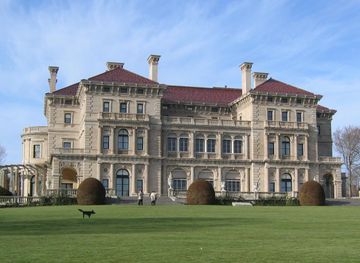
Explore more of Rhode Island
Discover Rhode Island: Explore historic mansions, vibrant cities, serene islands, and culinary delights in the smallest state with a big heart.
Explore Rhode Island