

Sachuest Point National Wildlife Refuge Travel Guide - Free Web & App
Your ultimate guide to Sachuest Point National Wildlife Refuge. Discover top landmarks, proposed trips, and local tips. Free on the web or via the Evendo companion app.


Sachuest Point National Wildlife Refuge in Rhode Island offers coastal trails, birdwatching, salt marshes, rocky shores and views near Newport year-round.
Coastal Landscape and Wildlife
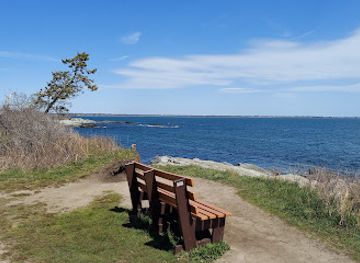
Sachuest Point National Wildlife Refuge occupies a compact, windswept peninsula on Rhode Island’s eastern shore, between the Sakonnet River and the open waters of Rhode Island Sound. Its approximately 242 acres combine rocky shoreline, sandy stretches, coastal shrubland, grassland, freshwater ponds and salt-marsh habitat. A walking trail follows the headland and offers changing views across the water, with opportunities to observe migratory birds, shorebirds and resident coastal species. Winter is an especially notable season for birdwatching, when sea ducks such as harlequin ducks may be seen offshore, while other times of year bring nesting and passage migrants.Read more about Sachuest Point National Wildlife Refuge
A Refuge Near Newport
Walking and Conservation
When is the best time to visit Sachuest Point National Wildlife Refuge?
Best: June–August · 24–27°C| Month | High (°C) | Rainfall (mm) |
|---|---|---|
| January | 4 | 85 |
| February | 6 | 75 |
| March | 9 | 95 |
| April | 14 | 100 |
| May | 19 | 95 |
| June (best) | 24 | 90 |
| July (best) | 27 | 85 |
| August (best) | 27 | 90 |
| September | 23 | 95 |
| October | 19 | 100 |
| November | 12 | 105 |
| December | 6 | 95 |
Getting to and around Sachuest Point National Wildlife Refuge
How to get there
Transportation
Best attractions in Sachuest Point National Wildlife Refuge
The principal attraction is the refuge’s coastal wildlife trail, which leads through a varied sequence of grassland, shrub, marsh and shoreline habitat rather than a series of built visitor facilities. Rocky ocean-facing sections provide broad views across Rhode Island Sound and the Sakonnet River, while quieter marsh and pond edges are useful places to watch waterfowl and migratory birds. The Audubon Society of Rhode Island’s nearby Norman Bird Sanctuary, in Middletown but separate from the refuge, offers an additional network of nature trails and a different landscape of fields, woodland and coastal overlooks. Newport’s historic district and preserved Gilded Age houses lie nearby, as do the beaches of eastern Aquidneck Island, allowing visitors to combine a short nature visit with cultural and seaside sightseeing. Within Sachuest Point itself, the appeal lies in observing changing light, tide, weather and bird activity across a protected coastal setting rather than ticking off a long list of attractions.
-
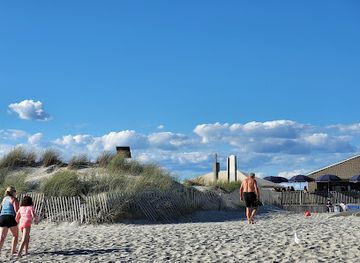
Beach
Second Beach
Experience the breathtaking beauty and tranquility of Second Beach in Middletown, Rhode Island—a perfect coastal getaway for relaxation and adventure.
-
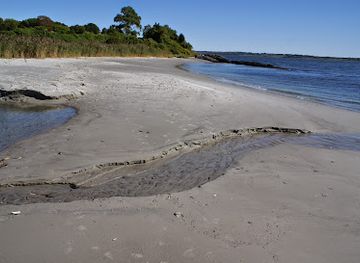
Public beach
Third Beach
Discover the beauty and tranquility of Third Beach in Middletown, Rhode Island, where sun, sand, and serenity await.
Explore Sachuest Point National Wildlife Refuge on the map
Plan your trip on one map. See where the top attractions, landmarks, restaurants and hotels are, and book hotels and experiences in a few clicks.
Best hotels in Sachuest Point National Wildlife Refuge
Best bars in Sachuest Point National Wildlife Refuge
Evening entertainment is limited within Sachuest Point itself, which closes into a quiet, nature-focused landscape rather than a nightlife venue. Visitors staying nearby usually find the broadest choice in Newport, where established pubs, hotel bars, restaurants and seasonal entertainment create a more active evening atmosphere. Middletown offers a practical selection of casual restaurants and local drinking establishments, but it is not a concentrated club district. After sunset, the refuge is not a place for informal walks or outdoor gatherings unless current access arrangements expressly allow them; wildlife protection, darkness and exposed coastal conditions make it more appropriate to return to a nearby settlement. Evening plans are therefore best treated as part of the Newport and Middletown stay rather than as an extension of the refuge experience.
-
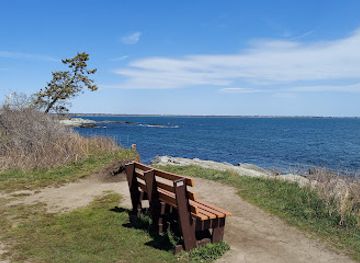
Wildlife refuge
Sachuest Point National Wildlife Refuge
Explore Sachuest Point National Wildlife Refuge, a breathtaking coastal paradise rich in wildlife and stunning landscapes, perfect for nature lovers and photographers.
-
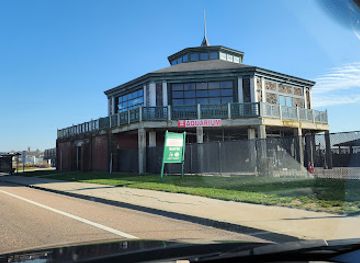
Snack bar
Easton's Beach Snack Bar
Experience the best of coastal cuisine at Easton's Beach Snack Bar, where delicious snacks meet breathtaking ocean views in Middletown, Rhode Island.
Best shops in Sachuest Point National Wildlife Refuge
There is no substantial retail provision inside Sachuest Point National Wildlife Refuge. Visitors should buy water, food, weatherproof clothing and other practical supplies in Middletown or Newport before heading to the coast. Newport has the area’s most varied concentration of independent shops, galleries, maritime-themed retailers and visitor-oriented businesses, while Middletown provides everyday services and access to outdoor essentials. Regional products associated with Rhode Island and coastal New England include seafood, locally made foodstuffs, artwork, nautical goods and small-batch craft items, though the selection differs between individual businesses. Farm stands and specialist producers may be seasonal rather than permanent, so travellers should not assume that a particular outlet or market is operating during every visit. Shopping is best combined with a wider Aquidneck Island itinerary rather than regarded as an activity within the refuge.
-
Wildlife refuge
Sachuest Point National Wildlife Refuge
Explore the breathtaking coastal beauty and abundant wildlife at Sachuest Point National Wildlife Refuge, a must-visit destination for nature lovers.
Get your free copy of our complete guide to Sachuest Point National Wildlife Refuge, delivered straight to you.
Everything on this page, from attractions and restaurants to essentials and local phrases, in one PDF you can read offline, print or share.
Already have an account? Sign in
Your Sachuest Point National Wildlife Refuge guide is ready.
We'll send it to · Not you? Sign out

Getting your guide ready…
We are putting together a fresh copy of the Sachuest Point National Wildlife Refuge guide. This can take up to a minute.
This can take a few moments. If your browser asks, choose Allow so the download can start. You'll find the guide in your Downloads folder.
Nothing happened? Download it again
Sorry, the guide is taking longer than usual. Please try again in a minute, or get it by email instead.
Sachuest Point National Wildlife Refuge essentials
Currency and Payment
Safety
Emergency Situations
Do's and Don'ts
Local Tips
From Eve
Local phrases worth knowing
You don't need to get them perfect. A few words go a long way, and locals appreciate the effort.
Basics
| English | Local | Say it |
|---|---|---|
| Hello | Hi | [hai] |
| Goodbye | Bye | [bi] |
| Yes | Yeah | [yeh] |
| No | Nope | [nohp] |
| Please/You're welcome | Please | [pliz] |
| Thank you | Thanks | [thangs] |
| Excuse me/Sorry | Excuse me | [ek-skyoos mee] |
| How are you? | How are you? | [haw ar yoo] |
| Fine. And you? | Good. And you? | [gud. and yoo] |
| Do you speak English? | Do you speak English? | [doo yoo speek ing-glish] |
| I don't understand | I don't get it | [ai dohnt get it] |
Eating & Drinking
| English | Local | Say it |
|---|---|---|
| I'd like to see the menu, please | Can I see the menu, please | [kan ai see thee men-yoo, pliz] |
| I don't eat meat | I'm vegetarian | [ai'm vedge-eh-tear-ee-an] |
| Cheers! | Cheers! | [cheerz] |
| I would like to pay, please | I'll pay now, please | [ai'l pay now, pliz] |
Emergencies
| English | Local | Say it |
|---|---|---|
| Help! | Help! | [help] |
| Go away! | Get lost! | [get lost] |
| Call the Police! | Call the cops! | [kawl thee cops] |
| Call a doctor! | Call a doc! | [kawl a doc] |
| I'm lost | I'm lost | [ai'm lost] |
| I'm ill | I'm sick | [ai'm sik] |
Shopping
| English | Local | Say it |
|---|---|---|
| I'd like to buy... | I wanna buy... | [ai wun-na buy] |
| I'm just looking | I'm just browsing | [ai'm just browz-ing] |
| How much is it? | How much does it cost? | [haw much duhz it cost] |
| That's too expensive | That's way too pricey | [thatz way tooo pry-see] |
| Can you lower the price? | Can you give me a discount? | [kan yoo giv mee a dis-count] |
Time & Numbers
| English | Local | Say it |
|---|---|---|
| What time is it? | What's the time? | [whats thee time] |
| It's one o'clock | It's one | [itz wun] |
| Half past (10) | Ten thirty | [ten thur-tee] |
| Morning | Morning | [mawr-ning] |
| Afternoon | Afternoon | [af-ter-noon] |
| Evening | Evening | [ee-ven-ing] |
| Yesterday | Yesterday | [yess-ter-day] |
| Today | Today | [toh-day] |
| Tomorrow | Tomorrow | [toh-maw-row] |
| 1 | One | [wun] |
| 2 | Two | [too] |
| 3 | Three | [three] |
| 4 | Four | [for] |
| 5 | Five | [fahyv] |
| 6 | Six | [siks] |
| 7 | Seven | [sev-uhn] |
| 8 | Eight | [ayt] |
| 9 | Nine | [nahyn] |
| 10 | Ten | [ten] |
Transport & Directions
| English | Local | Say it |
|---|---|---|
| Where's a/the...? | Where's the...? | [wheres thee] |
| What's the address? | What's the location? | [whats thee loh-key-shun] |
| Can you show me (on the map)? | Can you guide me (on the map)? | [kan yoo gahyd mee] |
| When's the next (bus)? | When's the next (bus)? | [whens thee nekst] |
| A ticket (to ....) | A ticket (to ....) | [uh tik-it] |
History of Sachuest Point National Wildlife Refuge
A Long-Used Coastal Landscape
The shore around Sachuest Point lies within the traditional homeland of the Narragansett people, whose relationship with Rhode Island’s coastal waters and lands long predates European settlement. The peninsula’s marshes, grasslands, ponds and shoreline offered access to a productive coastal environment, while its position beside the Sakonnet River connected it to the wider waterways of eastern Rhode Island. The modern refuge does not preserve a single untouched landscape: like much of the region, it reflects changing patterns of Indigenous use, colonial settlement, agriculture and later recreational pressure.
Farms, Fields and Changing Land Use
For much of the historic period, the wider Middletown landscape was shaped by small farms, pasture and coastal agriculture. Fields and rural properties occupied land that had previously functioned as a more continuous natural system, while nearby Newport developed as a port, resort and centre of maritime commerce. At Sachuest Point, the mixture of open grassland, scrub, wet areas and shore reflects both natural coastal processes and the after-effects of human land use. The area’s proximity to Newport also brought increasing recreational interest as roads and settlement expanded across Aquidneck Island.
Establishment of the National Wildlife Refuge
Sachuest Point National Wildlife Refuge was established in 1970 to protect important coastal habitat and provide a secure area for migratory birds and other wildlife. Its creation placed the peninsula within the National Wildlife Refuge System, shifting the emphasis from potential intensive development or unrestricted use towards habitat conservation and managed public access. The refuge remains part of the broader conservation landscape of southern New England, where coastal wetlands, shrublands and shorelines are increasingly important for species moving along the Atlantic Flyway.
Conservation and Public Access
Since its establishment, management at Sachuest Point has balanced wildlife protection with walking, environmental education and observation. Coastal vegetation, marsh systems and shoreline habitats are vulnerable to erosion, storms, invasive plants, disturbance and the wider effects of a changing climate. Refuge management therefore depends on marked paths, seasonal guidance and visitor behaviour that keeps people and wildlife at a suitable distance. Today, Sachuest Point’s significance lies not in monumental architecture but in the continuing protection of a relatively small coastal refuge beside one of Rhode Island’s most heavily visited historic regions.
Sachuest Point National Wildlife Refuge in Photos
Browse through our photo collection highlighting the charm and character of the destination.
Neighbouring destination travel guides
The closest destinations to Sachuest Point National Wildlife Refuge, if you have time for more than one.
-

-

-

-

-


Swipe for more destinations
Explore more
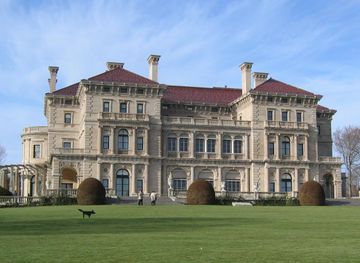
Explore more of Newport County
Newport County pairs Gilded Age mansions and sailing heritage with Atlantic beaches, island roads, seafood and rural coastal landscapes.
Explore Newport County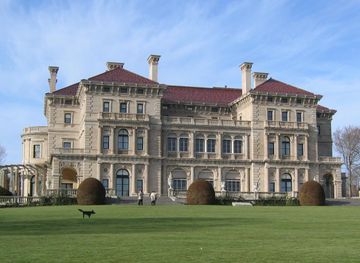
Explore more of Rhode Island
Discover Rhode Island: Explore historic mansions, vibrant cities, serene islands, and culinary delights in the smallest state with a big heart.
Explore Rhode Island