

Free Soufrière Quarter Travel Guide & Mobile App
Explore Soufrière Quarter with free travel guides. Discover regional history, expert tips, proposed trips, and audio guides on web or mobile app.


Explore Soufrière Quarter in Saint Lucia for the Pitons, volcanic springs, rainforest walks, historic estates, reefs and Creole-influenced cuisine.
Read more about Soufrière Quarter
When is the best time to visit Soufrière Quarter?
Best: February–April · 30–31°C| Month | High (°C) | Rainfall (mm) |
|---|---|---|
| January | 30 | 80 |
| February (best) | 30 | 70 |
| March (best) | 30 | 60 |
| April (best) | 31 | 70 |
| May | 31 | 90 |
| June | 32 | 110 |
| July | 32 | 120 |
| August | 32 | 130 |
| September | 32 | 130 |
| October | 31 | 120 |
| November | 31 | 110 |
| December | 30 | 100 |
Getting to and around Soufrière Quarter
How to get there
Transportation
Top city travel guides in Soufrière Quarter
The cities of Soufrière Quarter, and the easiest places to base yourself.
-

-

-


Swipe for more cities
Destinations in Soufrière Quarter
Resorts, valleys and scenic spots worth a trip of their own.
-

-

-

-

-

-


Swipe for more destinations
Best attractions in Soufrière Quarter
Soufrière Quarter brings together volcanic, marine, rainforest and cultural attractions within a relatively compact but steep landscape. The Sulphur Springs area introduces visitors to steaming ground, mineral pools and the island’s geothermal activity, while nearby Diamond Botanical Gardens combines tropical planting with a waterfall and historic estate setting. Toraille Waterfall offers a shorter nature stop, and the Tet Paul Nature Trail provides an accessible guided walk with views towards the Pitons, Caribbean coast and cultivated slopes. Gros Piton is climbable with a local guide, whereas Petit Piton is a more technical mountaineering undertaking. Along the shore, Anse Chastanet and Anse Mamin provide access to swimming, snorkelling and diving, with forest and reef environments close together. Historic plantation properties such as Fond Doux and Soufrière Estate reveal changing patterns of agriculture, architecture and food production. Boat trips explore the coast and marine areas around the Pitons, while local guides can connect village roads, farms and viewpoints that are difficult to reach independently. The attraction landscape is defined less by large purpose-built entertainment venues than by the close relationship between living communities, protected nature, volcanic geology and plantation history.
-
Tourist attraction
Soufrière Drive In Volcano
Discover the unique geothermal wonders of the Soufrière Drive In Volcano in St. Lucia, where adventure meets natural beauty in a breathtaking landscape.
-
Diamond Falls Botanical Gardens & Mineral Baths
Experience the lush beauty of Diamond Falls Botanical Gardens & Mineral Baths in St. Lucia, a tranquil retreat for nature lovers and relaxation seekers alike.
-
Tour agency
Toraille Waterfall Villas & ATV
Experience the breathtaking beauty of Toraille Waterfall in St. Lucia, a serene tropical paradise perfect for adventure and relaxation.
-
Tourist attraction
Morne Coubaril Historical Adventure Park
Explore the captivating Morne Coubaril Estate in St. Lucia, where history meets adventure in a lush tropical paradise.


Best landmarks in Soufrière Quarter
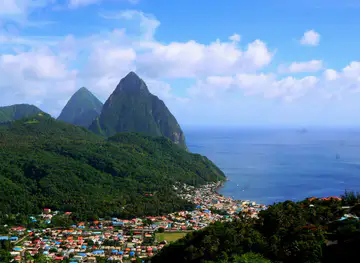
The twin peaks of Gros Piton and Petit Piton are Soufrière Quarter’s defining landmarks, rising sharply from the Caribbean and forming the visual centre of the Pitons Management Area. Their volcanic slopes, adjoining forests and marine setting explain the area’s World Heritage status. Soufrière’s waterfront and bay provide a changing perspective on the peaks and retain the town’s historic relationship with fishing and coastal travel. Inland, the Sulphur Springs geothermal landscape is a landmark of geological rather than architectural importance, marked by steaming ground and mineral activity associated with the Soufrière volcanic centre. The quarter’s historic plantation buildings and cultivated grounds, including those at Fond Doux and Soufrière Estate, represent the agricultural system that shaped the district. Diamond Waterfall and the gardens around it form another recognisable natural and cultural site, where managed botanical planting meets a volcanic stream. On the coast, the dark sands and forested approaches of Anse Mamin and Anse Chastanet show how closely Soufrière’s beaches, rainforest and reefs are connected. Together these places give the quarter a landmark landscape in which mountains, water, geology and human settlement remain inseparable.
-
Tourist attraction
Soufrière Drive In Volcano
Explore the geothermal marvels of Soufrière Drive In Volcano in St. Lucia, where nature's raw beauty meets therapeutic mud baths and hot springs.
-
Island
Saint Lucia
Explore Saint Lucia: A Caribbean paradise with stunning landscapes, rich culture, and unforgettable adventures.
-
 Resort hotel
Sugar Beach, a Viceroy Resort
Discover the ultimate luxury escape at Sugar Beach, a Viceroy Resort, nestled between the iconic Pitons in beautiful St. Lucia.
-
Botanical garden
Diamond Falls Botanical Gardens & Mineral Baths
Explore the lush landscapes of Diamond Falls Botanical Gardens & Mineral Baths, where nature's beauty and tranquility await in St. Lucia.


Explore Soufrière Quarter on the map
Plan your trip on one map. See where the top cities, national parks and sights are, and book hotels and experiences in a few clicks.
Best hotels in Soufrière Quarter
Best restaurants in Soufrière Quarter
Dining in Soufrière ranges from small local eateries and bakeries to hotel restaurants, estate dining rooms and more formal establishments overlooking the coast or Pitons. Saint Lucian cooking commonly combines rice, green or root vegetables, plantain, spices, stewed meats and freshly caught fish, while seafood is particularly appropriate along this west-coast quarter. Look for dishes such as green fig and saltfish, grilled or stewed fish, provisions and callaloo, recognising that recipes vary between households and kitchens. Cocoa, tropical fruit, herbs and spices grown on local estates appear in drinks, desserts and savoury dishes, and some plantation properties provide tastings or meals connected with their agricultural heritage. Soufrière’s markets and small food businesses are useful places to encounter everyday flavours, while resorts and contemporary restaurants often interpret regional ingredients through international techniques. Prices and service styles vary considerably between the town, estate properties and waterfront hotels, so reservations may be sensible for smaller or more formal dining rooms.
-
Resort hotel
Ladera Resort
Discover luxury amidst breathtaking views at Ladera Resort in St. Lucia – where nature meets elegance for an unforgettable getaway.
-
Seafood
The Coal Pot Restaurant
Experience authentic Caribbean seafood dining at The Coal Pot Restaurant in Castries, where flavor meets breathtaking views.
-
Restaurant
The Beacon Restaurant
Experience culinary excellence at The Beacon Restaurant in Palmiste, St. Lucia, where every meal comes with breathtaking views.
-
Creole
Orlando's Restaurant & Bar
Experience authentic Creole cuisine at Orlando's Restaurant & Bar in Soufriere, where every dish reflects St. Lucia's vibrant culture and flavors.


Best bars in Soufrière Quarter
Evenings in Soufrière Quarter generally centre on rum shops, hotel bars, waterfront restaurants, small cafés and occasional live-music or community events rather than a large nightclub circuit. Soufrière town offers the most localised evening activity, while resorts around the Pitons and Anse Chastanet provide quieter bars with views, cocktails and occasional entertainment. Saint Lucian rum, local beers and fruit-based drinks are widely available, and some establishments serve food late into the evening, though opening arrangements can vary by season and day of the week. Rural areas become quiet after dark, making them suitable for a relaxed dinner or stargazing rather than bar-hopping. Visitors should arrange return transport in advance when staying outside town, particularly on steep roads with limited lighting. Evening culture is best approached as a mixture of conversation, music, dining and hospitality, without assuming that every community has a formal nightlife district.
-
Creole
Orlando's Restaurant & Bar
Discover the flavors of St. Lucia at Orlando's Restaurant & Bar, where Creole cuisine comes alive in a vibrant atmosphere.
-
Restaurant
Fedo's
Experience the flavors of St. Lucia at Fedo's, where local cuisine meets warm hospitality in a charming setting.
-
Restaurant
Treetop Restaurant and Bar
Discover the breathtaking views and exquisite flavors at Treetop Restaurant and Bar, a culinary haven in St. Lucia.
-
Restaurant
Petit Peak Restaurant
Discover the flavors of St. Lucia at Petit Peak Restaurant, where local cuisine meets breathtaking views in an unforgettable dining experience.


Best nightclubs in Soufrière Quarter
Evenings in Soufrière Quarter generally centre on rum shops, hotel bars, waterfront restaurants, small cafés and occasional live-music or community events rather than a large nightclub circuit. Soufrière town offers the most localised evening activity, while resorts around the Pitons and Anse Chastanet provide quieter bars with views, cocktails and occasional entertainment. Saint Lucian rum, local beers and fruit-based drinks are widely available, and some establishments serve food late into the evening, though opening arrangements can vary by season and day of the week. Rural areas become quiet after dark, making them suitable for a relaxed dinner or stargazing rather than bar-hopping. Visitors should arrange return transport in advance when staying outside town, particularly on steep roads with limited lighting. Evening culture is best approached as a mixture of conversation, music, dining and hospitality, without assuming that every community has a formal nightlife district.
-
Bar
Bigger's Place
Experience the vibrant local culture and refreshing drinks at Bigger's Place, a lively bar in the heart of Soufriere, St. Lucia.
-
Grill
Bliss Nightlife
Discover the lively Bliss Nightlife in Canaries, St. Lucia, where delicious grilled food meets vibrant entertainment for an unforgettable experience.
-
Bar
Acquinas's Bar
Discover the vibrant spirit of St. Lucia at Acquinas's Bar, where refreshing drinks meet stunning views and lively social interactions.
-
Bar
Cheaperz Bar
Discover the vibrant energy and refreshing drinks at Cheaperz Bar in Palmiste, St. Lucia - a must-visit for travelers seeking local flavor.



Best shops in Soufrière Quarter
Shopping in Soufrière Quarter is modest in scale and closely connected with local food, craft and visitor services rather than large retail centres. Soufrière town has small shops, market stalls and vendors selling fruit, spices, drinks, clothing, practical goods and souvenirs, while estate and hotel boutiques may offer cocoa products, rum, artwork, jewellery and locally made items. Look for crafts using wood, shells or woven materials, but buy responsibly and avoid coral, protected wildlife products or objects presented as archaeological finds. Local agricultural products can include cocoa, coffee, herbs, tropical preserves and baked goods, with availability varying by season. Small galleries and craft outlets provide opportunities to support artists and makers, while markets offer a more everyday view of the quarter than resort shopping. Soufrière is not a destination for extensive designer retail; its most distinctive purchases are portable food products, locally produced crafts and items that reflect the island’s volcanic, agricultural and Caribbean setting.
-
Tourist attraction
Soufrière Drive In Volcano
Discover the unique beauty of Soufrière Drive In Volcano in St. Lucia - a geological wonder rich in history and natural beauty.
-
Resort hotel
Sugar Beach, a Viceroy Resort
Experience luxury and natural beauty at Sugar Beach, a Viceroy Resort, nestled between the majestic Pitons in St. Lucia.
-
Botanical garden
Diamond Falls Botanical Gardens & Mineral Baths
Experience the breathtaking beauty of Diamond Falls Botanical Gardens & Mineral Baths, a tropical paradise in St. Lucia with vibrant flora and soothing mineral waters.
-
Resort hotel
Ladera Resort
Experience unparalleled luxury and breathtaking views at Ladera Resort, where nature meets elegance in St. Lucia.


Get your free copy of our complete guide to Soufrière Quarter, delivered straight to you.
Everything on this page, from attractions and restaurants to essentials and local phrases, in one PDF you can read offline, print or share.
Already have an account? Sign in
Your Soufrière Quarter guide is ready.
We'll send it to · Not you? Sign out

Getting your guide ready…
We are putting together a fresh copy of the Soufrière Quarter guide. This can take up to a minute.
This can take a few moments. If your browser asks, choose Allow so the download can start. You'll find the guide in your Downloads folder.
Nothing happened? Download it again
Sorry, the guide is taking longer than usual. Please try again in a minute, or get it by email instead.
Soufrière Quarter essentials
Currency and Payment
Safety
Emergency Situations
Do's and Don'ts
Local Tips
From Eve
Local phrases worth knowing
You don't need to get them perfect. A few words go a long way, and locals appreciate the effort.
Basics
| English | Local | Say it |
|---|---|---|
| Hello | Bonjour | [bon-zhoor] |
| Goodbye | Au revoir | [oh ruh-vwar] |
| Yes | Oui | [wee] |
| No | Non | [noh] |
| Please/You're welcome | S'il vous plaît | [seel voo pleh] |
| Thank you | Merci | [mehr-see] |
| Excuse me/Sorry | Pardon | [par-dohn] |
| How are you? | Comment ça va? | [koh-mohn sah vah] |
| Fine. And you? | Bien. Et toi? | [byan. eh twa] |
| Do you speak English? | Parlez-vous anglais? | [par-lay voo ahn-glay] |
| I don't understand | Je ne comprends pas | [zhuh nuh kom-prahn pah] |
Eating & Drinking
| English | Local | Say it |
|---|---|---|
| I'd like to see the menu, please | Je voudrais voir le menu, s'il vous plaît | [zhuh voo-dray vwar luh meh-nu, seel voo pleh] |
| I don't eat meat | Je ne mange pas de viande | [zhuh nuh mahnj pah deh vyahnd] |
| Cheers! | Santé! | [sahn-tay] |
| I would like to pay, please | Je voudrais payer, s'il vous plaît | [zhuh voo-dray pay-ay, seel voo pleh] |
Emergencies
| English | Local | Say it |
|---|---|---|
| Help! | Au secours! | [oh suh-koor] |
| Go away! | Allez-vous-en! | [ah-lay voo-zahn] |
| Call the Police! | Appelez la police! | [ah-peh-lay lah poh-lees] |
| Call a doctor! | Appelez un médecin! | [ah-peh-lay un meh-deh-sahn] |
| I'm lost | Je suis perdu | [zhuh swee pair-doo] |
| I'm ill | Je suis malade | [zhuh swee mah-lahd] |
Shopping
| English | Local | Say it |
|---|---|---|
| I'd like to buy... | Je voudrais acheter... | [zhuh voo-dray ah-sheh-tay] |
| I'm just looking | Je regarde juste | [zhuh reh-gard zhoost] |
| How much is it? | C'est combien? | [say kom-byen] |
| That's too expensive | C'est trop cher | [say troh shair] |
| Can you lower the price? | Pouvez-vous baisser le prix? | [poo-vay voo beh-say luh pree] |
Time & Numbers
| English | Local | Say it |
|---|---|---|
| What time is it? | Quelle heure est-il? | [kel uhr eh-teel] |
| It's one o'clock | Il est une heure | [eel eh tun uhr] |
| Half past (10) | Dix heures et demie | [dees uhr eh deh-mee] |
| Morning | Matin | [mah-tahn] |
| Afternoon | Après-midi | [ah-preh mee-dee] |
| Evening | Soir | [swahr] |
| Yesterday | Hier | [ee-ehr] |
| Today | Aujourd'hui | [oh-zhoor dwee] |
| Tomorrow | Demain | [duh-mahn] |
| 1 | Un | [uhn] |
| 2 | Deux | [duh] |
| 3 | Trois | [trwah] |
| 4 | Quatre | [katr] |
| 5 | Cinq | [sank] |
| 6 | Six | [sees] |
| 7 | Sept | [set] |
| 8 | Huit | [weet] |
| 9 | Neuf | [nuhf] |
| 10 | Dix | [dees] |
Transport & Directions
| English | Local | Say it |
|---|---|---|
| Where's a/the...? | Où est le/la...? | [oo eh luh/lah] |
| What's the address? | Quelle est l'adresse? | [kel eh lah-dress] |
| Can you show me (on the map)? | Pouvez-vous me montrer (sur la carte)? | [poo-vay voo muh mohn-tray (sur lah kart)] |
| When's the next (bus)? | Quand est le prochain (bus)? | [kahn eh luh pro-shain (boos)] |
| A ticket (to ....) | Un billet (pour ....) | [uhn bee-yay (poor ....)] |
History of Soufrière Quarter
Indigenous Settlement Before European Colonisation
Long before European settlement, Saint Lucia was inhabited by Indigenous peoples, including communities associated with the Kalinago and earlier Caribbean populations. The island’s forests, rivers and coastal waters supported fishing, cultivation and movement between settlements. Soufrière’s sheltered bay and fertile volcanic slopes made the area suitable for human occupation, although written records from this period are limited and later colonial accounts often distorted Indigenous history. The landscape still gives an important sense of why the south-west became significant: it combines fresh water, marine resources, cultivable land and natural shelter beneath the Pitons.
French Settlement and the Founding of Soufrière
French colonists established Soufrière as a settlement in the eighteenth century, developing agriculture around the fertile volcanic slopes and using the bay for coastal communication. The name reflects the area’s sulphurous springs and volcanic activity. Sugar became the dominant plantation crop, worked by enslaved Africans under French colonial rule. Estate landscapes, old roads and plantation names preserve traces of this period, although the surviving heritage must be understood alongside the coercion and human suffering that sustained the colonial economy.
Rivalry Between French and British Rule
Saint Lucia changed hands repeatedly between France and Britain during the eighteenth and early nineteenth centuries, as both powers sought strategic control of the eastern Caribbean. Soufrière’s harbour and the island’s position between Martinique and the Caribbean routes gave the district military and commercial importance. This rivalry left a layered cultural inheritance, including French place names within a country whose official language and institutions later developed under British rule. Plantation ownership, legal administration and trade were repeatedly reshaped as colonial control changed.
Plantations, Enslavement and Emancipation
The estates around Soufrière produced sugar and later crops such as cocoa, coffee, citrus and bananas. Their prosperity depended on the labour of enslaved Africans until emancipation in the British Empire in the 1830s, followed by a period of apprenticeship and changing landholding patterns. Historic estates including Fond Doux and Soufrière Estate help visitors understand the agricultural history of the quarter, but their gardens and restored buildings represent only part of the story. The enduring legacy also lies in African-descended communities, land use and local food traditions.
Volcanic Landscapes and Scientific Interest
The Soufrière volcanic centre has shaped both the land and the local economy. Sulphurous springs, steaming ground and mineral deposits encouraged early interest in the area, while volcanic soils supported intensive cultivation. The geothermal landscape around Sulphur Springs remains active, and visitors are directed through managed areas rather than unrestricted ground. The Pitons, lava-hewn slopes and surrounding rainforest later became central to conservation efforts, linking geological significance with tourism and environmental management.
From Agricultural District to Tourism Centre
During the twentieth century, Saint Lucia’s economy gradually broadened beyond plantation agriculture, with tourism becoming increasingly important. Soufrière’s scenery, beaches, diving waters, rainforest and volcanic features attracted hotels, guesthouses, guides and excursion operators, while the town continued to serve local residents and fishing activity. The quarter’s tourism identity strengthened further through the protection of the Pitons and the creation of the Pitons Management Area. Today, the challenge is to balance visitor access with the needs of communities, farms, marine habitats and a fragile volcanic landscape.
The Pitons Management Area and World Heritage
The Pitons Management Area was inscribed on the UNESCO World Heritage List in 2004 for its exceptional volcanic landforms, biological diversity and cultural landscape. It includes Gros Piton, Petit Piton, the geothermal features around the Soufrière volcano and adjoining marine areas. The designation recognised that the quarter’s importance is not limited to two scenic peaks: rainforest, reefs, historic cultivation and continuing community use are part of the wider site. Conservation rules and guided access are therefore significant elements of visiting Soufrière.
Soufrière Quarter in Photos
Browse through our photo collection highlighting the charm and character of the destination.
Neighbouring regions of Soufrière Quarter
The closest regions to Soufrière Quarter, if you have time for more than one.
-
-

-

-

-


Swipe for more regions
Explore more

Explore more of Saint Lucia
Discover Saint Lucia, a Caribbean paradise with lush rainforests, pristine beaches, and vibrant culture. Perfect for adventure seekers and relaxation enthusiasts alike.
Explore Saint Lucia