

Lake Jocassee Travel Guide - Free Web & App
Your ultimate guide to Lake Jocassee. Discover top landmarks, proposed trips, and local tips. Free on the web or via the Evendo companion app.


Lake Jocassee in South Carolina pairs clear mountain water, waterfalls and forested coves with boating, hiking and quiet escapes in the Jocassee Gorges.
A Forested Mountain Reservoir
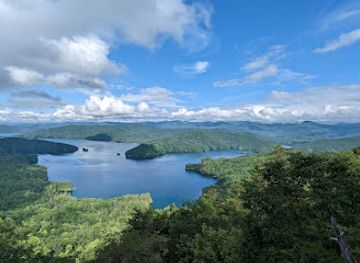
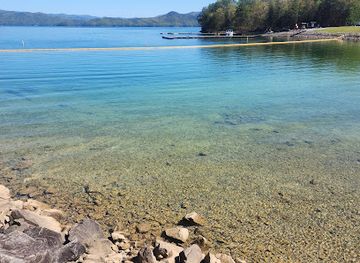
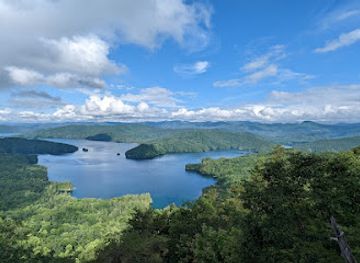
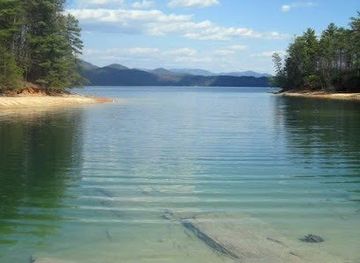
Lake Jocassee occupies a deep, folded landscape in north-western South Carolina, where the Blue Ridge foothills descend towards the state’s mountain border with North Carolina. Created in 1973 by the construction of the Jocassee Dam, the reservoir is surrounded by the largely undeveloped slopes, coves and river valleys of the Jocassee Gorges. Much of the shoreline remains forested, giving the lake a remote character despite its accessibility from Devils Fork State Park.Read more about Lake Jocassee
Waterfalls, Rivers and Wildlife
Exploring the Jocassee Gorges
When is the best time to visit Lake Jocassee?
Best: April–May, October · 22–27°C| Month | High (°C) | Rainfall (mm) |
|---|---|---|
| January | 11 | 130 |
| February | 13 | 120 |
| March | 17 | 140 |
| April (best) | 22 | 130 |
| May (best) | 27 | 120 |
| June | 31 | 120 |
| July | 33 | 140 |
| August | 32 | 140 |
| September | 28 | 130 |
| October (best) | 22 | 110 |
| November | 16 | 120 |
| December | 11 | 140 |
Getting to and around Lake Jocassee
How to get there
Transportation
Best attractions in Lake Jocassee
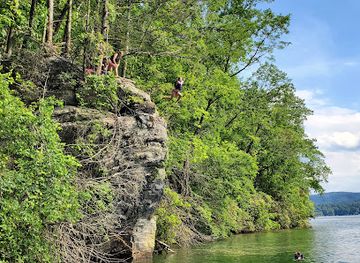
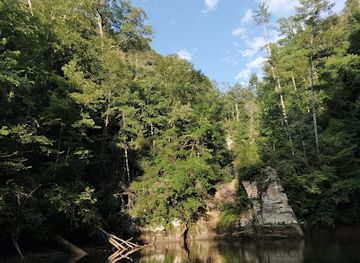
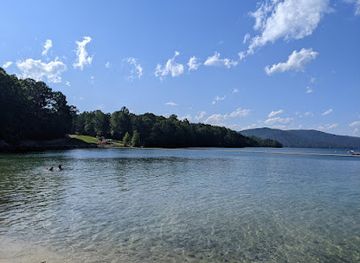
The central attraction is Lake Jocassee itself, a broad mountain reservoir divided into wooded arms by the valleys of the Whitewater, Thompson, Horsepasture and Toxaway rivers. Devils Fork State Park provides the principal public access, with lakeside camping, cabins, launch facilities and short trails that introduce the shoreline without requiring a boat. On the water, visitors can reach secluded coves, forested ridges and waterfalls that are difficult or impossible to approach by road, including the widely known Laurel Fork Falls. Paddling brings a quieter perspective to the narrow inlets, while anglers and boaters use the open lake and tributary areas in accordance with current regulations. The surrounding Jocassee Gorges offer a larger landscape of steep forests, streams and protected tracts, but access is not uniform and some locations require specific routes or permissions. The lake’s appeal lies less in a concentration of built attractions than in the range of scenery revealed between developed park facilities and remote mountain water.
-
Hiking area
Wright Creek Falls
Experience the natural beauty of Wright Creek Falls in Salem, SC, where hiking trails lead to breathtaking waterfalls and serene landscapes.
-
Park
Laurel Fork Falls
Explore Laurel Fork Falls, a stunning natural park in Sunset, SC, featuring breathtaking waterfalls and lush landscapes perfect for outdoor adventures.
-
Tourist attraction
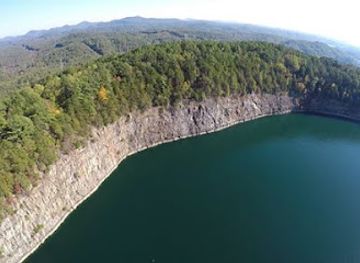
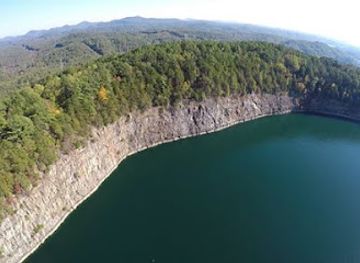
The Wall at Lake Jocassee
Experience the breathtaking beauty and outdoor adventures at The Wall at Lake Jocassee, a must-visit destination in South Carolina.
-
Historical landmark
Jocassee Town Historic Location
Explore the historical charm of Jocassee Town, a picturesque landmark surrounded by nature's beauty in South Carolina.
Best landmarks in Lake Jocassee
Lake Jocassee’s defining landmark is the Jocassee Dam, the hydroelectric structure that created the reservoir and transformed the historic valley into a network of deep mountain arms. The lake’s forested ridges and narrow coves are themselves significant landscape features, revealing the shape of the former river valleys beneath and around the water. Laurel Fork Falls is the best-known waterfall associated with the lake, dropping through a wooded gorge before reaching the reservoir’s upper reaches; viewing conditions depend on weather, water levels and approach. The surrounding Jocassee Gorges form a larger natural landmark of steep slopes, river corridors and extensive forest, while Devils Fork State Park marks the principal public meeting point between managed recreation and the reservoir. Older roads, settlements and land uses connected with the former valley remain part of the area’s history, although much of that landscape now lies beneath the lake or within protected forest.
-
Tourist attraction
The Wall at Lake Jocassee
Explore the breathtaking beauty of The Wall at Lake Jocassee, a serene destination for nature lovers and outdoor enthusiasts in South Carolina.
Explore Lake Jocassee on the map
Plan your trip on one map. See where the top attractions, landmarks, restaurants and hotels are, and book hotels and experiences in a few clicks.
Best hotels in Lake Jocassee
Best restaurants in Lake Jocassee
Lake Jocassee has no substantial restaurant district, and dining is concentrated outside the immediate shoreline at Devils Fork State Park. Visitors staying in cabins, campsites or on the water should plan provisions carefully, as the lake’s developed facilities are primarily recreational rather than culinary. Salem is the nearest small-town base for basic meals and supplies, while Seneca, Clemson and Pickens offer a broader choice of restaurants, cafés and food shops within the wider region. South Carolina’s Upstate food culture combines Southern comfort cooking, barbecue, biscuits, seasonal produce and locally influenced American fare, although individual menus vary. Farm stands and small rural stores may appear along regional roads, but they should not be treated as guaranteed sources of food near the lake. A picnic beside the water or a prepared meal at an authorised campsite is often the most practical dining arrangement for a full day on Lake Jocassee.
-
Canoe & kayak rental service
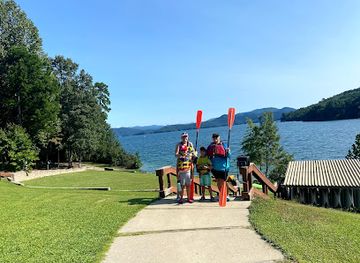
Eclectic Sun Paddlesports
Discover unforgettable adventures at Eclectic Sun Paddlesports—your gateway to kayaking and canoeing on beautiful Lake Jocassee.
Best bars in Lake Jocassee
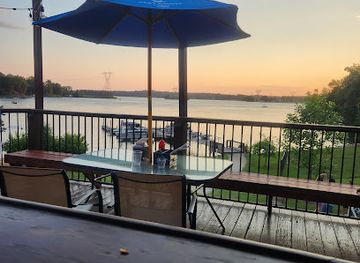
Evening entertainment around Lake Jocassee is quiet and rural rather than nightlife-oriented. Devils Fork State Park and the surrounding mountain shoreline have no concentration of bars or nightclubs, so evenings are generally spent at a campsite, cabin or other accommodation base, with the lake and forest providing the setting rather than organised entertainment. Salem has limited small-town hospitality, while Seneca, Clemson and the larger Upstate communities offer more conventional pubs, restaurants and bars outside the destination’s immediate landscape. Visitors should plan transport before drinking, since rural roads are dark, distances are significant and taxi availability cannot be assumed. Seasonal community events and live music may occur in nearby towns, but programmes vary. After sunset, the lake environment calls for low-impact behaviour, careful lighting and respect for other campers and wildlife rather than loud gatherings along the shore.
-
Canoe & kayak rental service
Eclectic Sun Paddlesports
Discover adventure at Eclectic Sun Paddlesports in Salem, SC - your one-stop destination for canoe and kayak rentals, outdoor gear, and local insights.
-
Scenic spot
Jumping Off Rock Overlook
Discover stunning views and hiking adventures at Jumping Off Rock Overlook, a top scenic spot in South Carolina perfect for nature lovers.
-
Boat rental service
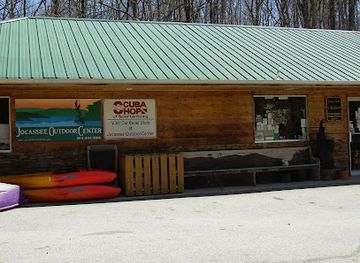
Jocassee Outdoor Center
Discover adventure at Jocassee Outdoor Center, your ultimate destination for boat rentals, fishing supplies, and outdoor gear in South Carolina's pristine wilderness.
-
Tour agency
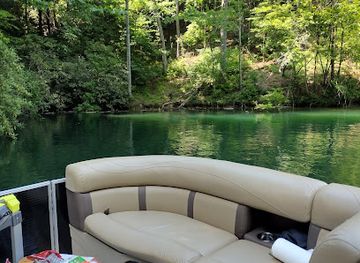
JOCASSEE LAKE TOURS
Discover the breathtaking beauty of Lake Jocassee with expert-guided tours showcasing stunning landscapes and abundant wildlife.
Best shops in Lake Jocassee
Shopping at Lake Jocassee is limited and functional rather than extensive. Devils Fork State Park is primarily an access and recreation site, so visitors should obtain fuel, groceries, fishing supplies, boating essentials and any specialist equipment in advance. Salem is the nearest small-town base, while Seneca, Pickens and Clemson provide wider retail services, outdoor equipment, supermarkets and locally owned businesses in the surrounding Upstate region. Rural roadside stands and farm shops may offer seasonal produce, honey or other local goods, but availability is variable and should not be assumed. Regional shopping can also include South Carolina food products, handmade items and outdoor clothing suited to the mountain environment, although these are found in the wider towns rather than on the remote shoreline. Bring maps, dry bags, water and provisions before launching, since there are no substantial lakeside shopping facilities once visitors are away from the developed access area.
-
State park
Devils Fork State Park
Explore the breathtaking landscapes and outdoor adventures at Devils Fork State Park in South Carolina, a true haven for nature lovers.
-
Canoe & kayak rental service
Eclectic Sun Paddlesports
Discover the beauty of South Carolina's waterways with canoe and kayak rentals at Eclectic Sun Paddlesports, your go-to for outdoor adventure.
-
Scenic spot
Jumping Off Rock Overlook
Discover the breathtaking views and natural beauty at Jumping Off Rock Overlook in Sunset, South Carolina - a must-visit scenic spot for all nature lovers.
-
Lake
Lake Jocassee
Discover the breathtaking beauty and outdoor adventures at Lake Jocassee, a hidden gem nestled in the Blue Ridge Mountains of South Carolina.
Get your free copy of our complete guide to Lake Jocassee, delivered straight to you.
Everything on this page, from attractions and restaurants to essentials and local phrases, in one PDF you can read offline, print or share.
Already have an account? Sign in
Your Lake Jocassee guide is ready.
We'll send it to · Not you? Sign out

Getting your guide ready…
We are putting together a fresh copy of the Lake Jocassee guide. This can take up to a minute.
This can take a few moments. If your browser asks, choose Allow so the download can start. You'll find the guide in your Downloads folder.
Nothing happened? Download it again
Sorry, the guide is taking longer than usual. Please try again in a minute, or get it by email instead.
Lake Jocassee essentials
Currency and Payment
Safety
Emergency Situations
Do's and Don'ts
Local Tips
From Eve
Local phrases worth knowing
You don't need to get them perfect. A few words go a long way, and locals appreciate the effort.
Basics
| English | Local | Say it |
|---|---|---|
| Hello | Howdy | [haw-dee] |
| Goodbye | See ya | [see yuh] |
| Yes | Yep | [yep] |
| No | Nah | [nah] |
| Please/You're welcome | Please and thank ya | [pleez and thank yuh] |
| Thank you | Much obliged | [muhch uh-blahy-d] |
| Excuse me/Sorry | Pardon me | [pahr-dn me] |
| How are you? | How y'all doin'? | [haw yawl doo-in] |
| Fine. And you? | Fine. And you? | [Fine. And you?] |
| Do you speak English? | Y'all speak English? | [yawl speak Ing-glish] |
| I don't understand | I ain't catchin' on | [I aint ketch-in on] |
Eating & Drinking
| English | Local | Say it |
|---|---|---|
| I'd like to see the menu, please | I reckon I'll take a gander at the bill, if ya don't mind | [I reck-in I'll take a gan-der at the bill, if yuh dont mind] |
| I don't eat meat | I don't fancy any meat | [I don't fan-see any meat] |
| Cheers! | Cheers! | [Cheers!] |
| I would like to pay, please | I reckon I'll settle the bill now | [I reck-in I'll set-l the bill now] |
Emergencies
| English | Local | Say it |
|---|---|---|
| Help! | Help! | [Help!] |
| Go away! | Git on outta here! | [Git on out-ta here!] |
| Call the Police! | Call the Sheriff! | [Call the Shur-iff!] |
| Call a doctor! | Call the Doc! | [Call the Doc!] |
| I'm lost | I'm turned around | [I'm turned a-round] |
| I'm ill | I'm feelin' poorly | [I'm feel-in poor-ly] |
Shopping
| English | Local | Say it |
|---|---|---|
| I'd like to buy... | I reckon I'll buy... | [I reck-in I'll buy...] |
| I'm just looking | Just browsin' | [Just brow-sin] |
| How much is it? | How much fer that? | [How much fur that?] |
| That's too expensive | That's a might pricey | [That's a might pry-see] |
| Can you lower the price? | Can ya do a better deal? | [Can yuh do a bet-ter deal?] |
Time & Numbers
| English | Local | Say it |
|---|---|---|
| What time is it? | What's the time? | [What's the time?] |
| It's one o'clock | It's one o'clock | [It's one o'clock] |
| Half past (10) | Half past ten | [Half past ten] |
| Morning | Mornin' | [Morn-in] |
| Afternoon | Afternoon | [Afternoon] |
| Evening | Evenin' | [Even-in] |
| Yesterday | Yest'day | [Yest-day] |
| Today | Today | [Today] |
| Tomorrow | Tomorrow | [Tomorrow] |
| 1 | One | [wun] |
| 2 | Two | [too] |
| 3 | Three | [three] |
| 4 | Four | [four] |
| 5 | Five | [five] |
| 6 | Six | [six] |
| 7 | Seven | [seven] |
| 8 | Eight | [eight] |
| 9 | Nine | [nine] |
| 10 | Ten | [ten] |
Transport & Directions
| English | Local | Say it |
|---|---|---|
| Where's a/the...? | Where's the...? | [Where's the...?] |
| What's the address? | What's the address? | [What's the address?] |
| Can you show me (on the map)? | Can ya show me (on the map)? | [Can yuh show me (on the map)?] |
| When's the next (bus)? | When's the next (bus)? | [When's the next (bus)?] |
| A ticket (to ....) | A ticket (to ....) | [A ticket (to ....)] |
History of Lake Jocassee
The Jocassee Valley Before the Lake
The Jocassee Valley formed part of the wider homeland and travelling landscape of Cherokee communities before European-American settlement. The name Jocassee is commonly associated with Cherokee tradition, although interpretations of its meaning vary. Later settlers used the valley for small-scale farming and other rural activities, while the surrounding mountains remained heavily forested and comparatively remote. The valley’s rivers, steep slopes and fertile pockets shaped settlement patterns, and its isolation helped preserve a distinctive mountain landscape well into the modern era.
Logging and Mountain Industry
During the late nineteenth and early twentieth centuries, commercial timber operations altered parts of the Jocassee and neighbouring valleys. Railways and temporary logging infrastructure enabled companies to remove valuable hardwoods and other forest resources from difficult mountain terrain. Farming, hunting and timber work continued alongside one another, but the industrial use of the forests changed the appearance and economy of the region. Many present-day views of wooded slopes reflect later forest regeneration as well as the original mountain ecology.
The Jocassee Dam and Reservoir
The modern lake was created in the early 1970s when Duke Power, now Duke Energy, built Jocassee Dam to support hydroelectric generation. The reservoir flooded much of the historic Jocassee Valley and permanently changed the relationship between the surrounding communities, rivers and transport routes. Former roads, homes and cultivated land disappeared beneath the water, while steep ridges and tributary valleys became the lake’s distinctive coves and arms. The project also established the basic geography of present-day recreation on Lake Jocassee.
From Working Forest to Protected Landscape
After the reservoir was formed, conservation interests increasingly focused on the extensive forests and waterways around the lake. The Jocassee Gorges became recognised as an important large-scale mountain landscape, and public agencies and conservation organisations acquired or protected substantial tracts of land. Devils Fork State Park, on the lake’s southern shore, provides the principal developed public access. Nearby protected lands and state-managed conservation areas help maintain the region’s forested character, although ownership and access arrangements vary around the wider gorges.
Modern Recreation and Stewardship
Lake Jocassee is now valued for boating, paddling, fishing, camping, swimming in appropriate areas and access to a mountain landscape that remains relatively free of intensive shoreline development. Recreation takes place within a working reservoir and a sensitive forest environment, so water levels, weather, seasonal conditions and land-management rules influence what visitors can do. The modern identity of the lake therefore combines hydroelectric infrastructure, public recreation and continuing efforts to protect the rivers, forests and wildlife of the Jocassee Gorges.
Lake Jocassee in Photos
Browse through our photo collection highlighting the charm and character of the destination.
Neighbouring destination travel guides
The closest destinations to Lake Jocassee, if you have time for more than one.
-

-

-

-

-
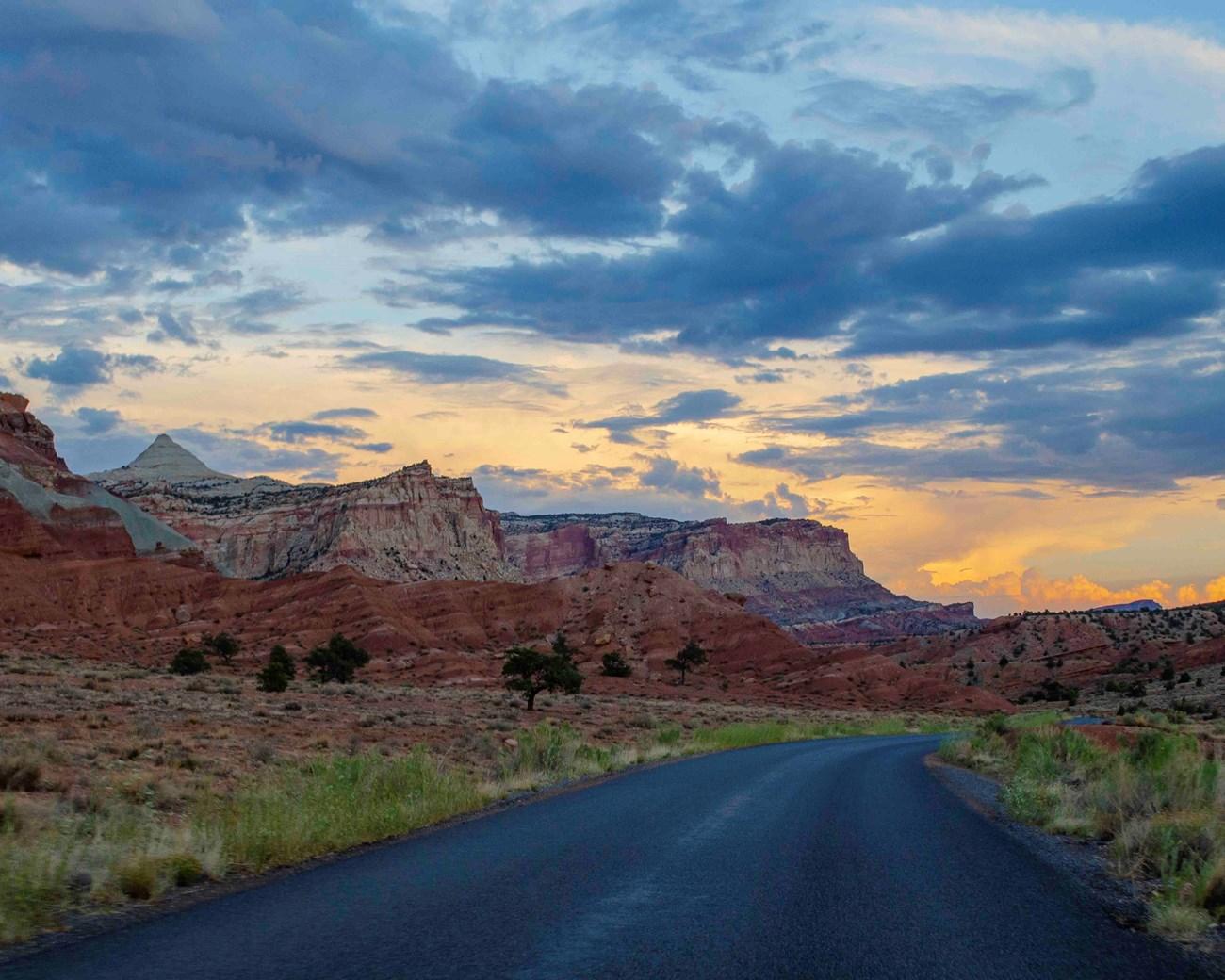 Nantahala National Forest
, North Carolina, offers Appalachian hiking, whitewater, waterfalls, Cherokee heritage, mountain lakes and scenic drives.
Nantahala National Forest
Nantahala National Forest, North Carolina, offers Appalachian hiking, whitewater, waterfalls, Cherokee heritage, mountain lakes and scenic drives.


Swipe for more destinations
Explore more

Explore more of Blue Ridge Mountains
Explore South Carolina’s Blue Ridge Mountains for waterfalls, forest trails, lakes, Cherokee heritage, mountain towns and Appalachian scenery.
Explore Blue Ridge Mountains
Explore more of South Carolina
Explore South Carolina: A blend of historic charm, natural beauty, and southern hospitality. From Charleston's cobblestone streets to Myrtle Beach's sandy shores, adventure awaits.
Explore South Carolina