

Free Asheville Travel Guide & Mobile App
Plan your Asheville trip with Evendo. Get free guides to top attractions, restaurants, hotels, and bars. Web access or download the mobile app.


Asheville, North Carolina blends Blue Ridge scenery, Biltmore history, Appalachian culture, craft studios, local food and distinctive mountain city sightseeing.
Mountain Setting and Historic Character
Asheville sits in western North Carolina, where the French Broad and Swannanoa rivers meet among the wooded ridges of the Blue Ridge Mountains. Its elevated setting brings long views, leafy streets and relatively mild summers, while the surrounding landscape provides a natural backdrop for hiking, scenic drives and waterfall excursions. Downtown Asheville combines late-nineteenth- and early-twentieth-century commercial buildings with independent bookshops, galleries, cafés, restaurants and music venues. The city’s most famous architectural landmark, Biltmore, occupies a vast estate south of the centre and preserves the scale and ambition of the Vanderbilt family’s Gilded Age vision.Read more about Asheville
Arts, Craft and Local Life
When is the best time to visit Asheville?
Best: May, September–October · 20–25°C| Month | High (°C) | Rainfall (mm) |
|---|---|---|
| January | 9 | 97 |
| February | 11 | 102 |
| March | 15 | 112 |
| April | 19 | 107 |
| May (best) | 24 | 116 |
| June | 28 | 113 |
| July | 29 | 140 |
| August | 29 | 134 |
| September (best) | 25 | 117 |
| October (best) | 20 | 89 |
| November | 14 | 93 |
| December | 10 | 102 |
Getting to and around Asheville
How to get there
Transportation
Best attractions in Asheville
Asheville’s principal attractions range from the grand scale of Biltmore, where visitors can explore the Vanderbilt house, gardens and landscaped estate, to the more informal studios of the River Arts District beside the French Broad River. Downtown rewards close inspection of its preserved Art Deco and Neoclassical buildings, independent galleries and public spaces, while the Asheville Art Museum provides a focused introduction to American art with connections to the region. The North Carolina Arboretum, south-west of the centre, combines cultivated gardens with woodland trails and seasonal plant displays. For broader mountain scenery, the Blue Ridge Parkway leads to overlooks and trailheads beyond the city, though it is a regional scenic route rather than an urban attraction. Pack Square and the surrounding civic quarter offer an accessible way to see Asheville’s public architecture, while the historic homes of Montford reveal a quieter residential side of the city.
-
Tourist attraction
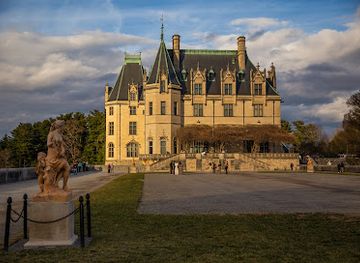
Biltmore
Explore the grandeur of Biltmore Estate, America’s largest home, nestled in the scenic Blue Ridge Mountains of Asheville, North Carolina.
7 min drive · 2.3 km from city centre
-
Tourist attraction
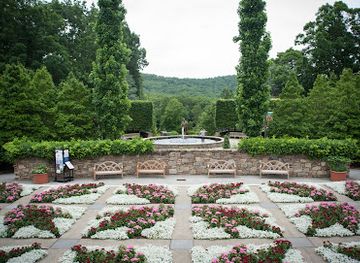
The North Carolina Arboretum
Discover the natural beauty and tranquility of The North Carolina Arboretum in Asheville, North Carolina. A perfect escape for nature lovers and travelers alike.
29 min drive · 9.6 km from city centre
-
Historical landmark
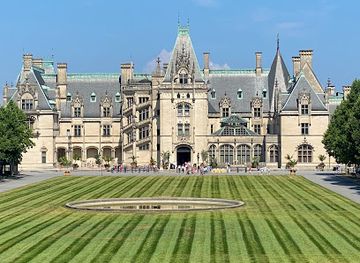
Biltmore Estate
Experience the majestic beauty and rich history of Biltmore Estate, the largest privately-owned home in the U.S., set in the stunning Blue Ridge Mountains.
10 min drive · 3.4 km from city centre
-
Tourist attraction
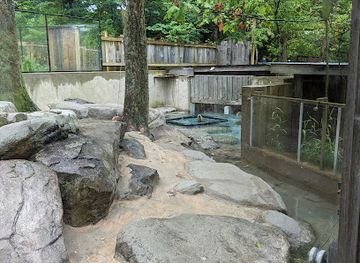
Western North Carolina Nature Center
Discover the beauty of the Appalachian wilderness at the Western North Carolina Nature Center, where native wildlife and educational experiences await.
16 min drive · 5.4 km from city centre
Best landmarks in Asheville
Biltmore House is Asheville’s most imposing landmark, a late-nineteenth-century mansion designed by Richard Morris Hunt for George Washington Vanderbilt and set within landscapes planned by Frederick Law Olmsted. In the civic centre, Asheville City Hall is a prominent example of Art Deco design, while the Buncombe County Courthouse and the Grove Arcade reflect the prosperous building programme of the early twentieth century. Basilica of Saint Lawrence, completed in 1909 and designed by Rafael Guastavino, is known for its broad tiled dome and Spanish Renaissance-inspired detailing. The Thomas Wolfe Memorial preserves the boyhood home associated with the Asheville-born writer, connecting the city’s domestic architecture with its literary history. In Montford, substantial late-nineteenth- and early-twentieth-century houses illustrate the city’s historic residential development, while Pack Square provides a public setting framed by important civic buildings.
-
Museum
Biltmore
Discover the breathtaking beauty and rich history of Biltmore, America's largest home, nestled in the scenic Blue Ridge Mountains.
7 min drive · 2.3 km from city centre
-
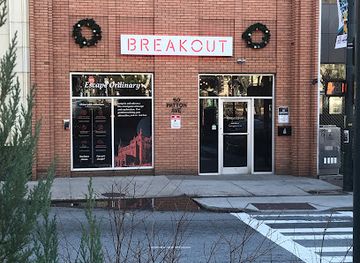
Escape room center
Breakout Games - Asheville
Experience the thrill of adventure at Breakout Games in Asheville - where puzzles, teamwork, and excitement await in immersive escape rooms.
8 min drive · 2.6 km from city centre
-
Arboretum
The North Carolina Arboretum
Discover the breathtaking beauty of The North Carolina Arboretum, where nature, art, and tranquility come together in the heart of the Blue Ridge Mountains.
29 min drive · 9.6 km from city centre
-
 Historical landmark
Biltmore Estate
Discover the elegance and history of Biltmore Estate, America's largest home, set against the stunning backdrop of the Blue Ridge Mountains.
10 min drive · 3.4 km from city centre


Explore Asheville on the map
Plan your Asheville trip on one map. See where the top attractions, landmarks, restaurants, bars and hotels are, find what's near where you're staying, and book hotels and experiences in a few clicks.
Neighbourhoods in Asheville
-

-


Swipe for more neighbourhoods
Best hotels in Asheville
Best restaurants in Asheville
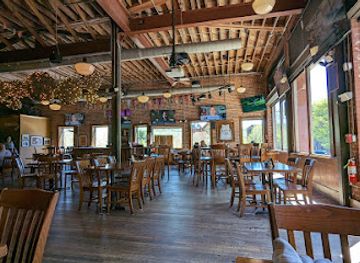
Asheville’s dining culture draws on Appalachian ingredients and traditions while making room for contemporary Southern cooking, international cuisines and a strong independent café scene. Menus may feature mountain trout, cornmeal, beans, greens, biscuits, preserved produce and locally sourced pork, alongside creative vegetarian and vegan cooking. The city’s craft-beverage culture has also influenced restaurant life, with breweries and taprooms often forming part of the evening landscape rather than standing apart from it. Downtown, South Slope, West Asheville and the River Arts District contain many of the city’s restaurants, cafés and casual eateries, while atmospheric dining also appears around Biltmore Village. Farmers’ markets and food-focused events provide opportunities to encounter regional produce and small-scale makers. Asheville’s culinary identity is therefore less about one defining dish than about the meeting of Appalachian foodways, farm-led cooking and an exploratory urban dining scene.
-
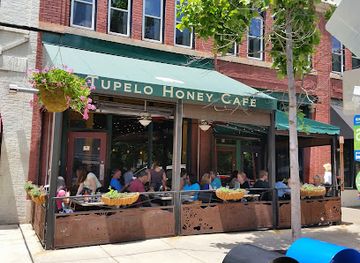
American
Tupelo Honey Southern Kitchen & Bar
Experience authentic Southern cuisine at Tupelo Honey Southern Kitchen & Bar in Asheville – where every dish tells a story.
8 min drive · 2.7 km from city centre
-
Mexican
White Duck Taco Shop
Discover unique gourmet tacos at White Duck Taco Shop in Asheville - where traditional Mexican meets creative culinary delights.
9 min drive · 3.1 km from city centre
-
American
Pack's Tavern
Discover Pack's Tavern in Downtown Asheville - where history meets delicious American cuisine in a vibrant atmosphere.
8 min drive · 2.7 km from city centre
-
Barbecue
Luella’s Bar-B-Que
Experience authentic Southern barbecue at Luella’s Bar-B-Que in Asheville, where flavor meets hospitality in every delicious bite.
15 min drive · 4.9 km from city centre

Best bars in Asheville
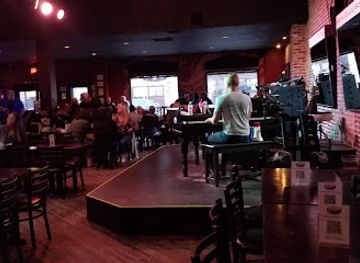
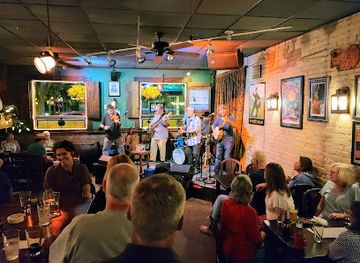
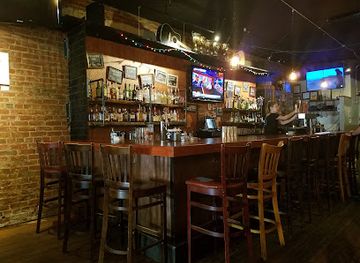
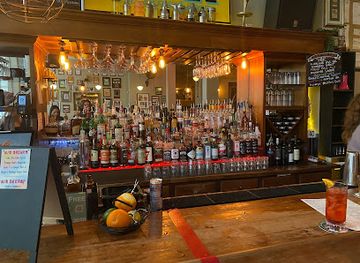
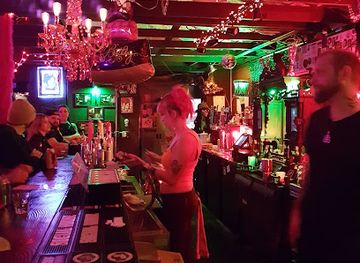
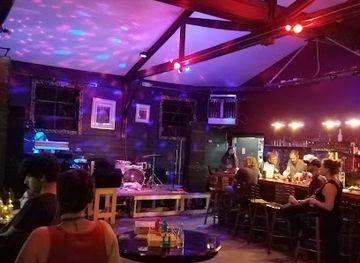
Asheville’s evening life is more strongly associated with craft beer, live music, cocktail bars and intimate performance spaces than with a large nightclub scene. South Slope, downtown and parts of West Asheville contain breweries, taprooms, pubs and bars, while the River Arts District has evening venues linked to galleries, studios and the riverfront’s former industrial buildings. Traditional Appalachian and bluegrass influences can be heard alongside rock, jazz and touring acts at established music venues, including the Orange Peel and Grey Eagle, whose locations are in different parts of the city. The historic centre also offers theatres, comedy, small concerts and cultural events for visitors who prefer entertainment without a club setting. Evening districts can be lively, but Asheville retains the scale of a mountain city, and the character of nightlife changes noticeably between central streets, residential neighbourhoods and outlying areas.
-
Bar
Off The Wagon Dueling Piano Bar Asheville
Discover the lively spirit of Asheville at Off The Wagon Dueling Piano Bar, where music, fun, and unforgettable moments await you.
9 min drive · 2.9 km from city centre
-
Pub
Jack of the Wood
Experience the vibrant atmosphere of Jack of the Wood, Asheville's premier Irish pub offering local brews, hearty food, and live music.
8 min drive · 2.6 km from city centre
-
Pub
Foggy Mountain Brew Pub
Experience the best of Asheville at Foggy Mountain Brew Pub, where craft beers and delicious food come together in a cozy atmosphere.
8 min drive · 2.6 km from city centre
-
Bar
Rankin Vault Cocktail Lounge
Experience the best cocktails and vibrant atmosphere at Rankin Vault Cocktail Lounge in Asheville, NC, perfect for socializing and relaxation.
8 min drive · 2.7 km from city centre
Best nightclubs in Asheville
Asheville’s evening life is more strongly associated with craft beer, live music, cocktail bars and intimate performance spaces than with a large nightclub scene. South Slope, downtown and parts of West Asheville contain breweries, taprooms, pubs and bars, while the River Arts District has evening venues linked to galleries, studios and the riverfront’s former industrial buildings. Traditional Appalachian and bluegrass influences can be heard alongside rock, jazz and touring acts at established music venues, including the Orange Peel and Grey Eagle, whose locations are in different parts of the city. The historic centre also offers theatres, comedy, small concerts and cultural events for visitors who prefer entertainment without a club setting. Evening districts can be lively, but Asheville retains the scale of a mountain city, and the character of nightlife changes noticeably between central streets, residential neighbourhoods and outlying areas.
-
Bar
Off The Wagon Dueling Piano Bar Asheville
Join the lively atmosphere at Off The Wagon Dueling Piano Bar in Asheville, where live music and great drinks create unforgettable nights.
9 min drive · 2.9 km from city centre
-
Bar
27 Club
Discover the 27 Club: A lively dive bar in Asheville offering live music, karaoke, and a warm atmosphere for all rock music lovers.
8 min drive · 2.6 km from city centre
-
Bar
Sly Grog Lounge
Experience the lively spirit of Asheville at Sly Grog Lounge, a unique bar featuring live music, vintage charm, and fun arcade games.
8 min drive · 2.7 km from city centre
-
Night club
O. Henry's
Explore the vibrant nightlife of Asheville at O. Henry's, a lively night club and gay bar renowned for its inclusivity and fantastic entertainment.
8 min drive · 2.8 km from city centre


Best shops in Asheville
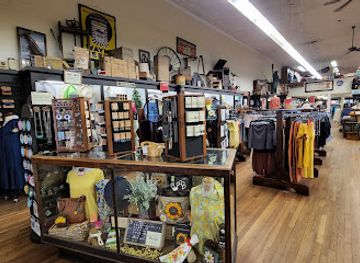
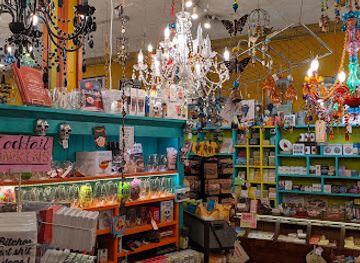
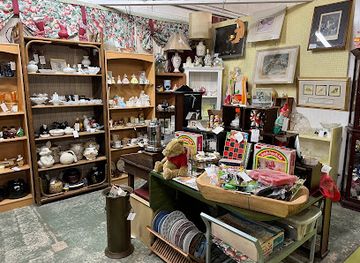
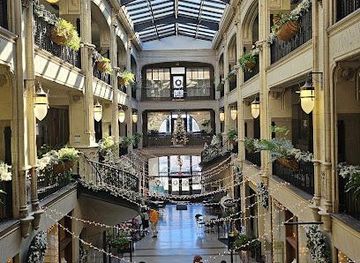
Shopping in Asheville ranges from independent downtown boutiques and galleries to working studios in the River Arts District, where visitors can encounter pottery, jewellery, paintings, glass, woodwork and textiles in settings connected to production. The historic Grove Arcade contains specialist shops and food businesses within one of the city’s best-known commercial buildings, while Biltmore Village has a more polished collection of independent retailers, galleries and cafés near the estate. West Asheville offers a neighbourhood-scale mix of vintage clothing, books, gifts and locally made goods. Craft remains central to the city’s retail identity, reflecting wider Appalachian traditions of ceramics, weaving, carving and handmade decoration. Regional food products, locally designed prints and practical outdoor goods are also common purchases. Galleries and studios vary in their opening patterns, so the experience is often more rewarding when approached as a district to explore rather than as a conventional shopping centre visit.
-
General store
Mast General Store Asheville
Discover a treasure trove of outdoor gear, clothing, and nostalgic treats at Mast General Store Asheville, a must-visit for every traveler.
8 min drive · 2.6 km from city centre
-
Gift shop
L.O.F.T. of Asheville
Explore L.O.F.T. of Asheville - a unique gift shop offering local crafts, books, and souvenirs in the vibrant heart of downtown Asheville.
9 min drive · 2.9 km from city centre
-
Antique store
Sweeten Creek Antiques & Collectibles, LLC
Explore a treasure trove of antiques and collectibles in Asheville at Sweeten Creek Antiques & Collectibles, where every item holds a unique story.
7 min drive · 2.3 km from city centre
-
Business center
Grove Arcade
Explore the historic Grove Arcade in Asheville, NC, where shopping, dining, and culture meet in a beautifully preserved setting.
8 min drive · 2.8 km from city centre
Get your free copy of our complete guide to Asheville, delivered straight to you.
Everything on this page, from attractions and restaurants to essentials and local phrases, in one PDF you can read offline, print or share.
Already have an account? Sign in
Your Asheville guide is ready.
We'll send it to · Not you? Sign out

Getting your guide ready…
We are putting together a fresh copy of the Asheville guide. This can take up to a minute.
This can take a few moments. If your browser asks, choose Allow so the download can start. You'll find the guide in your Downloads folder.
Nothing happened? Download it again
Sorry, the guide is taking longer than usual. Please try again in a minute, or get it by email instead.
Asheville essentials
Currency and Payment
Safety
Emergency Situations
Do's and Don'ts
Local Tips
From Eve
Local phrases worth knowing
You don't need to get them perfect. A few words go a long way, and locals appreciate the effort.
Basics
| English | Local | Say it |
|---|---|---|
| Hello | Howdy | [haw-dee] |
| Goodbye | See ya | [see yuh] |
| Yes | Yep | [yep] |
| No | Nah | [na] |
| Please/You're welcome | Please and thank ya | [pleez and thank yuh] |
| Thank you | Much obliged | [muhch uh-blahy-jd] |
| Excuse me/Sorry | Beg your pardon | [beg yur pahr-dn] |
| How are you? | How y'all doin'? | [how y'all doh-in] |
| Fine. And you? | Jus' fine. And y'all? | [juhs fine. And y'all?] |
| Do you speak English? | Y'all speak English? | [y'all speak ing-glish?] |
| I don't understand | I ain't catchin' on | [I aint katch-in on] |
Eating & Drinking
| English | Local | Say it |
|---|---|---|
| I'd like to see the menu, please | I reckon I'll take a gander at the menu, if y'please | [I rek-uhn eye-ul take uh gan-duhr at the menu, if y'please] |
| I don't eat meat | I don't do no meat | [I dont do no meet] |
| Cheers! | Bottoms up! | [bot-uhms up] |
| I would like to pay, please | I reckon I'll settle up, if y'please | [I rek-uhn eye-ul set-ul up, if y'please] |
Emergencies
| English | Local | Say it |
|---|---|---|
| Help! | I need a hand! | [I neyd uh hand] |
| Go away! | Git! | [git] |
| Call the Police! | Ring up the Sheriff! | [ring up thuh shur-iff] |
| Call a doctor! | Get a doc on the horn! | [get uh doc on thuh horn] |
| I'm lost | I'm turned around | [I'm turnd uh-round] |
| I'm ill | I ain't feelin' right | [I aint feel-in rahyt] |
Shopping
| English | Local | Say it |
|---|---|---|
| I'd like to buy... | I reckon I'll buy... | [I rek-uhn eye-ul bahy...] |
| I'm just looking | Jus' browsin' | [juhs brow-zin] |
| How much is it? | What's the damage? | [whats thuh dam-ij] |
| That's too expensive | That's a mite steep | [thats uh myt steep] |
| Can you lower the price? | Can y'all do a better deal? | [can y'all do uh bet-er deel] |
Time & Numbers
| English | Local | Say it |
|---|---|---|
| What time is it? | What's the time o' day? | [whats thuh tahym uh day] |
| It's one o'clock | It's one | [its wuhn] |
| Half past (10) | Half past ten | [haf past ten] |
| Morning | Mornin' | [morn-in] |
| Afternoon | Afternoon | [after-noon] |
| Evening | Evenin' | [even-in] |
| Yesterday | Yest'day | [yest-day] |
| Today | Today | [tuh-day] |
| Tomorrow | Tomorrah | [tomor-uh] |
| 1 | One | [wuhn] |
| 2 | Two | [too] |
| 3 | Three | [three] |
| 4 | Four | [for] |
| 5 | Five | [fahyv] |
| 6 | Six | [siks] |
| 7 | Seven | [sev-uhn] |
| 8 | Eight | [eyt] |
| 9 | Nine | [nahyn] |
| 10 | Ten | [ten] |
Transport & Directions
| English | Local | Say it |
|---|---|---|
| Where's a/the...? | Where's the... | [wheres thuh] |
| What's the address? | What's the whereabouts? | [whats thuh whur-about-s] |
| Can you show me (on the map)? | Can y'all point me out (on the map)? | [can y'all point me out (on thuh map)] |
| When's the next (bus)? | When's the next (bus) rollin' through? | [whens thuh next (bus) roll-in through] |
| A ticket (to ....) | A ticket (to ....) | [uh ticket (to)] |
History of Asheville
Cherokee Homelands and Early Settlement
The Asheville area lies within the traditional homelands of the Cherokee, whose societies, routes and place-based knowledge shaped the southern Appalachian landscape long before the arrival of European-American settlers. The Cherokee called the region by names associated with its river valleys and mountain geography, and nearby communities remained important after colonial expansion began. Buncombe County was created in 1791, and a settlement developed around the meeting of the French Broad and Swannanoa rivers. Early growth reflected farming, river travel and the establishment of roads through the mountains. The city’s later development therefore took place on land already embedded in Cherokee history, while removal and continuing pressures on Indigenous communities formed part of the broader history of western North Carolina.
The Founding of Asheville
The settlement was first known as Morristown and was renamed Asheville in 1797 in honour of Samuel Ashe, then governor of North Carolina. Its position in the river valleys made it a practical county seat and a growing centre for trade in a mountainous region where transport was difficult. For much of the nineteenth century, Asheville remained a relatively small inland town, but its civic role expanded as roads improved and visitors began to value the area’s climate and scenery. Courthouse buildings, churches and commercial premises gradually gave the centre a more substantial urban character, laying the foundations for the streets and districts that remain visible today.
Railways and Mountain Tourism
Rail connections transformed Asheville in the late nineteenth century. The Western North Carolina Railroad reached the town in 1879, strengthening links with eastern markets and making the mountains more accessible to travellers, investors and suppliers. Railway access encouraged hotels, boarding houses and health-oriented tourism, as Asheville acquired a reputation as a restorative highland resort. The increase in visitors also stimulated construction and commercial growth, while the city became a regional centre for banking, retail and professional services. Many surviving downtown buildings date from this period of expansion, when improved transport changed Asheville from a remote mountain settlement into a recognised destination and commercial hub.
The Vanderbilt Estate and Biltmore
George Washington Vanderbilt began acquiring land south of Asheville in the 1880s and commissioned the architect Richard Morris Hunt to design Biltmore House, completed in 1895. Frederick Law Olmsted, celebrated for his landscape work, planned the estate’s gardens and grounds, while the surrounding forests became part of an ambitious programme of scientific forestry. The French Renaissance-inspired house reflected the wealth and cultural aspirations of America’s Gilded Age, but the estate also influenced local employment, tourism and land management. Biltmore later became a major historic attraction and remains one of the clearest physical expressions of Asheville’s transformation into a destination for affluent visitors.
Civic Architecture and Cultural Change
Asheville’s prosperity continued into the early twentieth century, producing an impressive concentration of Art Deco and Neoclassical civic and commercial architecture. The Asheville City Hall, Buncombe County Courthouse and surrounding downtown buildings reflect the confidence of that era, although the city later faced serious economic pressures during the Great Depression. Asheville became known for preserving much of its historic core at a time when other American cities replaced older buildings with modern construction. From the mid-twentieth century onwards, preservationists, artists and independent businesses helped renew interest in the centre and in neighbourhoods such as Montford. This process shaped the architectural and cultural landscape encountered by visitors today.
The Contemporary Creative City
In the late twentieth and early twenty-first centuries, Asheville developed a strong reputation for visual arts, craft, music, independent food businesses and outdoor recreation. Former industrial buildings along the French Broad River were gradually adapted for studios, galleries, breweries and creative enterprises, creating the River Arts District. At the same time, the city’s proximity to the Blue Ridge Parkway and Pisgah National Forest reinforced its role as a base for mountain exploration. Contemporary Asheville remains connected to Appalachian traditions while attracting artists, entrepreneurs and visitors seeking a smaller city with a substantial cultural scene. Debates over growth, housing, development and the pressures of tourism continue to influence its civic life.
Asheville in Photos
Browse through our photo collection highlighting the charm and character of the destination.
Cities near Asheville
The closest cities to Asheville, if you have time for more than one stop.
-

-

-

-

-


Swipe for more cities
Explore more

Explore more of North Carolina
Discover North Carolina's blend of natural beauty, vibrant cities, and rich history. From the Outer Banks to the Blue Ridge Mountains, experience diverse landscapes and cultures.
Explore North Carolina