

Free Dickinson Travel Guide & Mobile App
Plan your Dickinson trip with Evendo. Get free guides to top attractions, restaurants, hotels, and bars. Web access or download the mobile app.


Dickinson, North Dakota, pairs Old West history, dinosaur fossils, prairie culture and easy access to Theodore Roosevelt National Park year-round.
A Rail-Born Prairie City
Dickinson stands in southwestern North Dakota, where the open Great Plains begin to fold into the grasslands and sculpted formations of the Badlands. The city grew beside the Northern Pacific Railway in the 1880s and remains an important regional centre, with broad streets, low-rise commercial districts and a strong connection to the farms, ranches and energy fields surrounding it. Its setting makes Dickinson a practical base for exploring western North Dakota while offering a character of its own.Read more about Dickinson
Fossils, Homesteads and Cultural Memory
Gateway to Western North Dakota
When is the best time to visit Dickinson?
Best: June, August–September · 21–27°C| Month | High (°C) | Rainfall (mm) |
|---|---|---|
| January | -4 | 11 |
| February | -2 | 13 |
| March | 5 | 20 |
| April | 14 | 29 |
| May | 20 | 52 |
| June (best) | 25 | 61 |
| July | 28 | 55 |
| August (best) | 27 | 41 |
| September (best) | 21 | 33 |
| October | 13 | 28 |
| November | 3 | 18 |
| December | -4 | 14 |
Getting to and around Dickinson
How to get there
Transportation
Best attractions in Dickinson
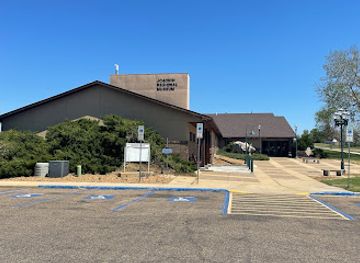
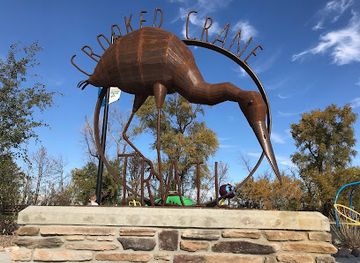
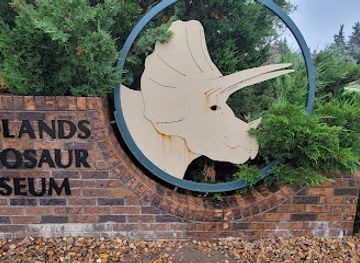
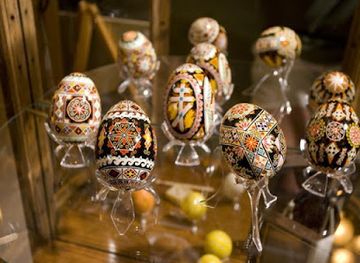
Dickinson's principal attractions bring together fossils, local history and the open landscape of western North Dakota. At the Dickinson Museum Center, the Badlands Dinosaur Museum presents regional palaeontology through fossil specimens and interpretive displays, while the Joachim Regional History Museum traces settlement, work and community life. Prairie Outpost Park extends the historical story outdoors with preserved and reconstructed buildings, machinery and reminders of pioneer-era routines. Dickinson State University contributes campus architecture, public events and cultural programming, and the Ukrainian Cultural Institute offers insight into the traditions of Ukrainian Americans in the region. Patterson Lake, just south of the city, provides boating, fishing and recreation in a prairie setting. The South Unit of Theodore Roosevelt National Park, about 30 miles west, is a separate national-park destination rather than a city attraction, but its Badlands formations, wildlife and scenic drives are a natural complement to a stay in Dickinson.
-
Tourist attraction
Dickinson Museum Center & Badlands Dinosaur Museum
Discover the rich history and prehistoric wonders at the Dickinson Museum Center & Badlands Dinosaur Museum in North Dakota.
5 min drive · 1.8 km from city centre
-
Tourist attraction
Patterson Lake Recreation Area
Immerse yourself in the natural beauty of Patterson Lake Recreation Area, a premier destination in Dickinson, North Dakota for outdoor fun and relaxation.
15 min drive · 4.9 km from city centre
-
Museum
Joachim Regional Museum
Explore the rich cultural heritage of Dickinson at the Joachim Regional Museum, where history comes alive through engaging exhibits and local stories.
5 min drive · 1.8 km from city centre
-
Tourist attraction
Ukrainian Cultural Institute
Explore the Ukrainian Cultural Institute in Dickinson, ND—an immersive experience of Ukrainian traditions, art, and cuisine awaits every visitor.
13 min walk · 1.1 km from city centre
Best landmarks in Dickinson
Dickinson's landmarks are chiefly institutions and preserved spaces that express the history of a working prairie city. The Dickinson Museum Center is the most important cultural complex, combining regional history with the area's geological and fossil heritage. Prairie Outpost Park forms an open-air historical landscape of buildings and machinery associated with settlement and rural life. Dickinson State University's campus, established as a normal school in 1918, represents the city's long-standing educational role. The Ukrainian Cultural Institute is a significant cultural landmark, preserving and presenting traditions rooted in the region's Ukrainian heritage. The Northern Pacific Railway's historic influence is visible in Dickinson's original role as a transport and commercial centre, even though the city is now more strongly experienced through its roads, civic institutions and dispersed modern development than through a single preserved old town.
-
Mexican
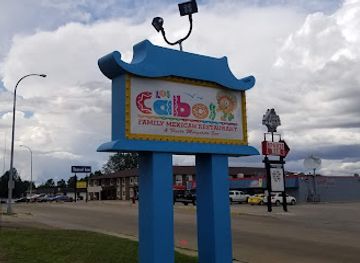
Los Cabos Family Mexican Restaurant
Experience the essence of Mexico at Los Cabos Family Mexican Restaurant, where authentic flavors and family-friendly ambiance meet in Dickinson, ND.
5 min drive · 1.7 km from city centre
-
Family-friendly
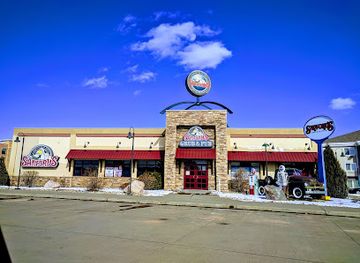
Sanford's Grub & Pub
Experience the warmth of family dining at Sanford's Grub & Pub in Dickinson, North Dakota, where delicious food and fun meet in a vibrant setting.
6 min drive · 2.0 km from city centre
-
Brewpub
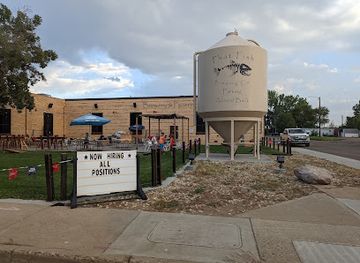
Phat Fish Brewing LLC
Experience the best craft beers and delicious cuisine at Phat Fish Brewing LLC in Dickinson, North Dakota - A true brewpub gem!
11 min walk · 0.9 km from city centre
-
Tattoo shop
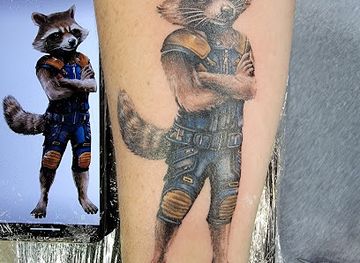
Body Temple Tattoo Nd
Explore artistic expression at Body Temple Tattoo, Dickinson's top destination for unique and personalized body art.
6 min walk · 0.5 km from city centre
Explore Dickinson on the map
Plan your Dickinson trip on one map. See where the top attractions, landmarks, restaurants, bars and hotels are, find what's near where you're staying, and book hotels and experiences in a few clicks.
Best hotels in Dickinson
Best restaurants in Dickinson
Dickinson's dining scene reflects its position as an agricultural and energy-service centre rather than a specialist culinary destination. Restaurants and cafés around the commercial core serve familiar American fare, steaks, burgers, sandwiches and breakfasts, while Mexican, Asian and other international influences add variety to everyday dining. Local cattle and prairie agriculture inform the region's preference for hearty portions and meat-centred meals, although visitors will also find lighter and contemporary choices. Coffee shops and casual eateries provide useful gathering places for residents, students and road travellers. Dining options are distributed through the city rather than concentrated in one historic food quarter, and menus, opening patterns and seasonal businesses can change, so the town's restaurants are best understood as practical local establishments with a regional service-centre character.
-
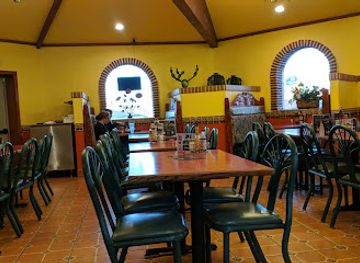
Mexican
Los Cabos Family Mexican Restaurant
Indulge in authentic Mexican flavors at Los Cabos Family Mexican Restaurant - where every meal is a fiesta!
5 min drive · 1.7 km from city centre
-
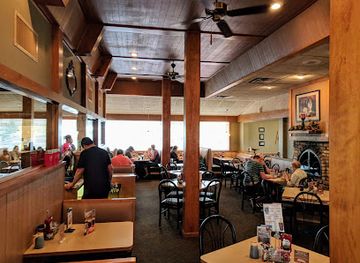
American
Country Kitchen Restaurant
Delight in classic American comfort food at Country Kitchen Restaurant - a family-friendly destination in Dickinson, ND.
5 min drive · 1.7 km from city centre
-
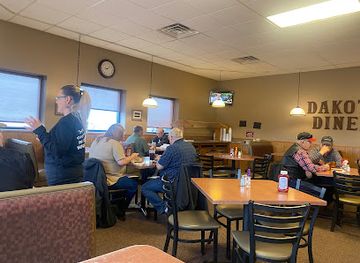
Breakfast
Dakota Diner
Dakota Diner offers mouthwatering breakfast classics in a cozy setting, making it the perfect start to your day in Dickinson.
11 min drive · 3.8 km from city centre
-
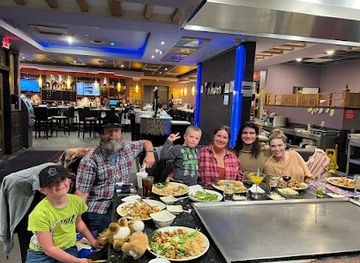
Japanese steakhouse
Sakura
Experience the art of Japanese dining at Sakura in Dickinson—where every meal is a performance of taste and skill.
6 min drive · 2.0 km from city centre
Best bars in Dickinson
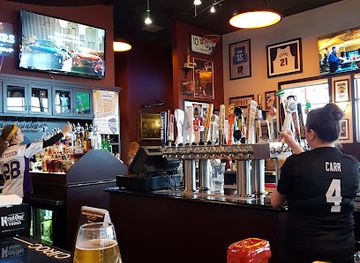
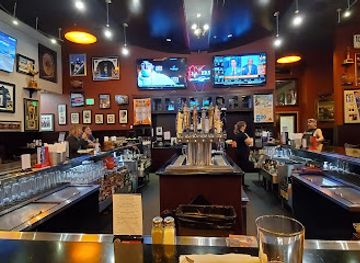
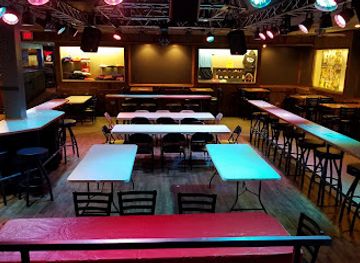
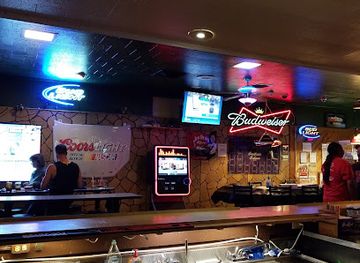
Dickinson's evening scene is modest and community-oriented, with the greatest concentration of after-dark activity found in local bars, restaurant lounges and gathering places rather than a large nightclub district. Sports bars and casual pubs provide spaces for conversation and televised games, while occasional live music, community events and performances connected with local organisations or Dickinson State University broaden the options. The city's small scale means nightlife is generally relaxed and tied to the weekly rhythm of residents, students and workers in the surrounding energy and agricultural economy. Visitors should not expect a dense late-night entertainment quarter, and venues can vary their schedules, but an evening meal followed by a drink or local event is a realistic way to experience Dickinson after dark.
-
Restaurant
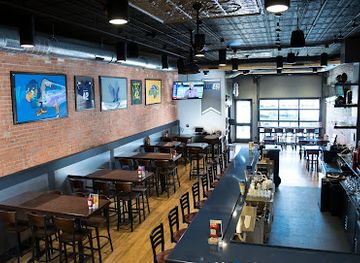
Blue 42 Sports Grille & Bar
Experience the best of American cuisine and sports culture at Blue 42 Sports Grille & Bar in Dickinson, North Dakota.
3 min walk · 0.2 km from city centre
-
Bar
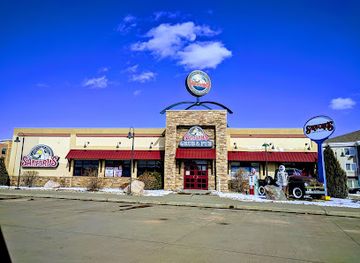
Sanford's Grub & Pub
Discover Sanford's Grub & Pub, a family-friendly restaurant and lively bar in Dickinson, ND, offering unique menu items and a vibrant atmosphere.
6 min drive · 2.0 km from city centre
-
Grill
Players Sports Bar & Grill
Discover the ultimate sports dining experience at Players Sports Bar & Grill in Dickinson, where great food and sports come together.
8 min drive · 2.8 km from city centre
-
Brewpub
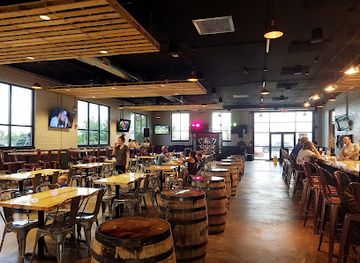
Phat Fish Brewing LLC
Discover unique craft beers and delicious pizzas at Phat Fish Brewing LLC, a lively brewpub in Dickinson, North Dakota.
11 min walk · 0.9 km from city centre
Best nightclubs in Dickinson
Dickinson's evening scene is modest and community-oriented, with the greatest concentration of after-dark activity found in local bars, restaurant lounges and gathering places rather than a large nightclub district. Sports bars and casual pubs provide spaces for conversation and televised games, while occasional live music, community events and performances connected with local organisations or Dickinson State University broaden the options. The city's small scale means nightlife is generally relaxed and tied to the weekly rhythm of residents, students and workers in the surrounding energy and agricultural economy. Visitors should not expect a dense late-night entertainment quarter, and venues can vary their schedules, but an evening meal followed by a drink or local event is a realistic way to experience Dickinson after dark.
-
Grill
Players Sports Bar & Grill
Discover the vibrant Players Sports Bar & Grill in Dickinson, ND, where delicious food meets an exhilarating sports atmosphere.
8 min drive · 2.8 km from city centre
-
Night club
Final Final Bar & Lounge
Discover the vibrant nightlife at Final Final Bar & Lounge, Dickinson's top spot for nightlife, cocktails, and unforgettable experiences.
5 min drive · 1.8 km from city centre
-
Bar
Spur Bar & Lounge
Discover the lively atmosphere of Spur Bar & Lounge, Dickinson's favorite nightlife spot for drinks, dancing, and socializing.
15 min walk · 1.2 km from city centre
-
Bar
Southside Saloon
Southside Saloon in Dickinson, ND: A hub for great drinks, lively events, and a friendly atmosphere perfect for tourists.
5 min walk · 0.4 km from city centre

Best shops in Dickinson
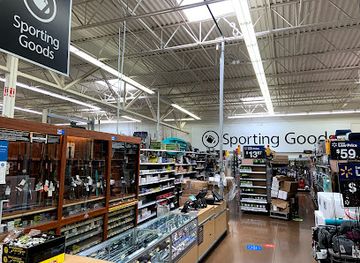
Shopping in Dickinson serves both local residents and travellers crossing western North Dakota. The city centre and surrounding commercial areas contain practical independent businesses, cafés, services and specialist shops, while larger retail areas provide everyday goods and outdoor equipment. Visitors interested in regional character can look for locally made crafts, prairie-themed gifts, books on North Dakota history, artwork and food products associated with ranching and agriculture. The Dickinson Museum Center and other cultural institutions may offer historically themed merchandise, although stock varies. This is not a market city with a dense bazaar tradition; retail is spread through a modern regional centre, and the most distinctive purchases tend to be connected with western North Dakota's Badlands, fossils, immigrant heritage and rural landscape rather than luxury shopping.
-
Department store
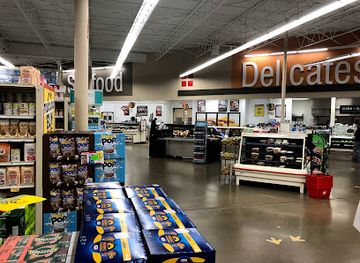
Walmart Supercenter
Explore Walmart Supercenter in Dickinson, ND – your ultimate shopping hub for groceries, clothing, electronics, and more!
10 min drive · 3.3 km from city centre
-
Grocery store
Cash Wise Foods Grocery Store Dickinson
Discover the essence of North Dakota at Cash Wise Foods in Dickinson, your local grocery store with a coffee shop and liquor store.
8 min drive · 2.5 km from city centre
-
General store
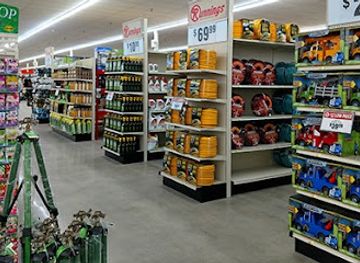
Runnings
Explore Runnings in Dickinson, a unique general store offering clothing, outdoor gear, and pet supplies for every traveler’s needs.
8 min drive · 2.8 km from city centre
-
Shopping mall
Prairie Hills Mall
Discover the charm of Prairie Hills Mall, your go-to shopping destination in Dickinson, North Dakota, featuring diverse stores and delightful dining options.
7 min drive · 2.4 km from city centre
Get your free copy of our complete guide to Dickinson, delivered straight to you.
Everything on this page, from attractions and restaurants to essentials and local phrases, in one PDF you can read offline, print or share.
Already have an account? Sign in
Your Dickinson guide is ready.
We'll send it to · Not you? Sign out

Getting your guide ready…
We are putting together a fresh copy of the Dickinson guide. This can take up to a minute.
This can take a few moments. If your browser asks, choose Allow so the download can start. You'll find the guide in your Downloads folder.
Nothing happened? Download it again
Sorry, the guide is taking longer than usual. Please try again in a minute, or get it by email instead.
Dickinson essentials
Currency and Payment
Safety
Emergency Situations
Do's and Don'ts
Local Tips
From Eve
Local phrases worth knowing
You don't need to get them perfect. A few words go a long way, and locals appreciate the effort.
Basics
| English | Local | Say it |
|---|---|---|
| Hello | Howdy | [haw-dee] |
| Goodbye | See ya | [see yah] |
| Yes | Yah | [yah] |
| No | Nah | [nah] |
| Please/You're welcome | Please/You betcha | [pleez/ yoo bet-chah] |
| Thank you | Thanks a lot | [thanks uh lot] |
| Excuse me/Sorry | Pardon me/My bad | [pahr-dun me/my bad] |
| How are you? | How ya doin'? | [how yah doin] |
| Fine. And you? | Good. How 'bout you? | [good. how bout yah] |
| Do you speak English? | Ya speak English? | [yah speak ing-glish] |
| I don't understand | I ain't gettin' it | [I aint get-tin it] |
Eating & Drinking
| English | Local | Say it |
|---|---|---|
| I'd like to see the menu, please | Can I check out the menu? | [can I check out the menu] |
| I don't eat meat | I don't do meat | [I dont do meat] |
| Cheers! | Bottoms up! | [bottoms up] |
| I would like to pay, please | I'll settle up now, please | [ill settle up now please] |
Emergencies
| English | Local | Say it |
|---|---|---|
| Help! | SOS! | [S-O-S] |
| Go away! | Git! | [git] |
| Call the Police! | Call the cops! | [call the cops] |
| Call a doctor! | Get a doc! | [get a doc] |
| I'm lost | I'm turned around | [im turned around] |
| I'm ill | I'm under the weather | [im under the weather] |
Shopping
| English | Local | Say it |
|---|---|---|
| I'd like to buy... | I wanna grab... | [I wanna grab] |
| I'm just looking | Just browsin' | [just browsin] |
| How much is it? | What's the damage? | [whats the damage] |
| That's too expensive | That's spendy | [thats spendy] |
| Can you lower the price? | Can ya knock it down? | [can yah knock it down] |
Time & Numbers
| English | Local | Say it |
|---|---|---|
| What time is it? | What's the hour? | [whats the hour] |
| It's one o'clock | It's one | [its one] |
| Half past (10) | Ten-thirty | [ten-thur-tee] |
| Morning | Mornin' | [mornin] |
| Afternoon | Afternoon | [afternoon] |
| Evening | Evenin' | [evenin] |
| Yesterday | Yest'day | [yes-t-day] |
| Today | Today | [today] |
| Tomorrow | Tomorrah | [tomorrah] |
| 1 | One | [wun] |
| 2 | Two | [too] |
| 3 | Three | [three] |
| 4 | Four | [four] |
| 5 | Five | [five] |
| 6 | Six | [six] |
| 7 | Seven | [seven] |
| 8 | Eight | [eight] |
| 9 | Nine | [nine] |
| 10 | Ten | [ten] |
Transport & Directions
| English | Local | Say it |
|---|---|---|
| Where's a/the...? | Where's the... | [wheres the] |
| What's the address? | What's the addy? | [whats the addy] |
| Can you show me (on the map)? | Can you point it out? | [can you point it out] |
| When's the next (bus)? | When's the next (bus)? | [whens the next bus] |
| A ticket (to ....) | A ticket (to ....) | [a ticket to] |
History of Dickinson
Railway Foundations in the 1880s
Dickinson emerged in the early 1880s as the Northern Pacific Railway extended across southwestern Dakota Territory. The railway created a shipping point and encouraged merchants, labourers and settlers to establish a permanent town on the open prairie. Dickinson was named for W.S. Dickinson, associated with the railway's land interests, and the settlement was incorporated in 1883. Its position along the line linked local cattle, grain and other agricultural production with wider markets. The railway also shaped the town's physical development, anchoring commercial activity and helping Dickinson become a service centre for a sparsely populated region.
Homesteading and Immigrant Settlement
During the late nineteenth and early twentieth centuries, homesteaders transformed the surrounding grasslands into farms and ranches. Many settlers came from German-speaking communities of Russia, while others arrived from Scandinavia, central Europe and elsewhere in the United States. They brought languages, religious practices, foodways and agricultural knowledge that became part of southwestern North Dakota's social character. The challenges were substantial: limited rainfall, severe winters and long distances demanded cooperation and adaptation. Institutions, churches and local businesses gradually gave the growing town a civic structure, while the railway continued to support the movement of people and produce.
Education and Regional Institutions
Dickinson's role expanded beyond railway commerce as schools and public institutions developed to serve the surrounding area. Dickinson State University began in 1918 as Dickinson State Normal School, preparing teachers for western North Dakota and later broadening its academic mission. The institution remains an important part of the city's intellectual and cultural life. Museums and historic preservation projects also grew from an interest in recording the experiences of homesteaders, ranch families, railway workers and immigrant communities. Buildings, machinery and household objects preserved in and around the Dickinson Museum Center connect the present city with this formative period.
Oil, Gas and Postwar Change
Petroleum exploration brought new economic possibilities to western North Dakota during the twentieth century, adding energy production to an economy long centred on agriculture, ranching and transport. Dickinson experienced periods of expansion and contraction as drilling activity responded to technology, prices and national demand. The development of the Bakken petroleum region in the early twenty-first century produced another pronounced population and business surge across the wider area, followed by a more measured period as activity fluctuated. These changes reinforced Dickinson's position as a regional service, employment and transport centre while placing its older prairie economy within a modern energy landscape.
Preserving Western North Dakota's Story
Contemporary Dickinson presents its history through museums, university programmes, preserved buildings and cultural organisations rather than through a single monumental historic quarter. The Dickinson Museum Center documents natural history, settlement and community life; Prairie Outpost Park preserves a collection of relocated and reconstructed structures; and the Ukrainian Cultural Institute maintains traditions associated with one of the region's important cultural inheritances. The city's continuing identity reflects several overlapping histories: Indigenous presence in the wider northern Plains, railway expansion, immigrant farming, ranching, education, fossil science and energy development. Together they explain Dickinson's role as both a local community and a western North Dakota gateway.
Dickinson in Photos
Browse through our photo collection highlighting the charm and character of the destination.
Cities near Dickinson
The closest cities to Dickinson, if you have time for more than one stop.
-
 Mandan
, North Dakota, pairs Missouri River history with Fort Abraham Lincoln, Native heritage, railroad stories, rodeo tradition and wide-open prairie landscapes.
2 h 45 min drive · 145 km from city centre
Mandan
Mandan, North Dakota, pairs Missouri River history with Fort Abraham Lincoln, Native heritage, railroad stories, rodeo tradition and wide-open prairie landscapes.
2 h 45 min drive · 145 km from city centre
-

-

-
-


Swipe for more cities
Explore more
Explore more of North Dakota
Discover the rugged beauty, rich history, and warm hospitality of North Dakota, the untamed frontier of the United States.
Explore North Dakota