

Bimini Islands Travel Guide - Free Web & App
Your ultimate guide to Bimini Islands. Discover top landmarks, proposed trips, and local tips. Free on the web or via the Evendo companion app.


Bimini Islands, The Bahamas: explore turquoise waters, Lucayan heritage, shipwrecks, fishing, diving and relaxed island life near Florida’s coast.
Islands at the Edge of the Bahama Banks
Bimini is the westernmost district of The Bahamas, a compact island group lying in the Atlantic Ocean close to Florida. Its principal inhabited islands are North Bimini and South Bimini, separated by a narrow channel and linked by local water transport, while smaller islands and cays extend around them. The setting is defined by clear shallows, pale sand, mangrove-fringed waterways and the dramatic drop from the Bahama Banks into the deep open sea. This proximity to the Gulf Stream gives Bimini an unusually strong maritime character, with fishing, diving and boating central to local life.Read more about Bimini Islands
History, Fishing and Island Character
Water, Wildlife and Local Experiences
When is the best time to visit Bimini Islands?
Best: January–March · 26–27°C| Month | High (°C) | Rainfall (mm) |
|---|---|---|
| January (best) | 26 | 57 |
| February (best) | 27 | 49 |
| March (best) | 27 | 43 |
| April | 28 | 46 |
| May | 28 | 78 |
| June | 29 | 148 |
| July | 30 | 197 |
| August | 30 | 203 |
| September | 30 | 190 |
| October | 29 | 149 |
| November | 29 | 75 |
| December | 27 | 59 |
Getting to and around Bimini Islands
How to get there
Transportation
Best attractions in Bimini Islands
Bimini’s principal attractions are its waters and the small settlements that support them. Alice Town provides the liveliest concentration of local history, marinas, restaurants and modest shops, while Radio Beach and other sandy shorelines offer easy access to the clear shallows for swimming when conditions permit. Offshore, coral reefs, wrecks, sand flats and deeper channels draw divers, snorkellers, anglers and wildlife guides. The Bimini Biological Field Station, known as the Shark Lab, is associated with research and education concerning sharks and marine ecosystems. Visitors can also seek out the so-called Bimini Road, a submerged formation near North Bimini often linked to Atlantis theories, although its origin remains debated rather than established as a lost city. South Bimini brings a quieter landscape of roads, beaches and residential areas, and boat excursions may explore nearby cays, mangroves and fishing grounds according to weather, access and conservation rules.
-
Tourist attraction
Luna Beach Club
Experience the idyllic beauty of Luna Beach Club in Bailey Town, a perfect blend of relaxation and adventure awaits you at this stunning beach pavilion.
-
Tourist attraction
Browns Marina
Experience the breathtaking beauty of Browns Marina in Bimini, your gateway to thrilling water adventures and serene relaxation.
-
Tourist attraction
Neal Watson's Bimini Scuba Center
Discover the underwater paradise of Bimini at Neal Watson's Scuba Center, where adventure and exploration await in the stunning Caribbean waters.
-
Tourist attraction
Bimini Blue Adventures
Experience the best of the Bahamas with Bimini Blue Adventures, where adventure meets the stunning beauty of the Caribbean sea.


Best landmarks in Bimini Islands
Bimini’s most distinctive landmarks are largely maritime and natural. The Bimini Road, a submerged alignment of pale stones near North Bimini, is a prominent diving and boating site whose formation has inspired Atlantis theories, although archaeological and geological interpretations remain contested. The shallow Bahama Banks, nearby reefs and the abrupt deep-water edge give the islands their physical identity and explain their importance to fishing and diving. The Healing Hole, a tidal mangrove pool in the Bimini environment, is associated with local stories and unusual water movement, but access and conditions should be checked before visiting. On land, the modest settlements of Alice Town and South Bimini, the old-style streets, marinas and shoreline buildings reflect the islands’ boat-based culture. The Bimini Biological Field Station is an important modern landmark for marine research, especially work involving sharks and their habitats.
-
 Hotel
Hilton at Resorts World Bimini
Discover the ultimate Bahamian getaway at Hilton at Resorts World Bimini, featuring luxurious amenities and breathtaking ocean views for an unforgettable vacation.
-
Club
Virgin Voyages’ the Beach Club at Bimini
Discover a tropical paradise at Virgin Voyages’ The Beach Club at Bimini, where sun, sand, and fun meet in an exclusive beach club experience.
-
Park
Radio Beach
Experience the serene beauty of Radio Beach in Bimini, a captivating destination for sun, sand, and unforgettable sunsets.
-
Resort hotel
Bimini Big Game Club Resort & Marina
Discover paradise at Bimini Big Game Club Resort & Marina, where adventure meets relaxation in the heart of the Bahamas.


Explore Bimini Islands on the map
Plan your trip on one map. See where the top attractions, landmarks, restaurants and hotels are, and book hotels and experiences in a few clicks.
Best hotels in Bimini Islands
Best restaurants in Bimini Islands
Dining in Bimini is concentrated around Alice Town, marinas, hotels and guesthouses rather than spread across a large restaurant district. Bahamian flavours are expressed through conch prepared in salads, fritters or soups, fresh fish, peas and rice, fried plantain and other straightforward island dishes, while American-influenced breakfasts, burgers and seafood meals are also common in visitor-oriented establishments. The day’s catch and access to local waters influence menus, although availability can vary with weather and supply deliveries. South Bimini has fewer services, so visitors staying there should check where meals are available and whether transport across the channel is practical in the evening. Casual bars, takeaway counters and small local eateries provide much of the destination’s character, with more extensive choices generally found around accommodation, marinas and Alice Town.
-
Restaurant
Stuart Conch Salad Stand
Experience authentic Bahamian cuisine at Stuart Conch Salad Stand - where fresh conch salad meets island vibes.
-
Restaurant
Joe's Conch Stand
Experience authentic Bahamian flavors at Joe's Conch Stand, where fresh seafood meets island charm in beautiful Bailey Town.
-
Restaurant
Bimini Big John's
Experience vibrant Bahamian culture at Bimini Big John's - where delicious seafood meets live music in Alice Town.
-
Pizza
Edith's Pizza
Discover delightful pizzas infused with local flavors at Edith's Pizza in Bailey Town, where every slice tells a story.


Best bars in Bimini Islands
Bimini’s evening scene is informal, maritime and considerably quieter than the nightlife of Nassau or a large Caribbean resort. Alice Town and the marinas have traditional Bahamian bars, hotel lounges and casual places where residents, anglers and visiting boat crews gather for drinks, conversation and music. Some venues host live entertainment or local events at particular times, but schedules are seasonal and should be confirmed locally rather than assumed. South Bimini has fewer evening options, and the islands do not have a substantial nightclub district or a continuous late-night circuit. The most characteristic after-dark experiences are relaxed meals, a drink near the harbour, music at a local venue or a quiet walk along the settlement rather than organised clubbing.
-
Restaurant
Stuart Conch Salad Stand
Experience the essence of Bahamian cuisine at Stuart Conch Salad Stand in Bailey Town, renowned for its fresh and flavorful conch salad.
-
Bar
Bimini Big John's
Discover Bimini Big John's: A lively bar and restaurant in Alice Town, offering delicious seafood, refreshing cocktails, and vibrant live music that celebrates Bahamian culture.
-
Bar
Island House
Experience the vibrant atmosphere and tropical flavors at Island House, a must-visit bar in Alice Town for every traveler seeking relaxation.
-
Restaurant
Smitty’s Beach Bar & Restaurant
Experience the vibrant flavors and laid-back charm of Smitty’s Beach Bar & Restaurant in the heart of Porgy Bay.


Best nightclubs in Bimini Islands
Bimini’s evening scene is informal, maritime and considerably quieter than the nightlife of Nassau or a large Caribbean resort. Alice Town and the marinas have traditional Bahamian bars, hotel lounges and casual places where residents, anglers and visiting boat crews gather for drinks, conversation and music. Some venues host live entertainment or local events at particular times, but schedules are seasonal and should be confirmed locally rather than assumed. South Bimini has fewer evening options, and the islands do not have a substantial nightclub district or a continuous late-night circuit. The most characteristic after-dark experiences are relaxed meals, a drink near the harbour, music at a local venue or a quiet walk along the settlement rather than organised clubbing.
-
Club
Virgin Voyages’ the Beach Club at Bimini
Discover the ultimate tropical escape at Virgin Voyages’ The Beach Club at Bimini, where luxury meets lively beachside fun.
-
Bar
Bimini Big John's
Experience Bimini's vibrant nightlife at Bimini Big John's, where delicious food meets live music in the heart of Alice Town.
-
Bar
Island House
Experience the vibrant nightlife at Island House, a lively bar in Alice Town ideal for cocktails, live music, and unforgettable moments.
-
Restaurant
Smitty’s Beach Bar & Restaurant
Experience the best of Bahamian cuisine at Smitty’s Beach Bar & Restaurant, where fresh seafood meets stunning ocean views.


Best shops in Bimini Islands
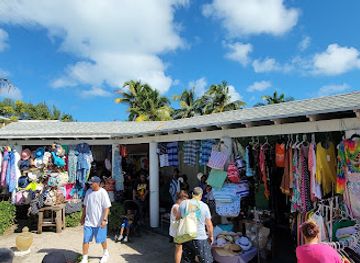
Shopping in Bimini is small-scale and practical, with the main concentration of shops in Alice Town and around marinas, hotels and visitor services. Local stalls and craft outlets may offer shell-free souvenirs, Bahamian artwork, clothing, jewellery, carved items and island-themed gifts, while food shops provide basic provisions for self-catering visitors. Fishing tackle, boating supplies and casual beach equipment are more characteristic purchases than fashion or luxury goods. South Bimini has fewer retail facilities, so visitors staying there or travelling offshore should obtain essentials in advance. Product ranges and opening patterns can change with deliveries, weather and season, and visitors should avoid buying coral, archaeological objects or anything taken from protected marine habitats. The strongest sense of place usually comes from locally made art, community crafts and products connected with Bimini’s fishing culture.
-
Bakery
Nate's Bimini Breads
Discover the flavors of the Bahamas at Nate's Bimini Breads, a local bakery offering fresh, homemade breads and pastries in the heart of Bailey Town.
-
Store
King Brown's Grocery Store
Explore the local flavors at King Brown's Grocery Store, a must-visit shopping destination in Bailey Town, offering unique products and friendly service.
-
Gift shop
Ms Antoinette
Discover unique handcrafted gifts and local art at Ms Antoinette in Bailey Town, where every treasure tells a story.
-
Shopping mall
Access Bahamas Bimini
Immerse yourself in Bahamian culture at Access Bahamas Bimini, where local crafts and unique souvenirs await in a vibrant shopping mall.


Get your free copy of our complete guide to Bimini Islands, delivered straight to you.
Everything on this page, from attractions and restaurants to essentials and local phrases, in one PDF you can read offline, print or share.
Already have an account? Sign in
Your Bimini Islands guide is ready.
We'll send it to · Not you? Sign out

Getting your guide ready…
We are putting together a fresh copy of the Bimini Islands guide. This can take up to a minute.
This can take a few moments. If your browser asks, choose Allow so the download can start. You'll find the guide in your Downloads folder.
Nothing happened? Download it again
Sorry, the guide is taking longer than usual. Please try again in a minute, or get it by email instead.
Bimini Islands essentials
Currency and Payment
Safety
Emergency Situations
Do's and Don'ts
Local Tips
From Eve
Local phrases worth knowing
You don't need to get them perfect. A few words go a long way, and locals appreciate the effort.
Basics
| English | Local | Say it |
|---|---|---|
| Hello | Hey | [Hey] |
| Goodbye | Goodbye | [Gud-bye] |
| Yes | Yes | [Yes] |
| No | No | [No] |
| Please/You're welcome | Please | [Pleez] |
| Thank you | Thank you | [Thank you] |
| Excuse me/Sorry | Excuse me | [Ex-kyus mi] |
| How are you? | How you doin'? | [How yu doin] |
| Fine. And you? | I good. You? | [I gud. You?] |
| Do you speak English? | You speak English? | [Yu spiik Inglish?] |
| I don't understand | I don't get it | [I don get it] |
Eating & Drinking
| English | Local | Say it |
|---|---|---|
| I'd like to see the menu, please | Menu, please | [Menyu, pliz] |
| I don't eat meat | I don't eat meat | [I don't it meet] |
| Cheers! | Cheers! | [Cheerz!] |
| I would like to pay, please | Pay, please | [Pay, pliz] |
Emergencies
| English | Local | Say it |
|---|---|---|
| Help! | Help! | [Help!] |
| Go away! | Go away! | [Go away!] |
| Call the Police! | Call the Police! | [Call the Police!] |
| Call a doctor! | Call a doctor! | [Call a doctor!] |
| I'm lost | I'm lost | [I'm lost] |
| I'm ill | I'm sick | [I'm sik] |
Shopping
| English | Local | Say it |
|---|---|---|
| I'd like to buy... | I want to buy... | [I wunt tu buy...] |
| I'm just looking | Just looking | [Jus looking] |
| How much is it? | How much? | [How much?] |
| That's too expensive | Too much | [Tu much] |
| Can you lower the price? | Lower the price? | [Lower the price?] |
Time & Numbers
| English | Local | Say it |
|---|---|---|
| What time is it? | What time is it? | [Wat taim is it?] |
| It's one o'clock | It's one o'clock | [It's one o'clock] |
| Half past (10) | Half (10) | [Half (10)] |
| Morning | Morning | [Morning] |
| Afternoon | Afternoon | [Afternoon] |
| Evening | Evening | [Evening] |
| Yesterday | Yesterday | [Yesterday] |
| Today | Today | [Today] |
| Tomorrow | Tomorrow | [Tomorrow] |
| 1 | 1 | [1] |
| 2 | 2 | [2] |
| 3 | 3 | [3] |
| 4 | 4 | [4] |
| 5 | 5 | [5] |
| 6 | 6 | [6] |
| 7 | 7 | [7] |
| 8 | 8 | [8] |
| 9 | 9 | [9] |
| 10 | 10 | [10] |
Transport & Directions
| English | Local | Say it |
|---|---|---|
| Where's a/the...? | Where is the...? | [Where is the...?] |
| What's the address? | What's the address? | [What's the address?] |
| Can you show me (on the map)? | Show me (on map) | [Show mi (on map)] |
| When's the next (bus)? | When's the next (bus)? | [When's the next (bus)?] |
| A ticket (to ....) | A ticket (to ....) | [A ticket (to ....)] |
History of Bimini Islands
Lucayan Settlement and Early Encounters
Before European colonisation, Bimini was inhabited by Lucayan people, whose societies occupied islands throughout the Bahama archipelago and relied on fishing, gathering, agriculture and inter-island exchange. The islands entered European records during the era of Spanish exploration, after which disease, enslavement and forced removal caused the rapid decline of the Lucayan population. The surrounding banks, channels and cays continued to be known through maritime routes, although Bimini remained a small and relatively remote island community compared with larger Bahamian centres.
Wrecking, Fishing and Maritime Life
For centuries, Bimini’s position near busy Atlantic routes influenced its economic life. Wrecking, salvaging and seafaring formed part of the wider maritime culture of The Bahamas, while fishing became increasingly important as residents developed detailed knowledge of the banks, reefs and deep-water channels. Conch fishing, small-scale trading and boatbuilding helped sustain communities on North and South Bimini. The islands’ geography made local boats as important as roads, and water remains central to movement, employment and identity.
Prohibition-Era Connections
During the period of Prohibition in the United States, Bimini’s proximity to Florida brought new maritime traffic and opportunities for smuggling. Alcohol moved through Bahamian waters, and island settlements became connected to a wider network of fast boats, visiting crews and American demand. The era contributed to Bimini’s enduring reputation as a place shaped by offshore trade and informal enterprise, although fishing and ordinary community life remained more fundamental to the islands than the romanticised stories associated with rum-running.
Hemingway and the Sporting Tradition
Ernest Hemingway visited Bimini during the 1930s and spent extended periods fishing in the surrounding waters. His association with the islands helped draw international attention to Bimini’s deep-sea fishing and maritime character, later reflected in his writing and in local commemorations. The fishing grounds around the islands subsequently became closely linked with sport-fishing competitions and charter-boat culture. Bimini’s tourism identity still rests heavily on the relationship between literary history, boat life and the abundant waters of the western Bahama Banks.
Modern Tourism and Marine Conservation
In the twentieth and twenty-first centuries, air services, marinas, hotels, guesthouses and organised excursions expanded Bimini’s connections with Nassau, Florida and the wider international visitor market. Tourism developed around fishing, diving, boating and beach holidays rather than dense urban growth. Marine conservation has become increasingly important as visitors and residents depend on healthy reefs, flats and shark habitats. The establishment of the Bimini Biological Field Station, widely known as the Shark Lab, strengthened the islands’ international profile as a place for shark research and public education.
Bimini Islands in Photos
Browse through our photo collection highlighting the charm and character of the destination.
Cities in Bimini Islands
The towns and cities of Bimini Islands, and the easiest places to base yourself.

Swipe for more cities
Neighbouring destination travel guides
The closest destinations to Bimini Islands, if you have time for more than one.
-

-

-

-

-


Swipe for more destinations
Explore more

Explore more of The Bahamas
Discover The Bahamas: A Caribbean getaway with stunning beaches, vibrant culture, and endless adventures. Perfect for relaxation, exploration, and unforgettable memories.
Explore The Bahamas