

Free Fort Myers Travel Guide & Mobile App
Plan your Fort Myers trip with Evendo. Get free guides to top attractions, restaurants, hotels, and bars. Web access or download the mobile app.


Fort Myers blends Edison-era history, Gulf Coast landscapes, riverfront culture, seafood, museums and easy access to Southwest Florida adventures.
River, Palms and Gulf Coast Light
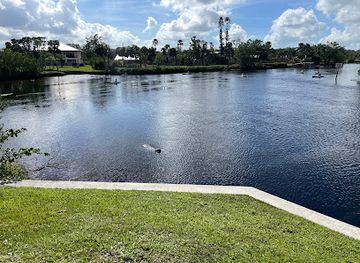
Fort Myers occupies a broad bend of the Caloosahatchee River in southwest Florida, where subtropical vegetation, low-rise neighbourhoods and a long history of movement converge. The city is the urban centre of Lee County and a gateway to beaches, barrier islands and the waterways of the Gulf Coast, although many of the best-known beaches lie across the region rather than within Fort Myers itself. Downtown’s River District brings together restored commercial buildings, public art, restaurants and waterfront parks, while the historic McGregor Boulevard corridor leads towards the former winter estates of Thomas Edison and Henry Ford.Read more about Fort Myers
Invention, Preservation and Local Life
When is the best time to visit Fort Myers?
Best: December–February · 23–24°C| Month | High (°C) | Rainfall (mm) |
|---|---|---|
| January (best) | 23 | 38 |
| February (best) | 24 | 51 |
| March | 27 | 64 |
| April | 29 | 64 |
| May | 32 | 102 |
| June | 33 | 178 |
| July | 34 | 203 |
| August | 34 | 203 |
| September | 33 | 178 |
| October | 31 | 127 |
| November | 27 | 64 |
| December (best) | 24 | 38 |
Getting to and around Fort Myers
How to get there
Transportation
Best attractions in Fort Myers
Fort Myers offers a varied circuit of history, science and subtropical landscapes. The Edison and Ford Winter Estates combine historic homes, laboratories, gardens and river views, making them the city’s most distinctive cultural attraction. In the River District, the IMAG History & Science Center presents interactive exhibits suited to families and curious adults, while the Burroughs Home preserves the domestic scale of an early twentieth-century Fort Myers residence. Six Mile Cypress Slough Preserve leads visitors along boardwalks through a wetland habitat populated by cypress trees, wading birds and other wildlife. The Calusa Nature Center and Planetarium adds environmental interpretation and astronomy, and the Sidney & Berne Davis Art Center occupies a former federal courthouse in the historic core. Baseball fans can attend Florida SouthWestern State College or other local sporting events, while the Caloosahatchee waterfront provides a relaxed setting for river views and public events.
-
History museum
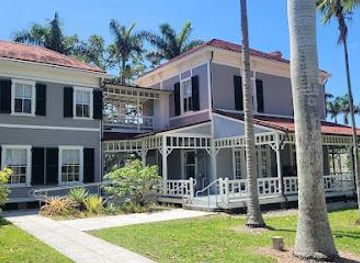
Edison & Ford Winter Estates
Discover the Edison & Ford Winter Estates in Fort Myers, a historic site blending innovation, rich history, and beautiful botanical gardens.
16 min drive · 5.2 km from city centre
-
History museum
Edison & Ford Winter Estates
Explore the historic Edison & Ford Winter Estates in Fort Myers, where innovation meets natural beauty in a captivating botanical experience.
16 min drive · 5.2 km from city centre
-
Tourist attraction
Lakes Park
Discover the beauty of Lakes Park in Fort Myers, a lush park filled with activities, scenic views, and family-friendly fun amidst nature.
31 min drive · 11 km from city centre
-
Park
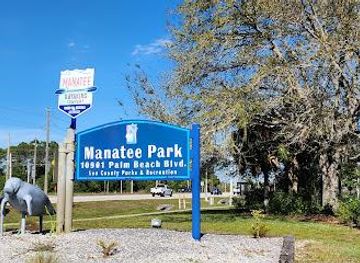
Manatee Park
Experience the tranquility of Manatee Park, a natural haven in Fort Myers where you can observe manatees and explore Florida's diverse wildlife.
29 min drive · 9.7 km from city centre


Best landmarks in Fort Myers
The Edison and Ford Winter Estates stand among Fort Myers’s defining landmarks, preserving the adjoining riverfront homes and working spaces associated with Thomas Edison and Henry Ford. Their gardens and surviving buildings represent the city’s transformation into a winter retreat for influential industrialists. In the historic centre, the Burroughs Home is a notable example of early twentieth-century domestic architecture, while the Sidney & Berne Davis Art Center occupies the former federal courthouse and reflects the civic ambitions of the growing town. The Caloosahatchee River remains a geographical landmark in its own right, shaping the city’s settlement, commerce and public spaces. McGregor Boulevard, with its royal palms and connection to the estates, forms a historic avenue rather than a single monument, but it is essential to the visual identity created by Fort Myers’s early twentieth-century development.
-
History museum
Edison & Ford Winter Estates
Experience the legacy of innovation at Edison & Ford Winter Estates, where history and nature intertwine in scenic Fort Myers, Florida.
16 min drive · 5.2 km from city centre
-
Park
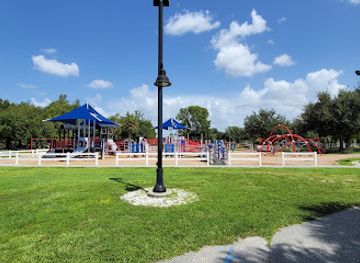
Lakes Park
Explore the natural beauty of Lakes Park in Fort Myers, a perfect blend of recreation, relaxation, and scenic views in the heart of Florida.
31 min drive · 11 km from city centre
-
Park
Manatee Park
Experience the tranquil beauty of Manatee Park, where you can observe manatees in their natural habitat while enjoying Florida's stunning landscapes.
29 min drive · 9.7 km from city centre
-
Nature preserve
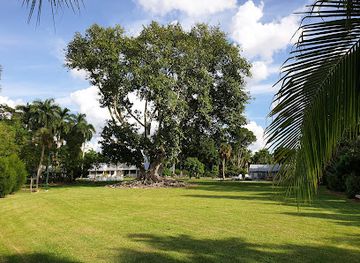
Six Mile Cypress Slough Preserve
Discover the serene beauty of Six Mile Cypress Slough Preserve, a nature lover's paradise in Fort Myers, Florida, rich with wildlife and stunning landscapes.
16 min drive · 5.4 km from city centre
Explore Fort Myers on the map
Plan your Fort Myers trip on one map. See where the top attractions, landmarks, restaurants, bars and hotels are, find what's near where you're staying, and book hotels and experiences in a few clicks.
Neighbourhoods in Fort Myers
-

-


Swipe for more neighbourhoods
Best hotels in Fort Myers
Best restaurants in Fort Myers
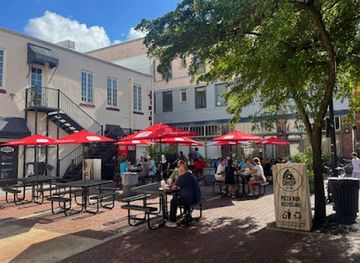
Fort Myers dining reflects southwest Florida’s coastal geography and its mixture of long-established Southern, Caribbean and Latin American influences. Seafood is central, with fish, shrimp, oysters and crab appearing in casual waterfront cooking as well as more polished menus, while grouper sandwiches and other Gulf Coast staples are familiar regional choices. Cuban and broader Latin American flavours are part of the area’s food culture, alongside barbecue, fried seafood, burgers and comfort food. The River District contains restaurants and cafés within the historic central area, and further choices spread along US 41, McGregor Boulevard and the roads towards the coast. Farmers’ markets and independent food stalls can add seasonal produce, baked goods and prepared dishes, while locally made beer and Florida citrus occasionally feature in menus and drinks. Dining patterns are strongly seasonal, with visitor numbers increasing during the cooler months.
-
Pizza
Downtown House of Pizza
Discover mouth-watering hand-tossed pizzas at Downtown House of Pizza in Fort Myers—where every slice is a taste of local flavor.
14 min drive · 4.8 km from city centre
-
American
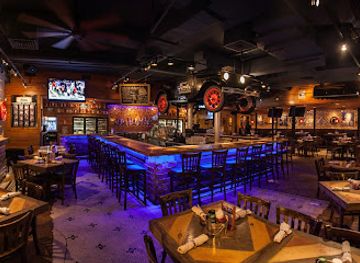
Ford's Garage Ft. Myers
Discover Ford's Garage in Fort Myers - where classic American cuisine meets an unforgettable automotive-themed atmosphere.
15 min drive · 4.9 km from city centre
-
Restaurant
Miller's Ale House
Discover the best American cuisine at Miller's Ale House in Fort Myers—where great food meets vibrant sports bar energy.
9 min drive · 3.0 km from city centre
-
Seafood
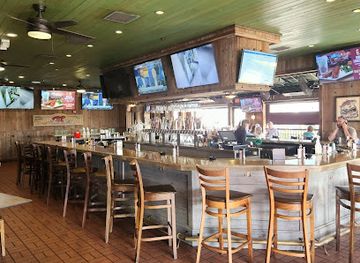
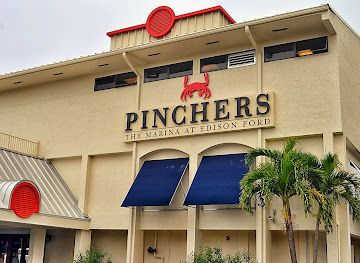
Pinchers
Experience fresh seafood delights at Pinchers in Fort Myers – where flavor meets coastal charm in every bite.
16 min drive · 5.4 km from city centre
Best bars in Fort Myers
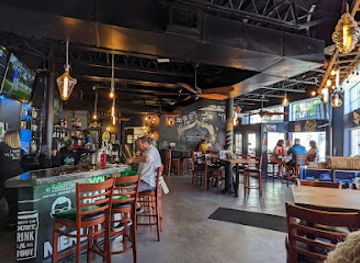
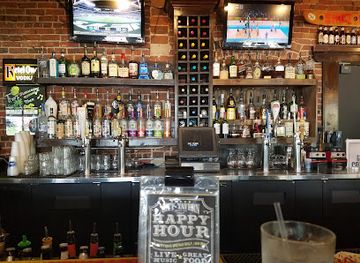
Fort Myers evenings are concentrated around the River District, where bars, restaurants, live-music spaces and cultural venues occupy or face historic downtown streets. The atmosphere ranges from relaxed drinks and outdoor seating to busier weekends with bands, dancing and late-evening socialising, while the riverfront provides a scenic setting before or after dinner. Craft beer, cocktails and Florida-influenced drinks are widely represented, and local breweries and taprooms add an informal alternative to traditional bars. The city’s nightlife is generally more social and neighbourhood-based than club-dominated, with performance programmes, gallery events and seasonal festivals contributing to the evening calendar. Activity changes considerably by day of the week and season, so visitors should check current venue information rather than assume every place keeps late hours.
-
Bar
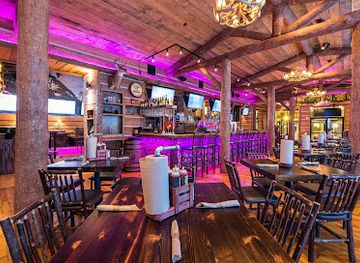
The Lodge
Discover The Lodge in Fort Myers: A perfect blend of barbecue delight and sports excitement in a vibrant atmosphere.
14 min drive · 4.8 km from city centre
-
Fine Dining
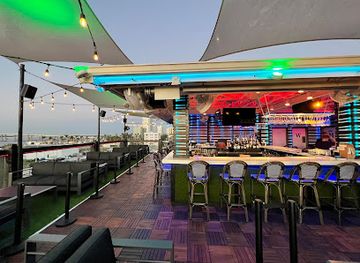
The Firestone Skybar & Martini Bar
Discover an exquisite dining and nightlife experience at The Firestone Skybar & Martini Bar in Fort Myers, where every evening is unforgettable.
15 min drive · 4.9 km from city centre
-
Restaurant
10 Twenty Five
Experience the best of American cuisine and craft beers at Fort Myers' 10 Twenty Five, where great taste meets a lively atmosphere.
14 min drive · 4.8 km from city centre
-
Bar
City Tavern
Discover the vibrant taste of Fort Myers at City Tavern - a lively bar and grill for food lovers and night owls alike.
15 min drive · 4.9 km from city centre
Best nightclubs in Fort Myers
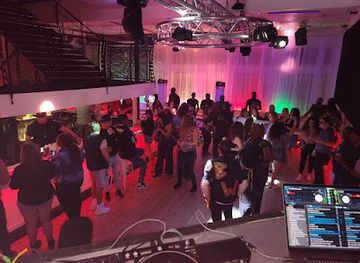
Fort Myers evenings are concentrated around the River District, where bars, restaurants, live-music spaces and cultural venues occupy or face historic downtown streets. The atmosphere ranges from relaxed drinks and outdoor seating to busier weekends with bands, dancing and late-evening socialising, while the riverfront provides a scenic setting before or after dinner. Craft beer, cocktails and Florida-influenced drinks are widely represented, and local breweries and taprooms add an informal alternative to traditional bars. The city’s nightlife is generally more social and neighbourhood-based than club-dominated, with performance programmes, gallery events and seasonal festivals contributing to the evening calendar. Activity changes considerably by day of the week and season, so visitors should check current venue information rather than assume every place keeps late hours.
-
Lounge
Space39 Art Bar & Martini Lounge
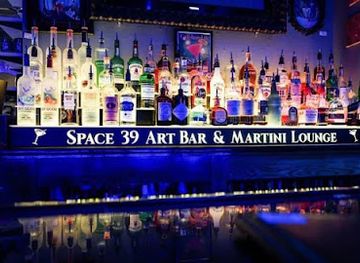
Discover the lively fusion of art, music, and mixology at Space39 Art Bar & Martini Lounge, the heart of Fort Myers nightlife.
15 min drive · 4.8 km from city centre
-
Pool hall
Miscue Lounge
Experience the vibrant atmosphere of Miscue Lounge in Fort Myers, where pool, drinks, and fun come together for an unforgettable night out.
13 min drive · 4.2 km from city centre
-
Night club
Viva Le Mirage
Discover the electrifying nightlife and exquisite dining at Viva Le Mirage in Fort Myers, a must-visit for an unforgettable experience.
29 min drive · 9.6 km from city centre
-
Night club
Celsius Night Club
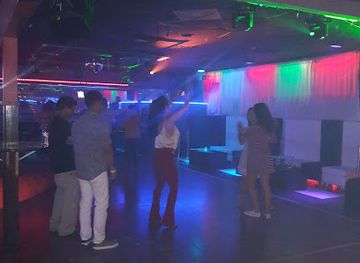
Discover the electrifying nightlife at Celsius Night Club in Fort Myers, offering a vibrant atmosphere for dancing and socializing.
14 min drive · 4.8 km from city centre

Best shops in Fort Myers
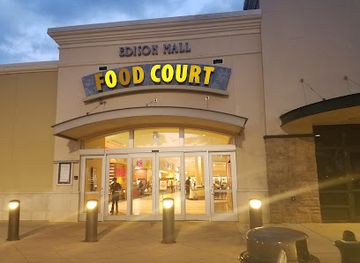
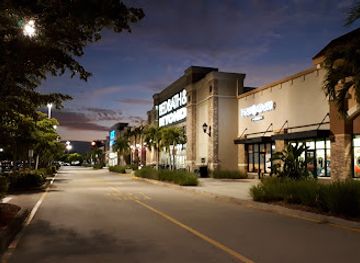
Shopping in Fort Myers ranges from historic-district boutiques to large suburban retail centres. The River District offers independent shops, galleries, antiques and locally oriented gifts among older commercial buildings, while Bell Tower Shops provides an open-air setting with fashion, dining and services. Edison Mall is a more conventional enclosed shopping centre, and Fleamasters Fleamarket on the city’s eastern side is associated with stalls selling clothing, household goods, collectibles, produce and miscellaneous finds. Visitors seeking distinctive purchases can look for Florida food products, citrus-themed goods, coastal artwork, handmade jewellery and locally produced crafts, while galleries often offer work inspired by wetlands, beaches and the Caloosahatchee. Shopping is spread across the metropolitan area rather than confined to one pedestrian quarter, making a car useful for combining downtown stores with larger retail clusters.
-
Flea market
Fleamasters Fleamarket
Explore the eclectic treasures of Fleamasters Fleamarket in Fort Myers, Florida - a vibrant market filled with unique finds, savory bites, and live music.
8 min drive · 2.7 km from city centre
-
Shopping mall
Edison Mall
Discover Edison Mall in Fort Myers: your ultimate shopping, dining, and entertainment destination with over 150 stores and delightful eateries.
13 min drive · 4.4 km from city centre
-
Shopping mall
Bell Tower
Discover the Bell Tower in Fort Myers: an enchanting shopping mall with boutiques, fine dining, and vibrant events for every visitor.
26 min drive · 8.8 km from city centre
-
Shopping mall
The Forum
Discover The Forum, Fort Myers' vibrant shopping mall with diverse stores, casual dining, and a lively atmosphere perfect for all visitors.
9 min drive · 3.0 km from city centre


Get your free copy of our complete guide to Fort Myers, delivered straight to you.
Everything on this page, from attractions and restaurants to essentials and local phrases, in one PDF you can read offline, print or share.
Already have an account? Sign in
Your Fort Myers guide is ready.
We'll send it to · Not you? Sign out

Getting your guide ready…
We are putting together a fresh copy of the Fort Myers guide. This can take up to a minute.
This can take a few moments. If your browser asks, choose Allow so the download can start. You'll find the guide in your Downloads folder.
Nothing happened? Download it again
Sorry, the guide is taking longer than usual. Please try again in a minute, or get it by email instead.
Fort Myers essentials
Currency and Payment
Safety
Emergency Situations
Do's and Don'ts
Local Tips
From Eve
Local phrases worth knowing
You don't need to get them perfect. A few words go a long way, and locals appreciate the effort.
Basics
| English | Local | Say it |
|---|---|---|
| Hello | Howdy | [haw-dee] |
| Goodbye | See ya later | [see ya lay-ter] |
| Yes | Yep | [yep] |
| No | Nope | [nope] |
| Please/You're welcome | Please | [pleez] |
| Thank you | Thanks | [thanks] |
| Excuse me/Sorry | Pardon me | [par-dun me] |
| How are you? | How ya doin'? | [how ya doin] |
| Fine. And you? | Good. You? | [good. yoo] |
| Do you speak English? | Ya speak English? | [ya speak ing-lish] |
| I don't understand | I don't get it | [i don't get it] |
Eating & Drinking
| English | Local | Say it |
|---|---|---|
| I'd like to see the menu, please | Can I check the menu? | [can eye chek the men-yoo] |
| I don't eat meat | I don't eat meat | [i don't eat meet] |
| Cheers! | Cheers! | [cheers] |
| I would like to pay, please | Check, please | [chek, pleez] |
Emergencies
| English | Local | Say it |
|---|---|---|
| Help! | Help! | [help] |
| Go away! | Scram! | [scram] |
| Call the Police! | Call the cops! | [call the cops] |
| Call a doctor! | Get a doc! | [get a doc] |
| I'm lost | I'm lost | [i'm lost] |
| I'm ill | I'm sick | [i'm sick] |
Shopping
| English | Local | Say it |
|---|---|---|
| I'd like to buy... | I wanna buy... | [i wanna buy] |
| I'm just looking | Just browsing | [just brow-zing] |
| How much is it? | How much? | [how much] |
| That's too expensive | Too pricey | [too pry-see] |
| Can you lower the price? | Can ya do a deal? | [can ya do a deal] |
Time & Numbers
| English | Local | Say it |
|---|---|---|
| What time is it? | What's the time? | [whats the time] |
| It's one o'clock | It's one | [its one] |
| Half past (10) | Half ten | [half ten] |
| Morning | Morning | [morning] |
| Afternoon | Afternoon | [afternoon] |
| Evening | Evening | [evening] |
| Yesterday | Yesterday | [yester-day] |
| Today | Today | [to-day] |
| Tomorrow | Tomorrow | [to-mor-row] |
| 1 | One | [wun] |
| 2 | Two | [too] |
| 3 | Three | [three] |
| 4 | Four | [four] |
| 5 | Five | [five] |
| 6 | Six | [six] |
| 7 | Seven | [seven] |
| 8 | Eight | [eight] |
| 9 | Nine | [nine] |
| 10 | Ten | [ten] |
Transport & Directions
| English | Local | Say it |
|---|---|---|
| Where's a/the...? | Where's the... | [wheres the] |
| What's the address? | What's the addy? | [whats the addy] |
| Can you show me (on the map)? | Can ya show me? | [can ya show me] |
| When's the next (bus)? | When's the next bus? | [whens the next bus] |
| A ticket (to ....) | A ticket (to ....) | [a ticket (to)] |
History of Fort Myers
Calusa Lands and River Networks
Long before the modern city, the lower Caloosahatchee region was part of the world of the Calusa, an Indigenous society whose power was closely connected to southwest Florida’s estuaries, fish-rich waters and shell-built landscapes. The river and coastal waterways supported transport, trade and settlement, while the broader region also saw interaction with other Indigenous peoples. Spanish expeditions reached Florida in the sixteenth century, bringing disease, violence and colonial pressure that severely disrupted Native communities. By the eighteenth century, the Calusa had largely disappeared as a distinct political force, but Indigenous history remains central to understanding the wetlands, islands and waterways around present-day Fort Myers.
A Frontier Military Post
The United States established Fort Myers in 1850 during the Third Seminole War, naming the post for Colonel Abraham C. Myers, a senior army officer. Built beside the Caloosahatchee River, the fort helped support military operations in a region where the United States was asserting control over southern Florida. The post was abandoned in 1858, before the American Civil War, and little of the original military structure survives above ground. Its location nevertheless gave the later settlement both its name and its strategic identity. The fort’s river setting also foreshadowed the importance of water transport to the community’s subsequent growth.
Settlement After the Civil War
A permanent civilian settlement developed around the former military site after the Civil War, attracting farmers, traders and families to the riverfront. Fort Myers was incorporated as a town in 1886, when southwest Florida remained relatively remote and transport depended heavily on riverboats and coastal connections. Cattle, fishing, logging and agriculture shaped the local economy, while the arrival of improved transport links gradually strengthened ties with the rest of Florida. The Caloosahatchee made the settlement a natural trading point, and its waterfront continued to influence the pattern of streets, warehouses and commercial activity visible in the historic centre.
Edison Comes South
Thomas Edison first visited Fort Myers in 1885 and soon selected the city as a winter retreat, establishing Seminole Lodge and a laboratory on the riverfront. The estate became a place for experimentation, gardening and seasonal residence rather than a conventional industrial factory, and Edison’s presence brought national attention to the small Florida community. His botanical interests also influenced the landscape, with palms and other plantings contributing to the visual character of the McGregor Boulevard area. The surviving estate, laboratory buildings and gardens provide an unusually direct connection between Fort Myers and the history of American invention.
Ford, Tourism and the Automobile Age
Henry Ford purchased the adjoining property, known as The Mangoes, in 1914, making Fort Myers a winter destination for two of America’s most prominent industrialists. Their presence encouraged wider interest in southwest Florida, whose mild climate, river scenery and developing roads appealed to affluent seasonal visitors. As automobiles replaced older forms of regional transport, the city’s relationship with its hinterland changed and roads increasingly shaped growth. McGregor Boulevard became a celebrated approach lined with royal palms, linking the historic riverfront estates with newer residential and resort development.
Modern Regional Growth
During the twentieth century, Fort Myers expanded from a small river settlement into a regional service centre as highways, air travel, tourism and population growth transformed southwest Florida. Suburban development spread beyond the old centre, while the riverfront and historic districts retained civic and cultural importance. The opening of Southwest Florida International Airport in the region reinforced the city’s connections with visitors and seasonal residents, and conservation efforts preserved wetlands and historic properties amid development pressure. Contemporary Fort Myers therefore contains several overlapping histories: Indigenous waterways, a military frontier, an agricultural town, an inventor’s retreat and a modern Gulf Coast city.
Fort Myers in Photos
Browse through our photo collection highlighting the charm and character of the destination.
Cities near Fort Myers
The closest cities to Fort Myers, if you have time for more than one stop.
-

-

-

-

-


Swipe for more cities
Explore more

Explore more of Florida
Discover Florida: A Sunshine State full of dazzling beaches, iconic theme parks, rich history, and stunning natural parks, offering endless adventures for every traveler.
Explore Florida