

Eleuthera Island, The Bahamas Travel Guide
Discover Eleuthera Island in The Bahamas: A serene escape with stunning beaches, vibrant local culture, and breathtaking landscapes that promise a memorable getaway.
Eleuthera Island, a slender slice of paradise in The Bahamas, is a haven for those seeking tranquility and natural beauty. Stretching over 100 miles in length but rarely wider than a mile, the island offers a unique blend of secluded beaches, vibrant local culture, and breathtaking landscapes. The island's name, derived from the Greek word for 'freedom', is fitting, as visitors often find themselves liberated from the hustle and bustle of modern life. Eleuthera's beaches are among the most stunning in the world, boasting powdery pink and white sands that contrast beautifully with the turquoise waters of the Atlantic Ocean and the Caribbean Sea. Notable beaches include the famous Pink Sands Beach, which gets its hue from the crushed coral, and the serene French Leave Beach. These pristine shores are perfect for sunbathing, snorkeling, or simply enjoying a leisurely stroll. Beyond its beaches, Eleuthera offers a wealth of activities and attractions. The island is dotted with charming villages, each with its own unique character and history. Explore Governor's Harbour, the island's capital, to experience a slice of Bahamian history with its colonial architecture and friendly locals. Don't miss the Glass Window Bridge, where you can witness the dramatic meeting of the dark blue Atlantic Ocean and the calm turquoise waters of the Caribbean Sea. For nature enthusiasts, the Leon Levy Native Plant Preserve provides a glimpse into the island's diverse flora and fauna. Eleuthera Island is also known for its rich culinary scene. Fresh seafood is a staple, with local dishes such as conch salad and rock lobster being must-tries. Many beachside shacks and upscale restaurants alike offer delicious meals made from locally sourced ingredients, providing a true taste of the island. Whether you're looking to relax on a secluded beach, explore local culture, or indulge in delicious cuisine, Eleuthera Island has something for everyone. Its unspoiled beauty and welcoming atmosphere make it a memorable destination for any traveler.

Know before you go
Hi, I'm Eve. Here are a few practical things to know before exploring Eleuthera Island.
- Visit the Glass Window Bridge early in the morning to avoid crowds and enjoy the stunning views in peace.
- Rent a car to explore the island at your own pace. Public transportation is limited, and many attractions are spread out.
- Bring cash, as some smaller establishments may not accept credit cards.
- Don't miss the local fish fry events, often held on Friday nights, for an authentic taste of Bahamian cuisine and culture.
- Pack reef-safe sunscreen to protect the delicate marine environment while enjoying the island's beautiful beaches.
- Check the local tide schedules if you plan to visit the Queen's Baths, natural pools that are best experienced during low tide.
Explore Eleuthera Island: Things to Do, Places to Eat, Hotels & More
Handpicked recommendations for top attractions, local dining, accommodations, and more

Best attractions in Eleuthera Island
Top-rated picks
Best Attractions

Glass Window Bridge
Explore the breathtaking Glass Window Bridge in Eleuthera, Bahamas—where the Atlantic meets the Caribbean in a spectacular display of nature's beauty.

Leon Levy Native Plant Preserve
Explore the breathtaking Leon Levy Native Plant Preserve, a serene national park showcasing Eleuthera's unique flora and vibrant ecosystems.

Ocean Hole
Experience the serene beauty of Ocean Hole, a unique natural swimming spot in Rock Sound, Bahamas, perfect for beach lovers and adventure seekers.

Queen's Baths
Experience the serene beauty of Queen's Baths, a stunning natural attraction in The Bahamas, perfect for relaxation and exploration in crystal-clear waters.

Best landmarks in Eleuthera Island
Top-rated picks
Best Landmarks

Princess Cays
Experience the breathtaking beauty and vibrant activities of Princess Cays, your private paradise in the Bahamas.

Buccaneer Club
Experience the vibrant flavors of the Bahamas at Buccaneer Club, a culinary gem in Governor's Harbour offering fresh seafood and local specialties.

Eleuthera
Experience the serene beauty and vibrant culture of Eleuthera, a hidden gem in the Bahamas, perfect for relaxation and adventure seekers alike.

Glass Window Bridge
Discover the breathtaking Glass Window Bridge in Eleuthera, Bahamas - where the Atlantic meets the Caribbean in stunning natural beauty.

Best restaurants in Eleuthera Island
Top-rated picks
Best Restaurants

Buccaneer Club
Experience authentic Bahamian cuisine at Buccaneer Club in Governor's Harbour – a culinary haven for food lovers.

Daddy Joe's Restaurant & Inn
Experience authentic Bahamian cuisine at Daddy Joe's Restaurant & Inn in Gregory Town—where flavor meets hospitality amidst tropical charm.

1648 - An Island Restaurant
Experience exquisite Bahamian cuisine with breathtaking ocean views at 1648 - An Island Restaurant in Eleuthera.

Tippy's Restaurant and Beachside Bar
Experience authentic Bahamian cuisine with ocean views at Tippy's Restaurant and Beachside Bar in North Palmetto Point.

Best bars in Eleuthera Island
Top-rated picks
Best Bars

Ronnies Hi-D-Way
Discover tropical bliss at Ronnies Hi-D-Way, a charming bar in Cupid's Cay, offering delightful drinks and stunning waterfront views.

Fishbone's Beach Bar & Grill
Discover the relaxed charm of Fishbone's Beach Bar & Grill, where delicious food meets breathtaking views in Eleuthera.

El Karaka Glass Window Bar & Grill
Discover the flavors of the Caribbean at El Karaka Glass Window Bar & Grill with stunning views and a vibrant atmosphere.

Seaside Breeze Resto and Bar
Experience the vibrant flavors of the Bahamas at Seaside Breeze Resto and Bar, where culinary delights meet stunning ocean views.

Best nightclubs in Eleuthera Island
Top-rated picks
Best Nightclubs

Ronnies Hi-D-Way
Experience the vibrant nightlife and local flavors at Ronnies Hi-D-Way, a must-visit bar in Governor's Harbour with a lively atmosphere and refreshing drinks.

Seven Seas Restaurant / 75 Secs Bar & Night Club
Experience the flavors of the Bahamas at Seven Seas Restaurant & 75 Secs Bar, where delicious seafood meets vibrant nightlife in Lower Bogue.

Juice City Lounge
Immerse yourself in the vibrant ambiance of Juice City Lounge, a top destination for delicious drinks and local flavors in James Cistern.

The Dilly Tree Players Lounge
Discover the vibrant nightlife at The Dilly Tree Players Lounge in North Palmetto Point, where great drinks and lively entertainment await.

Best shops in Eleuthera Island
Top-rated picks
Best Shops

Burrows One-Stop Grocery Store
Explore the heart of Governor's Harbour with Burrows One-Stop Grocery Store, your local hub for essential groceries and Bahamian flavors.

North Eleuthera Shopping Center
Explore the North Eleuthera Shopping Center for local goods, fresh produce, and a taste of island life in the Bahamas.

The Islander Shop
Discover unique Bahamian crafts, clothing, and souvenirs at The Islander Shop in Spanish Wells, the perfect place to find local treasures.

Island Made Gift Shop
Explore the Island Made Gift Shop for unique local souvenirs and handcrafted treasures that embody the spirit of the Bahamas.

Explore Eleuthera Island on the Map
A handpicked selection of must-see spots in Eleuthera Island, mapped for you.
Eleuthera Island Essentials
-
Eleuthera Island is accessible via two main airports: North Eleuthera Airport (ELH) and Governor's Harbour Airport (GHB). Both airports have regular flights from Nassau, the capital of The Bahamas. Visitors can also take a ferry from Nassau to Harbour Island, which is connected to Eleuthera by water taxi. Direct flights from the United States are available from several major cities, including Miami and Fort Lauderdale.
-
Getting around Eleuthera is best done by renting a car, as public transportation is limited. Car rentals are available at both airports and in major towns. Taxis are also an option but can be expensive for long distances. Bicycles and scooters are popular for shorter trips and exploring local areas. Note that driving is on the left side of the road, and the speed limits are generally low due to the island's narrow roads.
-
The official currency is the Bahamian Dollar (BSD), which is pegged 1:1 to the US Dollar. Both currencies are widely accepted on the island. Credit cards are accepted in most hotels, restaurants, and larger shops, but it is advisable to carry cash for smaller establishments and local markets. ATMs are available in major towns, but it is wise to withdraw enough cash before heading to more remote areas.
-
Eleuthera is generally a safe destination for tourists. However, it is advisable to take standard precautions, such as avoiding poorly lit areas at night and not leaving valuables unattended. While the island has a low crime rate, petty theft can occur, especially in more touristy areas. Gregory Town and Governor's Harbour are known to be safe, but always stay vigilant and aware of your surroundings.
-
In case of emergency, dial 911 for immediate assistance. There are medical facilities in Governor's Harbour and North Eleuthera. It is recommended to have travel insurance that covers medical emergencies. For minor health issues, pharmacies are available in major towns where you can purchase over-the-counter medications. Local police stations are also present in larger towns.
-
Fashion: Do dress casually and comfortably; beachwear is acceptable at the beach but not in towns or restaurants. Don't wear overly revealing clothing. Religion: Do respect local customs and traditions. Many locals are religious, and it is appreciated if you dress modestly when visiting churches. Public Transport: Do use taxis or car rentals for convenience. Don't rely on public buses, as they are infrequent. Greetings: Do greet locals with a friendly 'Hello' or 'Good day.' A handshake is also common. Eating & Drinking: Do try local delicacies such as conch salad and Bahamian rock lobster. Don't refuse hospitality, as it is considered impolite.
-
To experience Eleuthera like a local, visit local fish fries and farmers' markets. Engage with locals, who are often friendly and eager to share stories about the island's history and culture. Don't miss exploring the Glass Window Bridge, where the Atlantic Ocean meets the Caribbean Sea. For a unique experience, visit the Queen's Baths, natural pools formed by limestone rock formations.
When is the best time to visit Eleuthera Island?
Useful Local Phrases for Eleuthera Island
You don't need to speak the language perfectly. Even learning a few simple words can make conversations warmer—and locals usually appreciate the effort.
— Eve

Here are the phrases I use most often in Eleuthera Island. Try a few—you'll be surprised how far they go! 😊
❤️
-
- HelloHey mon
[Hey mon] - GoodbyeLater, man
[Later, man] - YesYes
[Yes] - NoNo
[No] - Please/You're welcomePlease
[Please] - Thank youTank ya
[Tank ya] - Excuse me/SorryExcuse me
[Excuse me] - How are you?How ya doin'?
[How ya doin'?] - Fine. And you?Irie. An' you?
[Irie. An' you?] - Do you speak English?Ya speak English?
[Ya speak English?] - I don't understandMe no understand
[Me no understand]
- HelloHey mon
-
- I'd like to see the menu, pleaseI wan' see da menu, please
[I wan' see da menu, please] - I don't eat meatI don' eat meat
[I don' eat meat] - Cheers!Cheers!
[Cheers!] - I would like to pay, pleaseI wan' pay, please
[I wan' pay, please]
- I'd like to see the menu, pleaseI wan' see da menu, please
-
- Help!Help!
[Help!] - Go away!Go 'way!
[Go 'way!] - Call the Police!Call de Police!
[Call de Police!] - Call a doctor!Call a doctor!
[Call a doctor!] - I'm lostI los'
[I los'] - I'm illI sick
[I sick]
- Help!Help!
-
- I'd like to buy...I wan' buy...
[I wan' buy...] - I'm just lookingI jus' lookin'
[I jus' lookin'] - How much is it?How much dis be?
[How much dis be?] - That's too expensiveDat too pricey
[Dat too pricey] - Can you lower the price?Can ya drop de price?
[Can ya drop de price?]
- I'd like to buy...I wan' buy...
-
- What time is it?What time it be?
[What time it be?] - It's one o'clockIt be one o'clock
[It be one o'clock] - Half past (10)Half past ten
[Half past ten] - MorningMornin'
[Mornin'] - AfternoonAfternoon
[Afternoon] - EveningEvenin'
[Evenin'] - YesterdayYestaday
[Yestaday] - TodayToday
[Today] - TomorrowTomorrow
[Tomorrow] - 1One
[One] - 2Two
[Two] - 3Three
[Three] - 4Four
[Four] - 5Five
[Five] - 6Six
[Six] - 7Seven
[Seven] - 8Eight
[Eight] - 9Nine
[Nine] - 10Ten
[Ten]
- What time is it?What time it be?
-
- Where's a/the...?Where dat...
[Where dat...] - What's the address?What be de address?
[What be de address?] - Can you show me (on the map)?Can ya show me (on de map)?
[Can ya show me (on de map)?] - When's the next (bus)?When de next (bus)?
[When de next (bus)?] - A ticket (to ....)A ticket (to ....)
[A ticket (to ....)]
- Where's a/the...?Where dat...
History of Eleuthera Island
-
Before the arrival of Europeans, Eleuthera Island was inhabited by the Lucayan people. These indigenous inhabitants were part of the larger Taíno culture, thriving in the Bahamas with their unique language, social structure, and traditions. The Lucayans were skilled in agriculture, fishing, and navigation, living in harmony with the island's natural resources until their population was decimated by European contact and subsequent enslavement.
-
In 1648, a group of English Puritans known as the Eleutheran Adventurers sought religious freedom and chose Eleuthera Island as their new home. Led by William Sayle, they named the island 'Eleutheria,' derived from the Greek word for freedom. These early settlers faced numerous hardships, including shipwrecks, food shortages, and conflicts with indigenous populations, but their determination laid the foundation for future settlements.
-
In the 18th and 19th centuries, Eleuthera became known for its flourishing pineapple plantations. The island's sandy soil and favorable climate made it ideal for growing pineapples, which were exported to the United States and Europe. This period marked an era of economic prosperity for Eleuthera, earning it the nickname 'The Pineapple Capital of the World.' The legacy of this period is still evident in the island's culture and annual Pineapple Festival.
-
During the American Civil War (1861-1865), Eleuthera played a strategic role as a base for Confederate blockade runners. The island's location made it an ideal spot for ships attempting to evade Union blockades and transport goods to and from the Confederacy. This clandestine activity brought a mix of prosperity and peril to the island, as blockade runners risked capture and confiscation by Union forces.
-
In the early 20th century, the wreck of the British mail ship SS William on Eleuthera's reefs became a significant event in the island's history. The ship's cargo included valuable goods and mail, which were salvaged by the island's residents. The wreck highlighted the dangers of navigation around Eleuthera's treacherous reefs and spurred efforts to improve maritime safety in the region.
-
Post-World War II, Eleuthera experienced significant developments as tourism began to flourish. The construction of airports, resorts, and infrastructure transformed the island into a popular destination for travelers seeking pristine beaches and a tranquil escape. Despite modern influences, Eleuthera has managed to preserve its rich history and cultural heritage, offering visitors a unique blend of past and present.
Cities in Eleuthera Island
Browse our curated selection of top destinations, scenic points, and must-visit spots in the area.

Neighbouring destination travel guides
Browse our curated selection of top destinations, scenic points, and must-visit spots in the area.


Your all‑in‑one travel companion app
Explore expert travel guides, compare and book tours, experiences, hotels, and more—all from the palm of your hand. Download now for seamless trip planning wherever your wanderlust takes you.


Explore More of The Bahamas

Looking beyond Eleuthera Island? Discover The Bahamas for broader travel guides, local hot-spots, and regional highlights.
Explore The BahamasEleuthera Island in Photos
Browse through our photo collection highlighting the charm and character of the destination.


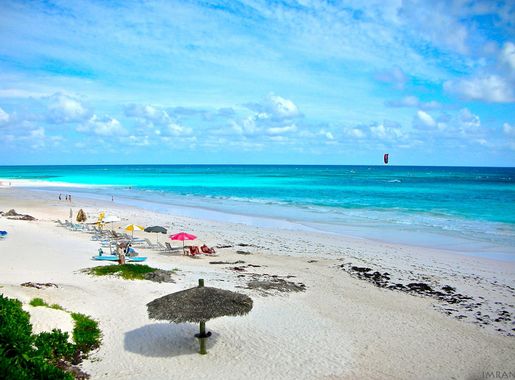
Eleuthera Island: A Hidden Paradise in The Bahamas
Eleuthera Island, a slender slice of paradise in The Bahamas, is a haven for those seeking tranquility and natural beauty. Stretching over 100 miles in length but rarely wider than a mile, the island offers a unique blend of secluded beaches, vibrant local culture, and breathtaking landscapes. The island's name, derived from the Greek word for 'freedom', is fitting, as visitors often find themselves liberated from the hustle and bustle of modern life. Eleuthera's beaches are among the most stunning in the world, boasting powdery pink and white sands that contrast beautifully with the turquoise waters of the Atlantic Ocean and the Caribbean Sea. Notable beaches include the famous Pink Sands Beach, which gets its hue from the crushed coral, and the serene French Leave Beach. These pristine shores are perfect for sunbathing, snorkeling, or simply enjoying a leisurely stroll. Beyond its beaches, Eleuthera offers a wealth of activities and attractions. The island is dotted with charming villages, each with its own unique character and history. Explore Governor's Harbour, the island's capital, to experience a slice of Bahamian history with its colonial architecture and friendly locals. Don't miss the Glass Window Bridge, where you can witness the dramatic meeting of the dark blue Atlantic Ocean and the calm turquoise waters of the Caribbean Sea. For nature enthusiasts, the Leon Levy Native Plant Preserve provides a glimpse into the island's diverse flora and fauna. Eleuthera Island is also known for its rich culinary scene. Fresh seafood is a staple, with local dishes such as conch salad and rock lobster being must-tries. Many beachside shacks and upscale restaurants alike offer delicious meals made from locally sourced ingredients, providing a true taste of the island. Whether you're looking to relax on a secluded beach, explore local culture, or indulge in delicious cuisine, Eleuthera Island has something for everyone. Its unspoiled beauty and welcoming atmosphere make it a memorable destination for any traveler.