

Free Sami Travel Guide & Mobile App
Explore Sami with free travel guides. Discover regional history, expert tips, proposed trips, and audio guides on web or mobile app.


Explore Sami in inland Gambia for river landscapes, village life, birdwatching and a quieter journey through the Central River Region.
Read more about Sami
When is the best time to visit Sami?
Best: December–February · 32–34°C| Month | High (°C) | Rainfall (mm) |
|---|---|---|
| JANUARY (best) | 33 | 0 |
| FEBRUARY (best) | 34 | 0 |
| MARCH | 36 | 0 |
| APRIL | 38 | 1 |
| MAY | 38 | 5 |
| JUNE | 37 | 50 |
| JULY | 35 | 100 |
| AUGUST | 33 | 200 |
| SEPTEMBER | 34 | 100 |
| OCTOBER | 35 | 50 |
| NOVEMBER | 34 | 5 |
| DECEMBER (best) | 32 | 0 |
Getting to and around Sami
How to get there
Transportation
Top city travel guides in Sami
The cities of Sami, and the easiest places to base yourself.

Swipe for more cities
Destinations in Sami
Resorts, valleys and scenic spots worth a trip of their own.

Swipe for more destinations
Best attractions in Sami
Sami’s attractions are primarily environmental and cultural rather than purpose-built. The River Gambia and its associated wetlands, wooded margins and seasonal channels provide opportunities for quiet observation of kingfishers, herons, egrets, bee-eaters and other birdlife, especially in the cooler morning hours. Rural roads lead through farmland and settlements where visitors can learn about rain-fed cultivation, livestock keeping, local trading and the practical relationship between villages and the river. Community-led visits may include walks, craft demonstrations or conversations about food production, but these should be arranged respectfully and in advance. Sami Tenda and other river-oriented locations may offer useful perspectives on movement and commerce along the water, subject to local access and current conditions. The district is also a practical setting for understanding the wider Central River Region, including its changing vegetation between wet and dry seasons. There are no large concentrations of museums or formal visitor attractions, so travellers should plan around landscapes, local knowledge and overland journeys rather than a fixed sightseeing list.
-
 State park
Bankuba Forest Park
Explore the natural wonders of Bankuba Forest Park, a tranquil state park in N'Jareng Kunda, perfect for hiking, birdwatching, and family picnics.
-
N'Dorna Forest Park
Explore the serene landscapes of N'Dorna Forest Park, a national forest rich in biodiversity and perfect for nature lovers and adventure seekers.
-
Tourist attraction
Sami wollof (karantaba)
Experience the vibrant culture and warm hospitality of Sami Wollof, a captivating tourist attraction in The Gambia that showcases local traditions and cuisine.
Best landmarks in Sami
Sami’s most important landmarks are geographical and communal rather than monumental. The River Gambia is the district’s defining natural reference point, linking settlements to a waterway that has shaped transport, trade, fishing and political history across the country. River landings and approach roads, including those associated with Sami Tenda, can help visitors understand how movement operates in an inland district, although access should be checked locally. Villages, mosques, meeting places, wells, cultivated compounds and mature trees may carry considerable meaning for residents even when they are not formally advertised as tourist sites. Seasonal floodplain vegetation and wooded river margins provide further visual markers of the landscape, changing markedly between the rains and the dry season. Unlike parts of The Gambia with concentrated colonial ruins or museum collections, Sami’s sense of place is expressed through its living settlements and working environment. A local guide is essential for explaining which sites may be entered, photographed or discussed, and for distinguishing a public landmark from a private or sacred place.
-
Tourist attraction
Kachikally Crocodile Pool
Discover Kachikally Crocodile Pool in Bakau, The Gambia - a unique blend of wildlife and cultural heritage in a serene setting.
-
National park
Bijilo National Park
Explore the lush landscapes and diverse wildlife of Bijilo National Park, a serene escape for nature lovers in Gambia.
-
Hotel
Tamala Beach Resort
Discover the ultimate beach getaway at Tamala Beach Resort, where luxury meets the vibrant culture of Serrekunda, Gambia.
-
International airport
Banjul International Airport
Experience the warmth of Gambian hospitality at Banjul International Airport, your starting point for exploring the beauty and culture of The Gambia.


Explore Sami on the map
Plan your trip on one map. See where the top cities, national parks and sights are, and book hotels and experiences in a few clicks.
Best hotels in Sami
Best restaurants in Sami
Dining in Sami is closely connected to household cooking, local markets and the agricultural calendar rather than a formal restaurant scene. Visitors may encounter dishes based on rice, millet, maize, vegetables, groundnuts and beans, with fish or meat available according to local supply and occasion. Common Gambian flavours can include onion, chilli, lime, herbs and groundnut-based sauces, while freshly prepared rice dishes are often central to a meal. Rural compounds, small food stalls and simple cafés may offer the most authentic options, but arrangements should be made through a host or guide where possible. Vegetarian food can often be arranged when requested clearly, although choice may be limited. Bottled or treated water is advisable, and travellers should eat food that is freshly cooked and served hot. The district is not a destination for fine dining; its culinary interest lies in seeing how locally available crops, river resources and shared meals shape everyday life.
-
Restaurant
Poco Loco Beachbar Gambia
Discover paradise at Poco Loco Beachbar in Serrekunda - where exquisite cuisine meets breathtaking ocean views.
-
Restaurant
John Raymond'S Beach Bar And Restaurant
Experience authentic Gambian cuisine with stunning ocean views at John Raymond's Beach Bar and Restaurant in Serrekunda.
-
Restaurant
Scala Restaurant
Experience authentic Gambian flavors at Scala Restaurant in Serrekunda – where culinary tradition meets contemporary dining.
-
Restaurant
Mo2 Jamaican Bar & Restaurant Gambia (Mosiah's)
Discover authentic Jamaican cuisine at Mo2 Jamaican Bar & Restaurant in Gambia – where every bite tells a story.


Best bars in Sami
Sami does not have a significant nightclub or organised late-night entertainment scene. Evening social life is more likely to centre on family compounds, community gatherings, small cafés, local shops and occasional informal music than on venues designed for international visitors. In larger settlements elsewhere in the Central River Region, simple bars and restaurants may provide a more recognisable evening setting, but services are modest and opening arrangements can change. Alcohol is not appropriate in every social or religious context, so visitors should follow local guidance and avoid assuming that drinking is part of rural hospitality. The most rewarding evenings in Sami may involve a shared meal, conversation, storytelling or observation of the night sky, arranged with hosts in a way that respects household routines and community privacy.
-
Restaurant
Mo2 Jamaican Bar & Restaurant Gambia (Mosiah's)
Discover the taste of Jamaica at Mo2 Jamaican Bar & Restaurant in Gambia, where vibrant flavors meet Caribbean hospitality.
-
Bar
Solomon’s Beach Bar & Restaurant
Discover the charm of Solomon’s Beach Bar & Restaurant, where culinary delights meet breathtaking ocean views in Serrekunda.
-
Bar
Calypso bar & restaurant
Discover the vibrant flavors and lively atmosphere of Calypso Bar & Restaurant in Bakau, where great food meets a stunning waterfront setting.
-
Bar
Reo's Bar and Restaurant
Experience the vibrant flavors and lively atmosphere of Reo's Bar and Restaurant on Senegambia Road, where Gambian hospitality meets culinary delight.


Best nightclubs in Sami
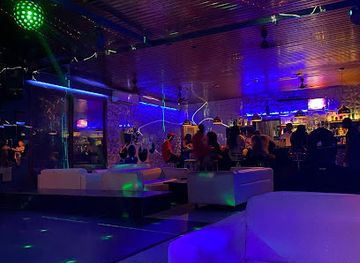
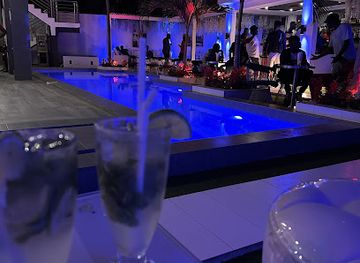
Sami does not have a significant nightclub or organised late-night entertainment scene. Evening social life is more likely to centre on family compounds, community gatherings, small cafés, local shops and occasional informal music than on venues designed for international visitors. In larger settlements elsewhere in the Central River Region, simple bars and restaurants may provide a more recognisable evening setting, but services are modest and opening arrangements can change. Alcohol is not appropriate in every social or religious context, so visitors should follow local guidance and avoid assuming that drinking is part of rural hospitality. The most rewarding evenings in Sami may involve a shared meal, conversation, storytelling or observation of the night sky, arranged with hosts in a way that respects household routines and community privacy.
-
Night club
Envy Night Club
Experience the heart of nightlife in Serrekunda at Envy Night Club, where dance, drinks, and dynamic entertainment await.
-
Night club
Aquarius Nightclub
Dive into an unforgettable nightlife experience at Aquarius Nightclub, where vibrant music and a lively atmosphere await in the heart of Serrekunda.
-
Night club
Ningki Nangka Bar & Night Club
Experience the electrifying nightlife at Ningki Nangka Bar & Night Club in Serrekunda, where music, dance, and cocktails come together for an unforgettable evening.
-
Night club
ONYX
Experience the electrifying nightlife at ONYX, Serrekunda's premier nightclub, featuring modern design, live DJs, and a vibrant atmosphere.

Best shops in Sami
Shopping in Sami is practical and locally oriented, with small village shops and market activity supplying food, household goods, clothing and agricultural necessities rather than a broad range of tourist merchandise. Depending on the settlement and season, visitors may find locally grown groundnuts, grains, vegetables or other produce, but availability and transport conditions vary. Handicrafts, woven items, clothing and small carved or decorative objects may be available through individual makers or community contacts, though they should be bought directly and respectfully rather than treated as guaranteed retail products. Larger markets in Central River towns offer more choice for provisions and everyday goods, while specialist souvenirs are generally easier to find in bigger Gambian centres outside the district. Carry cash in Dalasi, bargain politely only where negotiation is clearly customary and ask about the origin of wildlife products or old-looking objects before buying; avoid anything that may involve protected species or archaeological material.
-
Hotel
Senegambia Beach Hotel
Discover the charm of Senegambia Beach Hotel, a serene retreat blending relaxation and adventure on The Gambia's stunning coast.
-
Tourist attraction
Senegambia Craft Market
Explore the Senegambia Craft Market for authentic Gambian art, vibrant crafts, and unforgettable cultural experiences.
-
Hotel
Tamala Beach Resort
Experience the tranquility of Tamala Beach Resort, where luxury meets the vibrant culture of Gambia, perfect for a memorable getaway.
-
Market
Serekunda Market
Explore the colorful and lively Serekunda Market, a vibrant hub of Gambian culture filled with local crafts, fresh produce, and delicious street food.


Get your free copy of our complete guide to Sami, delivered straight to you.
Everything on this page, from attractions and restaurants to essentials and local phrases, in one PDF you can read offline, print or share.
Already have an account? Sign in
Your Sami guide is ready.
We'll send it to · Not you? Sign out

Getting your guide ready…
We are putting together a fresh copy of the Sami guide. This can take up to a minute.
This can take a few moments. If your browser asks, choose Allow so the download can start. You'll find the guide in your Downloads folder.
Nothing happened? Download it again
Sorry, the guide is taking longer than usual. Please try again in a minute, or get it by email instead.
Sami essentials
Currency and Payment
Safety
Emergency Situations
Do's and Don'ts
Local Tips
From Eve
Local phrases worth knowing
You don't need to get them perfect. A few words go a long way, and locals appreciate the effort.
Basics
| English | Local | Say it |
|---|---|---|
| Hello | Sama | [sah-mah] |
| Goodbye | Naa | [nah] |
| Yes | Aye | [eye] |
| No | Na | [nah] |
| Please/You're welcome | Jerejef | [jeh-reh-jehf] |
| Thank you | Mbaa jerejef | [mbah jah-reh-jehf] |
| Excuse me/Sorry | Maa jere | [mah jah-reh] |
| How are you? | Ndey na? | [nday nah] |
| Fine. And you? | Ndey jaara. A naa? | [nday jah-rah. ah nah] |
| Do you speak English? | Mbaa a jango English? | [mbah ah jahng-oh English] |
| I don't understand | Mbaa am buu | [mbah ahm boo] |
Eating & Drinking
| English | Local | Say it |
|---|---|---|
| I'd like to see the menu, please | Mbaa jango menyo, jerejef | [mbah jahng-oh men-yoh, jah-reh-jehf] |
| I don't eat meat | Mbaa am buu nyo | [mbah ahm boo nyoh] |
| Cheers! | Naa jere! | [nah jah-reh] |
| I would like to pay, please | Mbaa jango pay, jerejef | [mbah jahng-oh pay, jah-reh-jehf] |
Emergencies
| English | Local | Say it |
|---|---|---|
| Help! | Sama! | [sah-mah] |
| Go away! | Naa a janga! | [nah ah jahng-ah] |
| Call the Police! | Naa a jang Police! | [nah ah jahng Police] |
| Call a doctor! | Naa a jang doctor! | [nah ah jahng doctor] |
| I'm lost | Mbaa am buu | [mbah ahm boo] |
| I'm ill | Mbaa am bando | [mbah ahm ban-doh] |
Shopping
| English | Local | Say it |
|---|---|---|
| I'd like to buy... | Mbaa jango buy... | [mbah jahng-oh buy] |
| I'm just looking | Mbaa am jango | [mbah ahm jahng-oh] |
| How much is it? | Ndey jaara? | [nday jah-rah] |
| That's too expensive | O badoo jara | [oh bah-doo jah-rah] |
| Can you lower the price? | Mbaa a jango jara? | [mbah ah jahng-oh jah-rah] |
Time & Numbers
| English | Local | Say it |
|---|---|---|
| What time is it? | Ndey jara? | [nday jah-rah] |
| It's one o'clock | O jara go? | [oh jah-rah goh] |
| Half past (10) | Ndey jara half past (10) | [nday jah-rah half past (10)] |
| Morning | Bata | [bah-tah] |
| Afternoon | Gulu | [goo-loo] |
| Evening | Duku | [doo-koo] |
| Yesterday | Kato | [kah-toh] |
| Today | Gulu | [goo-loo] |
| Tomorrow | Jango | [jahng-oh] |
| 1 | Go | [goh] |
| 2 | Doo | [doo] |
| 3 | Tati | [tah-tee] |
| 4 | Nayi | [nah-yee] |
| 5 | Tano | [tah-noh] |
| 6 | Sank | [sahnk] |
| 7 | Nayi | [nah-yee] |
| 8 | Walu | [wah-loo] |
| 9 | Kilu | [kee-loo] |
| 10 | Sata | [sah-tah] |
Transport & Directions
| English | Local | Say it |
|---|---|---|
| Where's a/the...? | Ndey jara ...? | [nday jah-rah ...?] |
| What's the address? | Ndey jara address? | [nday jah-rah address?] |
| Can you show me (on the map)? | Mbaa a jango show (on the map)? | [mbah ah jahng-oh show (on the map)?] |
| When's the next (bus)? | Ndey jara next (bus)? | [nday jah-rah next (bus)?] |
| A ticket (to ....) | A ticket (to ...) | [ah ticket (to ...)] |
History of Sami
Early Riverine Settlement and Trade
The River Gambia corridor has supported settlement and exchange for centuries. Fishing, farming and movement along the water connected communities in what is now Sami with wider networks extending inland towards the Senegal River system and the Upper Gambia. Archaeological evidence across the wider river region points to long-established habitation, although many individual rural sites have not been extensively interpreted for visitors. The river was important not only for food and transport but also for the circulation of crops, livestock, ideas and political influence. Sami’s landscape should therefore be understood as part of a long West African river corridor rather than an isolated rural area.
Mandinka States and Regional Political Networks
Before European colonial rule, communities in the Central River area were linked to Mandinka-speaking political and commercial networks, alongside other peoples and local authorities. Power was exercised through settlements, ruling families, alliances and control of agricultural land and river routes rather than through the modern district boundaries used today. Islam spread gradually through commercial contacts, clerical families and regional rulers, becoming an important influence on education, law and public life. The legacy of these older networks remains visible in languages, family histories, religious practice and the continued importance of village authority.
European River Commerce and Colonial Expansion
European merchants and later colonial officials used the Gambia River as an entry into the interior from the early modern period onwards. Commerce included commodities such as hides, wax, ivory and agricultural produce, while the wider region was also caught up in the Atlantic slave-trading system, whose consequences affected communities throughout the river basin. During the nineteenth century, British influence expanded inland and competed with French territorial ambitions in neighbouring Senegal. The formal boundaries of The Gambia did not necessarily reflect older cultural and trading connections, but they helped create the administrative framework within which Sami is governed today.
The Protectorate and Agricultural Administration
Under the British Protectorate system, rural communities were increasingly administered through recognised local authorities, taxation and a network of officials and trading points. Groundnuts became especially important to the colonial economy, linking farming households to river transport, merchants and export markets. Roads and landing places developed unevenly, and much of the inland economy remained dependent on seasonal labour and rainfall. The colonial period left a mixed legacy: it introduced new administrative structures and commercial connections while reinforcing economic dependence on a limited range of agricultural commodities.
Independence and the Modern Gambian State
The Gambia became independent from Britain in 1965, and the rural districts of the Central River area became part of the new national administrative system. Material development has remained uneven between the coast and the interior, with road access, health services, electricity, education and communications improving at different rates. Sami’s contemporary identity is consequently shaped by both continuity and change: farming and village networks remain fundamental, while migration, mobile phones, schooling and links with urban centres have widened economic and social horizons.
Agriculture, Mobility and Rural Change
In recent decades, Sami has continued to depend substantially on rain-fed agriculture, livestock, local trade and household strategies that may include seasonal or longer-term migration. Climate variability, changing rainfall patterns, access to markets and the cost of transport all influence rural livelihoods. The district’s history is therefore still being written through practical adaptation rather than a single landmark event. Visitors who travel through Sami encounter a living landscape in which fields, roads, compounds, river access and village institutions reveal how Gambian communities sustain themselves within a changing regional economy.
Sami in Photos
Browse through our photo collection highlighting the charm and character of the destination.
Neighbouring regions of Sami
The closest regions to Sami, if you have time for more than one.
-

-

-

-
-


Swipe for more regions
Explore more

Explore more of The Gambia
Discover The Gambia: a treasure trove of cultural richness, stunning beaches, and diverse wildlife. An unforgettable journey awaits you in Africa's Smiling Coast.
Explore The Gambia