

Free Soma Travel Guide & Mobile App
Plan your Soma trip with Evendo. Get free guides to top attractions, restaurants, hotels, and bars. Web access or download the mobile app.


Soma, The Gambia, is a practical crossroads for exploring the south bank, local markets, Gambian culture, rural landscapes and routes towards Senegal.
A Road Town in Rural Gambia
Soma is a practical, energetic town in The Gambia’s Lower River Region, positioned on the south bank of the River Gambia along important routes linking the coast with the country’s eastern settlements and neighbouring Senegal. Rather than presenting a concentration of grand monuments or resort facilities, Soma offers an unvarnished view of everyday Gambian life: roadside commerce, market activity, shared taxis, small shops and a steady movement of travellers passing through the town.Read more about Soma
Markets, Movement and Local Life
A Base for the South Bank
When is the best time to visit Soma?
Best: January, August–September · 32–33°C| Month | High (°C) | Rainfall (mm) |
|---|---|---|
| January (best) | 32 | 0 |
| February | 33 | 0 |
| March | 36 | 0 |
| April | 37 | 0 |
| May | 38 | 0 |
| June | 37 | 0 |
| July | 34 | 0 |
| August (best) | 33 | 0 |
| September (best) | 33 | 0 |
| October | 33 | 0 |
| November | 35 | 0 |
| December | 34 | 0 |
Getting to and around Soma
How to get there
Transportation
Best attractions in Soma
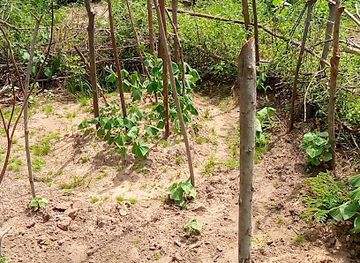
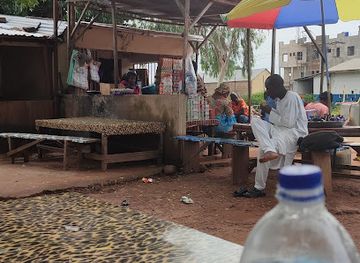
Soma’s principal attraction is the town itself and the opportunity to observe everyday life in a regional Gambian crossroads. The central market offers a close view of local commerce, with food, household goods and agricultural produce moving through stalls and small shops. Around the main road, public-service vehicles and shared taxis reveal the town’s importance as a link between the western Gambia, the Lower River Region and routes towards Senegal. Visitors can also explore the nearby countryside, where villages, cultivated land and broad rural horizons provide a quieter perspective on the south bank, although visits should be arranged respectfully and transport organised in advance. Soma is not a museum city and has few conventional ticketed attractions; its interest lies in movement, conversation, local food and the contrast between busy roadside activity and the open landscape beyond the built-up area.
-
Garden
Ousainou and Brother's Farm
Explore the serene beauty of Ousainou and Brother's Farm in Masembe, a lush garden retreat showcasing Gambia's vibrant flora and agriculture.
32 min drive · 12 km from city centre
-
 Tourist attraction
Yello, tenda Community Primates project
Explore the Yello Tenda Community Primates Project, a unique eco-tourism destination dedicated to wildlife conservation and education along the Trans-Gambia Highway.
28 min drive · 9.4 km from city centre
-
Park
تپه جلایر
Discover the tranquil beauty of Tipeh Jalair Park in Kaiaf, a perfect retreat for nature lovers and relaxation seekers.
26 min drive · 8.6 km from city centre
Best landmarks in Soma
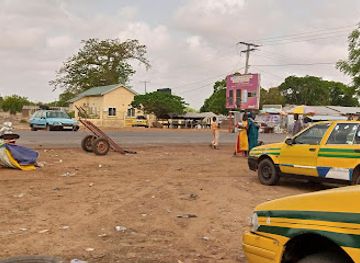
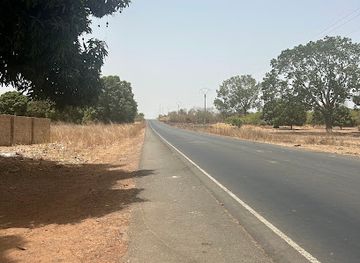
Soma’s most meaningful landmarks are functional rather than monumental. The town market represents its role as a regional centre of exchange, while the Trans-Gambia Highway gives physical form to the routes that have shaped its growth and links it with settlements across the south bank. The Senegambia Bridge, located near Farafenni rather than within Soma itself, is an important regional landmark whose opening in 2019 altered road travel between The Gambia’s two banks and Senegal; it should therefore be understood as a nearby transport landmark, not a structure in the town. Local mosques, civic buildings and transport stands contribute to Soma’s visual identity, but visitors should avoid assigning architectural or historical importance that has not been formally documented. The town’s significance lies chiefly in its position and daily activity.
-
Border crossing station
Missira Border Post
Discover the vibrant cultures and landscapes at Missira Border Post, your gateway between Gambia and Senegal along the Trans-Gambia Highway.
16 min drive · 5.4 km from city centre
-
Primary school
SOMA PROPER LOWER BASIC SCHOOL
Discover the heart of education in Soma at the Soma Proper Lower Basic School, where local culture and community come together to nurture young minds.
5 min drive · 1.8 km from city centre
Explore Soma on the map
Plan your Soma trip on one map. See where the top attractions, landmarks, restaurants, bars and hotels are, find what's near where you're staying, and book hotels and experiences in a few clicks.
Best hotels in Soma
Best restaurants in Soma
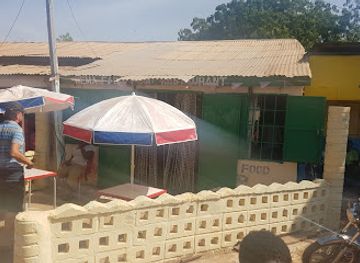
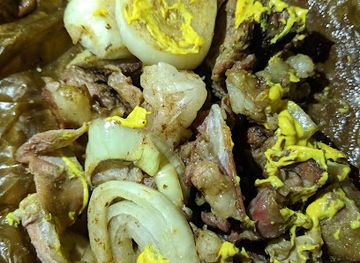
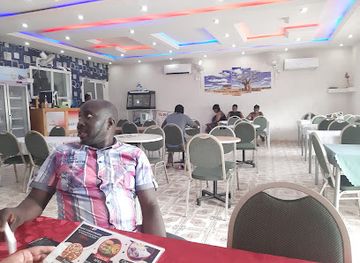
Soma’s food scene is informal and closely connected to local daily life. Small eateries, roadside cookshops and market stalls commonly serve Gambian staples such as benachin, a one-pot rice dish, domoda with groundnut sauce, chicken or fish yassa, and simple rice-and-stew meals. Tapalapa bread, akara and other quick foods are useful for travellers making an early road departure, while seasonal fruit and juices may appear in market areas. The flavours reflect the wider food traditions of The Gambia, where rice, peanuts, onions, chilli, fish and locally grown produce are central ingredients. Dining is generally practical rather than elaborate, with modest seating and service shaped by the pace of the town. Visitors should choose busy stalls with good food turnover, carry drinking water and ask about ingredients when dietary restrictions are important.
-
Restaurant
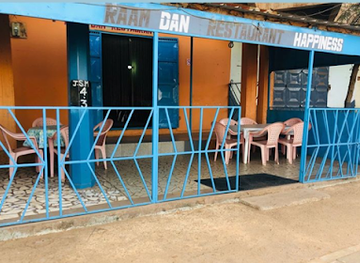
Raamdaan Restaurant and Catering Services
Experience the heart of Gambian culture through delicious food at Raamdaan Restaurant - a true culinary treasure in Soma.
13 min walk · 1.1 km from city centre
-
Restaurant
Nema fast food restaurant
Discover authentic Gambian flavors at Nema Fast Food Restaurant in Soma – where delicious meets convenient dining.
11 min walk · 0.9 km from city centre
-
Meat
Afra GNPC
Experience authentic Gambian flavors at Afra GNPC - where meat lovers find their paradise along the Trans-Gambia Highway.
16 min walk · 1.3 km from city centre
-
Restaurant
Babou's Food Paradise
Experience authentic Gambian cuisine at Babou's Food Paradise - a culinary haven along the Trans-Gambia Highway.
37 min drive · 17 km from city centre
Best bars in Soma
Soma does not have the concentrated nightlife associated with The Gambia’s coastal resort districts. After dark, activity is more likely to centre on modest local cafés, tea and refreshment stalls, small bars and social gatherings than on large nightclubs or organised entertainment venues. Evening life follows the rhythms of work, transport and community, with conversation and football often more prominent than late-night dancing. Visitors should expect limited formal programming and should ask accommodation staff or trusted local contacts about current places to sit safely. As in other parts of The Gambia, dress and behaviour should remain respectful, particularly outside clearly designated drinking venues. Walking alone on poorly lit roads after dark is best avoided, and transport arrangements should be made before leaving an accommodation area.
-
Grocery store
Soma Super Market
Explore Soma Super Market for a taste of local Gambian culture, fresh produce, and unique culinary delights in the heart of Soma.
11 min walk · 0.9 km from city centre
-
Bar
Whorf town
Experience the vibrant nightlife of Farafenni at Whorf Town, where local culture meets refreshing drinks in a lively bar atmosphere.
37 min drive · 17 km from city centre
-
General store
Soma Saremawdou Market
Discover the heart of Gambian culture at Soma Saremawdou Market, where vibrant stalls and friendly locals create a shopping experience like no other.
4 min walk · 0.3 km from city centre
-
Convenience store
Mini market Soma
Explore the essence of local life at Mini Market Soma, where convenience meets culture in the heart of Gambia.
11 min walk · 0.9 km from city centre
Best nightclubs in Soma
Soma does not have the concentrated nightlife associated with The Gambia’s coastal resort districts. After dark, activity is more likely to centre on modest local cafés, tea and refreshment stalls, small bars and social gatherings than on large nightclubs or organised entertainment venues. Evening life follows the rhythms of work, transport and community, with conversation and football often more prominent than late-night dancing. Visitors should expect limited formal programming and should ask accommodation staff or trusted local contacts about current places to sit safely. As in other parts of The Gambia, dress and behaviour should remain respectful, particularly outside clearly designated drinking venues. Walking alone on poorly lit roads after dark is best avoided, and transport arrangements should be made before leaving an accommodation area.
-
Parking lot
Soma
Discover Soma, a vibrant hub in The Gambia offering convenient parking and access to local culture and attractions.
10 min walk · 0.8 km from city centre
Best shops in Soma
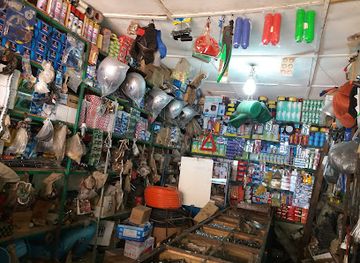
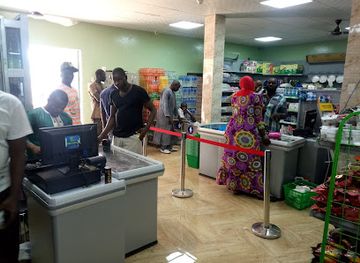
Shopping in Soma is centred on practical local commerce rather than specialist tourist retail. The market and surrounding roadside businesses sell fresh produce, rice, groundnuts, clothing, household necessities and items needed by travellers continuing along the highway. Small shops and informal stalls provide a useful glimpse of how the town serves both its resident population and neighbouring rural communities. Visitors may find packaged foods, woven goods or locally made household items, but the range changes with supply and season, and Soma is not primarily an artisan-shopping destination. Bargaining should be polite where it is invited, while food products should be selected with attention to freshness and safe storage. The most distinctive aspect of shopping here is the relationship between market trade, agriculture and transport rather than a curated souvenir scene.
-
Grocery store
Halabaid Trading Enterprises paradise supermarket
Discover the heart of Farafenni at Halabaid Trading Enterprises, your go-to grocery store for local and international flavors.
37 min drive · 17 km from city centre
-
Grocery store
Soma Super Market
Discover the authentic flavors of Soma at Soma Super Market, where local and international products await your exploration.
11 min walk · 0.9 km from city centre
-
General store
Soma Saremawdou Market
Explore the vibrant Soma Saremawdou Market in Gambia, where local culture, crafts, and cuisine come together to create an unforgettable shopping experience.
4 min walk · 0.3 km from city centre
-
Convenience store
Mini market Soma
Explore the heart of Soma with Mini Market Soma, your friendly convenience store for local snacks and essentials during your travels.
11 min walk · 0.9 km from city centre

Get your free copy of our complete guide to Soma, delivered straight to you.
Everything on this page, from attractions and restaurants to essentials and local phrases, in one PDF you can read offline, print or share.
Already have an account? Sign in
Your Soma guide is ready.
We'll send it to · Not you? Sign out

Getting your guide ready…
We are putting together a fresh copy of the Soma guide. This can take up to a minute.
This can take a few moments. If your browser asks, choose Allow so the download can start. You'll find the guide in your Downloads folder.
Nothing happened? Download it again
Sorry, the guide is taking longer than usual. Please try again in a minute, or get it by email instead.
Soma essentials
Currency and Payment
Safety
Emergency Situations
Do's and Don'ts
Local Tips
From Eve
Local phrases worth knowing
You don't need to get them perfect. A few words go a long way, and locals appreciate the effort.
Basics
| English | Local | Say it |
|---|---|---|
| Hello | Salam | [sa-lam] |
| Goodbye | Tijaa | [ti-jaa] |
| Yes | Waaw | [waaw] |
| No | Ala | [a-la] |
| Please/You're welcome | Nanga def | [nan-ga def] |
| Thank you | Jerejef | [je-re-jef] |
| Excuse me/Sorry | Ba beneen | [ba be-neen] |
| How are you? | Nanga def? | [nan-ga def?] |
| Fine. And you? | Jërëjëf. Ñaata la? | [je-re-jeef. nyaa-ta la?] |
| Do you speak English? | Noppaale Angalees? | [nop-paa-le an-ga-lees?] |
| I don't understand | Dégg naa la | [degg naa la] |
Eating & Drinking
| English | Local | Say it |
|---|---|---|
| I'd like to see the menu, please | Noppaale menu, jàppale | [nop-paa-le me-nu, ja-ppa-le] |
| I don't eat meat | Mangi ko ci yapp | [man-gi ko ci yap] |
| Cheers! | Jërejëf! | [je-re-jeef!] |
| I would like to pay, please | Noppaale baax, jàppale | [nop-paa-le baa-x, ja-ppa-le] |
Emergencies
| English | Local | Say it |
|---|---|---|
| Help! | Ndanka! | [n-dan-ka!] |
| Go away! | Jéegum! | [je-gum!] |
| Call the Police! | Noppaale polis! | [nop-paa-le po-lis!] |
| Call a doctor! | Noppaale doktora! | [nop-paa-le dok-to-ra!] |
| I'm lost | Mangi tudd | [man-gi tud] |
| I'm ill | Mangi jëf | [man-gi jeef] |
Shopping
| English | Local | Say it |
|---|---|---|
| I'd like to buy... | Noppaale xarit... | [nop-paa-le kha-reet...] |
| I'm just looking | Noppale nopp | [nop-paa-le nop] |
| How much is it? | Ñaata laa? | [nyaa-ta laa?] |
| That's too expensive | Wu ko def | [wu ko def] |
| Can you lower the price? | Mangi def | [man-gi def] |
Time & Numbers
| English | Local | Say it |
|---|---|---|
| What time is it? | Ñaata ñetti? | [nyaa-ta nyet-ti?] |
| It's one o'clock | Ñetti wàcce | [nyet-ti wa-cce] |
| Half past (10) | Wàcce ñetti (10) | [wa-cce nyet-ti (10)] |
| Morning | Suba | [su-ba] |
| Afternoon | Nderet | [n-de-ret] |
| Evening | Jikkoy | [ji-kkoy] |
| Yesterday | Ndeff | [nde-ff] |
| Today | Nopp | [nop-p] |
| Tomorrow | Bópp | [bo-pp] |
| 1 | Benn | [ben] |
| 2 | Juj | [juj] |
| 3 | Samb | [samb] |
| 4 | Një | [nje] |
| 5 | Juroom | [ju-room] |
| 6 | Woxtaan | [wox-taan] |
| 7 | Jàpp | [jap-p] |
| 8 | Jiri | [ji-ri] |
| 9 | Jokk | [jokk] |
| 10 | Fukk | [fukk] |
Transport & Directions
| English | Local | Say it |
|---|---|---|
| Where's a/the...? | Na waa...? | [na waa...?] |
| What's the address? | Noppaale alkaal | [nop-paa-le al-kaal] |
| Can you show me (on the map)? | Mangi layy dem (ci reew) | [man-gi lie dem (ci rew)] |
| When's the next (bus)? | Mangi ci jëf (bus)? | [man-gi ci jef (bus)?] |
| A ticket (to ....) | Billet (du ...) | [bil-let (du ...)] |
History of Soma
A Settlement on Regional Trade Routes
Soma’s early development belongs to the wider history of settlements along the south bank of the River Gambia, where farming communities, river movement and overland exchange connected the interior with the coast. The region has long been shaped by Mandinka, Jola, Fula and other communities whose languages, religious traditions and trading relationships continue to influence local life. Soma is not chiefly known for a surviving ancient monument or a single foundation date; its importance grew from its position within these practical networks of movement and exchange.
Colonial Roads and Administration
During the colonial period, British administration in The Gambia strengthened road links and commercial connections between river settlements and the coastal centres. Roads increased the importance of transport stops such as Soma, allowing agricultural goods and passengers to move more easily across the south bank. Colonial boundaries and administrative systems also connected local communities to a wider political structure centred on the River Gambia, while leaving many older patterns of farming, kinship and religious life intact.
Independence and National Integration
The Gambia became independent from Britain in 1965, and the decades that followed brought efforts to improve roads, public services and administrative links between the capital region and the rural interior. Soma’s role as a regional town expanded within this national framework. Shops, transport services and public facilities served surrounding villages as well as passing travellers, giving the town an economic function that depended less on monumental architecture than on accessibility and regular movement.
The Trans-Gambia Highway Era
Modern road construction and improvements to the Trans-Gambia route reinforced Soma’s position as a south-bank crossroads. The road connects important Gambian settlements and forms part of the overland relationship between The Gambia and Senegal. The opening of the Senegambia Bridge in 2019 changed regional travel by providing a permanent road crossing over the River Gambia near Farafenni, reducing dependence on the former ferry connection and altering journey patterns across the country.
A Contemporary Regional Town
Today, Soma reflects the continuing importance of rural commerce, transport and agricultural exchange in The Gambia. Its markets and roadside businesses serve a mobile population, while its streets reveal the practical relationship between villages, regional towns and national routes. Contemporary Soma has limited monumental heritage and a modest tourism infrastructure, but its history remains visible in the town’s function: it is a place shaped by circulation, trade and the everyday connections linking the south bank with the rest of the country.
Soma in Photos
Browse through our photo collection highlighting the charm and character of the destination.
Cities near Soma
The closest cities to Soma, if you have time for more than one stop.
-

-

-

-

-


Swipe for more cities
Explore more

Explore more of The Gambia
Discover The Gambia: a treasure trove of cultural richness, stunning beaches, and diverse wildlife. An unforgettable journey awaits you in Africa's Smiling Coast.
Explore The Gambia