

Free Mayaro-Rio Claro Travel Guide & Mobile App
Explore Mayaro-Rio Claro with free travel guides. Discover regional history, expert tips, proposed trips, and audio guides on web or mobile app.


Explore Mayaro-Rio Claro in southeastern Trinidad for broad Atlantic beaches, wetlands, forest roads, village food and a slower rural rhythm.
Read more about Mayaro-Rio Claro
When is the best time to visit Mayaro-Rio Claro?
Best: January–March · 30–31°C| Month | High (°C) | Rainfall (mm) |
|---|---|---|
| January (best) | 30 | 75 |
| February (best) | 31 | 65 |
| March (best) | 31 | 55 |
| April | 32 | 65 |
| May | 32 | 75 |
| June | 32 | 105 |
| July | 32 | 125 |
| August | 32 | 135 |
| September | 32 | 125 |
| October | 32 | 115 |
| November | 32 | 105 |
| December | 31 | 85 |
Getting to and around Mayaro-Rio Claro
How to get there
Transportation
Top city travel guides in Mayaro-Rio Claro
The cities of Mayaro-Rio Claro, and the easiest places to base yourself.

Swipe for more cities
Best attractions in Mayaro-Rio Claro
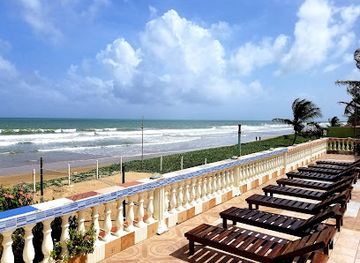
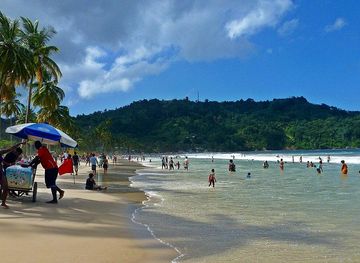
Mayaro-Rio Claro’s attractions are primarily environmental, coastal and cultural rather than concentrated in formal visitor complexes. Mayaro Beach provides a long Atlantic shoreline for walking, sea views and local recreation, although swimming conditions should be assessed carefully. Around Manzanilla and the eastern lowlands, the Nariva wetland environment offers opportunities for guided birdwatching, photography and learning about mangrove, marsh and freshwater habitats. Access arrangements vary, and protected areas should be visited with permission or an experienced local guide. Inland, Rio Claro provides a useful base for exploring the surrounding agricultural landscape and forested approaches, while Guayaguayare adds a coastal community with important petroleum history. Rural drives reveal coconut groves, small farms, waterways and changing vegetation, but many sites are best understood through local knowledge rather than signposted tourism infrastructure. The region also suits travellers interested in fishing traditions, village markets, natural history and quiet outdoor activity. Its appeal is the combination of broad spaces and living landscapes: the coast, wetlands, forest margins and working settlements remain more important to the visitor experience than a long list of ticketed attractions.
-
Park
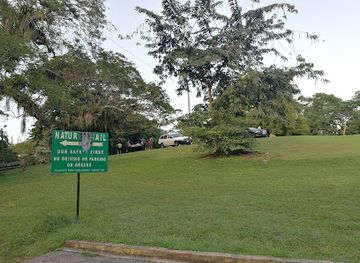
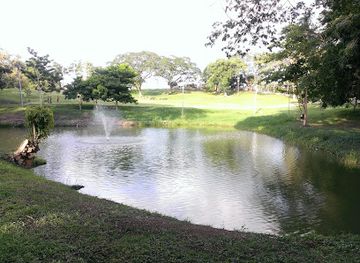
Palmiste Park
Experience the lush beauty and vibrant culture of Palmiste Park, a serene urban oasis in San Fernando, Trinidad, perfect for families and nature lovers.
-
Park
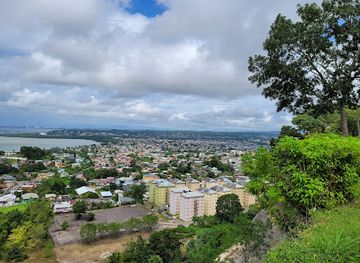
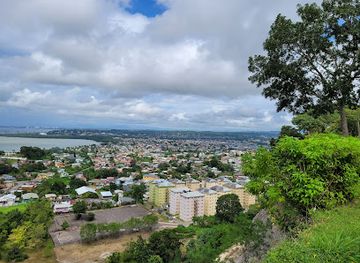
San Fernando Hill
Explore the breathtaking views of San Fernando Hill, a scenic park in Trinidad perfect for relaxation and outdoor adventures.
-
Historical landmark
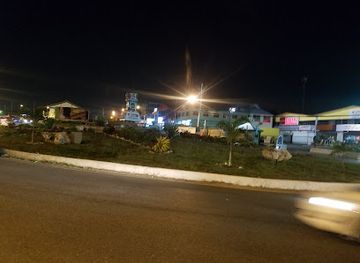
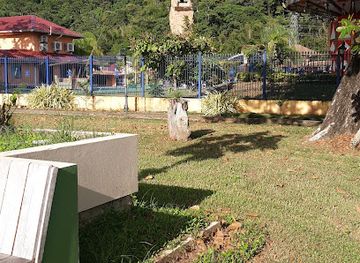
Marabella Roundabout
Experience the vibrant culture and artistic heritage at Marabella Roundabout, a historical landmark in San Fernando, Trinidad.
-
Tourist attraction
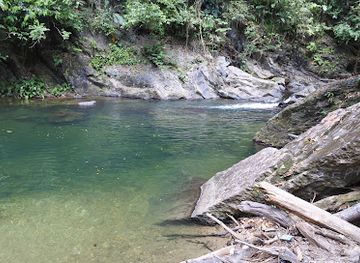
Three Pools
Explore the tranquil beauty of Three Pools in Blanchisseuse, a must-visit natural attraction for every traveler to Trinidad.
Best landmarks in Mayaro-Rio Claro
Mayaro Beach is the region’s most recognisable geographical landmark, a broad Atlantic-facing strand whose scale and open horizon distinguish the Mayaro coast from Trinidad’s more urbanised western shore. The Nariva wetland landscape around the eastern lowlands is another landmark of environmental importance: its marshes, waterways and forested edges represent one of Trinidad’s major remaining wetland systems and support a variety of wildlife. Guayaguayare’s petroleum landscape carries national historical significance because the settlement is associated with the early development of commercial oil production in Trinidad. Rio Claro’s importance is less monumental but lies in its role as the inland service centre formed by agricultural, forestry and transport history. Across the region, coconut-lined roads, rural bridges, waterways and scattered villages create a landscape of cultural significance, even where there is no formal monument. These places are best appreciated as connected features of southeastern Trinidad’s geography rather than as isolated architectural set pieces.
-
Park
Palmiste Park
Discover the serene beauty of Palmiste Park in San Fernando, a perfect retreat for nature lovers and families seeking relaxation and recreation.
-
Park
San Fernando Hill
Discover the breathtaking views and serene beauty of San Fernando Hill, a popular park and tourist attraction in Trinidad.
-
Park
Chaguaramas Boardwalk
Explore the scenic Chaguaramas Boardwalk, where turquoise waters meet lush landscapes, offering a tranquil escape in Trinidad.
-
Historical landmark
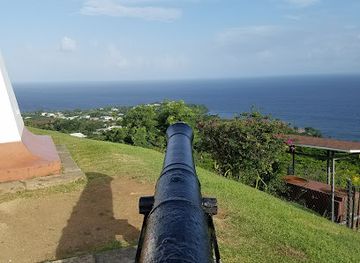
Fort King George
Discover Tobago's rich colonial heritage at Fort King George, a historical landmark offering stunning views and engaging exhibits.
Explore Mayaro-Rio Claro on the map
Plan your trip on one map. See where the top cities, national parks and sights are, and book hotels and experiences in a few clicks.
Best hotels in Mayaro-Rio Claro
Best restaurants in Mayaro-Rio Claro
Dining in Mayaro-Rio Claro is rooted in Trinidad and Tobago’s broader Creole, African, South Asian and coastal food traditions, with local variations shaped by fishing and rural agriculture. In Mayaro, seafood may feature prominently, while inland eateries and takeaways commonly serve dishes such as roti, curry, pelau, callaloo, provisions, fried fish, bake and shark-style fried breads, doubles and other savoury snacks associated with Trinidadian cooking. Menus and availability vary, so daytime food stalls, neighbourhood restaurants and busy local shops are often more dependable than seeking a formal dining district. Fresh fruit, coconut-based preparations and seasonal produce reflect the region’s agricultural background. Visitors should distinguish between Trinidadian food widely enjoyed across the country and dishes prepared with a specifically Mayaro or southeastern character. Carry cash for informal vendors, and ask about spice levels when ordering, as seasoning can be substantial.
-
Restaurant
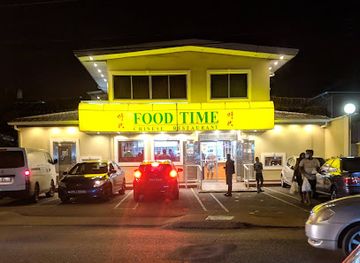
Food Time
Discover authentic Trinidadian flavors at Food Time in Arouca – where every dish tells a story.
-
Restaurant
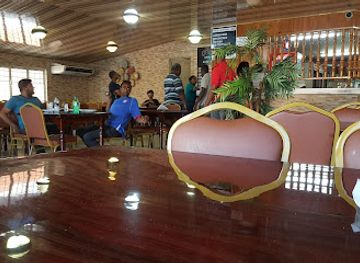
Wing's Restaurant and Bar
Discover authentic Caribbean flavors at Wing's Restaurant and Bar in Tunapuna - an unforgettable dining experience awaits.
-
Restaurant
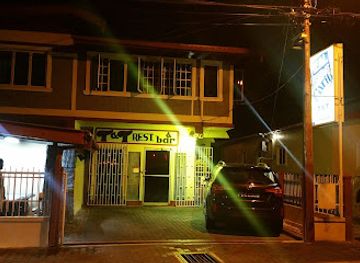
T&T Restaurant And Bar
Experience authentic Caribbean cuisine at T&T Restaurant And Bar in Trinidad - where vibrant flavors meet warm hospitality.
-
Seafood
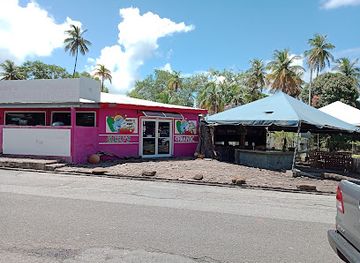
Ducky's Ortoire Organic Roast Seafood
Experience fresh seafood like never before at Ducky's Ortoire Organic Roast Seafood in Mayaro – where every bite tells a story of the sea.
Best bars in Mayaro-Rio Claro
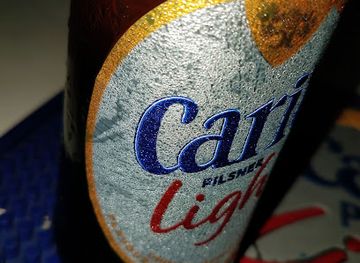
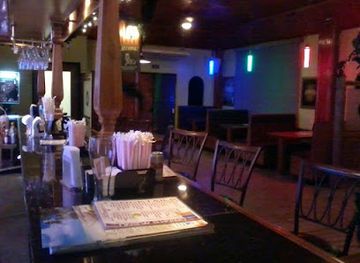
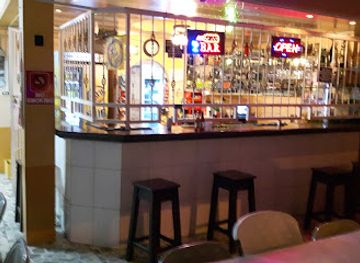
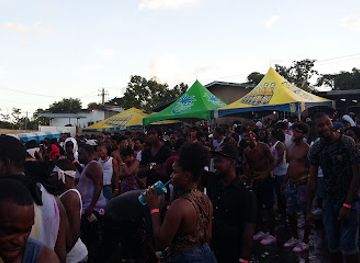
Evening life in Mayaro-Rio Claro is comparatively low-key. Mayaro has casual bars, rum shops and restaurants where residents meet, while Rio Claro provides a more practical selection of local drinking places, takeaways and occasional entertainment. The region is better suited to a relaxed meal, conversation, music and an early coastal walk than to a dense nightclub circuit. Social occasions may become busier around public holidays, community celebrations and festive periods, but temporary events and opening arrangements change. Visitors should ask accommodation hosts or local residents about current venues rather than relying on outdated listings. Drink responsibly, arrange transport before travelling between rural settlements and avoid walking unfamiliar coastal or forest roads late at night. The absence of a major club scene is part of the region’s rural character, not a lack of evening culture.
-
Bar
Merry Men Bar
Discover the lively atmosphere and local flavors at Merry Men Bar in Mayaro, Trinidad, the perfect spot for relaxation and socializing.
-
Lounge
M Rest & Bar
Discover the vibrant ambiance of M Rest & Bar, a must-visit lounge in Rio Claro for exquisite cocktails and lively nightlife.
-
Bar
Sky Hawk Bar / Abi Car Rental
Discover the vibrant atmosphere and local flavors at Sky Hawk Bar in Mayaro, Trinidad, a perfect spot for relaxation and fun.
-
Bar
Mapepire's Bar
Discover the vibrant nightlife at Mapepire's Bar in Radix, where every sip is a taste of local culture and every night is a celebration.
Best nightclubs in Mayaro-Rio Claro
Evening life in Mayaro-Rio Claro is comparatively low-key. Mayaro has casual bars, rum shops and restaurants where residents meet, while Rio Claro provides a more practical selection of local drinking places, takeaways and occasional entertainment. The region is better suited to a relaxed meal, conversation, music and an early coastal walk than to a dense nightclub circuit. Social occasions may become busier around public holidays, community celebrations and festive periods, but temporary events and opening arrangements change. Visitors should ask accommodation hosts or local residents about current venues rather than relying on outdated listings. Drink responsibly, arrange transport before travelling between rural settlements and avoid walking unfamiliar coastal or forest roads late at night. The absence of a major club scene is part of the region’s rural character, not a lack of evening culture.
-
Sports bar
Sammys Bar
Discover the lively atmosphere of Sammys Bar in Tabaquite – perfect for sports fans and food lovers alike in a vibrant Trinidad setting.
-
Night club
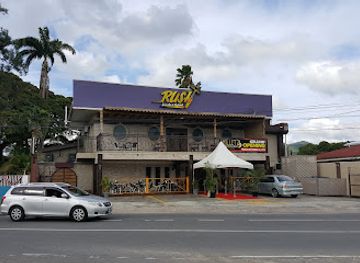
Rush Sports Bar and Night Club
Discover the perfect blend of sports and nightlife at Rush Sports Bar and Night Club in Tacarigua, a vibrant spot for unforgettable experiences.
-
Bar
El Mejor Bar
Experience vibrant nightlife and local culture at El Mejor Bar in San Pedro, where great drinks and live music create unforgettable memories.
-
 Bar
BarCarington bar
Experience the vibrant local culture and refreshing drinks at Carington Bar in the heart of Trinidad and Tobago.
Best shops in Mayaro-Rio Claro
Shopping in Mayaro-Rio Claro is practical and locally focused rather than centred on large malls or luxury retail. Rio Claro is the main inland place for supermarkets, pharmacies, everyday services and small independent shops, while Mayaro serves coastal communities and visitors with provisions, beach supplies and casual food outlets. Small village shops and roadside sellers may offer fruit, snacks, coconut products and other seasonal produce, though selection and payment methods vary. Visitors interested in Trinidadian food culture can look for doubles, baked goods, pepper sauces, preserves and locally prepared treats, buying only from vendors who appear established and hygienic. Markets and community sales may be more active on particular days or around public holidays, so local enquiries are useful. Souvenirs are generally less specialised than in Trinidad’s principal tourism centres; practical regional purchases, food products and small craft items are more characteristic than a dedicated handicraft quarter.
-
Shopping mall
JD's Mall
Experience vibrant shopping and local culture at JD's Mall in Trinidad, where retail therapy meets culinary delights.
-
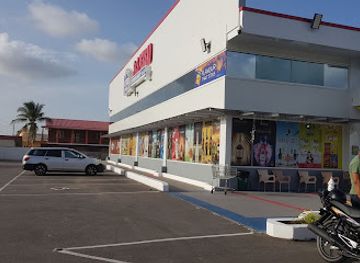
Supermarket
S & S Persad Supermarket
Discover the vibrant flavors of Trinidad at S & S Persad Supermarket, Mayaro's top shopping destination for locals and tourists.
-
Book store
The Next Generation Limited
Explore The Next Generation Limited in Rio Claro, a charming bookstore and stationery store brimming with literary treasures and creative supplies.
-
Gift shop
Nexgen Bookshop
Explore Nexgen Bookshop in Mayaro for a unique blend of books, beachwear, and coffee, making it a perfect stop for tourists and locals alike.



Get your free copy of our complete guide to Mayaro-Rio Claro, delivered straight to you.
Everything on this page, from attractions and restaurants to essentials and local phrases, in one PDF you can read offline, print or share.
Already have an account? Sign in
Your Mayaro-Rio Claro guide is ready.
We'll send it to · Not you? Sign out

Getting your guide ready…
We are putting together a fresh copy of the Mayaro-Rio Claro guide. This can take up to a minute.
This can take a few moments. If your browser asks, choose Allow so the download can start. You'll find the guide in your Downloads folder.
Nothing happened? Download it again
Sorry, the guide is taking longer than usual. Please try again in a minute, or get it by email instead.
Mayaro-Rio Claro essentials
Currency and Payment
Safety
Emergency Situations
Do's and Don'ts
Local Tips
From Eve
Local phrases worth knowing
You don't need to get them perfect. A few words go a long way, and locals appreciate the effort.
Basics
| English | Local | Say it |
|---|---|---|
| Hello | Hello | [Heh-loh] |
| Goodbye | Bye | [Bahy] |
| Yes | Yes | [Yes] |
| No | No | [No] |
| Please/You're welcome | Please/No problem | [Pleez/No prob-lem] |
| Thank you | Thank you | [Thank yuh] |
| Excuse me/Sorry | Excuse me/Sorry | [Ex-kyoos mi/Sor-ree] |
| How are you? | How yuh doin'? | [How yuh doin'?] |
| Fine. And you? | I good. An' you? | [I gud. An' yuh?] |
| Do you speak English? | Yuh does speak English? | [Yuh duz speek Ing-lish?] |
| I don't understand | I eh understand | [I eh un-der-stand] |
Eating & Drinking
| English | Local | Say it |
|---|---|---|
| I'd like to see the menu, please | Ah would like to see de menu, please | [Ah wud laik to see deh men-yu, pleez] |
| I don't eat meat | Ah eh eat meat | [Ah eh eet meet] |
| Cheers! | Cheers! | [Cheers!] |
| I would like to pay, please | Ah would like to pay, please | [Ah wud laik to pay, pleez] |
Emergencies
| English | Local | Say it |
|---|---|---|
| Help! | Help! | [Help!] |
| Go away! | Go way! | [Go wey!] |
| Call the Police! | Call de Police! | [Call deh Po-lees!] |
| Call a doctor! | Call a doctor! | [Call a dok-ta!] |
| I'm lost | Ah lost | [Ah lost] |
| I'm ill | Ah eh feel well | [Ah eh feel wel] |
Shopping
| English | Local | Say it |
|---|---|---|
| I'd like to buy... | Ah would like to buy... | [Ah wud laik to bai...] |
| I'm just looking | Ah just lookin' | [Ah just luk-in'] |
| How much is it? | How much dat cost? | [How much dat kost?] |
| That's too expensive | Dat too expensive | [Dat too ex-pen-sive] |
| Can you lower the price? | Yuh could lower de price? | [Yuh cud loh-er deh prais?] |
Time & Numbers
| English | Local | Say it |
|---|---|---|
| What time is it? | Wha time it? | [Wha taim it?] |
| It's one o'clock | It one o'clock | [It wan o-clock] |
| Half past (10) | Half past ten | [Half past ten] |
| Morning | Mornin' | [Morn-in'] |
| Afternoon | Afternoon | [Af-ter-noon] |
| Evening | Evenin' | [Eve-nin'] |
| Yesterday | Yesterday | [Yes-ter-day] |
| Today | Today | [To-day] |
| Tomorrow | Tomorrow | [To-morrow] |
| 1 | One | [Wan] |
| 2 | Two | [Too] |
| 3 | Three | [Tree] |
| 4 | Four | [For] |
| 5 | Five | [Faiv] |
| 6 | Six | [Siks] |
| 7 | Seven | [Sev-en] |
| 8 | Eight | [Ait] |
| 9 | Nine | [Nain] |
| 10 | Ten | [Ten] |
Transport & Directions
| English | Local | Say it |
|---|---|---|
| Where's a/the...? | Wha de ...? | [Wha de ...?] |
| What's the address? | Wha de address? | [Wha de ad-dress?] |
| Can you show me (on the map)? | Yuh could show me (on de map)? | [Yuh cud sho mi (on deh map)?] |
| When's the next (bus)? | When de next (bus)? | [When deh nekst (bus)?] |
| A ticket (to ....) | A ticket (to ...) | [A tik-et (to ...)] |
History of Mayaro-Rio Claro
Indigenous Settlement and the Eastern Wetlands
Long before European colonisation, Trinidad’s forests, rivers, coastal plains and wetlands supported Indigenous communities whose activities included fishing, hunting, gathering and cultivation. The eastern lowlands around the Nariva and Ortoire systems were especially productive environments, although archaeological evidence is often less visible to visitors than the region’s later plantation and petroleum history. Indigenous knowledge of waterways and forest resources continued to influence how later communities moved through and used southeastern Trinidad. Much of this early history survives through archaeology, landscape and scholarship rather than through large standing monuments.
Spanish Rule and French Creole Settlement
Trinidad remained under Spanish sovereignty until 1797, but the late eighteenth-century arrival of French planters and their enslaved labourers transformed settlement across the island. Estates, roads and agricultural communities expanded in places that had previously been more thinly settled from the European perspective. The eastern districts developed within this wider plantation economy, even though their forests, wetlands and distance from Port of Spain limited the scale of urban development. Place names and family histories in southeastern Trinidad still reflect overlapping Spanish, French Creole, African and later South Asian influences.
British Plantation Society and Emancipation
After the British capture of Trinidad in 1797, the island’s plantation economy was incorporated into the British Empire. Sugar and other estate agriculture relied on enslaved African labour until emancipation in the 1830s, after which labour patterns and land use changed substantially. Indian indentured workers began arriving from 1845, adding new religious, culinary and cultural influences to Trinidadian society. In Mayaro-Rio Claro, agricultural settlement, smallholdings and coastal communities developed alongside the remnants of plantation systems, producing the region’s distinctly mixed social and cultural character.
Coconut, Cocoa and Rural Agriculture
During the nineteenth and early twentieth centuries, coconut, cocoa, sugar and food crops shaped the economy of southeastern Trinidad. The Mayaro coast became associated with coconut cultivation as well as fishing and small-scale farming, while inland districts supported cocoa estates, provision grounds and forest-based work. These industries were vulnerable to disease, price changes, storms and transport difficulties, but their legacy remains visible in old estate landscapes, village food traditions and the region’s dispersed settlement pattern. Agriculture continues to matter locally even though the economy is now more varied.
The Government Railway and the Growth of Rio Claro
Improved transport was crucial to the development of southeastern Trinidad. Railway and road links connected inland agricultural and forest districts with markets and ports, helping Rio Claro emerge as a service and trading centre. The railway era reduced the isolation of communities that had previously depended heavily on difficult overland routes, although the lines were later closed as road transport became dominant. Rio Claro’s present role as the region’s inland hub is partly a legacy of this period, when transport infrastructure supported agriculture, forestry and the movement of people and goods.
Guayaguayare and Trinidad’s Petroleum Era
Guayaguayare is closely associated with the beginnings of Trinidad’s commercial petroleum industry. Oil exploration and production in the area formed part of the wider transformation that made petroleum central to the national economy during the twentieth century. The industry brought new technical work, infrastructure and investment, while also changing the relationship between coastal communities, land and the sea. Guayaguayare’s oil history sits alongside fishing, agriculture and village life, illustrating how older rural economies and modern extractive industries developed together in southeastern Trinidad.
Environmental Protection and Contemporary Change
In the later twentieth century, growing recognition of the value of Trinidad’s wetlands and forests led to stronger conservation measures. The Nariva Swamp became an important protected wetland, supporting habitats for waterbirds, reptiles and other wildlife, while forest reserves and environmental campaigns highlighted the pressures created by hunting, drainage, development and resource extraction. Today Mayaro-Rio Claro combines established villages, agriculture, petroleum-related activity, recreation and protected ecosystems. Its contemporary identity is therefore shaped as much by environmental stewardship and rural resilience as by its older plantation and industrial histories.
Mayaro-Rio Claro in Photos
Browse through our photo collection highlighting the charm and character of the destination.
Neighbouring regions of Mayaro-Rio Claro
The closest regions to Mayaro-Rio Claro, if you have time for more than one.
-

-

-

-

-


Swipe for more regions
Explore more
Explore more of Trinidad and Tobago
Discover Trinidad and Tobago: A Caribbean paradise where vibrant culture meets stunning natural beauty, offering unique experiences from lively festivals to serene beaches.
Explore Trinidad and Tobago