

Ortahisar (Trabzon) Travel Guide - Free
Explore Ortahisar in Trabzon with Evendo's free guide. Find the best shops, historic streets, restaurants, and gems on web or mobile.


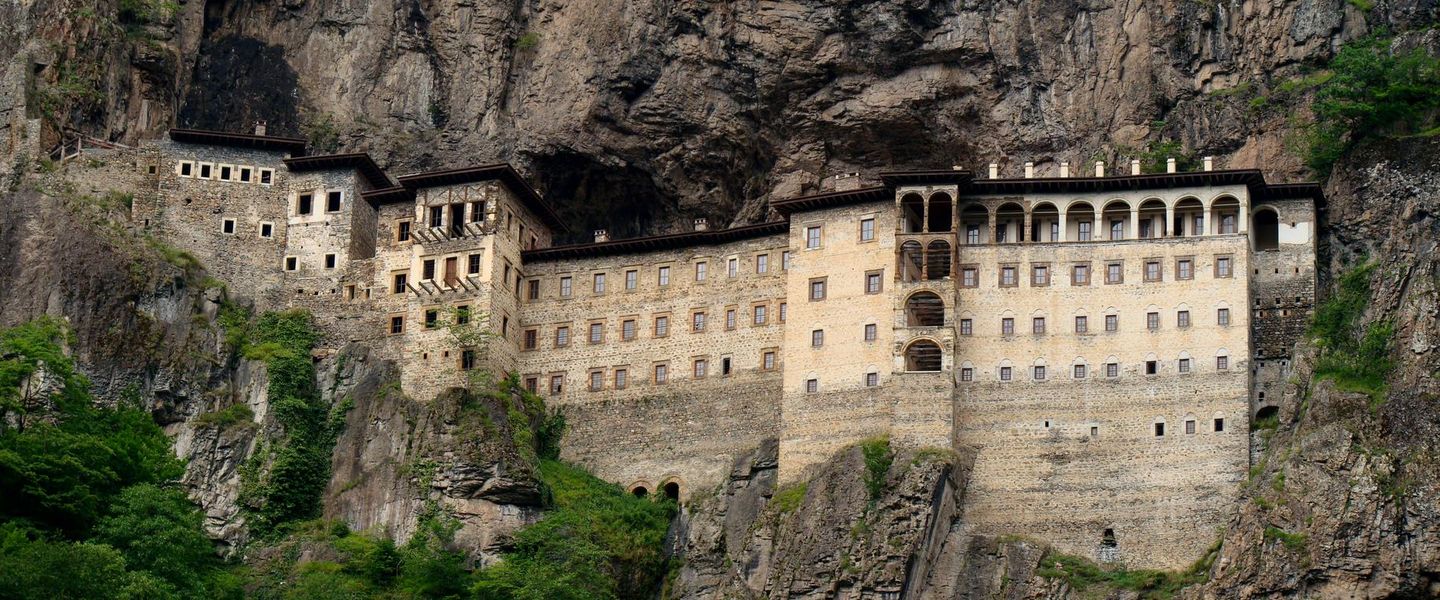


Ortahisar in Trabzon blends Byzantine and Ottoman heritage, lively markets, Black Sea cuisine, museums and hillside streets above the city centre.
Old Streets and Urban Layers
Ortahisar forms the historic and administrative heart of Trabzon, rising from the Black Sea shore towards wooded hills and enclosing much of the city’s oldest urban fabric. Its name means “middle fortress”, a reference to the citadel and defensive settlement that developed on the ridge above the modern centre. Today, the area combines busy commercial streets around Meydan with quieter lanes, remnants of medieval walls, Ottoman mosques, monumental civic buildings and traditional workshops. The geography is unmistakable: steep streets climb inland, while viewpoints on the upper slopes look across tiled roofs towards the sea.Read more about Ortahisar
Markets, Mosques and Public Squares
Trabzon’s Cultural Centre
Best attractions in Ortahisar
Ortahisar’s principal attractions are concentrated within and around its historic centre. Meydan Parkı and Atatürk Alanı provide the most sociable introduction, while the market lanes lead to the Bedesten, Taşhan and Bakırcılar Çarşısı, where historic commercial functions remain visible in workshops and small shops. Trabzon Museum, housed in the former Kostaki Mansion, presents the city’s late Ottoman and early republican story through its architecture and collections. Gülbahar Hatun Mosque and the landscaped Zagnos Valley offer a quieter counterpoint to the central streets, and fragments of Trabzon’s old defensive walls reveal the district’s medieval foundations. The city’s main heritage buildings are interwoven with working businesses rather than arranged in a single pedestrian precinct, so sightseeing involves short climbs, busy roads and occasional diversions through ordinary residential streets.
-
 Museum
Atatürk Pavilion
Explore the Atatürk Pavilion in Trabzon, a historical museum surrounded by stunning gardens, showcasing Turkey's rich culture and heritage.
10 min drive · 3.4 km from neighbourhood centre
-
Tourist attraction
Eyof Park
Eyof Park in Trabzon: A picturesque urban park offering lush greenery, recreational spaces, and breathtaking views in a serene atmosphere.
10 min drive · 3.5 km from neighbourhood centre
-
Tourist attraction
Bay Panorama
Discover the breathtaking views of the Black Sea at Bay Panorama, Trabzon's premier spot for scenic beauty and local delights.
15 min walk · 1.2 km from neighbourhood centre


Best landmarks in Ortahisar
Ortahisar’s landmarks express the successive Byzantine, Ottoman and modern layers of Trabzon. The remains of the old city walls and the fortified upper ridge explain the district’s name and strategic position, even where later streets have absorbed the defensive line. Gülbahar Hatun Mosque is an important Ottoman religious foundation, while the Bedesten and Taşhan preserve the commercial architecture of the historic market quarter. The former Kostaki Mansion, now Trabzon Museum, represents the grand residences and international commercial connections of the late Ottoman city. Meydan Parkı and Atatürk Alanı are modern civic landmarks rather than ancient monuments, but they remain central to daily urban life. Nearby Zagnos Valley, shaped as a contemporary public landscape below the old centre, helps visitors understand the steep terrain that has always influenced Ortahisar’s development.
-
Historical landmark
Trabzon Sign
Discover the stunning Trabzon Sign, a historical landmark that offers breathtaking views and a glimpse into the rich culture of Trabzon.
16 min walk · 1.3 km from neighbourhood centre
-
Historical landmark
Ganita
Discover Ganita, a stunning historical landmark in Trabzon, offering breathtaking views, rich cultural experiences, and a taste of local delicacies.
15 min walk · 1.2 km from neighbourhood centre
-
Historical place
Kavakmeydani Şadirvani
Explore the serene beauty and rich history of Kavakmeydani Şadırvan, a captivating historical site in Ortahisar, Trabzon, perfect for relaxation and reflection.
12 min walk · 0.9 km from neighbourhood centre
-
Historical landmark
Millet Balkonu
Experience the rich cultural heritage and stunning views at Millet Balkonu, a historical landmark in Ortahisar, Trabzon, perfect for every traveler.
13 min walk · 1.0 km from neighbourhood centre


Explore Ortahisar on the map
A handpicked selection of must-see spots in Ortahisar, mapped for you.
Best hotels in Ortahisar
Best restaurants in Ortahisar
Eating in Ortahisar introduces visitors to the hearty flavours of the eastern Black Sea, particularly through small lokantas, bakeries and casual restaurants around Meydan and the market streets. Regional dishes may include kuymak or mıhlama, a rich cornmeal and cheese preparation, pide, soups, filled breads and rice-based home cooking; menus vary, so asking what has been prepared that day is often useful. Trabzon’s celebrated butter, cheese, tea and hazelnuts also appear in breakfasts, pastries and sweets. Central cafés and tea houses provide places to pause between markets and museums, while restaurants serving grilled meat and Black Sea specialities reflect the city’s links with the wider region. Akçaabat köfte is associated with the broader Trabzon area rather than Ortahisar alone, so it is best understood as a regional food experience, not a narrowly local dish.
-
Restaurant
Müzeyyen Restaurant
Discover authentic Turkish cuisine at Müzeyyen Restaurant in Ortahisar – where every dish tells a story.
10 min drive · 3.5 km from neighbourhood centre
-
Restaurant
Cephanelik Restaurant Cafe
Discover culinary excellence and stunning views at Cephanelik Restaurant Cafe in Trabzon's Boztepe district.
18 min walk · 1.5 km from neighbourhood centre
-
Restaurant
Okkam Restoran
Discover authentic Turkish flavors at Okkam Restoran in Ortahisar, Trabzon – where every meal tells a story.
7 min drive · 2.5 km from neighbourhood centre
-
Restaurant
Nevre Cafe & Restaurant
Experience authentic Turkish cuisine at Nevre Cafe & Restaurant in Ortahisar – where every dish tells a story.
11 min drive · 3.7 km from neighbourhood centre


Best bars in Ortahisar
Ortahisar’s evening life is more sociable and conversational than club-oriented. Around Meydan and the central streets, cafés, tea houses and modest restaurants stay active after offices and shops close, with people meeting for tea, coffee and conversation. Some venues serve beer or spirits, but the district is not primarily known for a concentrated nightclub strip, and nightlife becomes quieter away from the central squares. Evening walks are most atmospheric around illuminated public spaces and the older commercial quarter, while visitors seeking late music venues may need to look beyond the historic core towards other parts of Trabzon. Respect for residential buildings is important on the uphill lanes, where ordinary homes stand close to cafés and small businesses.
-
Pub
Big Yellow Taxi Benzin Cafe
Discover the charm of Trabzon at Big Yellow Taxi Benzin Cafe, where every sip tells a story and every moment is a memory.
11 min drive · 3.6 km from neighbourhood centre
-
Bar
The Big Table Cafe
Experience the vibrant atmosphere of The Big Table Cafe in Ortahisar, where delicious food, live music, and great company await.
11 min drive · 3.6 km from neighbourhood centre
-
Restaurant
Le Shener’s Restaurant & Gastro Bar (5* Turistik Tesis)
Experience the best of Turkish cuisine at Le Shener’s Restaurant & Gastro Bar in Ortahisar, Trabzon—where tradition meets modern culinary artistry.
12 min walk · 1.0 km from neighbourhood centre
-
Bar
Barikat Cafe Bar
Experience the vibrant social scene and delicious beverages at Barikat Cafe Bar in Trabzon, a perfect spot for relaxation and connection.
10 min walk · 0.8 km from neighbourhood centre


Best nightclubs in Ortahisar
Ortahisar’s evening life is more sociable and conversational than club-oriented. Around Meydan and the central streets, cafés, tea houses and modest restaurants stay active after offices and shops close, with people meeting for tea, coffee and conversation. Some venues serve beer or spirits, but the district is not primarily known for a concentrated nightclub strip, and nightlife becomes quieter away from the central squares. Evening walks are most atmospheric around illuminated public spaces and the older commercial quarter, while visitors seeking late music venues may need to look beyond the historic core towards other parts of Trabzon. Respect for residential buildings is important on the uphill lanes, where ordinary homes stand close to cafés and small businesses.
-
Bar
Barikat Cafe Bar
Experience the vibrant energy of Trabzon at Barikat Cafe Bar, where delightful drinks and a lively atmosphere await.
10 min walk · 0.8 km from neighbourhood centre
-
Night club
Retto
Experience Trabzon's vibrant nightlife at Retto, a night club offering electrifying music, dancing, and a lively atmosphere.
11 min walk · 0.9 km from neighbourhood centre
-
Night club
MOD
Discover Trabzon's vibrant nightlife at MOD Night Club, where music meets excitement in an unforgettable party atmosphere.
11 min walk · 0.9 km from neighbourhood centre
-
Night club
MONO Trabzon
Discover the electrifying nightlife at MONO Trabzon, where music, dance, and unforgettable experiences await you until the early hours.
27 min drive · 9.1 km from neighbourhood centre



Best shops in Ortahisar
Shopping in Ortahisar is concentrated in practical, long-established commercial streets rather than a single modern retail centre. Bakırcılar Çarşısı is associated with copperware and metalworking, and its workshops offer a glimpse of craft traditions that have long supported Trabzon’s market economy. The Bedesten and the surrounding lanes contain shops selling textiles, jewellery, household goods, sweets, tea and regional food products, while the streets around Meydan mix independent retailers with national chains. Visitors may also encounter hazelnuts, local butter, tea and packaged Black Sea specialities suitable for gifts, although quality and presentation vary between shops. Bargaining is not universal, so it is sensible to ask politely whether a price is fixed before negotiating. The pleasure of shopping here lies in the working bazaar atmosphere and the continuity between retail, craft and everyday city life.
-
Shopping mall
Forum Trabzon Shopping Center
Explore Forum Trabzon Shopping Center: A shopping paradise with diverse stores, delicious dining, and lively entertainment in the heart of Trabzon.
10 min drive · 3.4 km from neighbourhood centre
-
Shopping mall
Kemeralti
Explore Kemeralti: A bustling shopping district in Trabzon where tradition meets modernity with local goods, delicious street food, and vibrant culture.
5 min walk · 0.4 km from neighbourhood centre
-
Gift shop
Local Gifts
Explore Local Gifts in Trabzon for authentic souvenirs, handcrafted treasures, and a glimpse into Turkey's rich culture.
6 min walk · 0.5 km from neighbourhood centre
-
Clothing store
Levi's® Forum Trabzon
Explore Levi's® Forum Trabzon for the latest in denim fashion and accessories, perfect for style-conscious travelers and locals alike.
10 min drive · 3.4 km from neighbourhood centre


Ortahisar essentials
Getting There
Getting Around
Safety
Emergency Situations
Do's and Don'ts
Local Tips

From Eve
Local phrases worth knowing
You don't need to get them perfect. A few words go a long way, and locals appreciate the effort.
Basics
| English | Local | Say it |
|---|---|---|
| Hello | Merhaba | [Mer-ha-ba] |
| Goodbye | Hoşçakal | [Hosh-cha-kal] |
| Yes | Evet | [Eh-vet] |
| No | Hayır | [Ha-yur] |
| Please/You're welcome | Lütfen | [Loot-fen] |
| Thank you | Teşekkür ederim | [Teh-shek-kur eh-deh-rim] |
| Excuse me/Sorry | Özür dilerim | [O-zur dee-leh-rim] |
| How are you? | Nasılsınız? | [Nah-suhl-suh-nuhz] |
| Fine. And you? | İyiyim. Ya siz? | [Ee-yee-yim. Yah siz] |
| Do you speak English? | İngilizce konuşuyor musunuz? | [Ing-ee-leez-che ko-noo-shoo-yor moo-soo-nooz] |
| I don't understand | Anlamıyorum | [An-lah-muh-yor-um] |
Eating & Drinking
| English | Local | Say it |
|---|---|---|
| I'd like to see the menu, please | Menüyü görmek istiyorum, lütfen | [Men-oo-yoo guhr-mek is-tee-yor-um, loot-fen] |
| I don't eat meat | Ben et yemem | [Ben et ye-mem] |
| Cheers! | Şerefe! | [Sheh-reh-feh] |
| I would like to pay, please | Ödemek istiyorum, lütfen | [O-deh-mek is-tee-yor-um, loot-fen] |
Emergencies
| English | Local | Say it |
|---|---|---|
| Help! | Yardım edin! | [Yar-duhm eh-deen] |
| Go away! | Uzaklaş! | [Oo-zak-lash] |
| Call the Police! | Polisi arayın! | [Po-lee-see ah-rah-yun] |
| Call a doctor! | Doktor çağırın! | [Dok-tor cha-uh-ruhn] |
| I'm lost | Kayboldum | [Kai-bol-doom] |
| I'm ill | Hastayım | [Has-tai-yum] |
Shopping
| English | Local | Say it |
|---|---|---|
| I'd like to buy... | Satın almak istiyorum... | [Sa-tun al-mak is-tee-yor-um] |
| I'm just looking | Sadece bakıyorum | [Sah-deh-je bah-ku-yor-um] |
| How much is it? | Bu ne kadar? | [Boo neh ka-dar] |
| That's too expensive | Bu çok pahalı | [Boo chohk pa-ha-luh] |
| Can you lower the price? | Fiyatı indirebilir misiniz? | [Fee-yat-uh in-dee-re-bee-leer mee-see-neez] |
Time & Numbers
| English | Local | Say it |
|---|---|---|
| What time is it? | Saat kaç? | [Saat kach] |
| It's one o'clock | Saat bir | [Saat beer] |
| Half past (10) | On buçuk | [On boo-chook] |
| Morning | Sabah | [Sah-bah] |
| Afternoon | Öğleden sonra | [O-led-den sonra] |
| Evening | Akşam | [Ak-sham] |
| Yesterday | Dün | [Doon] |
| Today | Bugün | [Boo-goon] |
| Tomorrow | Yarın | [Yah-run] |
| 1 | Bir | [Beer] |
| 2 | İki | [Ee-kee] |
| 3 | Üç | [Ooch] |
| 4 | Dört | [Durt] |
| 5 | Beş | [Besh] |
| 6 | Altı | [Ahl-tuh] |
| 7 | Yedi | [Yeh-dee] |
| 8 | Sekiz | [Seh-keez] |
| 9 | Dokuz | [Doh-koos] |
| 10 | On | [On] |
Transport & Directions
| English | Local | Say it |
|---|---|---|
| Where's a/the...? | ... nerede? | [Neh-reh-deh] |
| What's the address? | Adres ne? | [Ah-dres neh] |
| Can you show me (on the map)? | (Harita üzerinde) bana gösterebilir misiniz? | [(Ha-ree-ta u-zer-in-deh) bah-nah guh-steh-re-beel-eer mee-see-neez] |
| When's the next (bus)? | Sonraki (otobüs) ne zaman? | [Son-rah-kee (o-to-booos) neh zah-man] |
| A ticket (to ....) | (....'a) bir bilet | [(....'ah) beer bee-let] |
History of Ortahisar
The Fortress Above the Harbour
Ortahisar developed around the central ridge of ancient and medieval Trabzon, a naturally defensible position between the coast and the inland hills. The settlement formed part of the city known in antiquity as Trapezus and later became especially important under the Byzantine Empire of Trebizond, whose rulers maintained the city as their capital from 1204 until the Ottoman conquest in 1461. Surviving stretches of wall and the shape of the upper city preserve the logic of that fortified landscape, although centuries of rebuilding have made the modern district far denser and less clearly separated from the surrounding city.
Ottoman Markets and Foundations
After 1461, Trabzon was incorporated into the Ottoman state and Ortahisar became the centre of an expanding provincial city. Mosques, religious foundations, caravanserais, baths, shops and covered commercial spaces shaped the urban fabric around the fortress and market roads. Buildings associated with the Ottoman period, including Gülbahar Hatun Mosque, the Bedesten and Taşhan, reflect the combination of worship, trade and administration that sustained the central quarters. The district’s commercial identity continued through workshops and small-scale trading, linking inland agricultural production with the Black Sea port.
A Cosmopolitan Port City
During the nineteenth and early twentieth centuries, Trabzon’s position on Black Sea trade routes brought consular, commercial and religious communities into contact within and around the central city. The resulting urban landscape included grand residences, offices, schools, churches and markets alongside Ottoman institutions. The Kostaki Mansion, now Trabzon Museum, belongs to this late Ottoman architectural setting and illustrates the wealth and international connections of the period. War, political upheaval and the population changes that followed the end of the Ottoman Empire altered the social composition of the central quarters, while the market streets retained their practical importance.
Modernisation and Urban Renewal
Twentieth-century road building, public administration and population growth transformed Ortahisar from a compact fortified centre into the core of a regional city. New commercial buildings and apartment blocks filled gaps beside older monuments, and roads increasingly prioritised vehicle movement through the historic area. More recent projects have restored selected buildings, improved public spaces such as Meydan and Zagnos Valley, and presented the old centre as a cultural destination. These interventions sit alongside ordinary shops, offices and homes, so Ortahisar remains both Trabzon’s principal heritage zone and a functioning urban centre rather than a preserved museum quarter.
Ortahisar in Photos
Browse through our photo collection highlighting the charm and character of the destination.
Neighbourhoods near Ortahisar
The closest neighbourhoods to Ortahisar, if you have time for more than one stop.
-

-

-

-


Swipe for more neighbourhoods
Explore more
Explore more of Trabzon
Trabzon blends Black Sea scenery, Byzantine and Ottoman heritage, Sumela Monastery excursions, regional cuisine and lively local culture in northeastern Turkiye.
Explore Trabzon