

Mac Ewen Castle Travel Guide
Free Guide: Explore the evocative ruins of Mac Ewen Castle, a medieval stronghold of Clan MacEwen overlooking the serene Loch Fyne in Argyll, Scotland.


A brief summary of Mac Ewen Castle
Explore the evocative ruins of Mac Ewen Castle, a medieval stronghold of Clan MacEwen overlooking the serene Loch Fyne in Argyll, Scotland.
Mac Ewen Castle, located near Tighnabruaich on the eastern banks of Loch Fyne in Argyll and Bute, Scotland, is a historic ruin linked to the Clan MacEwen. The site evolved from a medieval dun to a promontory fort and later a fortified homestead, with archaeological finds dating back to the 12th century. Though now a ruin, it offers evocative views over the loch and a glimpse into Scotland’s medieval clan history.
On-site amenities
 Information boards
 Seating areas
Opening hours
- Every dayOpen 24 hours
Opening hours as listed on the venue’s Google Business Profile. Hours can change for services and special events, so check with the venue before you go.
- Address
- Tighnabruaich PA21 2EP
- Website
Getting there
Bus and Taxi
Car
Walking
Discover more about Mac Ewen Castle
Origins and Historical Significance of Mac Ewen Castle
Mac Ewen Castle, also known as Caisteal Mhic Eoghainn in Scottish Gaelic, stands as a testament to the medieval history of the Argyll region. The site originally hosted a medieval dun, a type of ancient fortification, which was later expanded into a promontory fort. Over time, this evolved into a medieval homestead, built using the ancient defensive walls for added protection. The castle is historically associated with the Clan MacEwen, who were the hereditary chiefs and proprietors of the Barony of Otter in the Loch Fyne area. The castle's ownership changed hands in the 15th century when Swene MacEwen surrendered his barony to King James I, leading to the lands passing to the Clan Campbell after Swene died without an heir in 1493.
Archaeological Discoveries and Structural Features
Excavations conducted by the Cowal Archaeological Society in 1968-69 revealed multiple phases of occupation. The earliest structure uncovered was a palisaded enclosure of medieval date, followed by the construction of a fort. The fortifications were later enhanced into a homestead, with large rectangular stones added to strengthen the walls. Archaeologists also discovered passages leading to the sea on both the north and south sides, indicating strategic access points. Noteworthy finds include a roundhouse with a cobbled floor, possibly a storehouse, and a boat-shaped building outside the main rampart. Artifacts such as a 12th-century crucifix, 15th-century groat, and pottery shards from the 13th and 18th centuries were recovered, providing insight into the castle’s long history.
The Castle’s Decline and Present Condition
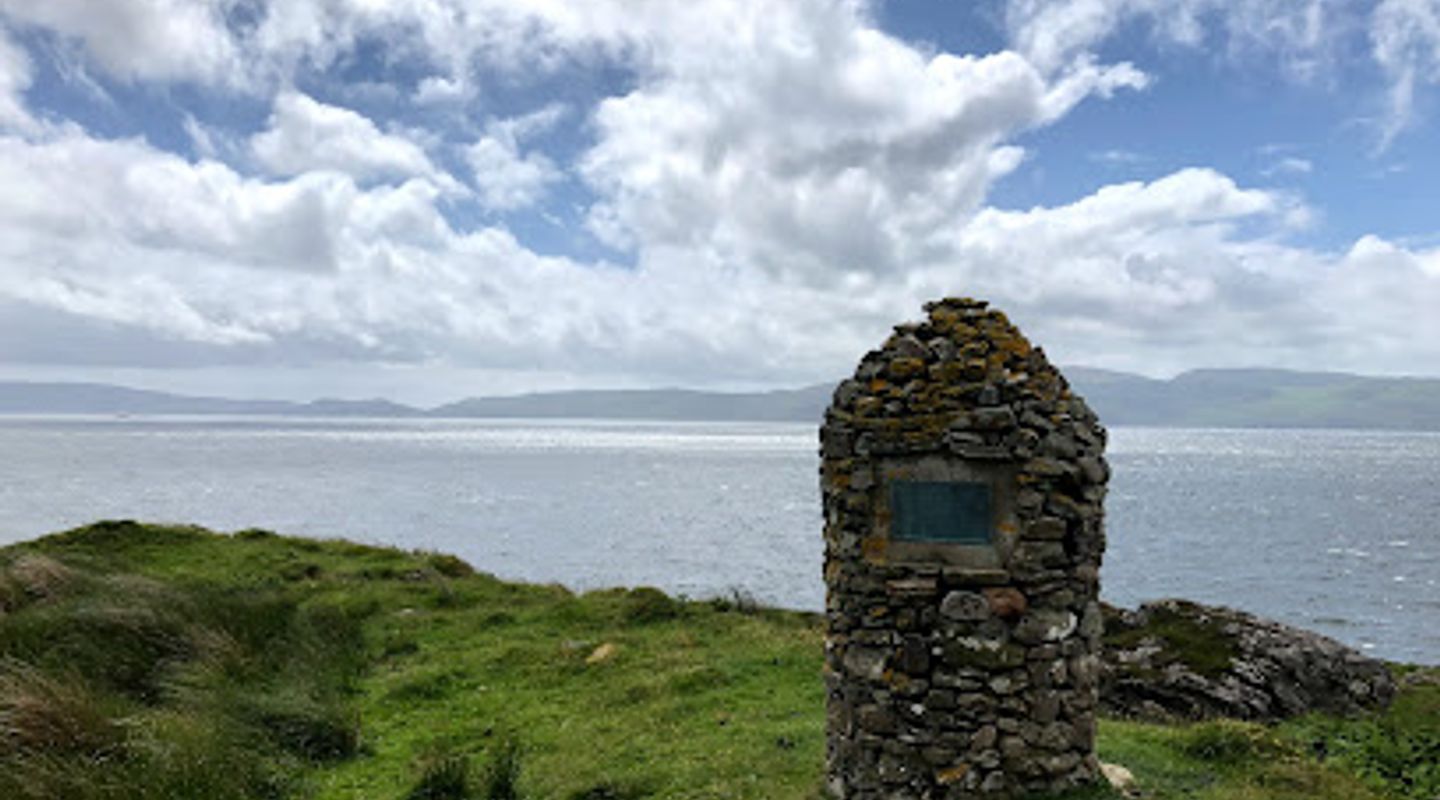
Over the centuries, Mac Ewen Castle fell into ruin. Stones from the castle were repurposed by locals for building repairs, leading to its gradual dismantling. Today, only remnants of the walls and foundations remain, perched on a rocky promontory overlooking Loch Fyne. Despite its ruined state, the site retains a powerful sense of history and connection to the Clan MacEwen. In 1990, the Clan MacEwen Society erected a cairn and plaque among the ruins to commemorate their ancestral seat and to guide visitors interested in the clan’s heritage.
Setting and Visitor Experience
The castle’s location offers sweeping views over the tranquil waters of Loch Fyne and the surrounding rugged coastline. Accessing the site involves a scenic walk through pastoral landscapes, including meadows and pastures, which enhances the immersive experience of stepping back in time. The remote and peaceful setting makes it a contemplative spot for those interested in Scottish history, archaeology, and clan heritage. The natural environment around the castle is rich with wildlife and offers a serene atmosphere away from urban bustle.
Clan MacEwen Legacy and Cultural Importance
Mac Ewen Castle is a significant cultural landmark for the Clan MacEwen, whose origins in the region date back to at least the early 13th century. The clan played an important role in the medieval Celtic world, with members serving as bards and historians who preserved clan history through poetry and song. Although the clan lost its lands in the 15th century, the castle remains a symbol of their enduring legacy and connection to the land. The site attracts those interested in exploring Scotland’s clan histories and the broader narratives of medieval Scottish society.
Conservation and Interpretation
While the castle is in ruins, ongoing interest from the Clan MacEwen Society and archaeological groups has helped maintain its historical significance. Interpretive materials, including the cairn and plaque, provide context for visitors. The site is protected as part of Scotland’s rich archaeological heritage, encouraging respectful visitation and preservation of this evocative medieval landmark.
Evendo Review Centre
 Google
Guest reviews
Best time to go
Quietest: Jan, Feb & Dec · before 6am or at 7pm
Busy times are Evendo estimates for a typical year, to help you plan. Actual crowds vary with events, school holidays and the weather.
Explore Mac Ewen Castle on the map
A handpicked selection of must-see spots near Mac Ewen Castle, mapped for you.
Get your free copy of our complete guide to Mac Ewen Castle, delivered straight to you.
Everything on this page, from opening hours and how to get there to Eve’s tips and the best time to go, in one PDF you can read offline, print or share.
Already have an account? Sign in
Your Mac Ewen Castle guide is ready.
We'll send it to · Not you? Sign out

Getting your guide ready…
We are putting together a fresh copy of the Mac Ewen Castle guide. This can take up to a minute.
This can take a few moments. If your browser asks, choose Allow so the download can start. You'll find the guide in your Downloads folder.
Nothing happened? Download it again
Sorry, the guide is taking longer than usual. Please try again in a minute, or get it by email instead.
Other nearby places you may find interesting
The closest places of the same kind, if this one is not quite what you had in mind.
-
-
-
-
-


Swipe for more places
More to explore near Mac Ewen Castle

 Best experiences near Mac Ewen Castle
 Best hotels near Mac Ewen Castle
 Best landmarks near Mac Ewen Castle
 Best attractions near Mac Ewen Castle
 Best shops near Mac Ewen Castle
 Best restaurants near Mac Ewen Castle
 Best bars near Mac Ewen Castle
Do you manage this location?
Take control to get all the benefits, like improved information, better appearance, and stronger visibility across AI-powered discovery.
Explore more

Explore more of Argyllshire
Explore Argyllshire: A Scottish paradise of rugged coastlines, ancient castles, and charming villages, offering a blend of natural beauty and rich history.
Explore Argyllshire
Explore more of United Kingdom
Discover the United Kingdom: A blend of rich history, stunning landscapes, and vibrant cities, offering a unique travel experience for every visitor.
Explore United Kingdom
