

Ardrossan Castle Travel Guide
Free Guide: Explore the evocative ruins of Ardrossan Castle, a historic coastal fortress with panoramic views and rich Scottish legends.


A brief summary of Ardrossan Castle
Explore the evocative ruins of Ardrossan Castle, a historic coastal fortress with panoramic views and rich Scottish legends.
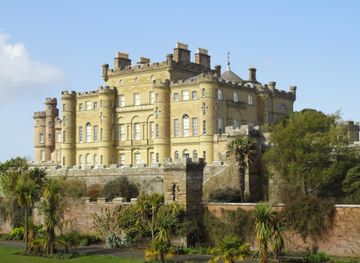
Ardrossan Castle, perched on a rocky promontory overlooking the Firth of Clyde in Ayrshire, Scotland, offers evocative ruins steeped in medieval history. Originally built in the 12th century and remodeled in the 15th century, the castle’s remains include a striking keep and vaulted cellars known as 'Wallace’s Larder.' The site provides panoramic views of Ardrossan, Saltcoats, and the sea, making it a scenic and atmospheric destination for history enthusiasts and nature lovers alike.
On-site amenities
 Seating areas
 Picnic areas
 Information boards
Opening hours
- Every dayOpen 24 hours
Opening hours as listed on the venue’s Google Business Profile. Hours can change for services and special events, so check with the venue before you go.
- Address
- Ardrossan KA22 8ED
Getting there
Bus
Car
Walking
Discover more about Ardrossan Castle
Ancient Origins and Strategic Setting
Ardrossan Castle stands on a commanding rocky bluff overlooking the town of Ardrossan and the Firth of Clyde. Its name derives from the Gaelic 'ard' meaning height and 'rossan' meaning rocky promontory, perfectly describing its dramatic location. The first castle here was likely constructed around 1140 by Simon de Morville, a powerful Norman lord. The site’s strategic position allowed control over the surrounding coastline and served as a defensive stronghold through centuries of Scottish history.
Medieval Fortifications and Historic Turmoil
The castle was originally a simple rectangular fortress made from grey sandstone, with a gatehouse and vaulted cellars built in the 13th century. Ownership passed through the Barclay family and later the Earls of Eglinton. During the Wars of Scottish Independence, Ardrossan Castle was held by English forces until famously captured and largely destroyed by William Wallace, an event marked by the grim cellar known as 'Wallace’s Larder' where the English garrison was said to have been slaughtered.
15th Century Rebuilding and Decline
In the 15th century, the Montgomery family rebuilt and expanded the castle, adding a prominent keep that still partially stands today. This period saw the castle flourish as a noble residence, briefly serving as the Montgomery family’s main home after the destruction of Eglinton Castle in 1528. However, by the 17th century, the castle fell into decline and was partially dismantled by Oliver Cromwell’s troops, who repurposed its stone for fortifications in Ayr.
Architectural Remnants and Visitor Experience
Today, visitors can explore the evocative ruins, including the remaining keep rising to the third storey with visible fireplaces and weathered carved stonework. The south range contains vaulted cellars and a blocked entrance to a cellar once used as a tunnel. The site offers spectacular views across South Bay, Ardrossan’s seafront, and towards the Isle of Arran and Goatfell. Informational boards provide historical context, and the surrounding park area includes seating and picnic spots, making it a pleasant place for reflection and exploration.
Legends and Local Lore
Ardrossan Castle is rich in folklore, including tales of hauntings by the ghost of William Wallace and stories of the Devil’s hoofprints left on the castle rocks. The legend of Sir Fergus Barclay, known as the 'De’il of Ardrossan,' adds a mystical dimension, recounting his pact with the Devil and subsequent trickery. These stories contribute to the castle’s atmospheric allure and cultural heritage.
Preservation and Community Significance
Though the ruins are fragile and fenced for safety, ongoing conservation efforts aim to preserve Ardrossan Castle’s historical fabric. The site remains a cherished landmark for locals and visitors, blending natural beauty with centuries of Scottish history. It is a popular spot for dog walkers, families, and those seeking a quiet connection with the past amidst stunning coastal scenery.
Evendo Review Centre
 Google
Guest reviews
Best time to go
Quietest: Jan, Feb & Dec · before 6am or at 10pm
Busy times are Evendo estimates for a typical year, to help you plan. Actual crowds vary with events, school holidays and the weather.
Explore Ardrossan Castle on the map
A handpicked selection of must-see spots near Ardrossan Castle, mapped for you.
Get your free copy of our complete guide to Ardrossan Castle, delivered straight to you.
Everything on this page, from opening hours and how to get there to Eve’s tips and the best time to go, in one PDF you can read offline, print or share.
Already have an account? Sign in
Your Ardrossan Castle guide is ready.
We'll send it to · Not you? Sign out

Getting your guide ready…
We are putting together a fresh copy of the Ardrossan Castle guide. This can take up to a minute.
This can take a few moments. If your browser asks, choose Allow so the download can start. You'll find the guide in your Downloads folder.
Nothing happened? Download it again
Sorry, the guide is taking longer than usual. Please try again in a minute, or get it by email instead.
Other nearby places you may find interesting
The closest places of the same kind, if this one is not quite what you had in mind.
-
-
-
-
-


Swipe for more places
More to explore near Ardrossan Castle

 Best experiences near Ardrossan Castle
 Best hotels near Ardrossan Castle
 Best landmarks near Ardrossan Castle
 Best attractions near Ardrossan Castle
 Best shops near Ardrossan Castle
 Best restaurants near Ardrossan Castle
 Best bars near Ardrossan Castle
Do you manage this location?
Take control to get all the benefits, like improved information, better appearance, and stronger visibility across AI-powered discovery.
Explore more
Explore more of Ayrshire
Discover Ayrshire: a coastal retreat in Scotland offering historic castles, scenic trails, and a rich cultural heritage awaiting your exploration.
Explore Ayrshire
Explore more of United Kingdom
Discover the United Kingdom: A blend of rich history, stunning landscapes, and vibrant cities, offering a unique travel experience for every visitor.
Explore United Kingdom
